
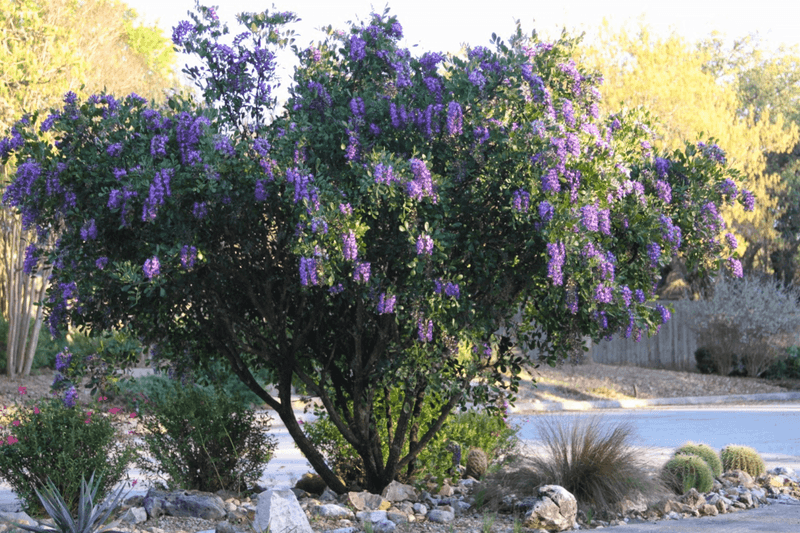
Most Texas homeowners know to watch for copperheads in the garden, but far fewer give a second glance to a handsome evergreen shrub that may already be growing in their own yard. That shrub is Texas mountain laurel, also called mescal bean or frijolillo, and its bright-red seeds carry a genuine ingestion hazard that can catch families and pet owners off guard. Learning to recognize it, understanding what actually poses the risk, and knowing how to respond if someone chews a seed can make a real difference for any household in Texas.
The plant is Texas mountain laurel—not a proven copperhead counterpart
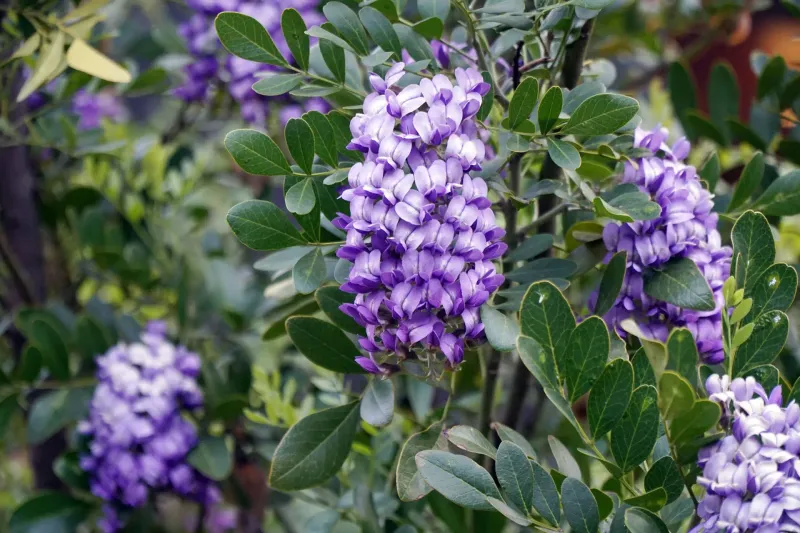
Spend any time scrolling through Texas gardening forums and you will eventually see a warning about a shrub that supposedly rivals the copperhead for neighborhood danger. The plant behind that claim is Texas mountain laurel, known scientifically as Dermatophyllum secundiflorum. Older Texas publications and garden records frequently list it under its former name, Sophora secundiflora, so you may encounter both names when searching for information.
The copperhead comparison makes for a vivid headline, but no reliable evidence establishes that Texas mountain laurel receives less public attention than copperheads, causes comparable harm, or matches them in danger. The defensible concern is more specific and more practical: a plant with a real ingestion hazard can sit in an ordinary residential landscape looking every bit like a normal ornamental shrub, and many people who walk past it every day have no idea what it is. That gap between appearance and toxicity is worth closing.
According to the Texas Poison Center Network’s guide to poisonous plants, the hazard profile of Texas mountain laurel centers on ingestion, not casual contact. Brushing against the leaves or sitting beneath the canopy is not the same as eating a seed. The plant deserves careful attention from any household where children, pets, or livestock might access fallen pods, but that attention should be grounded in what the evidence actually shows rather than a comparison that cannot be verified.
Common names add another layer of confusion. “Mountain laurel” by itself often refers to Kalmia latifolia, a completely different species found in the eastern United States. Using the Texas common name or the scientific name Dermatophyllum secundiflorum prevents that mix-up and keeps any conversation with a poison center or veterinarian on solid footing from the start.
Why Texas homeowners plant this native shrub
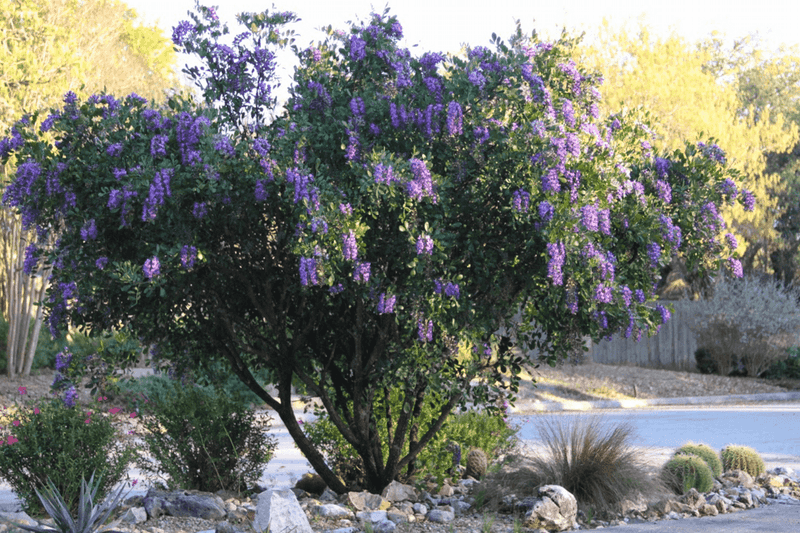
Few native Texas plants check as many boxes on a landscaper’s wish list as Texas mountain laurel. Texas A&M’s Plants of Texas Rangelands describes it as a native, drought-tolerant evergreen shrub or small tree that grows naturally across central, southern, and western Texas, including the Edwards Plateau, the Rio Grande Plains, and portions of the Trans-Pecos. Its natural range hugs the limestone hills and rocky soils that define so much of the Texas Hill Country, which means it evolved to handle exactly the conditions that defeat many ornamental plants.
Water restrictions have become a fact of life across much of Texas, and that reality pushes homeowners toward plants that can survive on rainfall alone once established. Texas mountain laurel fits that profile well. Its deep root system and tolerance for thin, alkaline soils make it a practical choice for anyone trying to maintain curb appeal without running a sprinkler every other day through a triple-digit Texas summer.
The ornamental appeal is genuine. Clusters of fragrant purple flowers appear in late winter to early spring, drawing comparisons to wisteria in both color and scent. The glossy, dark-green foliage stays attractive year-round. The University of Texas Wildflowers of Texas resource notes that the species is increasingly planted for landscape use, reflecting a broader shift toward regionally adapted natives.
No statewide count of how many residential yards contain the plant exists, but its combination of low water demand, year-round green, and showy spring blooms means it appears in nurseries, parkways, and garden beds throughout the state. For a homeowner who did not plant it intentionally, the shrub can arrive via a previous owner’s landscaping choices and blend in seamlessly with everything else in the yard.
How to recognize Texas mountain laurel safely
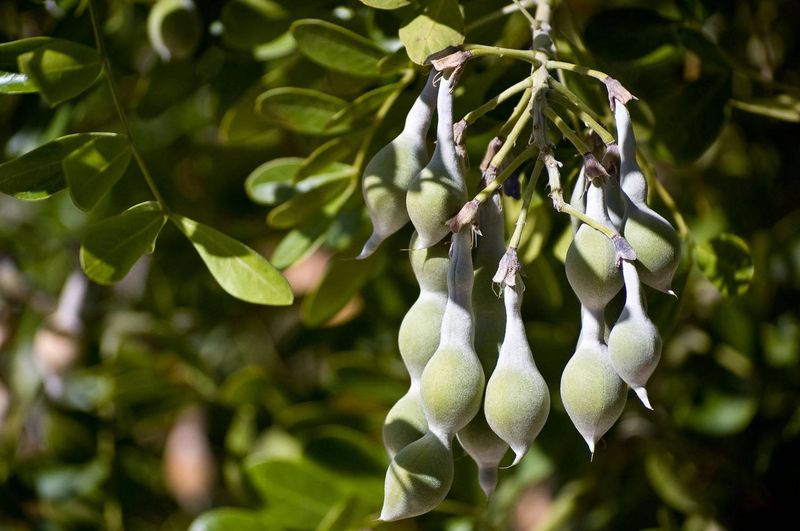
Recognizing Texas mountain laurel from a safe distance is entirely possible without touching or tasting any part of the plant. Start with the leaves: they are arranged alternately along the stem and divided into roughly 7 to 13 rounded, glossy leaflets. The overall leaf is compound, meaning each leaflet attaches to a central stalk rather than directly to the branch. That combination of alternate arrangement and compound structure narrows identification considerably.
The flowers are the plant’s most distinctive feature during late winter and early spring. They arrive in dense, drooping clusters and carry a fragrance many people compare to grape Kool-Aid or wisteria. The color ranges from pale lavender to deep violet-purple. Texas A&M’s Plants of Texas Rangelands profile describes the pods as hard and woody, containing one to eight bright-red seeds each roughly half an inch long.
Those seeds are eye-catching and, to a young child, may look like candy or a bead.
Common names create real confusion here. “Mountain laurel” by itself is widely used for Kalmia latifolia, an eastern U.S. species with entirely different flowers, leaves, and toxicology. The North Carolina Extension Gardener Plant Toolbox entry for Dermatophyllum secundiflorum lists frijolillo, mescal bean, mountain laurel, and Texas mountain laurel as common names for the same plant, which shows how easily a search or conversation can go sideways. Using the full common name “Texas mountain laurel” or the scientific name Dermatophyllum secundiflorum avoids that overlap.
When identification is uncertain, do not guess. Texas A&M AgriLife Extension’s plant identification resources can connect you with county agents and diagnostic tools that provide a reliable answer. A misidentification in either direction, treating a safe plant as dangerous or a dangerous one as safe, carries its own costs, so a confirmed ID is worth the extra step. If you are working around an unfamiliar shrub while waiting for confirmation, gloves are a reasonable precaution and cost nothing.
Why the seeds deserve particular caution
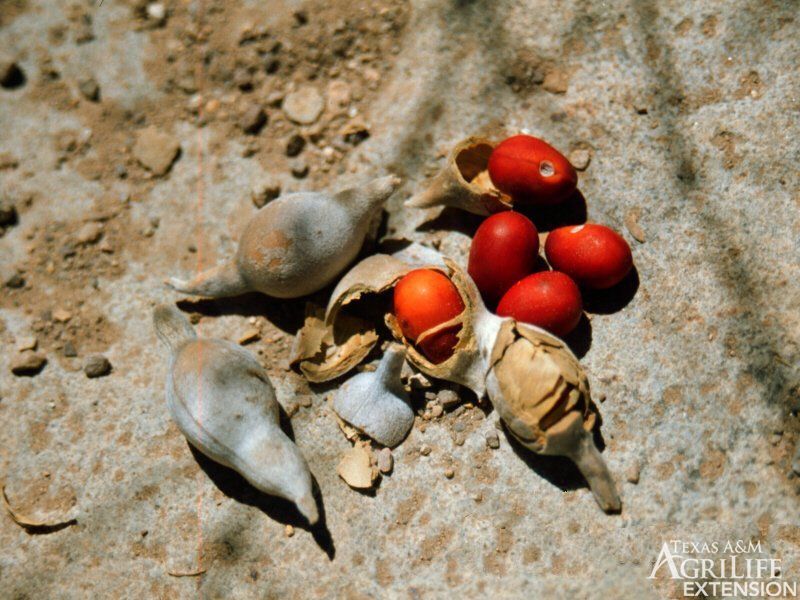
The bright-red seeds of Texas mountain laurel are the clearest household hazard the plant presents. Their color is striking enough to attract children and curious animals, and their size, roughly half an inch, makes them easy to pick up and put in a mouth. What makes them genuinely concerning is the chemistry inside.
Texas AgriLife Extension’s Zavala County Agriculture and Natural Resources newsletter explains that the plant contains quinolizidine alkaloids and reports that ground or chewed seeds are more dangerous than intact seeds. Whole seeds may pass through a livestock animal’s digestive system without releasing their full toxic load, while seeds that are chewed or crushed release those alkaloids far more efficiently. That distinction matters practically: a toddler who bites down on a seed to explore it is in a different situation from one who simply held a seed in a closed fist.
One specific alkaloid identified in the seeds is cytisine, also called sophorine. The North Carolina Extension Gardener entry for Dermatophyllum secundiflorum lists vomiting, diarrhea, excitement, delirium, and coma as possible signs following ingestion. These are documented possibilities, not guaranteed outcomes for every exposure, and the actual response depends on species, body size, the amount ingested, and whether seeds were chewed.
Texas AgriLife also reports that mature foliage carries toxicity, so the concern is not limited to seeds alone. Avoid saying that only the seeds are dangerous, but also avoid treating every leaf as equally lethal. The seeds, especially when chewed, represent the most acute household risk. No part of this plant should be eaten, brewed into tea, or used experimentally.
The historical “mescal bean” nickname has led some people to assume a connection to mescal or mezcal, but the plant is unrelated to the agave used to produce that beverage, and its alkaloids are toxic rather than intoxicating in any safe sense.
Ingestion is the documented risk—not simply touching the shrub
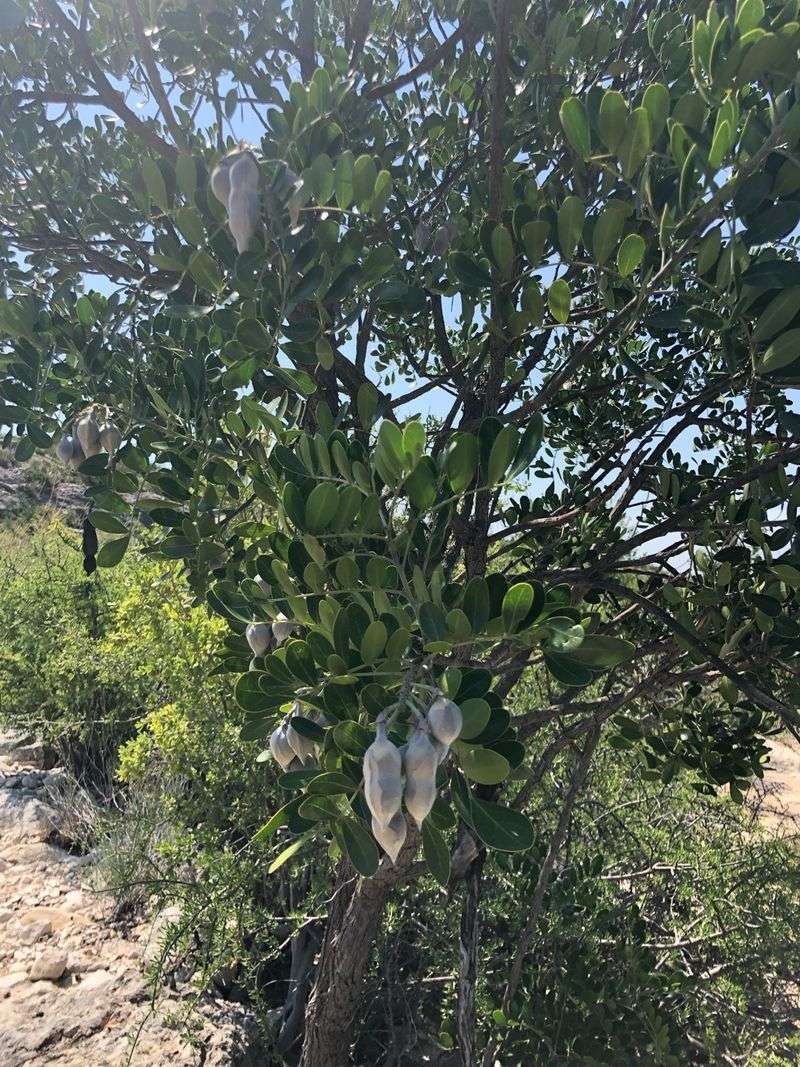
One of the most useful things a Texas homeowner can understand about this plant is what the evidence actually says about how exposure happens. Walking past Texas mountain laurel, sitting in its shade, or accidentally brushing a branch while gardening is not equivalent to eating its seeds. The documented hazard is ingestion: eating, chewing, or crushing seeds or plant material so that the alkaloids enter the body.
The Texas Poison Center Network draws a clear distinction between plants like poison ivy, which cause skin reactions through contact, and ingestion-hazard plants like Texas mountain laurel, where the primary route of concern is through the mouth. That distinction shapes how households should think about prevention. The goal is not to avoid the plant entirely but to prevent anyone, especially young children and animals, from chewing its seeds or pods.
Livestock evidence documents the consequences of actual ingestion. Texas AgriLife’s newsletter on mescal bean poisoning reports that sheep, goats, and cattle can be poisoned under range conditions, with recorded signs including trembling, a stiff or stilted gait, falling, and inability to rise. Those findings come from livestock settings and should not be automatically translated into precise human or household-pet risk estimates. The species involved, body size, amount ingested, and whether seeds were chewed all affect outcome.
For household pets, the honest answer is that dog- and cat-specific evidence is limited compared to the livestock record. The North Carolina Extension entry for Dermatophyllum secundiflorum lists possible ingestion signs including vomiting, diarrhea, excitement, delirium, and coma, but these are not guaranteed for every exposure at every dose. Keeping fallen pods and seeds away from dogs and cats is a reasonable precaution, and any suspected ingestion by a pet should go to a veterinarian or an appropriate animal poison resource rather than being managed at home. The absence of a large case series for dogs and cats does not mean the plant is safe for them; it means the precautionary approach is the right one.
Prevent access without treating every shrub as an emergency
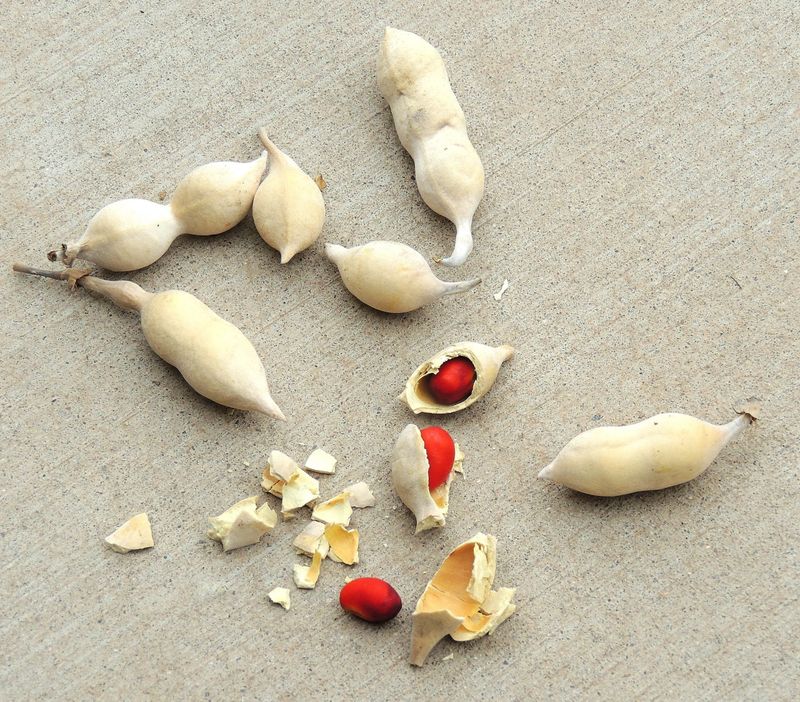
Prevention for Texas mountain laurel does not require tearing the shrub out of the ground the moment you identify it. A more measured approach, one grounded in what the evidence actually shows, focuses on controlling access to the parts of the plant that pose the clearest risk.
The first priority is fallen pods and seeds. The Texas Poison Center Network specifically warns against allowing children to chew seed- or bean-based jewelry, which points to a real-world scenario: the seeds are colorful enough to be strung as beads, and a child who chews one while wearing it has crossed from decoration into ingestion territory. Clear the area under and around the shrub regularly if children or animals play there, and dispose of pods in a sealed bag rather than leaving them in an open compost pile.
Children should be told plainly not to chew the seeds, put pods in their mouths, or attempt to make tea from any part of the plant. That guidance applies equally to older children who might be curious about the plant’s historical nickname. Texas AgriLife’s guidance on mescal bean toxicity reinforces that chewed or ground seeds carry a higher risk than intact ones, so the act of chewing is itself a key part of the hazard.
For households with dogs, cats, or backyard chickens, keeping animals away from fallen seeds is a prudent step even though dog- and cat-specific toxic-dose data is limited. Direct any suspected animal exposure to a veterinarian or an appropriate animal poison resource rather than attempting home treatment. If you are unsure whether the plant in your yard is actually Texas mountain laurel, confirm the identification through Texas A&M AgriLife Extension’s plant identification tools before deciding on any removal. Removing a plant that turns out to be something else entirely is unnecessary work, and leaving a confirmed hazard in place without access controls is the opposite problem.
What to do after a suspected human ingestion

Speed matters more than certainty when someone may have ingested part of this plant. If you see a child with a seed in their mouth or find evidence that plant material was chewed or swallowed, remove any remaining material from the mouth right away and call Poison Control at 1-800-222-1222 immediately. Do not wait to see whether symptoms appear before making that call. Early contact gives the poison center the information it needs to guide you, and some toxic effects can take time to develop.
The Texas Poison Center Network’s plant exposure guidance advises callers to follow the poison center’s instructions about giving fluids. Some general plant-exposure protocols mention offering a small amount of water if the person can swallow normally, but the right amount depends on the person’s age, size, and the specific exposure. Do not decide on a fluid amount independently; let the poison center direct that step. Giving too much or the wrong thing can complicate the situation.
While you are on the phone or preparing to call, try to retain a photograph of the plant or, if safe to handle without putting it near your face, a small sample in a sealed bag. Texas Poison Center guidance on poisonous plant exposures notes that accurate plant identification helps the center give better advice. If you have already confirmed the plant’s identity using Texas A&M AgriLife Extension’s plant identification resources, share that information with the poison center specialist.
Severe symptoms, including difficulty breathing, loss of consciousness, persistent vomiting, or signs of collapse, require emergency medical care rather than a home response. Call 911 or go to the nearest emergency room if the situation escalates while you are waiting for poison center guidance. For an animal that may have ingested seeds or plant material, contact your veterinarian or an animal poison hotline rather than Poison Control, which is designed for human exposures. Acting quickly, providing accurate information, and following professional direction are the three steps that matter most.
Respect the plant without overstating the threat
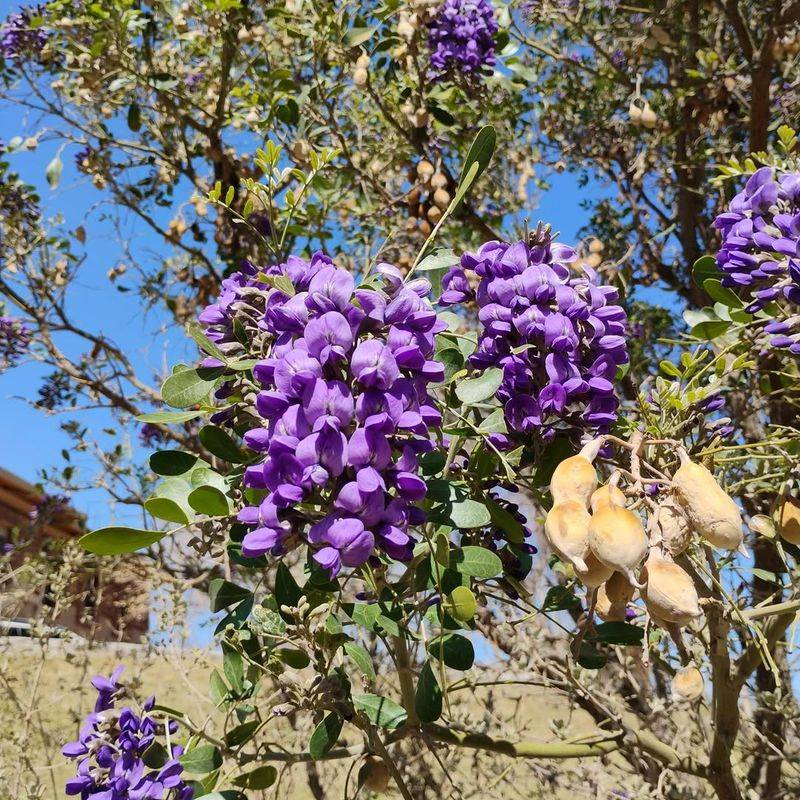
Texas mountain laurel earns its place in the Texas landscape. Texas A&M’s range plants profile describes a drought-adapted native that thrives in the limestone soils and hot summers that define much of the state, and its spring flowers are among the most fragrant any Texas yard can offer. Acknowledging those qualities is not at odds with acknowledging that its seeds and, according to Texas AgriLife, its mature foliage present a genuine ingestion hazard.
The practical response is straightforward: learn the plant’s identifying features well enough to recognize it at a glance, keep pods and seeds away from children and animals, avoid any experimentation with plant material, and reach for the Texas Poison Center Network at 1-800-222-1222, a veterinarian, an extension agent, or emergency services whenever a suspected exposure occurs. Consulting Texas A&M AgriLife Extension’s identification resources before making removal decisions keeps the response proportionate and accurate.
No comparison to a copperhead is needed to make the point worth taking seriously. A native shrub that looks like ordinary landscaping but carries a documented ingestion hazard from its seeds is reason enough to pay attention, and paying attention is the only thing this plant actually requires of you.