
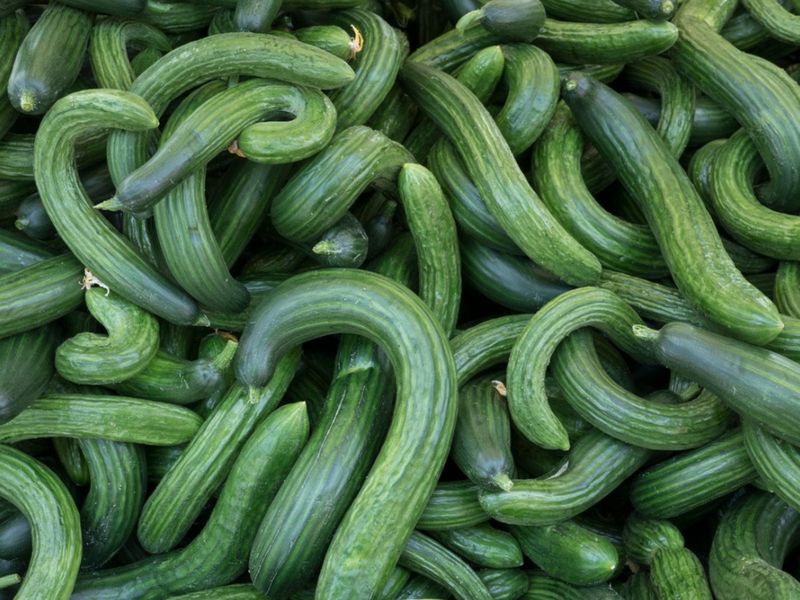
Pulling a curled, fat-ended cucumber off the vine is genuinely frustrating, especially when the rest of the plant looks healthy. Incomplete pollination is one of the more common reasons standard outdoor cucumbers grow uneven or tapered, and there is a simple hands-on step you can take to give future flowers a better shot. Before you reach for a paintbrush, though, it helps to know whether your variety even needs pollen and whether something else might be going on. A few quick checks can point you toward the right fix for your specific situation.
A misshapen cucumber often starts with incomplete pollination
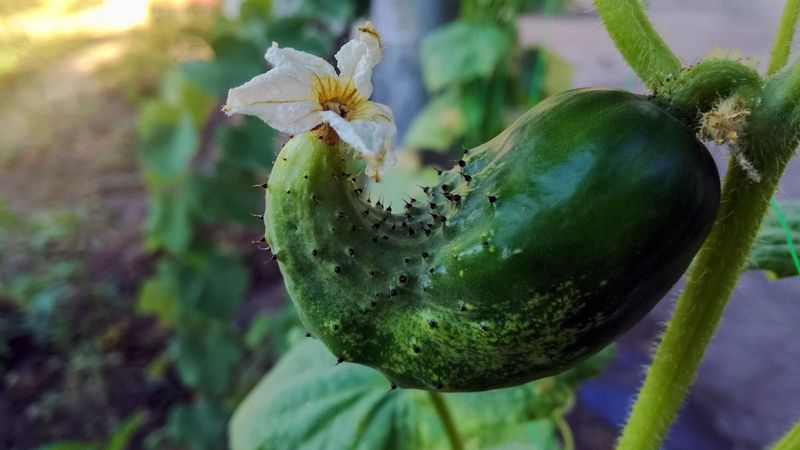
When a cucumber grows fat on one end, tapers unevenly, or curls into a crescent shape, incomplete pollination is one of the more common explanations. Cucumber plants produce separate male and female flowers, and pollen has to travel from a male flower to a female flower, usually carried by bees or other insects, before the fruit can develop normally. If too little pollen reaches the female flower, only part of the ovary gets the signal to grow, and the result is a lopsided or stunted cucumber. In some cases, a young fruit may abort and drop off the vine entirely before it reaches picking size.
According to Penn State Extension’s cucumber pollination research, poor pollination is a recognized cause of deformed cucumber fruit, alongside moisture stress, temperature extremes, mechanical injury, and virus infection. That list matters because the shape of a fruit alone cannot tell you which cause is responsible. Incomplete pollination is a reasonable first suspect, not a certainty.
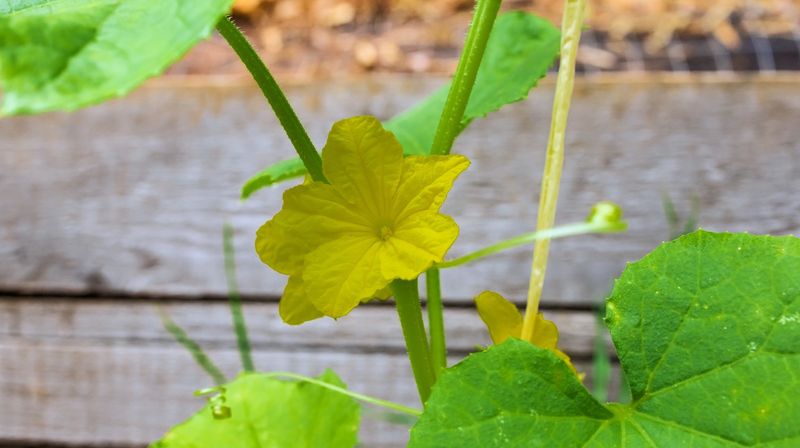
One thing to watch for: the first flowers to appear on a cucumber plant are usually male, and they often drop without producing fruit. That is completely normal and should not be mistaken for a pollination problem. Female flowers come later, identifiable by the small cucumber-shaped swelling just behind the blossom. Hand pollination targets those female flowers going forward, not the cucumbers that are already misshapen.
Check whether your cucumber should receive pollen
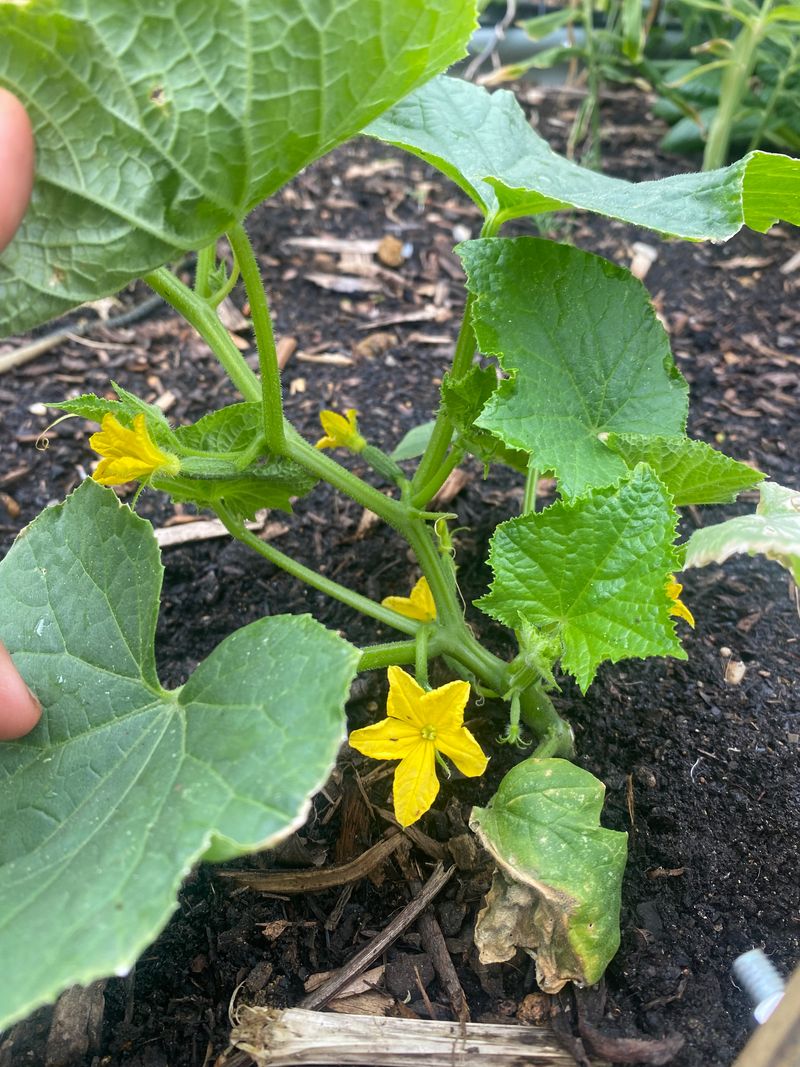
Before transferring any pollen, check the seed packet or the variety name online. Not every cucumber is meant to receive pollen from insects or a gardener’s hand, and applying pollen to the wrong type can actually make the problem worse.
Parthenocarpic cucumbers are varieties bred to set fruit without pollination at all. They are popular for greenhouse and high-tunnel growing, where insect access is often limited by design. When bees or other insects do reach these varieties and pollinate them, the result can be seeded, curved, or misshapen fruit, which is the opposite of what most gardeners want. University of Minnesota Extension’s pollination requirements guidance notes that parthenocarpic cucumbers do not need insect pollination and that unwanted pollination can reduce fruit quality in some protected-culture settings.
If your variety falls into this category, the right move may be to keep insects away rather than invite them in.
Gynoecious cucumbers, which produce mostly or all female flowers, present a different situation. These varieties often need a compatible pollen-producing plant nearby unless they are also parthenocarpic. Seed packets for gynoecious types sometimes include a few seeds of a standard variety specifically to supply pollen. If your packet came with two seed types and you only planted one, that gap could be contributing to poor fruit set.
Standard field-grown cucumbers that are open to the garden and not labeled as parthenocarpic are the best candidates for hand pollination when insect activity seems limited.
How to hand-pollinate a cucumber flower
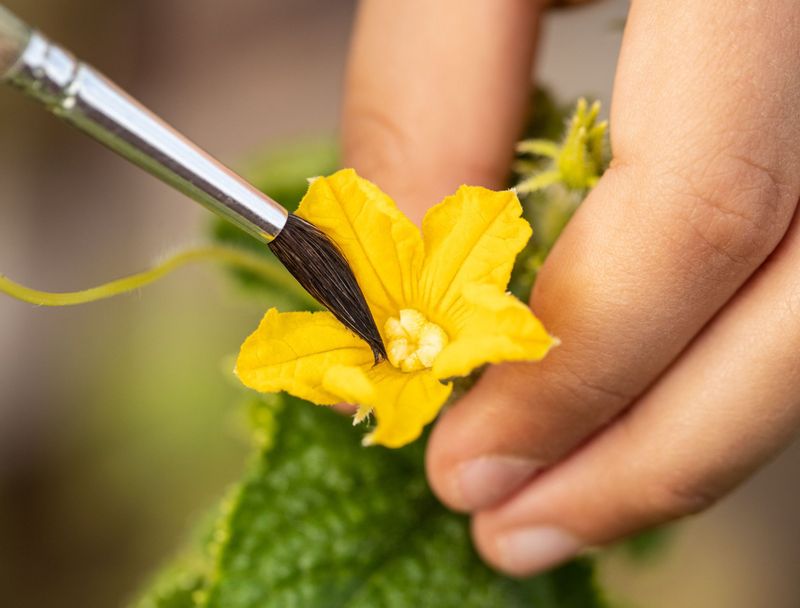
Timing is everything with cucumber flowers. They open in the morning and remain receptive for only a short window, so plan to hand-pollinate early in the day while the blossoms are fully open and fresh.
Start by finding a newly opened male flower. Male flowers sit on slender, straight stalks and have no swelling behind the blossom. Gently pull back or remove the petals to expose the anthers, the small pollen-covered structures at the center of the flower. Then locate a newly opened female flower, which you can recognize by the miniature cucumber-shaped swelling just behind the bloom.
Carefully rub the exposed anthers from the male flower directly against the stigma, the sticky central structure inside the female flower. A light, even contact is all that is needed. Clemson Cooperative Extension’s cucumber factsheet describes this direct flower-to-flower transfer as a reliable method for home gardeners working with standard varieties.
If you prefer not to pick the male flower, a small soft artist’s brush works well as a transfer tool. Dab it against the anthers of the male flower to collect pollen, then brush it gently across the stigma of the female flower. Either method can work; the goal is simply to move fresh pollen from one flower to the other.
Aim your efforts at newly opened female flowers only. Applying pollen to a cucumber that is already curled or fat-ended will not change its shape. The procedure supports development starting from that flower, so earlier in the process is always better.
Weather and flower access can interrupt pollination
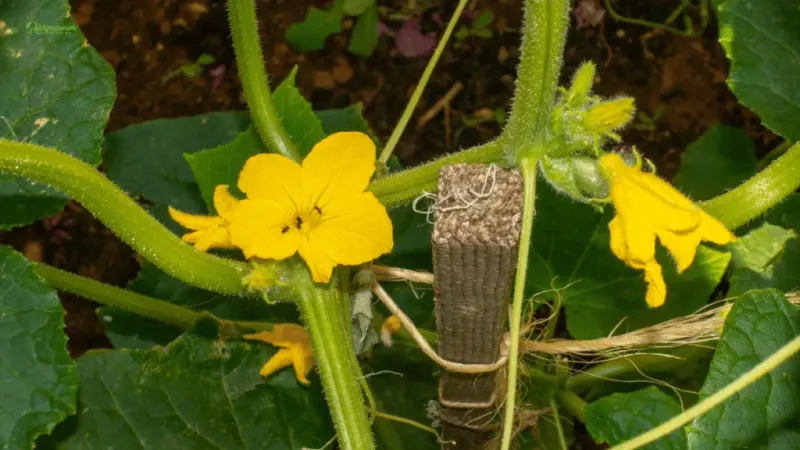
Cucumber flowers stay open for a brief period each morning, which means pollinators have a narrow window to do their work. When the weather closes that window, fruit set can suffer even on a plant that looks perfectly healthy.
Cold, rainy, cloudy, very hot, or windy days all tend to reduce bee and other insect activity. University of Minnesota Extension’s cucumber growing guide notes that these conditions can interfere with the pollination that cucumber fruit development depends on. A stretch of cool, overcast mornings during peak flowering is one of the more common reasons gardeners end up with a flush of oddly shaped fruit after what seemed like a productive bloom period.
Honey bees are the pollinators most gardeners think of first, but they are far from the only visitors. Bumble bees, squash bees, flies, and other insects may transfer pollen to cucumber flowers as well. Not seeing honey bees around your plants does not necessarily mean pollination is failing; other insects may be working the flowers at different times or in ways that are easy to miss.
Row covers are a common tool for protecting young cucumber plants from cucumber beetles and other pests, but standard floating row covers block insect access. Minnesota Extension’s season-extension guidance recommends removing row covers once flowering begins so pollinators can reach the blossoms. The exception is parthenocarpic varieties grown in protected culture, where keeping insects out may actually be the goal to preserve fruit quality.
Keep soil moisture as even as you can
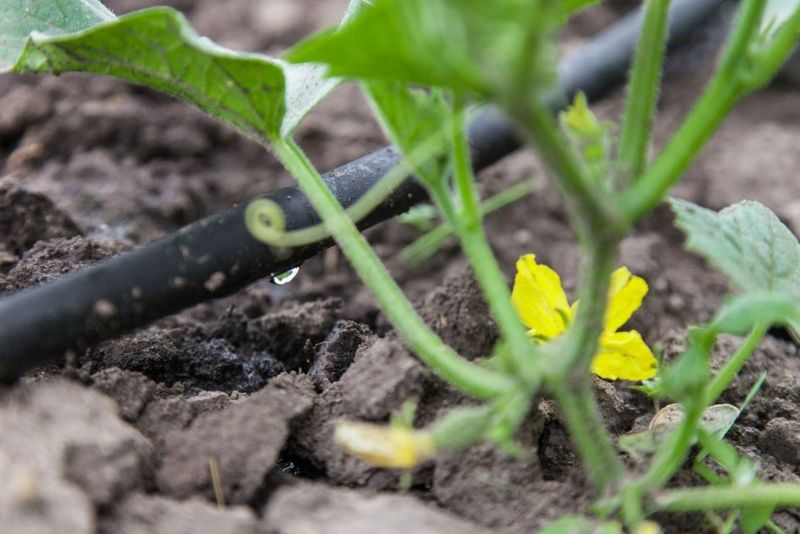
Even when pollination goes well, cucumbers can still grow misshapen if the soil swings between too dry and too wet. Moisture stress is one of the causes that can look a lot like a pollination problem from the outside, which is why managing water is a parallel priority rather than an afterthought.
Drought or large fluctuations in soil moisture can cause deformity, pointed or pinched ends, bitterness, and generally reduced fruit quality. Utah State University Extension’s cucumber guide identifies inconsistent moisture as a contributing factor to misshapen fruit, alongside poor pollination and other stressors. The two problems can occur together, which makes it harder to single out one cause when fruit keeps coming out wrong.
Deep, consistent irrigation is more effective than frequent shallow watering. Encouraging roots to grow deeper gives the plant better access to moisture during dry spells and helps buffer against sudden weather changes. A layer of mulch around the base of the plants, kept a few inches away from the stems, can slow evaporation from the soil surface and reduce the swings that lead to stress.
Waterlogged soil creates its own problems, so the aim is reasonable evenness rather than constant saturation. If fruit distortion continues after you have addressed both pollination and moisture, that pattern is a signal to look at other possible causes rather than just adding more water or pollen.
Pollen will not repair a cucumber that is already misshapen
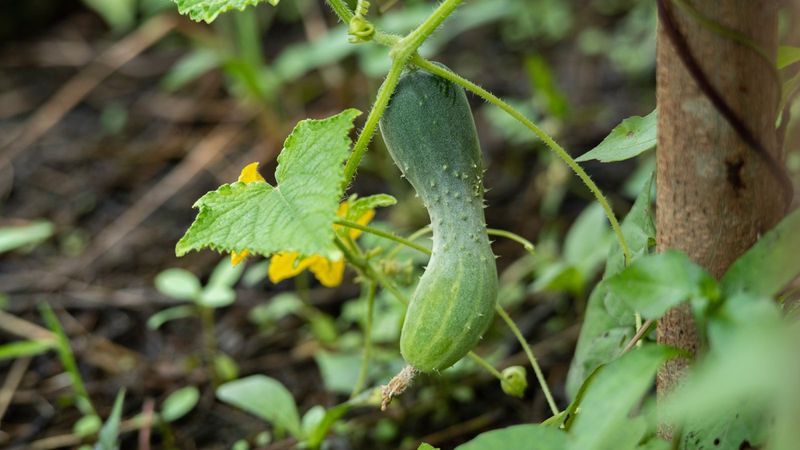
Setting realistic expectations here saves a lot of frustration. Once a cucumber has already developed a curve, a taper, or an uneven bulge, applying pollen to it is not going to change its shape. Pollination influences fruit development starting at the flower stage, so by the time you can see that something has gone wrong, that particular cucumber is already on its fixed path.
This is a practical inference from how fruit development works rather than a precisely measured cutoff, but the guidance from University of Illinois Extension’s cucumber page is consistent with it: target newly opened female flowers, not existing fruit. A cucumber that is badly deformed early in its development is unlikely to grow into a normal shape, and removing it from the vine is a reasonable choice. Leaving a misshapen cucumber on the plant can divert energy from flowers and developing fruit that still have a good chance.
The more useful question to ask when you find a curled cucumber is what the next set of flowers is doing. Hand-pollinating a newly opened female flower gives that developing fruit the best available start. If the following cucumbers come in straighter and more even, that is a reasonable sign that incomplete pollination may have been contributing to the problem, though it does not rule out other factors that may have improved at the same time, such as weather or moisture conditions.
Look beyond pollination when the symptoms spread
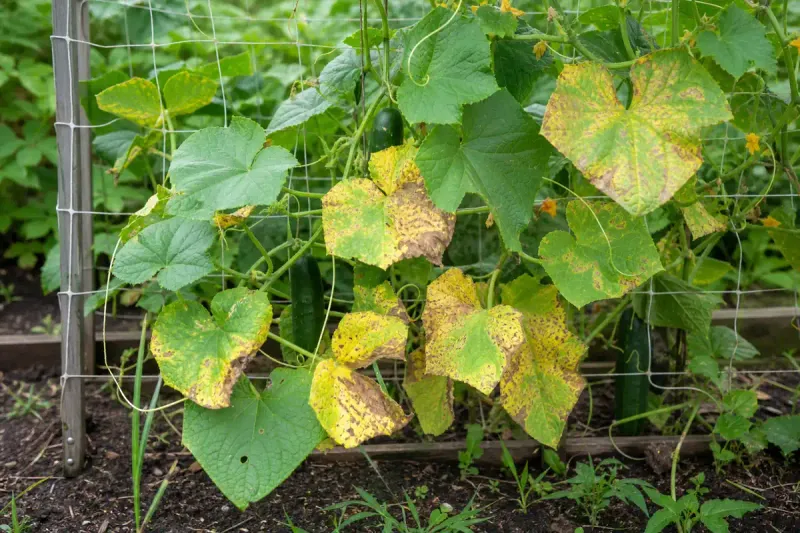
Hand pollination is a sensible first response when you find one or two oddly shaped cucumbers on an otherwise healthy-looking plant. It becomes a less useful answer when the problem spreads across the garden or shows up alongside changes in the foliage.
Penn State Extension’s high-tunnel cucumber production guide lists temperatures below about 65 degrees Fahrenheit, mechanical injury, moisture stress, poor fertility, and virus infection alongside poor pollination as recognized causes of misshapen fruit. That range of possibilities is worth keeping in mind before assuming that more pollen is the answer.
The pattern of the problem is one of the most useful diagnostic clues. A single misshapen cucumber among otherwise normal fruit on a plant with healthy green leaves fits the profile of an isolated pollination or moisture event. Widespread distortion on many fruits, especially when accompanied by mottled or yellow-green leaves, puckering, leaf curling, stunting, or unusual new growth, points toward something more systemic. University of Minnesota Extension’s cucurbit virus resource identifies those combined symptoms as indicators that warrant investigation for a viral infection rather than a pollination fix.
Fertility problems are another possibility that often gets overlooked. Both low fertility and excessive fertilizer can affect fruit development, and soil testing is a more reliable guide than routine fertilizing. If you suspect a nutrient issue, a basic soil test from your local extension service can help you understand what the soil actually needs rather than guessing. Suspected viral plants are best diagnosed rather than treated with pollen, fertilizer, or pesticides.
Use a diagnosis-first plan for the next fruit
A straightforward decision path can help you respond to misshapen cucumbers without overcomplicating the fix. Start with the seed packet to confirm whether your variety is a standard field type, a parthenocarpic variety, or a gynoecious type that needs a pollen source nearby. That single check shapes everything that follows.
For standard outdoor cucumbers, inspect the flowers and think about recent weather. If cool, rainy, or overcast conditions have been limiting pollinator activity, or if row covers have been blocking insect access, hand-pollinating a newly opened female flower in the morning is a practical next step. Maintain reasonably even soil moisture alongside that effort, since moisture stress can cause similar-looking problems independently. Then observe the next set of fruit with fresh eyes.
As University of Minnesota Extension notes, parthenocarpic varieties in protected settings may actually need protection from insect pollination rather than more of it. Getting the variety right before acting is the step most gardeners skip. Hand pollination is a useful response to one likely cause of misshapen cucumbers, not a guaranteed cure – and knowing when it applies is what makes it worth doing.