
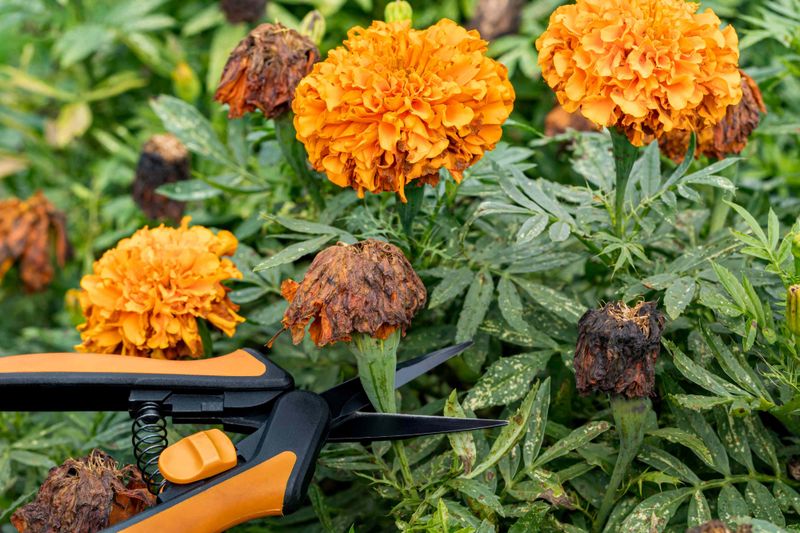
Midsummer is exactly when marigolds should be putting on their best show, yet many gardeners find themselves staring at tall, sparse plants covered in faded brown flower heads instead of bright blooms. For bedding marigolds in the Tagetes genus, removing those spent flowers before they set seed can help keep the bloom cycle going. But deadheading is only part of the answer, and knowing what else to check can save you a lot of frustration.
Deadheading may support new blooms, but it is not a fast cure

Bedding marigolds, the cheerful orange and yellow plants sold by the flat at nearly every garden center, belong to the Tagetes genus. The two types most home gardeners grow are French marigolds (Tagetes patula) and African marigolds (Tagetes erecta). Both are the focus of this guide. Pot marigold, or Calendula officinalis, is an entirely different plant, and care advice written specifically for Calendula does not automatically apply to Tagetes.
When a Tagetes plant grows tall and stops producing flowers, the instinct to start pulling off old blooms is a reasonable one. University of Minnesota Extension guidance on marigolds notes that plants can greatly benefit from removing spent blooms because doing so favors new flowers over seed production. University of Illinois Extension makes a similar point, describing deadheading as a way to improve reblooming.
That said, the promise of a fast, reliable recovery deserves a closer look. Deadheading may help a marigold that has slowed down because of seed formation, but it will not fix a plant that has stretched due to low light, grown leafy because of too much nitrogen, or declined because of soggy soil or disease. Those problems need their own solutions. Removing faded flowers is a genuinely useful habit, but calling it a cure for legginess or a guaranteed quick fix sets expectations the practice cannot always meet.
Make deadheading a five-to-seven-day flower check

Rather than waiting until the plant looks completely ragged, plan to walk through your marigolds on a regular schedule. Penn State Extension’s guidance on pruning herbaceous plants recommends removing spent flowers before seed formation, roughly every five to seven days. Iowa State Extension similarly advises removing faded marigold flowers regularly to help prolong blooming. Catching flowers early, before the petals fully dry and the seed head swells, keeps the plant focused on producing new buds rather than maturing seeds.
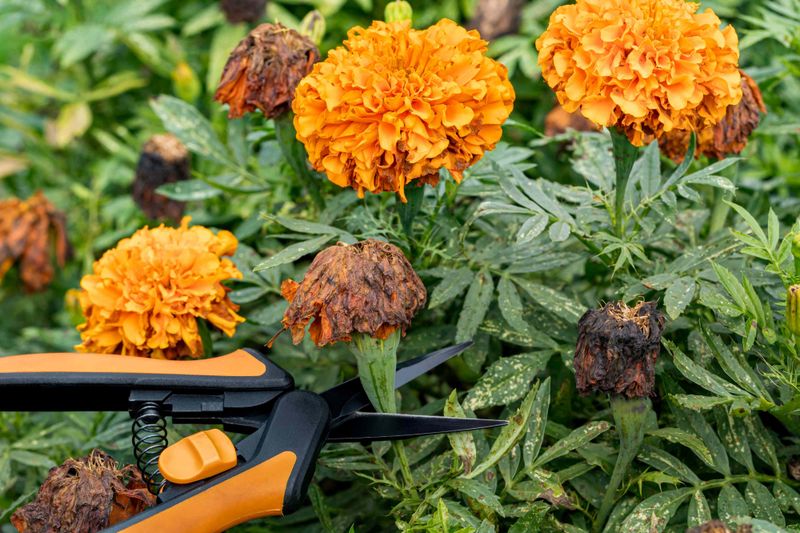
A finished flower is easy to spot once you know what to look for. The petals lose their color and begin to shrivel, the center of the bloom turns brown and papery, and the base of the flower head may start to feel dry or firm. When you find one, remove the entire spent flower head along with its short connecting stalk. Cut or pinch back to a healthy leaf, node, or visible side shoot.
Penn State Extension notes that cutting just above a node gives new growth a clear point to emerge from, which matters more than the exact tool you use.
During humid or wet stretches of summer, also pull off any flowers that are rotting or turning slimy rather than simply drying. Minnesota Extension’s marigold page recommends removing decaying blooms as part of keeping the plant tidy and reducing conditions that can encourage disease. Wet, collapsing flowers are not just cosmetic problems, so treat their removal as a sanitation step rather than a substitute for diagnosing what caused them in the first place.
Use pinching to correct leggy growth
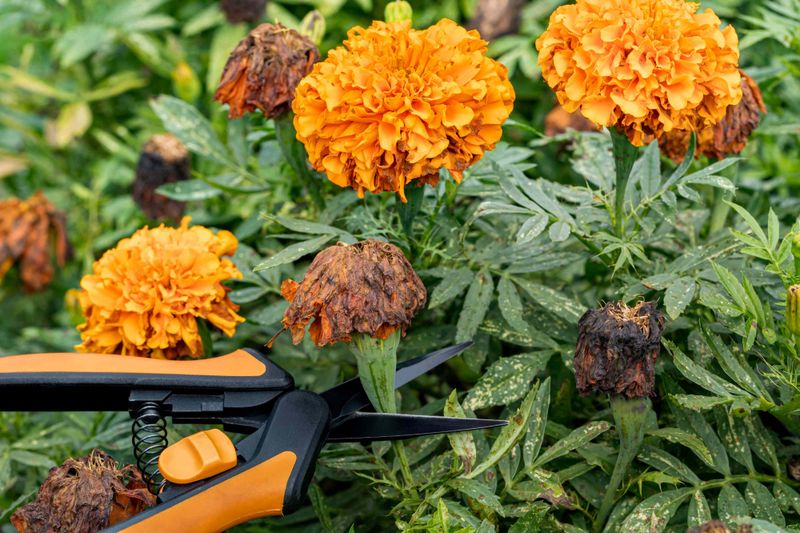
Deadheading and pinching are two different actions, and mixing them up can lead to the wrong fix for the wrong problem. Deadheading means removing a finished flower head and its stalk. Pinching means removing the growing tip of a stem to encourage the plant to branch out below that point. A plant that has become tall, sparse, and stretched needs pinching or selective cutting back in addition to deadheading, not instead of it.
Penn State Extension’s herbaceous pruning guidance lists French marigold among annuals that can benefit from pinching and notes that leggy annuals can be cut back during the season while leaving several nodes intact so new shoots have room to develop. When you trim back an elongated stem, count down from the tip and make your cut above a healthy leaf or node rather than cutting the stem all the way to the ground. That remaining stem length gives the plant the material it needs to push out new side branches.
A blanket hard cutback, taking every stem down dramatically at once, is not advisable as a routine move. It can temporarily strip the plant of whatever flowers remain and delay the next round of blooms. Penn State’s guidance on transplanting annuals warns that excessive pinching can postpone flowering because the plant needs time to build new branches and buds before it can bloom again. Moderate, selective stem correction paired with regular deadheading is a more measured approach than cutting everything back at once and hoping for the best.
Check light, feeding, and moisture before blaming the flowers
Before assuming deadheading is the only answer, spend a few minutes checking the conditions around your plants. Marigolds are sun lovers. Minnesota Extension’s marigold guidance generally recommends full sun, which means at least six hours of direct light each day. A plant receiving less than that can stretch toward available light and produce few flowers even if you remove every spent bloom on schedule.
If nearby shrubs, fences, or other plants have grown taller since spring and now cast shade that wasn’t there when you planted, that shift in light exposure is a plausible reason for poor flowering, though it should be treated as an inference to investigate rather than a guaranteed diagnosis.
Fertilizer habits also matter. When a marigold produces lush, dark green foliage but very few flowers, excess nitrogen is a likely contributor. Minnesota Extension, Penn State, and the University of Florida all caution against overfeeding with high-nitrogen fertilizers when the goal is more blooms. Marigolds are relatively light feeders, and pushing them with unnecessary fertilizer, especially one high in nitrogen, can direct the plant’s energy toward leaves rather than flowers.
Holding off on feeding or switching to a lower-nitrogen option may be more helpful than adding more product.
Soil moisture is the third factor worth checking. University of Florida IFAS information on Tagetes and Minnesota Extension both indicate that marigolds handle some dryness better than they handle consistently wet roots. For container plants in particular, check that drainage holes are clear and that the pot is not sitting in standing water. Crowding in containers can also limit root space and airflow, contributing to a plant that looks stressed despite regular deadheading.
Give the next flush time to develop

After you have removed spent blooms and addressed any obvious problems with light, feeding, or moisture, the next step is patience. Deadheading removes flower heads that are diverting the plant’s energy toward seed production, but it does not create instant flowers. New buds have to form, grow, and open, and how long that takes depends on light, temperature, available water, plant nutrition, cultivar, and the overall health of the plant at the time you made your cuts.
Penn State Extension notes that new growth after cutting back takes time to appear and that flowers produced later in the season can sometimes be smaller than the earlier ones. That is a realistic expectation, not a sign that something went wrong. Penn State’s transplanting guidance also reinforces that repeated aggressive pinching can push the flowering timeline further out, so once you have made your corrections, give the plant time to respond rather than continuing to cut.
Continue your regular five-to-seven-day inspection during this waiting period, removing any newly faded flowers as they appear. What you are working toward is a better chance of continued blooming through the rest of the season, not a guaranteed rapid rebound. Minnesota Extension is clear that deadheading is not required for marigolds to flower at all, and some cultivars will continue blooming without it. The habit improves the odds and keeps the plant tidy, but the word “fast” in many deadheading promises should be understood as relative to letting seed heads mature fully, not as a promise of flowers within days.
Recognize when deadheading is the wrong diagnosis

Not every problem with a marigold flower is a spent-bloom situation. Some symptoms that look like normal fading are actually warning signs of something that removing flowers alone will not fix. University of Minnesota Extension’s marigold diagnostic tool describes distorted or greenish blooms and witches’-broom-like growth as possible signs of aster yellows, a disease spread by leafhoppers that cannot be reversed by any pruning technique. Affected plants are generally best removed to prevent spread.
Penn State Extension’s guide to marigold diseases covers additional problems worth knowing. Botrytis gray mold can cause flowers to turn brown and develop fuzzy gray growth, particularly during wet or humid weather. Powdery mildew shows up as white, powdery patches on leaves and sometimes flowers. Leaf spot diseases produce brown or black spots on foliage and can spread under wet conditions.
Penn State recommends avoiding overhead irrigation for affected plants and improving airflow as practical management steps, though those measures address the environment rather than cure an existing infection.
Seed saving adds another layer of nuance. University of Georgia Extension guidance on maintaining summer annuals notes that gardeners who want to collect seed should allow selected healthy flowers to mature fully rather than removing every head. Some modern cultivars may also produce limited viable seed or be sterile, so check your variety before expecting a seed harvest. Finally, large African marigolds sometimes flop over because their stems simply cannot support the weight of heavy flower heads.
Minnesota Extension notes that staking can help with this structural issue, which is a different problem from legginess caused by insufficient light.
Repeat the check, then address the underlying problem
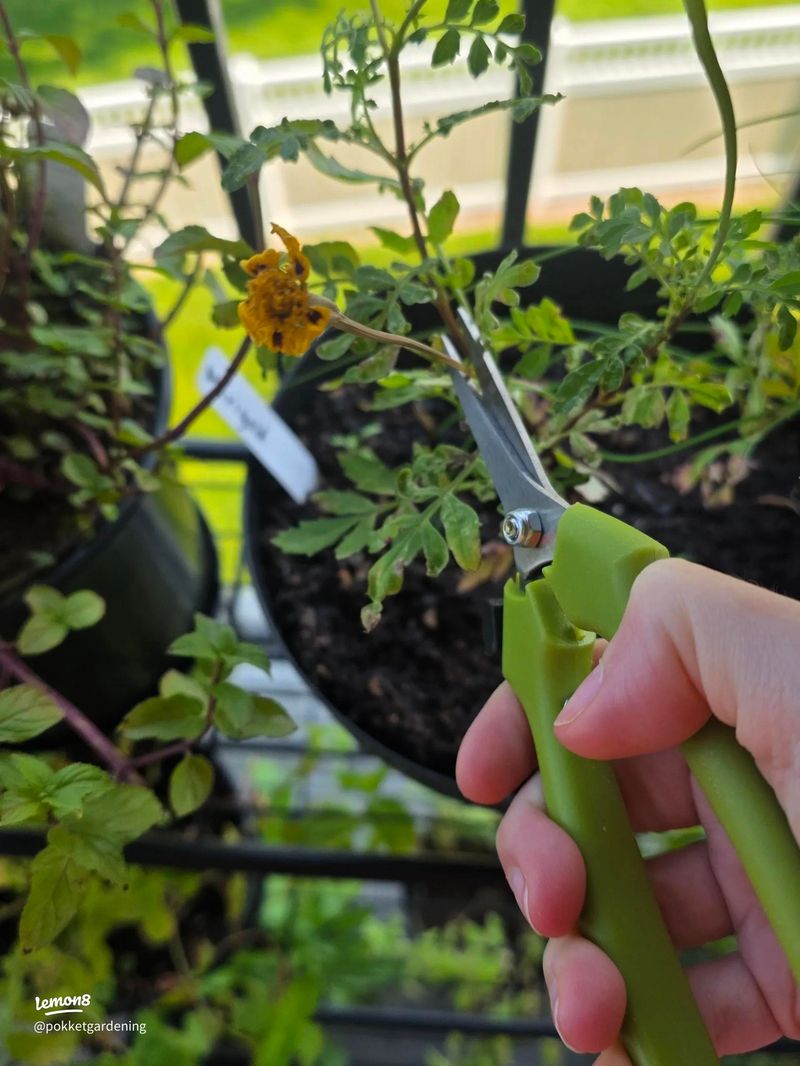
The practical routine comes down to two steps repeated through the season. Remove faded Tagetes flower heads and their stalks before seed formation, aiming for a check every five to seven days, and cut or pinch back to a healthy leaf or node each time. Minnesota Extension and Penn State Extension both support this as a way to favor continued flower production over seed development.
If the plant stays leggy or refuses to bloom after consistent deadheading, shift your attention to the growing conditions. Check light first, then fertilizer habits, then soil moisture and drainage. Look at stem shape to decide whether selective pinching is also needed, and examine the flowers themselves for signs of disease rather than assuming every damaged bloom is simply spent.
Deadheading is a real and useful habit, not a myth, but it works best as one piece of a larger picture. A marigold that gets full sun, reasonable moisture, and a steady hand with spent-flower removal has a genuine chance of blooming well into fall.