
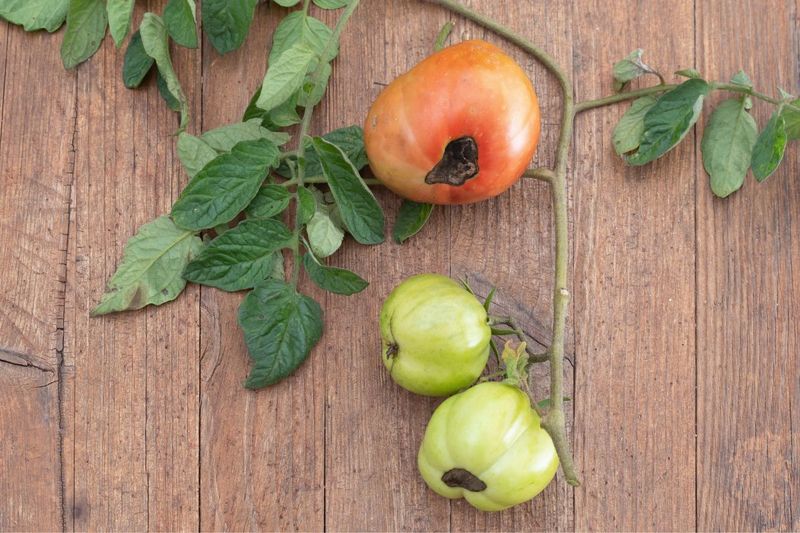
Finding a dark, sunken patch on the bottom of your tomatoes is one of the most discouraging moments in a home garden. Many gardeners assume the worst and start looking for a spray or a cure, but the problem is usually something you can influence yourself. That black spot is often blossom-end rot, a physiological disorder tied to how calcium reaches developing fruit, and uneven watering is one of the most common triggers. Understanding what is really happening puts you back in control before the rest of your crop is affected.
A blossom-end lesion often signals blossom-end rot
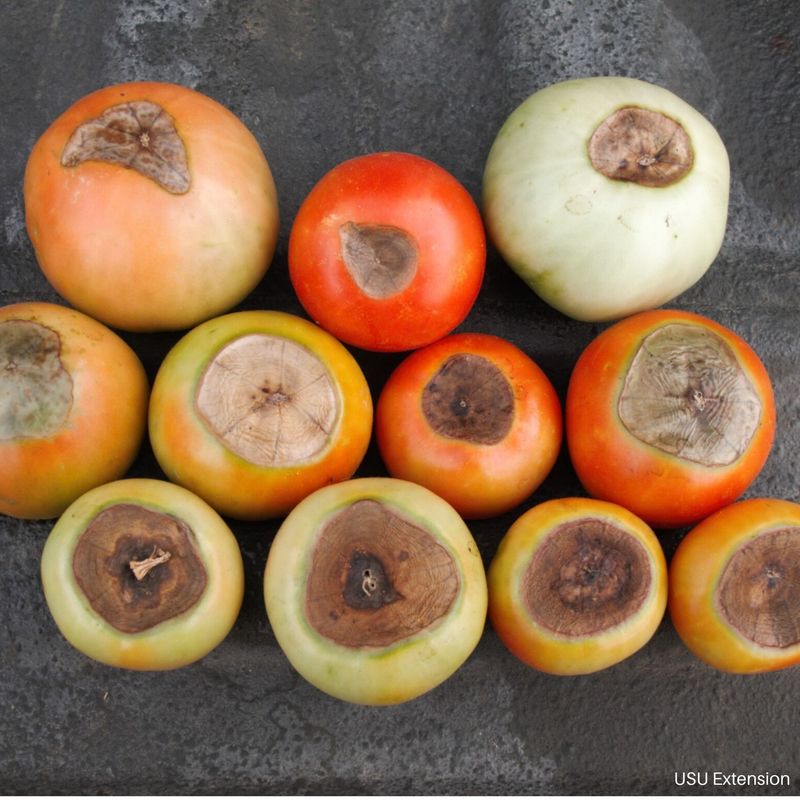
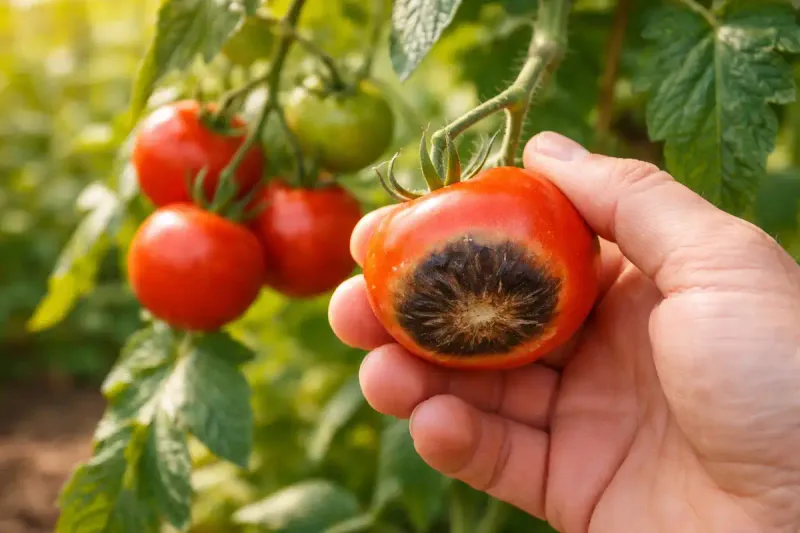
Spotting a pale, water-soaked mark at the very bottom of a tomato, the end opposite the stem, is the first sign most gardeners notice. That mark is on what plant scientists call the blossom end, the spot where the flower was attached before the fruit formed. Over a few days, University of Minnesota Extension notes that the spot typically enlarges into a flattened or sunken patch that turns brown and then a dark, leathery black.
This pattern strongly suggests blossom-end rot, commonly called BER. It is a physiological disorder, not an infectious disease caused by a fungus, bacterium, or virus that spreads from plant to plant. You cannot catch it on your hands and carry it to the next row, and spraying a fungicide will not stop it. Secondary fungi or bacteria sometimes move into the damaged tissue afterward, making the lesion look wetter, softer, or fuzzy, but those organisms are opportunists rather than the original cause.
BER often shows up first on early fruit or on tomatoes that are one-third to one-half grown. Utah State University Extension points out that large or elongated varieties tend to be more vulnerable than small-fruited types. Color alone is not enough to call it BER with certainty, so the location at the blossom end and the leathery texture together are the key clues to look for.
Calcium availability matters, but the mechanism is not fully settled
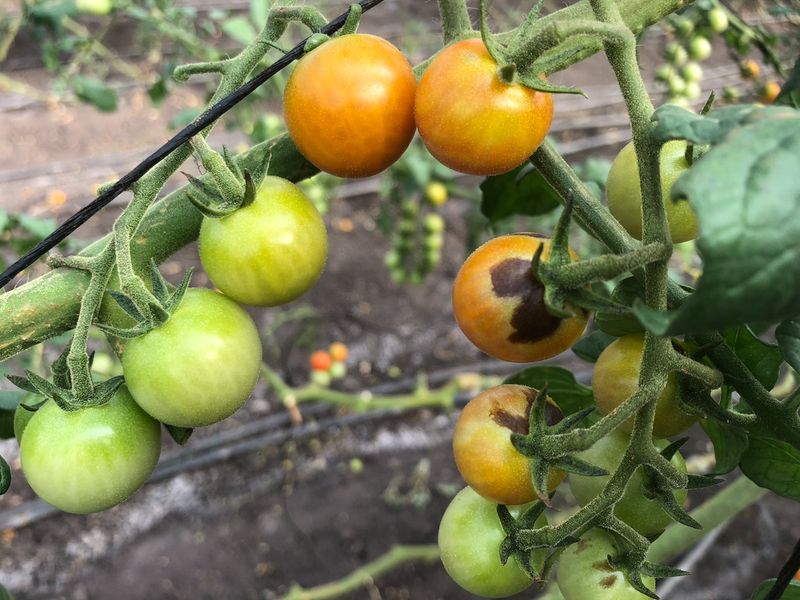
Calcium plays a structural role inside plant cells, and developing tomato fruit needs a steady supply of it as cells multiply rapidly. The catch is that calcium travels through the plant almost entirely with water moving upward through the stem. When that flow is interrupted or uneven, the fruit at the end of the line can end up short.
What makes BER tricky is that low calcium in the fruit does not automatically mean the soil is low in calcium. A plant can sit in calcium-rich soil and still deliver too little to its rapidly growing fruit during periods of stress. A peer-reviewed analysis in Scientia Horticulturae examined whether BER is primarily a calcium-deficiency problem or a broader stress response, and researchers continue to debate whether localized calcium shortfall in the fruit initiates the disorder or is partly a downstream result of it. A more recent review has similarly questioned whether disrupted calcium homeostasis, rather than simple deficiency, is the more accurate description of what happens inside the fruit.
For practical gardening purposes, the mechanistic debate changes very little about what you should do. Extension guidance consistently points to reducing plant stress and keeping the root zone stable as the most controllable ways to lower BER risk in developing and later fruit. Watering is central to that goal, but it is one part of a broader picture that also includes roots, soil conditions, heat, and fertilizer balance. Expecting a single fix to eliminate every case sets up disappointment.
Keep root-zone moisture relatively even
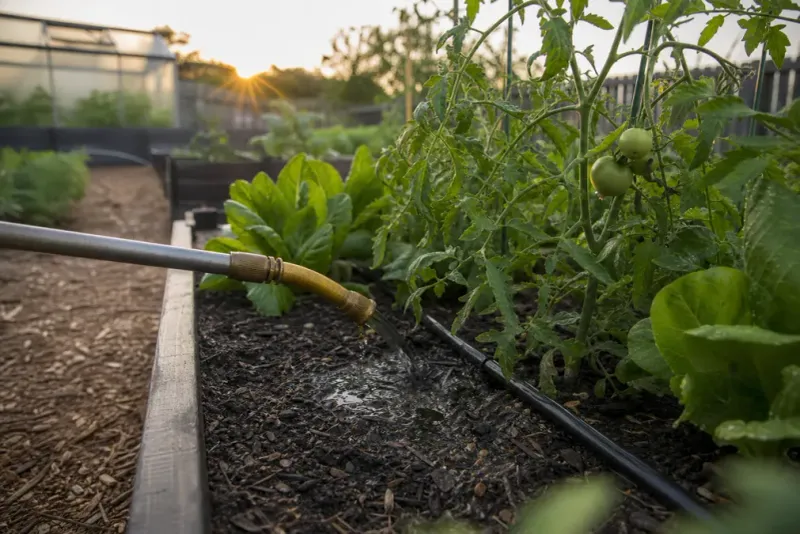
Moisture management is the most controllable factor most gardeners have, and keeping it relatively steady throughout fruit development can meaningfully reduce BER risk. The goal is not a rigid schedule but a consistent state in the root zone, wet enough to support calcium movement, dry enough that roots are not sitting in standing water.
Utah State University Extension recommends watering thoroughly so the entire root zone gets wet, then waiting until conditions call for irrigation again rather than sprinkling lightly and often. Shallow, frequent watering can encourage roots to stay near the surface, where they are more exposed to heat and drying. Thorough, less frequent watering tends to build a deeper, more resilient root system.
University of Georgia Extension guidance uses approximately one inch of water per week from rain and irrigation as a rough starting point, but that number shifts depending on your situation. Sandy soils drain quickly and may need more frequent attention. Heavy clay soils hold moisture longer but can become waterlogged if overwatered. Containers dry out much faster than garden beds and often need daily checks in hot weather.
Raised beds fall somewhere in between.
Check the soil a few inches down rather than relying on the surface or a calendar. If it feels dry at root depth, water. If it still feels moist, wait. Flooding a plant that has gone severely dry is not a cure; the goal is to restore appropriate moisture gradually without creating prolonged saturation that damages roots and worsens calcium uptake.
Mulch and careful cultivation support a steadier root zone
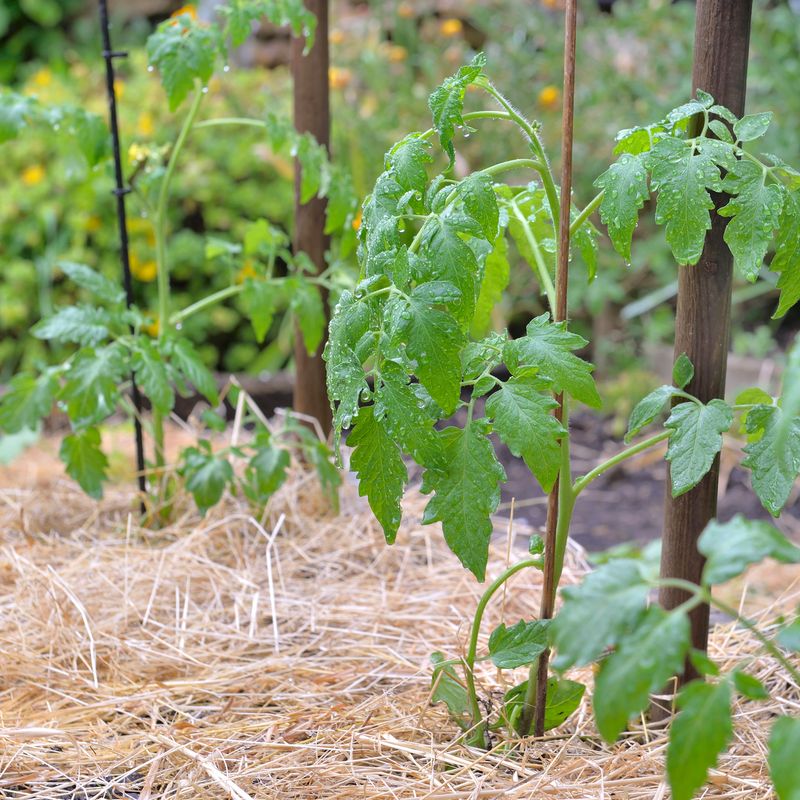
Mulch is one of the simplest tools for keeping root-zone moisture from swinging between extremes. A two-to-three inch layer of organic mulch, straw, shredded leaves, or wood chips slows evaporation from the soil surface and helps buffer the sharp wet-to-dry cycles that contribute to BER. Plastic mulch works similarly and is common in commercial tomato production for the same reason.
Whichever type you use, keep it pulled slightly back from the plant stem rather than piled up against it. Utah State University Extension advises leaving a small gap so moisture does not collect where the stem meets the soil, which can invite rot or disease unrelated to BER. A few inches of clearance is enough.
Cultivation habits matter just as much as what you put on the soil surface. Hoeing or digging near tomato plants can slice through shallow feeder roots without you realizing it. University of Minnesota Extension identifies root injury as a direct way to reduce a plant’s ability to take up water and calcium, which raises BER risk. If weeds are the concern, hand-pulling close to the stem or using mulch to suppress them is safer than deep cultivation.
Keeping the root system intact is a quiet but important part of protecting fruit that has not yet developed.
Remove damaged fruit and protect fruit that has not formed yet
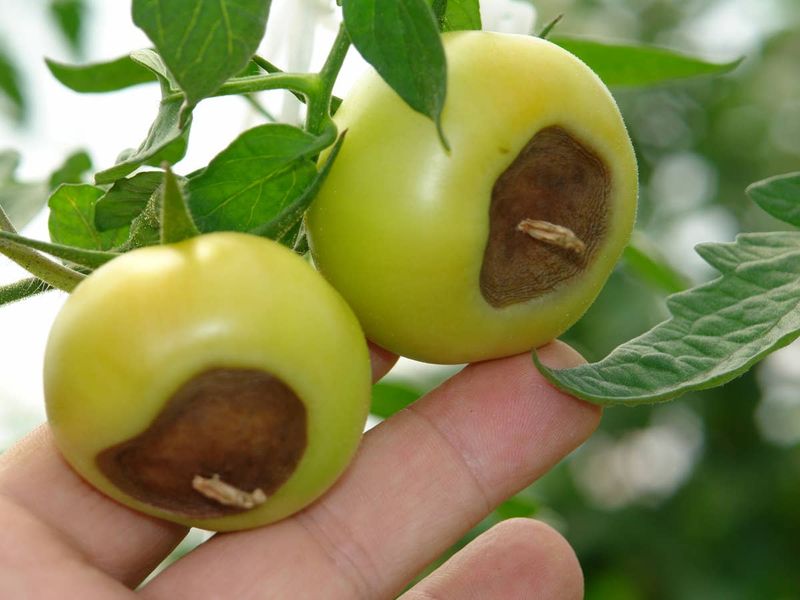
Once a lesion has formed on a tomato, nothing you do will reverse it. The damaged tissue is essentially dead, and the fruit will not develop normally from that point forward. Leaving it on the plant will not help, and it can become a site for secondary fungal or bacterial growth. University of Illinois Extension recommends removing affected fruit promptly, which may allow the plant to redirect its energy toward developing fruit that still has a chance.
After you pull the damaged tomatoes, shift your focus to the flowers and small fruit that have not yet shown symptoms. Stabilizing moisture, protecting roots, and avoiding the other stressors covered in this article can reduce the risk that the next round of fruit will follow the same path. University of Minnesota Extension notes that BER commonly strikes early or partly grown fruit, and that later fruit on the same plant can develop normally once growing conditions become more stable.
That outcome is realistic but not guaranteed. Weather, soil conditions, root health, and variety all continue to play a role throughout the season. Removing affected fruit and giving developing tomatoes the best possible conditions gives you the best odds, without promising that every tomato from that point on will be perfect. Consistent attention through the rest of the growing season matters more than any single intervention.
Check the other stresses that can raise BER risk
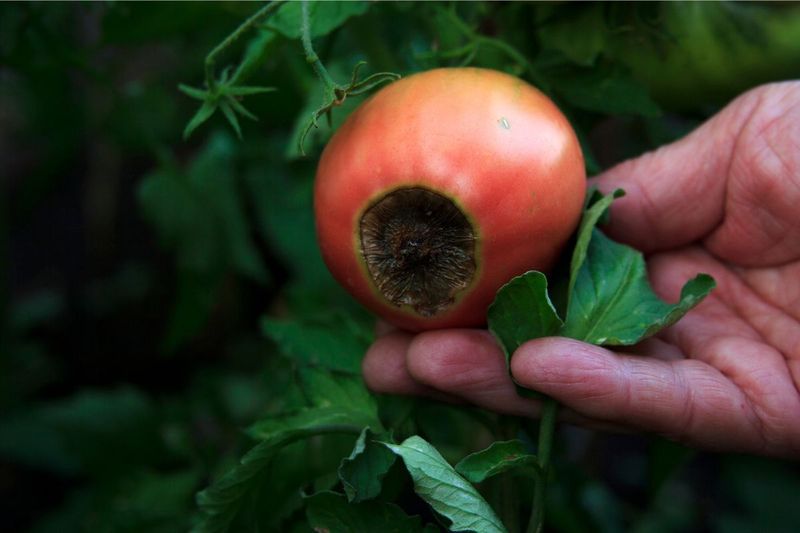
Watering gets most of the attention in BER discussions, but several other stressors can raise the risk independently or on top of uneven moisture. Poor drainage is a common one that gardeners overlook. Soil that stays waterlogged after rain suffocates roots, reducing their ability to absorb water and nutrients even when plenty of both are present. Compacted soil creates similar problems by limiting root growth and slowing drainage.
Heat is another factor. During hot spells, plants lose water rapidly through their leaves, and calcium movement to fruit can fall behind demand even when you are watering on schedule. High soil salinity, whether from road runoff, overfertilizing, or naturally salty soil, can also interfere with calcium uptake by competing for the same pathways roots use. Utah State University Extension lists drought, excessive moisture, root damage, compacted soil, salinity, and rapid growth alongside watering as documented contributors to BER.
Fertilizer choices matter too. Excessive nitrogen, especially from ammonium-based fertilizers, can push rapid leafy growth that outpaces calcium delivery to fruit. University of Minnesota Extension advises against overfertilizing and recommends using a soil test and product label to guide any nutrient additions. Variety selection also plays a role: large slicers and elongated types like Roma are generally more susceptible to BER, while cultivars such as Celebrity, Mountain Pride, and many cherry tomatoes tend to show fewer symptoms, though none are fully immune.
Think twice before reaching for calcium remedies
When gardeners see that black, sunken spot, the instinct is often to add calcium to the soil as fast as possible. Before buying anything, though, a soil test is the right first step. Lime and gypsum both supply calcium, but adding them to soil that already has adequate calcium will not solve a water-uptake problem, and it can shift pH or nutrient balance in ways that create new issues. University of Minnesota Extension is direct on this point: soil calcium is often already sufficient, and the problem lies in delivery, not supply.
Two popular home remedies deserve specific caution. Eggshells are often recommended as a calcium source, but UMN Extension’s review of common soil remedies notes that eggshells decompose far too slowly to supply useful calcium in time to affect a current season’s fruit. Epsom salts are an equally common suggestion, but they provide magnesium, not calcium. Applying excess magnesium can actually interfere with calcium uptake, and foliar applications can scorch foliage if misused.
Calcium sprays marketed for BER deserve a measured response rather than a blanket dismissal or an enthusiastic endorsement. Existing lesions cannot be reversed by any spray. Calcium does not move efficiently from leaves into fruit, which limits how much a foliar product can accomplish even when applied to healthy developing tomatoes. University of Georgia Extension describes some commercial calcium sprays as possible supplemental measures rather than primary solutions.
If you choose to try one, follow the product label carefully and treat it as a secondary step after addressing root-zone moisture and other contributing stressors.
Confirm the spot before calling it blossom-end rot
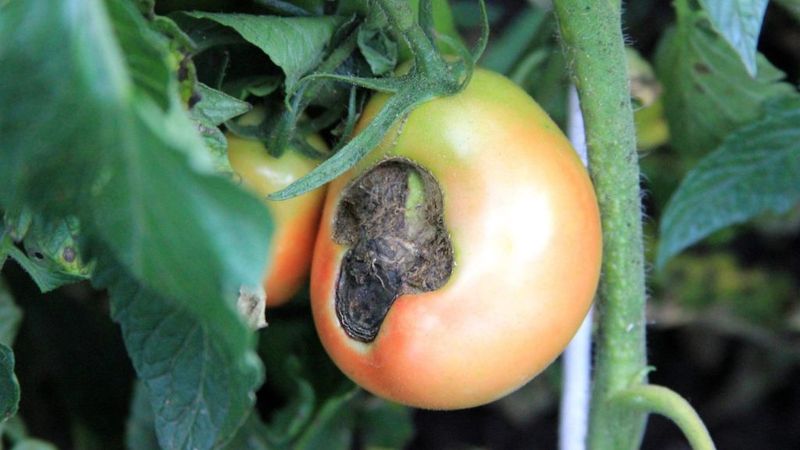
Before settling on a BER diagnosis, take a moment to confirm where the damage is located and what it looks like up close. BER is most reliably identified when the lesion starts at the blossom end, the very tip opposite the stem, and follows the characteristic progression from a pale, water-soaked mark to a sunken, leathery, brown-to-black patch. That specific location and texture together are the strongest clues.
Other tomato problems can produce dark or rotted spots that look alarming but follow different patterns. University of Minnesota Extension’s tomato fruit diagnosis tool points out that anthracnose typically causes sunken, circular spots that can appear on the sides or shoulders of ripe fruit, sometimes developing dark centers as the fungus sporulates. Alternaria fruit rot may produce lesions with a fuzzy or powdery black center and tends to occur at the stem end or on cracked fruit surfaces rather than the blossom end.
Insect feeding damage can also leave dark, soft, or irregular marks in locations that do not match the BER pattern. If the damage on your tomatoes is not centered on the blossom end, or if it appears on ripe fruit in scattered locations rather than following the sunken, leathery progression described above, reconsider the diagnosis before assuming BER. Getting the identification right matters because the corrective steps for an infectious disease or insect problem are different from what helps with BER. A correct diagnosis is the foundation of a useful response, and a wrong one wastes time and effort on the wrong fix.