
Squash plants that look fine in early summer can start wilting and yellowing by late July, and it’s easy to assume something went wrong all at once. The real picture is more regional and more manageable than a dramatic “second wave” suggests. Understanding what’s actually happening with squash bugs, and what’s happening separately with your marigolds and zinnias, puts you back in control before the season slips away.
Late July marks a regional scouting checkpoint
Squash bugs don’t follow a single national schedule. How many generations appear in your garden depends on where you live, what the summer has been like, and which cucurbit varieties you’re growing. University of Minnesota Extension guidance on squash bugs notes that Minnesota commonly sees one generation, with a partial second in some summers, while warmer regions like Maryland can support two full generations. Utah timing shifts depending on whether you’re in the north or south of the state.
None of that makes late July meaningless. Across many US temperate zones, it’s a reasonable moment to walk out to your cucurbit patch and look closely, because overwintered adults that hatched eggs in early summer may have produced a new set of nymphs by now, depending on local conditions. The key word is “may.” Late July is a checkpoint, not a biological deadline that applies equally from Minnesota to Georgia.
Drought does not appear in the research as a reliable trigger for a new squash-bug generation. It stresses plants, which can make damage more visible, but the insect’s life cycle is driven by temperature and season, not soil moisture. Flower care, including whether you deadhead your marigolds and zinnias, has no established connection to squash-bug population timing. Those are two separate management questions, and mixing them up leads to decisions that don’t help either problem.
Keep deadheading to extend summer flowers
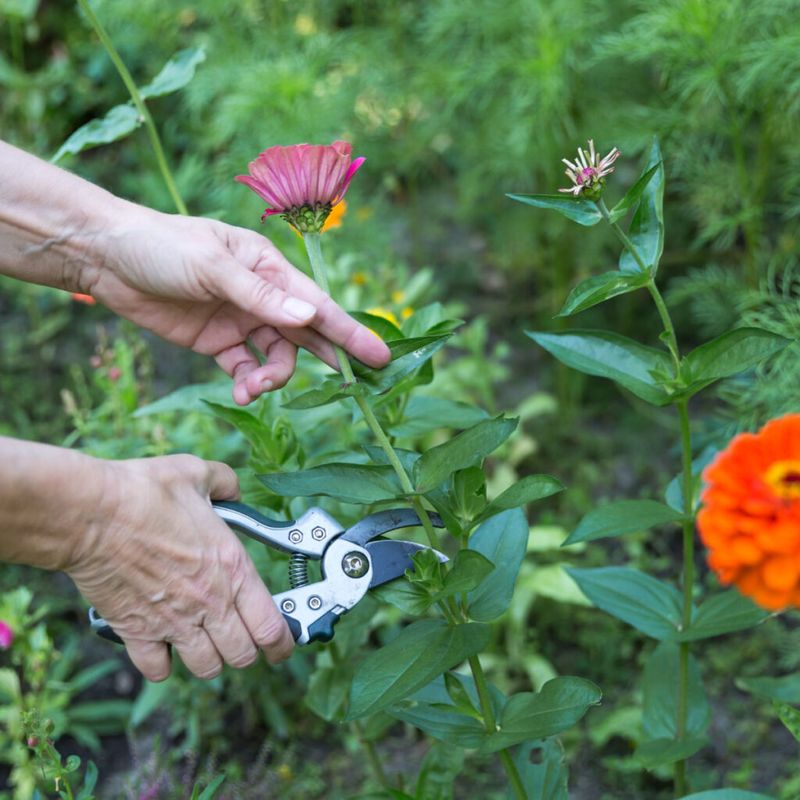
When a marigold or zinnia is allowed to form a mature seed head, the plant reads that as mission accomplished. Flower production typically slows or stops because the plant’s energy shifts toward ripening seed rather than opening new blooms. Removing spent flowers before that seed sets keeps the plant in a flowering mode, which is exactly what most gardeners want through the rest of summer.
University of Minnesota Extension marigold guidance confirms that Tagetes marigolds can bloom through frost under good conditions, and that deadheading supports that extended bloom by redirecting the plant away from seed production. Old or rotting flower heads should come off promptly regardless of seed plans, especially during humid stretches when decaying blooms can become a site for fungal problems.
Zinnias respond the same way. University of Illinois Extension zinnia care guidance recommends repeated deadheading or regular cutting of flowers to maintain continuous summer color. Harvesting zinnia stems for a vase accomplishes the same thing as deadheading because you’re removing the developing seed head before it matures. Penn State Extension’s overview of pruning herbaceous plants supports this principle broadly: removing spent flowers on annuals that are grown primarily for bloom generally encourages more flowering.
Letting every flower go to seed is a reliable way to shorten the season, not extend it.
Reserve a few healthy heads for seed
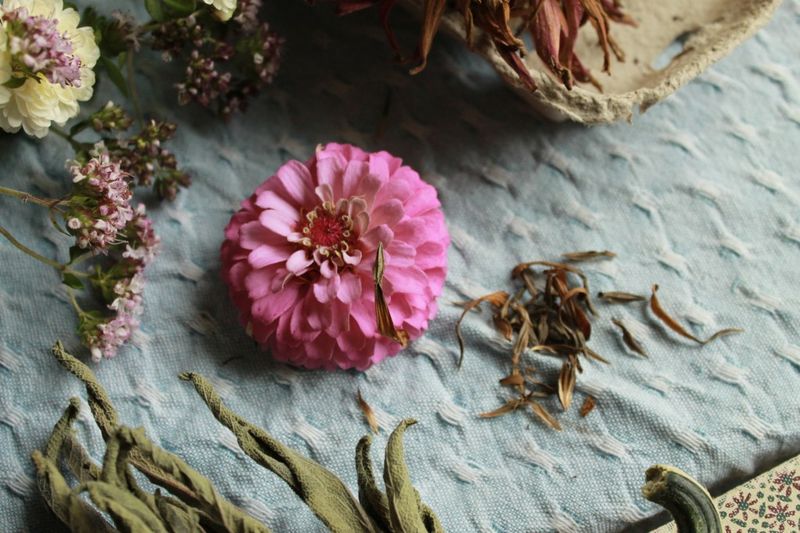
Saving seed from your favorite marigolds or zinnias doesn’t require stopping deadheading across the whole planting. A practical approach is to pick two or three healthy, well-formed flower heads on each plant, mark them so you remember not to cut them, and let those specific heads stay on the plant until they are fully dry, brown, and shriveled. Everything else keeps getting deadheaded for continued bloom.
Timing matters for seed quality. University of Illinois Extension seed-saving guidance emphasizes that harvesting too early produces immature seed that may not germinate reliably. Wait until the head is genuinely dry on the plant, not just faded in color. Once harvested, store seed in a cool, dry location in a labeled paper envelope or small container until planting time.
Realistic expectations matter here. Hybrid marigolds and hybrid zinnias may not reproduce the parent plant’s exact color, size, or flower form from saved seed. Open-pollinated zinnia varieties can also vary because insects carry pollen between plants, so crossing happens naturally. Beyond that, self-seeding in the garden is not guaranteed even when seed is mature.
Seed can be eaten by birds or insects, land where soil conditions prevent germination, or fail because of winter cold, disease, or competition from other plants. Saving seed deliberately and storing it yourself gives you more control than hoping dropped seed will volunteer on its own.
Drought changes care needs, not a reliable squash-bug timetable
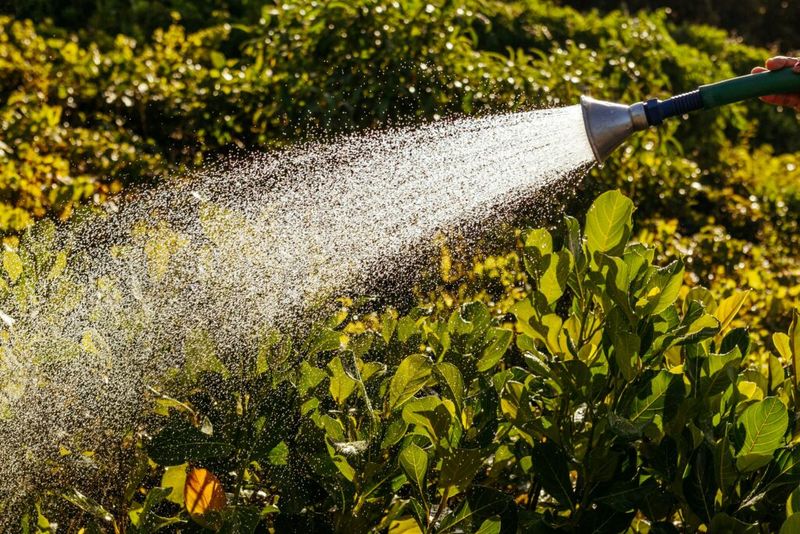
Two things are true about drought and your garden in late July, and they’re worth keeping separate. First, dry conditions do not appear in the research as a trigger for a new squash-bug generation. The insect’s reproductive timing is driven by temperature and season, not by whether your soil is dry. If squash bugs show up during a drought, the drought is a coincidence, not the cause.
Second, prolonged water stress genuinely does affect marigolds and zinnias. Both plants tolerate dryness better than many annuals, but “tolerant” doesn’t mean “fine without water.” Minnesota Extension’s marigold guidance notes that marigolds handle drought better than excess moisture, but that doesn’t mean intentional drought stress is a good strategy during active flowering. Extended dry periods can reduce vigor, cut bloom production, and weaken plants enough that they recover slowly even after watering resumes.
Rather than watering on a fixed calendar, check soil moisture a few inches down and watch the plants themselves for signs of stress. University of Minnesota Extension drought gardening guidance suggests roughly 1 inch of water per week as a flexible starting point, adjusted for soil type, mulch, heat, and any local watering restrictions. Water deeply at the root zone rather than lightly at the surface. For zinnias especially, Illinois Extension guidance on preventing powdery mildew in zinnias recommends avoiding routine wetting of foliage, so soaker hoses, drip irrigation, or careful hand watering near the base reduces disease risk.
Mulch around the root zone helps retain moisture but should stay clear of stems to prevent rot.
Scout squash leaves for eggs, nymphs, and adults
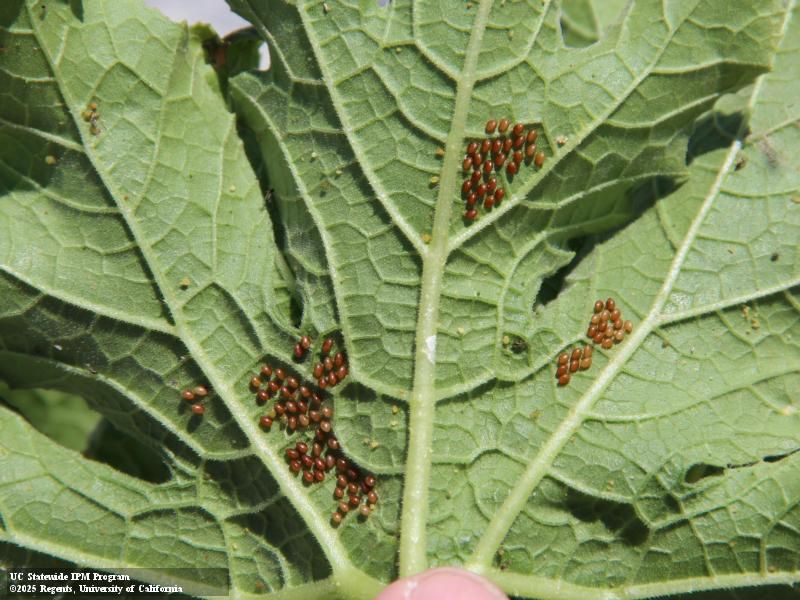
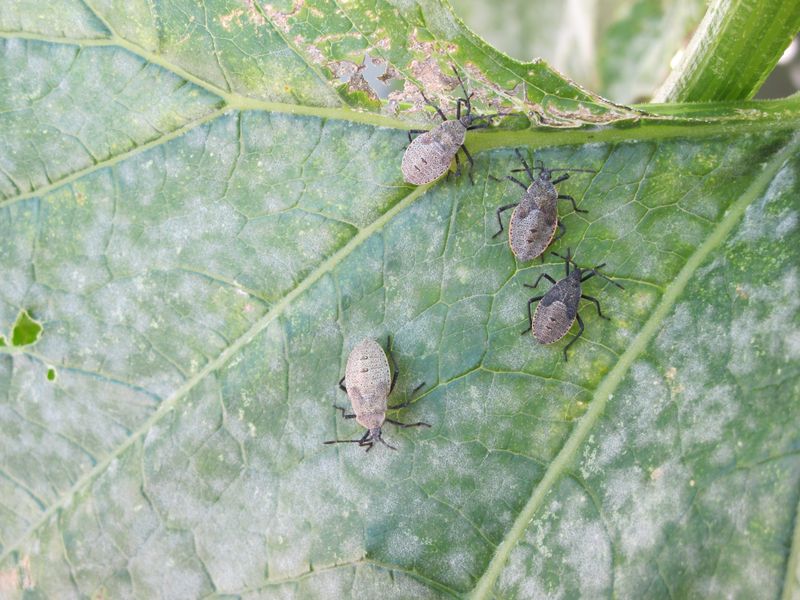
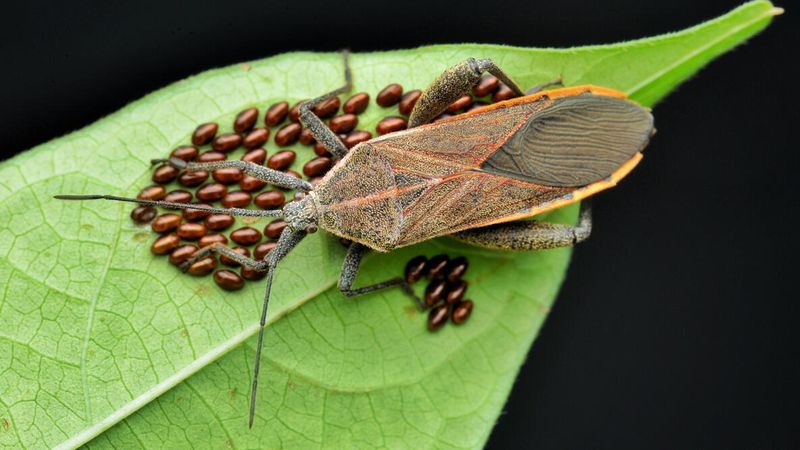
The most reliable way to know whether squash bugs are actually a problem in your garden is to go look for them directly. Start with the undersides of cucurbit leaves, particularly in the areas between the veins where adults prefer to lay eggs. Bronze or yellowish egg clusters arranged in neat rows are the clearest early sign. Young nymphs cluster together and are easier to spot as a group than individually.
Adults hide near stems and under foliage close to the ground, so check those sheltered spots as well.
University of Minnesota Extension squash bug scouting guidance recommends inspecting leaves carefully and removing egg masses by crushing them, scraping them off with a knife, cutting out the affected section of leaf, or pressing duct tape over the cluster and peeling it away. Hand-picking nymphs and adults into a container of soapy water is effective when populations are manageable. Getting to eggs and young nymphs early matters because control becomes harder as insects mature into adults.
Extension guidance sometimes references approximately one egg mass per plant as a rough decision point for treatment, but that figure comes from farm-scale thinking and shouldn’t be treated as a guaranteed threshold for home-garden crop loss. Your situation depends on plant size, how many cucurbits you’re growing, how much damage is already present, and how far into the season you are. Use the threshold as a rough prompt to act, not as a guarantee of what will happen if you wait. After harvest, remove and dispose of cucurbit vines and debris rather than leaving them in place, because Utah State University Extension guidance on protecting vegetables notes that squash bugs overwinter in sheltered plant residue.
Diagnose wilting before choosing a treatment
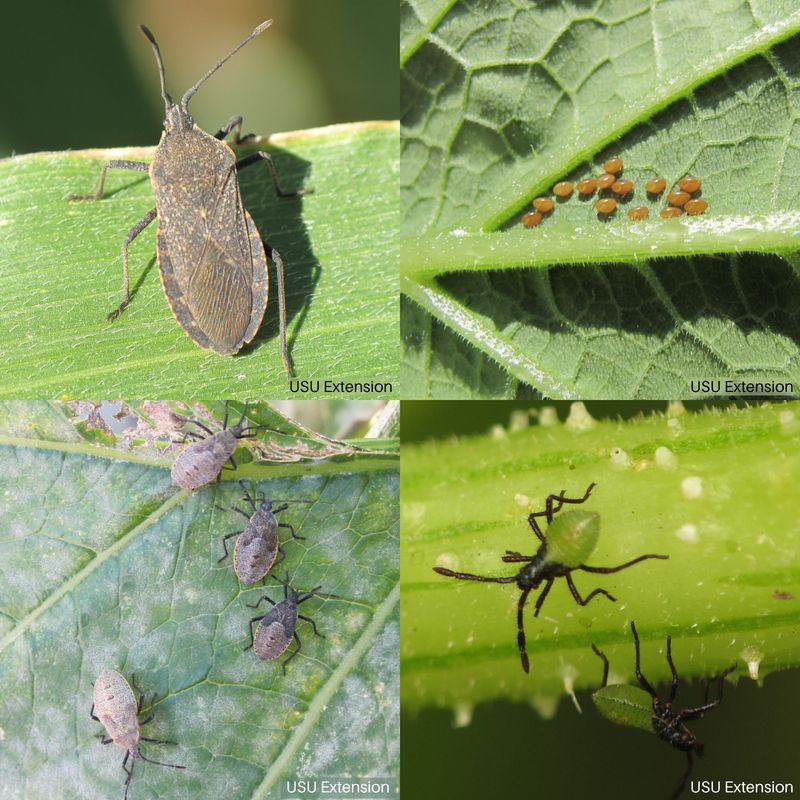
Wilting squash in late July has several possible explanations, and treating for squash bugs when a different problem is actually responsible wastes time and can make things worse. Three pest categories are commonly confused, and they require different responses.
Squash bugs suck sap from leaves and stems. The damage shows up as yellow or brown patches that spread as feeding continues, and the plant may wilt even when soil moisture is adequate. The diagnostic evidence is on the leaves: egg clusters, nymphs, or adult insects found during a close inspection. Squash vine borers are moth larvae that tunnel inside the main stem, cutting off water and nutrient flow.
The sign to look for there is a stem entry hole with greenish or yellowish frass nearby, often near the base of the plant. University of Minnesota Extension squash vine borer guidance describes the sudden, severe wilt that typically follows larval entry, which can look dramatic and is easily mistaken for other causes.
Cucumber beetles chew foliage and can transmit bacterial wilt, a disease that causes rapid, irreversible collapse of the plant. Drought stress and root problems can produce similar-looking decline without any pest involvement at all. Before choosing any treatment, look for direct evidence: eggs, nymphs, adults, entry holes, frass, or disease symptoms. If an insecticide is part of the plan, follow the product label exactly, target the undersides of leaves where insects are active, and avoid spraying open flowers or applying when pollinators are present.
Many labels allow or recommend applying later in the day when flowers have closed for the evening.
Treat flower care and squash-bug control as separate decisions
Pulling these two garden tasks apart makes both of them more manageable. For your marigolds and zinnias, the default is to keep deadheading through the rest of summer so the plants keep flowering. Mark a small number of healthy, fully developed heads on each plant if seed saving is the goal, and leave those specific heads to dry completely before harvesting. Water based on actual soil moisture and plant condition rather than the calendar, and keep water at the root zone to reduce foliar disease on zinnias.
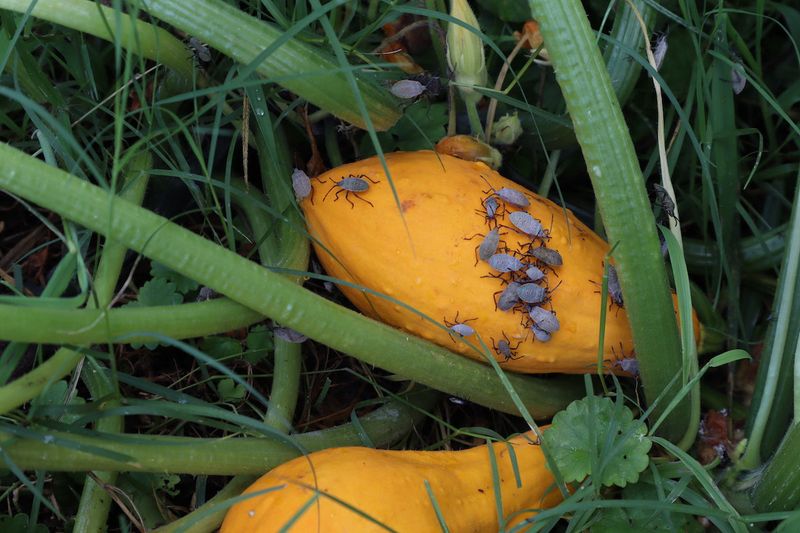
For squash plants, scout the leaves directly for eggs, nymphs, and adults rather than reacting to wilting alone. Remove egg masses and young nymphs by hand when you find them, and clean up cucurbit debris thoroughly after harvest since squash bugs overwinter in sheltered plant residue. Marigolds are not a reliable squash-bug repellent. Research evaluating French marigolds as border insectary plants shows effects that are pest-specific and inconsistent, so scouting and direct control remain necessary regardless of what’s planted nearby.
No reviewed evidence connects allowing marigolds or zinnias to set seed with any reduction in squash-bug populations.
Late July is a useful moment to assess both your flowers and your vegetable patch, but the assessment works best when it’s based on what you actually observe rather than on a fixed date or a promised pest cycle. What you find when you look closely is always more useful than what a calendar suggests you should expect.