
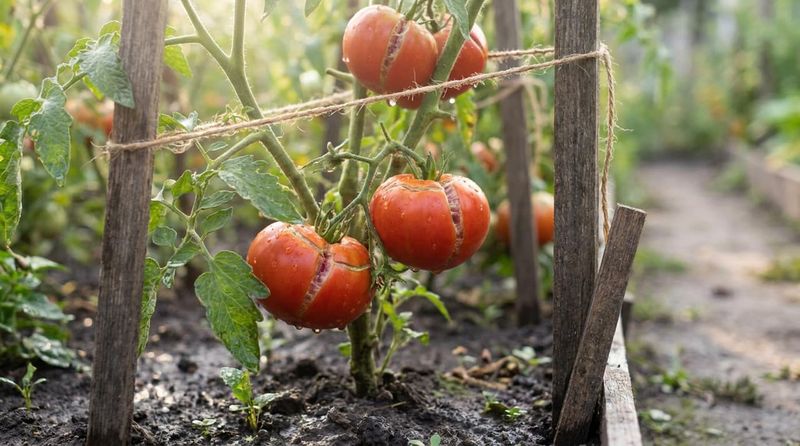
Few gardening moments sting quite like walking out to your garden and finding a beautiful, almost-ripe tomato split wide open. That crack often shows up right after you water, which makes it easy to blame yourself or your hose. But the real culprit is a sudden swing from dry soil to very wet soil, and that swing can come from irrigation or from a heavy summer rain. Understanding what actually drives the split puts you in a much better position to protect the rest of your crop.
A sudden moisture swing usually explains the split
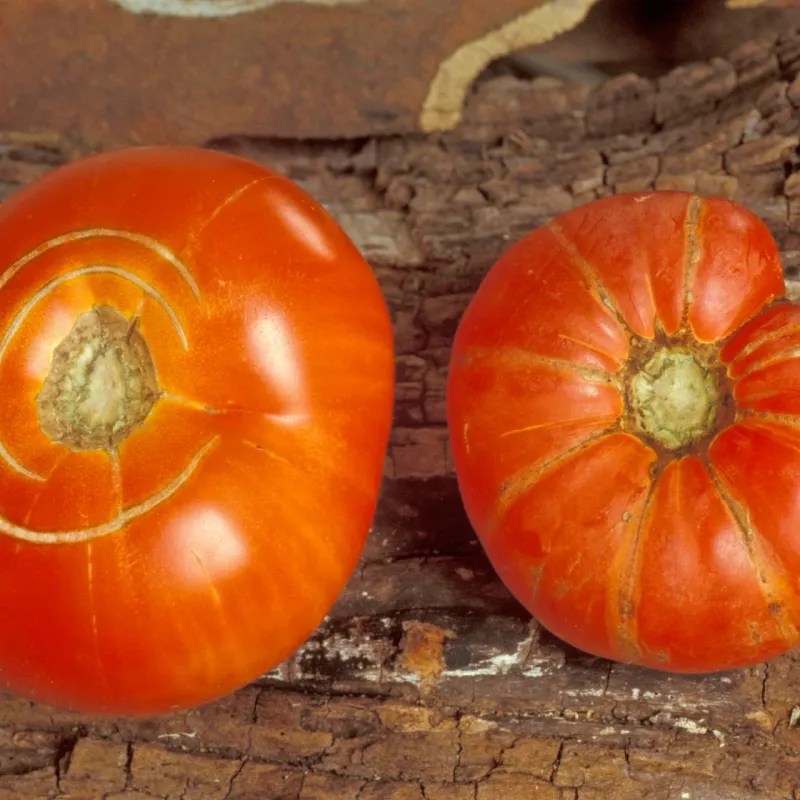
Tomato cracks tend to fall into two recognizable patterns. Radial cracks run outward from the stem end like spokes on a wheel, while concentric cracks form rings that circle the stem. University of Minnesota Extension identifies both types as common growth cracks, not automatic signs of an infectious disease.
When a split appears right after watering, it is tempting to treat that one watering event as the cause. The more accurate picture is that moisture stress likely built up over several days, and the fruit may have already been close to cracking before the hose came out. Penn State Extension notes that the visible split often reflects a stress pattern that developed gradually rather than a single irrigation event.
Rain deserves equal billing here. North Carolina Cooperative Extension points to heavy rain following a dry period as a documented and common cracking trigger, and UC IPM confirms that rapid moisture changes from any source can produce the same damaging dry-to-wet transition. Gardeners can work to manage soil moisture more evenly, but weather, cultivar genetics, and ripening stage mean that not every crack can be prevented.
Rapid fruit expansion puts stress on the skin
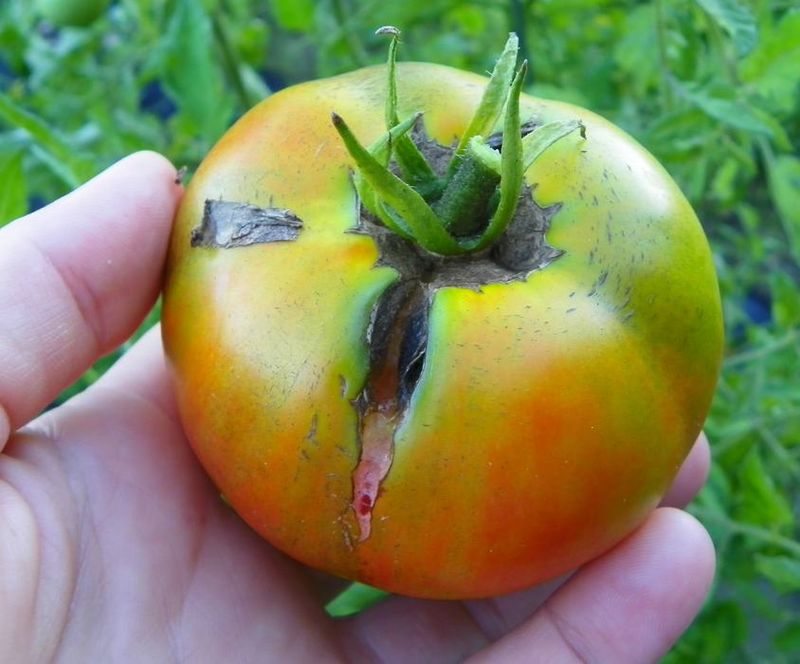
When a tomato plant draws up a large volume of water quickly, that water and dissolved nutrients move into the fruit. The interior can swell faster than the skin can accommodate, and the result is a crack. Research on tomato fruit cracking describes it as a rapid influx of water and solutes combined with a skin whose strength and elasticity may already be reduced during ripening.
That last point matters more than most gardeners realize. As a tomato ripens, its cuticle – the waxy outer layer – changes in ways that make it less flexible. Published research on cuticle properties during ripening shows that the skin becomes more vulnerable to splitting precisely when the fruit looks closest to harvest-ready.
Temperature, humidity, and direct sun exposure add to the equation. Hot weather accelerates both water movement and fruit growth, while environmental investigations into tomato cracking confirm that cultivar traits interact with those conditions in ways that vary from plant to plant. The inside-versus-skin explanation is a useful way to picture what happens, but the full process involves ripening chemistry, cuticle structure, temperature, and genetics working together – not a simple case of too much water in one sitting.
Check the root zone before setting a watering schedule
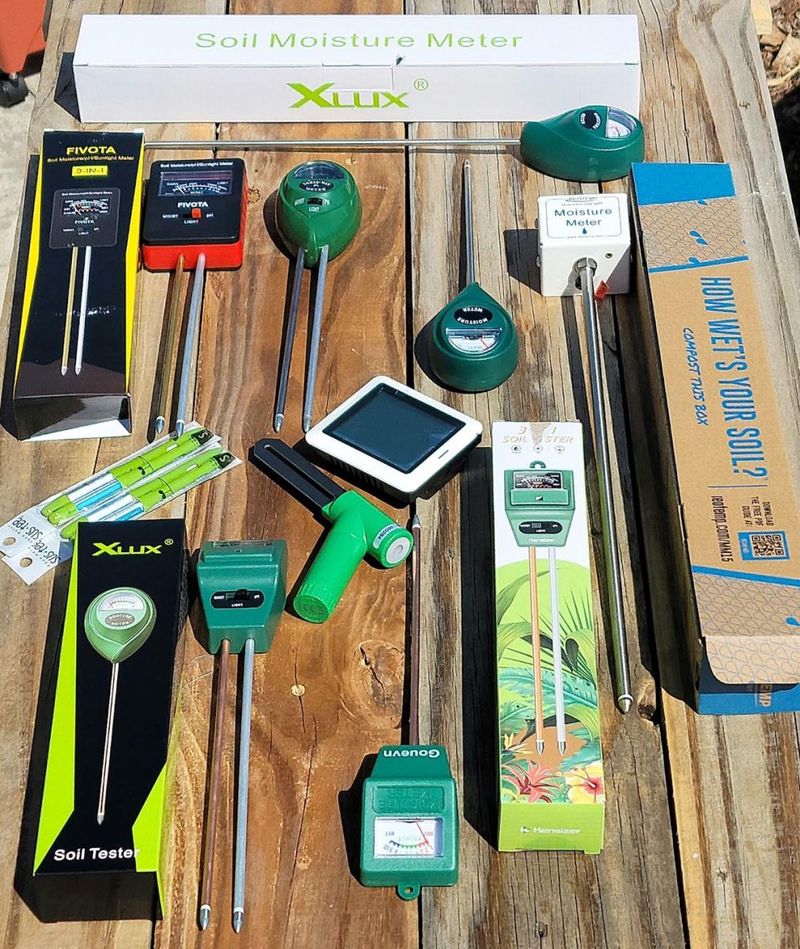
Surface soil can look bone-dry while the root zone several inches down still holds adequate moisture. Watering based only on what you see at the top can lead to overwatering that contributes to the very moisture swings that cause cracking. A better habit is to push a trowel or your finger three to four inches into the soil near the plant before deciding whether to water.
University of Minnesota Extension advises checking soil moisture below the surface and continuing to water if the soil is wet only an inch or two down, rather than relying on a fixed calendar or a quick glance at the surface. Thorough, deep watering that moistens the full root zone is more effective than repeated shallow sprinkles that wet only the top inch.
As a broad starting point, Utah State University Extension suggests tomatoes generally need roughly 1 to 2 inches of water per week, while University of Minnesota recommends approximately 1 inch per week as a home-garden baseline. Both figures shift considerably based on your soil type, local heat, rainfall, plant size, whether you use mulch, and whether plants grow in containers. Sandy soils and pots dry out faster and may need more frequent attention. Treat any weekly target as a flexible guide, not a rule.
Build a steadier rhythm with mulch and root-zone watering
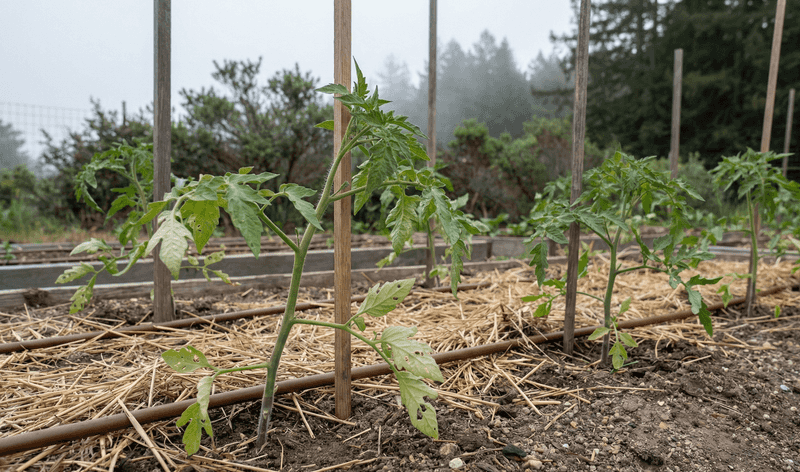
Mulch is one of the most practical tools for smoothing out the moisture swings that lead to cracking. A two-to-three inch layer of straw, wood chips, or shredded leaves placed around plants slows evaporation from the soil surface and helps buffer the root zone against rapid drying between waterings. University of Minnesota Extension recommends mulching tomatoes to help moderate soil moisture, and UC IPM lists mulch as a practical step for reducing cracking risk. Keep the mulch a few inches away from the main stem so air circulates at the base and moisture does not collect against the plant.
Where you deliver water also matters. Drip irrigation lines or soaker hoses run along the soil surface direct water to the root zone without repeatedly soaking foliage. University of Minnesota notes that avoiding overhead watering can reduce foliage disease risk because wet leaves and soil splash create conditions that favor fungal and bacterial problems. That said, overhead watering alone does not cause fruit cracking, and switching delivery methods will not stop every split on its own.
Utah State University Extension also reinforces consistent moisture management as a core practice during fruit development. The goal is to keep soil evenly moist – not saturated, and not left to dry out severely before the next watering. Mulch and root-zone delivery together can reduce the severity of moisture swings, though weather and cultivar traits may still produce cracks despite good technique.
Prepare for heavy rain after dry weather
Rain is not an innocent bystander when tomatoes crack. A heavy downpour following several dry days delivers exactly the kind of rapid dry-to-wet soil shift that stresses fruit, and it can happen faster than any irrigation system you control. University of Missouri Extension identifies heavy rain after drought stress as a leading real-world trigger for cracking and splitting in home gardens.
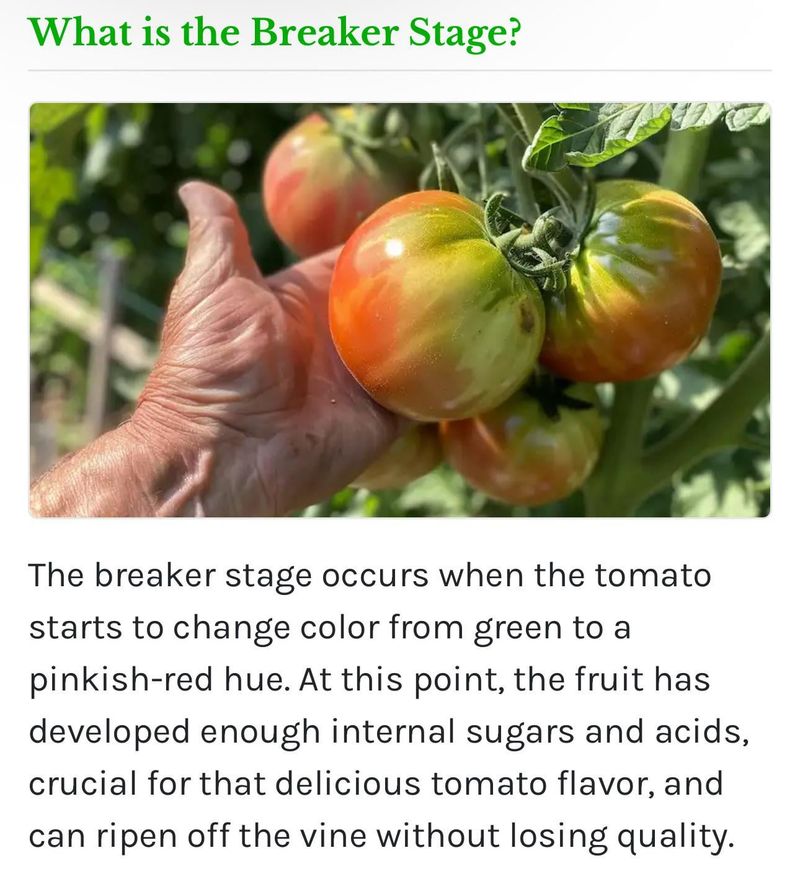
The most direct action available before a significant rain event is to harvest tomatoes that have already begun showing color. Once a tomato reaches the pink or “breaker” stage, it will ripen successfully indoors at room temperature. Oklahoma State University Extension recommends harvesting at the pink stage and ripening indoors as a way to sidestep weather-driven losses. Flavor develops well off the vine at this point, so you are not sacrificing quality by bringing fruit in early.
This strategy works best for fruit that is already showing color, not for green tomatoes that are weeks from maturity. North Carolina Cooperative Extension reinforces the same rain-preparedness approach, framing it as a targeted response to forecasted storms rather than a routine harvest practice. Keeping an eye on the forecast during dry stretches in midsummer gives you a window to act before the rain does the damage.
Separate growth cracks from other tomato disorders
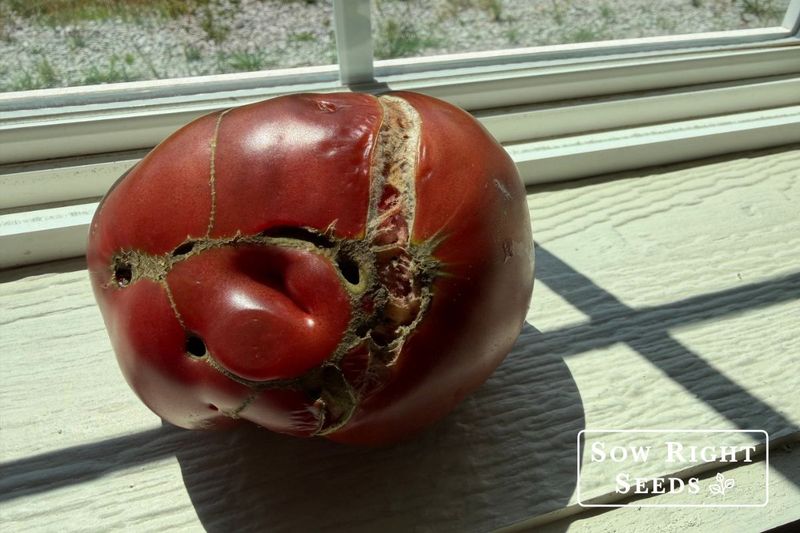
Not every blemish on a tomato is a growth crack, and knowing the difference helps you respond correctly. University of Minnesota Extension describes blossom-end rot as a dark, leathery, or sunken area that develops at the flower end of the fruit – the opposite end from the stem. It is associated with disrupted calcium movement and water management, and it is a completely separate disorder from the stem-end splits discussed here. Adding calcium products or extra fertilizer does not address ordinary growth cracks.
Catfacing produces misshapen, lumpy fruit with corky scarring, usually linked to disturbances during flower development or cool conditions at bloom time. Sunscald shows up as pale, papery, or bleached patches on fruit that has been exposed to intense direct sun, often after foliage is removed or lost. The University of Minnesota tomato diagnostic tool can help you match what you see to the right cause.
Growth cracks themselves are not automatically a sign of infection. Utah State University Extension notes that the opening a crack creates can allow fungi, bacteria, insects, and decay organisms to enter the fruit, particularly if the crack is deep or the weather is humid. Utah State also points out that monitoring cracked fruit closely and harvesting promptly gives you the best chance of using it before secondary damage sets in.
Handle cracked fruit carefully and skip it for canning
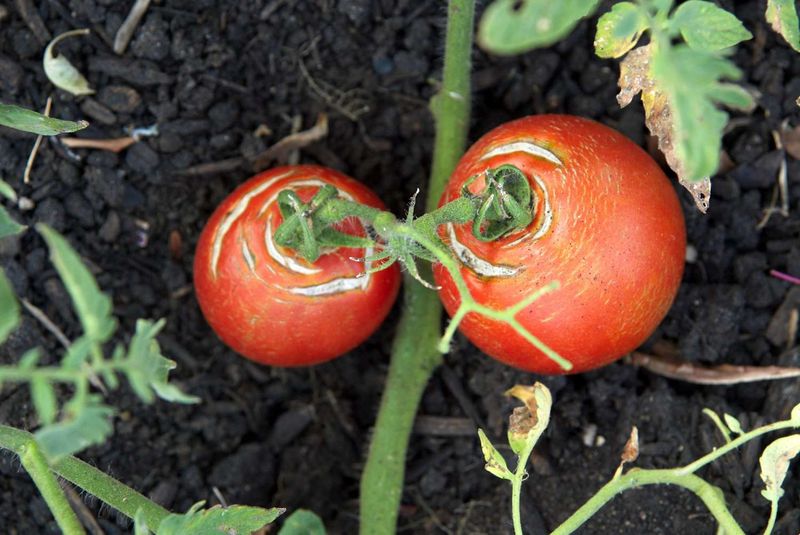
A tomato with a fresh, shallow crack and firm flesh throughout may still be usable. Cut away the damaged area generously, including any discolored tissue around the crack, and use what remains promptly if the rest of the fruit feels solid and smells right. University of Minnesota Extension advises evaluating cracked tomatoes individually rather than treating all cracked fruit the same way.
Soft spots, mold, or any sign of decay change the calculation entirely. USDA FSIS guidance on molds in food makes clear that soft, high-moisture produce like tomatoes should be discarded when mold is present, because the contamination can extend well beyond the visible surface. When in doubt, throw it out. USDA FSIS fresh-produce washing guidance applies to sound fruit before eating, not as a way to salvage something already decaying.
Home canning is a firm line. University of Minnesota Extension’s canning guidance explicitly advises against using damaged, cracked, overripe, or diseased tomatoes for home canning because compromised fruit may harbor pathogens or have unsuitable acidity levels that affect the safety of the final product. Fresh use only – and only when the remaining flesh is genuinely sound.
Use canopy care and cultivar choice to lower future risk

Healthy foliage does more than feed the plant. A full, intact canopy shades developing fruit from intense direct sun, which can moderate fruit temperature and reduce the stress that contributes to cracking. UC IPM notes that maintaining canopy cover can help reduce cracking risk, particularly for fruit that would otherwise sit exposed during peak afternoon heat. Avoid unnecessary heavy pruning during hot weather, since removing too much foliage at once can suddenly expose fruit that was previously shaded.
Pruning decisions affect more than airflow. Illinois Extension cautions that aggressive pruning or leaf removal during summer heat can increase sunscald and leave fruit more vulnerable to temperature swings. A light touch – removing only what is clearly diseased or damaged – tends to serve the plant better than dramatic cuts meant to improve air circulation.
When cracking recurs season after season despite good moisture management, variety selection is worth revisiting. Kansas State Research and Extension points out that crack-resistant varieties can reduce risk, though no variety performs perfectly under every growing condition. University of Minnesota Extension notes that large beefsteak types and many heirlooms are often more susceptible, while Utah State Extension confirms that susceptibility depends on cultivar and conditions together, not fruit size alone. Choosing a crack-resistant variety is a reasonable risk-reduction step – one piece of a broader strategy, not a guarantee of perfect fruit at the end of summer.