
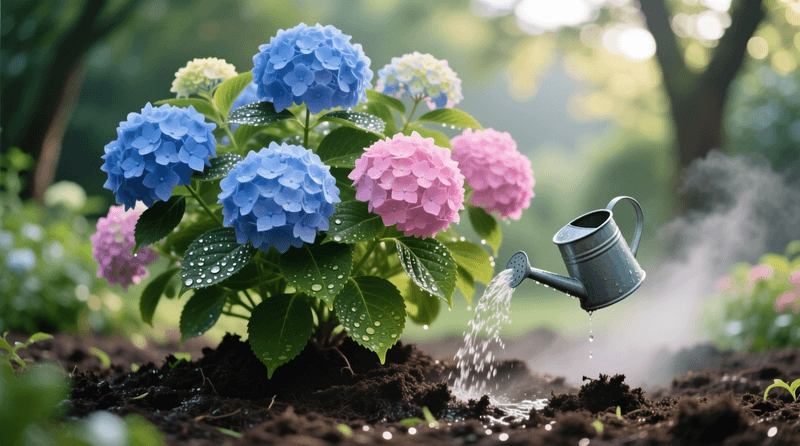
Watching your hydrangeas droop and brown during a summer heat wave is genuinely worrying, and the first instinct is almost always to grab the hose and water more. That instinct is not always wrong, but it can make things worse if the soil is already wet or draining poorly. What your hydrangeas really need is not a bigger dose of water on a fixed schedule – they need you to check what is actually happening at the root zone and respond to that.
Hydrangeas May Need More Water—But Not on Autopilot
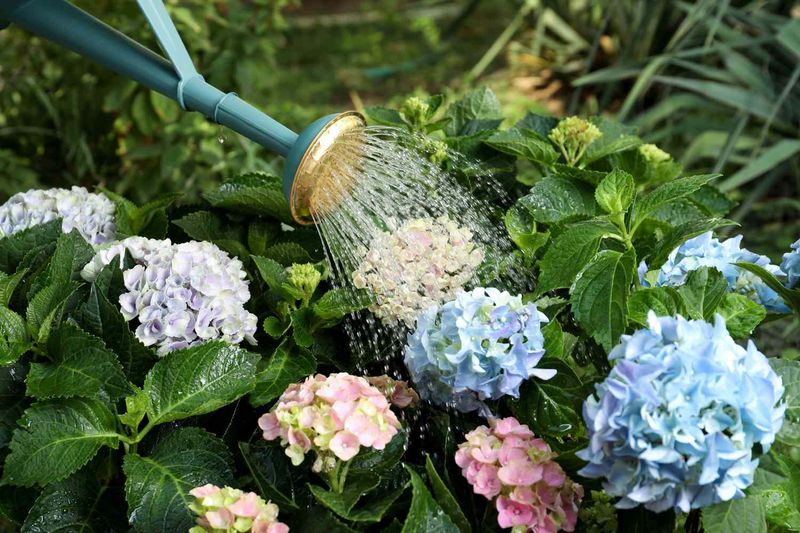
Hydrangeas are genuinely thirsty plants, and a stretch of hot, sunny, or windy weather can push them toward moisture stress faster than most shrubs. Oregon State University Extension describes hydrangeas as particularly vulnerable to heat and drought because their leaves lose water rapidly when temperatures climb and wind picks up. So yes, your plant may genuinely need more frequent irrigation during a heat wave.
The problem is not watering more often when conditions call for it. The problem is watering automatically, without checking whether the soil actually needs it. Turning on the hose every time a leaf droops, or sticking to a fixed every-other-day schedule regardless of rainfall or soil conditions, can leave the root zone saturated – and saturated soil can suffocate roots just as surely as dry soil can stress them.
A better approach treats watering as a diagnosis-and-response process rather than a calendar event. Check the soil at root depth, apply a slow and thorough soak when the root zone is drying out, then allow excess water to drain rather than giving repeated shallow sips or keeping the soil constantly wet. The rest of this article walks through how to do that check, how to apply water effectively, and how to adjust the plan for your specific plant and yard.
Check the Root Zone Before You Trust a Wilted Leaf
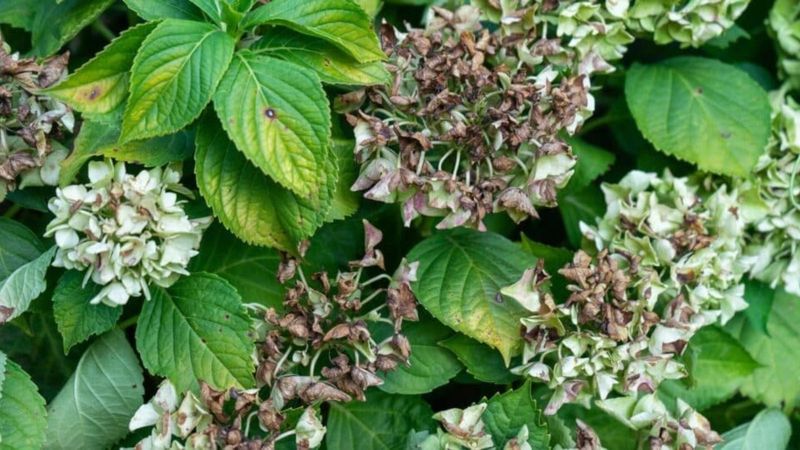
A drooping hydrangea is not always a thirsty hydrangea. Heat alone can cause temporary midday wilting even when the soil around the roots is still cool and moist – the plant simply cannot move water fast enough through its leaves to keep up with evaporation on a very hot afternoon. University of Illinois Extension notes that heat stress can produce visible wilt symptoms that are not directly caused by a lack of water in the soil.
Before reaching for the hose, press your finger or a small trowel several inches into the soil near the base of the shrub. For an established plant, University of Minnesota Extension recommends checking whether the upper 6 to 9 inches of root-zone soil are dry before watering. If the soil still feels moist and cool at that depth, hold off and check again in a few hours or the next morning.
Keep in mind that soil texture, sun exposure, wind, recent rainfall, and drainage all affect how quickly that zone dries. Sandy soil may be dry at root depth within a day; clay soil may still feel wet for several days after a soaking. If your hydrangea perks back up in the cooler evening hours without any additional water, heat-related temporary wilt is the likely explanation. Persistent wilt in soil that is already moist is a different signal – one worth investigating for root damage, poor drainage, or other causes rather than treating with more irrigation.
Water Slowly, Then Confirm the Soil Can Drain
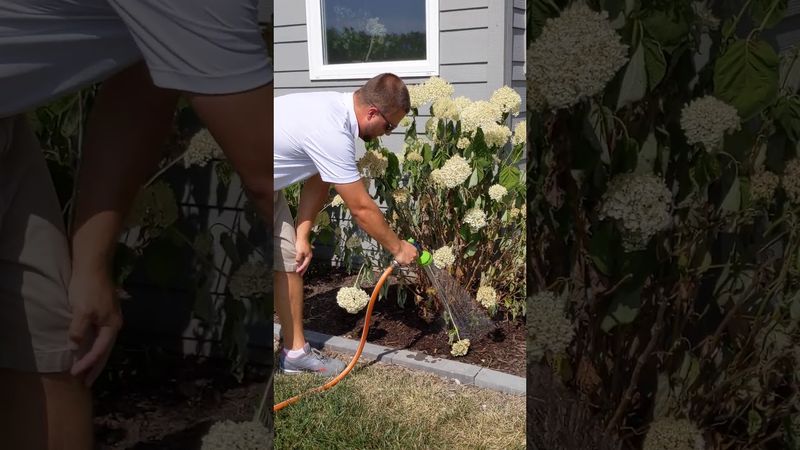
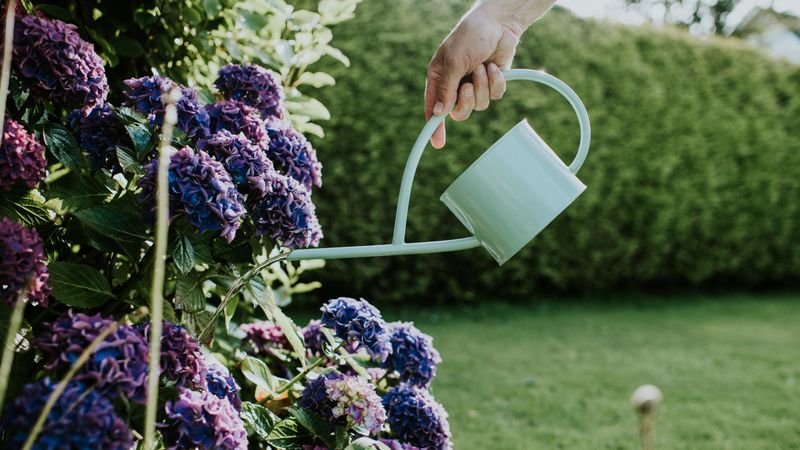
When the root zone is genuinely dry and your hydrangea needs water, how you apply it matters as much as how much you give. Water at the base of the plant rather than overhead, and apply it slowly enough that the soil can absorb it without a lot of runoff. Oregon State University Extension recommends a soaker hose or a watering bag for deep watering, noting that a quick surface sprinkling may not wet the soil deeply enough to reach the root zone where it counts.
Slow application can wet the root zone while reducing runoff – but only if the soil drains well. Compacted soil, heavy clay, or a low spot in the yard can stay saturated even with careful watering, and that lingering saturation reduces the oxygen available to roots. On sloped ground, water may shed off the surface before it has time to infiltrate. If you suspect drainage is a problem, check the soil again 30 minutes after watering and again the following morning; if it still feels soggy, drainage – not watering technique – may be the issue to address.
Morning is the best time to water when you have the choice. University of Minnesota Extension explains that morning watering gives the plant time to absorb moisture before peak afternoon heat and reduces losses to evaporation and wind. Base watering is preferred for efficiency and to limit how long foliage stays wet – not because sunlight causes water droplets to burn leaves, which Penn State Extension identifies as a gardening myth, but because prolonged leaf wetness can contribute to disease.
Let Soil, Sun, and Drainage Set the Interval
No single watering schedule fits every yard, and that is not a frustrating limitation – it is actually useful information. The right interval between waterings depends on a combination of factors that vary from one garden bed to the next, and understanding those factors helps you stop second-guessing the calendar.
Soil texture is one of the biggest variables. Sandy soil drains quickly and may dry out at root depth within a day or two during a heat wave, sometimes requiring smaller and more frequent applications. Clay or compacted soil holds water much longer, which reduces how often you need to water but increases the risk of poor drainage and root oxygen problems if you water on a fixed schedule regardless. University of Minnesota Extension notes that soil type and site conditions directly alter the appropriate watering interval.
Sloped ground adds another wrinkle, since water can run off a slope before it has time to soak in, making slow application especially important.
Sun exposure and wind also shift the equation significantly. A hydrangea planted in more sun than its cultivar can comfortably handle will need more frequent irrigation and may still develop scorched leaf margins during a heat wave – no amount of extra water fully compensates for a mismatch between the plant and its site. Oregon State University Extension points out that choosing a better-adapted cultivar or providing afternoon shade can be a more effective long-term approach than continually increasing water, though neither change guarantees the plant will thrive.
Use Mulch to Slow Drying, Not to Skip Checks
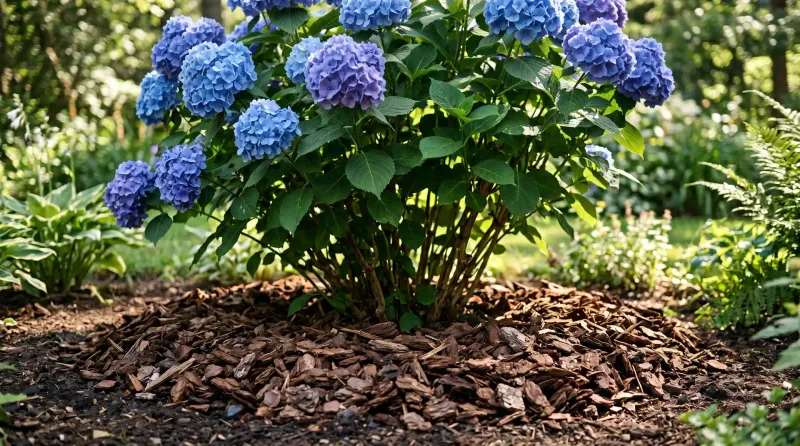
A layer of organic mulch around your hydrangea is one of the most practical things you can do to support a steadier watering rhythm during hot weather. University of Minnesota Extension recommends roughly 2 to 4 inches of organic mulch to slow evaporation from the soil surface and moderate soil temperature – both of which help the root zone stay moist longer between waterings.
Placement matters. Keep the mulch pulled back from the plant’s stems rather than piling it up against the base, which can trap moisture against the crown and create conditions for rot. A practical depth of about 3 inches, spread outward from the stem to the drip line, gives you good coverage without creating a problem at the base.
Mulch supports your watering decisions – it does not replace them. During an extended heat wave, even a well-mulched bed can dry out at root depth, and the only way to know for certain is to check. Think of mulch as a buffer that reduces how often the root zone dries out and gives you a little more flexibility in your schedule, not as a system that eliminates the need to monitor your plant.
Adjust the Plan for Hydrangea Type, Age, and Container
Not all hydrangeas respond to heat the same way, and treating them as one uniform category leads to watering decisions that fit none of them well. Bigleaf hydrangea (Hydrangea macrophylla) is especially sensitive – it has a high moisture demand and does not tolerate drought well. University of Georgia Cooperative Extension advises watering bigleaf hydrangea when it begins to wilt in the absence of rainfall and keeping it from becoming drought-stressed.
Smooth hydrangea (H. arborescens) and oakleaf hydrangea (H. quercifolia) generally handle summer heat somewhat better, and panicle hydrangea (H. paniculata) is among the more adaptable types, tolerating a wider range of conditions. That said, none of these should be thought of as drought-tolerant plants – they all benefit from consistent moisture monitoring during hot weather, especially in their first few years.
Newly planted hydrangeas need closer attention than established shrubs because their roots have not yet spread into the surrounding soil. University of Minnesota Extension notes that recent transplants are more vulnerable to drying out, and a rigid “deep and infrequent” rule does not apply to them the same way it does to a shrub that has been in the ground for several years.
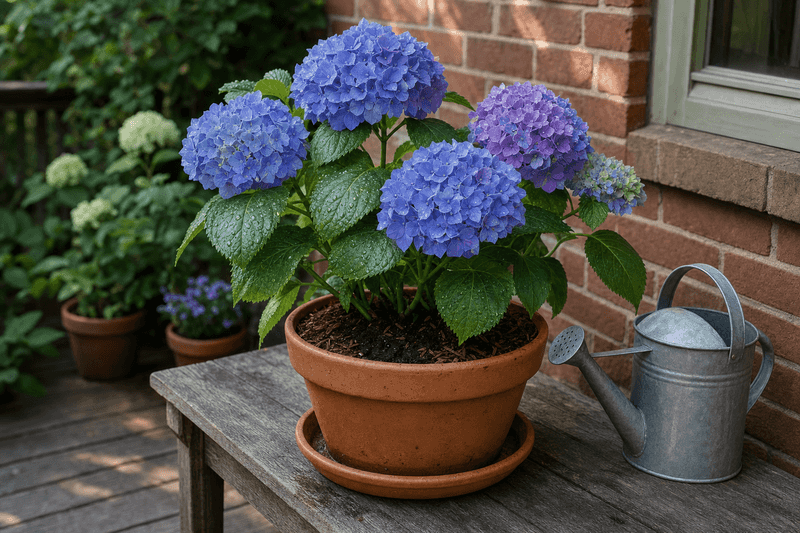
Containers are a separate situation entirely. Potted hydrangeas dry out much faster than in-ground plants and may need daily checks during hot, dry weather. University of Minnesota Extension guidance on container plants emphasizes that drainage holes are essential and that saucers should be emptied after watering so roots do not sit in standing water. Even with attentive watering, a container in direct afternoon sun during a heat wave can dry out faster than once a day, so check the soil – not the clock.
Treat Wet-Soil Wilt as a Warning Sign
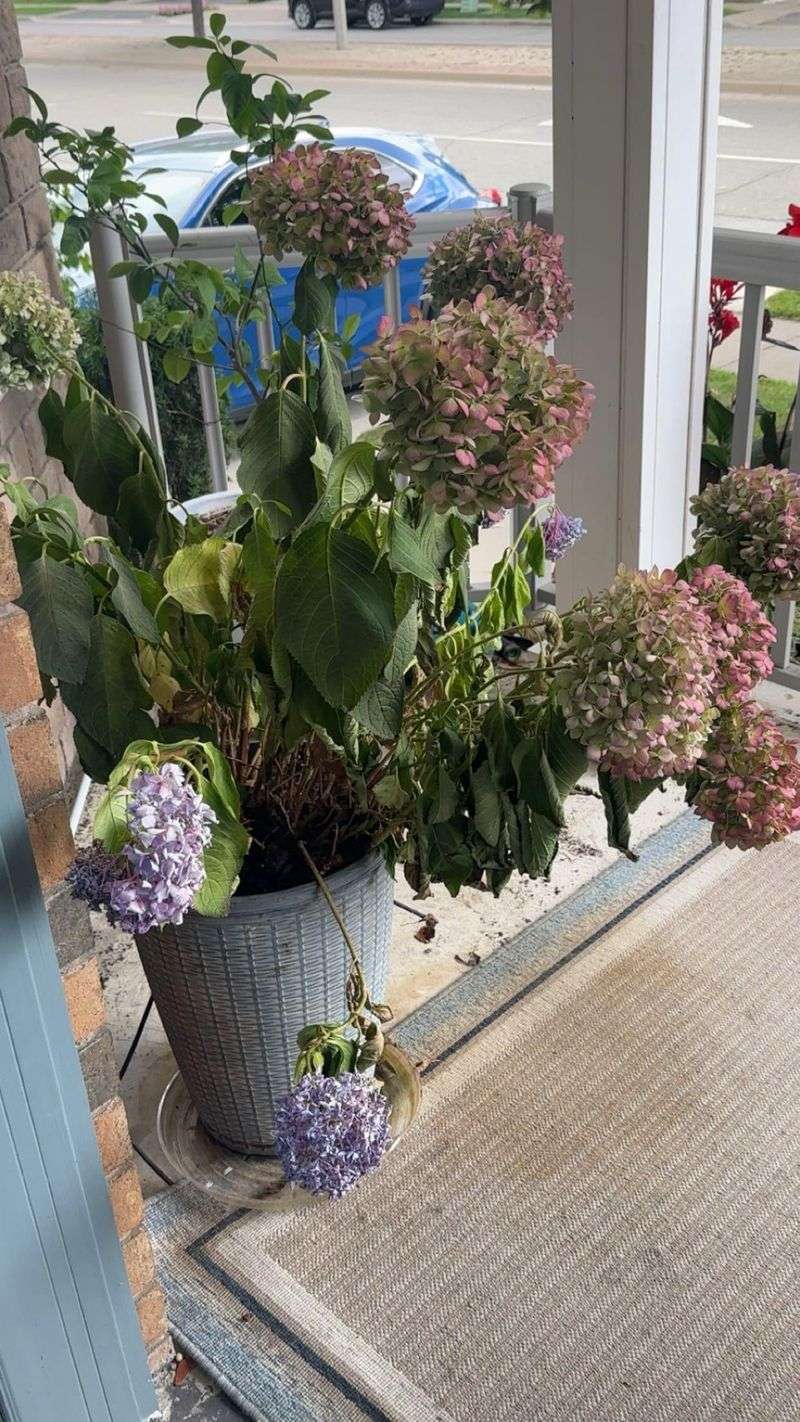
One of the more counterintuitive situations a gardener faces is a hydrangea that keeps wilting even after regular watering – or one that is drooping while the soil around it is already wet. Adding more water in that scenario is not the fix, and it may actively make things worse.
Wilt in moist or wet soil points toward a different set of problems. Root damage from previous overwatering, poor drainage that keeps the root zone saturated, excessive sun exposure beyond what the cultivar handles, or heat injury to the plant itself can all produce drooping leaves even when soil moisture is adequate. Oregon State University Extension’s general hydrangea care guidance identifies brown leaf edges and leaf drop as symptoms that can accompany overwatering – not just drought – particularly in poorly draining soil. Escalating irrigation in that situation risks compounding the root damage already underway.
Brown, crispy leaf margins and scorched tissue from heat injury are a different matter. Those leaves will not turn green again – the tissue is damaged and stays that way. However, that does not mean the plant cannot recover. Oregon State Extension notes that a hydrangea can produce new growth after a heat event, and that removing a few badly damaged leaves or flower heads is far less stressful to the plant than cutting back a large portion of the canopy during the heat.
Avoid heavy pruning and resist the urge to fertilize as a rescue response – both add stress to a plant that is already working hard just to survive the conditions.
Repeat the Moisture-Based Routine Through the Heat
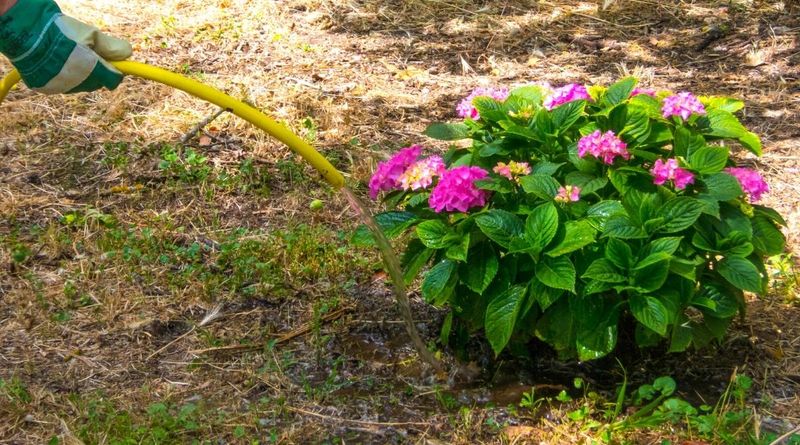
The routine that works through a heat wave is straightforward to repeat once you have done it a few times. Check the root zone before watering, apply water slowly at the base when the soil is drying out, confirm that excess water can drain, and reassess based on what you find – not based on the calendar or the look of the leaves alone. University of Minnesota Extension consistently frames established-shrub watering as a condition-based practice rather than a fixed schedule, and that framing holds especially well during summer heat.
Heat can genuinely increase how often your hydrangea needs water, and that is worth acknowledging. The goal is not to water less – it is to water in response to what is actually happening in the root zone, keeping moisture consistent without letting the soil stay saturated. If the plant remains stressed despite appropriate soil moisture, look beyond the watering routine: consider drainage, sun exposure, plant age, hydrangea type, container conditions, and whether the cultivar is a good match for the site.
A hydrangea that gets the right rhythm through the hottest weeks of summer tends to come through with far less damage than one that was either overwatered out of worry or underwatered because the signs were misread. Consistency and observation beat both extremes.