
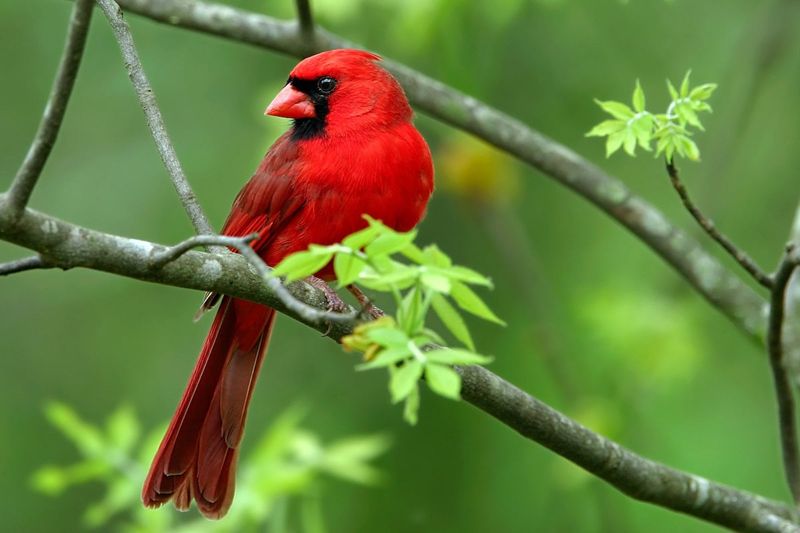
Few backyard moments stop a North Carolina homeowner in their tracks quite like a brilliant red cardinal dropping onto a fence post or garden shrub. That flash of crimson raises an immediate question: why here, why now, and does it mean something? The answer turns out to be part ecology, part personal meaning, and entirely worth understanding. Whether you spotted one bird once or you see cardinals every morning, knowing what is actually driving that behavior puts you in a much better position to enjoy the visit and support the bird.
A Single Cardinal Landing May Be Ordinary
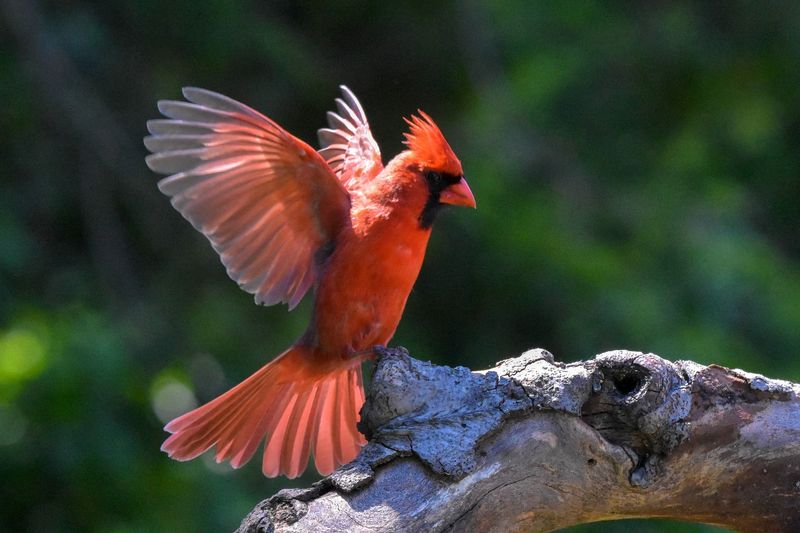
Northern Cardinals are year-round residents across North Carolina, which means spotting one in January is just as normal as seeing one in July. The species, known formally as Cardinalis cardinalis, does not migrate in the way that warblers or swallows do. Cornell Lab of Ornithology’s All About Birds profile confirms that the Northern Cardinal maintains a permanent, non-migratory presence throughout its eastern U.S. range, and North Carolina sits squarely within that range year-round.
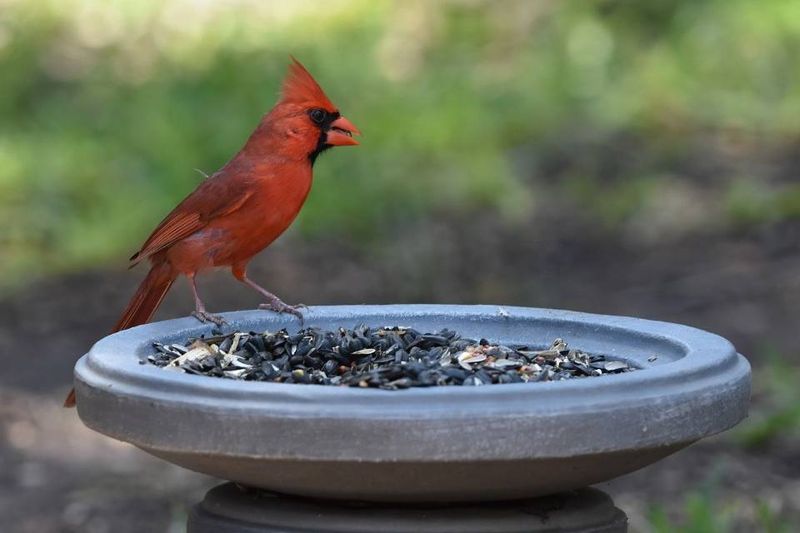
Cardinals thrive in the kinds of landscapes that North Carolina yards often provide. They favor woodland edges, dense shrubs, tangled hedgerows, and semi-open suburban gardens where low vegetation offers both cover and foraging opportunities. Audubon’s field guide entry on the Northern Cardinal notes that the species forages mainly on the ground and in low vegetation, eating seeds, berries, and insects, and readily visits feeders, especially for sunflower seeds.
One thing worth keeping in mind: the species being a year-round resident does not mean the same individual bird lives in your yard all year. Cardinals move around their home ranges in response to food availability, weather, and territorial pressure. A single landing on your porch railing or garden bed may reflect a brief stop during routine foraging rather than a lasting connection to your property.
That distinction matters before assigning any deeper meaning to a one-time visit. USGS range data for the Northern Cardinal shows continuous coverage across the state, confirming that the bird’s presence in your county is unremarkable from a population standpoint. A single landing is a data point, not a declaration. The bird may have found a seed, scanned for a threat, and moved on, using your yard the same way a traveler uses a rest stop.
What Repeated Visits Can—and Cannot—Tell You
Repeated cardinal activity in a yard tells a more interesting story than a single landing, though it still has limits. When a cardinal shows up at your feeder morning after morning, or when you regularly spot one foraging beneath a particular shrub, the reasonable conclusion is that your yard is offering something useful: accessible seeds, ripe berries, insects, water, dense cover, or proximity to a territory the bird is actively defending.
Thirty years of Project FeederWatch data consistently show that cardinals rank among the most frequently reported feeder birds in the eastern United States, which reflects just how well-adapted the species is to suburban and semi-rural yards. Regular visits suggest your yard has crossed some threshold of usefulness for the bird, but they do not tell you the whole story.
A few things repeated visits cannot confirm. First, you cannot assume that every cardinal you see is the same individual. Cardinals can look nearly identical within a sex, and unless you have a banded or unusually marked bird, you are likely watching several different birds over the course of a week. Second, regular feeder use does not mean the bird nests on your property, that it considers your yard a permanent home territory, or that the yard is broadly healthy for wildlife.
Cornell’s guidance on backyard seeds and shelter makes clear that birds respond to specific resources, not to the overall quality of a landscape.
A cardinal using one fruiting shrub or a single feeder stocked with sunflower seeds is telling you that one resource is available and accessible. University of Florida IFAS research on cardinal habitat use reinforces that the species responds to specific food and cover features rather than to a yard’s general condition. Treat regular visits as useful ecological feedback about what is working, while resisting the urge to read them as proof of a special bond between the bird and your property.
Personal Meaning Belongs to Belief, Not Bird Biology
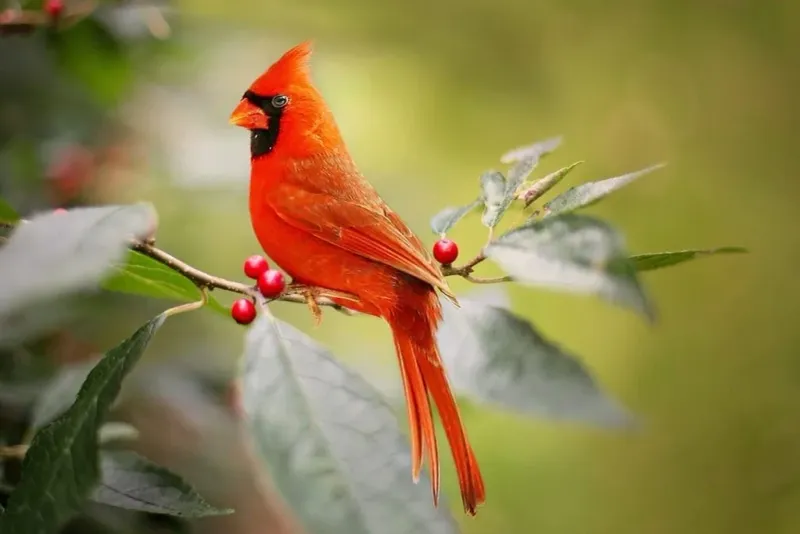
Cardinals hold a striking place in American cultural life, and it is easy to understand why. A bright red bird landing close enough to observe is the kind of moment that feels charged with significance, especially during periods of grief, transition, or longing. Some people interpret a cardinal sighting as a visit from a deceased loved one, a message of comfort, or a sign that someone is watching over them. Those interpretations are real and meaningful to the people who hold them, and they deserve to be treated with respect.
What they are not is ornithologically documented. Audubon’s overview of Northern Cardinal facts covers the bird’s biology, behavior, and ecology without any suggestion that cardinals function as messengers or supernatural signals. The bird does not appear at a particular moment because of a spiritual assignment; it appears because your yard offered food, cover, water, or a convenient perch along its foraging route.
That said, the comfort people draw from a cardinal encounter is genuinely worth acknowledging. Research covered in Psychology Today’s writing on grief and natural symbols suggests that people in mourning often find comfort in objects or animals that feel like connections to someone they have lost. A familiar, visually distinctive bird like a cardinal can become anchored to memory and emotion in ways that feel profound and personal.
Separately, research on birds and well-being has found that noticing and listening to birds can genuinely support mental health. The meaning you attach to a cardinal sighting belongs to your own experience, your family traditions, and whatever spiritual or cultural framework you bring to the moment. Ecology can explain the bird’s behavior; it cannot, and does not need to, govern what the encounter means to you.
Read the Behavior Before Assigning Meaning
Cardinal behavior varies considerably depending on the time of year, the sex of the bird, and what the bird is actually responding to. Treating every sighting as one undifferentiated phenomenon leads to misreading what the bird is communicating ecologically and sometimes to unnecessary worry or misplaced symbolism.
A quick fly-through or a single landing on your fence is the most common and least informative event. The bird passed through, found or did not find what it needed, and moved on. Regular feeder visits are a step up in ecological signal: the bird has learned that a specific location reliably provides food and returns on that basis. A pair of cardinals actively defending a section of dense shrubs during late spring or summer is doing something different again, behaving in ways consistent with nesting or territory defense rather than simple foraging.
All About Birds’ Northern Cardinal profile describes how males sing persistently from elevated perches to establish and maintain territory, a behavior with a clear ecological explanation.
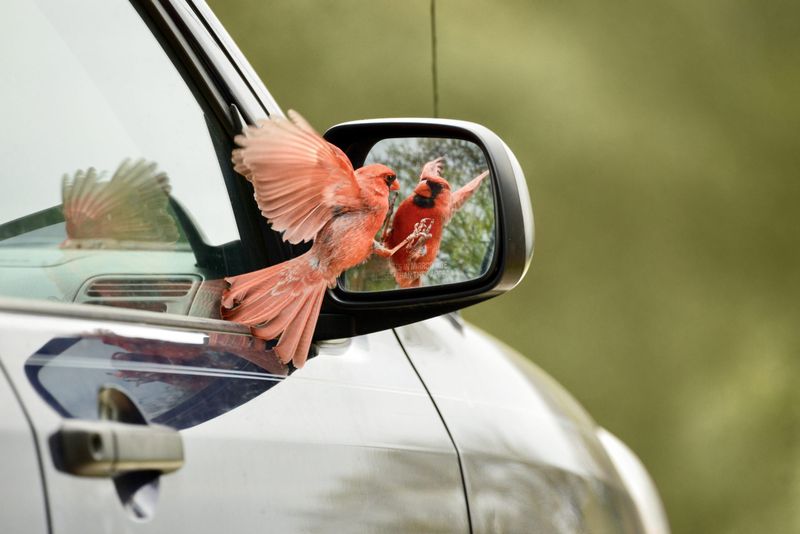
One of the most misunderstood cardinal behaviors is the repeated attack on a window, mirror, car side mirror, or any other reflective surface. Homeowners sometimes interpret this as an omen or a desperate attempt to get their attention. Ask Extension’s guidance on cardinal window behavior explains that the bird is responding to its own reflection as if it were a territorial rival. This is especially common during breeding season and can involve both males and females.
The bird is not distressed in a supernatural sense; it is doing exactly what its instincts tell it to do when it perceives an intruder that will not retreat.
For window attacks, the fix is practical rather than symbolic. Covering or altering the outside surface of the affected window, applying an exterior screen, or adding a dense pattern of markings can break up the reflection. Audubon’s guidance on preventing bird-window collisions notes that widely spaced decals are not reliably effective; the markings need to be close enough together to interrupt the mirror effect across the whole surface. Addressing the reflection removes the trigger and protects the bird from exhausting itself on a fight it cannot win.
Build Cardinal Habitat With North Carolina Plants
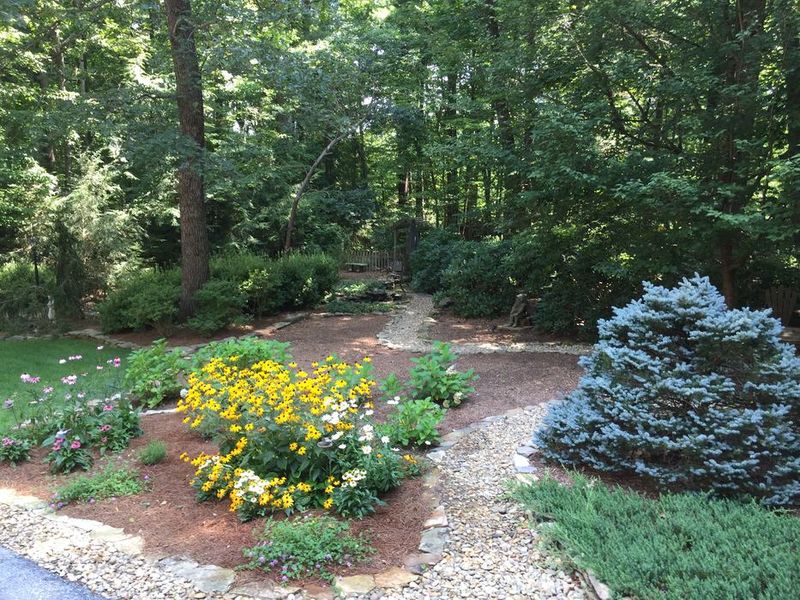
Once you understand that a cardinal visits because your yard offers something useful, the logical next step is making the yard offer more of what the bird actually needs. Native plants are the most durable foundation for that goal because they provide food, cover, and nesting structure while also supporting the insects that cardinals feed to their nestlings during the breeding season.
NC State Extension’s guide to managing backyards for birds identifies the Northern Cardinal as a shrub-associated species and recommends native food-producing plants as the backbone of bird-friendly yards. Specific plants listed by NC State and related Extension resources include serviceberry, native blueberries, black cherry, flowering dogwood, elderberry, American holly, wax myrtle, and eastern red cedar. Each of these provides fruits, seeds, or insect habitat that cardinals and many other native birds can use across multiple seasons.
Plant selection should match your region within North Carolina. NC State’s native plant landscaping guide and the Extension Gardener Handbook’s native plant chapter both emphasize that suitability varies among the mountains, Piedmont, and Coastal Plain. A plant thriving in Buncombe County may struggle in Brunswick County, so matching species to your specific region and soil conditions matters more than following a generic list.
A common misconception is worth clearing up here. Cardinal flower, Lobelia cardinalis, is not named for the Northern Cardinal bird and is not a plant that specifically attracts cardinals for food. NC State Extension’s Plant Toolbox resource notes that cardinal flower is named for the red color of its blooms. It can be a fine addition to a North Carolina garden where it benefits pollinators and hummingbirds, but it should not be promoted as a cardinal-specific attractant.
Beyond plant selection, Chatham County Extension’s gardening-with-birds guidance recommends retaining dense shrub layers, reducing excessive lawn coverage where practical, and leaving some seed heads standing through winter rather than cutting everything back in fall. These low-effort adjustments reduce your dependence on feeders and give the yard a structure that supports cardinals and other native birds across all seasons. And Pender County Extension’s bird-landscaping guide reinforces that layered plantings with shrubs at varying heights give birds the cover and foraging opportunities they need year-round.
Use Feeders and Birdbaths With Care
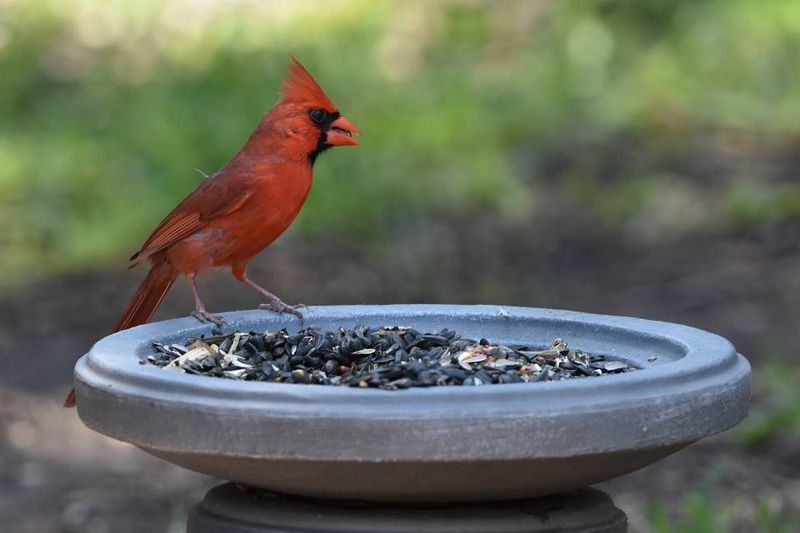
Sunflower seeds in a feeder or a shallow birdbath placed near shrubs can genuinely bring cardinals closer for observation, and there is nothing wrong with using those tools intentionally. Cornell’s Northern Cardinal profile confirms that the species readily visits feeders stocked with black-oil sunflower seeds, one of the most reliably attractive offerings for the species. Cardinals also appreciate a platform or tray feeder where they can land comfortably, since they are larger birds than finches or chickadees.
The responsibility that comes with a feeder or birdbath is maintenance. Concentrated feeding stations can become vectors for disease if food is allowed to spoil, hulls accumulate, or water grows stagnant. USGS guidance on feeder safety recommends cleaning feeders regularly, removing spilled or soiled food promptly, disinfecting with a 10% bleach solution, rinsing thoroughly, and allowing equipment to dry completely before refilling. The same standard applies to birdbaths, which should be emptied, scrubbed, and refilled every few days during warm weather.
Disease events involving feeder birds do occur. USGS reporting on songbird morbidity events and case investigations into feeder-associated bird deaths illustrate that poorly maintained stations can contribute to transmission. If you notice sick or dead birds near your feeder, the right response is to stop feeding temporarily, clean and disinfect all equipment, and contact your state wildlife agency or local wildlife authority for current guidance on whether and when to resume.
Habitat planting and natural food sources, the native shrubs and seed-producing plants covered in the previous section, can reduce how much you rely on a feeder while also avoiding the concentration risks that come with a busy station. That is not a guarantee of zero disease risk from natural foraging, but it does spread birds across a larger area and reduces the crowding that concentrated feeders can create. NC State Extension’s backyard bird management resource presents habitat as a complement to, or partial replacement for, feeders rather than a competing approach.
Let the Ecology Explain the Visit—and the Moment Mean What It Means to You
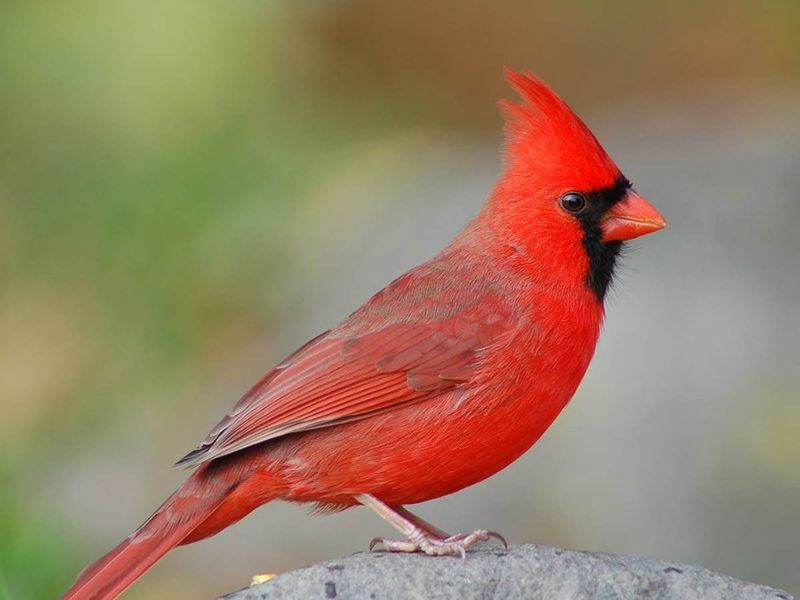
Ecology and personal meaning do not have to compete with each other. A cardinal landing in your yard almost certainly arrived because something there, a seed, a shrub, a birdbath, a patch of cover, or a nearby territory, made the stop worthwhile. That is the explanation the bird’s behavior supports, and it is a satisfying one in its own right.
At the same time, if the moment carried emotional weight for you, that experience is yours. Research connecting bird observation to improved well-being suggests that pausing to notice a bird can genuinely shift how you feel, regardless of any supernatural interpretation. The two things, a bird responding to habitat and a person finding the moment meaningful, can coexist without either canceling the other out.
If you want to encourage more visits, the practical path runs through native plant choices suited to your part of North Carolina, maintained feeders and birdbaths, and a yard structure that gives cardinals the dense shrub cover they prefer. If you find an injured cardinal, do not attempt to capture it, keep it indoors, or care for it yourself over an extended period. The Migratory Bird Treaty Act protects Northern Cardinals from unauthorized take and possession; contact a licensed wildlife rehabilitator in your area for guidance on how to help safely.
Ecology tells you why the bird showed up. What the visit means to you is a question only you can answer, and that is exactly as it should be.