
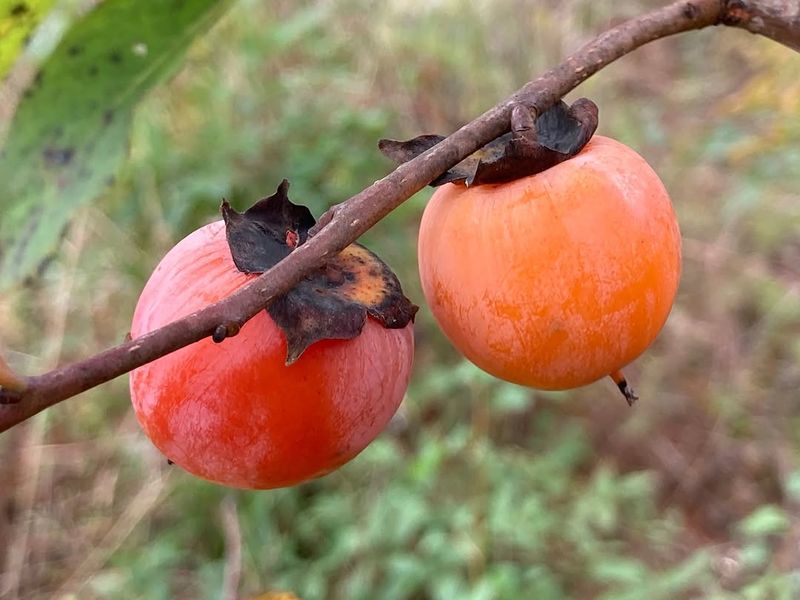
Two fruit trees have grown wild across North Carolina for centuries, feeding wildlife and quietly ripening each fall, yet most homeowners walk right past them at the nursery. Pawpaw and American persimmon are genuine NC natives, and both can offer real fruit, strong wildlife value, and lower routine care than many popular orchard trees when planted in the right spot. Neither one is a magic solution, and not every yard can fit them, but understanding what each tree actually needs makes the choice a lot clearer.
A promising native option, not a tree for every yard
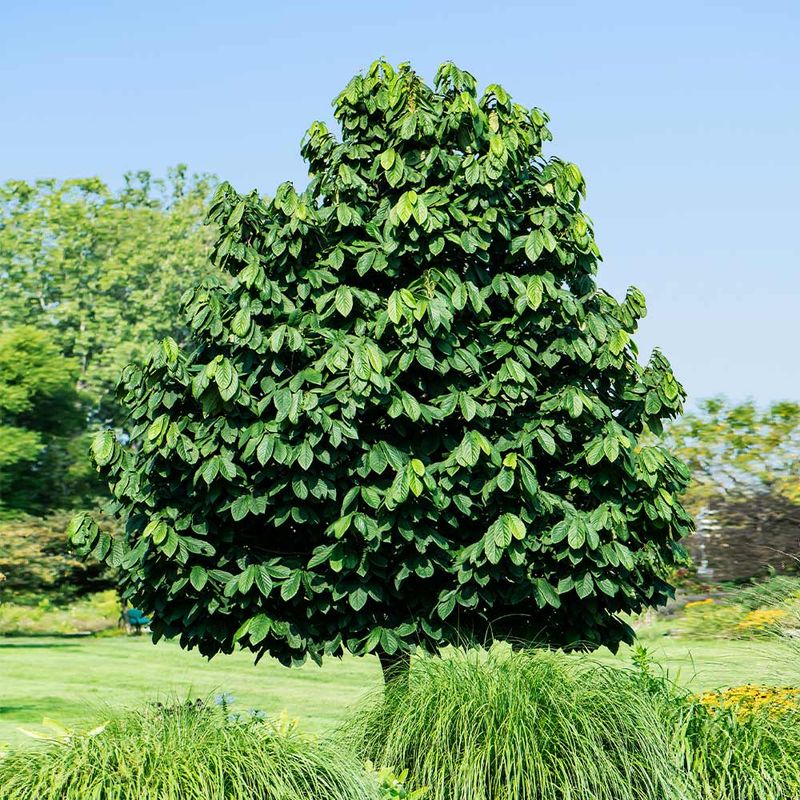
Pawpaw and American persimmon have grown across North Carolina’s Coastal Plain, Piedmont, and Mountains for a very long time, and both earn their place as legitimate native fruit trees. NC State Extension’s plant profile for common pawpaw confirms it is suited to all three NC regions, and the corresponding profile for American persimmon shows the same broad regional reach. That native status comes with real advantages, but it does not mean every yard should have one or that either tree plants itself and disappears into the background.
The strongest case for these trees is a conditional one. Many conventional home-orchard fruits, including apples, peaches, and pears, typically require consistent pest and disease management. NC State’s home-orchard disease and insect guide describes spray programs that many North Carolina growers use across multiple seasons. By comparison, NC State describes persimmons among the relatively lower-maintenance fruit crops, and established pawpaws generally ask for less routine intervention than a peach tree in a humid NC summer.
That said, the sources do not provide a side-by-side production comparison proving these natives out-produce imported fruit trees as a general rule.
What the evidence does support is that both trees can be worthwhile additions under the right conditions. Pawpaw needs moisture-retentive but well-drained soil, two genetically different trees for reliable fruit, and careful establishment before it becomes easier to manage. American persimmon tolerates a much wider range of difficult conditions but can grow very large, making site selection critical. NC State’s production guide for smaller orchard plantings identifies sunlight, space, and soil drainage as foundational site factors for any fruit tree, and both natives are no exception.
The sections that follow address each of those factors so readers can make a well-grounded decision rather than a hopeful one.
Pawpaw needs thoughtful establishment before it becomes easier to manage
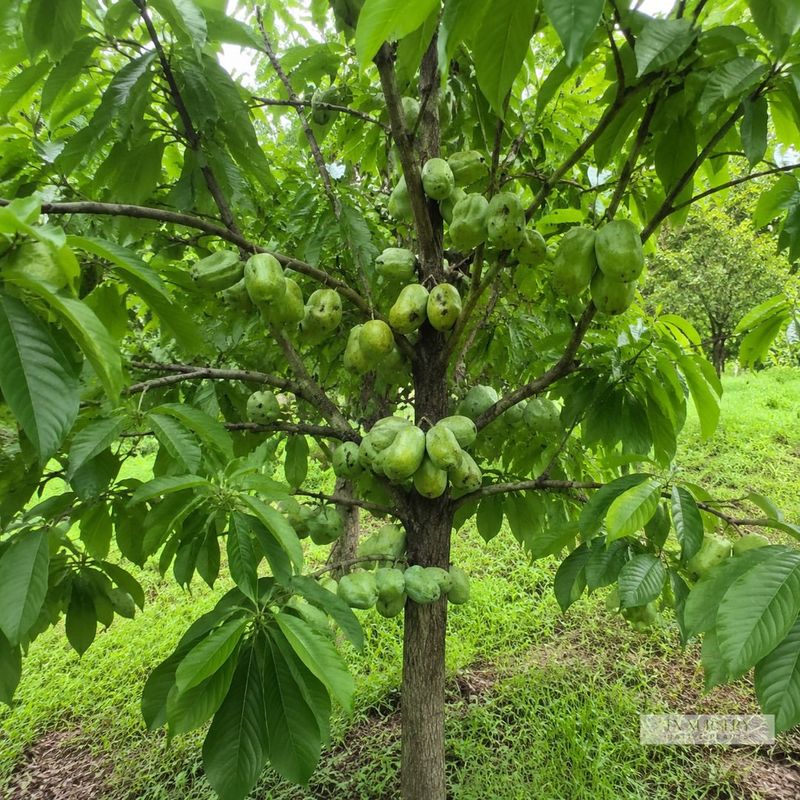
Pawpaw looks tropical, and in some ways it behaves like it. The leaves are large and glossy, the fruit is custard-soft and sweet, and the whole plant has an exotic feel that seems out of place in a Carolina backyard until you remember it has been growing here all along. NC State’s pawpaw profile lists hardiness zones 5a through 9b, meaning it can handle conditions from the NC mountains down through the warmest coastal areas.
Soil matters more for pawpaw than for many other fruit trees. It performs best in moisture-retentive, well-drained ground and struggles in sites that stay wet for long stretches. Pawpaw does tolerate partial shade and can grow as an understory tree in woodland settings, but shade and orchard-quality fruit production are not the same thing. Full sun is the practical priority when the goal is reliable fruit quantity and quality, and a shady spot should be understood as a wildlife planting rather than a fruit-producing one.
The taproot is the feature that trips up most first-time pawpaw growers. It grows deep quickly, making the tree genuinely difficult to transplant once established. NC State Extension’s Lee County guide on pawpaw and the plant toolbox both advise buying container-grown nursery stock and leaving wild trees where they are. Digging a wild pawpaw almost always ends in failure because the taproot tears and the tree rarely recovers.
Establishment requires consistent watering even though mature pawpaws are comparatively self-sufficient. NC State Extension’s Wilkes County pawpaw guide notes a potential yield of 25 to 50 pounds per tree under cultivation, but that figure reflects good conditions and careful management, not a guaranteed homeowner result. Pollination adds another layer of planning. Ask Extension’s pawpaw pollination guidance explains that pawpaws are self-incompatible, meaning pollen from a genetically different tree is required.
Suckers from the same root system do not reliably provide compatible pollen, so two unrelated seedlings or two different named cultivars are the practical answer. Pawpaw flowers are pollinated primarily by flies and beetles rather than honeybees, and cool or rainy weather during bloom, late frost, and deer browsing can all reduce fruit set in a given year.
American persimmon tolerates difficult conditions but demands room
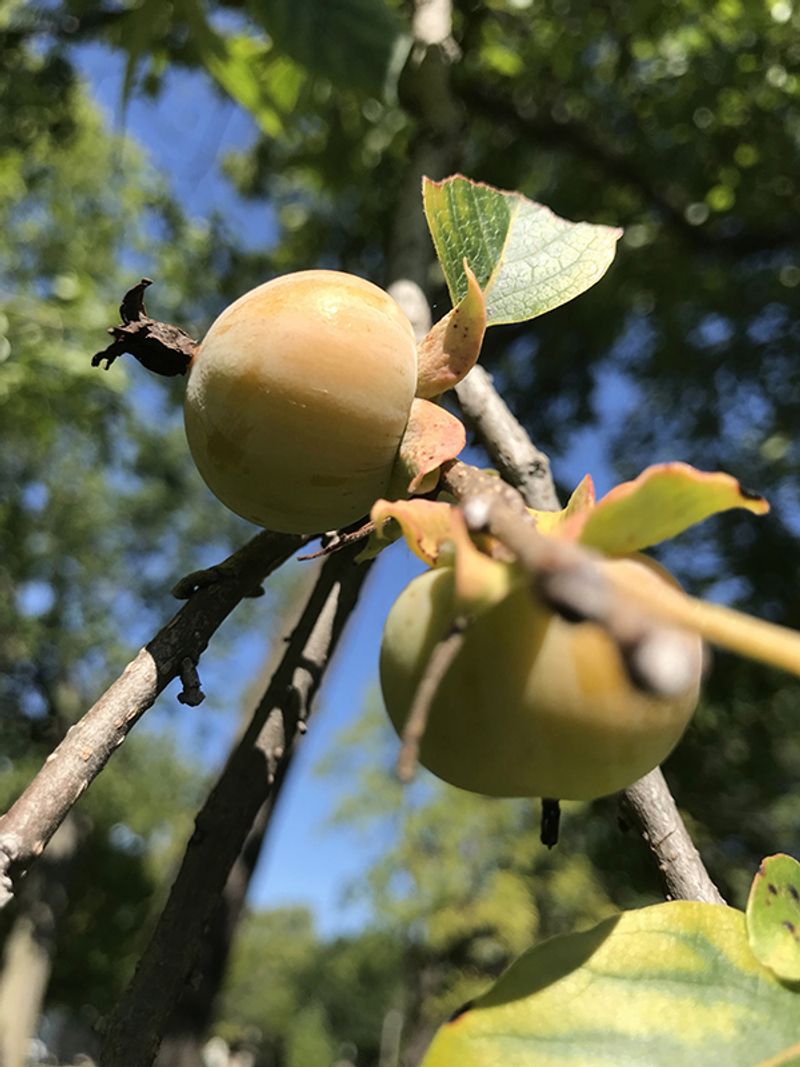
American persimmon, Diospyros virginiana, earns its reputation as one of the toughest native trees in the state. NC State’s American persimmon profile describes its tolerance for heat, drought, poor soils, wind, and urban conditions, making it a candidate for sites where other fruit trees would fail quickly. It prefers moist, well-drained soil and performs best in full sun to partial shade, but it can survive conditions that would stress most conventional orchard species.
The size of a mature American persimmon is the single most important factor for North Carolina homeowners to understand before planting. USDA Forest Service documentation on common persimmon and the NC State plant profile both place mature height at roughly 30 to 80 feet tall with a spread of 20 to 35 feet wide. A tree at the larger end of that range can damage foundations, lift sidewalks, interfere with utility lines, and overwhelm small patios. Checking the available space before purchasing is not optional.
Pollination requires attention too. American persimmon is generally dioecious, meaning male and female flowers grow on separate trees. A female tree typically needs a compatible male nearby to produce fruit dependably. Virginia Cooperative Extension’s edible landscape species guide reinforces this point, and buyers of named cultivars should confirm pollination requirements with the nursery because cultivar behavior can vary.
Seed-grown persimmons may begin fruiting in roughly 4 to 9 years; grafted trees may start in about 3 years, with full production often taking longer still.
One distinction worth stating plainly: American persimmon, Diospyros virginiana, is the NC native. Asian or Japanese persimmon, Diospyros kaki, is a separate species not native to North Carolina. NC State’s Asian persimmon profile notes that it performs best in eastern NC and the southern Piedmont but may suffer damage below 10 degrees Fahrenheit. The two species are not interchangeable in a discussion of NC natives.
Their fruit requires different harvest expectations
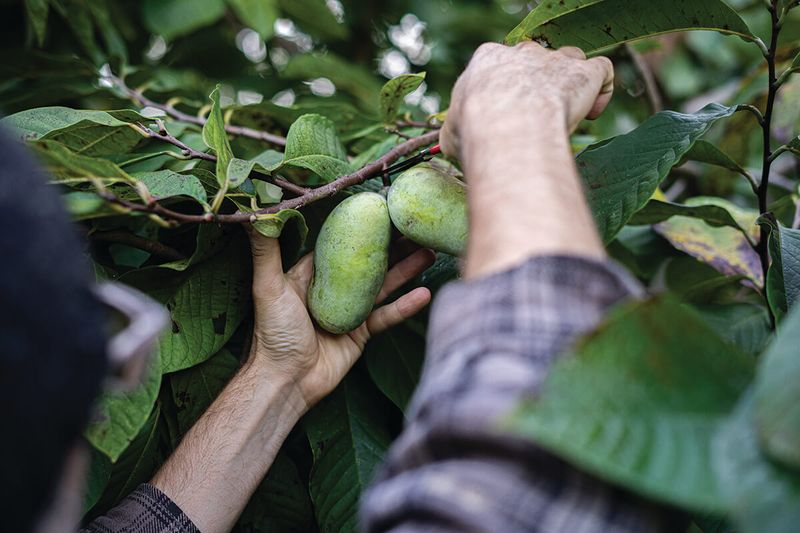
Pawpaw and American persimmon both reward patience, but they reward it in very different ways. Pawpaw fruit typically ripens from late summer into early fall across North Carolina. NC State’s Extension Gardener Handbook section on tree fruit and nuts and USDA ARS documentation on Asimina germplasm both note that the fruit softens like an avocado and can continue ripening off the tree. That perishability is the main reason pawpaw rarely appears in conventional grocery stores, and homeowners should plan to use or refrigerate fruit quickly after harvest.
Safety matters more with pawpaw than most people expect. NC State’s pawpaw safety information warns that the seeds and skin can cause stomach or intestinal pain and that handling the plant may cause contact dermatitis in some people. Harvest with gloves, remove seeds and skin before eating, and keep leaves and stems away from food preparation. Children should not be encouraged to eat unripe fruit or any part of the plant other than the prepared flesh.
American persimmon carries its own harvest challenge. The fruit is strongly astringent until fully ripe because of soluble tannins, and eating an unripe persimmon produces an intense mouth-puckering sensation that most people find deeply unpleasant. A widespread rule claims that frost is required before persimmons become edible, but that is misleading. NC State Extension’s Hoke County persimmon guide and University of Florida IFAS postharvest guidance for persimmon both clarify that ripeness and softening determine edibility, not frost.
A fully soft, deeply colored persimmon that falls or releases easily from the tree is ready. One that is still firm is not, regardless of the calendar or weather. IFAS research on alleviating astringency in persimmon fruit explains that soluble tannins must convert before the fruit is safe and pleasant to eat in quantity, reinforcing why harvest timing matters so much.
Both trees support wildlife beyond the harvest
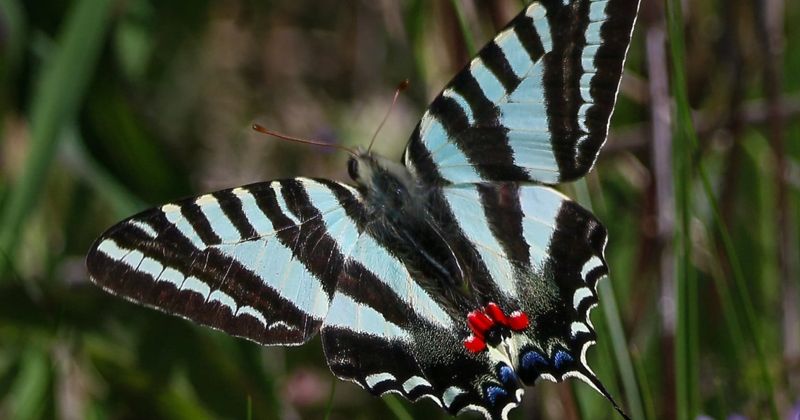
One of the strongest arguments for planting either tree has nothing to do with what ends up on your table. Pawpaw plays a specific and well-documented role in the NC landscape as the larval host plant for the zebra swallowtail butterfly. NC State’s pawpaw plant profile confirms this relationship, noting that the foliage feeds zebra swallowtail caterpillars. The fruit itself attracts birds and mammals, adding food-web value that extends well past the human harvest window.
American persimmon carries similar wildlife credentials. USDA Forest Service species review data for Diospyros virginiana and Forest Service silvics documentation both describe persimmon fruit as an important food source for squirrels, foxes, raccoons, opossums, quail, and other animals. The fruit that drops or lingers on branches well into winter provides calories at a time when other food sources are limited.
That wildlife pressure is also a practical consideration for anyone hoping to harvest fruit for the household. Squirrels and raccoons in particular are efficient competitors, and in a heavy wildlife year, a significant portion of the crop may disappear before it reaches peak ripeness. Planning for some wildlife share, rather than being surprised by it, leads to less frustration. Neither tree has any documented evidence supporting claims that it reduces ticks, mosquitoes, or other household pests.
The wildlife value is real and well-supported; the pest-control angle is not, and conflating the two would mislead readers into planting for the wrong reasons.
Match the planting plan to the site
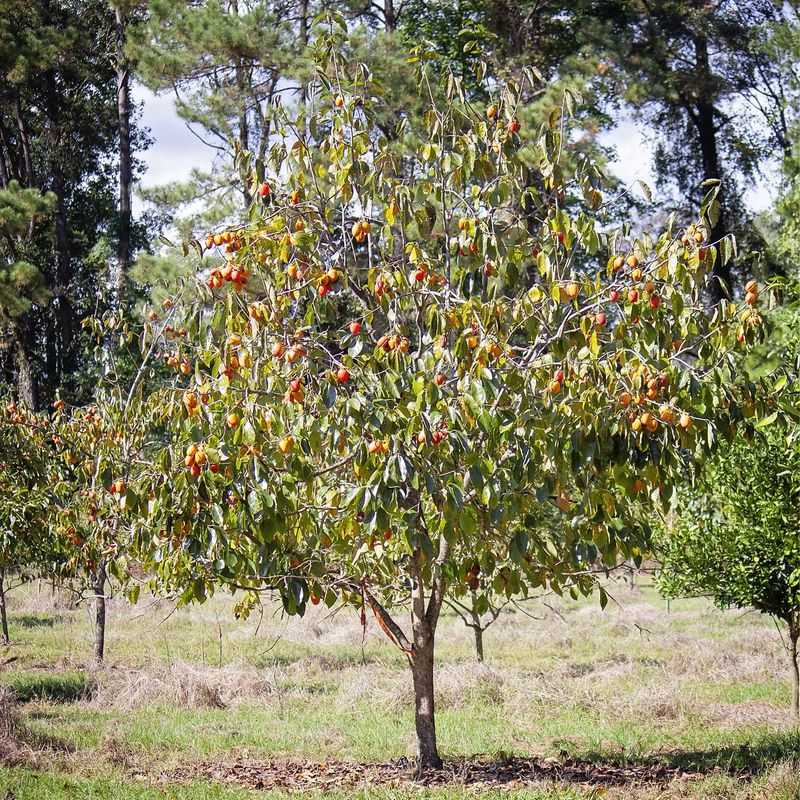
Before purchasing either tree, spend time with the actual planting site rather than the catalog description. NC State’s production guide for smaller orchard plantings identifies sunlight as one of the most consequential site factors for fruit production. Full sun, meaning at least six to eight hours of direct light daily, should be the starting point for both species when fruit quantity and quality are the goal. A spot that looks sunny in spring may be heavily shaded by midsummer once neighboring trees leaf out, so observe the site across seasons if possible.
Pawpaw fits best in a location with moisture-retentive, well-drained soil. Permanently wet or compacted ground is a poor match. NC State’s pawpaw profile lists mature dimensions at roughly 15 to 30 feet tall and wide, which is manageable in many suburban lots, but the two-tree pollination requirement means the actual footprint doubles. Buy container-grown stock from a reputable nursery and confirm that the two trees are genetically different, not two rooted suckers from the same parent plant.
NC State Extension’s Lee County pawpaw article and the Wilkes County establishment guide both emphasize consistent watering during the first growing seasons until roots are well anchored.
American persimmon needs more room than most homeowners initially anticipate. NC State’s American persimmon profile gives a mature range of approximately 30 to 80 feet tall and 20 to 35 feet wide. Keep it away from foundations, utility lines, driveways, sidewalks, and small patios. It earns its place on larger properties and difficult urban sites where soil quality or drainage would eliminate most alternatives.
When purchasing a named cultivar, confirm sex and pollination requirements directly with the nursery, as Virginia Cooperative Extension’s edible landscape guide notes that cultivar behavior can vary from the general dioecious pattern.
For both species, apply a mulch ring around the base after planting to retain soil moisture and moderate soil temperature, but keep the mulch a few inches away from direct contact with the trunk. Consistent watering during establishment is the single most controllable factor in whether a new tree thrives or struggles, and skipping it in the first summer is one of the most common reasons these trees fail to take hold.
Choose pawpaw, persimmon, or neither according to your constraints
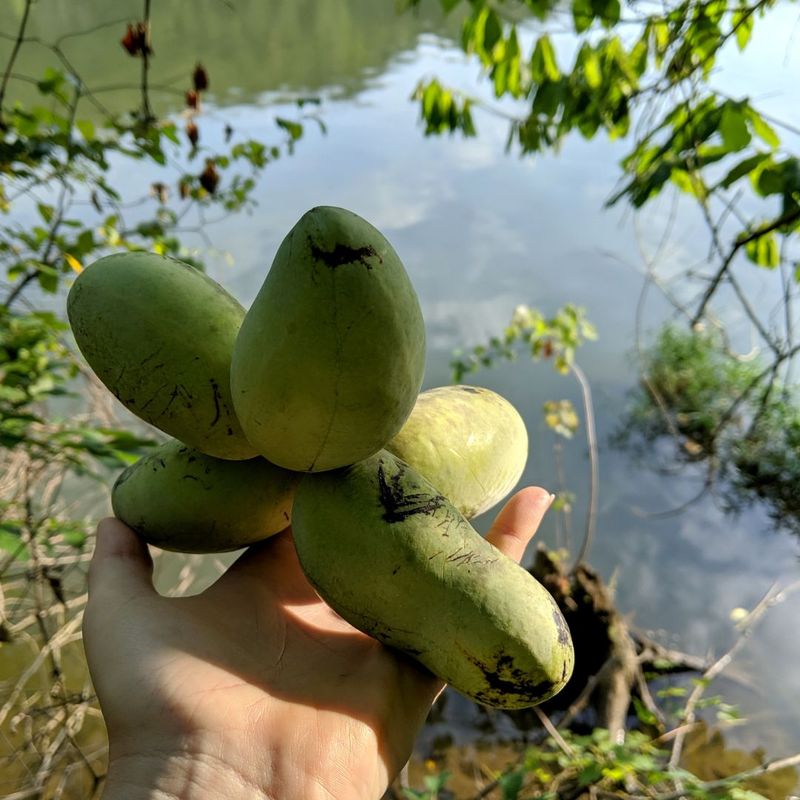
Pawpaw makes the most sense for homeowners who can offer moisture-retentive, well-drained soil with substantial sun, room for at least two genetically different trees, and the willingness to water carefully through the first couple of growing seasons. NC State’s pawpaw profile makes clear that the tree can fruit across all three NC regions, but the establishment phase is not passive. Gardeners who want a tree they can plant and ignore from the start will likely be disappointed.
American persimmon suits homeowners with enough open space to accommodate a large tree, the patience to wait several years before meaningful fruit production, and the attention to verify sex and pollination before purchase. NC State’s persimmon profile supports its use on challenging sites where heat, drought, or poor soil would eliminate other options, and it genuinely earns the low-maintenance label once established and properly sited. The fruit is worth the wait for those who appreciate its flavor, but the astringency of unripe fruit means timing and patience carry over from planting all the way through harvest.
Neither tree fits every situation. Small lots with limited sun, permanently saturated soil, or no room for a tree that may eventually top 50 feet are genuinely poor candidates for American persimmon. Yards without space for two pawpaws in a sunny location are poor candidates for that species if fruit production is the priority. NC State’s orchard planning guidance reinforces that site honesty at the start prevents wasted effort and disappointment later.
Native status does not make either tree pest-free, drought-proof in all conditions, or guaranteed to produce fruit in every yard. Wildlife pressure, weather variation, and pollination gaps can all reduce harvests in any given year, and knowing that in advance leads to more realistic expectations and better planting decisions.
The right native fruit tree fits the yard
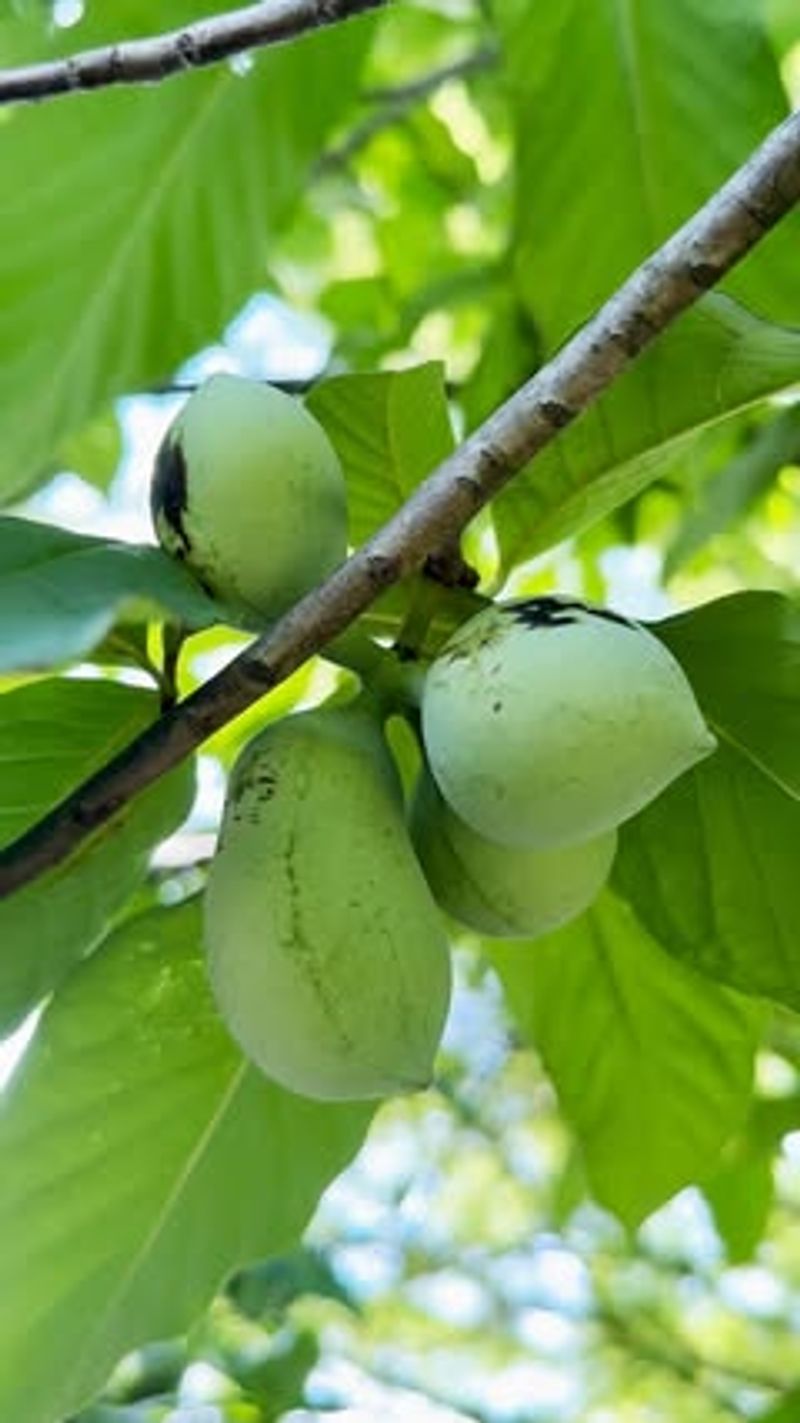
Pawpaw and American persimmon offer North Carolina homeowners something genuinely useful: native fruit trees with documented wildlife value and the possibility of lower routine management than many conventional orchard choices, provided the site, space, and pollination requirements are met. NC State’s pawpaw profile and its American persimmon counterpart give the species-level detail needed to match each tree to a realistic site. NC State’s home-orchard pest management guidance puts that comparison in context: conventional tree fruits often carry a heavier ongoing management burden, and that contrast is where both natives make their strongest case.
Accurate species identification, adequate space, compatible pollination, and honest harvest expectations matter more than enthusiasm about native plants. A well-sited pawpaw pair or a properly spaced persimmon on a large lot can genuinely deliver on the promise. The trees that struggle are almost always the ones planted in the wrong spot for the wrong reasons. Choose the tree that fits the yard, not the yard that you wish you had.