
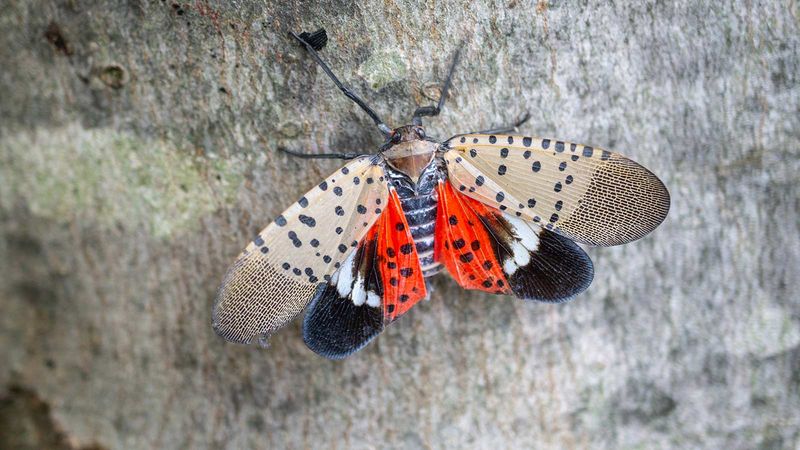
A striking insect has been turning up in North Carolina yards, and the first reaction many people have is to back away fast. That instinct makes sense, but the real concern has nothing to do with getting bitten or stung. The spotted lanternfly is completely harmless to people and pets, yet it can quietly damage grapevines, fruit trees, and other plants if it goes unnoticed. Knowing what to look for and what to do next puts you in a much stronger position than either panicking or ignoring it.
Safe to touch, serious to ignore
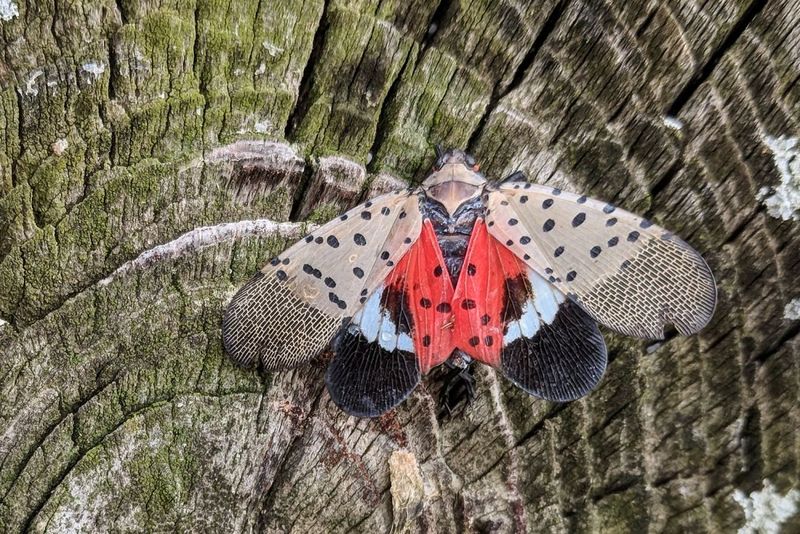
Spotted lanternflies look alarming the first time you see one, but physical contact is not the danger here. NC State Extension confirms that the spotted lanternfly does not bite or sting and poses no direct threat to people or pets. The title of many online warnings implies otherwise, and that framing needs to be set aside before anything else.
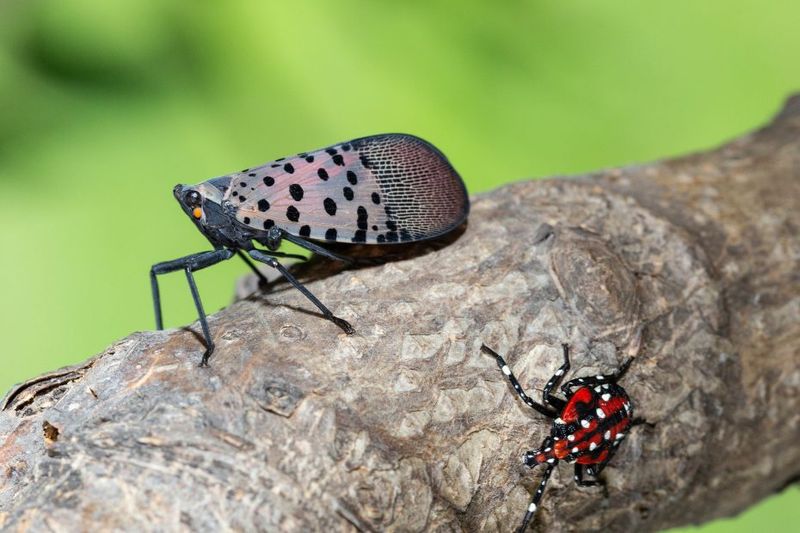
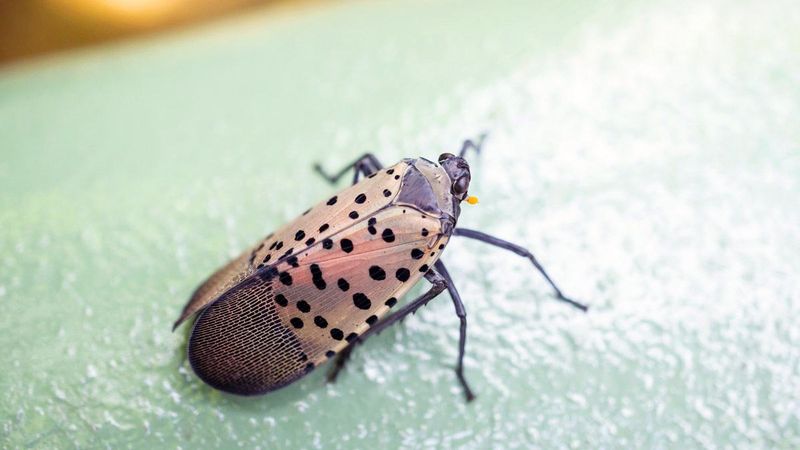
What you should actually watch for are the identification details. Adults are roughly one inch long with gray-brown forewings covered in black spots. Open the wings and you will see red hindwings marked with black spots and a black-and-white band along the edge. Early-stage nymphs are small and black with white spots; later nymphs develop patches of red before they reach adulthood.
Egg masses look like dried mud or smeared gray putty and are generally about one inch long.
Confirming the identification matters before you make any public report or choose a response. USDA APHIS notes that several other insects can be mistaken for spotted lanternflies, and NC State lists specific North Carolina look-alikes including the ornate bella moth, the harnessed tiger moth, and the ailanthus webworm moth. All three share some combination of spots, red coloring, or wing patterning that can fool a quick glance.
A photograph taken close enough to show wing detail is the most useful tool you have. Lay a coin or pen next to the insect before shooting so the image includes a clear size reference. Careful identification is the starting point for every action that follows, and rushing past it can lead to misreporting a harmless native species or treating the wrong pest entirely.
Why heavy feeding matters in a North Carolina yard
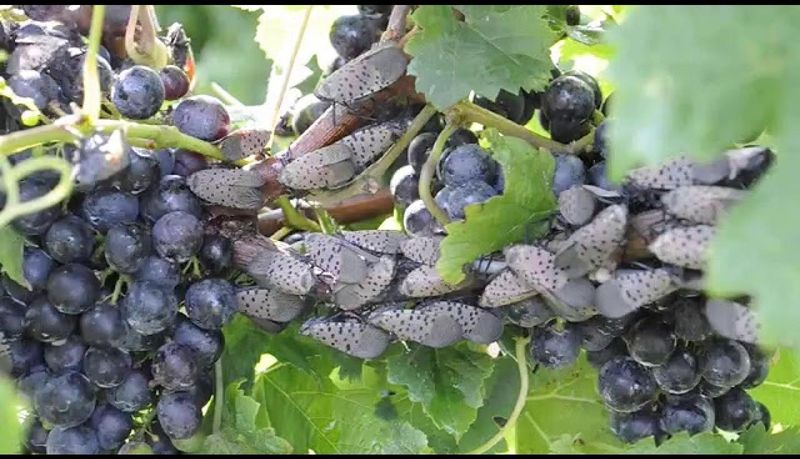
One spotted lanternfly on a mature oak is unlikely to cause visible harm. The concern grows when a population builds up over weeks or months and feeds repeatedly on the same plants. The insect pierces plant tissue and extracts sap, and the sugary waste it produces, called honeydew, drips onto leaves and surfaces below. That residue feeds a black fungus called sooty mold, which coats foliage and interferes with photosynthesis.
Honeydew also draws ants, wasps, and other insects that can become a nuisance of their own.
The host list is broad. USDA APHIS documents feeding on grapevines, apples, stone fruits, maples, walnuts, willows, hops, and many other plants. Tree-of-heaven is a preferred host and is common along roadsides and disturbed land across the state, but the insect is not limited to it. Grapevines draw particular attention because concentrated feeding late in the growing season can reduce a vine’s energy reserves heading into winter, affecting the following year’s production.
North Carolina’s wine industry has reason to pay attention. NCDA&CS has identified the spotted lanternfly as a serious agricultural threat to the state, with grapes named as a priority concern. Penn State Extension’s vineyard management research shows that damage outcomes depend on pest numbers, how long feeding continues, the health of the plant, and other environmental stressors. A single insect on an ornamental tree is a different situation from a large population settling on a grapevine during late summer.
The practical takeaway for homeowners is proportionality. Watch for signs of feeding pressure on susceptible plants, especially grapevines and fruit trees, rather than treating every sighting as a landscape emergency. NC State Forestry Extension echoes this measured approach, noting that population size and duration of feeding are the key variables in assessing risk.
When to search for each life stage
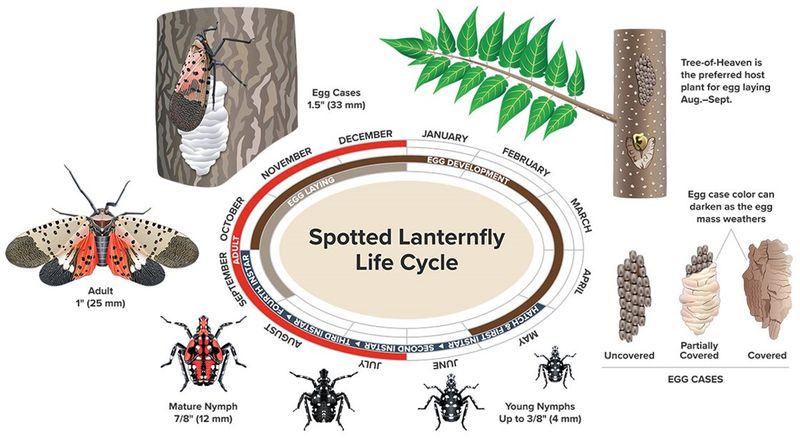
Searching at the right time of year makes a real difference in what you find and how useful your inspection is. The spotted lanternfly moves through three distinct phases in North Carolina, and each one calls for a slightly different approach.
Egg masses are the longest-lived stage and the easiest to find during cooler months. NCDA&CS reports that egg masses are generally visible from September through May. During that window, scan tree bark, wooden fences, stone walls, outdoor furniture legs, and any other firm surface that stays relatively undisturbed. The masses blend in well because they look like a smear of dried mud or cracked gray putty rather than a neat cluster of eggs.
Nymphs begin hatching from late March through July. Early nymphs are small and black with white spots, making them easy to overlook against dark bark. As they grow through later instars, red patches appear alongside the spots. Check the undersides of leaves and along stems on preferred hosts, especially tree-of-heaven, maples, and grapevines, during this period.
NC State Extension’s identification guide includes photographs of each nymph stage that make comparison straightforward.
Adults are generally present from July through December. They tend to aggregate in large numbers on host plants in late summer and early fall, which is when feeding pressure on grapevines and fruit trees is most concentrated. Adults are also the most mobile stage and the most likely to hitch a ride on a vehicle or piece of equipment.
A simple habit of checking your yard during each of these windows, even briefly, gives you a much better chance of catching the pest early before numbers grow.
A sighting means identify and check the location
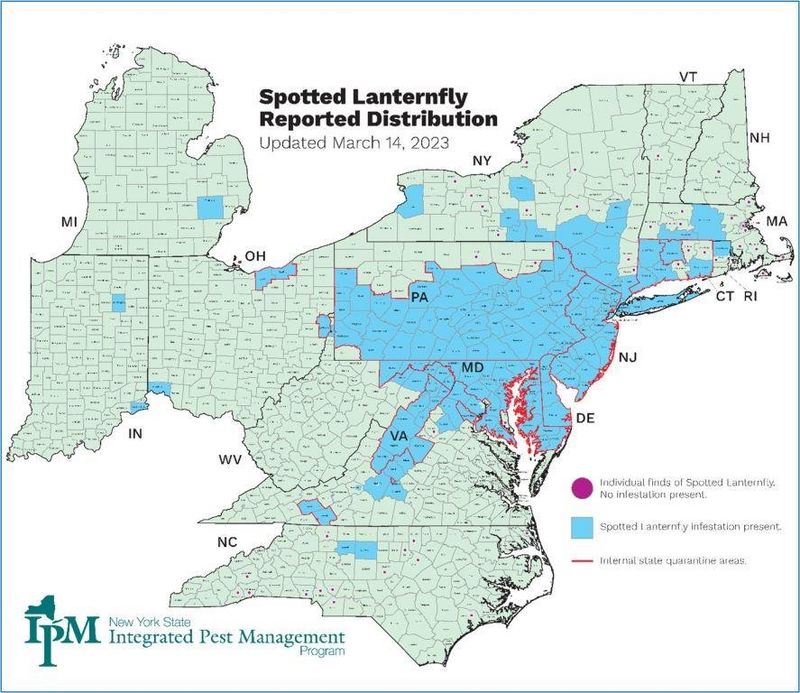
Finding a suspected spotted lanternfly in your yard is a starting point for two questions: where exactly are you, and what does the current distribution look like? Those answers shape what you should do next.
As of February 10, 2026, NCDA&CS confirmed established populations in seven counties: Forsyth, Guilford, Rockingham, Caldwell, Davidson, Rowan, and Caswell. The agency also described additional breeding populations along the I-85 and I-285 corridors and near Pelham. That list reflects what was documented at a specific point in time, and distribution information can change as surveys continue.
Outside those known or generally infested areas, a sighting is more likely to represent an isolated hitchhiker than a breeding population. Forest Service research on spotted lanternfly spread shows that vehicle and freight movement are the primary pathways for long-distance jumps, meaning a single adult can travel hundreds of miles from its origin before anyone notices. One insect does not prove that a colony has formed nearby, but it does mean the area deserves a closer look.
Before submitting any report, check the NCDA&CS spotted lanternfly page to see whether your location falls inside a generally infested area. Residents in those zones, particularly in western Guilford and eastern Forsyth counties, are directed toward county Cooperative Extension offices or licensed pest professionals for management advice rather than routine individual reports. If you are outside known populations, your report contributes real information to the state’s tracking efforts and helps agencies decide where to focus survey resources.
Photograph first, then follow local guidance
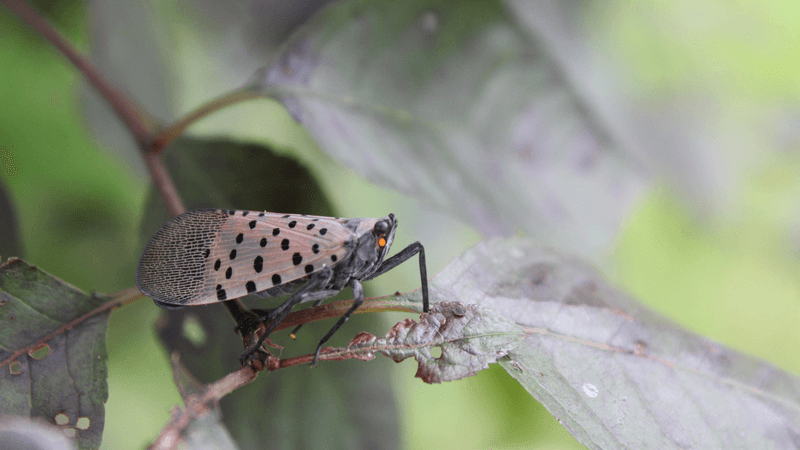
Once you have a suspected spotted lanternfly in front of you, the first move is to document it rather than immediately react. A clear photograph taken before anything else gives you something to submit and something to compare against identification guides if you are unsure.
Position your phone or camera close enough to capture wing detail. Place a coin, pen, or any common object next to the insect to provide a size reference in the frame. Note the date, your street address or nearest intersection, and whether the insect was on a plant, a fence, a vehicle, or another surface. These details matter when a report is submitted because they help agency staff assess whether the location falls inside a known population or represents a new area of concern.
For sightings outside known or generally infested areas, submit your photograph and location through the NCDA&CS spotted lanternfly reporting tool. State officials have consistently asked residents to report suspected sightings so that new locations can be investigated promptly. That request carries the most weight when the sighting is in an area where the pest has not yet been confirmed.
After photographing, NC State Extension guidance reflects NCDA&CS advice that a confirmed or strongly suspected specimen can be killed by squishing it or placing it in rubbing alcohol when that is practical. Neither action is required before you photograph, and neither substitutes for the report if your location is outside known populations.
Residents in generally infested areas, such as parts of Forsyth and Guilford counties, should check current NCDA&CS guidance first. In those zones, contacting your county Cooperative Extension office or a qualified pest professional for management advice is often the more appropriate next step than filing an individual report for every insect seen.
Look beyond the tree for egg masses
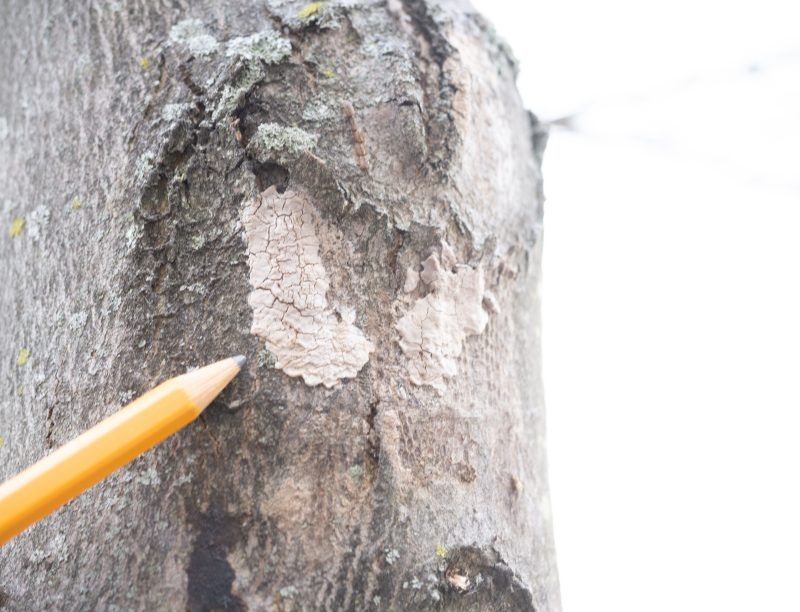
After finding a suspected spotted lanternfly, the natural next step is to look at the nearest tree. That is a reasonable starting point, but stopping there misses a lot of ground. Egg masses are laid on almost any firm, relatively smooth surface, and the pest does not limit itself to bark.
Work through a wider checklist: tree trunks and large branches, wooden and metal fences, outdoor furniture legs and undersides, patio chairs and tables, grills, trailers, lawn equipment, and any vehicles that have been parked near trees. USDA APHIS confirms that egg masses have been found on all of these surfaces, which is part of why the pest spreads so effectively through ordinary human activity. A mass tucked into a wheel well or under a trailer hitch can survive a long drive and establish the pest in a completely new location.
USDA has asked residents specifically to search for egg masses on outdoor items they plan to move, especially during the September-through-May window when masses are present. The search takes only a few minutes and can prevent accidental transport.
When you find a mass on a suitable hard surface, scrape it off using a stiff card, putty knife, or similar tool. Place the scraped material directly into a sealed plastic bag that contains hand sanitizer or rubbing alcohol, which kills the eggs. Tie or zip the bag shut and put it in your household trash. For smooth hard surfaces like concrete, stone walls, or metal equipment, pressure washing is also an effective removal method.
Reserve pesticide discussion for a later step and a qualified source. Egg mass removal during the dormant season is one of the most practical actions a homeowner can take, and it requires no chemicals at all.
Clean vehicles and outdoor gear before moving them
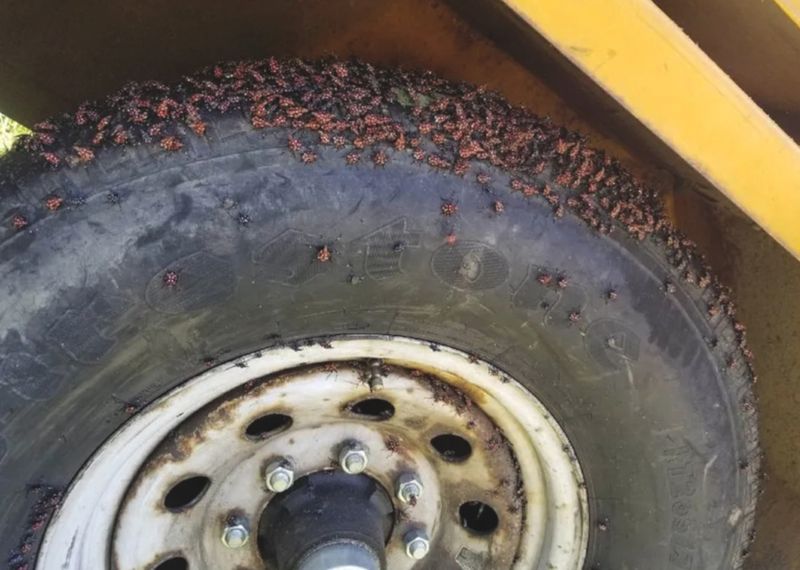
Human movement is the single largest driver of spotted lanternfly spread across long distances. The insect does not fly hundreds of miles on its own; it rides. Adults land on vehicles, trailers, and equipment, and egg masses get laid on the same surfaces without the owner ever noticing. A camping trip, a furniture delivery, or a drive through an infested county can bring the pest somewhere it has never been.
Before leaving any area where spotted lanternfly has been found or suspected, walk around your vehicle and check the obvious hiding spots: door frames, the front grille, wheel wells, the roof, and the underside of bumpers. Adults can tuck into gaps and stay put through highway speeds. USDA APHIS recommends this departure check as a standard precaution, not as evidence that an infestation has occurred.
The same logic applies to anything you haul or carry. USDA guidance on cleaning outdoor items before moving them covers trailers, lawn mowers, leaf blowers, camping gear, and outdoor furniture. Firewood deserves special attention: do not move untreated firewood from an infested or potentially infested area to a new location, because egg masses are easily concealed in bark crevices.
Forest Service research on spotted lanternfly dispersal documents how freight and passenger vehicles have driven the pest’s spread across multiple states in a short period. A two-minute inspection before you pull out of the driveway is a genuinely low-effort contribution to slowing that pattern, and it does not require any products or professional help.
Monitor before treating the yard
Reaching for a spray can the moment you see a spotted lanternfly is an understandable impulse, but it is not the recommended starting point. NC State Extension advises homeowners to monitor first and to contact the county Cooperative Extension office or a qualified pest professional for management advice before selecting any treatment. That sequence matters because the right response depends on how many insects are present, which plants are affected, and what products are legally registered for that pest on that site.
Pesticide labels are legal documents, not suggestions. A product must list the spotted lanternfly as a target pest and must list the type of site where you plan to use it, whether that is a residential yard, a vegetable garden, or a fruit tree. EPA guidance on pesticide safety is clear that using a product in ways that contradict the label is both illegal and potentially harmful to people, pets, and beneficial insects including pollinators.
Spraying a broad-spectrum household pesticide at the first sighting can kill beneficial insects, disrupt natural predators of other pests, and expose your family and neighbors to unnecessary chemical contact, all without meaningfully reducing a spotted lanternfly population if more insects keep arriving. Penn State Extension’s spotted lanternfly management guide walks through registered options and the conditions under which they are appropriate, and it consistently frames professional or Extension consultation as the right entry point for treatment decisions.
It is also worth understanding what homeowner management can and cannot accomplish. NCDA&CS conducts surveys and manages priority sites across the state using resources and methods that go well beyond what an individual property owner can replicate. Your role at home is monitoring, reporting when appropriate, removing egg masses, and preventing hitchhiking spread. Those actions support the broader effort without requiring you to manage an infestation on your own.
Small actions can slow the spread
The corrected takeaway from all of this is straightforward. You do not need to recoil from a spotted lanternfly because it is toxic, and you should not shrug it off because one insect cannot prove that your yard has a breeding population. Both reactions miss the point.
What actually helps is a short sequence of careful steps: confirm the identification using photographs and published guides, report suspected new sightings through the state tool when current NCDA&CS guidance calls for reporting, scrape and dispose of egg masses you find on hard surfaces, and inspect anything you plan to move before it leaves your property. Checking outdoor items before moving them is one of the simplest ways a homeowner can contribute to slowing the pest’s spread across the state.
None of these steps require special equipment or expertise, and none of them promise eradication. NCDA&CS is the agency responsible for surveys and coordinated management, and homeowners are partners in that effort, not the primary defense. The grapevines, maples, and fruit trees in North Carolina yards are worth protecting, and the most durable protection starts with paying attention and acting on what you actually find.