
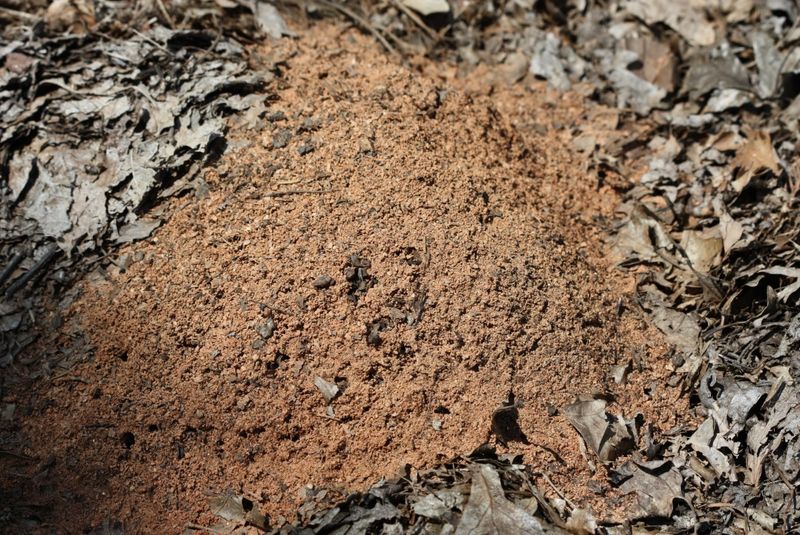
Spotting a fire ant mound in your garden bed can make your stomach drop, but that mound is sending a message worth reading before you grab any spray. Most gardeners assume the ants showed up because something is wrong with the soil, but the real story is more about location than fertility. Learning to read what the mound is actually signaling can save you time, protect your plants, and help you make a smarter, safer decision for your family and the native insects that share your yard.
A Mound Is a Site Signal, Not a Soil Test
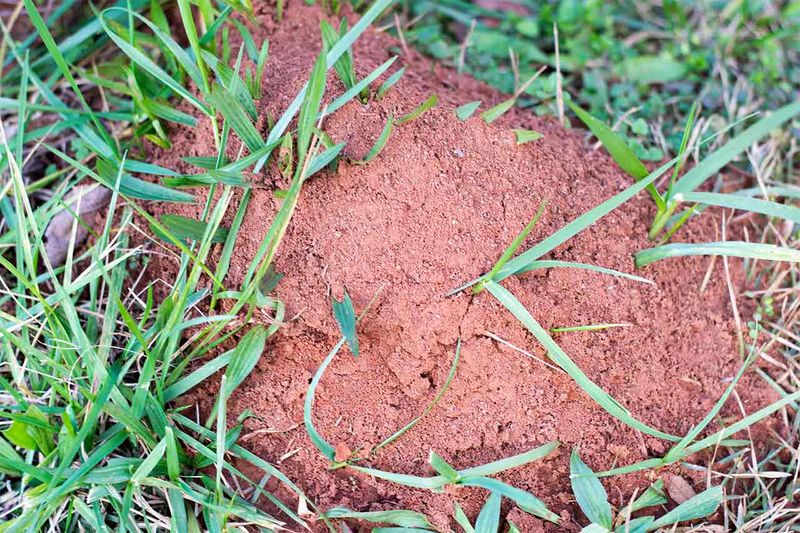
Pulling on your gardening gloves and spotting a dome of loose soil rising out of your flower bed is unsettling, but that mound is not a laboratory report on your garden’s health. Fire ants choose a spot because the local conditions suit them, not because your soil failed some invisible test. The signals they respond to include sunlight exposure, soil temperature, moisture levels, the presence of shelter like mulch or a stump, soil texture, recent flooding, and ground disturbance. None of those factors translate into a diagnosis of poor fertility, low pH, compaction, or nutrient deficiency.
According to Mississippi State University Extension’s fire ant biology research, imported fire ants strongly favor open, sunny areas, and the shape of their mounds shifts with temperature and moisture rather than reflecting anything fixed about the soil’s chemical composition. A bed that gets full afternoon sun, warms up quickly in spring, and stays relatively loose after tilling can be attractive for reasons that have nothing to do with how well you garden. The mound is a clue about that patch of ground on that particular day, not a verdict on your entire yard.
Before choosing any control method, walk the bed and look at what surrounds the mound. Check whether the area stays sunny most of the day, whether water pools nearby after rain, whether mulch is deep and warm, and whether anything was recently dug up or moved. UGA Cooperative Extension’s guide to managing imported fire ants points out that garden features like mulch, compost, tree bases, and cracked surfaces can all attract colonies by providing warmth or moisture. That inspection, not an assumption about soil quality, is the right first step.
Weather Changes What the Mound Reveals
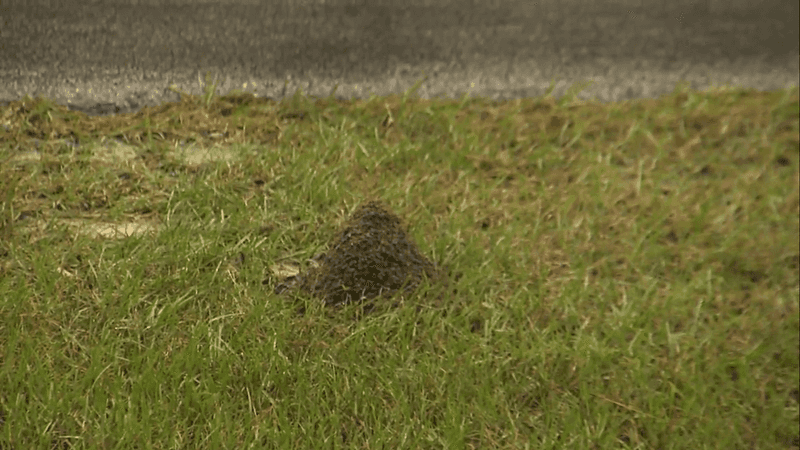
Mound height and shape are not fixed measurements you can use to judge how serious a colony is. Workers constantly adjust the structure in response to outside conditions, which means what you see on a cool April morning looks very different from what is happening underground on a hot July afternoon.
When temperatures drop or rain soaks the ground, workers tend to build the mound taller and closer to the surface. The goal is to keep the queen and brood in a warmer, drier zone while the surrounding soil stays cool and wet. Flip that scenario to a dry summer heat wave, and the colony often retreats deeper into the earth where the soil stays cooler. The visible mound may shrink or seem to disappear, but the colony has not gone anywhere.
Mississippi State University Extension’s fire ant biology overview explains this vertical movement clearly: mound visibility reflects current environmental conditions far more than it reflects colony size or how urgently you need to act.
Heavy rain and flooding add another layer of complexity. After a significant storm, colonies may push workers and brood upward toward the soil surface, or they may relocate the entire nest to higher ground. NC State Extension’s post-storm fire ant guidance notes that flooding is a known trigger for mound movement and increased surface activity, which is one reason mounds seem to appear from nowhere after a heavy rain event.
Fire ant pressure also varies considerably across North Carolina. The coastal plain and lower Piedmont tend to see heavier, more consistent infestations, while mountain counties experience lower pressure overall. USDA APHIS maintains specific quarantine areas within the state, so the mound in your bed is part of a regional picture that differs depending on where you live. A mound that appears after a spring thunderstorm in Raleigh carries different context than one that emerges after summer flooding near Wilmington.
Why Garden Beds Make Useful Fire-Ant Real Estate
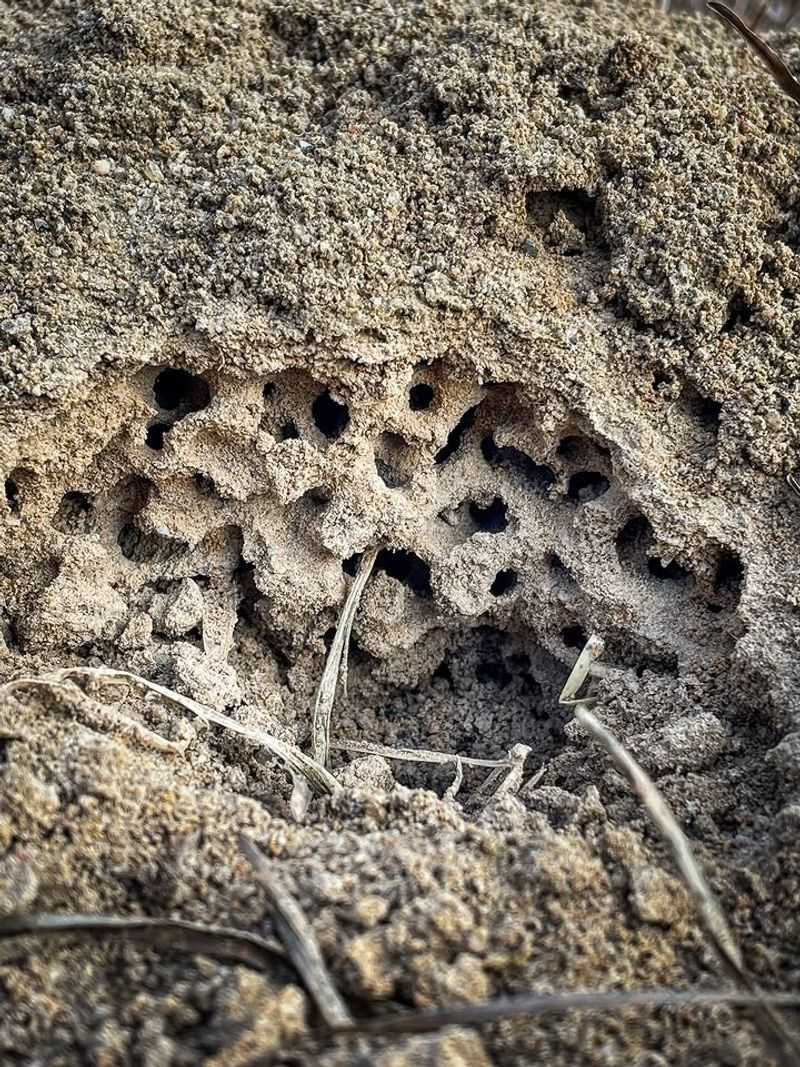
Garden beds offer fire ants a surprising number of advantages that have nothing to do with the plants growing in them. Mulch holds warmth and moisture, compost generates its own low heat as it breaks down, tree stumps and root masses create sheltered cavities, and the loose soil that gardeners work so hard to achieve is exactly the texture ants prefer for tunneling. Bed edges where pavement meets soil, cracks in stepping stones, and the gap between a raised bed frame and the ground are all entry points and nesting sites that colonies exploit.
Open, sunny soil that warms up early in the season is particularly attractive. A bed that faces south, loses its mulch cover in a dry stretch, or gets tilled in late winter can become prime real estate almost overnight. UGA Cooperative Extension’s urban fire ant management bulletin emphasizes that moisture gradients, standing water nearby, and recently disturbed areas are all factors that can draw a colony in from the surrounding landscape, meaning the ants likely did not choose your bed because of what you planted.
Drainage patterns deserve a close look. If one corner of the bed stays wetter longer than the rest, or if a downspout empties near the garden edge, those moisture conditions can make that spot more or less attractive depending on the season. Mississippi State University Extension notes that colonies can relocate when flooding or soil saturation makes a current site unsuitable, so a mound that moves from one part of the bed to another after heavy rain is responding to drainage, not to your gardening choices.
Scan beyond the mound itself. Check the bed’s edges, any nearby lawn area, adjacent landscape beds, and structures like fences or retaining walls. Nearby colonies are a constant reinvasion source, so understanding the surrounding landscape is as important as treating the mound you can see.
Confirm the Ant Before You Disturb the Mound
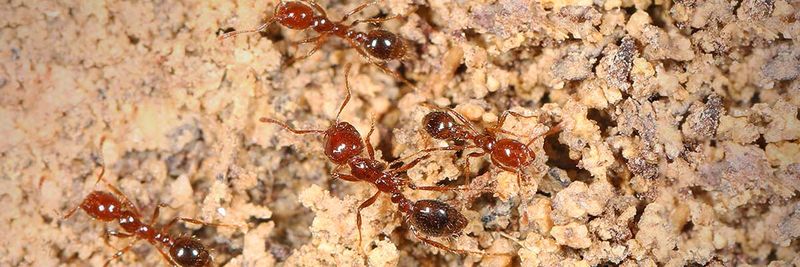
Before any control decision makes sense, you need to know what you are actually dealing with. Not every ant mound in a North Carolina garden belongs to the red imported fire ant, and not every reddish ant is an imported species. The state has multiple fire ant species, and some native ants build mounds that can look similar at a glance. Treating the wrong ant, or treating a native species that poses no real risk, wastes money and can harm insects that benefit your garden.
Imported fire ants are generally reddish-brown to black and range from roughly 1/8 to 1/4 inch long. One key physical feature is the two-node structure between the thorax and abdomen, which separates them from many other ant species. An active mound, if gently approached from a distance without touching it, may show workers moving quickly across the surface. NC State Extension’s red imported fire ant resource notes that positive identification can be difficult and recommends submitting a specimen to a county Cooperative Extension office when you are uncertain.
That step is worth taking before spending money on treatment.
The single most important safety rule at this stage: do not kick, rake, dig into, or immediately shovel an active mound. CDC/NIOSH guidance on protecting yourself from stinging insects is direct on this point, recommending that you avoid disturbing mounds, wear protective clothing when working near them, and inspect any objects, vegetation, or debris before picking them up. Fire ants respond to vibration and disturbance with rapid, aggressive swarming, and they bite and sting simultaneously. A single misstep near an active mound can result in dozens of stings within seconds.
USDA APHIS maintains identification and distribution resources that can help you understand whether your area has confirmed imported fire ant pressure. If you are not sure what species you have, observe from a safe distance, collect a small sample using a sealed container without disturbing the mound, and contact your local Extension office before proceeding.
The Right Response Depends on Who Uses the Bed

A fire ant mound is not automatically an emergency, but context determines whether it is a problem you need to address today or one you can monitor. The key question is who regularly gets close to that mound and how often.
A mound located beside a path that children use daily, along a pet’s regular route through the yard, or in a bed you handle every weekend while weeding or harvesting presents a genuine sting risk that warrants action. That same colony sitting in the far corner of an ornamental bed that nobody walks through or touches between monthly visits is a different situation entirely. NC State Extension points out that individual mound treatments can use less insecticide overall and reduce effects on native ants and other ground-dwelling insects compared with broad broadcast applications across an entire bed or lawn. Matching the response to the actual risk protects both your household and the beneficial insects that help keep your garden healthy.
Treatment categories for individual mounds include contact drenches, dusts, granular products, and baits, each with different application methods, timing requirements, and site restrictions. These are categories to understand, not endorsements of any specific product. What matters most is that the product label explicitly authorizes use in your type of garden space. A product registered for turf or ornamental landscapes may not be legal or safe to use in a vegetable bed, around edible herbs, or near fruit plants.
NC State Extension’s yard fire ant management guide walks through these categories with NC-specific context.
The 2026 North Carolina Agricultural Chemicals Manual, Chapter V is the authoritative reference for which products are approved for which sites in North Carolina. Reading the label for your specific garden type, whether vegetable, herb, ornamental, or lawn edge, is not optional. The label is the law, and it is also your clearest guide to protecting everyone who shares the space.
Timing and Labels Determine Whether Treatment Works
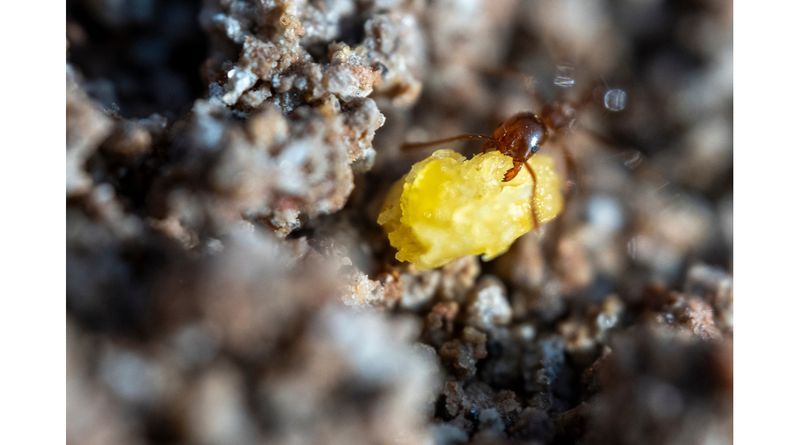
Choosing the right product is only half the battle. When and how you apply it shapes whether it works at all, especially in a garden setting where weather, temperature, and the ants’ own foraging behavior can make or break a treatment.
Baits work by taking advantage of the colony’s food-gathering system. Worker ants find the bait, carry it back to the colony, and share it with other workers and the queen. That process only happens when ants are actively foraging, which means the ground needs to be dry, the bait needs to be fresh, and the temperature needs to fall within a range where foraging is vigorous. UGA Cooperative Extension’s fire ant management bulletin recommends testing activity with a small food lure near the mound before applying bait, and notes that foraging generally slows below about 65 to 70 degrees Fahrenheit and above 90 degrees Fahrenheit.
During hot North Carolina summers, late afternoon or early evening application may give the bait a better chance of being picked up while temperatures are tolerable for foraging.
Baits are not fast. Depending on the active ingredient, meaningful control can take several weeks, and some insect-growth-regulator baits take considerably longer to reduce colony size. Bait application also does not prevent reinvasion from neighboring colonies or newly mated queens moving in from surrounding areas. Plan for follow-up monitoring rather than assuming one application closes the problem permanently.
Contact-style mound drenches work differently, reaching ants in the upper tunnel network more directly. NC State Extension reports that drenches tend to perform best in spring and fall when soil temperatures hover around 70 to 85 degrees Fahrenheit. During peak summer heat, ants often retreat deeper into the mound, reducing contact with the drench; morning or evening application can help if the product label permits it.
In edible garden beds, site-specific label authorization is non-negotiable. Few fire ant baits are registered for use inside home vegetable gardens. Some products may be applied at the garden perimeter or to individual mounds outside the planting area, but crop restrictions and preharvest intervals must be followed exactly. The 2026 NC Agricultural Chemicals Manual is the reference to consult for site-specific authorization in North Carolina.
Safe Stewardship Avoids Both Panic and Homemade Fixes

Protecting your household from fire ants is a reasonable goal. So is protecting your soil, your waterways, your pets, and the native insects that help your garden function. Those goals are not in conflict, but they do require more care than reaching for whatever is under the sink.
Before any pesticide application, EPA guidance on protecting pets from pesticides advises removing children, toys, and pets from the area and keeping them away for the full label-specified re-entry period. Products should always stay in their original containers, and bait or granules should be placed only where children, pets, and non-target wildlife cannot reach them. Near ponds, streams, drainage ditches, or any standing water, extra caution is required because many insecticides can harm aquatic organisms. EPA’s ten tips for protecting children from pesticides reinforces that storage and application discipline is as important as product choice.
Home remedies sound appealing but carry real risks. Mississippi State University Extension’s review of fire ant home remedies found that grits and club soda are ineffective, and that petroleum products, solvents, bleach, and ammonia can damage plants, contaminate soil, pollute groundwater, and create serious hazards for the person applying them. Very hot water may kill some ants inconsistently but can also scald plant roots. None of these approaches are a reliable substitute for a labeled product applied correctly.
Treatment, even when done well, does not seal the yard against reinvasion. Nearby colonies and newly mated queens will continue to move through the landscape, which is why reassessing the bed’s conditions and surrounding area after treatment matters more than escalating chemical use. UGA Cooperative Extension notes that populations can recover after treatment, particularly in moist or flood-prone locations.
Sting reactions deserve serious attention. Fire ants bite and sting repeatedly, and local reactions often develop into itchy, fluid-filled pustules over the following day. CDC/NIOSH is clear that breathing difficulty, chest symptoms, severe swelling, nausea, sweating, or faintness after a sting require immediate medical attention, not a wait-and-see approach.
Read the Mound, Then Choose the Smallest Effective Response
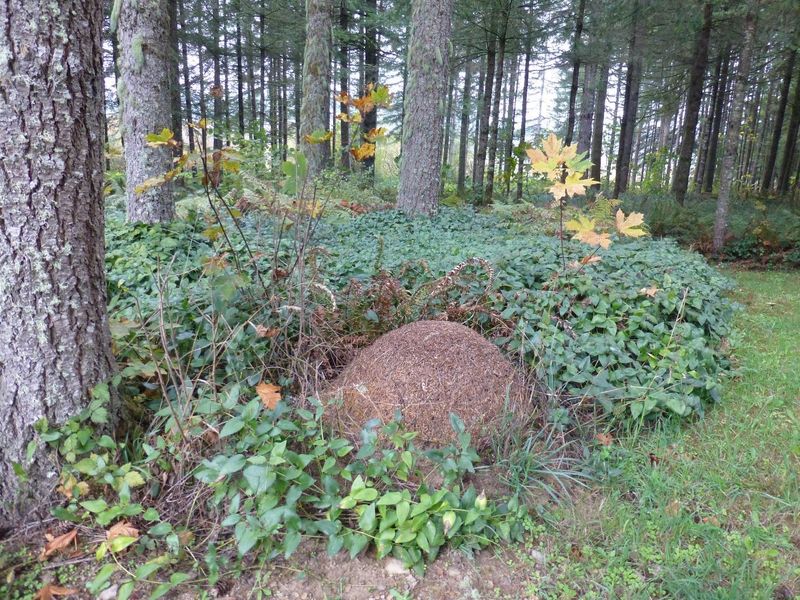
A fire ant mound in your garden bed is worth taking seriously, but it calls for a measured sequence rather than an immediate reaction. Start by reading the site: look at sun exposure, drainage, mulch depth, nearby disturbance, and who regularly uses that part of the yard. Then confirm the ant’s identity from a safe distance, without kicking or raking the mound, and contact your county Cooperative Extension office if you are uncertain about the species.
Once you know what you have and where the real risk lies, match the response to the situation. A mound near a play area or a bed you handle weekly justifies targeted individual treatment with a label-approved product. A mound in a rarely visited ornamental corner may only need monitoring. NC State Extension and UGA Cooperative Extension both support selective treatment of confirmed, high-risk mounds as a more ecologically sound approach than blanket applications across the whole garden.
No mound requires a soil overhaul, and no single treatment permanently closes the door on reinvasion. The gardeners who handle fire ants most effectively are the ones who stay curious about site conditions, act proportionally, and remember that a mound is a signal about a place, not a sentence about the whole yard.