
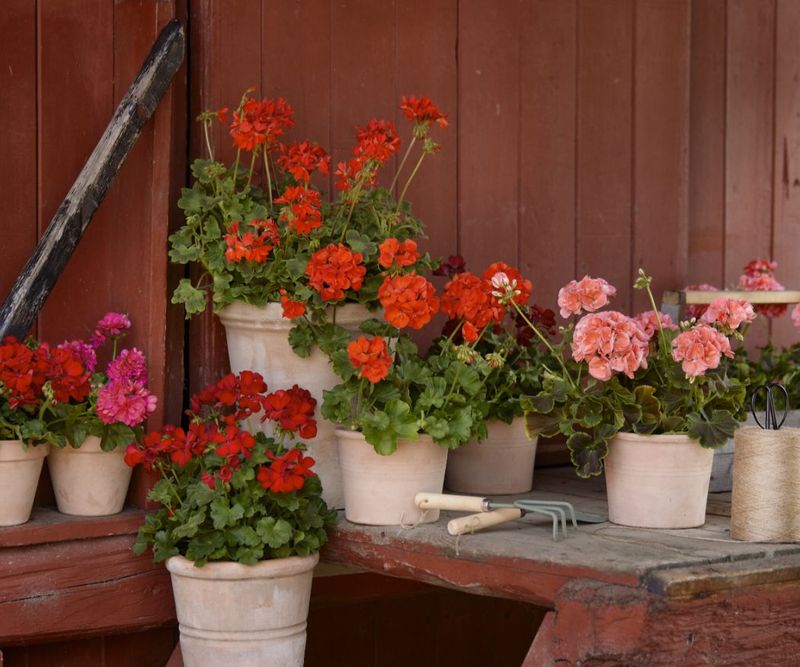
Potted geraniums that look pale, stunted, or stingy with blooms are frustrating, especially when you’ve been watering and caring for them faithfully. Feeding problems can play a real role, but they’re rarely the only explanation, and the fix isn’t always as simple as adding more fertilizer. Before you reach for a bottle, it helps to know exactly what kind of plant you’re working with, what else might be going wrong, and how to build a cautious, label-based routine that won’t make things worse.
Identify the Plant Before You Change Its Feed
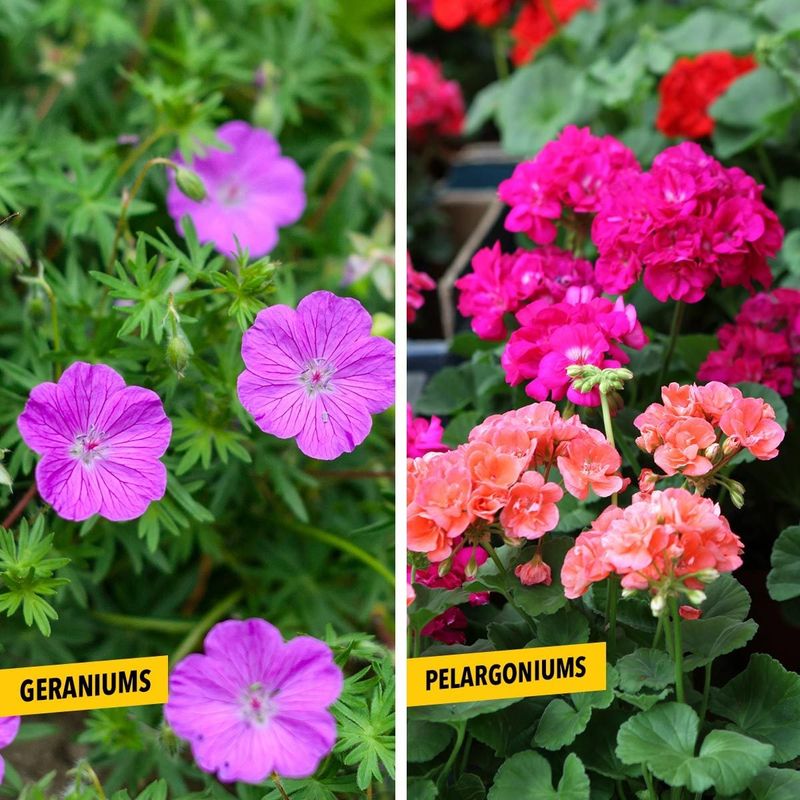
Most gardeners call them geraniums, but the cheerful, round-flowered plants filling porch pots and window boxes across the U.S. are almost certainly Pelargoniums, not true Geraniums. UC IPM notes that the common container “geranium” belongs to the genus Pelargonium, while true Geraniums, often called cranesbills, are a separate genus with different care requirements. Mixing up the two can send you down the wrong troubleshooting path entirely.
Within Pelargonium, the differences matter as well. Zonal types are the classic upright, round-flowered pot plants; ivy types trail and cascade; scented types are grown more for fragrance than flowers; regal types prefer cooler temperatures; and interspecific hybrids combine traits from more than one species. UMass Extension research on containerized crops notes that ivy geraniums, for example, are particularly prone to edema, a water-uptake disorder, and that preferred growing conditions can differ by type. A single fertilizer routine is not equally appropriate for every cultivar or growing system.
When your plant looks tired, pale, or reluctant to flower, the first question is not “what should I feed it?” The first question is “what exactly am I growing, and is its current setup suited to its type?” Answering that honestly will shape every decision that follows.
Check the Look-Alike Causes Before Feeding
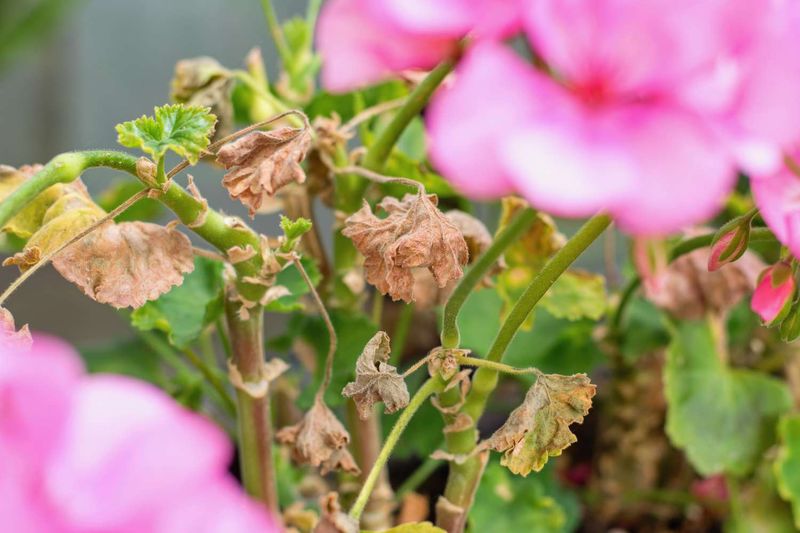
Repeated watering really can strip nutrients from a small pot over time. Container media hold only a limited volume of soil, and every watering event pushes some soluble nutrients out through the drainage holes. Clemson Extension notes that insufficient nitrogen can cause geraniums to become stunted and yellowed, and this kind of gradual nutrient depletion is a legitimate concern for plants that have been in the same pot through a long season.
That said, the same symptoms show up for completely different reasons. University of Minnesota Extension warns that geraniums may flower poorly in inadequate light and that watering problems, root rot, pests, and disease can all produce yellowing or wilting that looks identical to a nutrient shortage. Poor drainage keeps roots sitting in moisture long enough to cause rot, which then starves the plant of the water and nutrients it needs even when both are present.
UC IPM’s houseplant problem guide lists inadequate or excessive water, poor drainage, root disease, insufficient light, pests, and fertilizer or salt problems among the possible causes of yellowing, wilting, and weak growth. Yellow leaves alone cannot tell you which one is responsible. Before concluding that your plant is hungry, check whether it’s getting enough direct sun, whether the potting mix feels wet or bone dry, and whether root or stem tissue looks healthy when you gently remove the plant from its pot. A nutrient fix applied to a waterlogged or root-rotted plant will not help and may cause further harm.
Fix Light, Water, and Drainage First
Fertilizer can only do its job when the basic growing conditions are right. Light is the biggest factor for flowering: University of Minnesota Extension recommends full sun for outdoor geraniums and states plainly that less sun means fewer flowers. Colorado State Extension puts the target at 6 to 8 hours of direct sun daily for flower production. A plant sitting in a shady spot may never bloom well regardless of what you feed it.
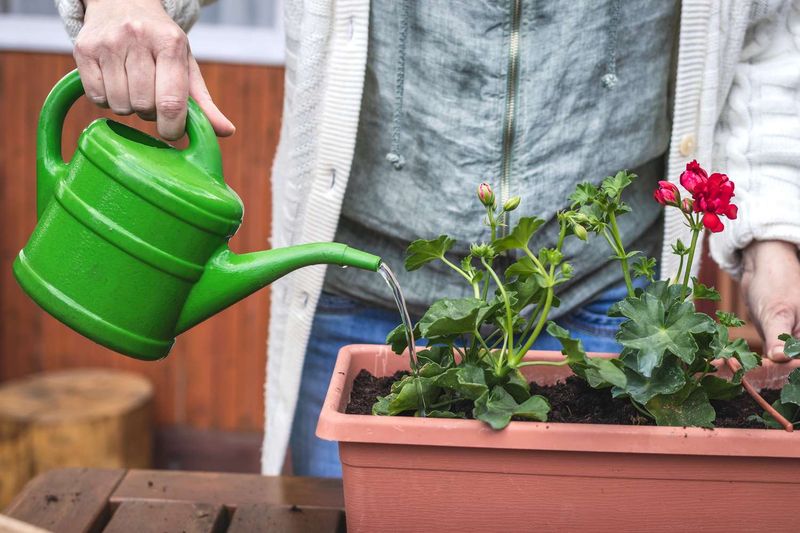
Watering habits matter just as much. University of Minnesota Extension advises watering when the top 1 to 2 inches of potting mix feels dry, and notes that Pelargoniums tolerate slightly dry soil better than soggy conditions. Every pot needs functional drainage holes. Without them, water pools at the root zone, oxygen disappears, and roots begin to break down, cutting off the plant’s ability to absorb anything.
One more check before adding any fertilizer: read the bag or tag on your potting mix. Many commercial mixes already contain slow-release fertilizer granules, and UMN Extension’s container fertilizing guidance recommends considering what’s already in the medium before beginning regular applications. Adding a liquid feed on top of an active slow-release charge can push nutrient levels higher than the plant can use. Also check UC IPM’s geranium production notes on how inadequate drainage through the pot allows fertilizer salts to accumulate to damaging levels over time.
Sorting out light, water, and drainage first gives you a cleaner picture of whether a feeding change is actually needed.
Choose a Complete Fertilizer Without Chasing a Magic Ratio
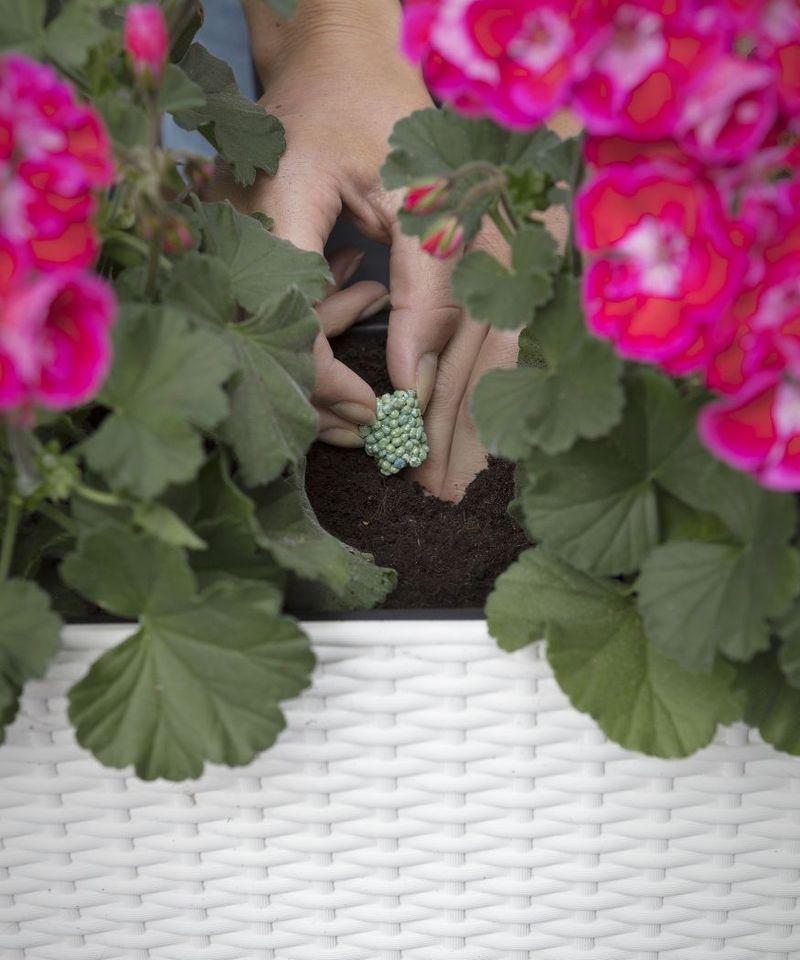
When conditions are right and supplemental feeding makes sense, a complete, balanced fertilizer is a reasonable starting point. University of Minnesota Extension gives 10-10-10 as one example of a balanced fertilizer suitable for geraniums and other annual flowers. Colorado State Extension mentions 20-20-20 as another balanced option. Those numbers represent the percentages of nitrogen, phosphorus, and potassium in the product, not a universal prescription that every pot requires in equal measure.
High-phosphorus “bloom booster” products are heavily marketed for flowering plants, but the geranium-specific extension sources reviewed here do not back that approach as a default. Oregon State Extension’s NPK guide explains that adding phosphorus automatically without evidence of deficiency or a media test is unnecessary and can interfere with the uptake of other nutrients. Excess fertilizer of any kind can cause salt buildup, root injury, and reduced flowering rather than more blooms.
The product label is the most reliable guide to rate and frequency for the specific fertilizer you’ve chosen. Concentrations differ significantly between products, so a rate that works well with one formula may be excessive with another. Pick one complete fertilizer, read its label carefully, and follow it consistently rather than switching products or layering multiple sources at once.
Build a Label-Based Routine for Active Growth
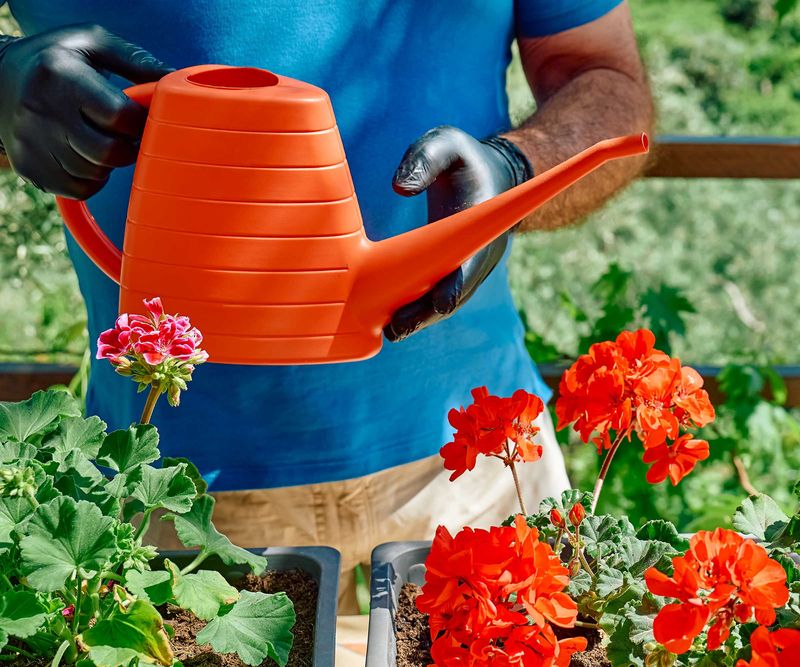
Before the first feeding of the season, account for what’s already in the pot. If the potting mix was freshly opened and contains slow-release fertilizer, UMN Extension’s container fertilizing guidance suggests waiting roughly 2 to 6 weeks before beginning regular supplemental applications, depending on the mix, watering frequency, and growth rate. Starting too early just adds unnecessary nutrient load.
Once regular feeding is appropriate, several source-backed schedules are worth knowing. University of Minnesota Extension describes applying a water-soluble fertilizer at half strength when watering, with the product label controlling rate and frequency. Half strength means half of that specific product’s labeled rate, not a fixed teaspoon-per-gallon amount, because concentrations vary widely between products. Clemson Extension and University of Georgia Extension give a broader maintenance interval of approximately every 4 to 6 weeks for water-soluble fertilizer.
Iowa State Extension offers a more frequent option of roughly every 2 weeks with a dilute solution.
These are not competing rules. They reflect different products, potting mixes, watering frequencies, container sizes, and Pelargonium types. The right interval for your plant depends on all of those factors together. UMass Extension’s containerized crop research reinforces that nutrient needs shift with growth rate, container volume, and drainage, so a consistent, label-guided schedule beats reactive extra doses whenever the plant looks off.
Feed during active growth, ease off or stop when growth slows in late summer or fall, and let the product label set the pace.
Recognize When Fertilizer Has Become the Problem
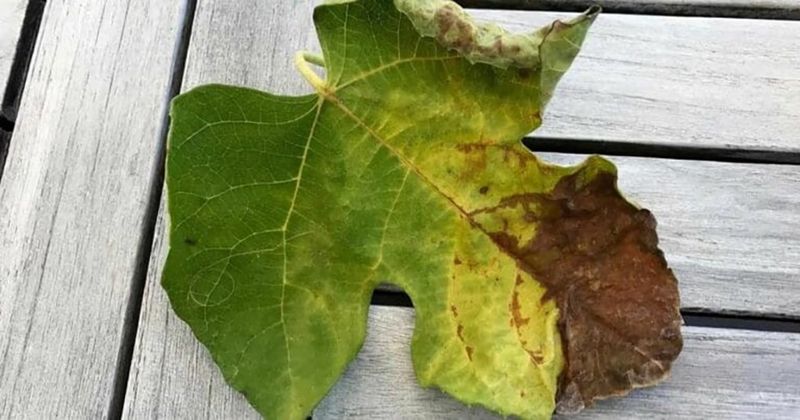
More fertilizer does not always mean a healthier plant. Salt buildup from repeated feeding is a real risk in containers, and UMass Extension’s geranium production guidance states that inadequate drainage through the pot can allow fertilizer salts to accumulate enough to severely check growth. Symptoms can include wilting despite adequate soil moisture, burned or brown leaf margins, slowed or stopped new growth, and, over time, root injury that reduces the plant’s ability to take up water and nutrients at all.
When excess soluble salts seem like a plausible explanation, the corrective step is to pause fertilizer and water the container thoroughly with plain water, allowing it to drain freely several times. Penn State Extension’s plant nutrition guide describes this leaching process as a way to flush accumulated salts out through the drainage path. A white or crusty residue on the rim or soil surface of the pot is a visible clue that salt levels may be elevated.
The leaching step only works safely when the container drains freely. UC IPM’s geranium production notes identify root rot and water-related disorders as important alternative diagnoses, and adding large volumes of water to a pot that already drains poorly can deepen root disease rather than correct it. If the potting mix stays wet for days after watering, the problem is drainage and root health, not salt accumulation, and flooding the pot will make things worse. Pause feeding, assess drainage, and address root-zone conditions before attempting any leaching.
Reassess the Plant Instead of Adding More
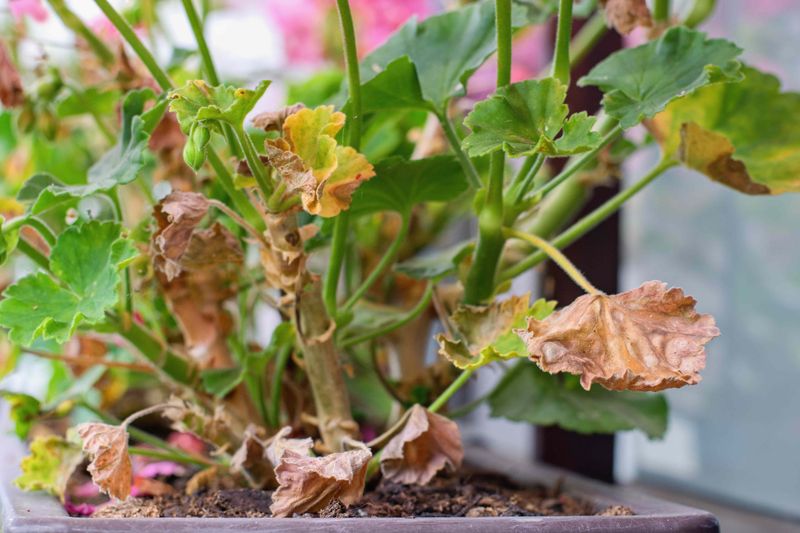
After correcting light, watering, drainage, and the feeding routine, give the plant a few weeks before drawing conclusions. New growth that looks greener, firmer, or more vigorous than the older leaves is a positive sign that conditions have improved. Pale or distorted new growth, continued wilting, or spreading discoloration suggests that something beyond nutrition is still at play.
Resist the urge to add extra fertilizer doses when symptoms don’t clear up quickly. UC IPM’s houseplant problem resources note that many look-alike symptoms, including yellowing, wilting, and stunting, can persist or worsen when the underlying cause is a watering problem, disease, or pest rather than a nutrient shortage. Reactive extra doses don’t speed recovery and can introduce the salt problems described in the previous section.
Deadheading spent flowers is worth doing consistently throughout the season, and Clemson Extension recommends removing faded blooms to support repeat flowering. That said, deadheading is a separate practice from fertilizer management and does not substitute for it. If yellowing, wilting, or disease-like lesions continue after the routine is corrected, UMass Extension notes that a precise nutrient diagnosis may require media or tissue testing rather than visual guessing. Your local cooperative extension office can often help identify whether pests, disease, or a specific deficiency is the real culprit.
Sometimes the most useful thing you can do for a struggling plant is stop adding to it and start listening more carefully to what it’s already showing you.