
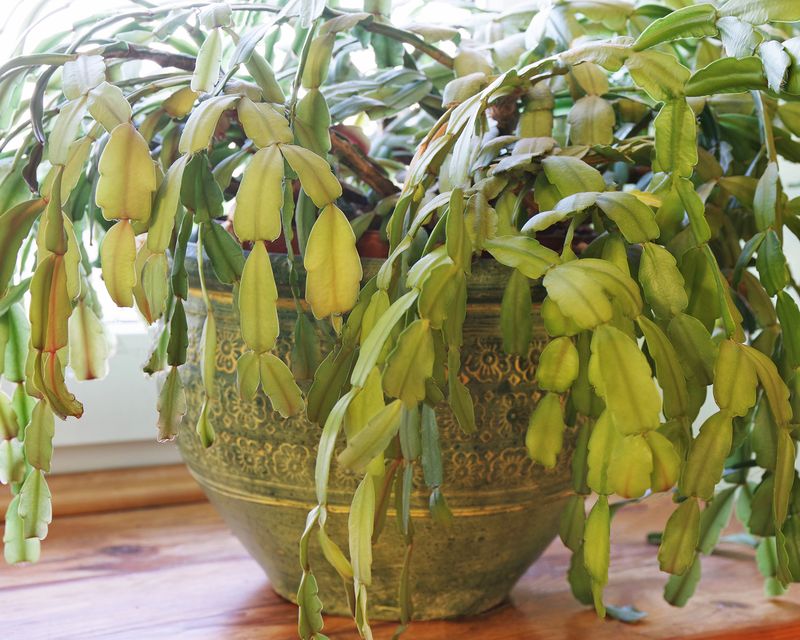
Few things worry a plant owner more than watching a beloved Christmas cactus go soft and droopy seemingly overnight. The good news is that limp segments do not automatically mean the plant is doomed – they are a clue pointing you toward a specific part of the pot you may not have checked yet. Before you reach for the watering can or panic-repot the whole thing, a quick look below the soil surface can tell you far more than the segments themselves ever will. This guide walks you through a root-zone check so you can choose the right fix instead of guessing.
Limp segments are a symptom, not a watering verdict
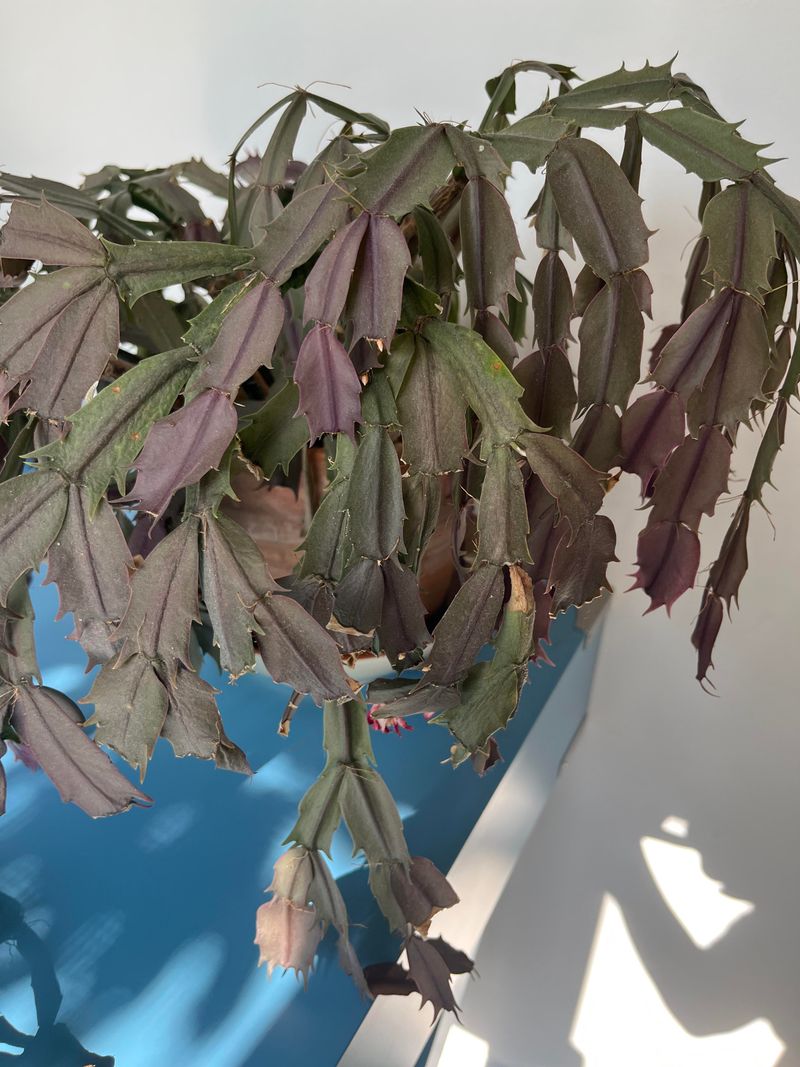
When the flattened pads on your holiday cactus go soft, the instinct is to grab the watering can or assume you have watered too much. Both reactions move too fast. Those pads are technically stem segments, not leaves in the botanical sense, though calling them leaves is perfectly understandable consumer shorthand. What matters right now is that their limpness is a symptom with several possible causes – and the cause determines the cure.
Holiday cacti sold under the name “Christmas cactus” often include Thanksgiving cactus and closely related hybrids. UNH Extension guidance on holiday cacti notes that the common name covers more than one species, though their care requirements are broadly similar. What all of them share is a rainforest epiphyte background – they grow anchored to trees in humid tropical forests, not in desert sand. That distinction matters enormously for how you water and pot them.
Because these plants come from a humid but fast-draining environment, they need moisture and they also need air around their roots. UConn Extension’s holiday cactus factsheet confirms that both too much water and too little can produce wilting. Underwatering, overwatering, compacted media, low light, temperature stress, and disease can all make segments go limp. The symptom alone cannot tell you which problem you are dealing with – only a root-zone check can start to sort that out.
Why wet soil can leave a Christmas cactus wilted
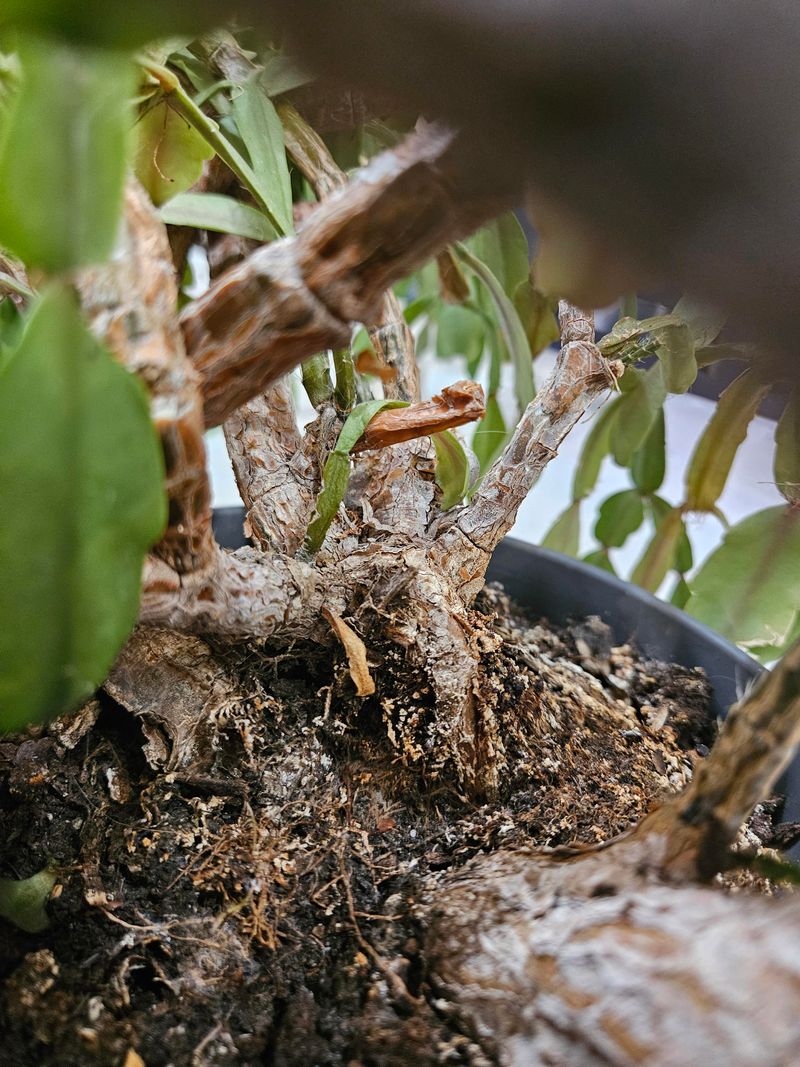
Saturated potting mix does something counterintuitive: it cuts off the oxygen that roots need to function. When soil stays wet for too long, the air pockets collapse, root cells begin to break down, and the plant loses its ability to take up water – even though water is sitting all around it. The result is a plant that looks thirsty while sitting in a soaked pot.
Minnesota Extension’s holiday cactus resource describes root rot in holiday cacti as producing gray-green foliage, wilting, stem collapse, and dark, mushy roots. Iowa State Extension similarly identifies overwatering as a direct cause of limp growth and root rot in these plants. The damage is not always visible from the outside – a pot can look perfectly normal while the roots underneath are already struggling.
A wet pot paired with limp segments is a specific combination that calls for a drainage and root investigation, not more water. Adding water to a saturated mix deepens the oxygen deficit and accelerates any rot already underway. Iowa State Extension’s holiday cactus guide reinforces that overwatering is one of the most common mistakes with these plants. If the mix feels wet and the segments are still limp, stop watering and start investigating.
Check the moisture and drainage before you intervene
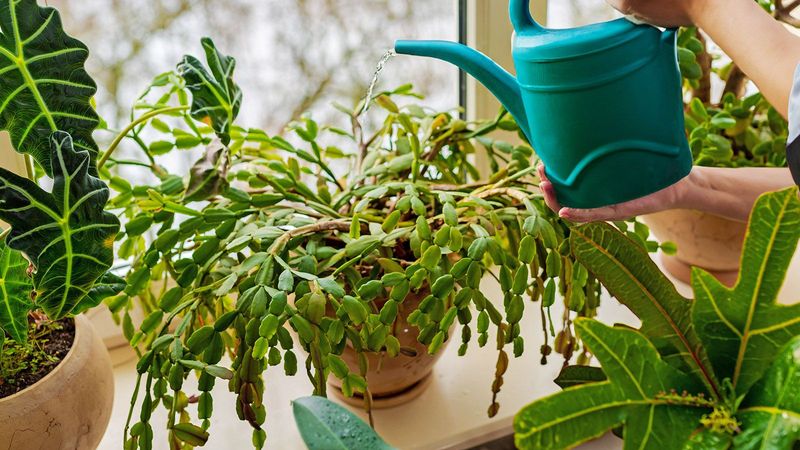
Surface appearances can mislead you. The top inch of potting mix can feel dry to the touch while the lower root zone remains saturated, especially if the mix has degraded or compacted over time. Wisconsin Extension’s holiday cactus article specifically warns that surface dryness can be deceptive in heavier or older mixes. Push a finger or a wooden skewer two to three inches into the pot and feel what is actually happening where the roots live.
While you are checking moisture, look at the pot itself. Drainage holes should be open and unobstructed – tip the pot and confirm water can flow freely. Any saucer, cachepot, or decorative sleeve should be emptied after every watering so the container does not sit in standing water. Illinois Extension’s container drainage guidance explains that containers sitting in collected water effectively lose their drainage advantage entirely.
The correct watering rhythm for a holiday cactus is a wet-dry cycle, not a fixed calendar. UNH Extension’s watering guidance recommends watering thoroughly when the mix has dried sufficiently, then allowing excess water to drain completely before the pot is returned to its spot. How often that happens depends on the season, pot size, mix type, and the amount of light the plant receives – no schedule fits every situation. A pot that stays wet unusually long after watering is a warning sign worth taking seriously, because it can indicate root loss or a drainage problem rather than a need for more water.
Dry soil calls for a different, gentler rescue
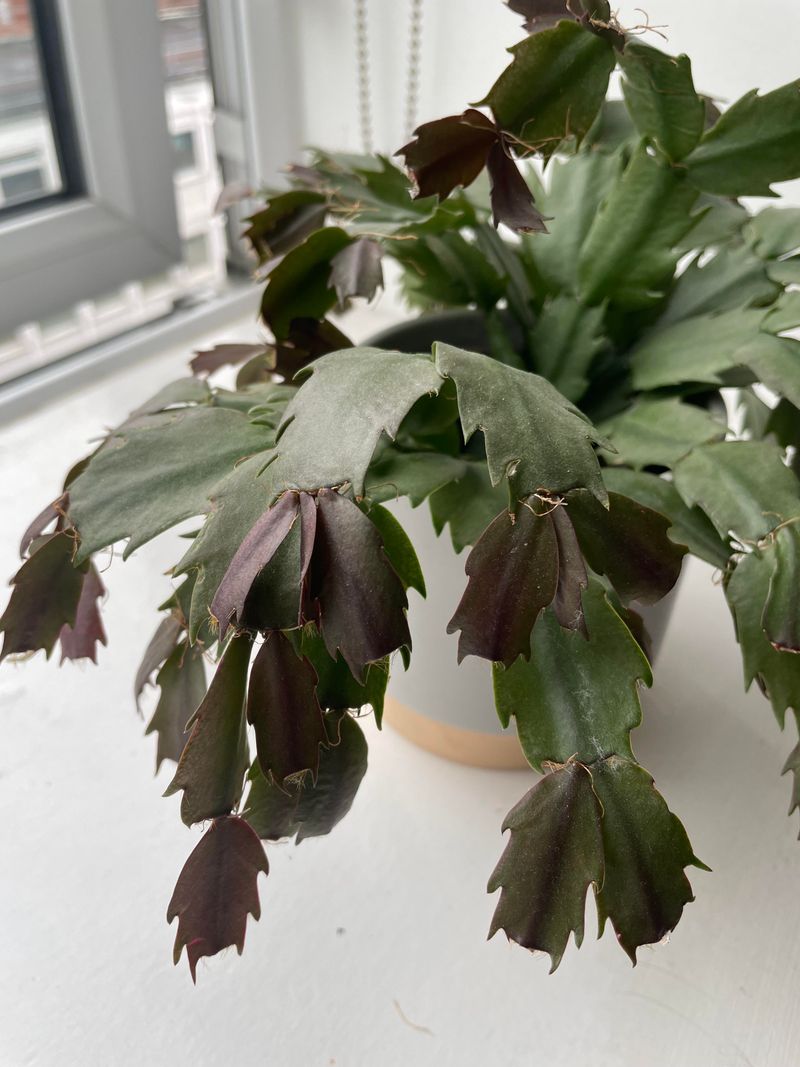
Not every limp Christmas cactus is sitting in wet soil. When you push your finger into the mix and find it bone dry throughout, and the segments look wrinkled or shriveled rather than just soft, underwatering becomes the more plausible explanation. The two scenarios can look similar from above, which is exactly why checking below the surface matters so much before acting.
Gradual rehydration is safer than flooding a severely droughted plant. UConn Extension cautions that prolonged drought can kill roots, and if roots have already been lost, a large sudden watering can waterlog the remaining root system and cause rot. A better approach is to water moderately, allow the mix to absorb it, and then check again in a day or two before adding more. Some gardeners also set a severely dry pot in a shallow tray of water for twenty to thirty minutes to let the mix rehydrate from below, then remove it and let it drain.
Even with dry soil, appearance alone is not a definitive diagnosis. UNH Extension notes that stress from low humidity, drafts, or temperature swings can also cause segment softening. If the plant does not respond to careful rehydration within a few days, treat that as a signal to unpot and examine the roots rather than continuing to add water.
Inspect the roots to assess damage and choose a rescue strategy
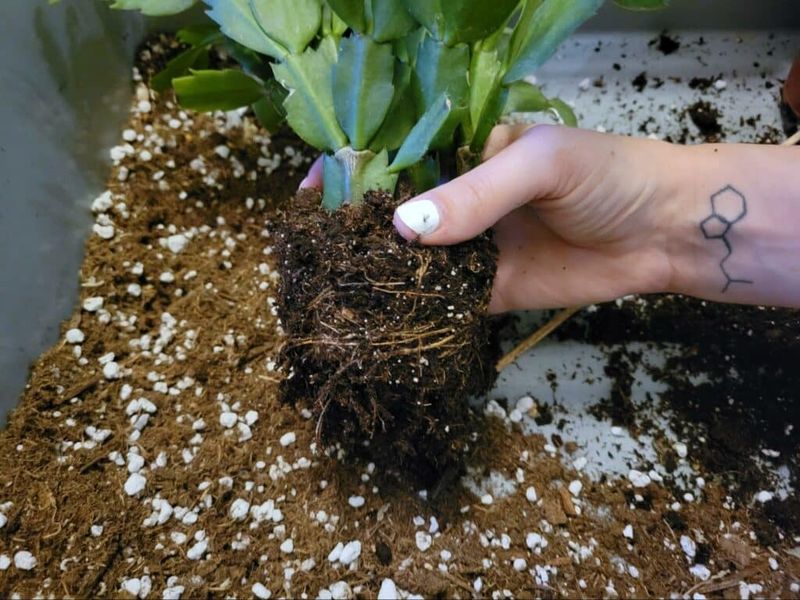
Unpotting a plant feels drastic, but there are clear situations that call for it: the mix stays wet days after watering, the segments remain limp despite wet soil, the pot dries unusually slowly, or you suspect the drainage holes are blocked. These are not moments for more guessing – they are moments to look directly at the root ball and see what you are working with.
Ease the plant out of its container gently and shake away loose mix so you can see the roots. Firm, light-colored or tan roots are healthy-looking and a good sign. Dark, limp, or mushy roots are consistent with rot or severe root loss – Minnesota Extension describes this pattern alongside wilting and stem collapse in holiday cacti with root rot. Keep in mind that visual inspection tells you the extent of the damage and helps you choose a treatment path, but it cannot definitively identify which pathogen, if any, is involved or reliably predict whether the plant will recover.
Penn State Extension’s plant health diagnostic guidance emphasizes that root problems often require a hands-on look rather than surface assessment alone. If most of the roots look firm and the damage is limited, a careful repot in fresh mix gives the plant a reasonable chance. If the root system is almost entirely dark and mushy, recovery is uncertain even with the best follow-up care. Wisconsin Extension notes that a severely compromised plant can be very difficult to bring back, which makes the inspection step a decision point rather than just a formality.
Repot damaged roots without creating a new drainage problem
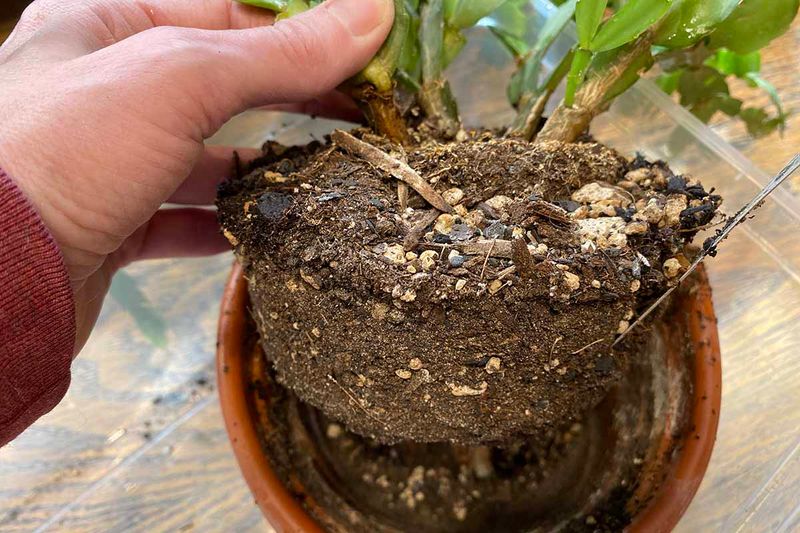
Once you have confirmed root damage or a drainage failure, the salvage sequence is straightforward. Remove as much of the old wet medium as you can without tearing healthy roots. Use clean, sharp scissors or pruning shears to cut away roots that are dark, mushy, or clearly dead, cutting back to tissue that looks firm. Cleaning your tool between cuts with rubbing alcohol reduces the chance of spreading any pathogen from one root to another.
Repot into fresh, preferably sterile potting mix in a container with at least one unobstructed drainage hole. Penn State Extension’s holiday cactus care guide and Iowa State Extension both confirm that a well-draining all-purpose mix can work perfectly well – a special cactus product is not mandatory. What matters is that the mix drains freely and allows air to reach the roots. Choose a pot only slightly larger than what remains of the root system; a container that is too large holds excess moisture the reduced root ball cannot use.
Skip the layer of gravel or rocks in the pot’s bottom. University of Nebraska Extension explains that a gravel layer creates a perched saturated zone just above it, which can make drainage worse rather than better. Drainage comes from holes in the pot and a porous mix, not from material stacked inside. For a healthy plant that is simply limp from a temporary stress, routine repotting is not necessary – Wisconsin Extension notes that holiday cacti often do well slightly pot-bound and are best repotted after flowering or in spring unless an active root problem forces earlier action.
Stress and disease signs can change the plan
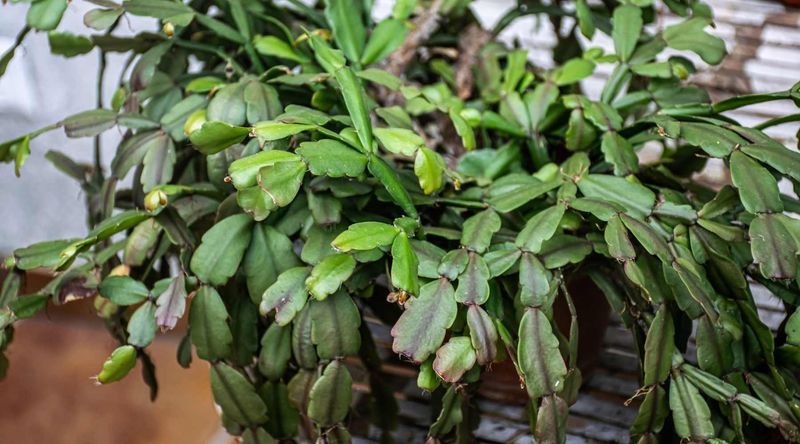
A root-zone check covers the most common causes of limpness, but some situations call for a closer look at the plant’s environment and the condition of the stem base. Holiday cacti prefer bright, filtered or indirect light – Iowa State Extension’s holiday cactus guide recommends avoiding hot direct sun, which can scorch segments and stress the plant. Cold drafts from windows or doors, forced-air heating vents nearby, and sudden temperature swings can all cause segment softening or bud drop. Correcting these conditions supports recovery, but fixing the light or moving the pot away from a vent does not substitute for checking whether the roots and soil are healthy.
UNH Extension and Minnesota Extension both describe how environmental stress can mimic moisture-related symptoms, which is another reason the root check comes first. Once you are looking at the base of the plant, pay attention to what you see at and just below the soil line. Ordinary root rot from overwatering looks different from bacterial soft rot, which produces black, wet, slimy lesions at the stem base – a more alarming pattern.
Minnesota Extension associates that black, slimy presentation with bacterial soft rot and recommends destroying infected plants to prevent spread to others. Penn State Extension’s Christmas cactus disease resource lists Phytophthora and Pythium root rots as documented pathogens in addition to bacterial issues, and notes that different pathogens require different responses. Applying a general fungicide as a first response to a wilting plant is not well-supported – the pathogen involved may not respond to fungicide at all, and in cases of advanced infection the most responsible action may be to discard the plant rather than attempt treatment.
Propagate healthy segments if the original plant is badly compromised
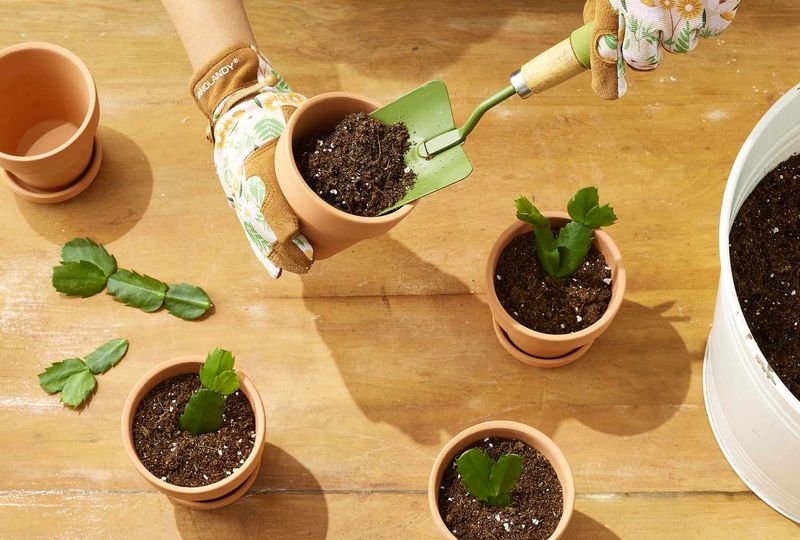
Extensive root loss or advanced disease can make full recovery unlikely even with careful repotting, and that is worth acknowledging honestly rather than offering false reassurance. When the root ball is mostly gone or the stem base shows signs of serious infection, taking healthy stem cuttings as a backup gives you the best chance of preserving the plant’s genetics before the original is lost.
Wisconsin Extension recommends propagating from stem segments as a practical response when a severely compromised plant is difficult to recover. Choose segments that look firm and healthy – no soft spots, discoloration, or lesions. Allow the cut end to callus for a day or two before placing it about an inch deep in fresh, barely moist potting mix. Keep it in bright indirect light and resist watering heavily until new growth signals that roots have formed.
Propagation is a contingency, not a cure, and it works best when you act before the entire plant deteriorates. The diagnostic order stays the same regardless: check the moisture below the surface, confirm that drainage is working, inspect the roots if the plant stays limp in wet soil, and then choose watering, repotting, or propagation based on what you actually find. A Christmas cactus that has been in the family for years deserves that careful look – and sometimes the cutting you take today becomes the thriving plant you enjoy for the next decade.