
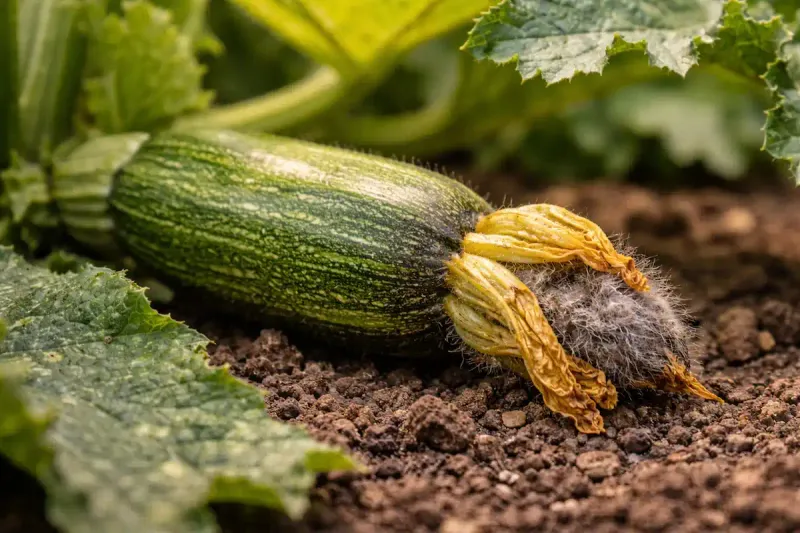
Watching a tiny zucchini swell up and then shrivel before it ever reaches your kitchen is one of the most frustrating moments in a summer garden. Most growers blame the plant, the soil, or bad luck, but the real cause is usually found at the flower. Whether the problem starts before the bloom, during pollination, or in wet conditions afterward, figuring out which one is happening changes everything about how you respond.
Start with the fruit and the flower
The title points to a moment before the flower opens, and that framing is useful but not quite complete. Environmental stress can begin affecting plant health before a bloom ever forms, pollination itself happens only while the female flower is open, and disease or moisture problems can damage flowers and young fruit during or after that window. Treating “before the bloom opens” as the single causal moment can send you chasing the wrong fix.
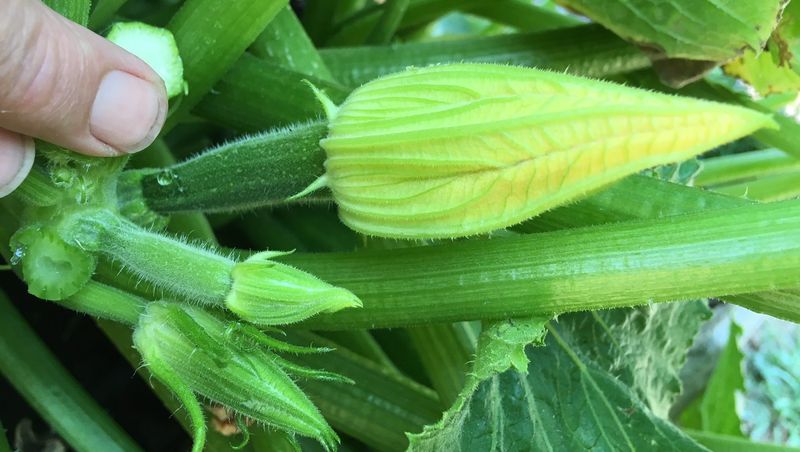
Before anything else, confirm which flower you are looking at. A female zucchini flower has a small, undeveloped squash sitting directly behind the blossom at the base of the stem. A male flower grows on a thin, plain stem with no swelling beneath it. Only the female flower can become fruit, and only if pollen reaches it while it is open.
The symptom worth tracking is a fruit that swells briefly, stays small or misshapen, shrivels, drops, or later breaks down before reaching edible size. University of Minnesota Extension notes that the first round of small summer squash is especially likely to abort, often because of poor pollination during the plant’s first fruiting cycle. Before adjusting soil or reaching for a spray, spend a few days observing the flower type, the fruit’s appearance, recent weather, and soil moisture. That sequence of observations will point you toward the right response far more reliably than a default amendment.
Pollination depends on a short morning window
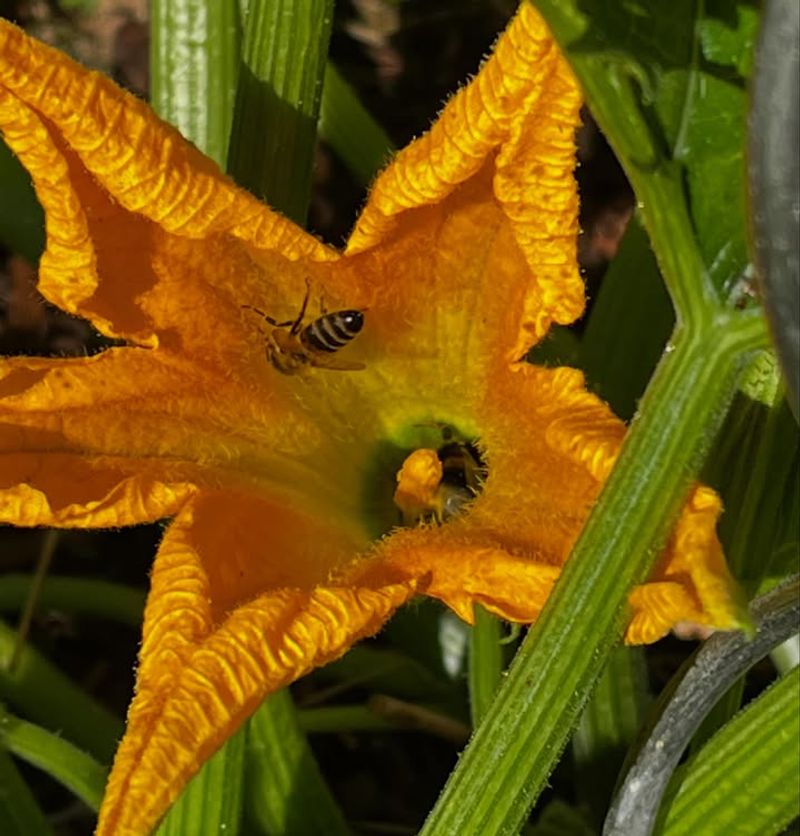
Zucchini produces separate male and female flowers on the same plant, and the two must work together for fruit to develop. Pollen has to travel from the male flower’s anther to the sticky stigma at the center of the open female flower. Without that transfer, the young fruit stops developing, and the tiny squash shrivels and drops.
The catch is that cucurbit flowers stay open for only a few hours, generally during the morning. University of Minnesota Extension’s guide on flower and fruit set in cucurbits explains that squash bees and bumblebees are the primary movers of pollen during that window, since both forage during morning hours when zucchini flowers are receptive. Assuming your garden has no pollinators is a mistake; squash bees in particular are easy to overlook because they work early and nest quietly underground near cucurbit plantings.
When pollen transfer is incomplete, the results vary. A fruit may simply fail to set at all, remain permanently small, grow misshapen with uneven seed development, or abort after a few days of apparent growth. Penn State Extension’s overview of cucumber pollination reinforces that inadequate pollen delivery is one of the most common explanations for these outcomes in cucurbit crops. What poor pollination does not do on its own is create soft, mushy, water-soaked rot.
If you are seeing fuzzy growth or collapsing tissue, a second cause is at work alongside or instead of a pollination shortage.
Weather can interfere before and during flowering
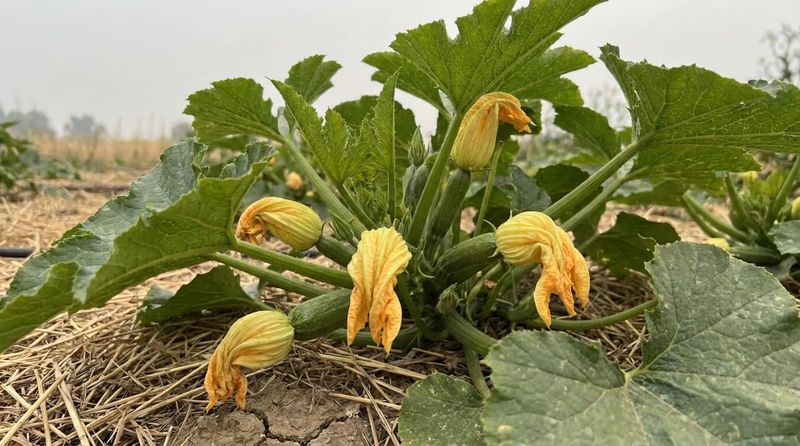
A stretch of bad weather before your zucchini even blooms can set up problems that show up later as failed fruit. Drought reduces the plant’s ability to support flower production. Flooding and waterlogged soil limit root function. Extreme heat above roughly 90 degrees Fahrenheit can cause flowers to drop or produce non-viable pollen before a bee ever visits.
Cold snaps, strong wind, and prolonged rain can each suppress pollinator activity during the narrow morning window when flowers are open and receptive.
The University of Minnesota Extension vining vegetable guide lists drought, excess moisture, flooding, extreme heat, cold, wind, and rain among the stresses that can reduce flowering, limit pollinator visits, or cause small fruit to abort. None of these stresses follow a tidy sequence where the damage ends once the flower opens. Heat can continue stressing the plant during pollination; rain can wet flowers and encourage disease after they close.
When you notice shriveled or aborted fruit, compare the symptom against recent weather before assuming a hidden soil problem. Three or four days of temperatures above 95 degrees Fahrenheit during the plant’s first bloom cycle is a more likely explanation for widespread fruit drop than a nutrient deficiency that developed overnight. Keeping a simple garden log of temperatures, rainfall, and fruit-set outcomes over two or three weeks often reveals the pattern more clearly than any single inspection.
Manage the root zone throughout the crop cycle

Soil advice for zucchini is most useful when it focuses on root health, drainage, and consistent moisture rather than on default calcium additions. The root zone needs to stay evenly moist without sitting in standing water. Watering deeply enough to reach the full root zone, then allowing excess to drain, gives the plant what it needs without creating the waterlogged conditions that suffocate roots and open the door to rot.
University of Minnesota Extension’s irrigation guidance for vegetables supports mulching as a way to reduce sharp swings between dry and wet soil, which helps maintain the steady moisture that zucchini roots prefer. A two-to-three-inch layer of straw or wood-chip mulch placed a few inches away from the main stem can buffer against both rapid drying and soil splash during rain. Drip irrigation is preferable to overhead watering where practical, since it keeps the foliage and fruit drier and reduces the wet conditions that favor fungal problems.
One common mistake is cultivating deeply close to the plant to control weeds. Zucchini roots spread widely and sit relatively near the surface, so aggressive hoeing within a foot or two of the main stem can sever roots and impair the plant’s ability to move water and nutrients. University of Minnesota Extension’s review of common soil health remedies points out that calcium moves into developing fruit tissue with water, meaning root injury or inconsistent moisture can limit calcium delivery even when soil calcium levels are adequate. Keeping roots intact and moisture steady is a more reliable foundation than adding amendments before diagnosing the actual problem.
Match the visible damage to the likely cause
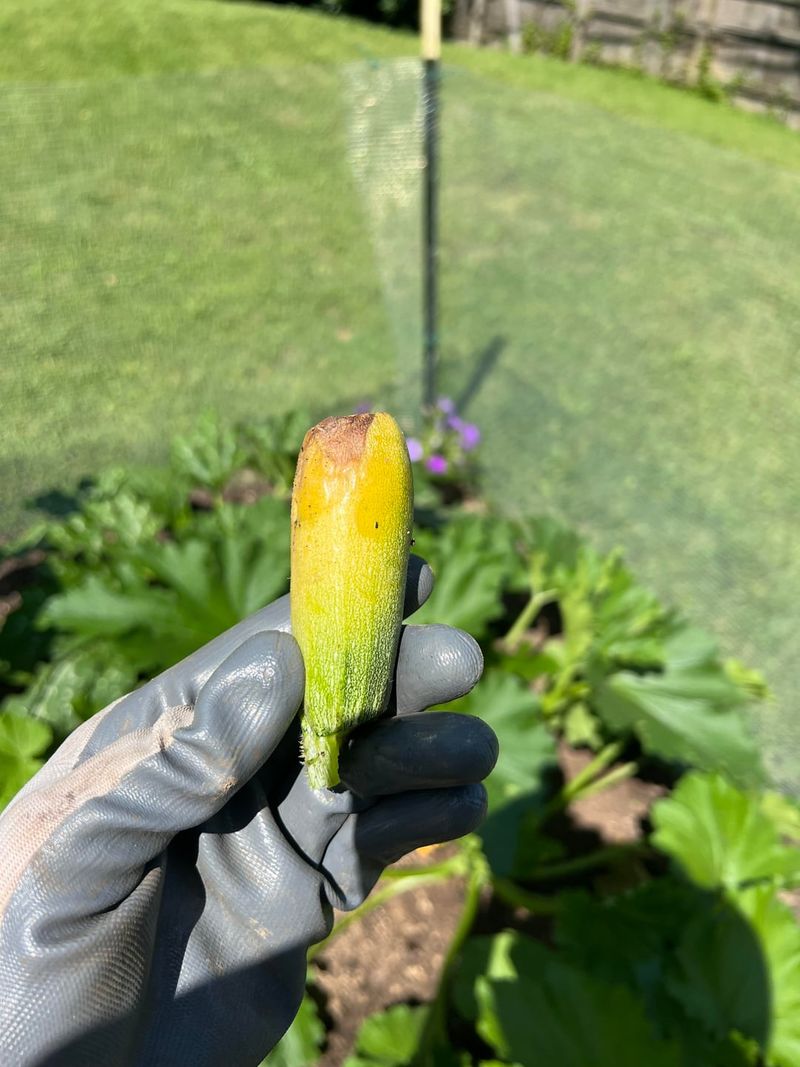
Not every rotting zucchini has the same story behind it, and the appearance of the damaged fruit carries a lot of diagnostic weight. A fruit that stays small, turns yellow or pale, shrivels from the blossom end, and drops cleanly is most consistent with a pollination failure or stress-related abortion. There is no pathogen required for this outcome; the plant simply stops investing resources in a fruit that did not receive enough pollen or that formed during a period of heat or moisture stress.
A firm, dark, leathery, or sunken lesion concentrated at the blossom end of an otherwise normal-looking fruit suggests a blossom-end-rot-type physiological disorder. Utah State University Extension’s blossom end rot fact sheet notes that this condition is common in tomatoes and peppers but occurs only rarely in zucchini squash. When it does appear in zucchini, inconsistent moisture and root-function problems are typically involved rather than genuinely calcium-deficient soil.
Mushy, watery, collapsing tissue accompanied by white, purplish, or black fuzzy growth points toward a fungal disease rather than a simple pollen shortage. The University of Minnesota Extension page on Choanephora rot describes this disease as one that infects flowers and young fruit under prolonged wet, humid conditions, producing characteristic fuzzy sporulation on affected tissue. Symptoms can overlap because tissue that aborted from poor pollination may later be colonized by secondary organisms, so fuzzy growth on a shriveled fruit does not always mean disease was the original cause. Each appearance points toward a different response, and a confident diagnosis usually requires seeing more than one affected fruit.
Use hand-pollination as a targeted backup
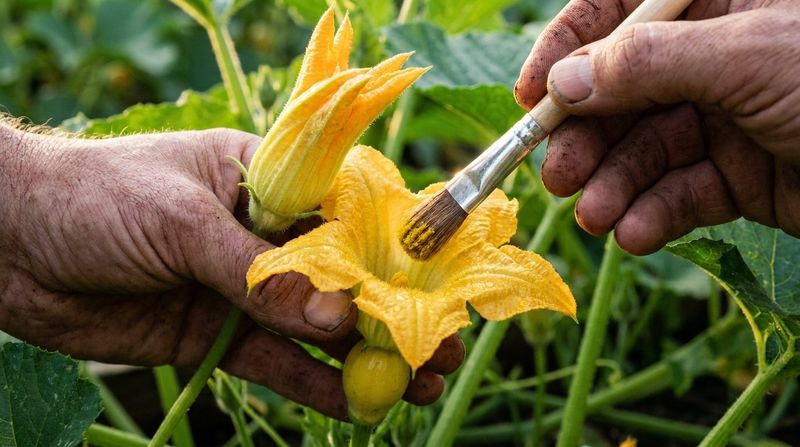
Hand-pollination is a practical tool for specific circumstances, not a universal fix for every shriveled zucchini. The right time to try it is when you have seen repeated fruit-set failures across multiple female flowers during a period when you rarely observe bees or other pollinators visiting the flowers during morning hours. If you regularly see bees working the blooms, hand-pollination is unlikely to add meaningful benefit.
The method is straightforward. Find a freshly opened male flower, the one on the thin plain stem with no swelling behind it, and remove or gently peel back its petals to expose the pollen-covered anther. Then transfer that pollen directly onto the sticky stigma at the center of an open female flower. Colorado State University Extension’s vegetable garden hints and Oregon State University Extension’s guide on growing zucchini both describe this same approach for improving fruit set when natural pollination is insufficient.
Do this in the morning while both flowers are fully open, since the female flower’s receptive period is short.
A few cautions apply. Squash bees are native ground-nesting bees that often forage very early, sometimes before most gardeners are outside, so their absence is easy to assume incorrectly. Avoid disturbing patches of bare or loosely packed soil near your cucurbit beds, since squash bees nest underground in those areas. Hand-pollination also cannot correct the underlying causes of other problems.
Heat stress, waterlogged roots, or an active fungal infection will continue affecting fruit even after successful pollen transfer.
Take a low-risk action plan
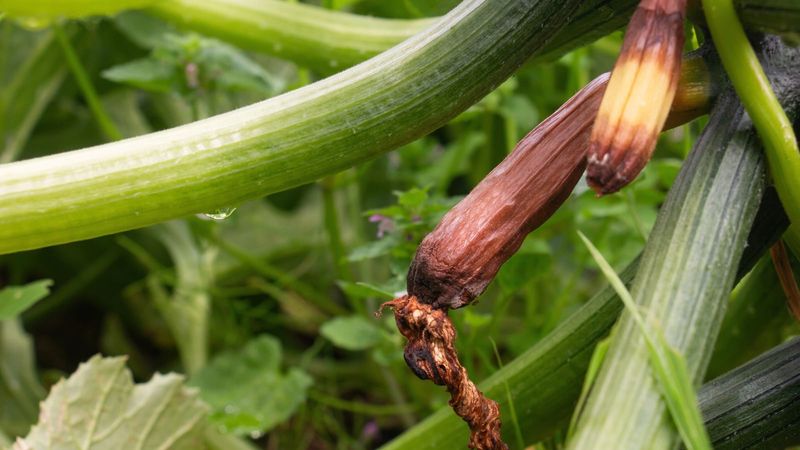
Once you have matched the visible symptom to the most likely cause, a staged response keeps risk low and avoids wasting amendments or harming pollinators. Start with what costs nothing: remove any fruit showing mushy tissue or fuzzy growth from the garden entirely rather than leaving it under the plant. University of Minnesota Extension’s Choanephora rot guidance explains that fungicide applications are not an effective control for this disease because new susceptible flowers open every day. Sanitation, improved airflow, and reduced wetness around the plant are the more appropriate responses.
Space plants so that foliage and fruit dry reasonably quickly after rain or irrigation. Switch from overhead watering to drip irrigation if possible, and water in a way that allows excess to drain rather than pool. University of Minnesota Extension’s vegetable irrigation strategies support consistent, deep watering over frequent shallow applications, with mulch helping to buffer soil moisture between sessions.
On the amendment question, resist the urge to add lime, gypsum, eggshells, or Epsom salts without evidence that your soil actually needs them. University of Minnesota Extension’s review of common soil remedies finds that eggshells decompose too slowly to prevent blossom end rot and that Epsom salts can interfere with calcium uptake when added without a confirmed magnesium deficiency. A soil test is the only reliable basis for adding any of these materials. For pollinator protection, EPA guidance on pollinator protection directs applicators to follow all product-label restrictions, avoid applying insecticides to open flowers, and use timing and drift-reduction practices that reduce exposure to actively foraging bees.
Let the next flowers test your diagnosis
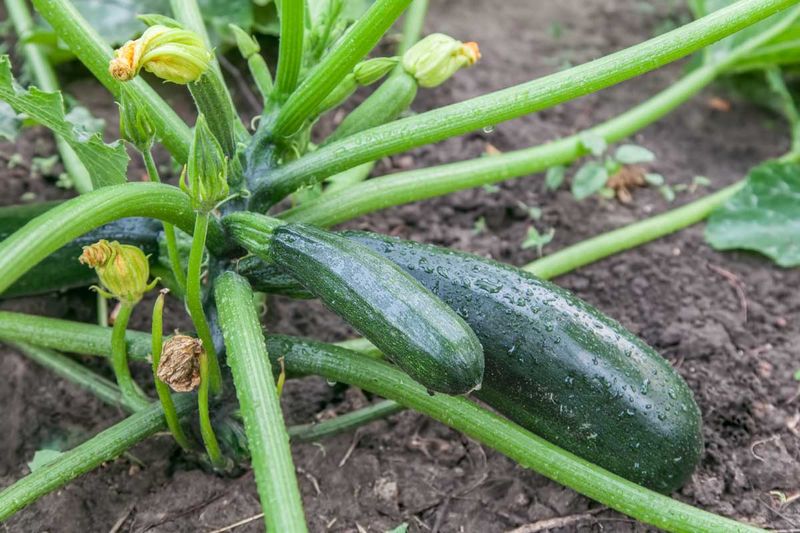
Recovery is not something you can confirm from a single inspection. The more useful approach is to watch the next two or three female flowers through their full cycle and record what happens. Notice whether a young fruit begins swelling and continues growing past the first three days, whether soil moisture stays even between waterings, and whether any soft or fuzzy growth returns on new fruit.
Use what you observe to confirm or revise your diagnosis. Continued fruit abortion with no fuzzy growth and limited bee activity points toward a pollination problem; try hand-pollination on the next female flower. Persistent moisture pooling or root disturbance points toward drainage and watering adjustments. Returning fuzzy growth on new fruit calls for renewed sanitation and reduced wetness rather than a fungicide.
If symptoms remain ambiguous or keep recurring despite your corrections, a local cooperative extension office can review your specific conditions and provide regionally grounded guidance. Watching the plant through several flower cycles is often more informative than any single fix. The zucchini plant is telling you something with every fruit it drops; the goal is to learn its language before the season runs out.