
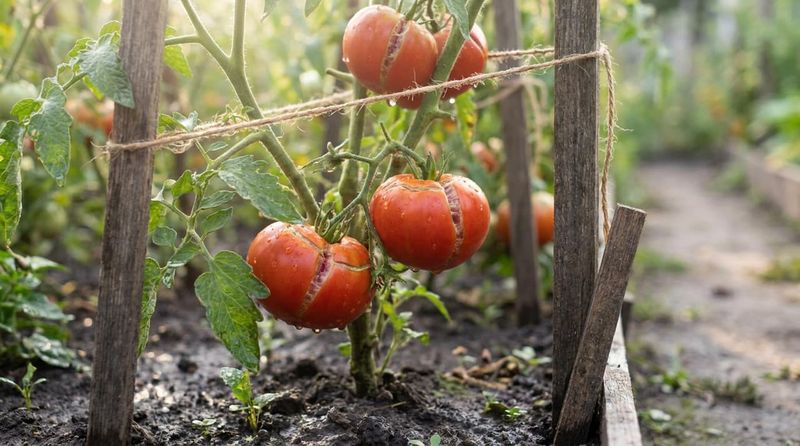
Walking out to your garden after a summer rainstorm and finding your nearly ripe tomatoes split wide open is genuinely discouraging. The good news is that this kind of damage is one of the most fixable problems a home gardener faces, and it usually comes down to how consistently the soil stays moist. Understanding what actually causes those cracks, and what you can do about it before the next downpour, can save a lot of fruit.
Identify the Typical Growth Crack
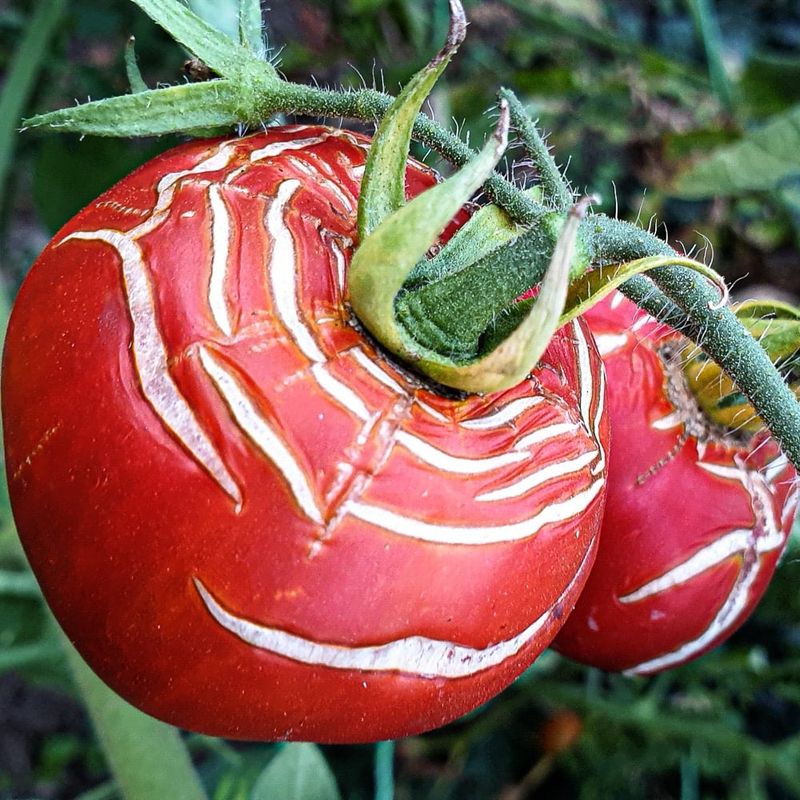
Two crack patterns show up most often on garden tomatoes, and recognizing them helps you rule out insects or disease right away. Radial cracks run outward from the stem like spokes on a wheel, while concentric cracks form rings that circle the stem end. University of Minnesota Extension’s tomato diagnostic tool classifies both as physiological growth disorders, meaning the plant’s own biology produces the damage rather than a pathogen or pest chewing through the skin.
Knowing this matters because it changes what you do next. A gardener who mistakes growth cracks for a fungal disease might reach for a spray that does nothing for the underlying problem. One who suspects insect damage might search for pests that were never there. North Carolina State Extension confirms that ordinary growth cracks are not caused by infectious organisms and do not spread from fruit to fruit the way a disease would.
The key question to ask when you spot these cracks is what has been happening in the soil over the past week or two. Cracking rarely appears out of nowhere; the fruit’s history of water availability usually explains why the skin gave way when it did. That soil-moisture history is where the real diagnosis begins.
Understand How Dry Soil and Heavy Water Split Fruit
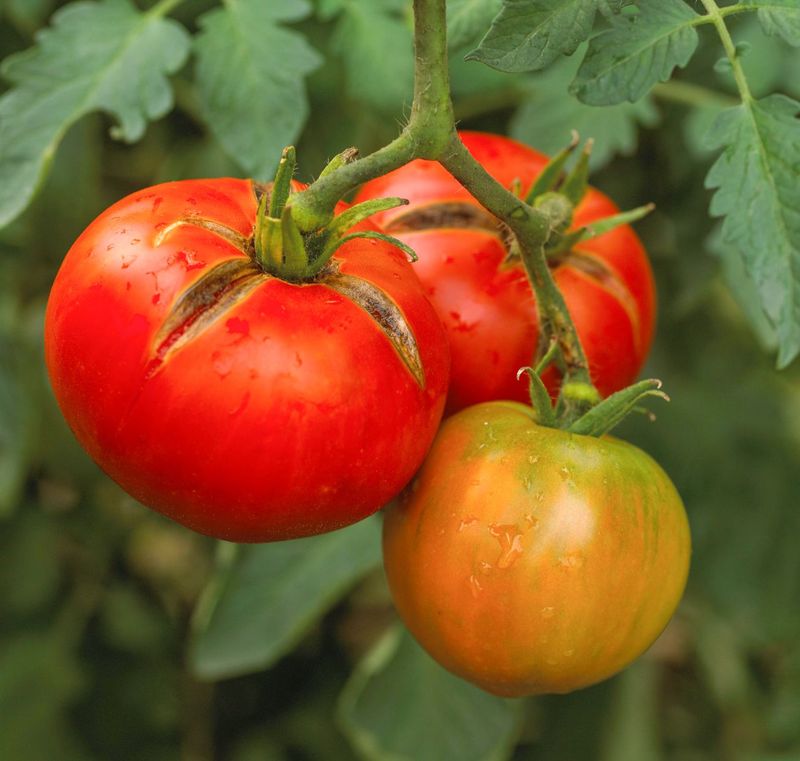
When soil dries out significantly between waterings, a tomato plant gradually reduces the steady flow of water reaching developing fruit. The fruit keeps growing, but at a slower pace set by what the roots can deliver. Then a heavy rain arrives, or a gardener waters deeply after skipping several days, and water availability jumps sharply.
Penn State Extension explains that this sudden surge causes the fruit’s interior to expand faster than the outer skin can accommodate. The skin, already stretched to match the fruit’s current size, simply cannot keep pace and splits along the path of least resistance, which is usually toward the stem. UMass Extension notes that ripening fruit is especially vulnerable because the skin becomes less elastic as the tomato matures, leaving it with less ability to flex under sudden internal pressure.
Rain does not act as the sole cause here. A summer storm after a stretch of consistently moist soil is a very different situation from the same storm following two weeks of drought. University of Minnesota’s vegetable irrigation guidance makes clear that the damaging sequence is the swing from dry to wet, not the rainfall event itself. Heat adds to the risk by speeding fruit development and raising the temperature of the fruit’s skin, but a hot day alone does not cause cracking the way a dry-to-wet moisture swing does.
Keep Root-Zone Moisture as Even as Practical
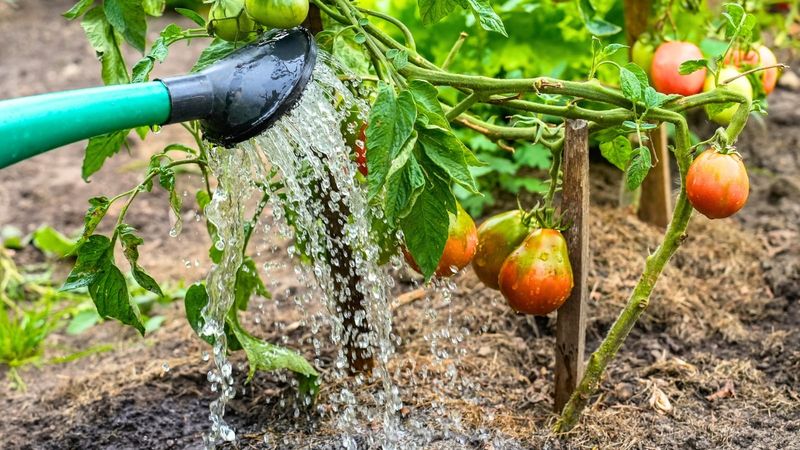
The most reliable way to reduce cracking is to keep the soil in the root zone reasonably moist throughout the time fruit are developing, rather than letting it swing between very dry and very wet. That does not mean watering on a rigid daily schedule; it means paying attention to what the soil actually holds. University of Minnesota’s tomato growing guide recommends checking moisture several inches below the surface rather than judging by the top inch alone, which can feel dry even when deeper soil is still adequate.
A commonly cited starting benchmark for many in-ground gardens is about one inch of rainfall or irrigation per week, but treat that as a rough guide rather than a rule. Utah State University research on home-garden tomatoes points out that sandy soils drain quickly and may need more frequent attention, while clay soils hold moisture longer. Container-grown tomatoes and plants under intense heat or carrying heavy fruit loads may need water more often than an in-ground bed in moderate weather.
USU’s vegetable irrigation guide advises watering deeply enough to wet the full root zone rather than applying frequent, shallow sprinkles that never reach lower roots. Count recent rainfall toward your total before turning on the hose, and avoid skipping irrigation after a storm if the soil dries out again within a few days. Recreating drought stress after a downpour simply sets up the same damaging cycle all over again.
Use Mulch and Base Irrigation to Reduce Moisture Swings
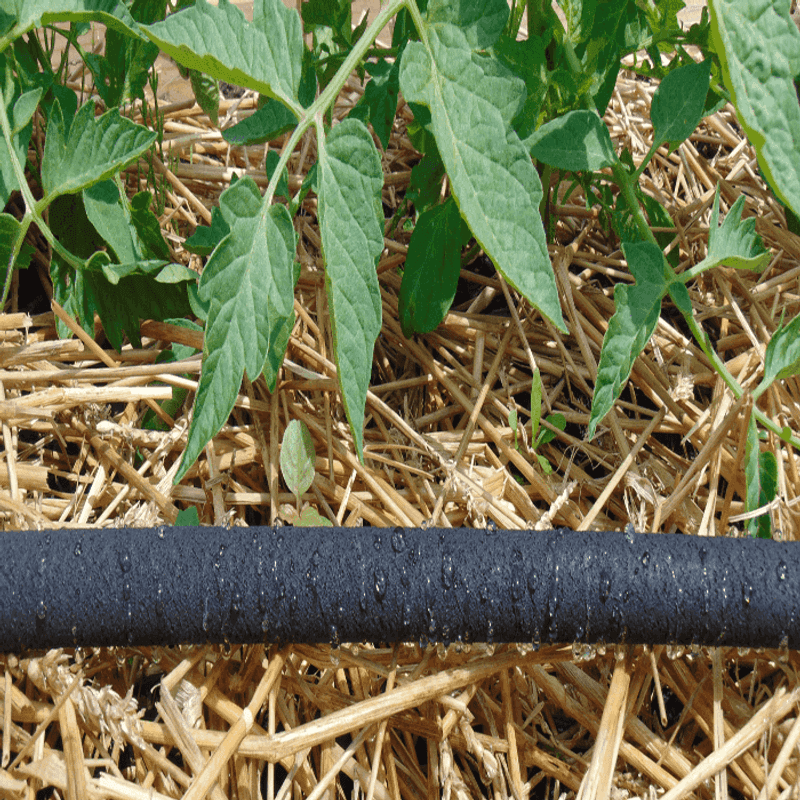
Mulch is one of the most practical tools for smoothing out the wet-dry cycles that lead to cracking. A layer of clean straw, shredded leaves, or finished compost spread two to three inches deep around your plants slows evaporation from the soil surface, which means the root zone stays moist longer between waterings and after rain. University of Minnesota Extension lists mulching as a key cultural practice for managing tomato cracking, and Iowa State University Extension similarly recommends it to buffer soil temperature and moisture. Keep the mulch a couple of inches away from the stem itself so you do not trap excess moisture against the base and invite rot.
Where you deliver water also matters. Drip irrigation lines or a soaker hose placed at soil level put water directly into the root zone at a slow, steady rate that the soil can absorb without runoff. Oregon State Extension’s tomato guide notes that base watering also avoids unnecessarily wetting leaves, which can reduce some foliar disease risks over time.
These practices reduce evaporation and soften wet-dry swings, but they do not guarantee crack-free fruit. If a prolonged drought is followed by a heavy rain, some cracking can still occur even in a well-mulched bed. Think of mulch and base watering as tools that lower risk, not as a complete solution on their own.
Account for Heat, Ripeness, Foliage, and Cultivar
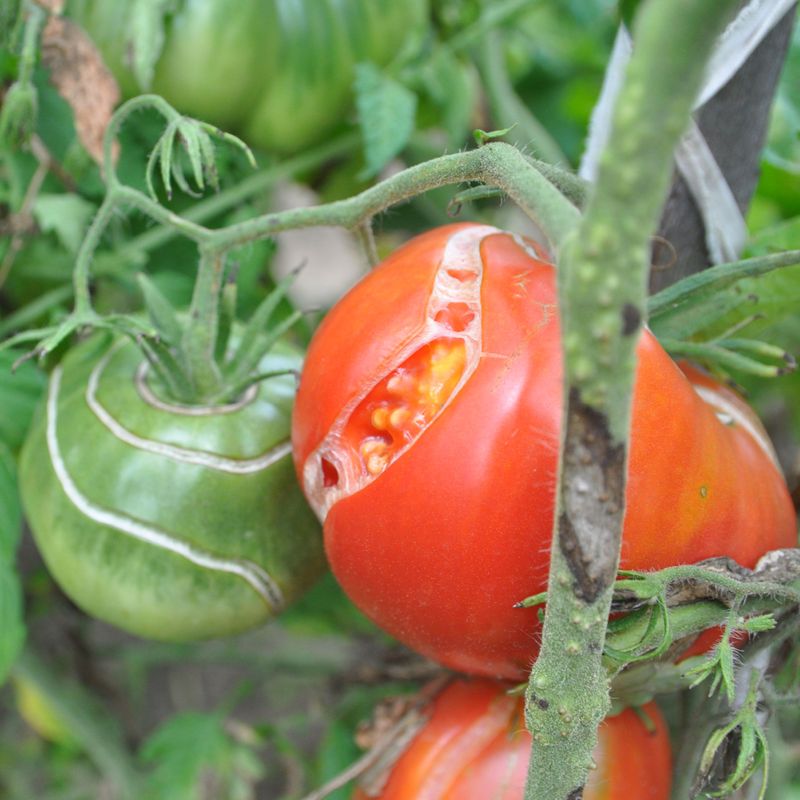
Even when two plants in the same bed receive identical water, one may crack while the other stays intact. Several factors explain that variation. As a tomato ripens, its skin gradually loses elasticity, so fruit that are close to fully ripe have less give to accommodate a sudden surge of internal water. UC ANR’s integrated pest management guide on fruit cracking identifies fruit maturity as a meaningful contributor to susceptibility, alongside moisture swings.
Cultivar makes a real difference too. Large beefsteak types and many heirloom varieties tend to crack more readily than smaller-fruited types, though Iowa State University Extension cautions that no variety is guaranteed to stay crack-free when soil moisture swings sharply. Penn State Extension notes that selecting crack-resistant cultivars can reduce but not eliminate the problem.
Foliage loss is another factor that often gets overlooked. Leaves shade the fruit and moderate its temperature on hot afternoons. When excessive pruning or disease strips the canopy, fruit are left exposed to direct sun, which raises their surface temperature and may reduce skin flexibility further. University of Minnesota Extension links foliage loss to increased cracking risk for this reason.
Heat amplifies all of these effects by speeding fruit development, but it works alongside moisture swings rather than replacing them as the central cause.
Harvest Before Exceptional Rain Without Creating Drought Stress
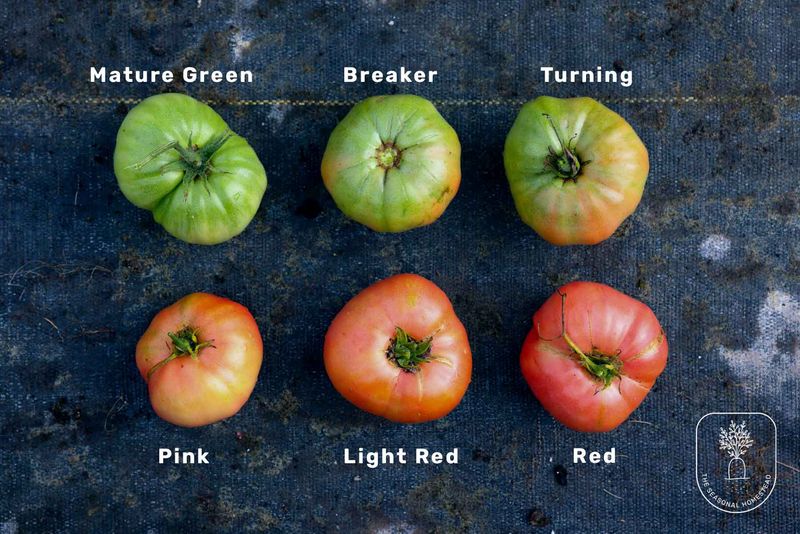
When cracking has been a recurring problem and a heavy rain is in the forecast, harvesting nearly ripe fruit is a practical way to protect the ones you most want to save. Penn State Extension reports that picking at the breaker-to-pink stage rather than waiting for full vine ripeness can reduce late-development cracking, since the fruit finishes ripening off the vine without exposure to the moisture surge. Tomatoes harvested at this stage will continue to ripen at room temperature over a few days and still develop good flavor.
One approach that should be avoided, though, is cutting back on irrigation in the days before a forecast storm hoping to reduce how much water the fruit absorbs. Nebraska Extension recommends harvesting near-mature fruit before predicted rain rather than stressing plants through deliberate drought. Withholding water simply recreates the dry-soil condition that makes the subsequent rain so damaging.
Any fruit that does crack should be picked promptly. University of Missouri Extension warns that open splits quickly admit secondary fungi, bacteria, insects, and rot, and leaving cracked fruit on the vine speeds deterioration. Before reaching for calcium products or a pesticide, confirm what you are actually looking at: growth cracks radiate from or circle the stem end, while blossom-end rot appears as a dark, sunken, leathery patch at the blossom end and involves disrupted calcium uptake. Sunscald, by contrast, produces a pale or papery patch on fruit exposed to intense sun after foliage loss.
Ordinary growth cracks call for moisture management, not sprays.
Decide Whether a Cracked Tomato Is Usable
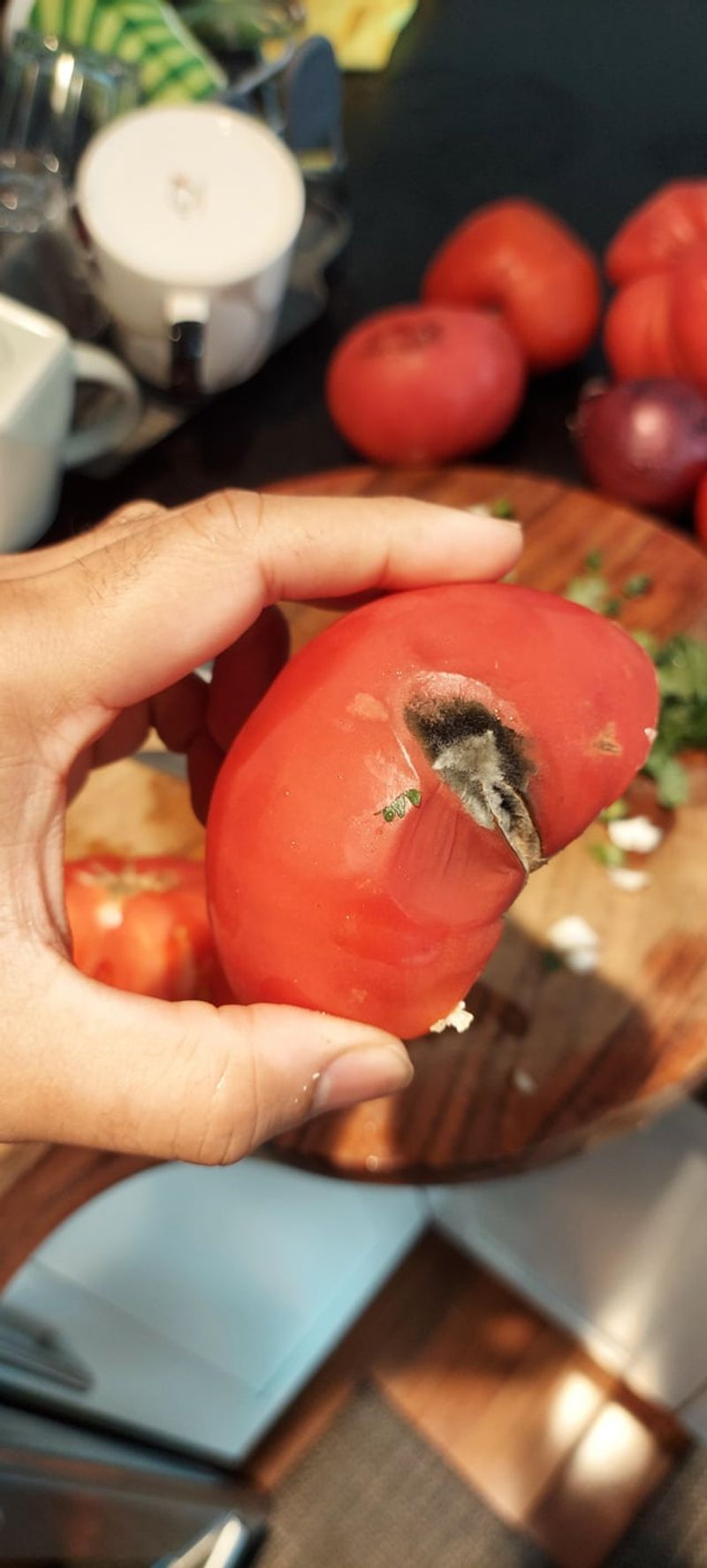
A small surface crack on an otherwise firm, good-smelling tomato is very different from a fruit that has split deeply or shows signs of mold, soft decay, or insect activity inside the crack. For the mildly damaged ones, cutting away the cracked portion and using the rest promptly is a reasonable approach. USDA food safety guidance notes that bacteria can thrive in damaged areas of fresh produce, which is why trimming generously and eating the fruit right away matters rather than storing it whole for later.
Fruit with deep cracks, any sign of mold, a sour or off odor, soft rotting flesh, or insect contamination should go into the compost, not onto the plate. No amount of rinsing or trimming makes a tomato that has already begun to rot safe to eat. University of Missouri Extension advises discarding cracked fruit that shows decay rather than attempting to salvage it.
Home canning is a different matter entirely. University of Minnesota’s canning guide is clear that cracked, bruised, diseased, or rotting tomatoes should not be used for home-canned products, and their salsa canning guidance repeats the same standard. Cut tomatoes that you do plan to use should go into the refrigerator promptly. No existing split can be closed or healed once it forms, so the only goal with already-cracked fruit is to use the sound portions safely and quickly.
Build a Steadier Routine Before the Next Storm
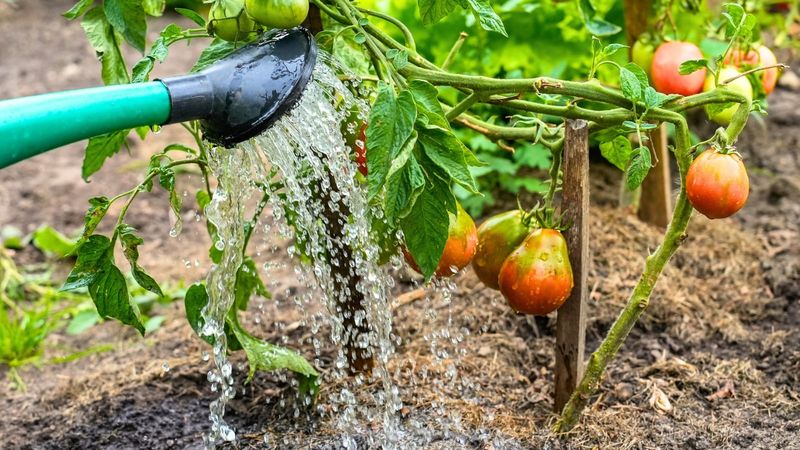
A hot spell followed by a heavy downpour is not a mysterious garden disease; it is a signal that the soil’s moisture level was already uneven before the rain arrived. The steps that reduce cracking are the same ones that make tomato plants generally healthier: stable root-zone moisture, a layer of organic mulch, deep and consistent watering that accounts for rainfall, and enough healthy foliage left on the plant to shade developing fruit. University of Minnesota’s growing guide and their tomato disorder resource both point back to these same fundamentals.
Monitor cultivars known to crack more readily, and when a significant storm is forecast, harvest any tomatoes that have already turned pink or begun to blush. These steps can meaningfully reduce new cracking and limit losses, but they cannot guarantee a crack-free harvest or repair fruit that has already split. The most realistic goal is fewer cracks each season, not a perfect one, and that is genuinely achievable for most home gardeners willing to pay attention to what the soil is doing between rainfalls.