
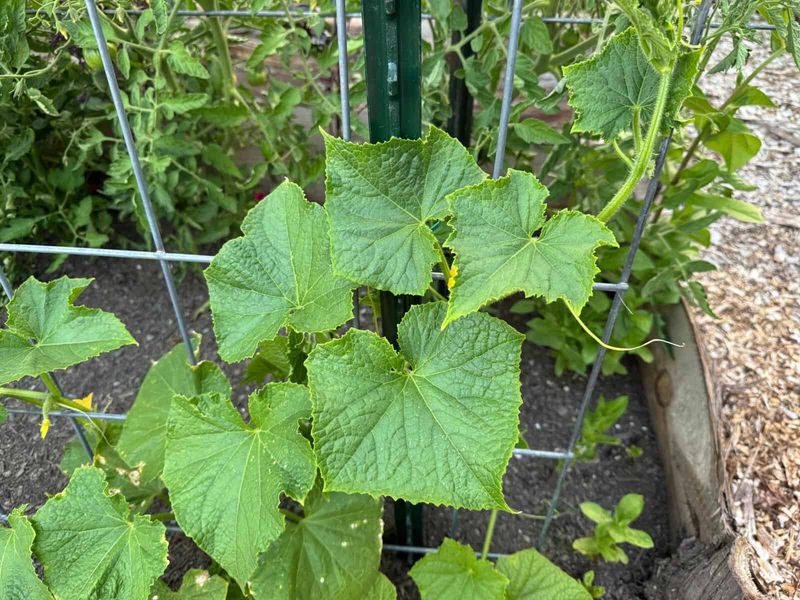
You planted cucumbers expecting a steady harvest, but instead you have a jungle of dark-green vines and almost nothing worth picking. That gap between a healthy-looking plant and a disappointing yield is one of the most frustrating problems in a summer garden. Several things can cause it, and sorting through them carefully is the fastest way back to actual cucumbers on your table.
Lush vines are a clue, not a diagnosis
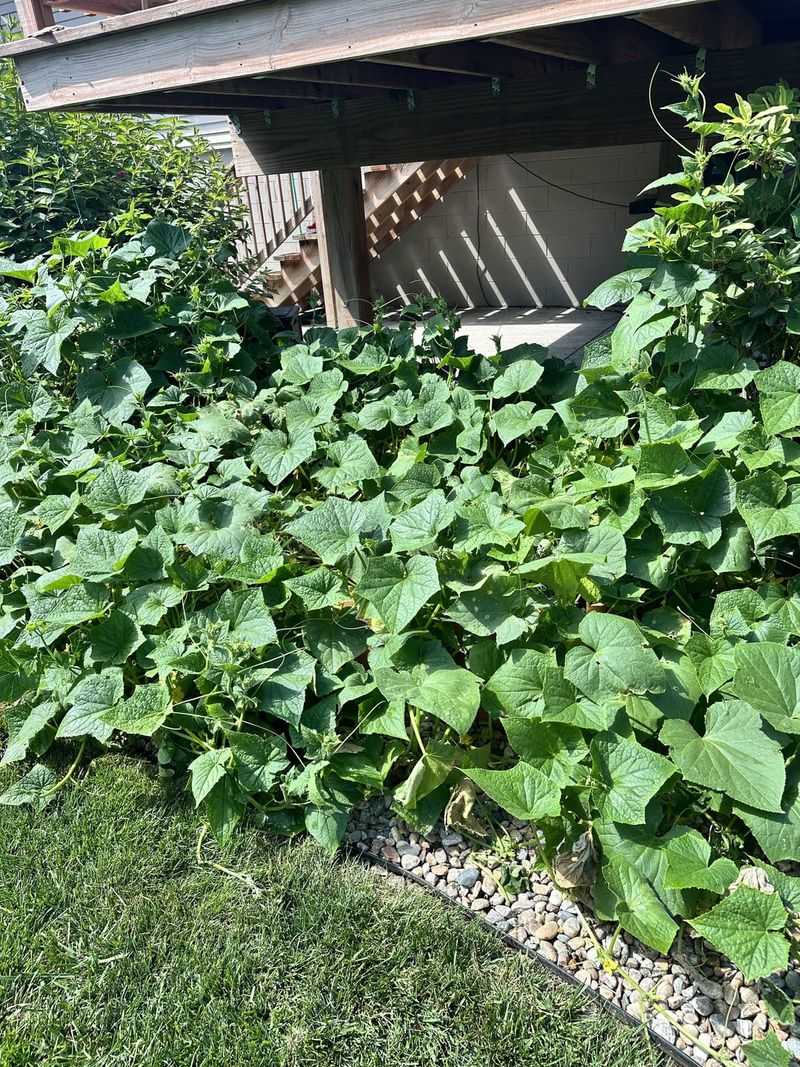
Dark-green, fast-growing cucumber vines look like a success story, but vigorous foliage and a weak harvest are two different problems that do not always share the same cause. When a vine is unusually leafy and slow to flower, excessive fertility is a reasonable possibility worth investigating, especially if you have applied nitrogen-rich fertilizer, manure, composted manure, fish emulsion, blood meal, or lawn fertilizer more than once this season. University of Minnesota Extension’s vining vegetable guide notes that too much nitrogen can push cucurbits toward vine and leaf growth instead of fruiting.
Pinched, curved, shriveled, or aborted cucumbers are a separate pattern, and the list of possible causes is longer. Poor pollination, temperature stress, inconsistent soil moisture, viruses, mature fruit left on the vine, and specific nutrient problems can all produce malformed or stunted fruit. Leaf color alone cannot tell you which of those is at work.
The practical starting point is to look at the full picture: how the plant is growing, what the flowers look like, what the weather has been, and what you have been feeding. Penn State’s cucumber production research reinforces that lush foliage and misshapen fruit each have their own differential diagnosis. Resist the urge to land on one answer before you have checked the others.
Excess nitrogen can favor vines over fruit
Nitrogen is the nutrient most closely tied to leaf and stem growth, and cucumbers need a reasonable supply of it early in the season. The trouble starts when nitrogen keeps arriving in large amounts after the plant is already well-established. At that point, the plant can keep pushing out new foliage and extending its vines while flowering and fruit set fall behind.
Colorado State Extension’s plant nutrition guidance draws the same distinction for cucumbers, squash, and melons: too much nitrogen at the wrong stage tips the balance toward vegetative growth. Oregon State Extension lists “vigorous plants that fail to bloom or set fruit” as a possible sign of excessive fertility in cucumbers. The risk is highest when gardeners apply multiple nitrogen-rich products in succession without accounting for what is already in the soil.
That said, vigorous growth by itself does not confirm nitrogen excess. Other nutrients, soil biology, and environmental conditions all influence how a plant behaves. Foliar and soil testing gives you actual numbers rather than an educated guess from leaf color alone. Dark-green leaves signal vigor, but they cannot tell you which nutrient is elevated or whether something else is limiting fruit development.
Audit recent feeding before adding anything else
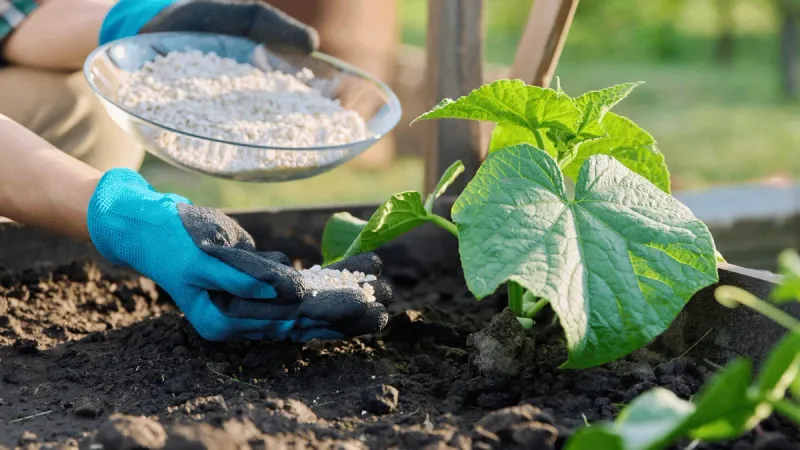
Before you reach for another product, stop and list every fertilizer, manure, or amendment you have applied since planting. Include composted manure, fish emulsion, blood meal, lawn fertilizer, slow-release granules, and any other source of nutrients. If that list is long, or if you have applied anything more than once on an already-dark-green plant, pausing additional feeding is a reasonable first step.
The next move is a soil test, not a switch to a different fertilizer. University of Minnesota Extension’s soil testing guidance explains how a test reveals what is actually present in your soil, which is the only reliable way to decide whether any nutrient is needed. Interpreting those results for fruit and vegetable crops helps you match the numbers to a real action. Adding phosphorus, potassium, or a so-called bloom booster without a test result to support it can worsen an existing imbalance, waste money, and contribute to water quality problems, as Minnesota’s phosphorus fertilizer research makes clear.
Regional timing recommendations also differ in ways that matter. Utah State recommends a nitrogen side-dressing after vines develop runners but before flowering, while Oregon State suggests side-dressing one week after flowering begins. Penn State uses different rates and timing altogether. No single schedule fits every garden, soil, or growing system, so any future application should follow the soil test result, the product label, the crop stage, and your local extension recommendations.
Check pollination before blaming the fertilizer
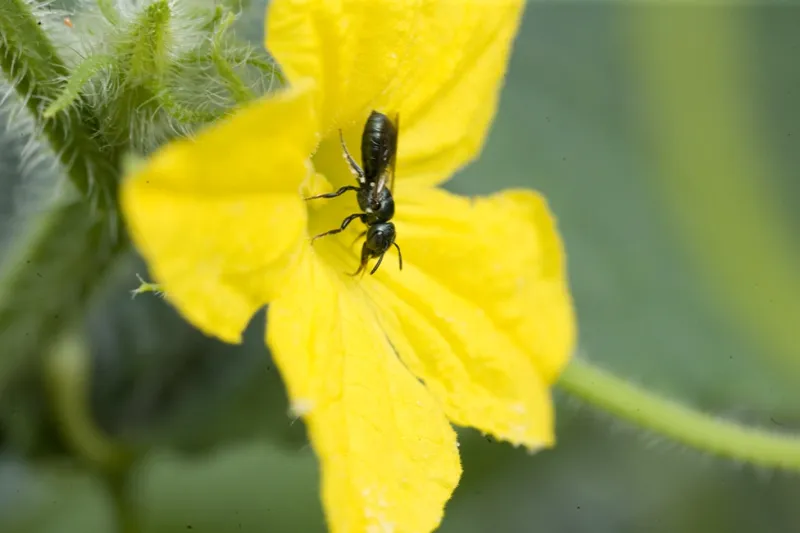
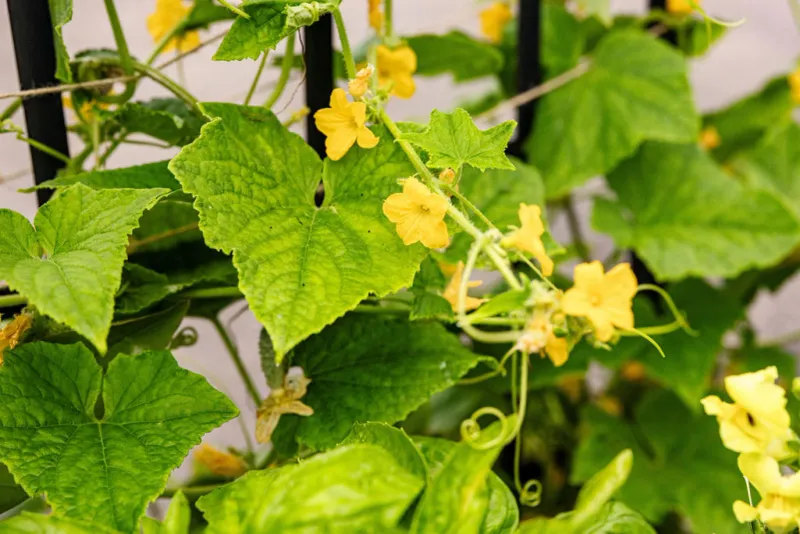
Small, curved, light, or aborted cucumbers are a classic sign of incomplete pollination, and that possibility deserves a close look before you adjust any nutrients. Conventional outdoor cucumber varieties produce separate male and female flowers on the same vine. The female flower is easy to identify once you know what to look for: a small, cucumber-shaped swelling sits directly behind the blossom, which is the immature fruit waiting for pollen. University of Minnesota Extension’s cucumber growing guide explains this flower structure and notes that the first flowers to appear are often male, so their drop is completely normal and not a sign of a fertilizer problem.
When a female flower receives little or no pollen, the tiny fruit behind it may grow slightly, then stop, turn yellow, and fall off. Penn State’s cucumber pollination resource describes how inadequate pollen transfer produces fruit that is small, curved, or misshapen. Bees are the primary transfer agent outdoors, so anything that reduces bee visits reduces fruit set.
Keeping flowers accessible to pollinators is the most reliable fix. Utah State’s row cover guidance recommends removing covers once plants begin to flower so insects can reach the blossoms. Avoid applying insecticides during bloom where possible, since products that contact bees during flowering can sharply reduce pollination. Utah State’s pollination guide notes that hand-pollination is an option for conventional outdoor varieties when bee activity is genuinely low, but it is not necessary for well-pollinated plants.
Some greenhouse and specialty cucumbers are parthenocarpic and set fruit without any pollination at all, so check your variety before deciding on a strategy, as Penn State’s high-tunnel cucumber research highlights.
Heat and uneven moisture can also disrupt fruit development
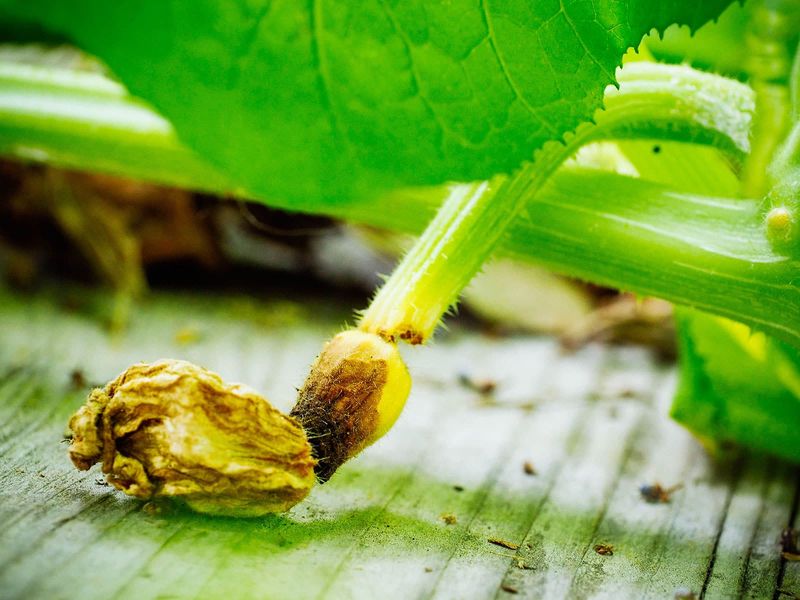
Even a well-fed, well-pollinated cucumber plant can struggle to produce usable fruit when the weather turns extreme or the soil dries out unevenly. High temperatures reduce bee activity, which means fewer successful flower visits and more fruit that fails to develop properly. University of Minnesota Extension’s heat stress guide identifies reduced pollinator activity as one consequence of very hot weather in the vegetable garden.
Penn State’s high-tunnel cucumber research points to temperatures above approximately 90 degrees Fahrenheit as a threshold where reproductive failure becomes more likely, though that figure applies to specific production systems and varieties rather than every garden in every region. Your own results will depend on your variety, your location, and whether you are growing in a container, a raised bed, or a protected structure.
Moisture is just as important as temperature. Penn State’s cucumber production guide notes that fluctuating soil moisture and water depletion can cause deformed fruit and reduce both yield and quality. Utah State Extension recommends roughly 1 to 2 inches of water per week, but that range shifts with soil type, plant size, air temperature, recent rainfall, whether you use mulch, and whether the crop is in a container or a high tunnel. The goal is relatively even soil moisture throughout fruit development, not a rigid weekly number.
Use the fruit pattern to widen the diagnosis
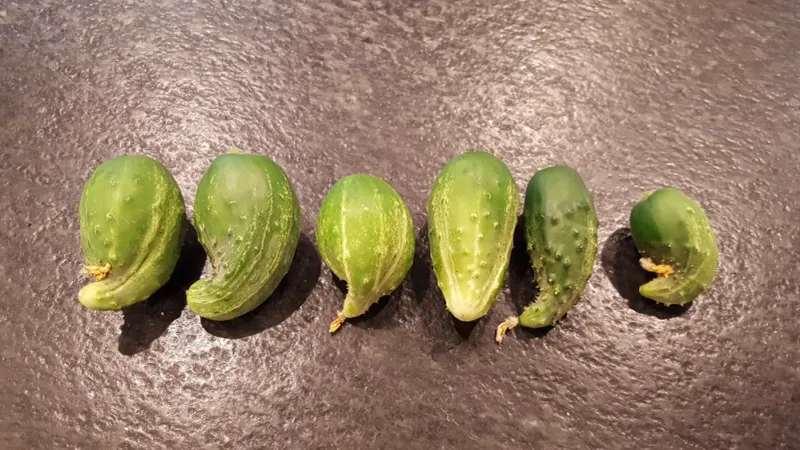
Lush vines with no fruit and vines producing misshapen or aborted cucumbers are related problems, but they are not identical, and the difference matters when you are trying to figure out what to fix. Excessive nitrogen most directly supports the first pattern: abundant foliage, delayed flowering, and poor fruit set. When fruit is already forming but coming out pinched, curved, or shriveled, the range of possible causes widens considerably.
Excess soluble salts can injure roots and reduce water uptake in ways that look similar to drought stress. Excessive boron has been linked to fruit abortion in high-tunnel cucumber production, as Penn State’s high-tunnel research documents. Viruses and diseases can distort fruit in ways that no amount of fertilizer adjustment will correct. Oregon State’s nutrient management publication cautions that appearance alone cannot distinguish between these problems, and that testing or professional diagnosis is the appropriate next step when basic checks do not explain the pattern.
Harvest habits are also worth examining. Overmature cucumbers left on the vine signal the plant to slow or stop producing new fruit. Colorado State Extension and University of Illinois Extension both recommend picking frequently to keep production moving. That habit supports a healthy harvest cycle, but it does not fix underlying problems with pollination, fertility, or disease, so do not let it substitute for a real diagnosis.
Stabilize care while the cause becomes clearer
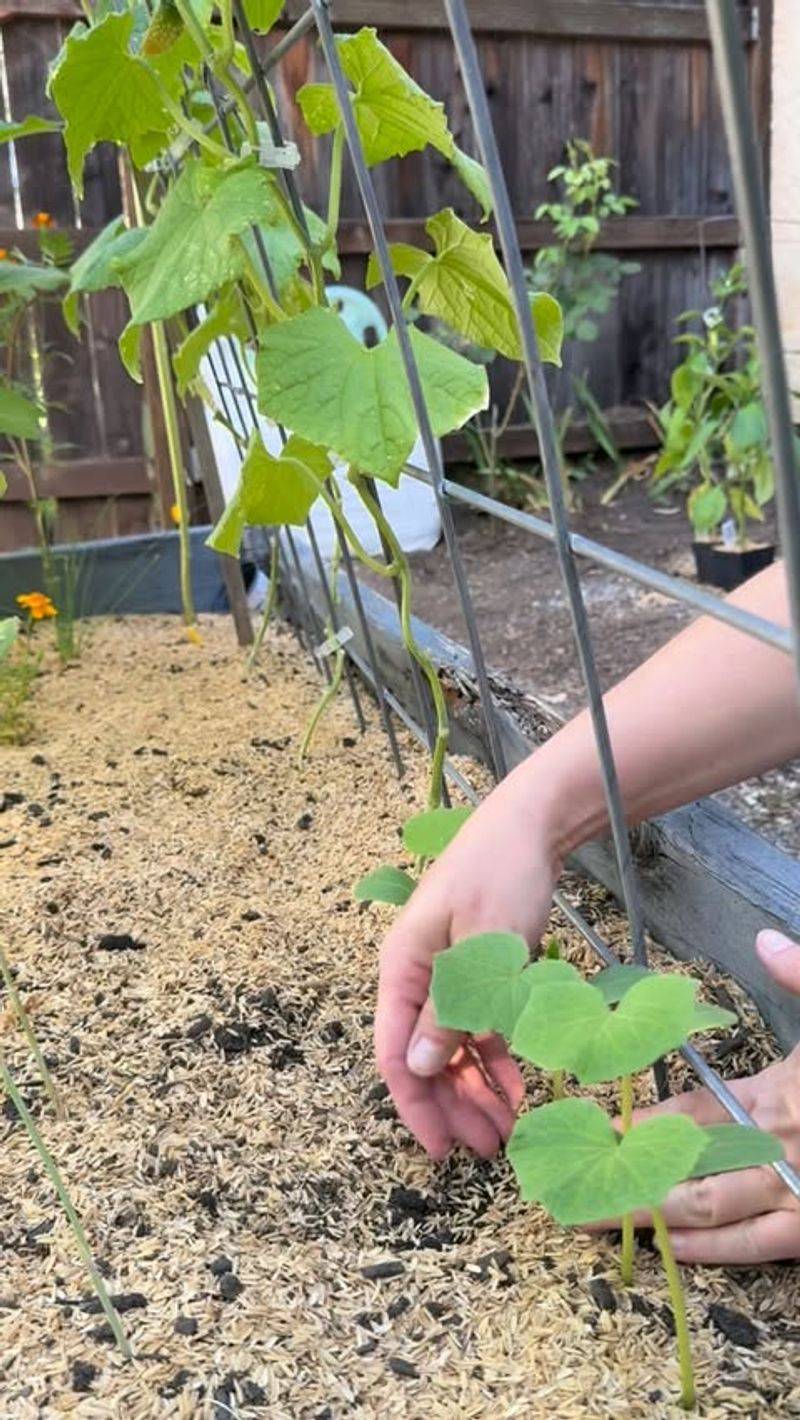
Recovery starts with the basics, not with another product. Stop adding fertilizer if your vines are already dark green and growing fast, and hold off until you have a soil test result to guide the next application. Keep soil moisture as consistent as you can given your soil, weather, and setup, and check the plant every few days rather than setting a rigid watering schedule.
Protect pollinator access by removing row covers once flowers open, and avoid insecticide applications during bloom where possible. If your variety is a conventional outdoor type and bee activity seems genuinely low, hand-pollination is worth trying on a few female flowers, but skip that step for parthenocarpic varieties. University of Minnesota Extension’s cucumber guide is a useful reference for identifying flower types and understanding what your specific variety needs.
Badly misshapen or aborted cucumbers will not recover on their own. Utah State Extension says to remove them rather than wait; leaving them in place does not help the plant redirect energy. Pick any usable fruit as soon as it reaches a good size, since Colorado State Extension confirms that frequent harvest supports continued production. Before you change anything about your fertilizer program, work through variety, flower development, weather, and feeding history as a checklist.
A soil test should drive the next feeding decision, because excess or poorly timed nitrogen may explain lush, unproductive vines, but pinched fruit is a broader problem that deserves a broader answer. A garden that keeps you observing and adjusting is one that keeps producing.