
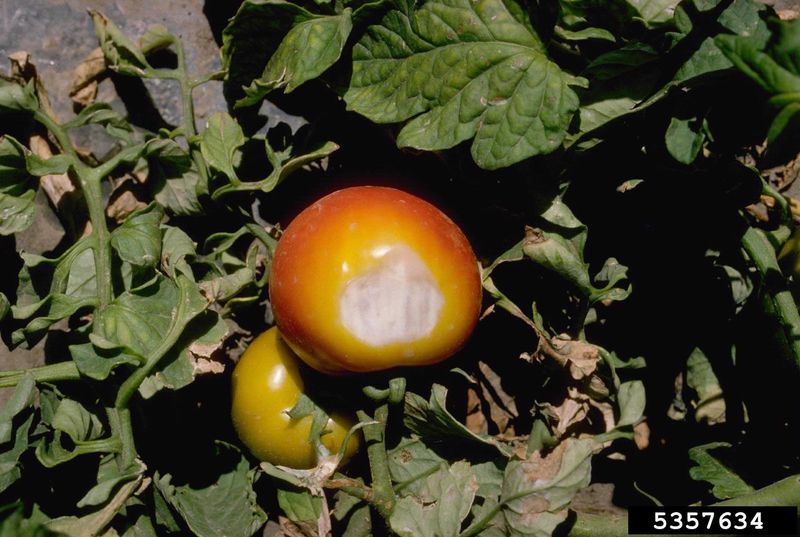
Spotting a pale, papery patch on the sunny side of a tomato you have been carefully growing all season is genuinely discouraging. That bleached, flattened area is most likely sunscald, a heat and light injury that shows up when fruit skin gets too much direct exposure. The sun and high temperatures cause the actual damage, but losing too much protective leaf cover, whether from pruning, disease, or other canopy loss, can leave fruit wide open to it. Understanding what is really happening makes it much easier to protect the tomatoes still on the vine.
Those Sun-Facing Patches Point to Sunscald
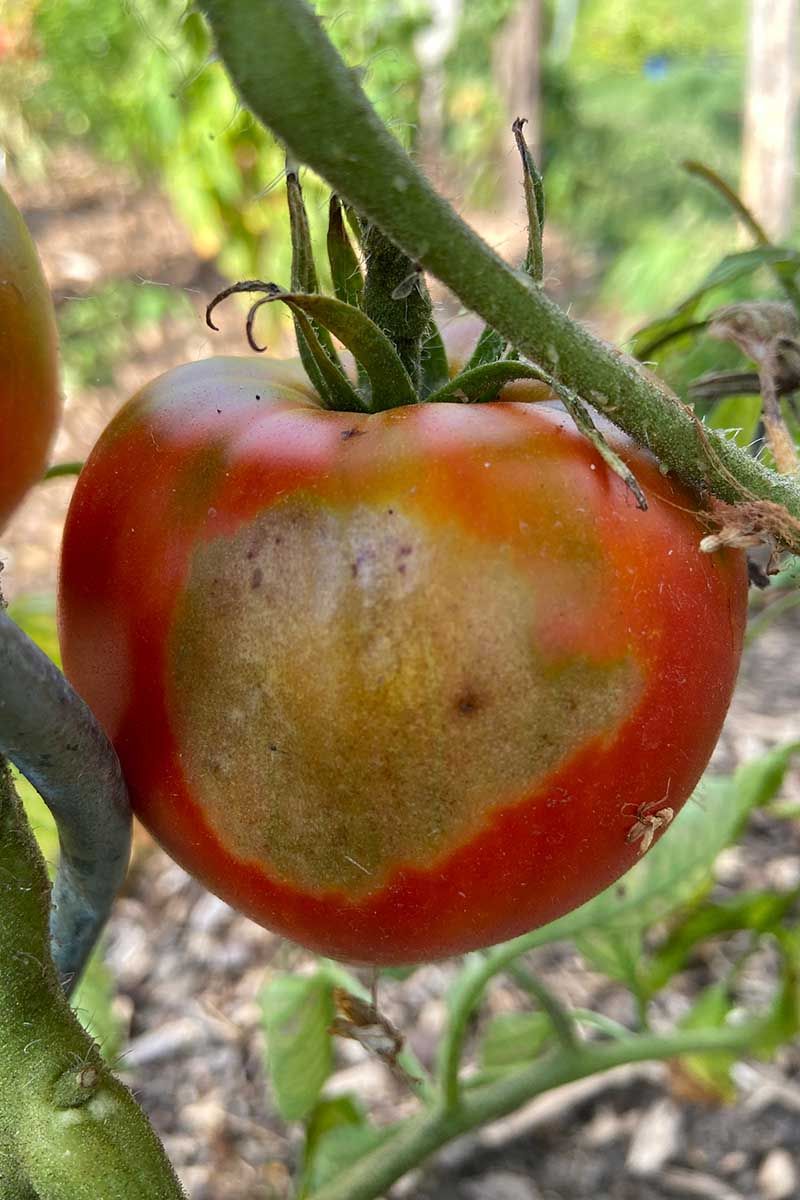
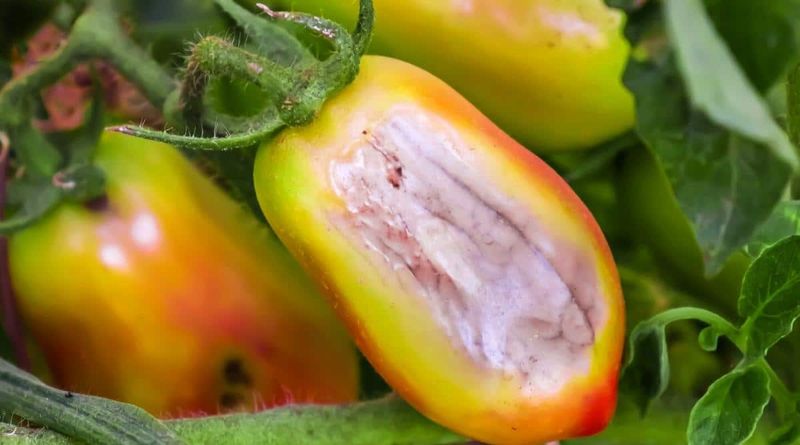
Pale, flattened patches appearing on the side of a tomato that faces direct sunlight are a strong signal that the fruit has suffered sunscald. The affected skin typically starts out pale yellow, white, tan, or grayish and feels slightly soft at first. Over time, that same area can flatten, wrinkle, harden, and take on a leathery or papery texture that is noticeably different from the rest of the fruit surface.
According to UC IPM guidance on sunscald, the injury is confined to the tissue receiving the most direct light, which is why the location matters so much as a clue. If you rotate the tomato and the patch is clearly on the sun-facing side rather than the blossom end or a random spot, sunscald becomes the most likely explanation. Secondary rot can eventually move into the damaged area, turning what started as a cosmetic blemish into a more serious problem.
Sunscald is a physiological injury, not an infectious disease. University of Minnesota Extension’s tomato disorder guide distinguishes it clearly from fungal or bacterial problems. No pathogen is spreading through the tissue; the cells were simply damaged by heat and light. That distinction matters because the fix is about managing exposure, not applying a spray or treatment.
The Sun and Heat Cause the Damage
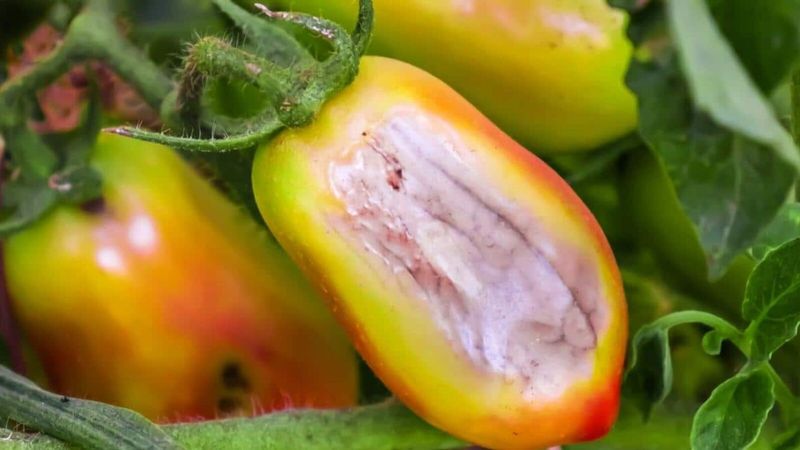
Sunscald is not a mystery with a hidden cause. Intense visible light and high fruit surface temperatures are what injure the tomato tissue directly. When a fruit that has been sitting in comfortable shade suddenly finds itself baking under full afternoon sun, the skin cells on that exposed side can be damaged faster than the plant can respond.
Early controlled research on tomato sunscald found that both high temperature and visible light were needed to reliably produce the injury, which supports the idea that neither factor alone tells the whole story. The combination, full sun hitting fruit that has no shade buffer, is what pushes tissue past its tolerance. This is also why sunscald spikes during heat waves rather than on every sunny day.
Pruning enters the picture because removing leaves can take away the plant’s natural protection. The sun is still the immediate cause of the injury, but a well-leafed canopy keeps fruit temperatures lower by intercepting that light before it reaches the skin. As Illinois IPM’s disease profile for tomato sunscald notes, sudden exposure of previously shaded fruit is a key condition for the disorder to develop. Framing it correctly matters: the sun causes the patch, but the canopy is the plant’s defense, and anything that weakens that defense raises the risk.
Aggressive Foliage Removal Can Expose the Fruit
Removing too much healthy foliage at once, especially leaves that are positioned directly above or around developing fruit, is the pruning habit most likely to raise sunscald risk. When a grower strips a significant portion of the canopy in one session, or prunes heavily right before or during a stretch of hot weather, fruit that was previously shaded can find itself suddenly exposed to full afternoon sun with no time to adapt.
UC ANR’s tomato production guidance specifically advises avoiding over-pruning and retaining adequate leaf cover. The same source recommends stopping pruning one to two weeks before an expected harvest window so the plant can maintain and rebuild its protective canopy. Removing shade foliage aggressively right before a heat wave works against that goal entirely.
Pruning is not the only way fruit ends up exposed, though, and it would be misleading to treat it as the single usual cause. Penn State Extension’s tomato disorder resource and University of Minnesota Extension both acknowledge that foliar diseases like early blight or Septoria leaf spot can strip a canopy just as effectively as a pruning session. Insect feeding, wind damage, rough handling, natural branch spreading under fruit weight, drought stress, and varieties with naturally thin foliage can all open gaps that leave fruit vulnerable. The common thread is canopy loss, not any single cause.
Protect the Remaining Fruit Before the Next Heat Wave
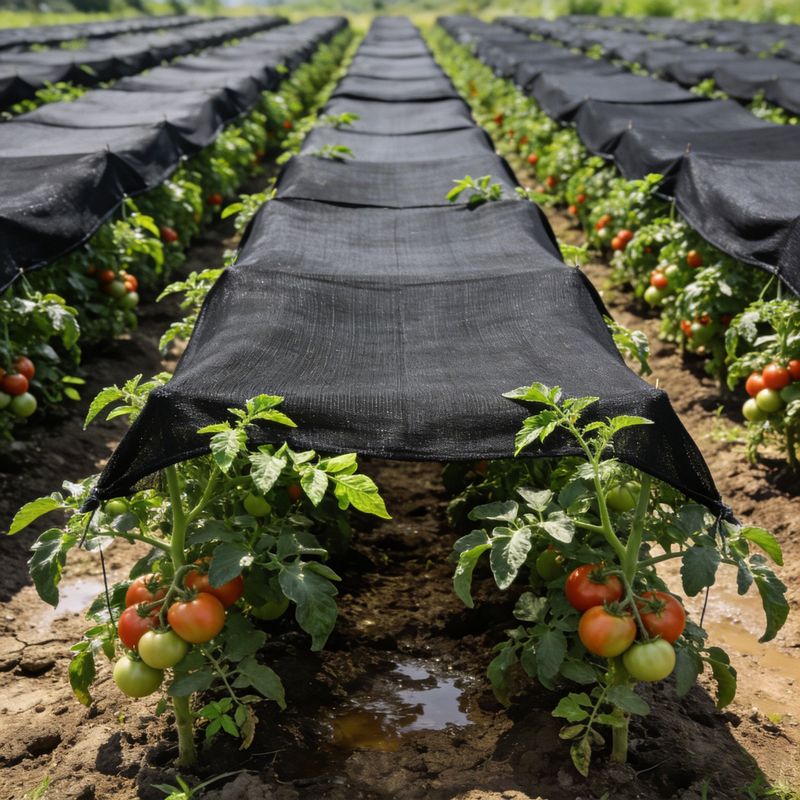
Once sunscald has appeared on some fruit, the priority shifts to protecting what is still on the vine. The first step is straightforward: stop removing healthy green leaves, particularly any that are shading clusters of developing fruit. A canopy with gaps lets heat build on the fruit surface; closing those gaps with the leaves already there is the fastest free fix available.
For fruit already sitting in direct afternoon sun with no leaf cover overhead, a temporary screen or shade cloth positioned to block the harshest light can reduce surface temperatures during the peak exposure window. Oregon State University Extension’s tomato growing guide recommends this kind of targeted protection for maturing fruit during heat events. The goal is shading the exposed fruit during the hottest direct-light period, not blocking all light from the entire plant. Shade cloth needs vary depending on your climate, how long the heat persists, and the variety you are growing, so treat it as a useful option rather than a fixed prescription.
Another practical move during a heat wave is harvesting tomatoes as soon as they show the first blush of color and letting them finish ripening indoors out of the sun. UC ANR guidance on protecting tomatoes in excessive heat recommends this approach specifically when high temperatures threaten ripening fruit. A tomato ripened on a kitchen counter away from direct sun is far less vulnerable than one hanging on the vine through a 100-degree afternoon. Penn State’s heat stress guidance reinforces keeping plants well-watered and vigorous so the canopy itself stays healthy through hot spells.
Prune According to the Tomato’s Growth Habit
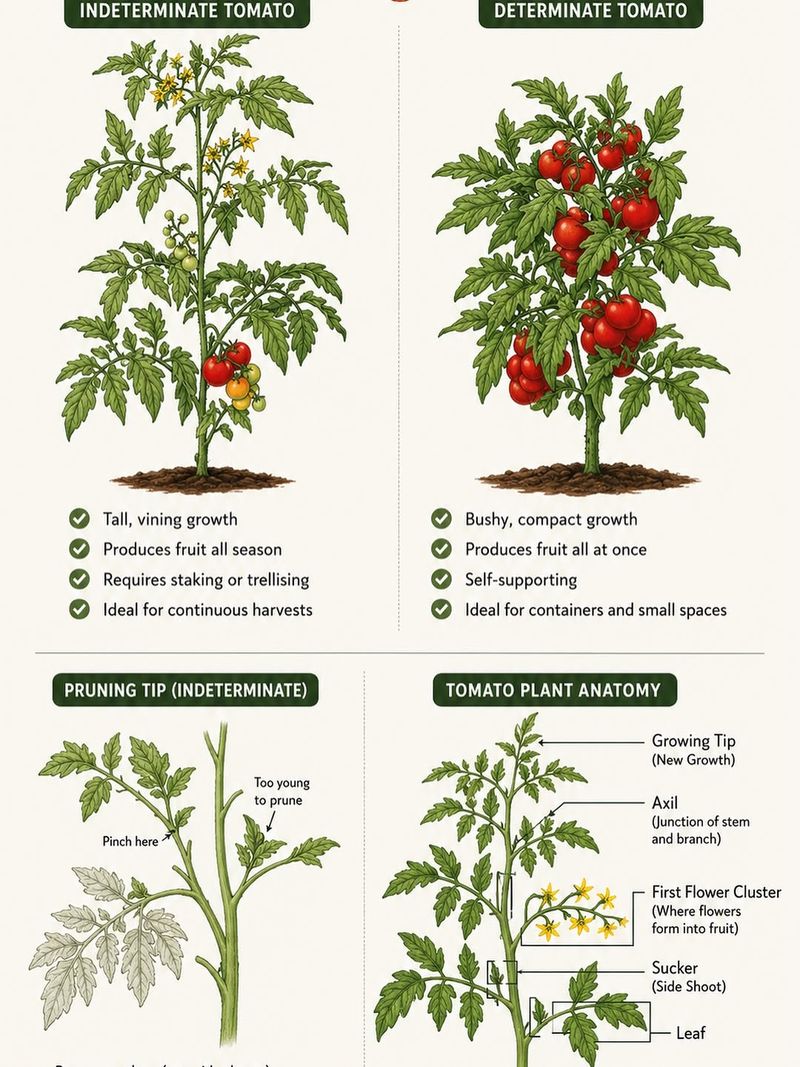
How much pruning is appropriate depends heavily on what kind of tomato you are growing. Indeterminate varieties keep producing new growth and fruit all season, which means they can handle selective pruning better than determinate types, but the key word is selective. For these plants, the practical approach is to remove only suckers that are genuinely crowding the structure, any foliage that is dead or visibly diseased, and any branches lying on the soil. Leaves that are positioned to shade developing fruit clusters should stay.
Penn State Extension’s seedling-to-fruit guide describes leaving the first set of leaves on a sucker when you do remove it, a detail that preserves some photosynthetic capacity and a bit of canopy cover at the same time. Pruning still has real value on indeterminate plants: it keeps a trellised vine manageable, improves airflow through the canopy, and makes it easier to spot problems early. The goal is not zero pruning but thoughtful pruning that does not open large gaps over fruit.
Determinate or bush tomatoes are a different story. UC ANR’s guidance on tomato types explains that these plants set most of their fruit in a concentrated window and then stop producing new vegetative growth. Removing significant foliage from a determinate plant can cut into its fruit-producing growth and strip away the shade cover it will not replace. Intensive pruning of bush tomatoes is generally unnecessary and can do more harm than good.
When pruning to remove diseased leaves, Penn State Extension advises removing no more than 20% of total leaf mass in a single session. That limit applies whether the goal is disease management or general canopy shaping during warm weather.
Check the Lesion Against Other Tomato Problems
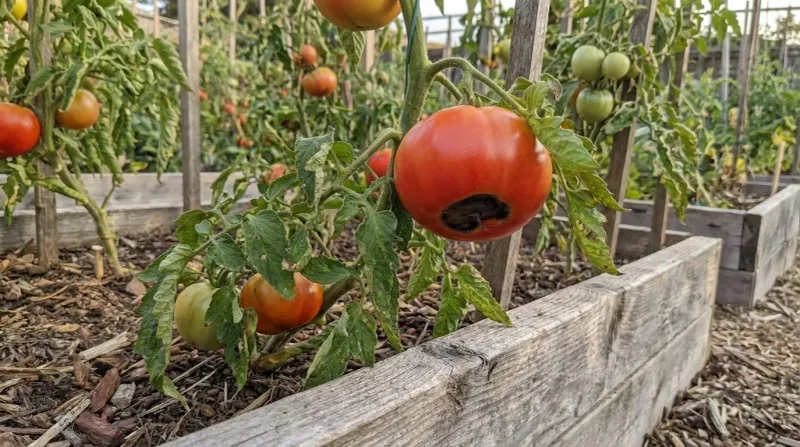
Before concluding that pruning exposed the fruit, take a close look at exactly where the lesion sits and what it looks like. A classic sunscald patch is dry, flattened, and located on the side of the fruit that faces the most direct light. That location is the most useful single clue because it reflects the physics of the injury.
Blossom-end rot looks superficially similar to some people but sits at the opposite end of the fruit, the blossom end away from the stem, and is associated with moisture stress and calcium transport problems rather than light exposure. Oregon State University Extension’s blossom-end rot fact sheet describes the characteristic placement clearly. If the dark, leathery area is at the bottom of the fruit rather than the sunny side, blossom-end rot is the more likely explanation.
Infectious diseases tend to behave differently from sunscald. Penn State Extension’s tomato disease guide notes that fungal and bacterial problems often show up on leaves first, spread progressively through the plant, or display characteristic spotting patterns and sometimes visible fungal growth. If you are seeing lesions on leaves alongside the fruit damage, a disease problem rather than a pure light injury may be at work, and that distinction changes how you respond.
Pale or uneven color that does not come with a dry, sunken, exposed-side lesion can point to something else entirely. Illinois Extension notes that high temperatures can slow full red color development and contribute to yellow-shoulder symptoms, where the top of the fruit stays pale or greenish. That is a ripening problem tied to heat, not a tissue injury from direct exposure. Checking the whole plant for signs of disease- or insect-related leaf loss can also reveal whether the canopy thinned for reasons other than pruning.
Damaged Fruit Will Not Heal, but the Crop Can Recover
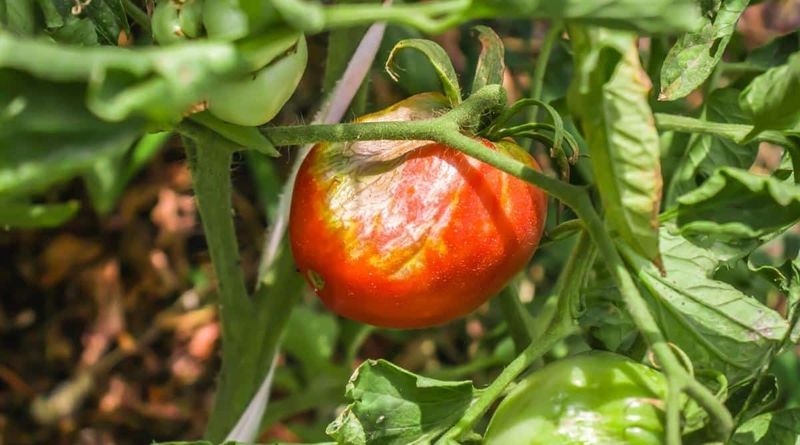
Sunscalded tissue does not recover once it has been injured. The cells are gone, and the affected area stays pale, dry, and papery regardless of what happens next. What matters now is deciding what to do with each damaged fruit and how to keep the rest of the crop from following the same path.
Fruit with a small, dry, contained lesion and otherwise sound flesh can sometimes be trimmed and used after cutting away the affected area. Kansas State University’s sunscald fact sheet and University of Minnesota Extension both note that sunscalded tissue is vulnerable to secondary decay, so the remaining flesh needs to be genuinely firm and free of soft spots. Fruit that is rotting, leaking juice, showing mold, or extensively damaged should go straight to the compost bin rather than the kitchen.
Going forward, the practical rule is to preserve healthy foliage, address any disease or insect problems that are thinning the canopy, and add temporary shade rather than stripping leaves when summer heat builds. A tomato plant with a full, healthy canopy is its own best sunscreen.