
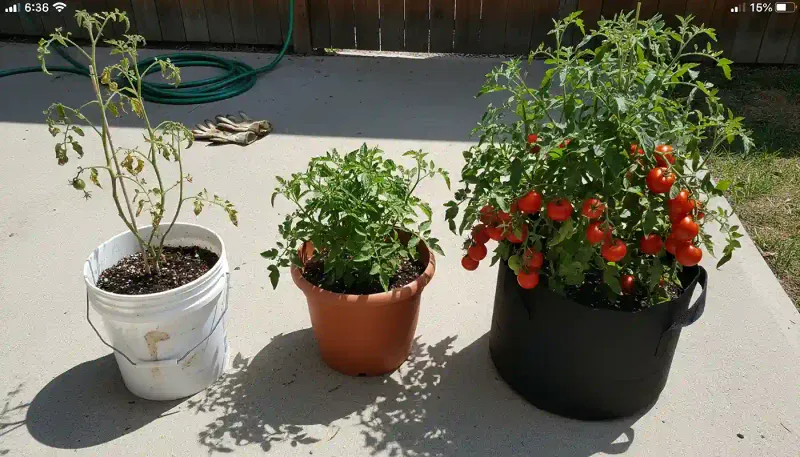
Watching your potted tomato sit there barely growing while summer heat cranks up is genuinely frustrating, especially when you expected this to be the season it finally took off. A lot of gardeners blame the weather or the variety, but the real culprit is often hiding right under the plant. An undersized container can quietly cap how much your tomato can grow, and heat makes that limitation obvious fast. Before you write off the season, a few targeted fixes can make a real difference.
An undersized pot can limit a tomato in summer
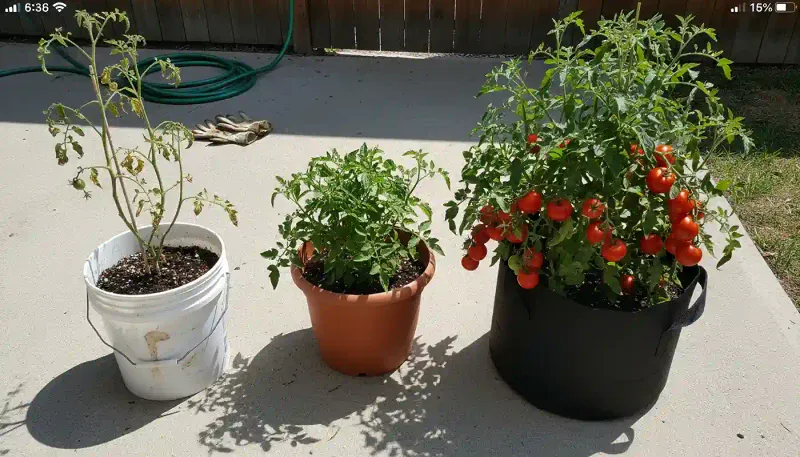
Root volume matters more in summer than at any other point in the growing season. A container that feels adequate in spring can become a genuine bottleneck by July, when heat accelerates evaporation and the plant’s demand for water and nutrients peaks. Oregon State University Extension notes that tomato growth and production become more restricted as container size decreases, and that restriction shows up most clearly when temperatures climb.
A smaller pot simply holds less water and fewer dissolved nutrients. When the sun is strong and the air is dry, a compact container can go from adequately moist to dangerously dry in just a few hours. Frequent watering keeps the plant alive but also flushes nutrients out of the mix faster, compounding the problem. University of Minnesota Extension points out that nutrients in a container are limited to whatever is in the potting mix, and repeated watering can leach them away.
Research backs up the practical importance of root volume: a peer-reviewed meta-analysis across 65 studies found that doubling pot size increased plant biomass by an average of 43%, though that figure is an average across many plant types and conditions, not a guaranteed outcome for every tomato. An undersized container is a strong first suspect at the container level, but it is not the only explanation. Heat stress, inconsistent watering, poor drainage, inadequate light, and nutrient problems can all produce the same symptoms.
Choose a pot for the mature tomato
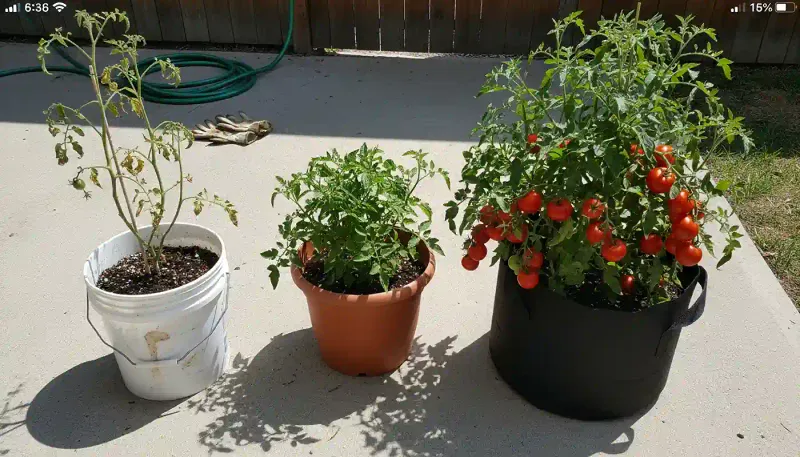
The most common sizing mistake happens at the nursery, when a gardener picks a container that fits the transplant rather than the full-grown plant. A healthy tomato seedling looks perfectly comfortable in a 2-gallon pot in May. By August, that same plant may be severely restricted if it turns out to be a vigorous indeterminate vine that naturally spreads several feet in every direction.
Colorado State University Extension recommends 2 to 5 gallons per tomato plant depending on variety, while Oregon State University Extension suggests a container at least 12 inches deep, such as a 5-gallon nursery pot, for determinate types. Illinois Extension lists tomatoes at a minimum of 20 inches in diameter in one container gardening guide. These numbers vary because tomato varieties vary.
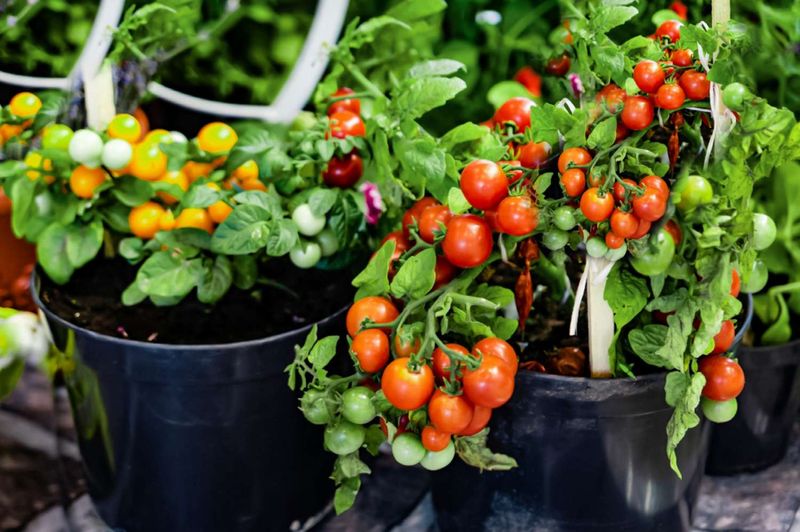
True dwarf, patio, and micro varieties bred specifically for containers can perform well in 1- to 2-gallon pots. Standard or determinate tomatoes generally need at least 5 gallons to have enough rooting room. Vigorous indeterminate plants – the kind that keep growing until frost – may outgrow even a 5-gallon container and benefit from something larger. Illinois Extension’s container vegetable guide reinforces that no single pot size works for every tomato, so matching the container to the variety’s mature habit is the starting point.
Make the extra root volume usable
Moving a tomato into a bigger container only helps if that container actually drains. Before repotting, check that the drainage holes are open and unobstructed. A pot sitting in a saucer full of standing water creates the same saturated conditions as a pot with blocked holes. Roots deprived of oxygen by waterlogged media can deteriorate quickly, and a larger volume of wet soil makes that worse, not better.
Penn State Extension identifies unobstructed drainage as one of the fundamental requirements for container vegetable success. Oregon State University’s container gardening basics guide echoes that point, noting that standing water at the base of a container can damage roots even when the upper portion of the mix appears fine.
The growing medium matters just as much as the container. A quality potting mix holds moisture while still allowing excess water to drain freely. Illinois Extension’s container garden tips and University of New Hampshire Extension both caution against using straight garden soil in containers, because it tends to compact over time and can drain poorly. The correct fix is more usable root volume in a well-aerated, moisture-retentive mix, not simply placing a stressed plant in a larger volume of heavy or saturated soil.
Repot when the container clearly limits the plant
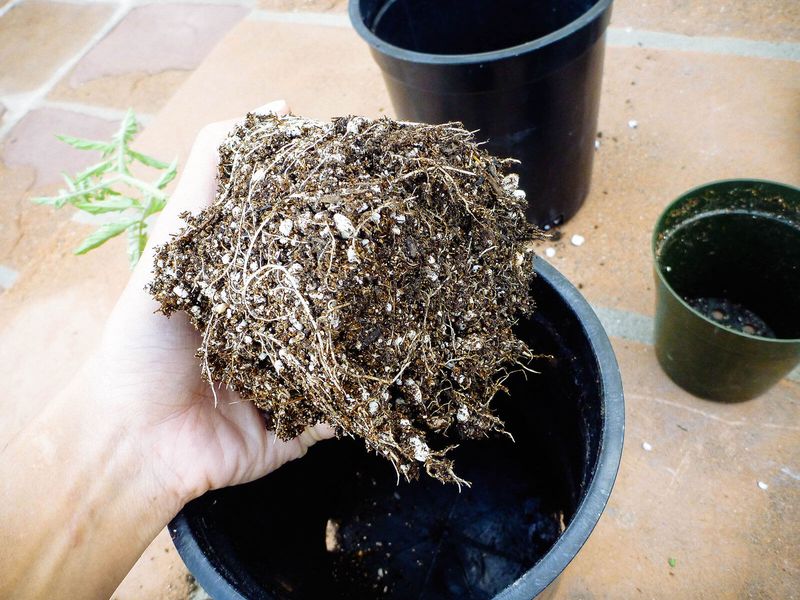
Repotting a full-size tomato that has been living in a 1- or 2-gallon container is a reasonable intervention when the variety clearly outgrew the pot. Moving the plant into an appropriately sized, well-drained container gives the roots more room to spread, which can improve water and nutrient uptake. The key is to minimize additional root disturbance during the transfer – rough handling adds stress on top of stress.
Keep realistic expectations in place. Oregon State University Extension and University of Minnesota Extension both focus on choosing the right container from the start rather than prescribing midsummer repotting as a guaranteed fix. Providing more rooting room can remove a container-level limitation, but a plant already dealing with heat stress, root damage, disease, or poor light may not bounce back fully even after the move.
A visible, dense, circling root ball is not required before acting. Illinois Extension notes that inadequate rooting volume can restrict growth well before roots become obviously tangled. If a standard-size tomato has been in a small container all season and is showing persistent stunting, slow growth, or frequent wilting that improves only briefly after watering, the container size is worth addressing – even if the root ball does not look obviously compacted when you tip the plant out. Utah State University Extension recommends selecting an appropriate container size before planting to avoid this situation altogether.
Manage moisture without drowning the roots
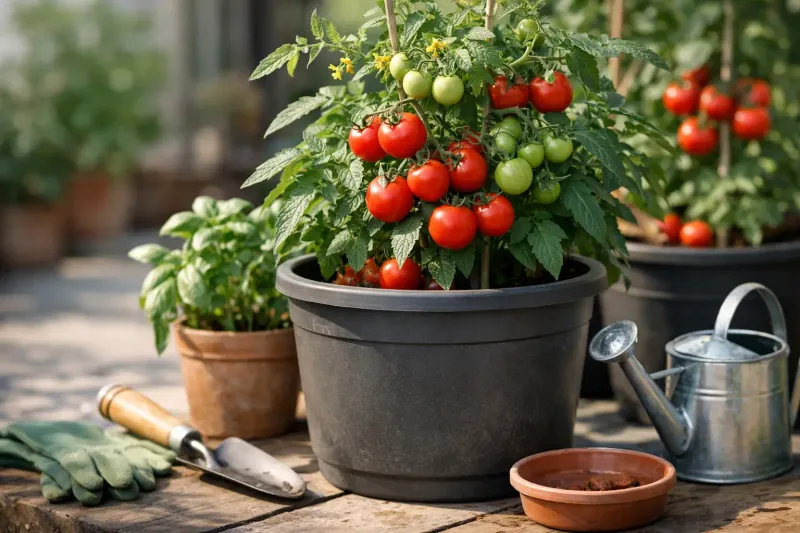
Heat turns a marginally sized container into an urgent moisture problem. On a 90-degree day with low humidity, a small pot can dry out completely between morning and afternoon. The instinct to water more often is correct, but how you water matters as much as how frequently you do it.
University of Minnesota Extension recommends watering thoroughly until excess water exits the drainage holes, then allowing the excess to drain away fully before the next watering cycle. Iowa State University Extension notes that small containers may need daily or even twice-daily watering during hot, dry, or windy weather, but ties that guidance to checking the mix rather than watering on a fixed schedule regardless of conditions.
Swinging between bone-dry and heavily saturated causes its own set of problems. University of Minnesota’s tomato disorder guide links inconsistent moisture to wilting, flower and fruit drop, blossom-end rot, and fruit cracking. Blossom-end rot in particular reflects disrupted calcium movement through the plant, and while maintaining even moisture is the most reliable first step, adding calcium supplements alone does not guarantee a fix. A layer of mulch on the potting mix surface can slow evaporation and buffer root-zone temperature swings, which helps.
Minnesota’s tomato growing guide includes mulch as a practical tool, though it cannot compensate for an undersized container or a drainage problem.
Separate heat-stalled growth from poor fruit set
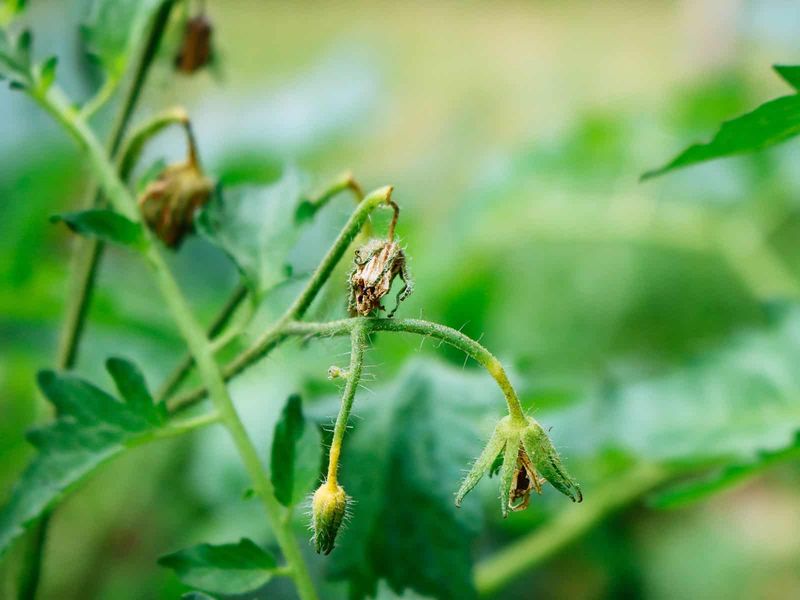
Not every midsummer slowdown traces back to the container. Heat affects flowering and fruiting through a completely separate mechanism, and a tomato in a perfectly sized pot can still stop setting fruit when temperatures climb too high. Understanding this distinction saves a lot of unnecessary repotting.
Virginia Tech Extension explains that day temperatures above approximately 90 degrees Fahrenheit and nighttime temperatures above roughly 70 degrees Fahrenheit can reduce flower viability and prevent fruit set. Utah State University Extension reinforces that heat-related fruit drop is a physiological response, not a sign that the plant is failing or that the pot is wrong.
During a heat wave, the most useful steps are keeping root-zone moisture consistent, watering in the morning so foliage dries before peak heat, and avoiding unnecessary pruning that adds stress. University of Minnesota’s hot-weather gardening guide and their heat-wave garden tips both describe temporary growth pauses as a normal heat response, even in well-maintained containers. Flowers dropping or failing to set fruit during a stretch of 95-degree days is a heat problem. Blaming the pot and repotting the plant will not change the weather, and the plant will likely resume fruiting once nighttime temperatures moderate.
Check competing causes before blaming the pot
Wilting during the hottest part of the afternoon is one of the most misread signals in container gardening. Heat alone can cause temporary leaf wilt even when the potting mix has plenty of moisture. Stick a finger or a moisture meter into the mix before reaching for the hose, and confirm that the drainage holes are clear before concluding anything about the container size.
Several other conditions can mimic restricted-root symptoms. University of Minnesota’s tomato stunting diagnostic tool and their tomato disorders guide identify inadequate light, inconsistent watering, poor drainage, nutrient deficiencies, pest damage, and disease as causes of slow or stunted growth that can look identical to root restriction from the outside. Virginia Tech Extension adds excessive heat to that list.
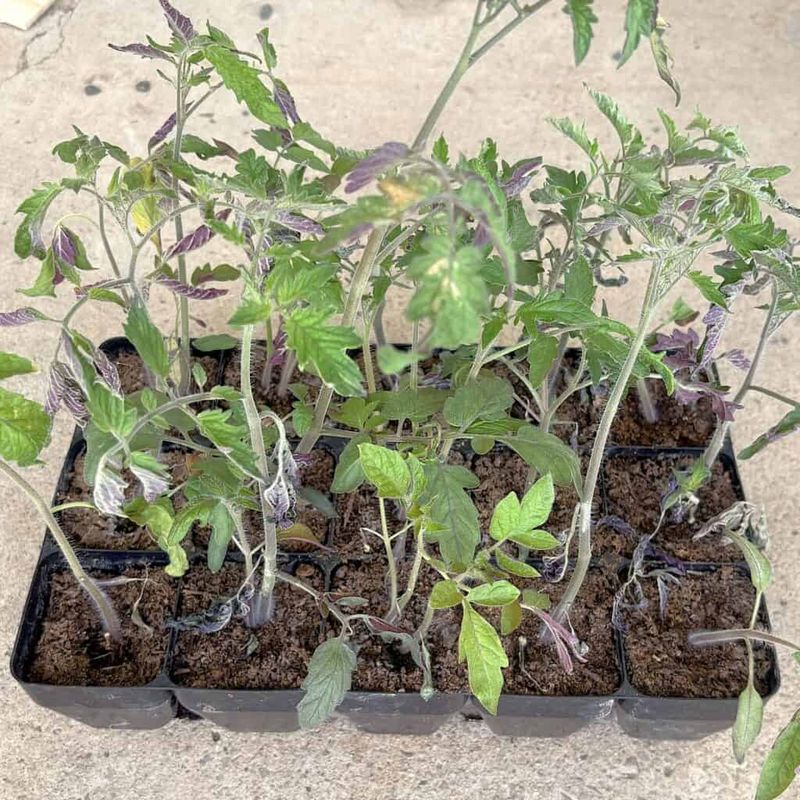
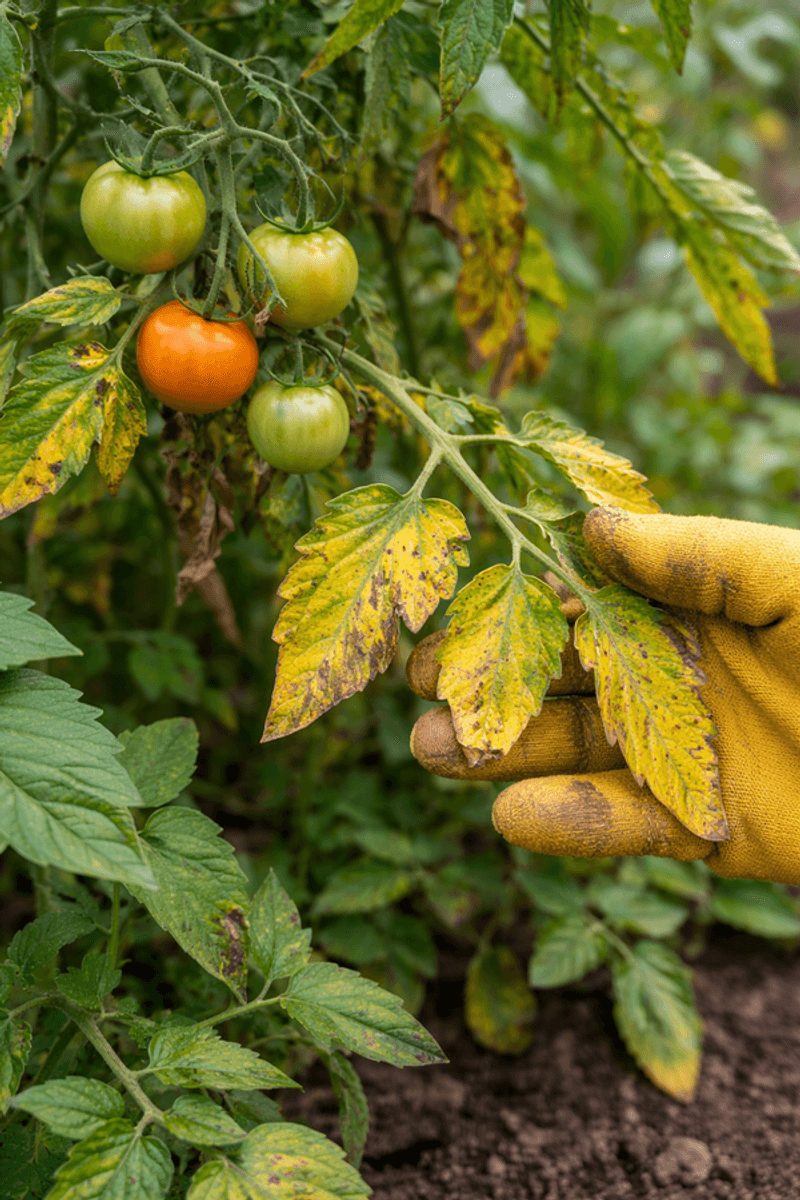
Pay close attention to leaf appearance before acting. Mottled, distorted, curled, or severely yellowed foliage can point to a virus, herbicide injury, insect feeding, or another disorder that a larger container will not cure. Moving a diseased or pest-infested plant into a bigger pot just gives the problem more room to continue. Run through the full checklist – light, moisture, drainage, nutrition, pest and disease signs – before concluding that pot size is the primary issue.
Balance nutrition with the rest of the diagnosis
Container tomatoes frequently need supplemental fertilizer because the nutrients available to the plant are limited to whatever is in the potting mix. Repeated watering, especially during hot weather when watering frequency increases, gradually flushes those nutrients out. A plant that has been in the same container for several weeks without feeding may be running short on nitrogen, potassium, or other elements even if everything else looks fine.
University of Minnesota Extension recommends regular, moderate fertilization according to the product label, and Penn State Extension identifies consistent feeding as one of the four keys to container vegetable success. Nutrition can be assessed and corrected alongside pot size, drainage, and moisture without waiting for one fix to be completed before starting another.
Overfertilizing carries real risks. Excess fertilizer can injure roots, raise the salt concentration in the potting mix to damaging levels, push the plant toward excessive leafy growth at the expense of fruit, or delay ripening. Utah State University Extension cautions that heavy feeding cannot substitute for adequate root volume, water, light, or drainage. Follow the product label, and resist the temptation to double the dose during a heat wave in hopes of forcing growth that the plant’s current conditions cannot support.
Give the tomato room, then reassess
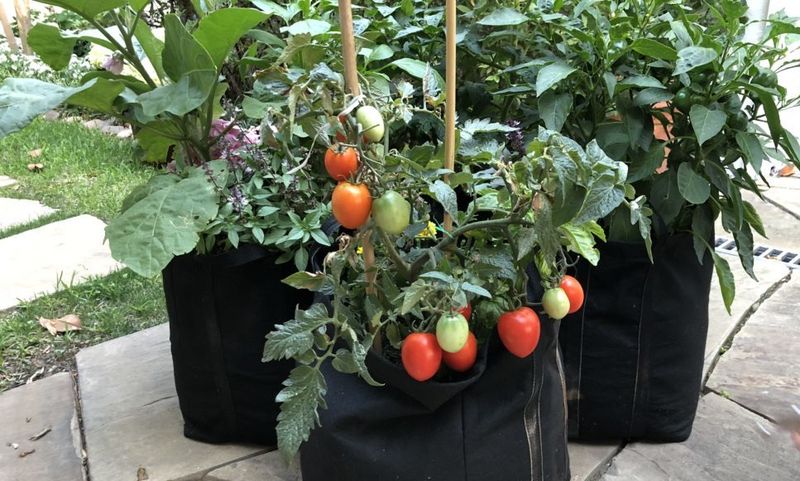
Matching the container to the tomato’s mature variety is the clearest corrective step available. Confirm that drainage holes are open, use a quality potting mix, and maintain even moisture through the heat by checking the mix before watering rather than following a rigid daily schedule. Assess nutrition as part of the same review and apply fertilizer according to the label when the plant shows signs of deficiency or when regular feeding has lapsed.
An undersized container is a leading suspect when a potted tomato remains small, grows slowly, or wilts repeatedly despite adequate watering. Oregon State University Extension and University of Minnesota Extension both anchor their container tomato guidance in matching root volume to the plant’s needs from the start. But persistent or unusual symptoms – especially distorted leaves, mottling, or failure to respond after correcting the container – call for a fresh look at heat, light, pests, disease, and other causes. Minnesota’s tomato disorder resources offer a practical next step for anything that does not respond to the container fix.
Getting the pot right removes one obstacle; what the plant does next tells you whether there are more.