
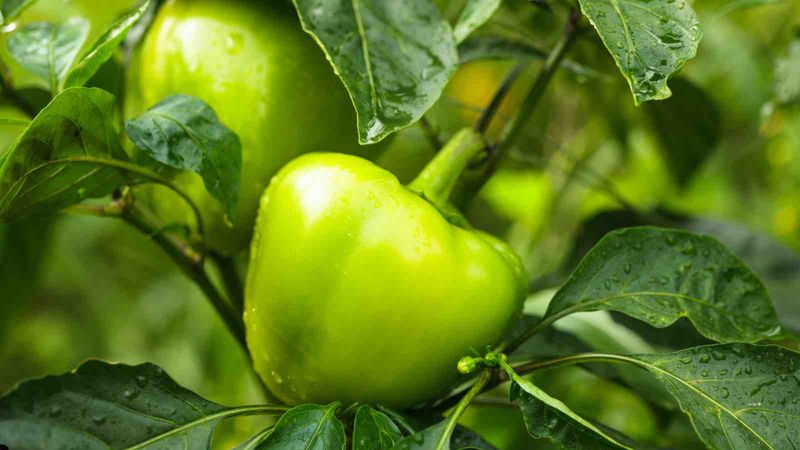
You walk out to your pepper plants expecting a flush of red, yellow, or orange fruit, and all you find is a wall of green leaves and maybe a handful of small green peppers that never seem to change. That frustrating picture is more common than you might think during a hot summer, and the cause is often not what gardeners expect. Understanding what actually goes wrong, and when, can save you from chasing the wrong fix while your plants struggle through the heat.
A leafy pepper plant can be showing a fruit-set problem
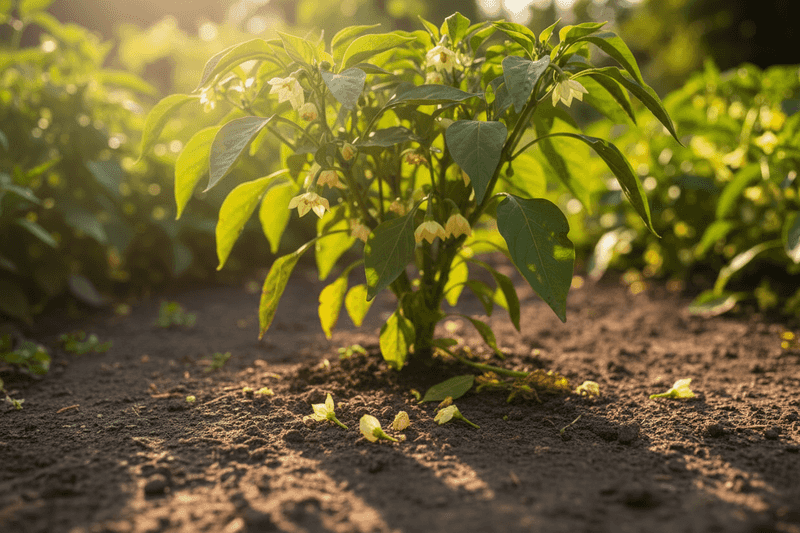
Before assuming that your green peppers are stuck and refusing to turn color, check what is actually on the plant. Count the flowers, look for tiny fruit forming at the base of spent blooms, and notice whether those small fruits are growing or disappearing within a few days. A plant that drops most of its flowers or grows a tiny pepper only to lose it before it reaches full size has a fruit-set problem, not a ripening problem. That difference matters because the fix is completely different.
Heat can quietly rob a pepper plant of its fruit load before color ever enters the picture. When flowers abort or fertilization fails, the plant has no fruit to ripen, and all the energy it would have directed into fruit stays in the leaves and stems instead. That is why a heat-stressed plant often looks so lush and green. University of Maryland Extension guidance on poor blossom and fruit set identifies heat as one of the primary reasons vegetable plants produce vigorous foliage while setting little or no fruit.
So before you worry about why your peppers are green, ask a more upstream question: are there actually enough peppers on the plant? If flowers are dropping and tiny fruit is disappearing, your investigation should start there, not with ripening. Establishing that distinction is the first step toward a real diagnosis.
Heat interferes with peppers before ripening begins
Peppers are warm-season crops, but they have a surprisingly narrow comfort zone when it comes to setting fruit. Iowa State University Extension puts the range for strongest bell pepper fruit set at roughly 70 to 80 degrees Fahrenheit, and notes that daytime temperatures above about 85 degrees can cause flowers to abort. The same source observes that hot peppers tend to tolerate warmer conditions better than bell peppers, so the type of pepper you are growing matters.
Other extension programs report higher thresholds. University of Maryland Extension cites problems above 95 degrees Fahrenheit during the day or when nighttime temperatures stay above 75 degrees. These figures are not interchangeable, and none of them represent a universal cutoff. Cultivar, pepper type, how many consecutive hot days the plant has endured, nighttime temperatures, humidity, wind, and how well-watered the plant is all influence how much damage actually occurs.
A single afternoon above 90 degrees is very different from two weeks of relentless heat with warm nights.
The mechanism behind the damage runs through the flower itself. Prolonged heat can reduce pollen viability, interfere with fertilization, cause flowers to abort before fruit forms, and disrupt early fruit development even when a fruit does begin to form. A plant moving through a heat wave may lose a whole flush of flowers without the gardener noticing until the plant looks mysteriously bare of fruit a few weeks later. Recognizing this upstream disruption helps you target the right stage of plant development when you take action.
Green does not always mean the pepper is stuck
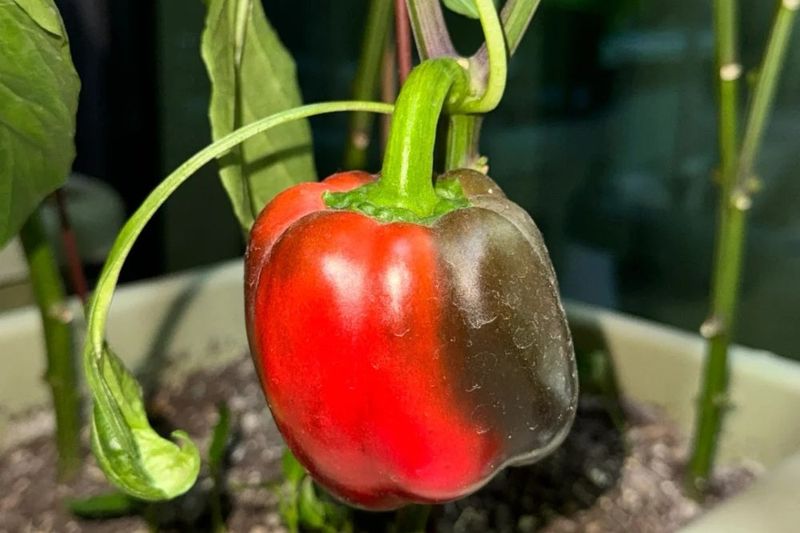
A green pepper on the vine is not automatically a problem. Many gardeners assume that a pepper should be changing color by now, but the timeline for full color depends heavily on when flowering happened, not when the transplant went into the ground. Utah State University Extension estimates roughly 30 days from flowering to mature green, followed by another 10 to 20 days for full color development. That means a pepper can take 35 to 45 days or more from the time of flowering to reach the color shown on the seed packet, and conditions during that window can slow things further.
Counting from transplanting often leads gardeners astray. A plant that went in the ground in May might not have flowered heavily until July, which means full-color fruit in August or September is right on schedule, even though it feels late. University of Minnesota Extension also notes that peppers can be harvested at the immature green stage for most cultivars, so a green pepper may simply be at an earlier but perfectly edible point in its development.
Equally important: check the seed packet or plant tag to confirm what color your cultivar is supposed to reach at maturity. University of Illinois Extension points out that some varieties are intended to be harvested green, while others mature red, yellow, orange, purple, brown, or another color entirely. A pepper sitting on a plant that is supposed to be a green-mature type will never change color, no matter how long you wait, and that is not a failure.
The plant’s symptoms reveal which problem you have
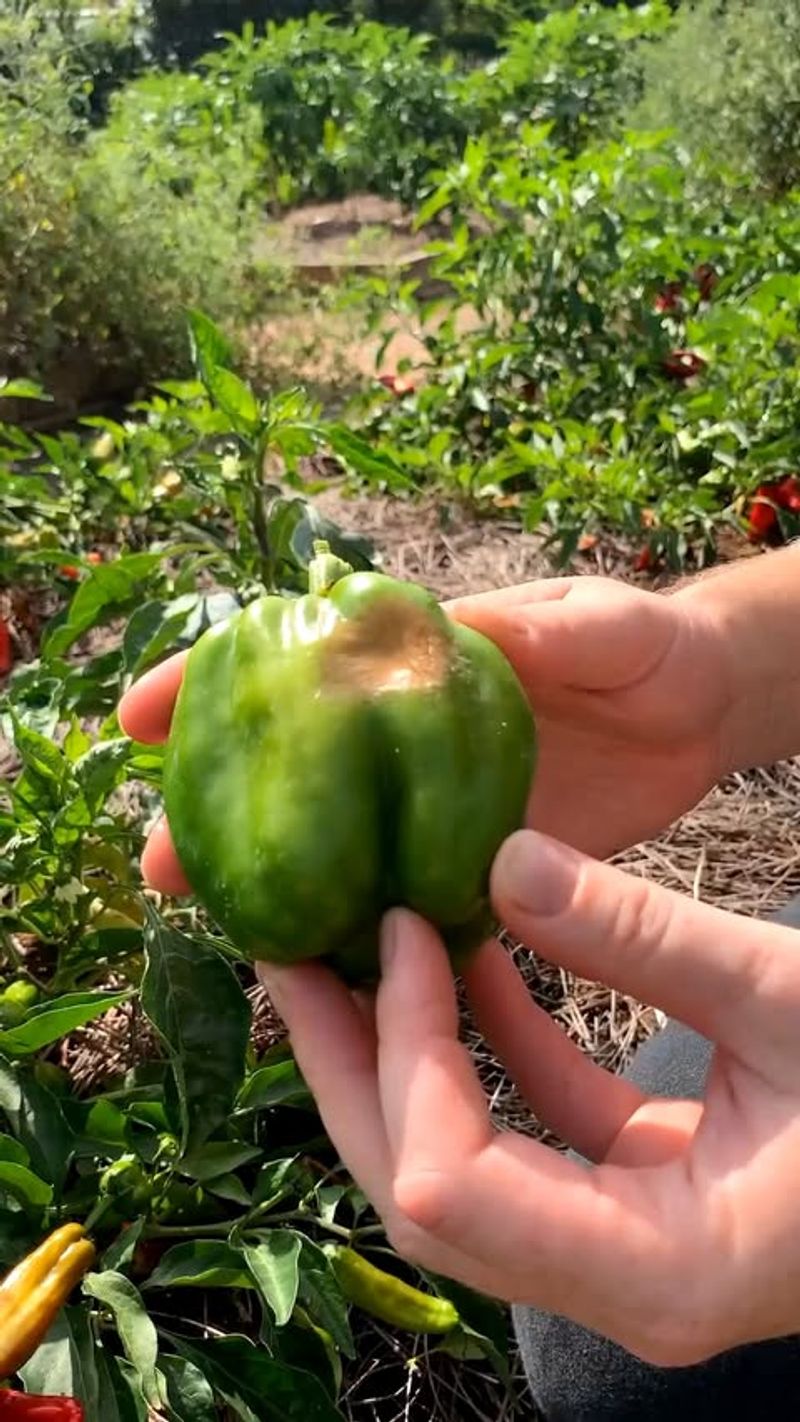
Walking up to your pepper plant with a clear checklist in mind makes diagnosis much faster. Start at the flowers. Flowers that drop off cleanly before any swelling occurs at the base point to pollination or fertilization failure, often heat-related. Flowers that stay attached but never develop into fruit suggest a similar upstream problem.
Tiny peppers that form and then shrivel or drop within a week or two are a sign of early fruit abortion, which can happen when heat or water stress hits during the most vulnerable early stage of fruit development. University of Maryland Extension confirms that these early-stage failures are among the most common heat-related pepper problems.
Full-sized green fruit that simply has not changed color yet is a separate situation. That fruit may be developing normally and just needs more time. It may also have set during a stressful period and be coloring more slowly or unevenly as a result. Either way, it is not the same as aborted fruit, and the response is different.
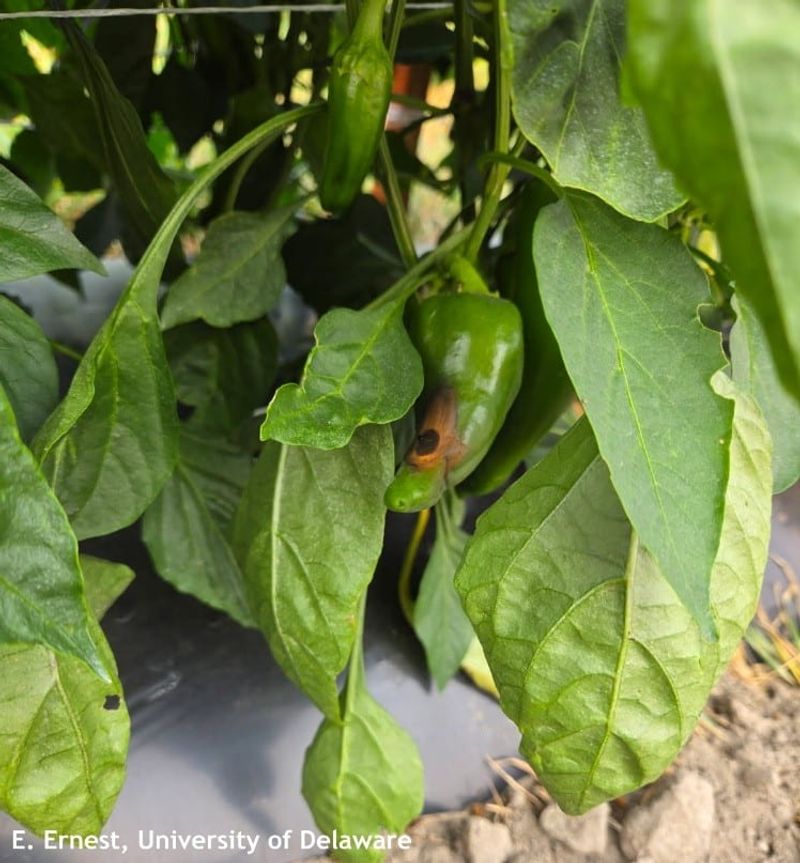
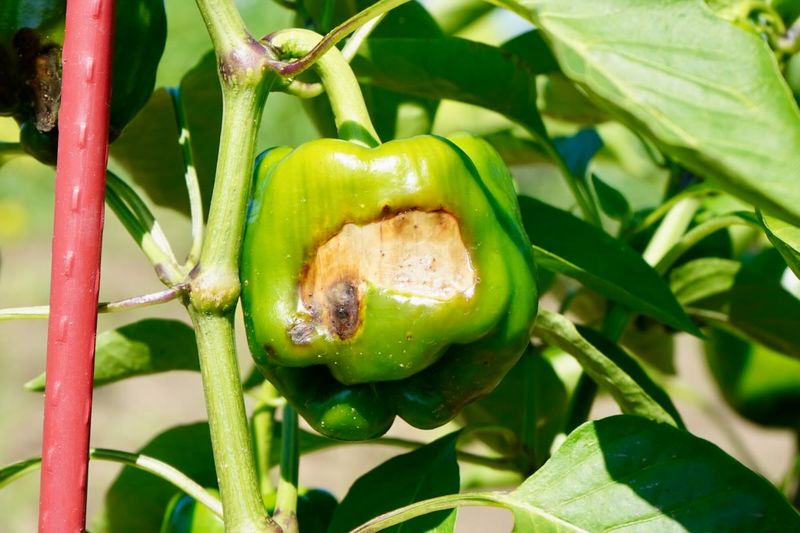
Two other conditions deserve their own category. Sunscald shows up as bleached, dry, sunken, or papery patches, usually on the side of the fruit facing the sun. UC IPM’s guidance on sunscald identifies intense direct sunlight on exposed fruit as the cause. Blossom-end rot, by contrast, appears as a dark, leathery or sunken spot at the tip of the pepper where the blossom was attached.
Illinois Extension links blossom-end rot to uneven water availability affecting calcium movement within the fruit, not simply a lack of soil calcium. Both conditions are distinct from delayed ripening, and treating one as the other wastes time.
Steady moisture and temporary shade reduce summer stress
Keeping the root zone consistently moist through flowering, fruit set, and early fruit development is one of the most reliable things you can do for pepper plants during hot weather. Iowa State University Extension recommends roughly 1 inch of water per week as a starting point, with closer attention during dry stretches. That figure should go up when temperatures are extreme, soil is sandy, or plants are in containers that dry out quickly. The goal is consistent moisture rather than a strict weekly number.
Letting the soil swing between bone dry and waterlogged is harder on peppers than either condition held steadily. Iowa State’s vegetable watering guidance recommends organic mulch as one of the most practical tools for reducing those swings, because mulch slows evaporation and buffers soil temperature at the same time. A 2 to 3 inch layer of straw, shredded leaves, or similar material around the base of the plant can make a measurable difference during a heat wave.
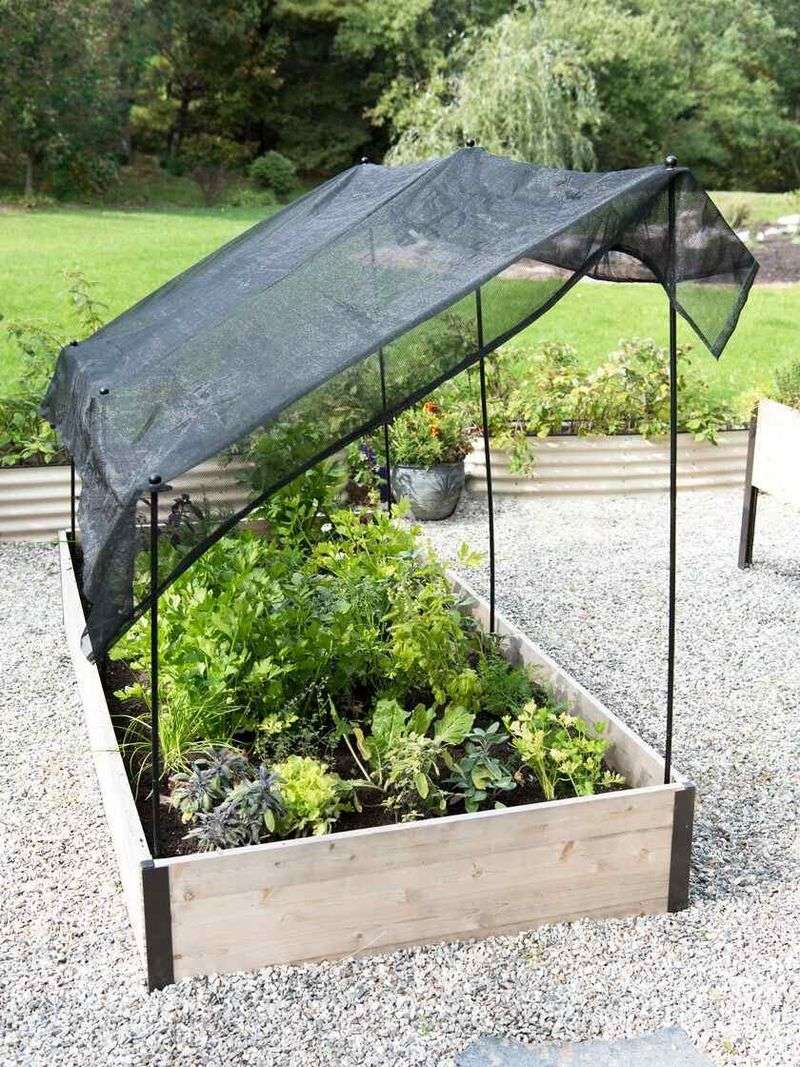
Shade is worth considering when temperatures push into the range where flower drop becomes likely. University of Delaware Cooperative Extension reports that approximately 30 percent shade cloth can cool vegetable crops without blocking too much light. Draping shade cloth over a simple frame during the hottest part of the afternoon, then removing it in cooler weather, may help reduce heat load on flowers and young fruit. These steps support the plant during stress; they cannot restore flowers or fruit that have already been lost.
Avoid blind fertilizer fixes and leaf stripping
Lush green foliage on a pepper plant can look like a nitrogen problem, but appearances can be misleading. Illinois Extension’s 2025 pepper production problems article specifically notes that university research does not support overfertilization as a general explanation for why pepper plants produce abundant foliage and few fruits. A plant that has set little fruit because of heat stress will naturally look leafy, because fewer resources are being directed into fruit. That does not mean nitrogen is the cause.
Applying fertilizer without a soil test or a crop-specific recommendation adds risk without a clear benefit. Excess nitrogen can push even more vegetative growth and delay fruit maturity. Phosphorus, calcium, and bloom-booster products applied without a diagnosed deficiency may simply be ineffective, while too much of any of them can damage plant roots or create soil imbalances. Illinois Extension’s pepper growing page advises gardeners to get a soil test before making fertilizer decisions rather than guessing based on plant appearance alone.
Removing leaves to expose green peppers to more sunlight is another tempting response that tends to backfire. Leaf cover is not just decorative; it shields fruit from intense direct sunlight. UC IPM’s sunscald guidance identifies exposed fruit as the primary target for sunscald damage. Stripping leaves during a heat wave can increase the amount of fruit surface exposed to scorching sun, leading to bleached, papery patches that ruin the pepper before it ever colors.
Leave the foliage in place and let it do its job.
Harvest according to the cultivar and fruit stage
Waiting for the perfect color before harvesting can work against you, especially during a long hot summer. Most pepper cultivars are edible at the mature green stage, meaning you do not have to leave every fruit on the plant until it reaches the color on the seed packet. University of Minnesota Extension recommends harvesting mature green peppers rather than leaving them to overripen on the plant, which can slow overall production. Picking fruit that has reached full size keeps the plant focused on developing the next flush rather than holding energy in fruit that is already done growing.
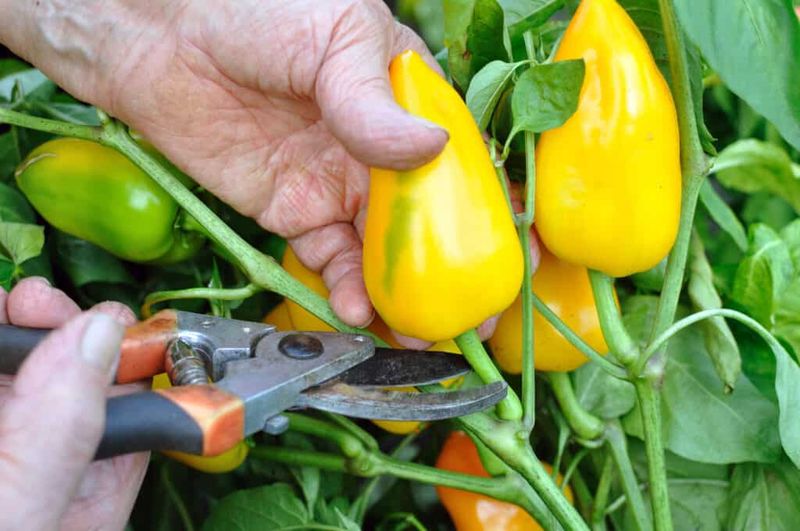
When you do harvest, cut the stem rather than pulling or twisting the pepper off the plant. Pulling can snap branches, especially on plants carrying a heavy load of fruit, and that kind of mechanical damage weakens the plant at a time when it is already under heat stress. A clean cut with scissors or pruners is faster and safer for both the plant and the fruit.
Once peppers are off the plant, handle them with some care. Utah State University Extension harvest guidance warns that peppers are susceptible to chilling injury when stored below about 45 degrees Fahrenheit, which can damage texture and interfere with quality. If you grow hot pepper varieties, wear gloves during harvest and washing, and be careful not to touch your eyes or face before washing your hands thoroughly. UC Agriculture and Natural Resources growing guidance also notes that a modest reduction in watering after fruit reaches full size and begins coloring is acceptable, but should never reach the point of wilting or severe soil drying.
Moderating weather may restore future fruit set

Start your response in the right order. Walk out to the plant and look at the flowers and young fruit first. Check whether flowers are dropping, whether tiny fruit is aborting, or whether full-sized green peppers are simply waiting for color. Then verify the cultivar’s expected mature color and count roughly how many days have passed since flowering, not since transplanting.
That sequence gives you an actual diagnosis before you take any action.
Once you know what you are dealing with, reduce heat and moisture stress as much as practical: consistent watering, mulch, and temporary shade during the hottest hours. Protect the leaf canopy rather than removing it. Hold off on fertilizer unless a soil test identifies a specific deficiency. University of Maryland Extension notes that plants often resume normal production when stressful conditions moderate, though individual flowers or fruit lost during a heat wave cannot necessarily be recovered.
Utah State University Extension reinforces that full-sized green peppers may still color later in the season as temperatures ease, so patience combined with good plant care is a legitimate strategy. Heat-related setbacks are not automatically permanent, but recovery is possible rather than guaranteed. The most productive response targets what the plant needs right now, starting with the stage where the problem actually began, well before any color was ever going to appear.