
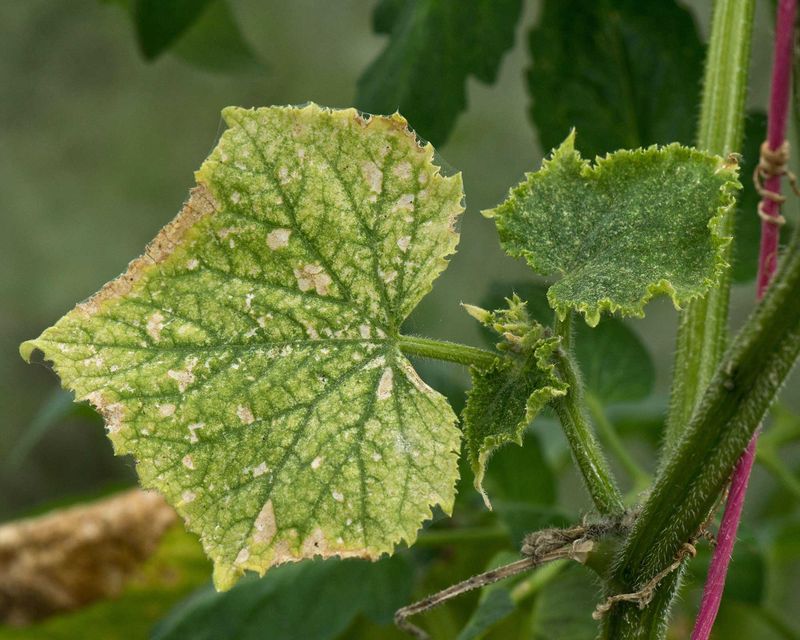
Walking out to your cucumber patch on a hot afternoon and finding the leaves looking pale, silvery, or speckled can stop you in your tracks. That kind of damage often points toward spider mites, tiny arachnids that commonly feed on leaf undersides during hot, dry weather, but they are not the only possible explanation. Heat injury, drought stress, thrips, and other problems can look remarkably similar, so rushing to spray before you know what you are dealing with can do more harm than good. A careful inspection is always the right first move.
Silvery stippling can suggest pest feeding—but not prove it
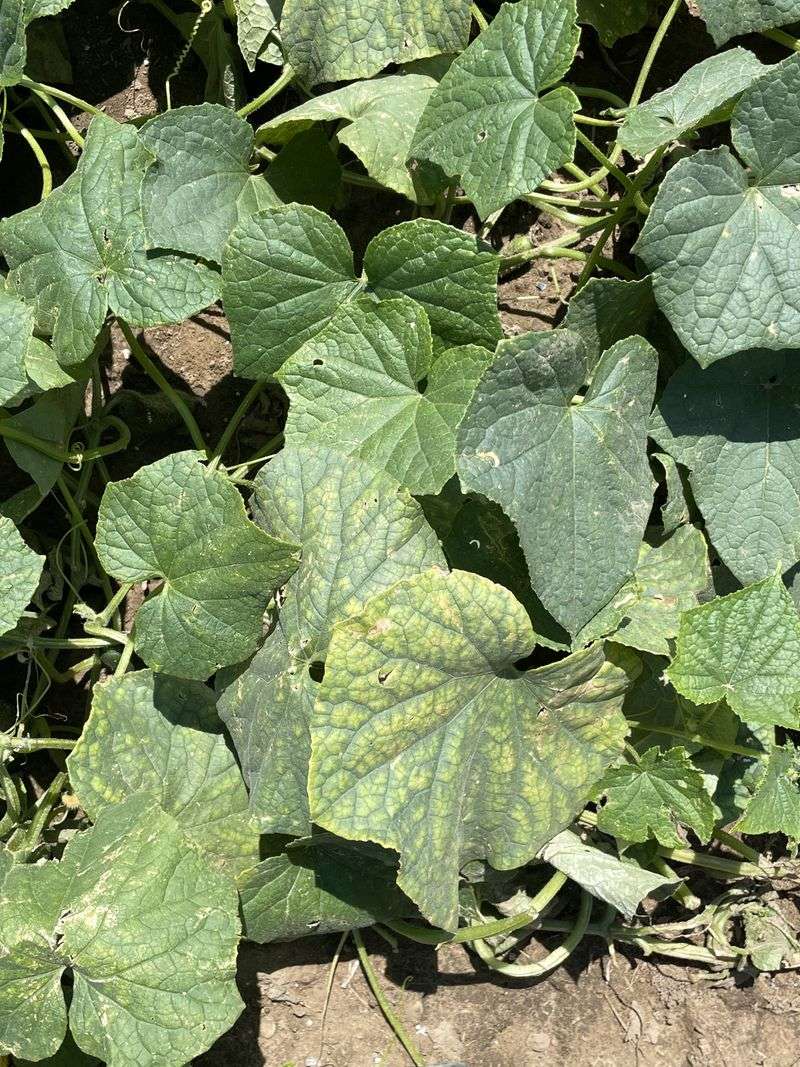
Fine white or yellow speckles scattered across a cucumber leaf are one of the earliest signs that something is feeding on it. UC IPM’s cucurbit pest management guidance explains that spider mites remove cell contents and chlorophyll as they feed, which is why the damage shows up as tiny pale dots rather than larger holes or lesions. As feeding continues, those dots can merge into broader patches of pale, bronzed, or silvery tissue, and severely affected leaves may eventually brown, die back, and drop from the plant entirely.
Reduced plant vigor and a smaller harvest can follow if the damage spreads unchecked. That progression sounds alarming, but it does not mean spider mites are the confirmed culprit every time you spot a silvery leaf in the heat of summer. Hot, dry weather does favor rapid mite population growth, making them a strong suspect under those conditions.
Still, UC IPM’s cucurbit pest damage identification resource makes clear that thrips, silverleaf whiteflies, diseases, and environmental stress can all produce symptoms that look similar to mite injury. The corrected premise here matters: silvery foliage during a heat wave is a reason to investigate, not a reason to assume you already know the answer. Move from assumption to confirmation before you do anything else.
Hot, dry weather gives tiny arachnids an advantage
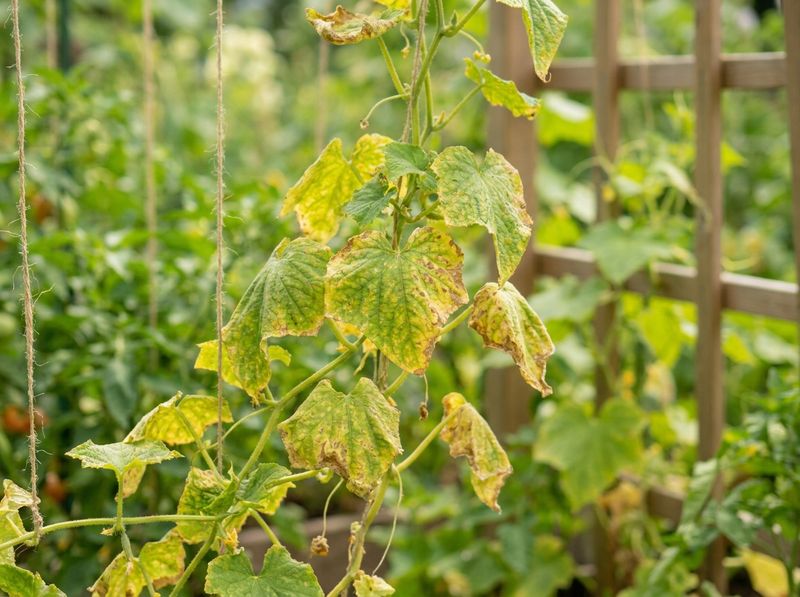
Spider mites are not insects. They are arachnids, relatives of spiders and ticks, and that distinction matters because many common insecticides have little or no effect on them. University of Minnesota Extension notes that two-spotted spider mites are roughly 1/50 inch long, which puts them well below the threshold of easy visibility without a hand lens or magnifying glass. That is a big part of why gardeners so often miss them until damage is already spreading.
Hot, dry conditions create a favorable environment for rapid mite population growth, and drought stress can weaken the plant’s ability to tolerate feeding. Heat alone does not create mites, but a stretch of dry, hot weather combined with dusty conditions and water-stressed plants can allow populations that were previously undetectable to build up quickly. Broad-spectrum pesticide use that kills off natural predators can also set the stage for a sudden surge.
When temperatures climb and rainfall is scarce, start scouting your cucumber plants proactively rather than waiting for obvious damage. Begin with the lower and older leaves, where mite colonies often establish first, and then work your way up and outward to nearby healthy-looking foliage. Because populations can expand across the plant faster than most gardeners expect, checking only one leaf or one section of the vine will not give you a reliable picture of what is happening.
Use the underside inspection and white-paper test
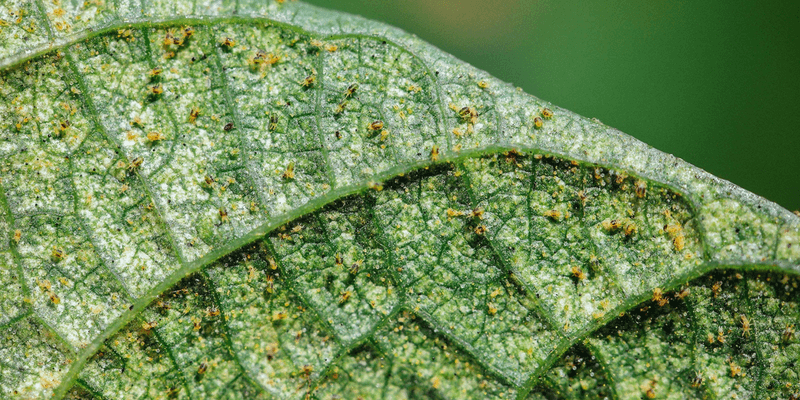
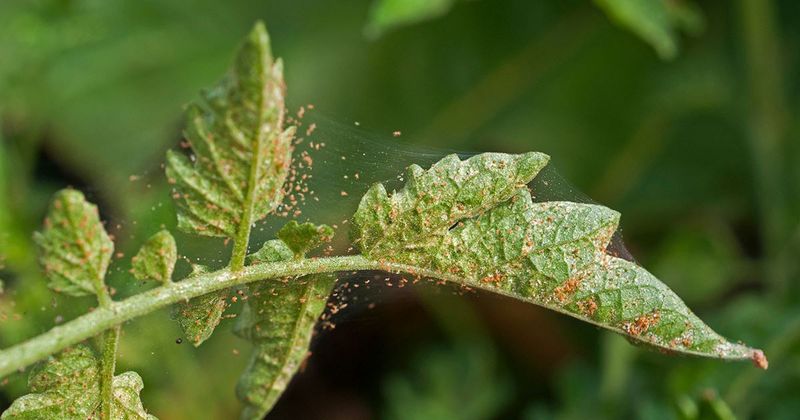
Flipping a leaf over takes about two seconds and gives you far more useful information than staring at the top surface. UC IPM’s home and landscape spider mite guidance recommends examining leaf undersides with a hand lens, where you may find tiny moving specks, clusters of eggs, cast skins from molting, or colonies of mites surrounded by fine silk webbing. Any of those findings strengthens the case for spider mites considerably.
For an even clearer confirmation, try the white-paper test. Hold a sheet of plain white paper beneath a suspect leaf, then give the leaf a firm tap or shake. Watch the paper closely for tiny dots that move on their own. Dust and debris will stay put; mites will crawl.
Illinois Extension’s twospotted spider mite page describes this technique as a practical way to distinguish mites from environmental debris when magnification is not available.
Webbing is a useful piece of evidence when you find it, but its absence should not be used to rule out mites entirely. Some spider-mite species produce little or no conspicuous webbing, especially early in an infestation. Inspect the whole plant, not just the most visibly damaged leaves. As populations grow, mites can spread to upper leaf surfaces and to other parts of the vine, so limiting your inspection to the undersides of a few leaves may cause you to underestimate how far the problem has spread.
Compare spider mites with other causes of silvering
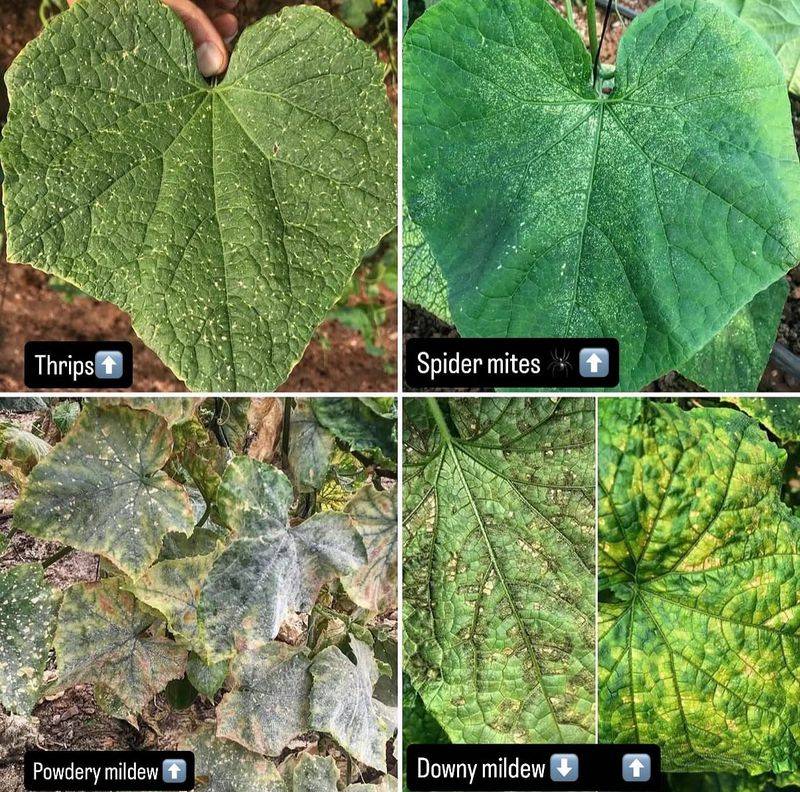
Silvery or pale foliage on a cucumber plant is a symptom, not a diagnosis. UC IPM’s cucurbit pest damage identification guide points out that thrips can cause irregular white blotches, fine flecking, or a silvery sheen on leaf surfaces, and they often leave behind small black fecal specks that are a useful distinguishing clue. Silverleaf whiteflies can also turn cucurbit foliage whitish or silver, and their tiny white adults or yellowish nymphs on the underside of leaves are the evidence to look for.
Drought stress and heat injury are probably the most commonly confused non-pest causes. A cucumber plant that has gone without adequate water during a heat wave may develop pale, papery, or bleached patches that look remarkably like stippling from a distance. The key difference is that environmental stress tends to produce more uniform discoloration, often starting at leaf margins or on the most exposed leaves, rather than the scattered pinpoint dots that mite feeding creates.
Disease can also produce discoloration or silvery-looking patches, depending on the pathogen involved. Before settling on any explanation, go back to the physical evidence: are there moving specks, eggs, cast skins, or visible colonies? Is there a pest you can actually see? Color alone, no matter how striking, is not enough to confidently name the cause.
Confirming the presence of a specific pest or ruling out environmental causes takes a hands-on look at the whole plant.
Relieve stress and dislodge mites before reaching for sprays

Once you have a likely or confirmed mite diagnosis, the first responses do not come from a spray bottle. Correcting drought stress is a practical starting point because well-watered plants tolerate feeding pressure better than stressed ones, and dry conditions are part of what allows mite populations to grow quickly in the first place. Make sure your cucumbers are receiving consistent moisture at the root zone, especially during heat waves.
A firm stream of water directed at the undersides of leaves and the lower portions of the plant can physically dislodge mites, disrupt webbing, and wash away the dust that interferes with natural predators. Colorado State University Extension’s spider mite resource notes that water sprays can reduce mite populations, but this approach may need to be repeated and does not guarantee control or eliminate eggs already attached to the leaf surface. Think of it as a helpful reduction, not a one-time fix.
Protecting natural enemies is equally important at this stage. Predatory mites, lacewings, lady beetles, minute pirate bugs, and predatory thrips all feed on spider mites and can provide meaningful suppression when they are present. UC IPM’s cucurbit mite guidance warns that broad-spectrum or persistent insecticides can wipe out these beneficial predators, and in some cases their loss leads to worse mite outbreaks than would have occurred with no intervention at all. Give natural control a chance before moving on to chemical options.
Use soaps and oils only under label-safe conditions
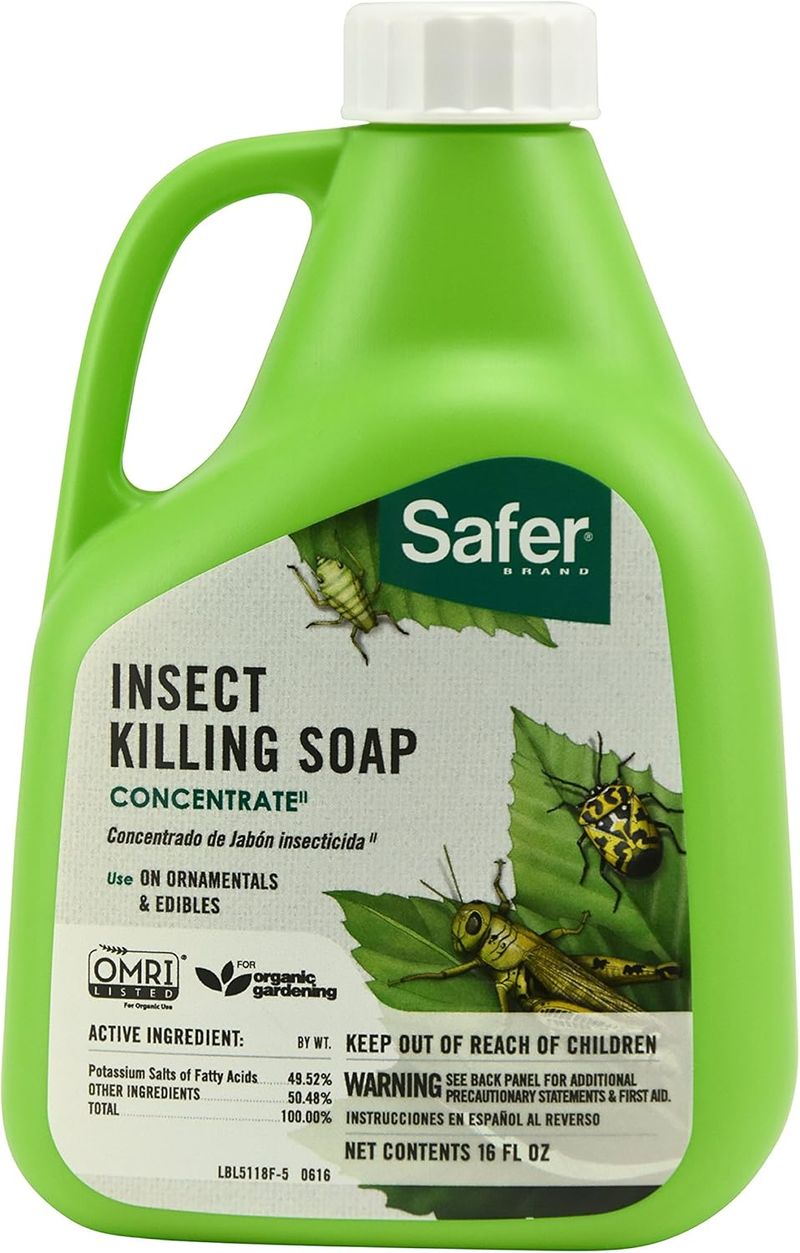
Labeled insecticidal soap and horticultural oil are sometimes appropriate options when mite populations are building and physical removal has not been enough. The critical word in that sentence is “labeled”: the product must specifically list cucumber or the applicable crop group on its label, and you must follow every instruction it provides. These materials work through direct contact with the pest, so thorough coverage of leaf undersides is essential. They have little residual activity, meaning mites that hatch from eggs after the application are not affected, and repeat treatments according to the label schedule may be necessary.
UC IPM cautions against applying soaps or oils to water-stressed plants or when temperatures are expected to exceed 90 degrees Fahrenheit. Both materials can injure foliage under those conditions, and cucumber leaves are particularly susceptible. Apply during cooler parts of the day, such as early morning, and make sure the plant has been adequately watered beforehand. Dense webbing can also prevent sprays from reaching the mites underneath, which is another reason to address infestations before they reach that stage.
Do not substitute household dish soap or detergent for a labeled product. Colorado State University Extension’s guidance on soaps and detergents warns that household formulations can burn or injure plant foliage because they are not formulated for this purpose. Similarly, avoid sulfur-based products unless you have confirmed that the specific product is safe for cucumber in your local conditions, as sulfur can damage cucurbit foliage. University of Minnesota Extension reinforces that a properly formulated and labeled insecticidal soap is the appropriate choice, not a homemade substitute.
Monitor buildup instead of following a magic number
There is no single treatment threshold that applies universally to spider mites on home-garden cucumbers. UC IPM’s cucurbit mite management page is explicit on this point: no established threshold exists, so decisions should be based on monitoring, predator activity, how quickly populations are growing, the plant’s overall condition, and how much damage has already occurred. That means the first speck of stippling you find does not automatically call for a pesticide application.
Return to the same affected leaves every two or three days and repeat the white-paper test on both previously damaged foliage and nearby leaves that looked healthy during your last check. You are watching for new stippling, an increase in the number of moving mites, the spread of webbing to new areas, or signs that the plant itself is declining faster than before. If predators are present and active, give them time to work before escalating your response.
UC IPM’s home and landscape guidance suggests acting before severe webbing or extensive damage develops, because heavy infestations are harder to manage and the plant has less capacity to recover from significant defoliation. A clearly expanding population on a plant that is already showing stress warrants a more urgent response than a handful of mites on an otherwise vigorous vine. Regular monitoring gives you the information you need to make that call with confidence rather than guesswork.
Protect the harvest with a label-based treatment plan
A sensible response to silvery cucumber leaves moves through a clear sequence: inspect the whole plant, run the white-paper test to confirm pest activity, correct any drought stress, wash the leaf undersides with a firm stream of water, and protect any natural predators you find. Reassess after a few days before deciding whether a labeled product is warranted. That order matters because each step gives you more information and may reduce the problem before you need to reach for anything stronger.
Cucumber is a food crop, and that changes the stakes around any pesticide decision. The EPA is clear that pesticide labels are legally binding: you must confirm that the product lists cucumber or the applicable crop group, follow all application limits and personal protective equipment requirements, and observe the preharvest interval before picking fruit. Product registrations and labeled uses change over time, so always read the current label for your specific product rather than relying on general advice.
Silvery leaves during a hot, dry stretch are a real reason to go out and look closely at your cucumber plants. They are not, by themselves, proof that one hidden pest is always to blame. A careful inspection, not an automatic spray, is what turns a worrying symptom into a manageable situation.