
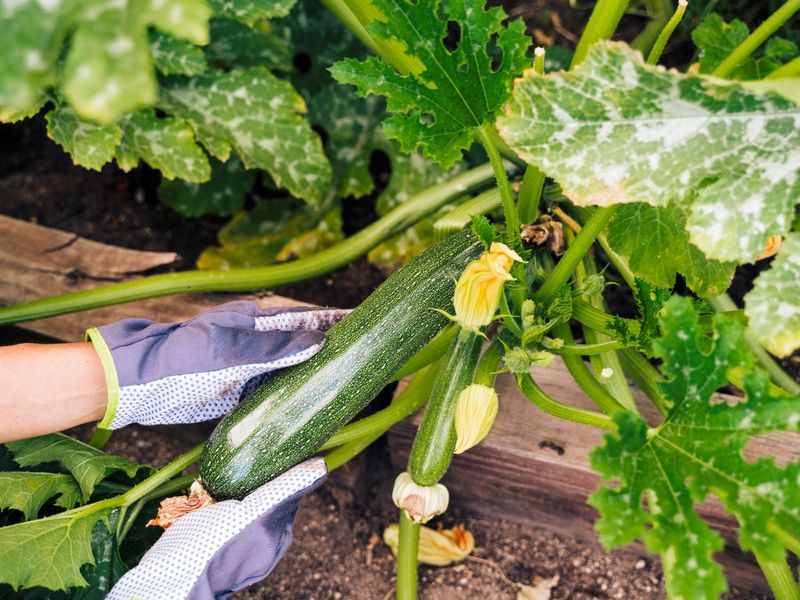
You water faithfully, the plant looks enormous, and yet the zucchini just aren’t showing up. When your plant is all foliage and almost no fruit in the middle of summer, it’s tempting to pin the blame on one thing you did wrong. The real picture is usually more complicated, and sorting through it doesn’t require a chemistry degree. A few careful observations can point you toward the actual problem and a low-risk way to address it.
Lush foliage is a clue, not a diagnosis
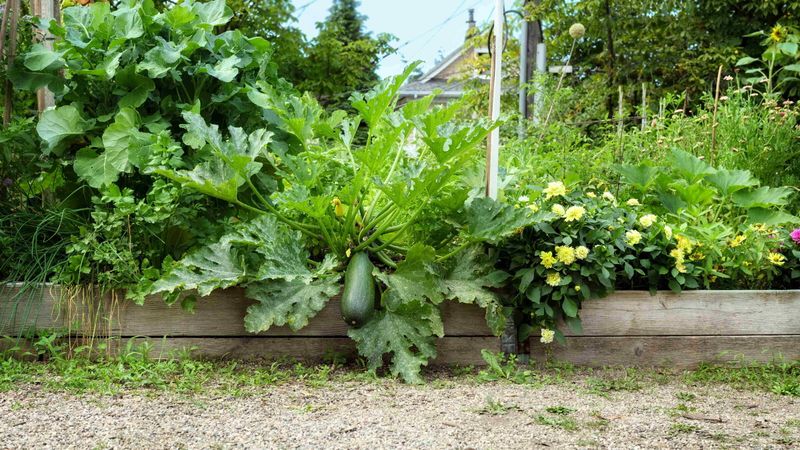
Walking out to a zucchini plant that has swallowed half your raised bed can feel alarming, but big leaves by themselves don’t point to a single cause. Variety plays a real role here: some zucchini cultivars are simply bred for vigorous, spreading growth, and a plant given rich soil, consistent water, and full sun will often reward you with impressive foliage whether or not anything is wrong.
The situation changes when the leaves are unusually dark green and the plant keeps producing new shoots and leaves while flowering stays sparse or delayed. That combination, especially after repeated fertilizer applications, makes excess nitrogen a more plausible factor worth investigating. University of Minnesota Extension guidance on fertilizing plants identifies excess nitrogen as a driver of excessive leafy growth and delayed fruiting in vegetable crops.
Heat adds another layer. UMN’s research on heat and vegetable gardens shows that high summer temperatures can independently reduce female-flower production and cause flower or young-fruit abortion, so a leafy plant struggling in July heat may be dealing with multiple overlapping pressures at once. Removing healthy leaves is not a productive response to lush growth, and adding more fertilizer without first understanding what’s already in the soil can make things worse. The first step is simply to observe more carefully before acting.
Excess nitrogen can favor leaves over fruit
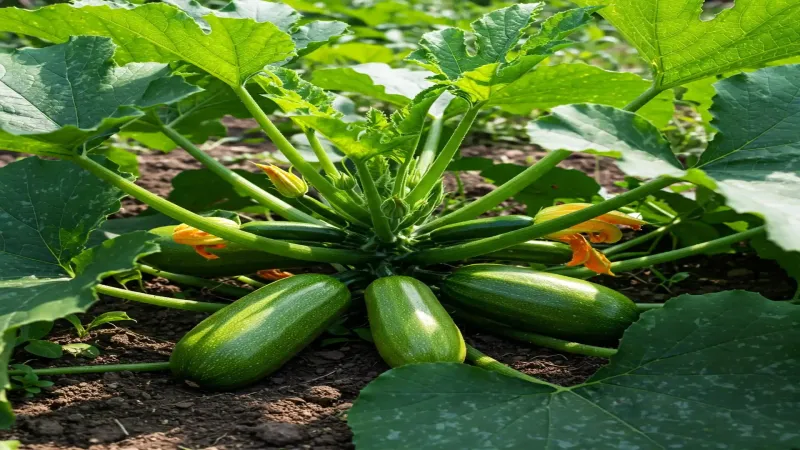
Nitrogen is the nutrient most responsible for green, leafy plant growth, and when a zucchini gets more of it than the plant can direct toward reproduction, the result can be impressive foliage paired with delayed or reduced fruiting. Oklahoma State University Extension’s column on fruiting vegetables confirms that excess nitrogen can push plants toward vegetative growth at the expense of fruit production.
The risk is highest when a gardener has applied multiple rounds of nitrogen-rich inputs over the season. Blood meal, fish fertilizer, urea, lawn fertilizer used on the vegetable bed by mistake, and repeated applications of composted or fresh manure can all contribute. Composted manure in particular is often treated as nutritionally mild, but UMN guidance on interpreting soil tests for vegetable crops notes that repeated manure applications can create substantial nutrient accumulation over time.
Excess nutrients can also create imbalances between elements, which may affect how efficiently the plant uses what’s available. Penn State Extension’s soil management resources point out that over-application can injure plants, waste money, and contribute to water-quality problems beyond the garden. The takeaway is that more is not safer when it comes to fertilizer, and a history of generous feeding is worth reviewing before reaching for another bag.
Audit the feeding history before adding anything else
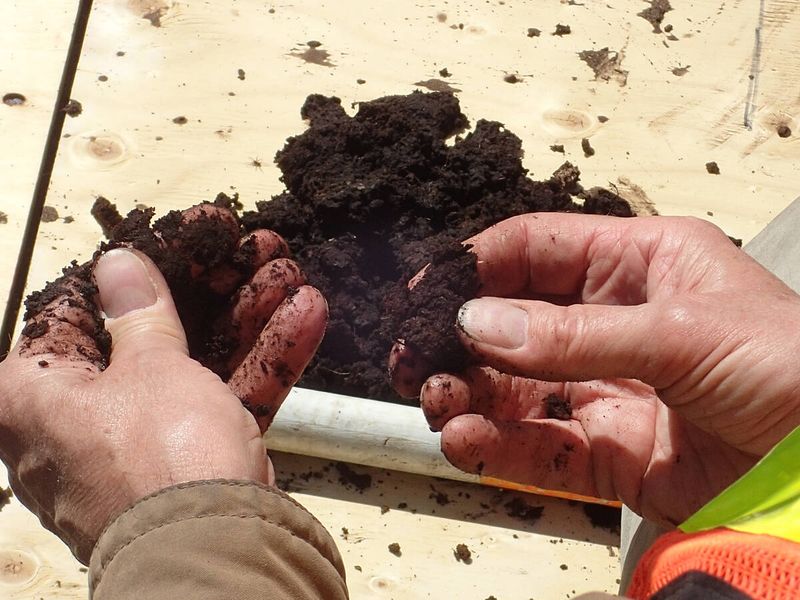
Before changing anything in the garden, take a few minutes to reconstruct what the plant has already received. Write down every product applied since planting, including the approximate amount and timing. Check the nutrient analysis on each bag or bottle, specifically the three numbers representing nitrogen, phosphorus, and potassium. If the nitrogen number is high and applications have been frequent, that’s a meaningful data point worth acting on.
The practical response is to pause unnecessary nitrogen-heavy feeding rather than to stop fertilizing entirely and permanently. UMN’s guide to growing summer squash and zucchini recommends basing phosphorus and potassium applications on a soil test rather than automatically adding more. A basic soil test for home gardens is inexpensive and gives you actual numbers for nutrient levels and pH rather than guesses based on how the plant looks.
Resist the urge to switch to a high-phosphorus bloom booster as a quick fix. Phosphorus applied to soil that already has adequate levels doesn’t help the plant fruit faster and can create environmental problems. Penn State Extension’s guidance on tailoring fertilizer recommendations reinforces that nutrient applications should match what the soil and crop actually need. One more point worth setting expectations around: pausing excess nitrogen won’t immediately restore fruit set during a heat wave.
Heat can independently suppress fruiting regardless of what’s in the soil, so the fertilizer audit is just one part of a broader check.
Read the flowers before choosing a remedy
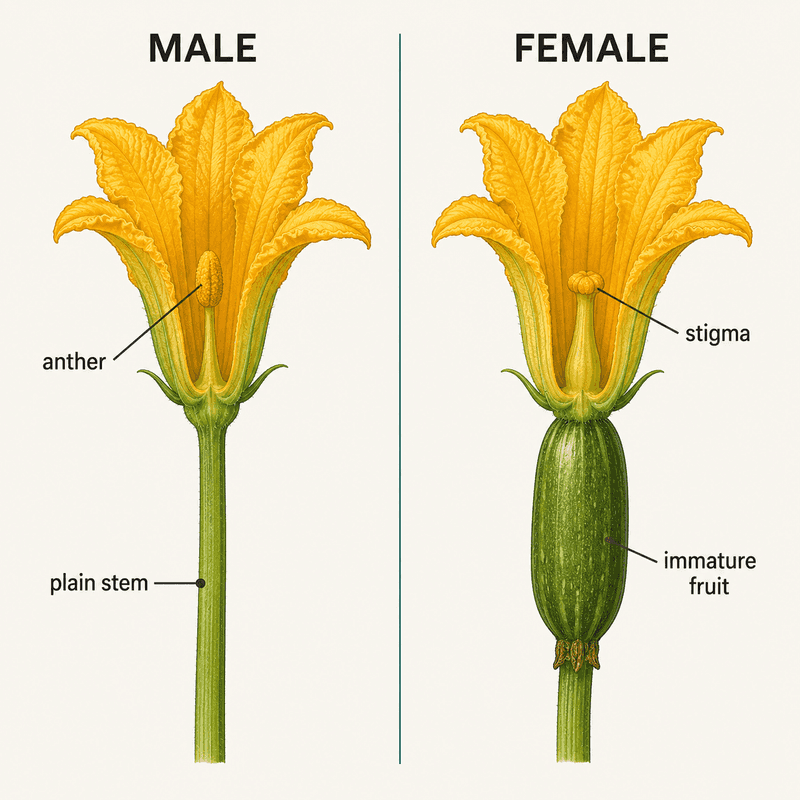
Flower inspection is one of the most useful diagnostic steps a gardener can take, and it costs nothing. A female zucchini flower has a small, swollen bump at its base that looks like a tiny, undeveloped zucchini. A male flower sits on a thin, plain stem with no swelling behind the petals. Both are normal and necessary, but only the female flower can become fruit.
Early in the season, zucchini plants typically produce a flush of male flowers before female flowers appear. Several weeks of flowers with no fruit is completely normal at the start. University of New Hampshire Extension’s article on zucchini flowering explains this male-first pattern and notes that female flowers generally follow as the plant matures. If the plant is well into the season and still producing very few or no female flowers, heat, stress, or variety may be the primary issue rather than fertilizer.
A different pattern tells a different story. When female flowers are present but the tiny fruit behind each one shrivels and drops rather than enlarging, the likely culprits shift toward pollination failure, heat stress, inconsistent moisture, or disease. UMN’s summer squash growing guide outlines both patterns and helps gardeners distinguish them. Knowing which situation you’re dealing with narrows the remedy considerably and avoids wasted effort on the wrong fix.
Heat can disrupt fruit set and pollination
Hot weather doesn’t just make gardening uncomfortable; it can directly interfere with the biological processes that turn flowers into fruit. UMN’s research on heat and the vegetable garden reports that daytime temperatures around or above 90 degrees Fahrenheit and nighttime temperatures around or above 70 degrees Fahrenheit can shift cucurbit plants toward producing more male flowers and contribute to flower or young-fruit abortion. These are practical warning ranges, not guaranteed failure thresholds, and outcomes vary by cultivar, humidity, soil moisture, and local conditions.
Oklahoma State University Extension’s column on fruiting vegetables in summer similarly notes reduced fruit set in squash when daytime temperatures exceed 90 degrees and adverse effects when nights stay warm. Pollen quality and viability can drop in intense heat, and bee activity often declines during the hottest parts of the day, reducing natural pollination at the same time the flowers themselves are under stress.
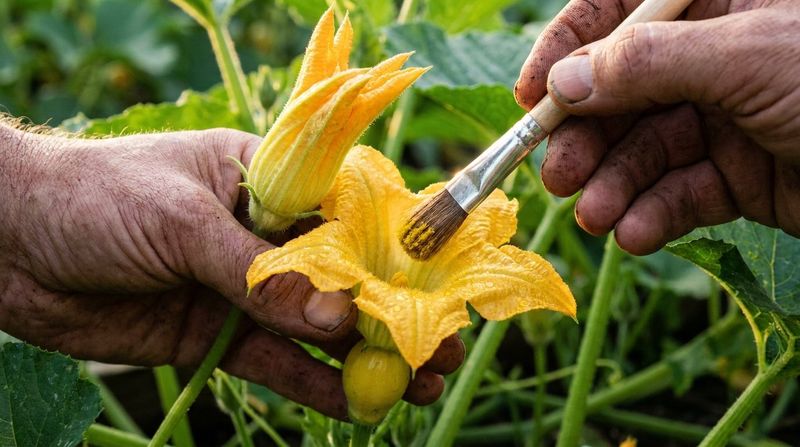
When female flowers are open and you notice very little bee activity in the morning, hand-pollination is a reasonable and low-risk option. Using the male flower itself or a cotton swab, transfer pollen from the male flower’s center to the sticky central stigma inside the female flower. Zucchini flowers open early and close within hours, so timing matters. Colorado State University Extension’s vegetable garden hints and University of Georgia Extension’s squash guide both describe this technique.
Hand-pollination cannot compensate for a plant that is producing no female flowers, or one under severe heat, drought, or disease stress, so it works best as a supplement to other corrective steps rather than a standalone fix.
Steady moisture and regular picking protect the next harvest
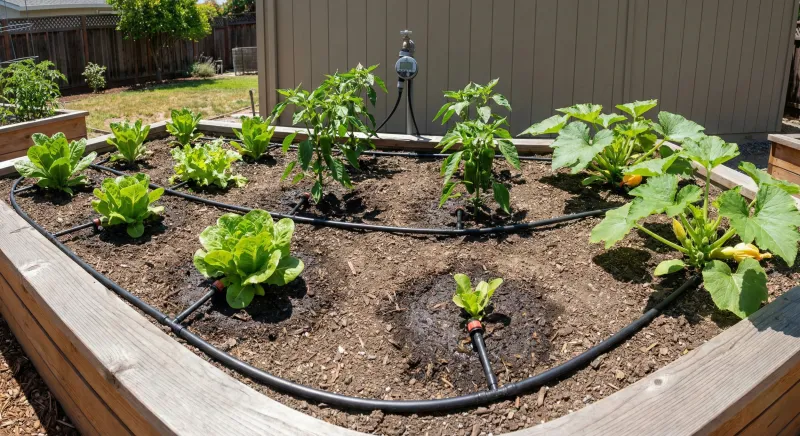
Soil moisture swings are harder on zucchini than many gardeners realize. Alternating between dry soil and sudden heavy watering can stress the plant, contribute to flower drop, and reduce the plant’s ability to set and hold fruit. Utah State University Extension’s squash growing guide recommends deep, infrequent watering totaling roughly one to two inches per week, adjusted for rainfall, soil type, and current weather conditions.
Delivering that water at soil level rather than overhead helps on two fronts. Drip irrigation or a soaker hose keeps moisture where roots can use it and avoids routinely wetting the foliage, which can increase disease pressure in squash. UMN’s summer squash guide also recommends mulching around the base of the plant to conserve soil moisture and moderate temperature fluctuations at the root zone. These steps support the plant without adding more inputs.
Harvesting frequently is the other cultural practice worth prioritizing right now. Large zucchini left on the plant signal it to slow down or stop producing new fruit, because the plant’s energy shifts toward maturing the seeds inside the oversized fruit already there. Colorado State University Extension’s guide to squash and melons and Utah State’s cucurbit harvest and handling guidance both recommend keeping summer squash picked regularly. Picking won’t guarantee fruit set during extreme heat, but leaving oversized fruit on the vine almost certainly reduces continued production.
Check pests and disease before escalating treatment
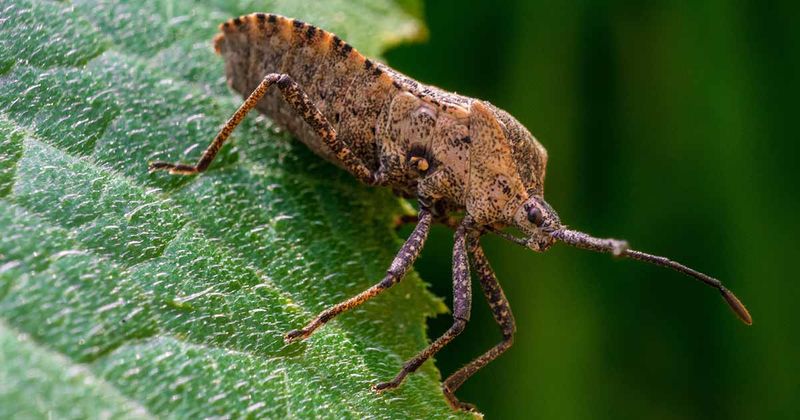
A zucchini plant that looks leafy and vigorous but fruits poorly might be fighting off more than just heat or too much nitrogen. Squash bugs, cucumber beetles, and squash vine borers are common in US home gardens, and each can weaken the plant in ways that reduce fruiting without leaving immediately obvious damage. UMN’s growing guide for summer squash lists these pests alongside fungal and bacterial diseases and viral infections as conditions that can affect plant health and fruit production.
Inspect stems at soil level for entry holes or frass that could indicate vine borer activity. Check the undersides of leaves for squash bug egg clusters, which are bronze-colored and arranged in neat rows. Look for mosaic patterns, distortion, or unusual yellowing on leaves that might suggest a viral disease. Oklahoma State University Extension’s fact sheet on pumpkin and squash diseases provides descriptions of common fungal, bacterial, and viral problems that affect cucurbit crops.
Identify the problem before treating. Any pesticide use on edible crops requires reading and following the product label, including edible-crop restrictions, harvest and reentry intervals, and instructions for protecting pollinators. EPA guidance on reading pesticide labels and EPA’s pollinator protection resources both emphasize avoiding applications while bees are actively foraging. Treating for pests or disease won’t restore fruiting if heat, pollination failure, or nutrition remains the primary constraint.
Choose a restrained reset for hot weather
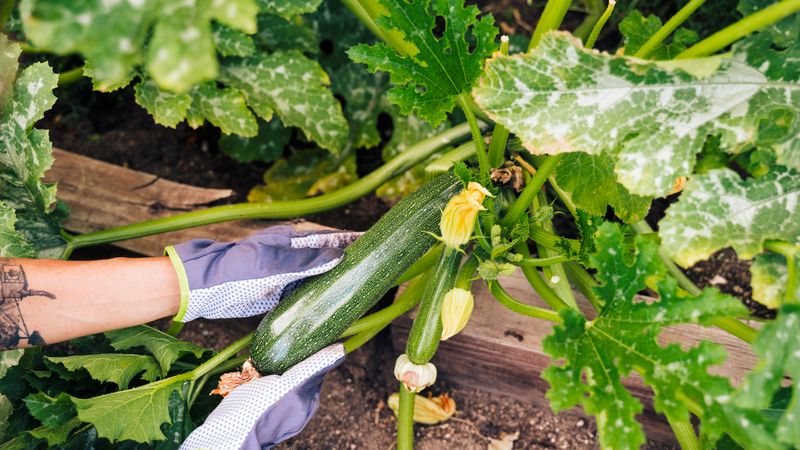
When a zucchini plant is leafy and barely fruiting in July, the most useful first move is a fertilizer audit and a soil-test plan, not another feeding. Review what was applied, check the nitrogen content of each product, and pause any inputs that are nitrogen-heavy until you have test results to guide the next decision. UMN’s plant fertilizing guide supports using soil-test data rather than visual symptoms as the basis for nutrient management.
After the fertilizer audit, inspect the flowers to determine whether pollination or heat is the immediate barrier to fruit set. If female flowers are present but bees are scarce, try selective morning hand-pollination. Keep the soil consistently moist, apply mulch if you haven’t already, and pick any oversized fruit still on the plant today. Work through the pest and disease checklist before reaching for any spray product.
Correcting genuine excess nitrogen may help the plant shift energy toward reproduction once conditions allow, but Oklahoma State Extension’s summer fruiting column is clear that fruit production can remain low during the hottest stretch of the season regardless of what else you adjust. The goal right now is to remove the obstacles you can control and give the plant a fair chance when temperatures ease. A zucchini that’s genuinely healthy and well-supported tends to make up for lost time quickly once the heat breaks.