
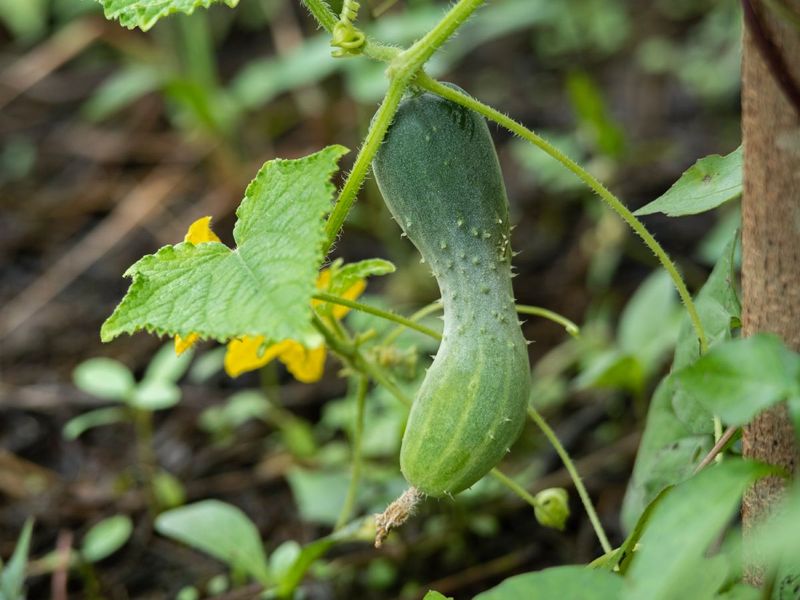
Pulling a cucumber off the vine and finding it swollen in the middle but pinched or tapered at both ends is one of those midsummer surprises that makes you wonder what went wrong. That lumpy, waisted shape is not just cosmetic – it is a signal worth paying attention to, especially when it shows up on fruit after a stretch of hot weather. Fluctuating soil moisture is one well-supported reason this happens, but it is not the only one, and a little detective work can help you figure out what your plants actually need.
A moisture swing can produce fat and pinched cucumber sections
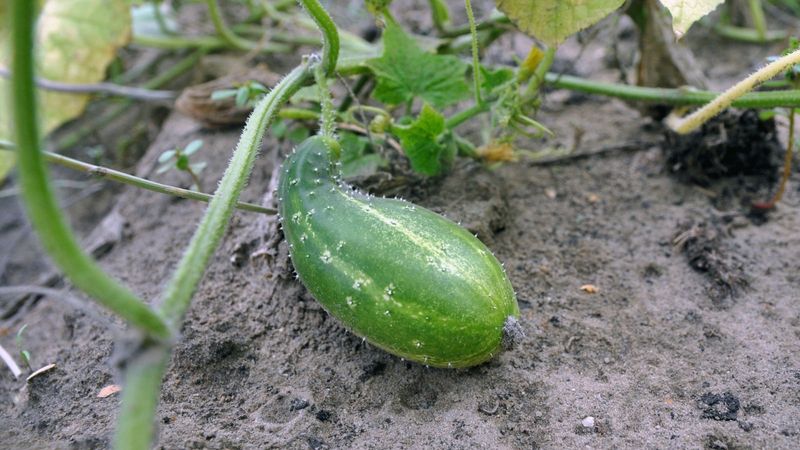
Spotting a cucumber that bulges in the center but tapers off at the stem and blossom ends is understandably puzzling. The shape looks unusual enough that many gardeners assume something serious went wrong, but the pattern itself offers a useful starting clue. Illinois Extension’s guidance on container vegetables specifically describes a “fat/skinny” cucumber as a sign of changing water availability, which points toward root-zone moisture as one place to investigate.
The relevant watering habit is not simply skipping a day here and there. What appears to matter more is a recurring cycle where the root zone dries out significantly during flowering or early fruit development, then receives enough water later to resume growth. That start-stop pattern can translate into uneven cell development along the fruit, producing the swollen-then-narrow shape you see on the vine.
That said, this shape alone does not confirm a watering problem. Illinois Extension’s cucumber growing guide and Penn State’s high-tunnel cucumber research both note that misshapen fruit can result from several causes, including pollination issues, disease, and other stressors. Treat the shape as a reason to check your irrigation, not as proof that watering is to blame.
Heat can magnify water stress—and complicate pollination
Cucumbers are shallow-rooted plants, and that matters a lot during the hottest weeks of summer. Illinois Extension notes that cucumbers need ample, consistent moisture, and that need becomes especially acute while flowers are setting and fruits are expanding. When the top few inches of soil dry out quickly in high temperatures, the roots may not have access to steady water even if you watered recently.
Utah State University recommends roughly 1-2 inches of water per week as a general target for cucumbers, with adjustments upward during fruiting and hot weather because demand rises. A dry-to-wet root-zone cycle is one plausible moisture-related mechanism that heat can intensify – but it is not the only explanation for pinched ends during a heat wave.
Heat has a separate effect that gardeners sometimes overlook: it can interfere with pollination. Minnesota Extension reports that bee activity and pollination can decline around 90 degrees Fahrenheit, and that temperatures above roughly that threshold can reduce cucumber fruit set. So when misshapen fruit appears during a hot spell, water stress and pollination trouble can both be contributing at the same time, and heat alone does not confirm which one is the main driver.
Check two inches down before changing your watering schedule
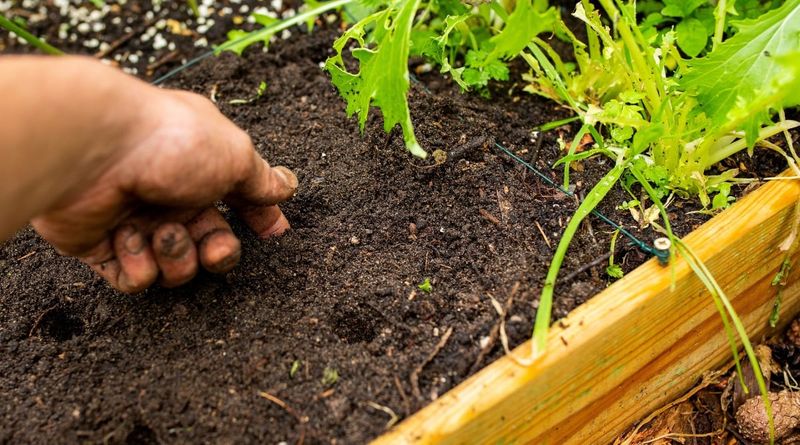
Before adjusting anything, take a moment to actually check the soil. Judging moisture by how the surface looks or by how long ago you watered last is not reliable enough, because the top inch can appear dry while the root zone still holds plenty of water – or vice versa.
Minnesota Extension recommends watering when the soil is dry about 2 inches below the surface, which means pressing a finger or a thin dowel into the ground near the plant and feeling what is actually there. If the soil at that depth feels consistently dry when you check over several days, that is meaningful information. If it feels moist or even wet, adding more water is not the fix.
Utah State Extension emphasizes watering deeply enough to wet the root zone, but water should soak in gradually without puddling, running off the surface, or leaving the soil waterlogged. Saturated soil deprives roots of oxygen and can invite root disease just as surely as drought stress can. Frequency needs to respond to your specific conditions – soil type, mulch depth, rainfall, container size, plant size, and current heat – rather than a fixed calendar schedule.
Stabilize the root zone for the next round of fruit
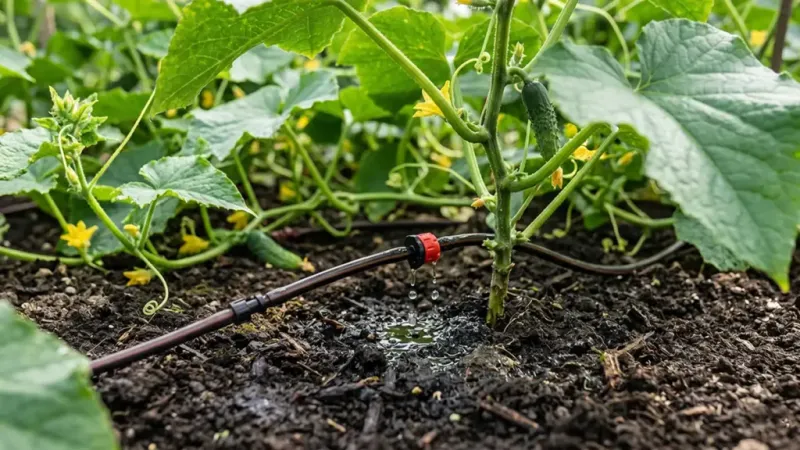
When the soil check confirms that your cucumber’s root zone has been drying out between waterings, the practical response is to shift toward a steadier supply rather than simply watering more on the same irregular schedule. The goal is stable moisture, not a fixed number of watering days per week.
Drip irrigation, a soaker hose, or careful low-flow watering directed at the base of the plant are the most reliable delivery methods. These approaches keep water near the roots and away from the foliage, which matters because wet leaves can encourage fungal disease. Apply water slowly enough that it soaks into the soil rather than running off or pooling on the surface.
Mulching around the plant – with straw, shredded leaves, or wood chips – can meaningfully reduce evaporation and buffer the soil against rapid moisture swings. Utah State Extension recommends removing badly misshapen young fruit so the plant can direct its energy toward developing later cucumbers under improved conditions. One important clarification: Minnesota Extension’s watering guidance makes clear that overwatering can deprive roots of oxygen and promote root diseases. Fruit that already formed with an abnormal shape will generally stay that way – improved irrigation targets the cucumbers still developing on the vine, not the ones already harvested or removed.
Containers and exposed beds need more frequent checks
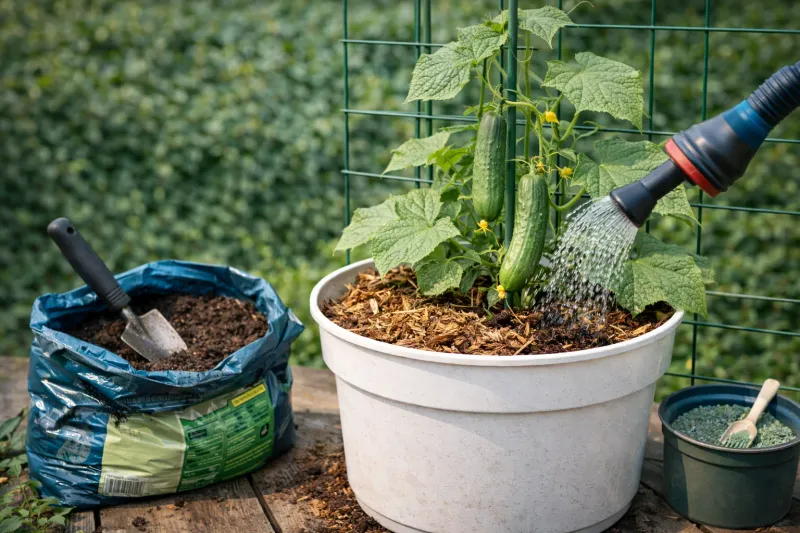
Growing cucumbers in containers, hanging planters, raised beds with sandy fill, or any exposed spot with strong wind and full sun puts the plant in a situation where the root zone can dry out far faster than a typical in-ground garden bed. These setups are not inherently bad choices, but they do require more attentive monitoring.
Illinois Extension specifically warns that container potting mix can dry so thoroughly that it begins to repel water, channeling it along the inside edges of the pot rather than soaking through to the roots. If you notice water running quickly out the drainage holes without the soil actually feeling moist in the middle, that is a sign the mix has become hydrophobic. A second, slower watering application shortly after the first can help rehydrate the mix fully.
These faster-drying conditions may mean you need to check soil moisture daily during a heat wave and water more often than you would in a well-mulched in-ground bed. Minnesota Extension’s vegetable garden watering guidance reinforces that no single schedule fits all situations – the soil check is always the most reliable guide. A heavily fruiting vine in a small pot on a south-facing patio in July is simply a different watering situation than the same variety planted in a mulched raised bed.
Poor pollination can create a similar cucumber shape
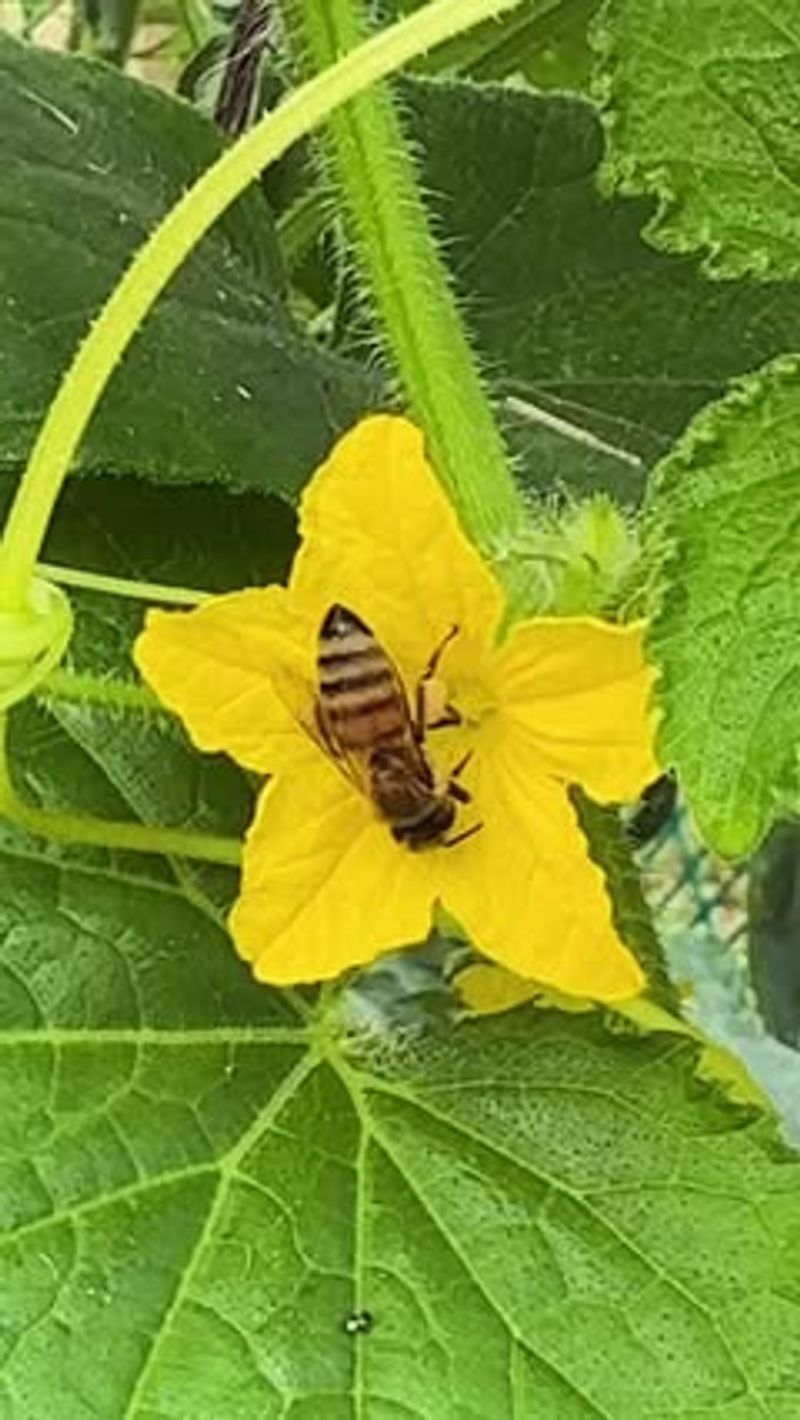
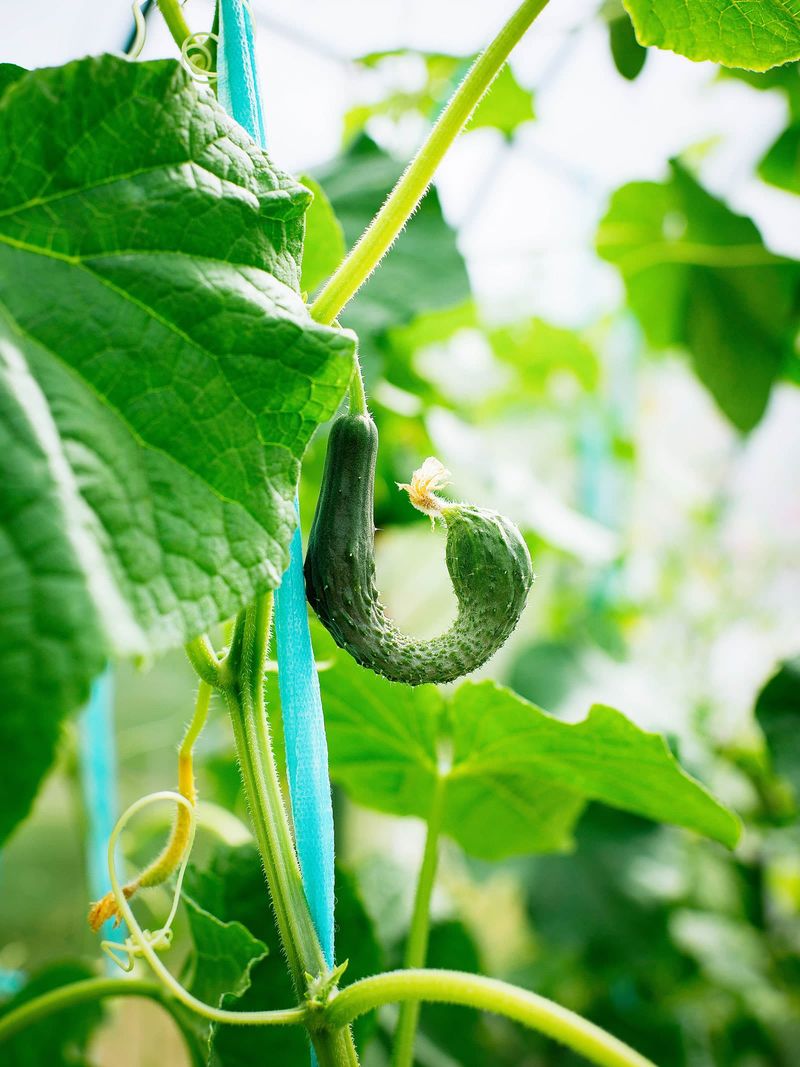
Moisture is not the only path to a misshapen cucumber. Inadequate pollination is another important and common explanation for fruit that develops unevenly, curves, narrows, or tapers in unexpected ways. Understanding this possibility matters because the fix is completely different from adjusting your irrigation.
Penn State’s cucumber pollination resource explains that cucumbers rely on bees and other pollinators to transfer pollen from male to female flowers, and that insufficient pollen transfer can produce curved, narrow, or otherwise deformed fruit. Minnesota Extension notes that high heat can reduce bee activity, which means a hot midsummer stretch can suppress pollination just as it increases water demand – making the two causes harder to separate based on timing alone.
Cutting open a misshapen cucumber and finding few or poorly developed seeds may suggest pollination trouble, but that observation alone cannot confirm the cause at home. Cultivar type also plays a role: parthenocarpic cucumbers are bred to set fruit without pollination, but Penn State notes that unwanted pollination of some parthenocarpic greenhouse varieties can itself produce seeded, misshapen, or bitter fruit. That particular wrinkle is more relevant to protected growing environments than to a typical backyard garden, but it is a reminder that cultivar characteristics genuinely matter when diagnosing shape problems.
Look for plant symptoms that point beyond irrigation
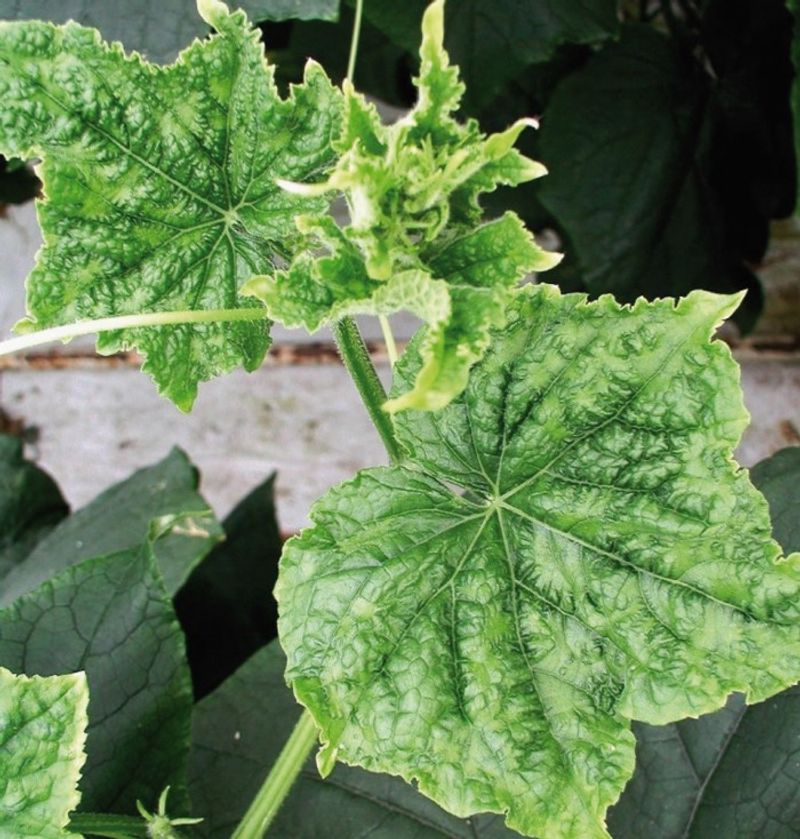
Misshapen cucumbers that keep appearing even after you have steadied the watering and ruled out pollination trouble deserve a closer look at the plant itself. Several other problems can deform cucumber fruit, and some of them call for a completely different response than adjusting irrigation.
Nutrient deficiencies, cold temperatures during fruit development, mechanical injury from insects or equipment, and cultivar-specific characteristics can all contribute to abnormal shapes. More urgently, Minnesota Extension’s cucurbit virus resource describes how certain viral diseases produce misshapen fruit alongside mottled or mosaic leaves, curled or distorted young growth, unusual color rings, and stunting. If you are seeing any combination of those symptoms on the same plant, the problem likely goes beyond soil moisture.
Penn State’s high-tunnel cucumber guidance lists nutrient problems as one possible cause of fruit distortion, but reaching for fertilizer – especially high-nitrogen products or boron – without evidence of a deficiency or a soil test is not a good first move. Excess boron is specifically toxic to cucumbers. Minnesota Extension’s plant disease management guidance recommends that suspected viral infections be investigated with expert or laboratory help rather than home diagnosis from symptoms alone. Sudden wilting, widespread lesions, rot, or severe stunting are all reasons to stop experimenting with irrigation and seek a proper diagnosis.
Use new fruit as the test of your correction
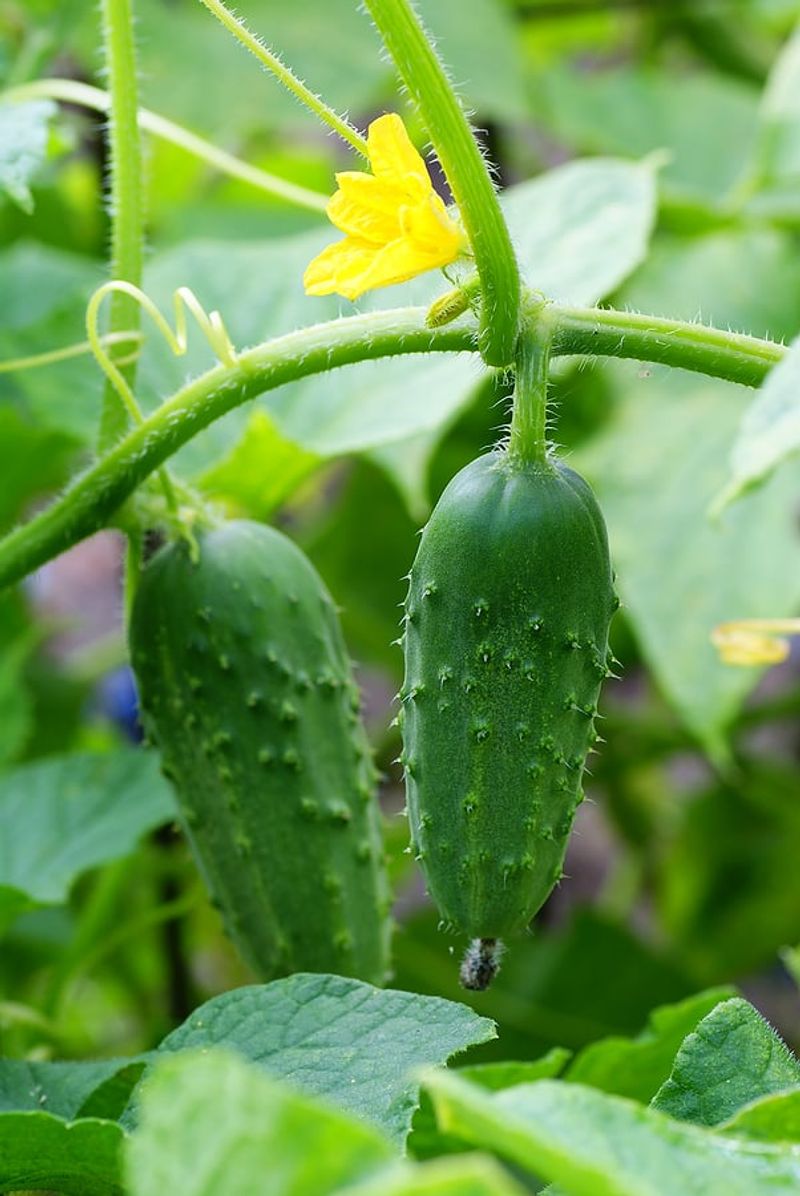
Once you have checked soil moisture, corrected any recurring dry-to-wet swings, and added mulch to buffer the root zone, the cucumbers already on the vine with abnormal shapes will not change. Utah State Extension suggests removing badly misshapen young fruit so the plant can put its energy toward developing later cucumbers under better conditions – though removing them does not confirm what caused the problem or guarantee the next batch will be perfect.
Watch the fruit that forms after your irrigation adjustment. If new cucumbers develop with a more normal shape, steadier root-zone moisture was likely a contributing factor. If distortion continues, revisit the pollination question and look again at the plant for disease symptoms. Minnesota Extension’s watering guidance and Penn State’s pollination resource both support a diagnostic approach rather than assuming one fix covers every case.
Steadier soil moisture is a strong, well-supported first response to the fat-middle, pinched-end pattern – but it is a starting point for investigation, not an explanation for every misshapen cucumber that appears in a hot garden.