
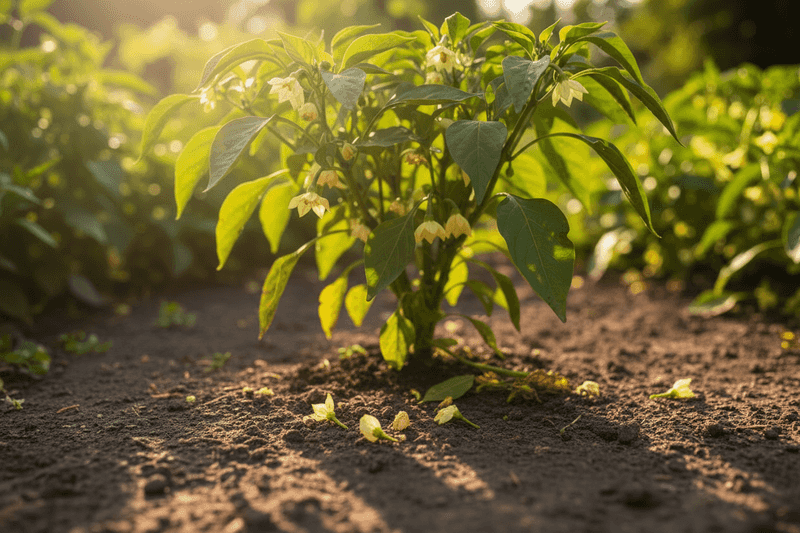
You step outside on a hot afternoon and find a cluster of pepper blossoms scattered on the soil beneath a plant that was loaded with buds just days ago. Watching flowers fall before they can become peppers is genuinely discouraging, especially when the plant looked so promising. The good news is that widespread blossom drop during a heat wave usually points to a recognizable pattern, and understanding what is happening gives you a real path forward.
Heat-stressed flowers offer the leading explanation
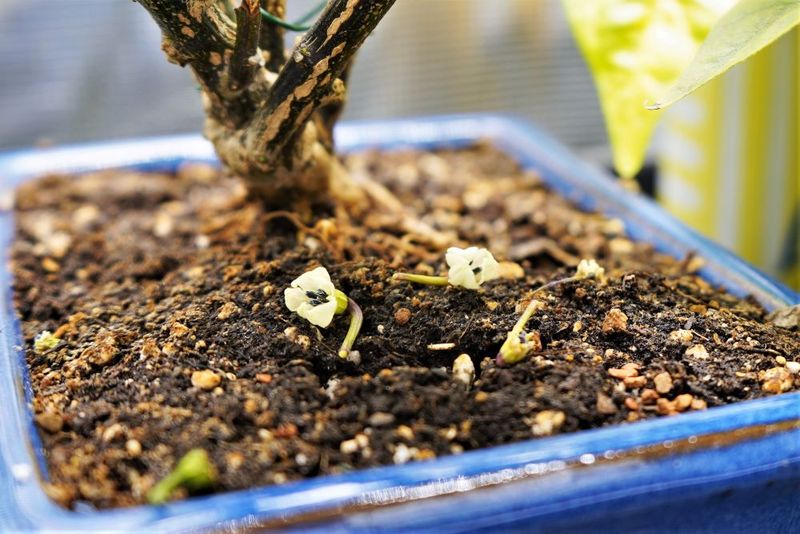
Abundant flowering followed by widespread blossom loss during a stretch of hot weather is a recognizable pattern, and the explanation that fits it most consistently is heat-related flower abortion, often made worse by uneven moisture in the root zone. That is a strong hypothesis, not a confirmed diagnosis. Blossom drop simply means flowers or tiny immature fruit detach from the plant before they can develop, and several conditions beyond heat can trigger the same result.
University of Maryland Extension guidance on blossom and fruit set lists heat, cool nights, wind, humidity, poor pollination, insects, nutrient imbalance, excessive nitrogen, disease, and cultivar sensitivity as recognized contributors to flower loss. Blaming a single hidden cause for every dropped blossom oversimplifies a problem that can have several overlapping triggers. The symptom alone cannot tell you which one is in play.
A temporary production pause during a heat wave does not mean the plant is permanently failing. UC Agriculture and Natural Resources pepper guidance and Oregon State Extension heat-wave guidance both note that peppers can resume production after conditions moderate. Staying calm, observing carefully, and responding with steady care gives the plant its best chance.
Hot days and warm nights can stop fruit set
Pepper plants reproduce through a process that is surprisingly sensitive to temperature, and the problem during a heat wave goes deeper than visible wilting. High heat can reduce pollen viability and interfere with fertilization itself, meaning a flower may look normal but fail to set fruit because the pollen is no longer functional or the fertilization process breaks down before it completes.
A controlled bell-pepper study published in the Journal of Agronomy and Crop Science found that flower buds and open flowers exposed to approximately 33 degrees Celsius (about 91 degrees Fahrenheit) for extended periods showed reduced fruit set, with pollen viability and post-pollination fertilization identified as especially heat-sensitive stages. That research supports treating reproductive failure as a direct heat effect, not just a consequence of a wilted or thirsty plant.
Extension sources offer approximate temperature benchmarks, though these vary by cultivar and pepper type. Iowa State University Extension identifies daytime temperatures above roughly 85 degrees Fahrenheit and nighttime temperatures above about 75 degrees as ranges where bell peppers may struggle to set fruit. University of Georgia Extension emphasizes that warm nights above approximately 70 degrees can be especially disruptive. Hot-pepper cultivars often tolerate higher temperatures than bell peppers, so the threshold is not universal.
Hand-pollinating every flower is unlikely to fix this. University of Illinois Extension notes that pepper flowers can self-pollinate, but when heat has already damaged pollen or disrupted fertilization, moving pollen from flower to flower cannot restore what the heat has compromised.
Uneven moisture can intensify heat stress
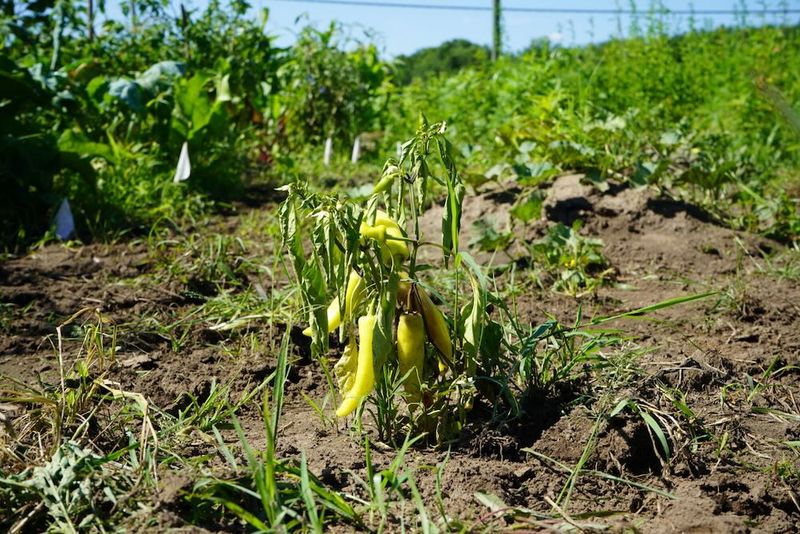
Heat stress and water stress are related but not the same thing, and treating them as identical can lead to the wrong response. On a hot, dry, windy day, a pepper plant can lose water faster than its roots can replace it even when the soil is reasonably moist. The atmosphere is pulling moisture out of the leaves faster than the plant can keep up, and that creates stress without the root zone being dry.
The opposite problem is just as real. Repeated cycles of letting the soil dry out completely and then saturating it can damage roots and reduce the plant’s ability to absorb water and nutrients at exactly the moment it needs them most. Oregon State Extension pepper guidance and New Mexico State University’s chile pepper disorder publication both point to water-balance swings as a factor that can worsen flower abortion during hot weather.
The practical target is relatively even root-zone moisture throughout flowering and early fruit set. UC IPM watering guidance for peppers reinforces this, noting that water stress during bloom can substantially reduce fruit set. University of Minnesota Extension adds that temporary midday wilt is common on hot afternoons even when soil moisture is adequate, so a drooping plant at noon is not automatically a signal to water. Check the soil a few inches down before deciding the plant needs more water.
Check competing causes before choosing a treatment
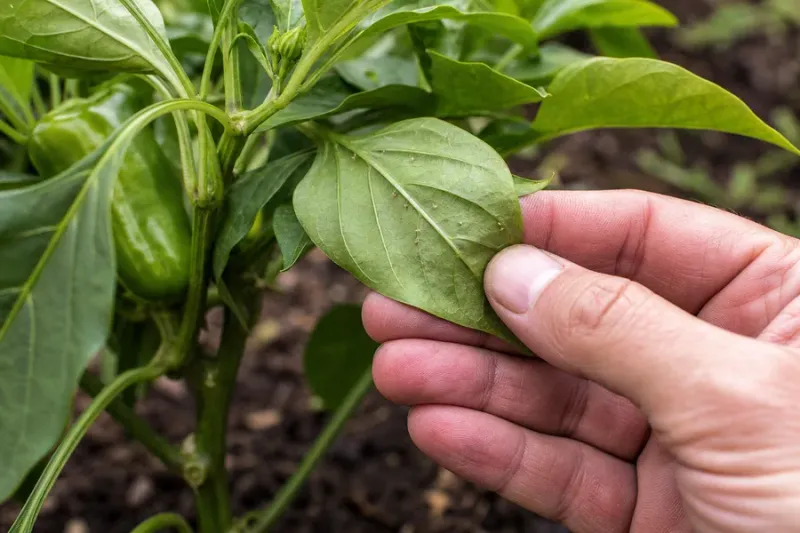
Before assuming the heat is the only explanation, run through a quick mental checklist of what conditions were actually present when the blossoms fell. What were the overnight temperatures? Was there significant wind? Has the soil been consistently moist, repeatedly dry, or occasionally waterlogged?
Are the plants in containers, where roots heat up and dry out faster than in the ground? These details matter because they change the diagnosis.
UC Agriculture and Natural Resources pepper production guidance identifies a favorable general range of roughly 55 to 65 degrees Fahrenheit at night and 75 to 85 degrees by day. If your nights have been cool rather than warm, the problem may be cold-related flower drop rather than heat stress, and the response is different. Iowa State University Extension notes that nights below about 60 degrees can also cause blossom drop, which means early-season conditions or a sudden cool spell can produce the same symptom as a heat wave.
Walk around the plant and look carefully at the flowers, leaves, stems, and nearby soil. UC IPM pepper bloom guidance and NMSU pepper production guidance both recommend checking for aphids, mites, thrips, and other insects that can damage flowers or disrupt fruit set. Look for distorted growth, yellowing patterns, or unusual spotting that might indicate disease or herbicide injury. A plant already carrying a heavy load of developing peppers may also drop later flowers because it has limited resources to support more fruit, as noted by University of Georgia Extension.
One distinction worth keeping clear: blossom-end rot is not the same as blossom drop. University of Illinois Extension and University of Florida IFAS describe blossom-end rot as a dark, sunken lesion on the bottom of a developing pepper, not a fallen flower. Seeing rotted fruit on the plant is a different problem from watching blossoms detach.
Keep the root zone evenly moist
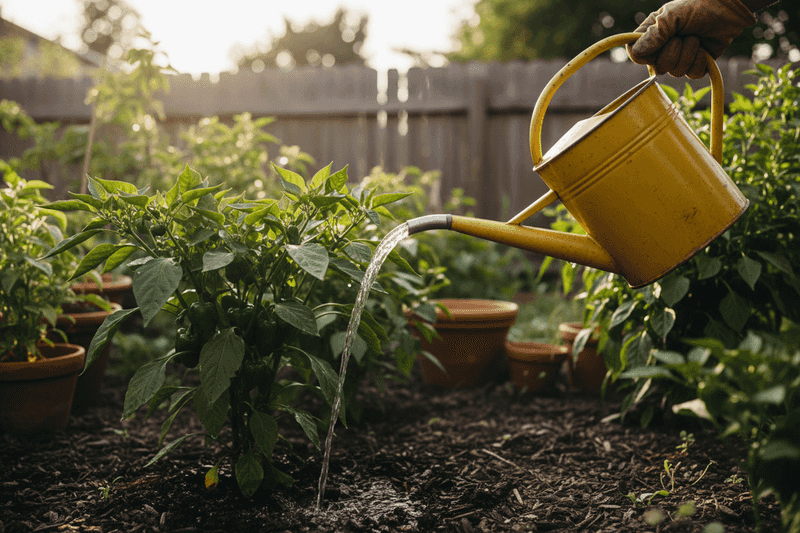
Once you have confirmed that heat and moisture swing are the most likely contributors, the first practical step is checking what is actually happening at the root zone. Push a finger or a soil probe two to three inches into the ground near the plant. Soil that feels dry at that depth probably needs water; soil that feels cool and damp probably does not, even if the leaves are drooping at midday.
When watering is needed, water deeply at the soil surface rather than sprinkling lightly and frequently. University of Minnesota Extension pepper guidance and Oregon State Extension both recommend deep, infrequent watering that encourages roots to grow deeper rather than staying near the surface where they are most vulnerable to heat and rapid drying. Shallow, frequent sprinkling followed by a dry spell creates exactly the kind of wet-dry cycle that adds stress during flowering.
Container peppers need more attention because their limited root volume heats up quickly and dries out faster than in-ground plants. UC IPM watering guidance suggests checking containers more frequently during hot weather and watering when the top inch or two of soil feels dry.
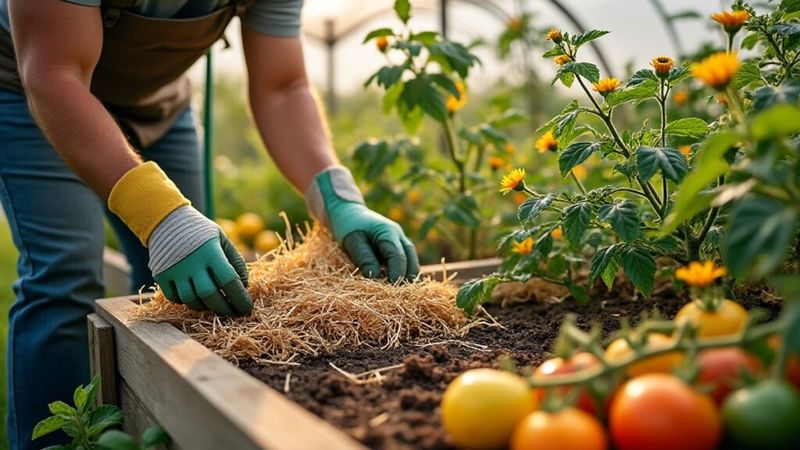
Mulch is a practical tool for stabilizing root-zone conditions. UC Agriculture and Natural Resources pepper guidance recommends about 2 inches of mulch around plants to reduce evaporation and moderate soil temperature, while keeping the mulch a few inches away from the stem to avoid rot. Favor early-morning watering at the soil surface. Wetting leaves during hot, dry periods can increase disease risk, so root-zone irrigation is the safer default.
Use temporary shade carefully during extreme heat
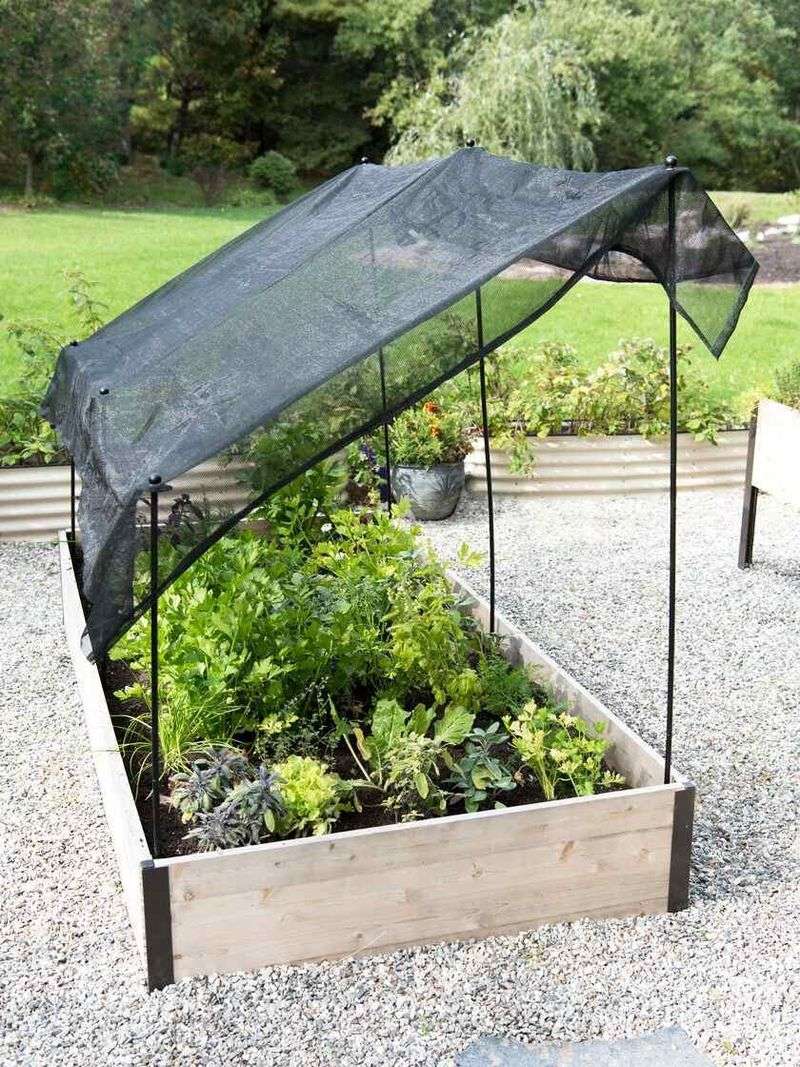
Shade cloth can reduce heat load on pepper plants during the worst days of a heat wave, but how you install it matters as much as whether you use it. Draping material directly over plants traps heat and can raise temperatures around the foliage rather than lowering them. The cloth needs to be elevated on stakes or a simple frame so air can move beneath it.
University of Delaware Cooperative Extension identifies 30% shade cloth as a practical level for many vegetables, including peppers, because it cuts some of the most intense radiation without blocking so much light that plants lose the energy they need for growth. Secure the cloth against wind so it does not collapse onto the plants or blow away. University of Maryland Extension and University of New Hampshire Extension both note that ventilation is essential when using any protective covering over heat-sensitive crops.
Row covers are a different situation. Oregon State Extension warns that enclosed row covers can trap heat and push internal temperatures above 90 degrees Fahrenheit, which would worsen rather than reduce stress. If you use a row cover as shade, monitor the temperature underneath and vent or remove it when conditions inside rise. Shade is a temporary stress-reduction measure for extreme heat, not a permanent substitute for a well-chosen, sunny planting location.
Avoid quick fixes that cannot repair heat damage
A common reaction to blossom drop is reaching for something to add, whether fertilizer, a bloom booster, or a calcium supplement. None of those products can repair pollen that heat has already damaged, and some can create new problems if applied incorrectly or unnecessarily.
Excess nitrogen encourages lush, fast foliage growth at the expense of flowering and fruiting. UMass Extension guidance on garden fertilization cautions that high-phosphorus bloom-booster products are not a reliable rescue tactic where soil phosphorus is already adequate, and pushing extra nutrients onto a heat-stressed plant rarely helps fruit set. Clemson University Extension pepper guidance recommends fertilizing based on soil-test results or product labels rather than responding to a symptom with a nutrient blast. University of Maryland Extension similarly notes that excessive nitrogen can contribute to poor fruit set.
Calcium amendments are also frequently misapplied in this situation. Calcium sprays or soil additions do not address heat-damaged pollen, and they should not be presented as a universal answer to blossom drop. University of Florida IFAS and NMSU Extension both explain that calcium transport problems are associated with blossom-end rot on developing fruit, not with flowers falling from the plant before they set.
Hand-pollinating every flower is unlikely to help either. As the controlled bell-pepper heat study and University of Illinois Extension both note, pepper flowers self-pollinate, and moving pollen between flowers cannot restore viability that heat has already reduced. The more useful response is stabilizing conditions rather than adding treatments.
Watch for renewed flowering after temperatures moderate
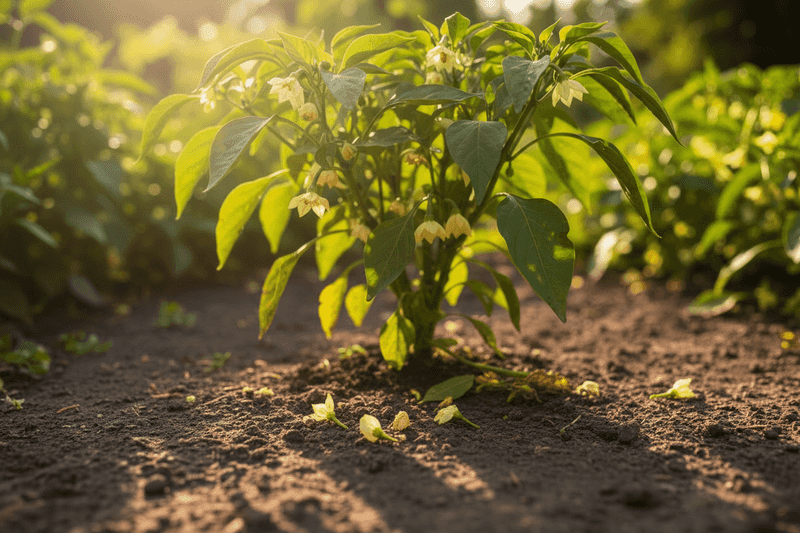
After a heat wave passes and temperatures drop back into a more favorable range, keep an eye on the plant rather than assuming the season is over. New flower buds may appear within a week or two, and some of those can develop into fruit if conditions stay reasonable. Oregon State Extension heat-wave garden guidance and UC Agriculture and Natural Resources both note that production can resume after temperatures moderate, though recovery is not immediate or guaranteed.
Continue watering steadily at the root zone, keep mulch in place, and avoid the temptation to fertilize heavily in hopes of speeding the rebound. University of Illinois Extension advises patience, noting that pepper plants often need time to shift back into productive mode after heat stress. If blossom drop continues under milder temperatures, that is a signal to look more carefully for pests, disease, nutrient imbalance, or other causes covered earlier. NMSU Extension reinforces that heat plus moisture swing is the leading explanation for heavy flowering followed by widespread drop in hot weather, but persistent loss under cooler conditions calls for a fresh look.
A plant that flowered abundantly once will likely do so again given steady care and a reasonable stretch of weather.