
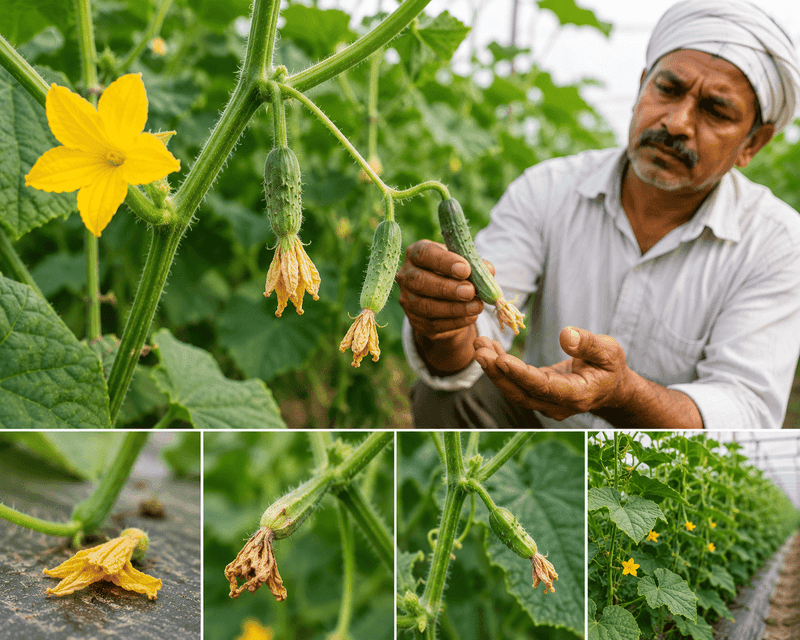
Watching cucumber vines grow thick and green while every flower falls off before producing a single fruit is one of summer gardening’s most frustrating puzzles. The vines look perfectly healthy, yet the blossoms pile up on the ground instead of turning into cucumbers. Several things can cause this, and inconsistent watering is one credible culprit worth checking first, but heat, pollination gaps, and even the type of flower dropping can all play a role. Understanding what is actually happening on that vine is the fastest way to figure out what, if anything, needs to change.
Identify the flower before diagnosing the problem
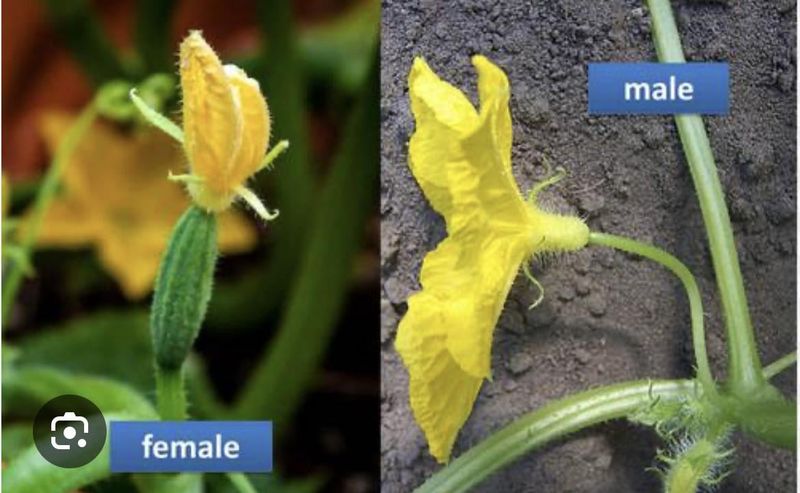
Before assuming something is wrong, take a close look at the flowers that are falling. Cucumber plants produce two distinct flower types on the same vine, and telling them apart changes everything about the diagnosis. Male flowers grow on a slender, straight stem with no swelling behind the petals, while female flowers have a tiny, cucumber-shaped ovary sitting just below the blossom itself.
Male flowers almost always appear first, sometimes a week or two before any female flowers show up. After they release their pollen, they drop off naturally, and that is completely normal behavior. University of Minnesota Extension guidance on growing cucumbers confirms that early male-flower drop does not indicate a watering problem, a heat problem, or any other stress on the plant.
The symptom worth investigating is repeated loss of female flowers or tiny cucumber-shaped ovaries before they begin to swell and grow. Colorado State Extension’s cucurbit disorder guide also distinguishes normal male-flower drop from genuine fruit-set failure. A handful of fallen blossoms near the base of the plant is not by itself proof that watering or heat damaged anything, so start by identifying which type of flower you are actually losing before moving on to other checks.
Heat can interrupt fruit set even on a healthy-looking vine
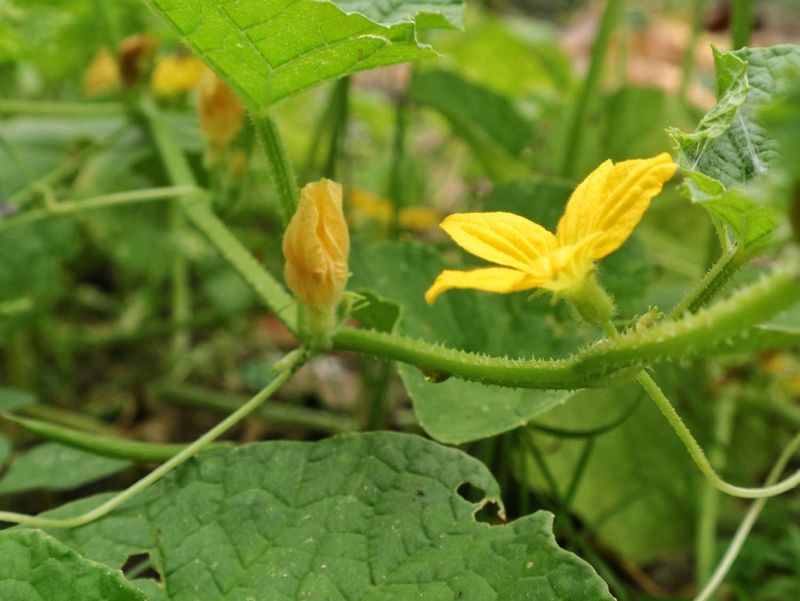
Cucumber leaves are surprisingly resilient in heat. The foliage can stay deep green and vigorous even when the reproductive parts of the plant are struggling, which is why a vine can look perfectly fine while dropping every flower or tiny fruit it produces. Leaves and stems have a wider tolerance for high temperatures than flowers and developing fruit do.
University of Minnesota Extension’s vining vegetable guide identifies both excessive heat and inconsistent moisture as causes of blossom drop and fruit abortion in cucumbers, noting that daytime temperatures in the 90s or nighttime temperatures around 70 degrees Fahrenheit can cause flowers and small fruits to abort. Utah State University Extension similarly notes that fruit set can decline when temperatures climb into that range, though the exact threshold varies by cultivar, how long the heat lasts, humidity, and nighttime conditions.
Heat also affects the pollen itself. A peer-reviewed cucumber study found substantially lower pollen fertility under a 38 degrees Celsius day and 30 degrees Celsius night heat treatment compared to cooler control conditions. That matters because even a well-watered plant with plenty of female flowers can fail to set fruit if heat has compromised pollen quality or reduced bee activity during the hottest part of the day. Heat and moisture stress can interact, but they are also distinct causes that can operate independently, so correcting one does not guarantee the other stops being a factor.
Check for inconsistent moisture without assuming it caused the drop
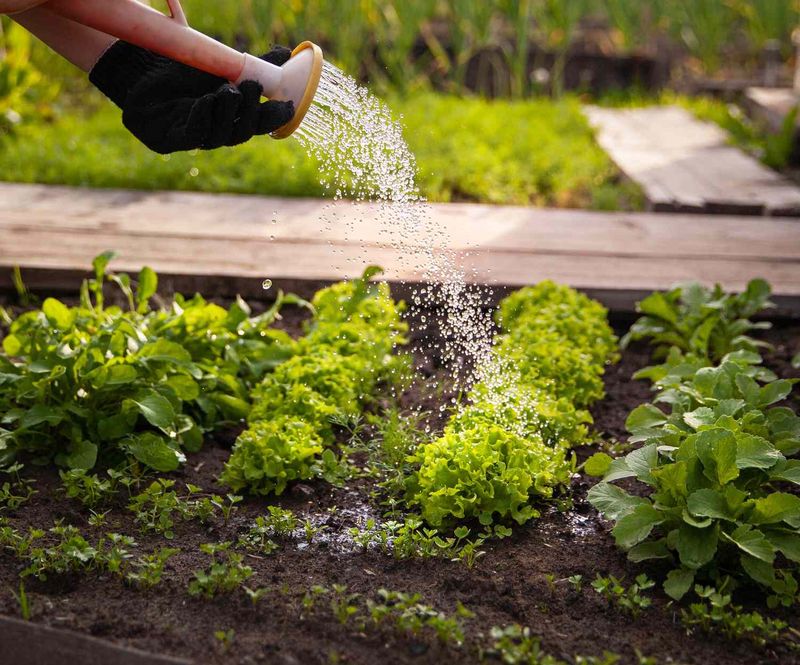
Unstable soil moisture is a plausible contributor to cucumber flower and young-fruit abortion, particularly when hot weather is already raising the plant’s water demand. When the root zone swings repeatedly from very dry to saturated and back again, it can add physiological stress at the same time reproductive growth is most vulnerable. That said, dry-to-wet cycling is one possible pattern to investigate, not an automatic diagnosis for every dropped blossom.
The goal is stable moisture with adequate drainage, not permanent saturation. Waterlogged soil can deprive roots of oxygen and create its own reproductive problems, so the target is uniformly moist soil that drains well rather than soil that stays soggy. Minnesota Extension’s vegetable garden watering guidance recommends checking soil about 2 inches below the surface rather than relying on a calendar or a surface glance, because the top inch can dry out quickly while deeper soil stays moist, or vice versa.
Several factors change how fast soil dries out between checks. Sandy soil loses moisture faster than loam or clay. Containers dry out much more quickly than in-ground beds. Trellised vines exposed to wind can lose moisture faster than sprawling plants.
Penn State Extension’s cucumber production guidance notes that high heat accelerates drying further. Checking the soil rather than trusting a fixed schedule is the most reliable way to know whether inconsistent moisture is actually part of the problem in your specific bed.
Build a moisture routine around soil conditions
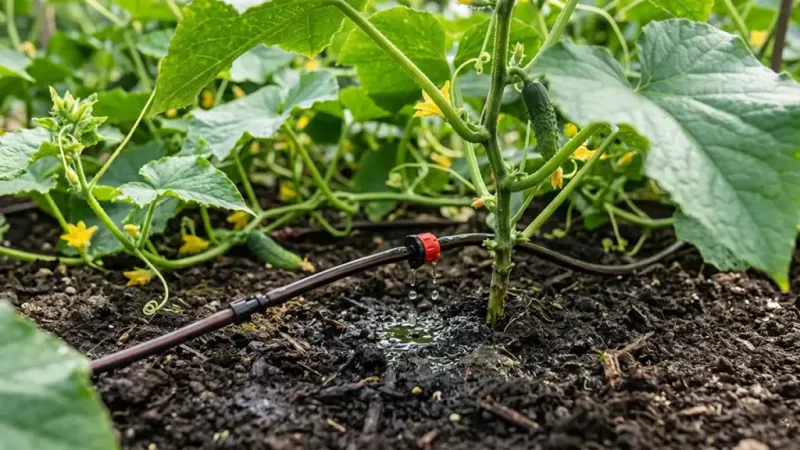
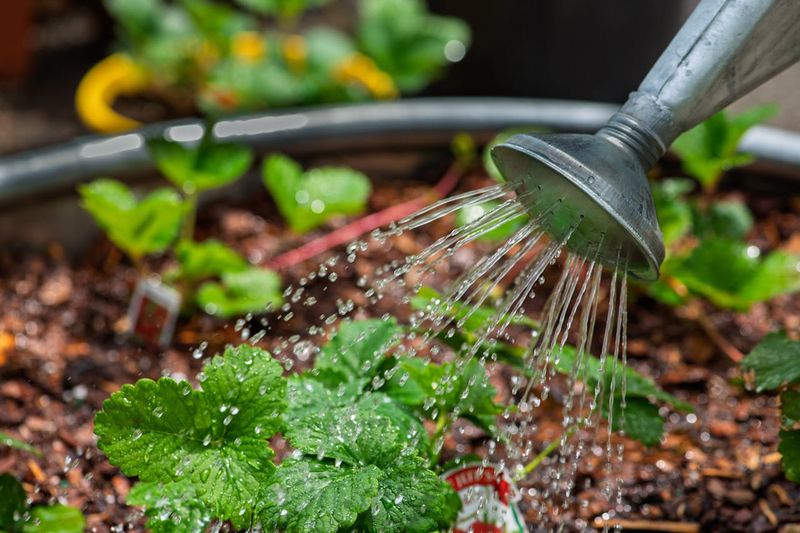
Once you know the soil is dry at 2 inches down, water slowly at the root zone rather than sprinkling the foliage. Apply water at a pace that lets it soak in rather than run off, and continue until the root area is thoroughly moistened. Then check again the next day or two days later rather than setting a fixed schedule.
Minnesota Extension’s cucumber growing page suggests roughly 1 inch of water per week from rainfall plus irrigation as a starting estimate for in-ground cucumbers, and Utah State University Extension gives a broader range of 1 to 2 inches depending on plant size. Both figures are starting points, not universal prescriptions. Sandy soil, wind exposure, trellising, high heat, and container culture all increase demand, while clay soil, mulch, and cooler weather reduce it. Measure rainfall with a rain gauge and subtract it from what you apply.
Mulch is one of the most practical tools available. A 2- to 3-inch layer of straw, wood chips, or shredded leaves over the root zone slows evaporation, buffers soil temperature, and reduces the frequency of swings from dry to wet. Oregon State Extension’s heat-wave garden guide recommends applying water slowly at the root zone and using mulch together as a heat-stress response. Drip irrigation or a soaker hose keeps water off the foliage and delivers it where roots can use it.
Containers and plants going through extreme heat may need attention every day or every other day, but only when the soil moisture check shows they actually need it, not as a rigid rule.
Check pollination when female flowers keep failing
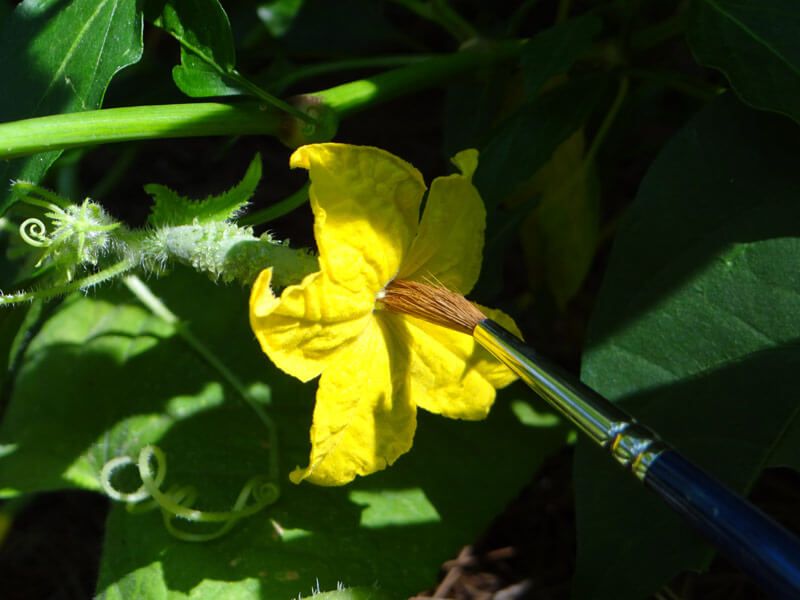
A pollination gap can look almost identical to a watering problem from the outside. Female flowers appear, then drop off or shrivel without the ovary swelling, and the vine continues to look healthy. For most common cucumber varieties grown in home gardens, that sequence can happen when insects are not moving pollen from male to female flowers consistently enough.
Standard non-parthenocarpic cucumbers depend on bees and other pollinators to carry pollen. Utah State University Extension’s pollination guide explains that cucumber flowers may remain receptive for only a few hours, so timing and daily pollinator activity both matter. Penn State Extension’s cucumber pollination resource notes that poor pollination can cause female flowers or tiny fruits to abort, or can result in small, curved, or misshapen cucumbers even when some pollen was transferred.
Hand-pollination is a practical backup when pollinator traffic seems low and female flowers are already present. Pick a freshly opened male flower, peel back the petals to expose the pollen-covered center, and brush it gently against the center of a female flower. A small, clean paintbrush works as well. Morning is the most efficient time because flowers are fully open and pollen is most viable.
Colorado State Extension’s vegetable garden hints recommend this approach when natural pollination appears to be limiting fruit set. Hand-pollination can improve results when pollination is genuinely the bottleneck, but it cannot reverse damage from heat stress, severe water deficit, or disease.
Lower heat stress while keeping flowers accessible
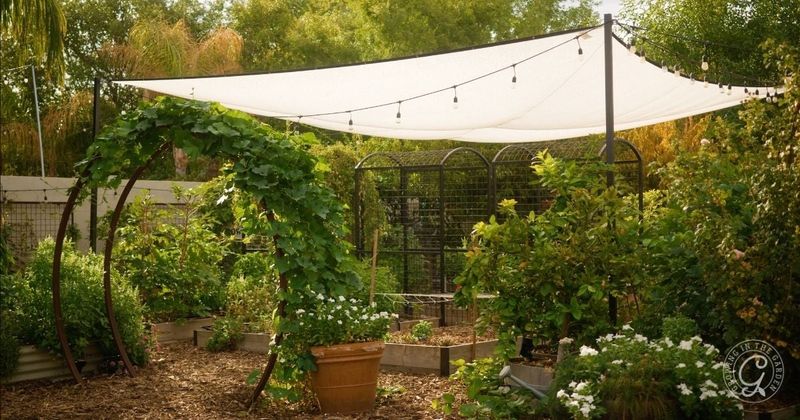
Shade cloth can take the edge off extreme heat for cucumber vines, but it comes with trade-offs that matter for fruit set. Lightweight shade cloth rated at 30 to 40 percent shade can reduce canopy temperature and slow moisture loss during the hottest hours of the day. Heavier shade cloth or full cover over an extended period can reduce photosynthesis and flowering, which trades one problem for another.
Oregon State Extension’s heat-wave garden guide recommends applying shade cloth as a temporary measure during heat events rather than as a permanent installation. Utah State University Extension’s row cover guidance points out that row covers used for frost protection or pest exclusion must be ventilated or removed as temperatures climb toward 90 degrees Fahrenheit underneath, because trapped heat can damage plants more than the outside temperature alone.
Pollinator access is the other key concern. Row covers and shade cloth that completely enclose the vine will block bees from reaching the flowers, which compounds any pollination problem already present. Open the edges or remove covers during the morning hours when pollinators are most active and flowers are open, then replace the cover in the afternoon if heat is severe. Shade is one tool in a broader response that still requires monitoring soil moisture and watching for pollinator activity.
Account for variety, harvest load, and other stresses
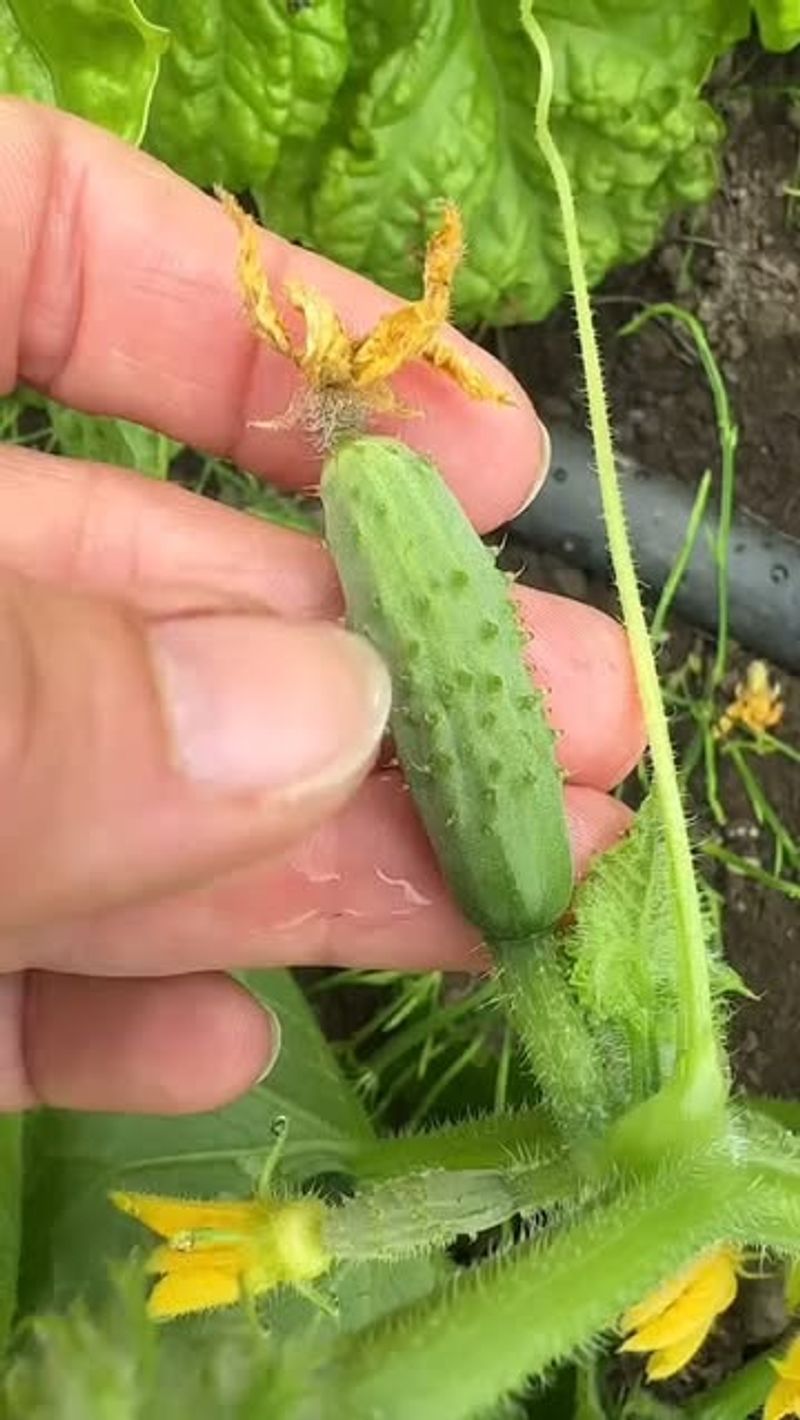
Some cucumber problems have nothing to do with watering, and recognizing them prevents wasted effort. Cultivar genetics are one example. Parthenocarpic cucumbers, which include many greenhouse and specialty types, can develop fruit without any pollination at all. If you are growing one of those varieties and fruit is still not setting, the cause is almost certainly something other than a lack of bee visits.
Gynoecious cucumber varieties, which produce mostly or entirely female flowers, are a different situation. Minnesota Extension’s pollination requirements guide explains that gynoecious types often need pollen from a compatible male-flowering cucumber planted nearby, unless the variety is also parthenocarpic. Seed packets for gynoecious types often include a few seeds of a standard variety for exactly this reason. Minnesota Extension’s cucumber page notes that cultivar selection affects both pollination needs and heat tolerance.
Harvest load is worth checking too. Colorado State Extension’s cucurbit guide notes that leaving mature cucumbers on the vine can sometimes suppress additional fruit set. Picking fruit promptly encourages the plant to keep producing. Beyond that, persistent female-flower loss despite stable moisture and adequate pollination warrants a look at drainage, disease, and nutrient balance.
EPA pollinator protection guidance emphasizes avoiding insecticide applications to blooming plants, since killing pollinators during bloom worsens fruit set rather than helping it. Heavy nitrogen fertilizer is similarly counterproductive: it encourages lush foliage without improving flower or fruit production, and Minnesota Extension’s heat-stress vegetable guide cautions against fertilizing during extreme heat events.
Use a symptom-first checklist before changing the schedule
A practical sequence helps more than a rigid schedule change. Start by looking at the fallen flower: if it has a slender stem and no swelling behind the petals, it was a male flower and the drop was normal. If it had a tiny cucumber-shaped ovary that shriveled before growing, that is worth investigating further.
Next, push a finger or a pencil about 2 inches into the soil near the root zone. If it is dry at that depth, water thoroughly and add mulch to slow the next drying cycle. Minnesota Extension’s watering guide and the vining vegetable guide both support checking soil condition rather than following a fixed morning-only or every-day rule. If the soil feels adequately moist, shift attention to heat and pollinator activity before assuming watering is the problem.
Stabilizing soil moisture is a practical and worthwhile corrective step, but Minnesota Extension’s heat-effects guide makes clear that heat, pollination gaps, and cultivar traits can cause fruit-set failure independently. A well-watered vine in a heat wave may still drop its flowers. Diagnosing the actual limiting factor, rather than defaulting to one fix, is what gives each corrective step a real chance to work.