
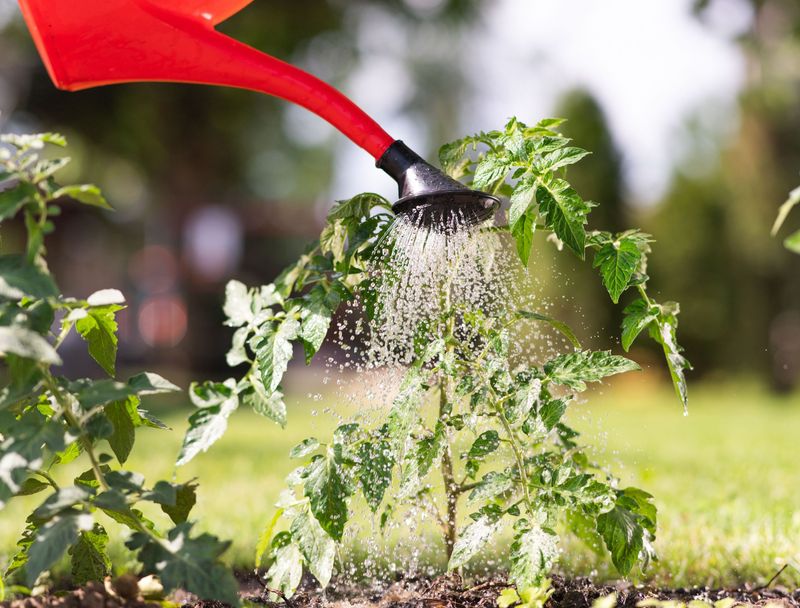
Hot summer weather can turn a thriving tomato patch into a wilting, struggling mess almost overnight. The good news is that how you water matters just as much as how often you do it, and making one key change to your approach can reduce a lot of the problems gardeners blame on the heat. Getting water to the roots slowly and steadily, while keeping soil moisture reasonably consistent, gives your plants a much better shot at healthy fruit development. This guide breaks down exactly how to do that and how to tell when something other than dry soil is really the problem.
Heat stress and water stress are different problems
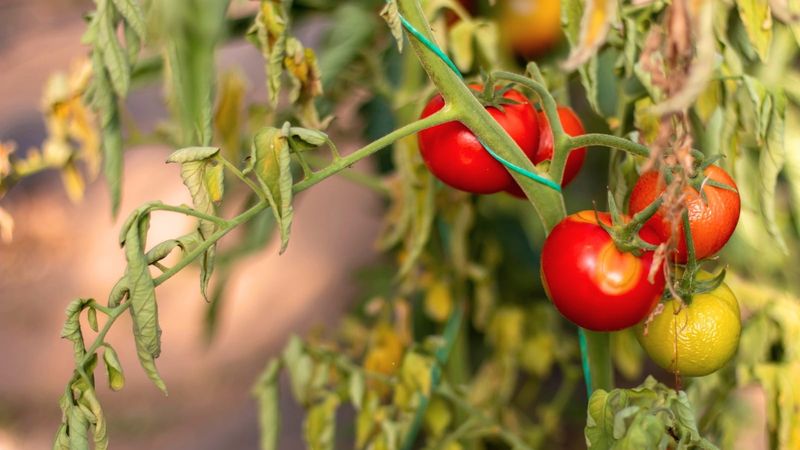
Tomatoes are tough plants, but they face two very different enemies during a hot summer: excessive heat and dry soil. Mixing them up leads to the wrong fix, and sometimes makes things worse. Knowing which problem you are actually dealing with is the first step toward helping your plants.
When air temperatures climb well above 90 degrees Fahrenheit during the day or stay above 70 degrees at night, tomatoes can wilt, curl their leaves, and drop blossoms even when the root zone has plenty of moisture. That is heat stress, and adding more water will not solve it. University of Minnesota Extension guidance on gardening in hot weather explains that extreme temperatures can interfere with pollination and fruit set regardless of how well you water, so some flower drop during a heat wave is not automatically your fault.
Water stress works differently. It builds when the root zone dries out too much between waterings, or when you swing from bone-dry soil to a heavy soaking and back again. Those swings can contribute to blossom-end rot, fruit cracking, shallow root development, and uneven growth. UMN’s heat gardening tips note that checking the soil before watering is essential, because a wilting plant in extreme heat may not actually need water at all.
The goal is reasonably consistent moisture at the root zone, not the maximum amount of water you can apply. Keeping that distinction clear will help you respond to symptoms more accurately all season long.
A well-supported method delivers water slowly at the roots
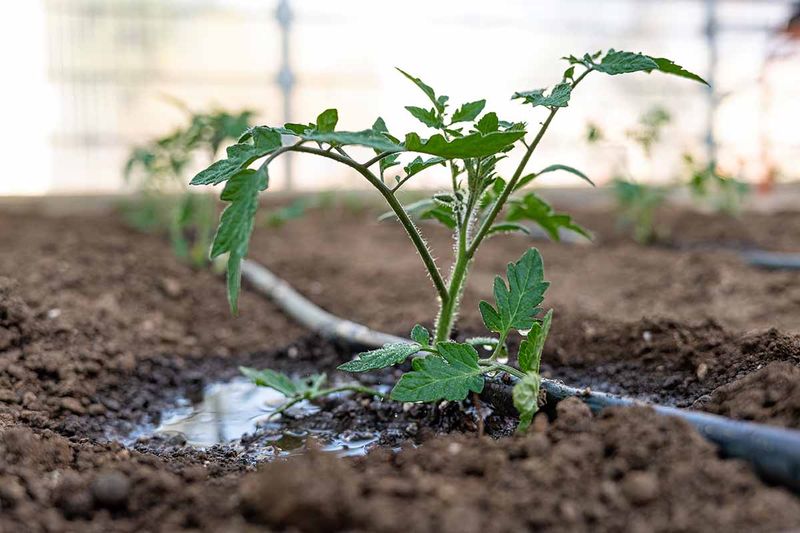
Slow, root-zone watering is one of the most consistently recommended approaches for tomatoes, and for good reason. When water is delivered directly to the soil near the roots rather than sprayed over the plant, it reaches the zone where the plant actually takes it up. Less water is lost to evaporation, foliage stays drier, and the soil surface gets less disturbance from splash.
Drip irrigation and soaker hoses are well-suited delivery tools for home gardeners. A drip line with pressure-regulated emitters placed near the base of each plant can apply water slowly and steadily, giving the soil time to absorb it without runoff. Soaker hoses work similarly when laid close to the root zone and covered with mulch. Utah State University Extension’s tomato irrigation guidance identifies root-zone delivery as a well-supported approach for reducing moisture swings and improving water use.
The equipment improves how water is delivered, but it does not decide when or how much to apply. A drip line running on a fixed timer while the soil stays saturated causes just as many problems as underwatering. Results also depend on correct emitter placement, adequate pressure, even spacing, soil type, slope, and whether the system is checked and adjusted regularly.
Penn State Extension’s tomato growing guide reinforces that thorough wetting of the active root zone matters more than the specific delivery tool. The method supports healthier moisture management, but the gardener still has to respond to actual soil conditions.
Check the root zone before you decide to water
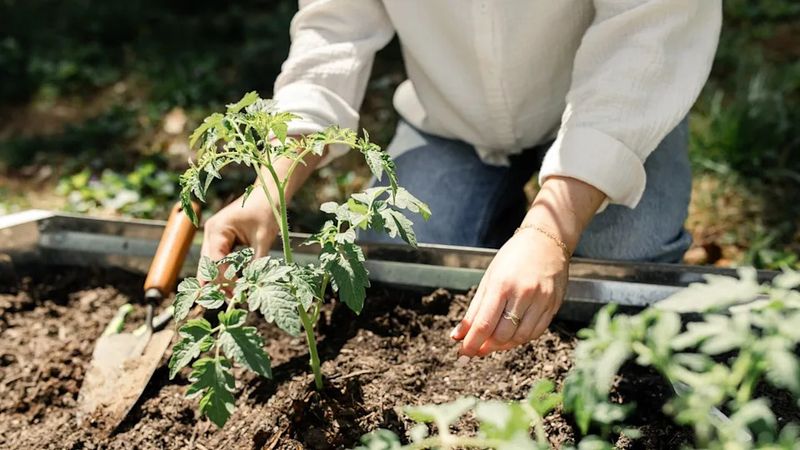
A calendar cannot tell you whether your tomatoes need water today. Soil type, recent rainfall, wind, temperature, plant size, and bed depth all affect how quickly moisture disappears. The only reliable way to know whether it is time to water is to check the root zone directly.
Start by pushing your finger into the soil about two inches deep near the base of a plant. If the soil at that depth feels moist and cool, the surface may have dried out while the root zone still holds enough moisture. If it feels dry or barely damp at two inches, grab a trowel and dig a little farther. Penn State Extension recommends checking around two inches deep as a starting point, then digging deeper to see how far water has actually penetrated.
Soil texture changes how deep water travels. University of Minnesota Extension notes that one inch of water may wet sandy soil to roughly ten inches but only reach about six inches in heavy clay. Knowing your soil type helps you set realistic expectations for how often you will need to check and water.
When you do water, apply it slowly and gradually until the root zone is thoroughly moistened, then stop before you see runoff, puddling, or standing water. Frequent shallow sips encourage roots to stay near the surface, where they are far more vulnerable to heat and drought. Deep, thorough watering followed by a real inspection the next time you are tempted to water beats any fixed schedule you could set on a timer.
Build a setup that can deliver more even moisture
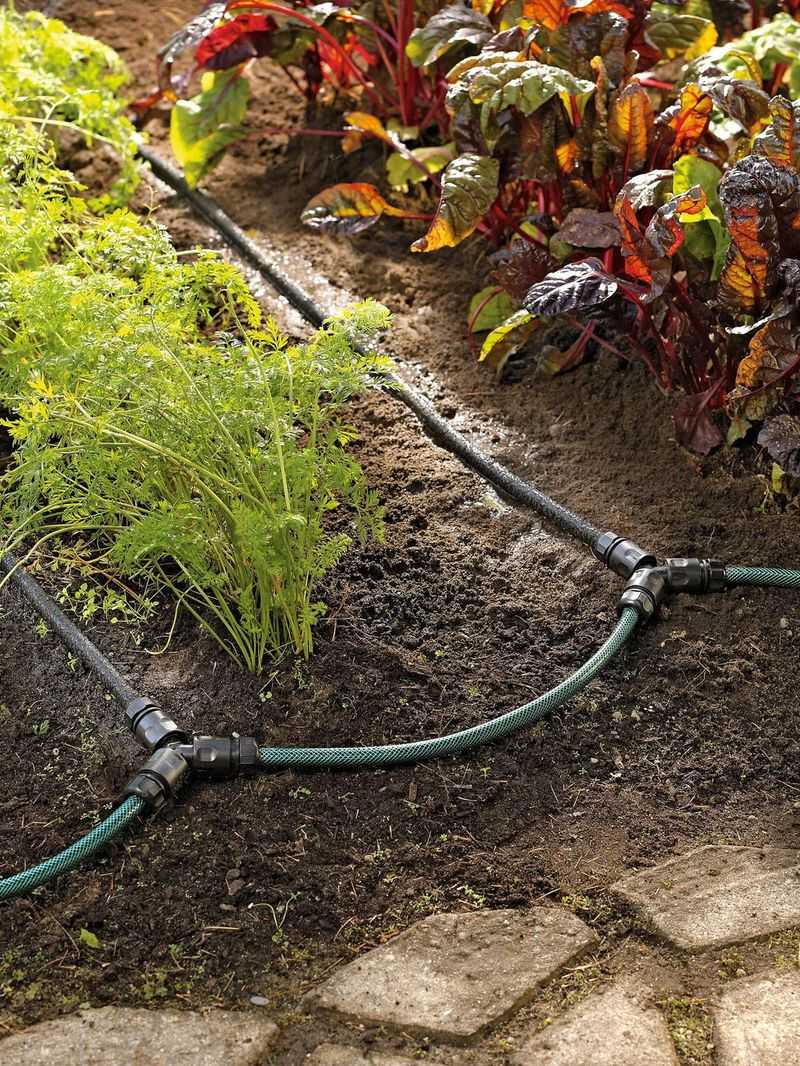
Putting together a practical watering setup does not require expensive equipment, but a few deliberate choices can make a real difference in how evenly moisture reaches your tomato roots. Start by placing a drip line or soaker hose close to the base of your plants, roughly two to four inches from the stem, so water seeps into the soil where the roots are actively growing.
After running the system, check several spots along the bed by digging a few inches into the soil. Uneven wetting is common with soaker hoses on slopes, in compacted soil, or when water pressure is too high or too low. Adjust placement or output as needed rather than assuming the equipment is doing its job uniformly. Colorado State University Extension’s vegetable irrigation guide recommends verifying actual soil wetting rather than relying on run time alone.
Covering the soil with two to three inches of organic mulch, such as straw, shredded leaves, or wood chips, helps slow evaporation and buffer soil temperature. Utah State University Extension’s blossom-end rot guidance highlights mulch as a practical tool for stabilizing moisture and reducing soil splash onto lower leaves. Keep mulch a few inches away from the stem to allow airflow and discourage rot at the base.
If you use overhead sprinklers or a hose, Penn State Extension’s disease guide notes that wet foliage and soil splash can raise the risk of foliar diseases like early blight and Septoria leaf spot. Morning is the better time when foliage must be wetted, giving leaves more time to dry. For true drip systems, Penn State research on drip irrigation timing found no consistent advantage to morning versus afternoon delivery; getting the amount and frequency right matters more than the clock. A simple rain gauge placed in or near the bed helps you subtract rainfall from your weekly total and avoid unnecessary watering after a storm.
Adjust frequency as heat and growing conditions change
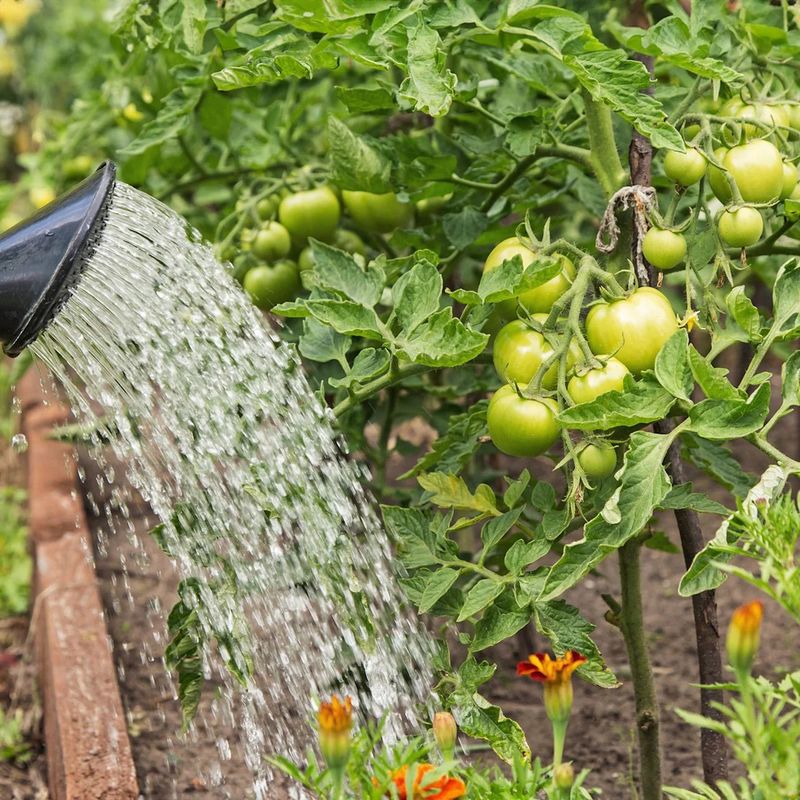
Established in-ground tomatoes commonly need around one to one and a half inches of water per week, including any rainfall. Utah State University Extension’s vegetable water recommendations put the range at one to two inches per week depending on conditions. Both figures are useful starting points, not rigid quotas, and your soil check should always have the final say.
Several factors push that need higher and faster. Sandy soil drains quickly and may require more frequent watering than clay or loam. Wind pulls moisture from both soil and leaves faster than calm conditions. Large, heavily fruiting plants draw more water than young transplants.
Shallow raised beds, which hold less total soil volume, can dry out quickly during a heat wave. Any of these conditions, especially in combination, means your plants may need attention every day or two rather than on a relaxed weekly schedule.
Container tomatoes present a particularly demanding situation. Colorado State University Extension’s container gardening resource notes that pots dry out much faster than in-ground beds and may need watering daily or even more than once per day during sustained hot weather. Water each container thoroughly until you see a little drainage from the bottom, but do not allow it to sit in standing water, which can suffocate roots.
During stretches of extreme heat, University of Minnesota Extension suggests checking soil daily and watering every day or every other day as conditions require. The right interval is always the one that keeps the root zone from drying out excessively, not a number you picked at the start of the season and never revisited.
Diagnose symptoms before adding more water
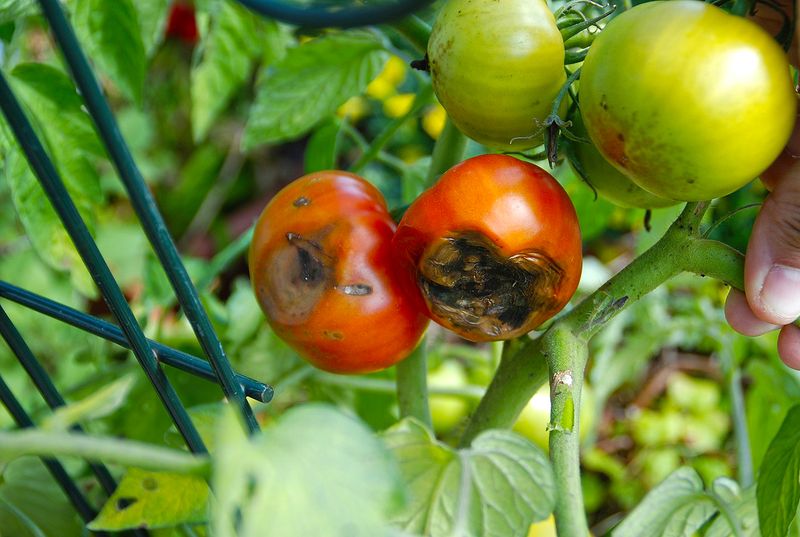
Symptoms like wilting, curling leaves, dark patches on fruit, and cracked skin can look like a watering emergency, but each one has a range of possible causes. Reaching for the hose before checking the facts can make some of those problems worse.
Wilting is the most common alarm signal, but UMN’s heat garden tips point out that tomatoes can curl and droop in extreme afternoon heat even when the root zone is fully moist. Always check the soil before watering a wilted plant. If the soil two to four inches down still feels cool and damp, the plant may recover on its own once temperatures drop in the evening. Adding water to already saturated soil can reduce oxygen in the root zone and worsen root problems over time.
Blossom-end rot, the dark leathery patch that appears on the bottom of developing fruit, is often blamed on calcium deficiency. The reality is more nuanced. Utah State University Extension’s blossom-end rot resource explains that the disorder reflects disrupted calcium movement inside the plant, which fluctuating moisture, root damage, waterlogged soil, and environmental stress can all trigger. Adding calcium amendments without a soil test is not a reliable universal fix.
Fruit cracking has its own set of triggers. UC IPM’s guide to fruit cracks on tomatoes identifies irregular moisture, sudden heavy rain after a dry spell, rapid fruit expansion, heat, and exposed fruit as contributing factors. Even excellent irrigation cannot eliminate cracking in every cultivar or every weather pattern. Root-zone irrigation can reduce some disease-favorable leaf wetness and soil splash, but Penn State Extension’s disease overview makes clear that drip systems cannot prevent airborne pathogens, soilborne diseases, heat injury, or pest damage.
Diagnose first, then decide whether watering is actually the lever you need to pull.
Steadier moisture improves the odds, not every outcome
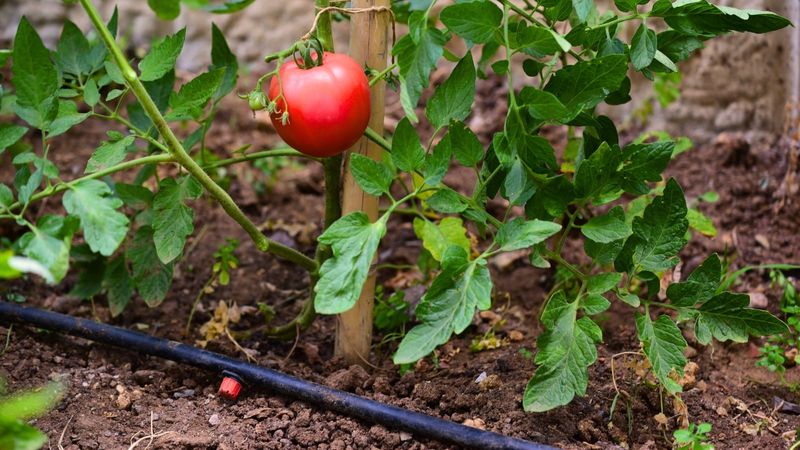
Consistent root-zone moisture is one of the most meaningful things you can control in a summer tomato garden. Keeping soil reasonably steady, rather than swinging between dry and soaked, can reduce avoidable water stress and improve the odds of healthier fruit development and a more reliable harvest through the season. That is a real benefit, and it is worth the effort to get right.
However, irrigation cannot fix everything. Utah State University Extension’s tomato irrigation guidance is clear that yield depends on cultivar selection, pollination conditions, soil fertility, sunlight, pest pressure, and disease management alongside water. High nighttime temperatures can cause flower drop even when soil moisture is perfect. A soilborne disease, a nutrient imbalance, or a shading problem will limit fruit production regardless of how well you irrigate.
Colorado State University Extension’s tomato guide similarly notes that heat-related pollination failure can occur even in well-watered gardens.
The practical sequence that brings all of this together is straightforward: place water delivery near the roots, check soil moisture before each watering decision, water thoroughly when the root zone begins to dry, verify that coverage is even, and adjust frequency as heat, rainfall, and plant size change. Steady moisture will not guarantee a perfect harvest, but it removes one of the most common and avoidable reasons tomatoes struggle in summer heat.