
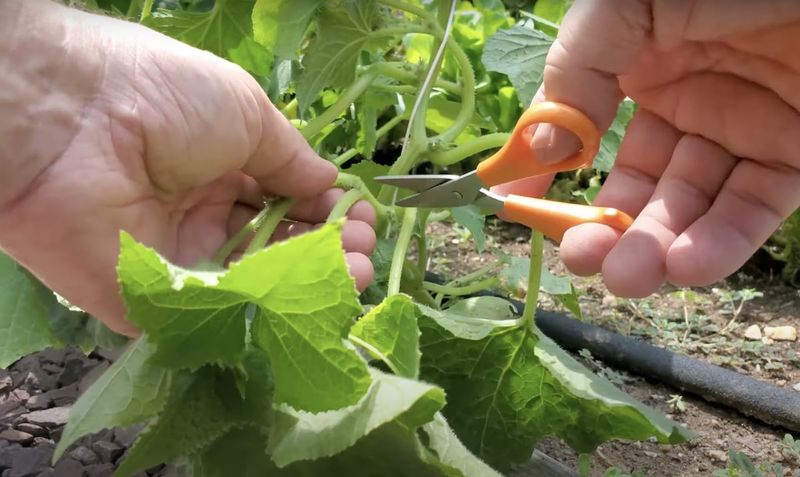
You planted cucumbers expecting a steady harvest, and instead you have long, leafy vines running in every direction with almost nothing to show for it. Before you reach for the pruners, the real answer is usually a diagnosis, not a cut. Poor fruit set in outdoor cucumbers is most often linked to pollination gaps, heat, uneven watering, excess nitrogen, or leaving oversized cucumbers on the vine too long. Working through those causes first will save you from removing healthy growth that the plant genuinely needs.
Sprawl does not prove that your cucumber is failing
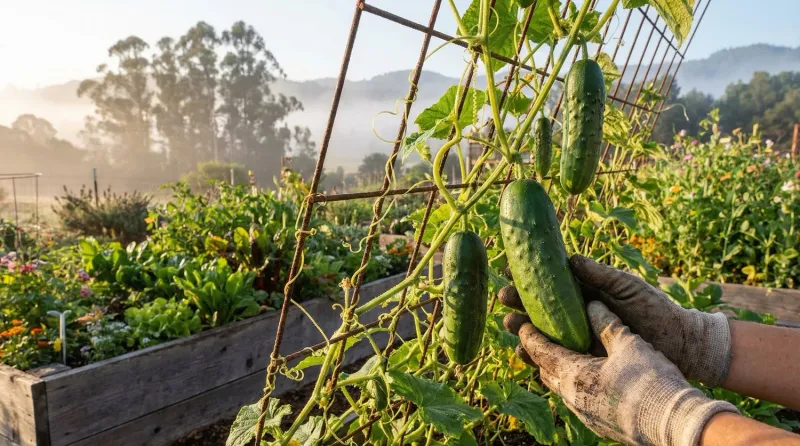
A yard full of vigorous, tangling cucumber vines can feel like a problem, but the plant itself may be doing exactly what it is supposed to do. Many outdoor slicing and pickling cucumber varieties are naturally aggressive growers, and their lateral branches are not wasted growth. Penn State Extension notes that netting systems for slicing cucumbers commonly involve little, if any, pruning because these varieties produce fruit on their lateral branches, not just the main stem.
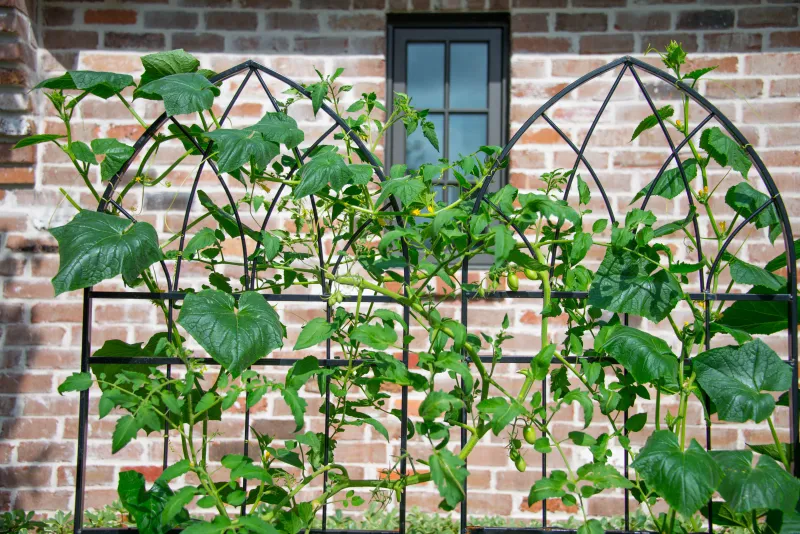
Sprawl becomes a management challenge when the vines are hard to walk around, difficult to inspect, or sitting directly on wet soil where disease pressure rises. That is a reason to consider trellising, not aggressive pruning. Trellising organizes the vine, lifts fruit off the ground, and makes it easier to see flowers, developing cucumbers, pests, and early disease signs. University of Minnesota Extension guidance on trellises and cages confirms that vertical support can improve airflow and fruit cleanliness without requiring you to cut anything off.
Pruning removes plant tissue and may be appropriate only under a specific, defined production protocol tied to a particular cultivar and growing system. Trellising and pruning are not the same action. Before touching the vine at all, spend a few minutes checking why the fruit is stalling, because the cause almost certainly has nothing to do with how far the plant has sprawled.
Inspect the flowers before you touch the vine
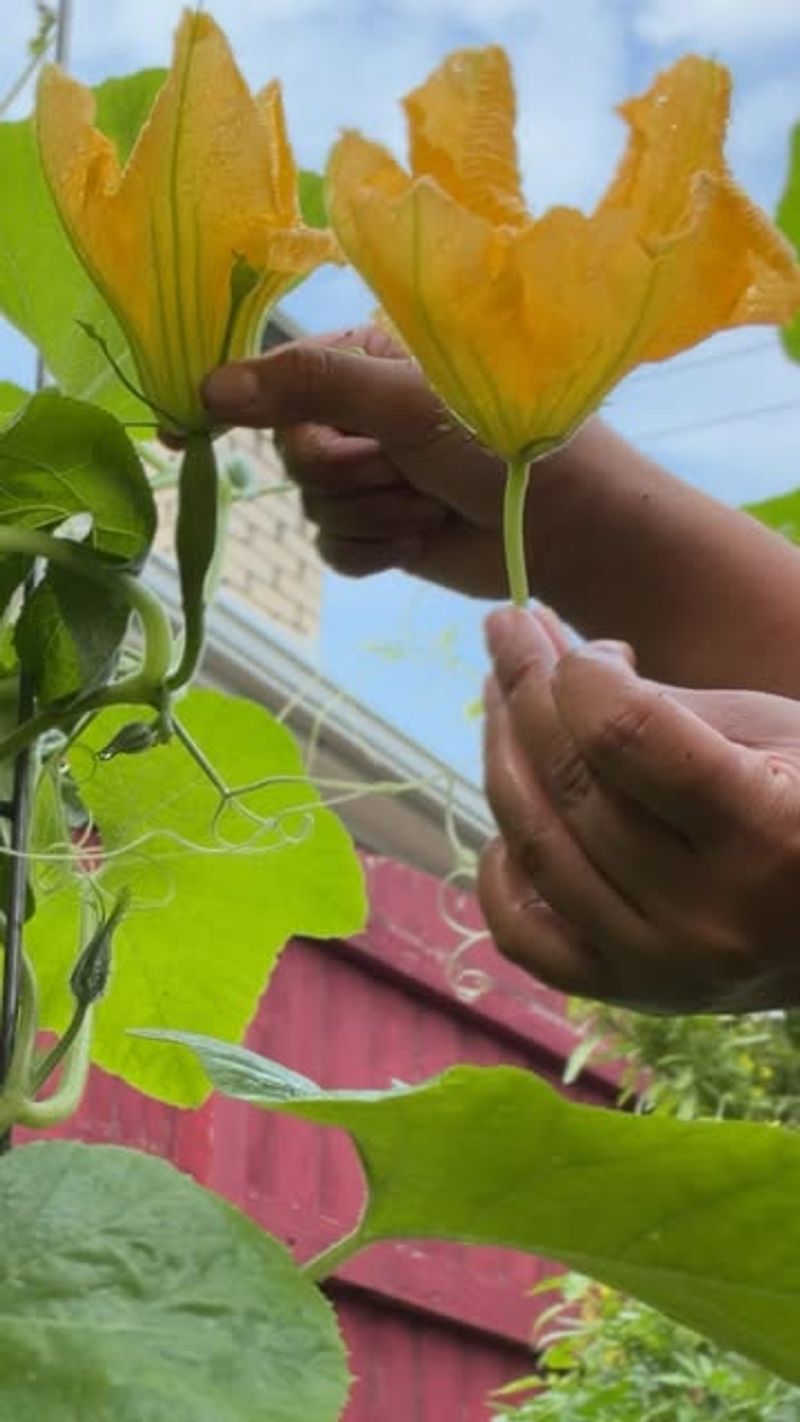
Cucumber plants produce two distinct flower types on the same vine, and telling them apart is the single most useful diagnostic step you can take. Female flowers have a tiny, swollen, cucumber-shaped ovary sitting right at the base of the bloom. Male flowers are slender at the base with no swelling at all. University of Minnesota Extension explains that cucumbers commonly produce a flush of male flowers before any female flowers appear, so a stretch of blooms that drop without setting fruit is often completely normal early in the season.
Work your way along a few vines and look for both flower types. If you find only male flowers, the plant has not yet reached the stage where fruit is possible. Waiting a week or two and checking again is the right move. Illinois Extension’s troubleshooting guide for cucurbits points out that cutting the vine during this male-only phase can remove the lateral growth where female flowers and future cucumbers would have appeared, which makes the actual problem worse rather than better.
Once you spot female flowers, the diagnostic question shifts. Are those female flowers dropping without setting, producing small or misshapen fruit, or developing normally? Each of those outcomes points toward a different cause. UMN’s cucurbit fruit-set guide lists pollination failure, heat, and moisture stress as the most common reasons female flowers stall even after they open.
Check pollination before blaming the plant’s shape
Standard slicing and pickling cucumbers grown outdoors need insect visitors to carry pollen from male to female flowers. When that transfer does not happen reliably, female flowers drop, and any fruit that does start developing may come out small, pointed, or bent. Utah State University Extension’s pollination guide notes that cold, rainy, or very windy days can keep bees away from the garden entirely, and extended stretches of that weather during flowering can be enough to stall a harvest even on a completely healthy vine.
Excessive heat creates a separate problem. High temperatures can reduce bee foraging activity and, in some cases, reduce the viability of pollen itself. If your garden has been running through a heat wave during the cucumber’s flowering window, poor pollination may be the culprit even if the weather looks fine by the time you notice the missing fruit.
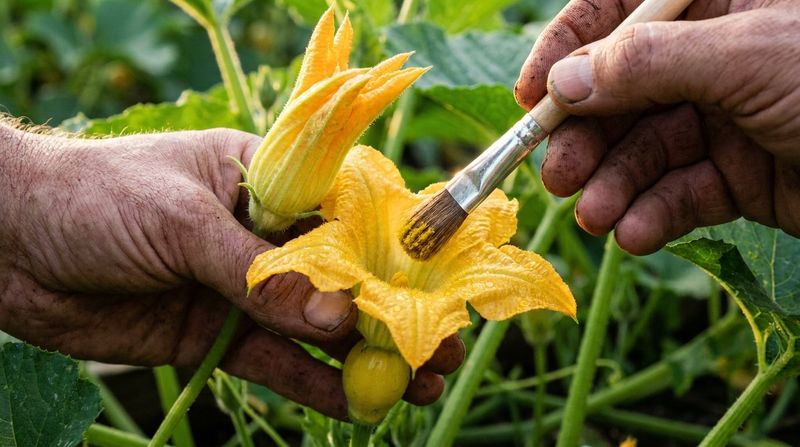
Before adding more pollinators or trying hand-pollination, check what cultivar you are actually growing. University of Minnesota Extension’s pollination requirements resource explains that some greenhouse and high-tunnel cultivars are parthenocarpic, meaning they set fruit without any pollination at all. Pollinating those varieties can actually cause seeded, misshapen fruit rather than fixing the problem. Identifying the cultivar from the seed packet or plant tag first will tell you whether attracting more bees or using a small brush to transfer pollen is genuinely helpful or potentially counterproductive for your specific plant.
Heat, moisture, nitrogen, and harvest timing can limit fruit
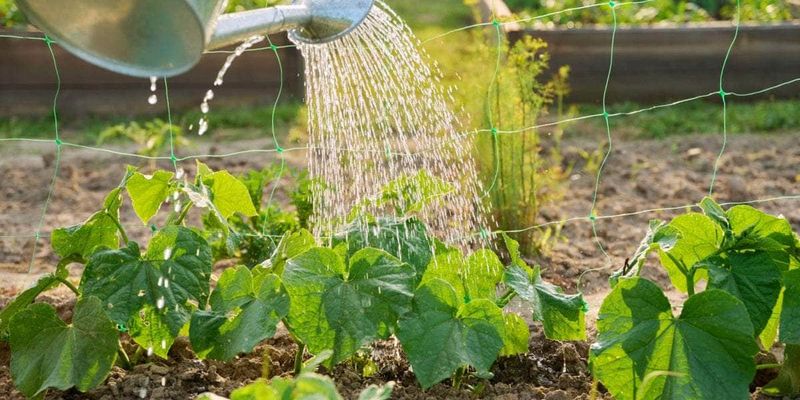
After checking flowers and pollination, run through four additional factors that frequently stall cucumber harvests without any connection to how the vine is shaped. Excess nitrogen is a common one. University of Minnesota Extension’s cucurbit growing guide links heavy nitrogen applications to lush, fast-growing vines that delay fruiting. If you fertilized generously or amended with a lot of fresh compost before planting, a soil test will tell you whether nitrogen is running high.
The fix is adjusting future inputs, not pruning the vine as a workaround.
Uneven watering is another practical target. UMN’s home cucumber guide recommends aiming for roughly one to two inches of water per week, adjusted for rainfall, soil type, and local conditions. Letting the soil swing between soggy and bone-dry around flowering and fruit set can produce bitter, pointed, or poorly sized cucumbers even when the vine itself looks healthy and vigorous.
High temperatures add another layer. Penn State Extension reports that temperatures above approximately 90 degrees Fahrenheit can cause reproductive failure and reduce fruit set, which means a heat wave during your cucumber’s peak flowering window can wipe out an expected flush of cucumbers with no other cause involved.
Finally, check whether any cucumbers already on the vine have grown too large and been left there. Oversized fruit signals the plant to slow down or stop producing. Picking regularly, roughly two or three times per week when fruit is sizing up, keeps the plant in a productive mode and removes a quiet but significant drag on continued yield.
Lower-lateral pruning may fit one defined high-tunnel protocol
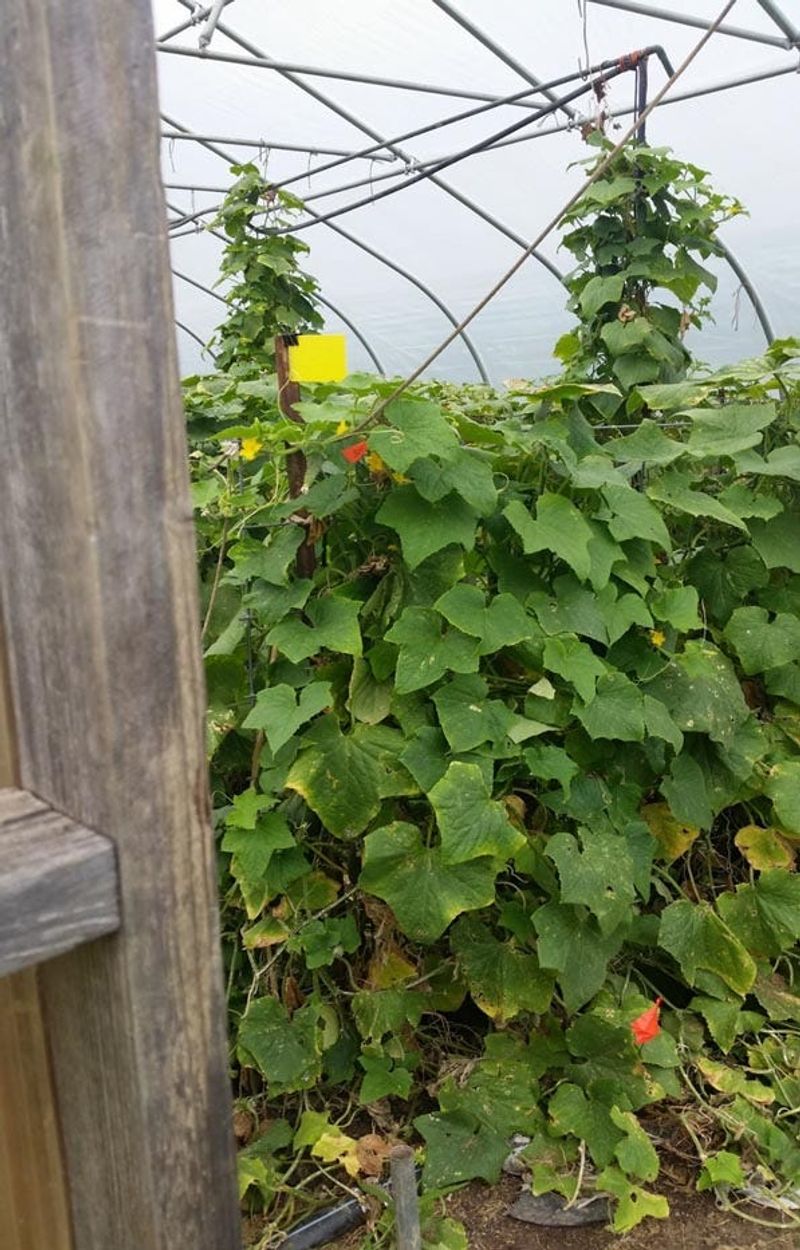
There is a specific situation in which removing lower lateral growth has direct extension support, and it is worth naming precisely so it does not get applied too broadly. University of Maryland Extension’s high-tunnel cucumber guide recommends removing the first four to six lower lateral runners near the base of the plant as part of its described high-tunnel training system. That recommendation belongs to that system, with its specific cultivars, spacing, irrigation setup, and trellis arrangement. It is not a general rule for any cucumber growing upward on any support.
Penn State describes a different approach in its single-stem high-tunnel system, where lower flowers and all lateral branches are removed to keep the plant on a single vertical stem. Penn State Extension’s high-tunnel cucumber guide also describes netting systems for slicing cucumbers in which little or no pruning is used, because those varieties fruit on the laterals that a single-stem protocol would remove. These are not contradictory pieces of advice; they are protocols for genuinely different systems.
Greenhouse production takes the variation even further. Oregon State University’s greenhouse cucumber guide and Alabama Cooperative Extension’s greenhouse production overview both describe structured single-string systems using parthenocarpic cultivars with controlled irrigation and fixed crop cycles. Those systems assume conditions that a backyard garden simply does not replicate. Following the protocol designed for your cultivar and your exact training system is the only way to apply any of this guidance correctly.
Preserve healthy leaves when a protocol calls for pruning
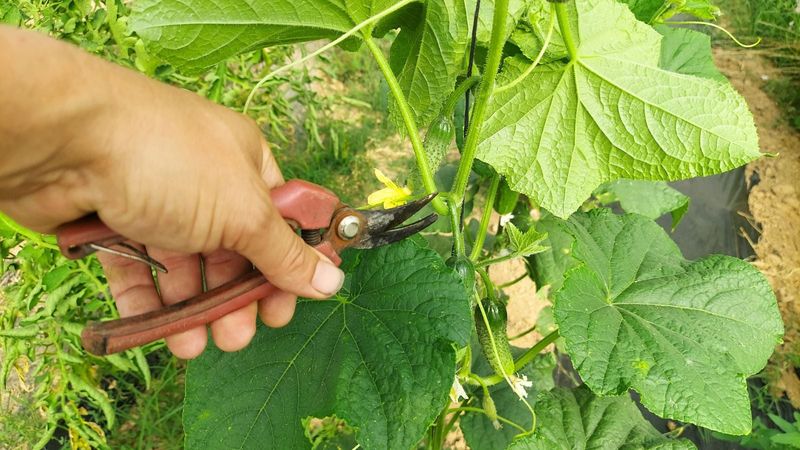
When a defined protocol does call for removing some lateral growth, the sequence matters as much as which tissue you cut. Start by getting the main stem onto its trellis or support string before removing anything. Then confirm the cultivar and the specific production protocol that applies to your growing system. Only after those two steps should you remove the lower laterals or flowers that the protocol actually specifies.
Do not strip healthy leaves from the vine simply because it looks crowded or because the stem is long. Leaves power the plant’s photosynthesis, and reducing that capacity can reduce yield. A peer-reviewed high-wire cucumber study published in Scientia Horticulturae found that removing 33 percent or 50 percent of young leaves reduced cumulative fruit yield, with the authors attributing the reduction to lower leaf area and reduced light interception. That finding does not support removing healthy foliage as a way to improve production.
Cutting the main growing tip is also not a default fix. Topping belongs to specific greenhouse systems at a defined stage after the vine reaches the support wire. Applied indiscriminately to a backyard cucumber, it removes future fruiting growth along with the leaves that support the whole plant.
Tool hygiene matters any time you prune. University of Minnesota Extension recommends cleaning visible debris from pruners first, then disinfecting with 70 percent isopropyl alcohol before moving between plants. Clean tools reduce the chance of spreading pathogens from one plant to another. If you cannot identify which protocol applies to your cultivar and system, the safer choice is to skip the pruning cut entirely and focus on the other factors covered earlier.
Support an outdoor vine before you decide to prune it
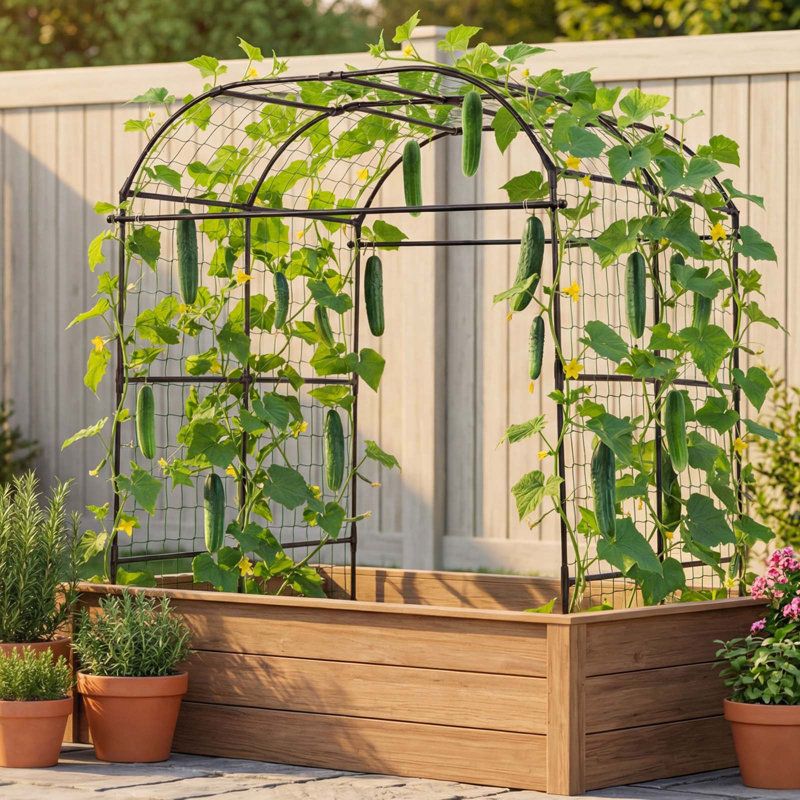
For most home gardeners growing slicing or pickling cucumbers in the ground, the most useful first step is adding support rather than removing growth. University of Minnesota Extension’s trellis and cage guide explains that vertical support can improve airflow around foliage, keep fruit cleaner and straighter, make harvesting easier, and allow you to spot developing cucumbers, pest damage, and early disease signs that a sprawling mat of vines can hide completely.
Trellising can improve fruit quality and management in meaningful ways, but it does not guarantee a higher total number of cucumbers. That distinction is worth keeping in mind before investing significant effort in a support structure while the actual limiting factor is pollination, heat, or soil nutrition.
After getting the vine onto a trellis or other support, run through a practical recheck before considering any cut. Look at the flowers again: are female flowers present, and are they setting? Check your watering consistency and soil moisture. UMN’s home cucumber guide and its cucurbit fruit-set resource both list pollination, moisture, heat, and nutrition as the most common causes of poor fruit set in outdoor cucumbers.
Scan the foliage for aphids, cucumber beetles, or signs of powdery mildew. Check whether any cucumbers already on the vine have gone too large and need picking. Completing that checklist takes less time than pruning and is far more likely to reveal the actual reason the harvest has stalled.
Choose the cut only after you identify the system
The clearest decision rule for a sprawling outdoor cucumber with little fruit is this: do not top the main stem as a way to force production. Diagnose what is actually limiting fruit set, correct that condition, and support the vine if trellising helps your situation. Penn State Extension and University of Minnesota Extension both point to pollination, heat, moisture, and nutrient management as the primary levers for outdoor cucumber yield, not pruning style.
Reserve lower-lateral pruning for the specific high-tunnel or greenhouse protocols that call for it, and follow the instructions tied to your cultivar and training system rather than borrowing a cut from a different setup. Maryland’s high-tunnel guidance is useful precisely because it is specific. A vine that is healthy, leafy, and full of female flowers setting fruit is succeeding, even if it has sprawled well past the edge of its bed.