

Texas summers can punish roses fast, and what you do in the weeks before serious heat settles in your area can mean the difference between healthy blooms and a plant that barely survives. The checklist is not complicated, but it does require paying attention to your specific location, soil, and water situation rather than following one-size-fits-all advice. From the Gulf Coast to North Texas to the Hill Country, conditions vary enough that the same action can help one garden and hurt another. Run through these eight steps now, and your roses will have a much better shot at holding on when the hottest days arrive.
Prepare for the heat your locality will actually face
Texas stretches across so many climate zones that “summer heat” does not arrive on the same date or hit the same intensity everywhere. A gardener near Houston deals with humidity and clay soil that holds moisture differently than a gardener in Amarillo, Midland, or San Antonio. Before changing anything about how you water or care for your roses, take stock of where you actually are and what your local conditions look like right now.
The idea that the worst heat is still ahead applies in some parts of Texas, but not all. As a reference point, Dallas-Fort Worth climate normals show average highs of 95.6 degrees Fahrenheit in July and 95.8 degrees in August, meaning both months sit near the local peak. Your locality may follow a similar pattern, or it may peak earlier or later. The practical point is that you can use this checklist before an upcoming heat spell or while managing heat that is already affecting your roses.
Region, soil drainage, humidity, wind, rainfall, plant age, container status, and sun exposure all shape how much preparation your roses need and how urgently. The American Rose Society notes that heat stress affects roses in multiple ways, and that good preparation improves resilience without guaranteeing uninterrupted blooms. Start by walking your garden and inspecting each rose individually rather than applying the same treatment to every plant.
One more thing to confirm before you add irrigation: check the rules that apply to your specific water source. The Texas Water Development Board explains that watering restrictions are set locally by water utilities, municipalities, and, where applicable, groundwater conservation districts or other local authorities. There is no single statewide schedule that covers every Texas homeowner, so look up the rules for your address before increasing how often or how long you run water.
Check the root zone before you reach for the hose
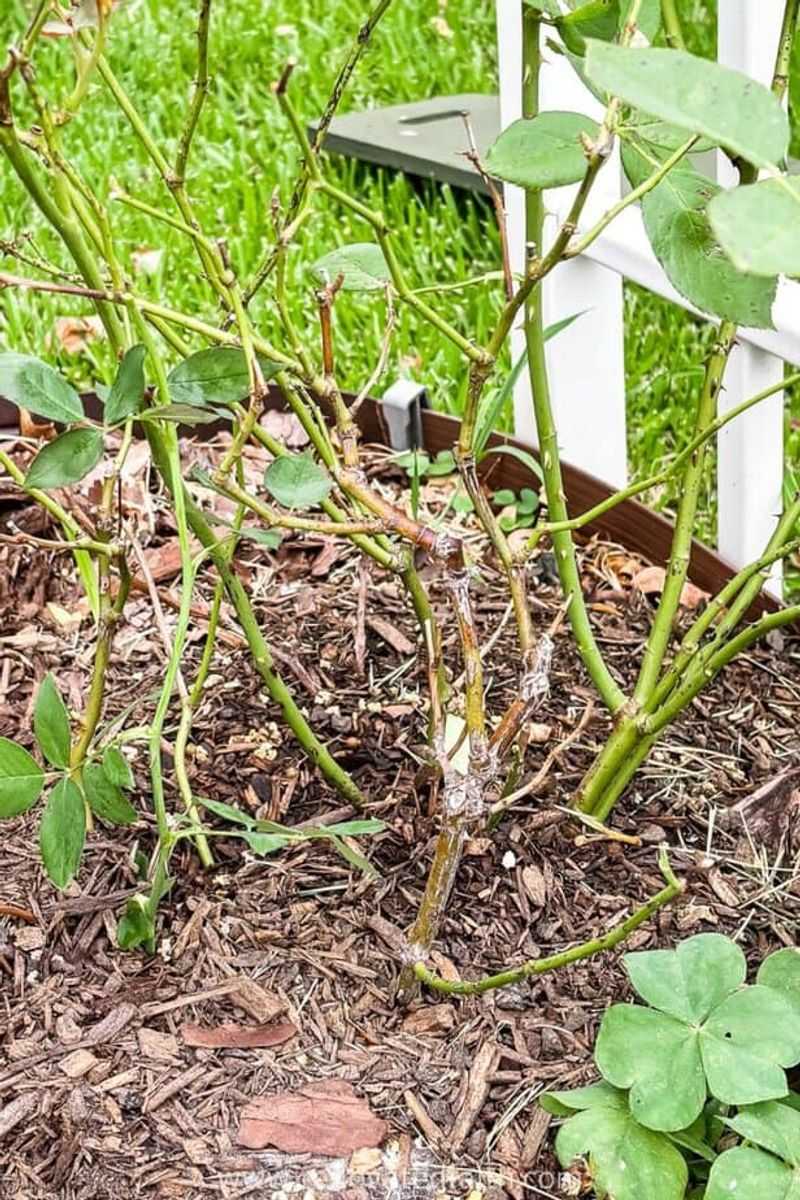
The single most useful thing you can do before watering your roses is check whether they actually need it. Push a finger or a thin wooden dowel about an inch into the soil near the root zone. If the soil at that depth feels dry, the rose is ready for a thorough watering. If it still feels moist, hold off and check again in a day or two.
Texas A&M’s Earth-Kind rose guidance recommends watering thoroughly when the root zone is dry at about a 1-inch depth, not on a fixed daily schedule. Watering too frequently, especially in soil that drains poorly, can promote root disease and suffocate the plant. The goal is moist, well-drained soil, not permanently soggy ground. If you notice standing water around the base of a rose several hours after watering, drainage is a problem worth solving before the heat intensifies.
Established roses and newly planted roses behave very differently when it comes to moisture needs. A rose that has been in the ground for two or more years has developed a deeper, more extensive root system that can access moisture further down in the profile. A newly planted rose, by contrast, has a limited root zone and will dry out faster, especially in hot, windy weather. New plants generally need more frequent monitoring and irrigation while they are getting established, even if the surrounding soil still holds moisture.
Container roses add another layer of complexity. Pots heat up quickly in Texas sun, and the limited soil volume can dry out much faster than in-ground soil, sometimes within a day during a heat wave. Basic rose culture guidance from UGA Extension reinforces that container plants need attentive monitoring in warm weather. Even so, containers still need drainage holes, and a pot sitting in a saucer full of water is inviting root disease just as surely as waterlogged in-ground soil.
Check container roses daily during the hottest stretches, and empty saucers after watering. University of Minnesota Extension guidance on container plants confirms that containers dry faster than in-ground beds and require more frequent attention, while still emphasizing the importance of drainage.
Water deeply at the soil surface
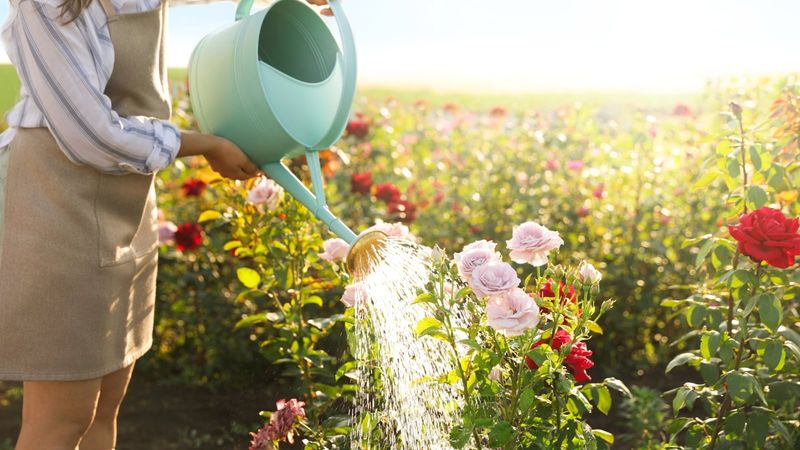
Once you have confirmed the root zone is dry and ready for water, the method you use matters almost as much as the amount. Drip irrigation, a soaker hose laid near the base of the plant, or careful hand watering directed at the soil surface are all solid choices. These methods deliver water where the roots can reach it without wetting the leaves, canes, or flowers.
Texas A&M’s Earth-Kind program advises against sprinkler irrigation for roses, particularly in the evening or at night. When foliage stays wet for extended periods, conditions become favorable for fungal disease, including black spot. Morning is the best time to water if any overhead application is unavoidable, because foliage has time to dry before temperatures drop at night. That said, a targeted spray from a hose nozzle can be useful for knocking aphids or spider mites off foliage as a pest-control step, which is different from routine overhead irrigation that soaks the plant repeatedly.
A common planning benchmark is roughly 1 inch of water per week, counting rainfall. UGA Extension’s basic rose culture guidance references this figure as a general starting point, but it is not a rigid prescription for every Texas rose. Sandy soil drains fast and may need more frequent, shorter sessions. Heavy clay holds moisture longer but can become waterlogged if overwatered.
Wind, extreme heat, plant size, mulch depth, irrigation efficiency, and plant age all push actual needs up or down from that benchmark. Container roses often need considerably more frequent watering than in-ground plants during hot spells.
Local water restrictions can limit how often or how long you run irrigation, regardless of what the plant needs. Check the schedule and any exemptions that apply to your address through your water utility or municipality before assuming you can water freely. Deep, thorough watering on an as-needed basis is almost always more efficient and more beneficial to the plant than shallow, frequent sprinkling, and it tends to work better within restricted watering windows too.
Use mulch to steady the soil, not bury the rose
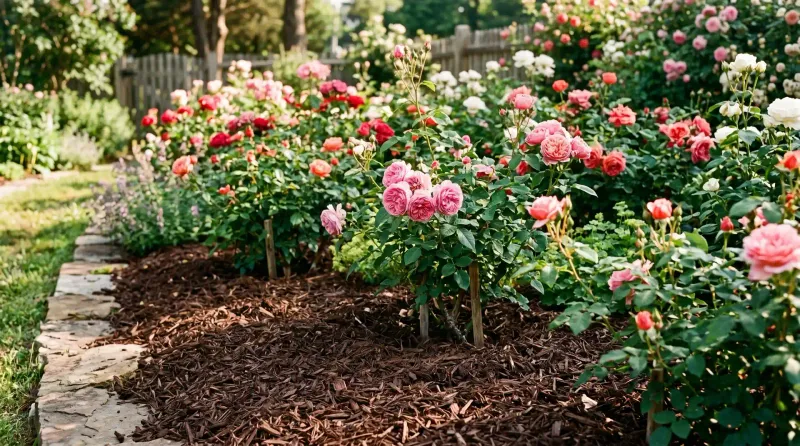
Mulch is one of the most cost-effective tools in a Texas rose garden, and replenishing it before serious heat arrives pays dividends through the entire summer. Aim for roughly 3 inches of organic mulch, such as shredded hardwood, pine bark, or composted material, spread in a ring around the base of each rose. That depth is enough to meaningfully slow moisture evaporation from the soil surface, moderate soil temperature, suppress weed competition, and reduce the chance of soil-borne disease splashing onto lower leaves during rain or irrigation.
Texas A&M’s Earth-Kind growing tips confirm that mulch conserves water, moderates soil temperature, reduces weed pressure, lessens soil-borne disease issues, and adds organic matter as it breaks down over time. In Texas summer conditions, where soil surface temperatures can climb dramatically in direct sun, that temperature-moderating function protects feeder roots that sit close to the surface.
Placement matters as much as depth. Keep the mulch a few inches away from the rose stem and, on grafted roses, away from the bud union or graft area. Mulch piled directly against the stem traps moisture and can encourage crown rot or other fungal problems at the base of the plant. Think of the mulch ring as a protective blanket for the soil, not a collar around the trunk.
Mulch slows moisture loss between waterings, but it does not eliminate the need to check the root zone. A thick mulch layer can make the surface feel cool and damp even when the soil underneath is dry enough to stress the plant. Scoop the mulch aside occasionally and check the soil below when you do your moisture inspection. Conversely, if you notice the soil staying wet for days after watering, check whether the mulch is holding too much surface moisture in an area with poor drainage, and address the drainage issue rather than simply reducing water.
Groom lightly and leave major pruning to the right advice
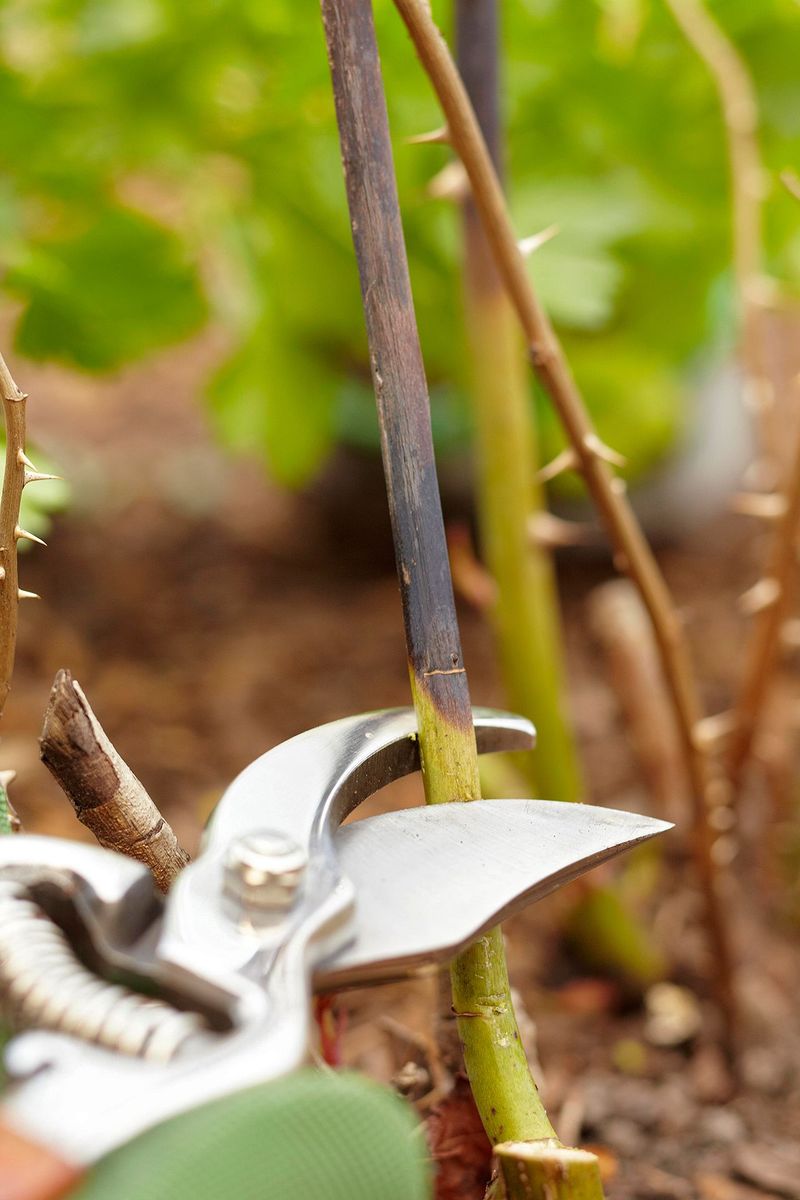
Summer is not the season for dramatic reshaping. When heat is building or already present, the priority for pruning is sanitation, meaning the removal of dead, diseased, broken, or clearly damaged wood. Those materials can harbor pests and disease and draw energy the plant could direct toward healthy growth. Removing them is straightforward and low-risk at any time of year.
Deadheading, or removing spent flowers, is a different matter. For many repeat-blooming roses, cutting off finished flowers just above the next healthy leaf set can encourage the plant to produce another flush. It also keeps the plant looking tidy. UGA Extension’s rose culture guidance presents deadheading as a selective grooming practice that can support repeat flowering, not as an emergency heat treatment.
Some old roses bloom only once per season and will not respond to deadheading with additional flowers, so the value of the practice depends on what you are growing.
Where things get more complicated is with broader summer cutbacks. Texas A&M’s Earth-Kind pruning guidance makes clear that pruning timing, depth, and technique vary considerably by rose class and region. Hybrid teas, shrub roses, climbers, and old garden roses are not managed identically. Climbers, for example, generally bloom on older wood, and cutting them back hard can eliminate the season’s flowering.
Applying the same approach to every rose in the garden is a reliable way to cause problems.
Texas A&M’s old rose guidance notes that some old garden roses can sulk or fail to rebloom after overly hard pruning. If you are uncertain about how much cutting is appropriate for a particular cultivar, limit yourself to sanitation cuts now and look up cultivar-specific guidance before removing anything beyond clearly damaged material. Earth-Kind growing tips support this conservative approach during the growing season, reinforcing that light grooming and sanitation are the appropriate summer defaults for most roses in Texas conditions.
Diagnose brown or black foliage before treating it
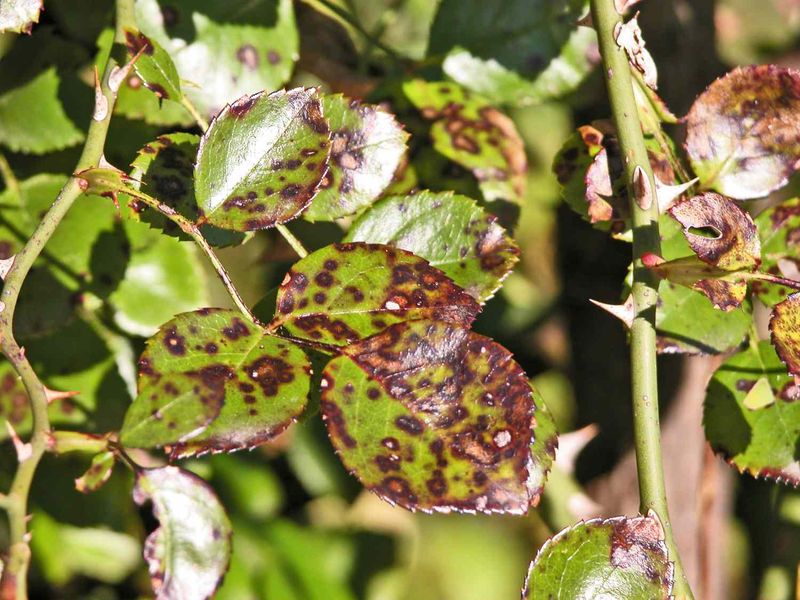
Not every discolored leaf is a sign of disease, and treating the wrong problem can make things worse. Black spot is a genuine concern for Texas roses, and Texas A&M AgriLife Extension identifies it as a major fungal disease of roses in the state. Its characteristic symptoms include roughly circular black or dark brown spots on the upper leaf surface, often with a yellow halo around each spot, and it can cause significant defoliation when conditions favor it.
Heat stress, however, produces its own set of symptoms that can look superficially similar. The American Rose Society’s overview of heat stress in roses describes scorched, tan, or brown leaf edges and tips, damaged or malformed flowers, and browning that spreads from the margins inward as heat-related injury rather than fungal disease. Salt injury from irrigation water or over-fertilizing can also produce leaf-edge browning and tip burn. Pesticide injury, particularly from sprays applied during hot weather or to stressed plants, can cause discoloration that resembles disease.
The practical approach is to look carefully at the pattern and location of the damage before drawing conclusions. Fungal spots tend to have defined edges and appear on the leaf surface in scattered patches. Heat or salt scorch tends to affect leaf margins and tips first and often appears across multiple leaves at similar positions on the plant. Inspect the undersides of leaves for mites, which leave fine webbing and a dusty, stippled appearance on the upper surface.
Check stem tips and flower buds for clusters of aphids, and look inside flowers for thrips, which are tiny and can cause petal distortion and browning.
UC IPM’s rose disease and abiotic disorder guidance and their rose insect and mite resources both reinforce the value of accurate diagnosis before reaching for any treatment. Sanitation, good air circulation, appropriate watering at the soil surface, and monitoring are the first line of response. Targeted treatment, chosen based on what you have actually identified, comes after that foundation is in place.
Avoid fertilizer and pesticide choices that amplify stress
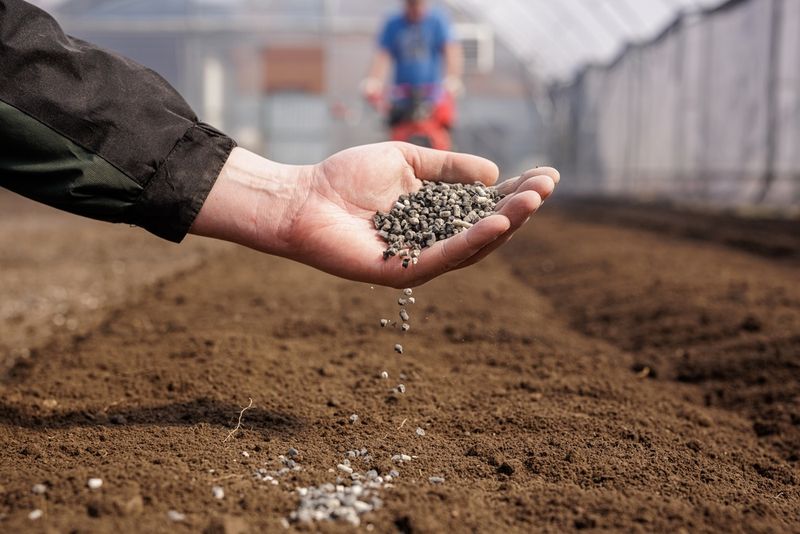
Two common impulses during summer, pushing roses with fertilizer to force more blooms and spraying on a fixed schedule to prevent problems, can both backfire when plants are already dealing with heat or drought. Understanding why helps you avoid the extra damage.
Fertilizer salts pull water through osmosis. Texas A&M’s soils and fertilizers guidance explains that fertilizer salts can draw water away from roots and cause burn when soil moisture is limited. Applying a high-nitrogen fertilizer to a rose that is already water-stressed, or to soil that is too dry to dilute the salts properly, risks root injury at a time when the plant has little capacity to recover. Earth-Kind growing tips note that established roses under appropriate mulch and soil management may need little or no routine fertilizer.
If you do fertilize, make sure the soil is adequately moist before and after application, and avoid high-salt products during the hottest stretches.
Pesticide applications carry their own heat-season risks. UC IPM’s guidance on chemical phytotoxicity warns that the risk of plant injury from pesticide applications rises around 90 degrees Fahrenheit, increases further when plants are drought-stressed, and worsens when sprays dry slowly or when rates and label directions are not followed precisely. Horticultural oils are specifically flagged as problematic on drought-stressed plants and during hot weather, because they can block gas exchange and cause significant foliar damage.
Every pesticide decision should begin with the scouting step described in the previous section. UC IPM’s rose insect and mite resource supports monitoring, sanitation, and cultural practices as the first response, with targeted treatment reserved for confirmed problems at levels that justify intervention. Always read the product label completely before mixing or applying anything, and follow its guidance on temperature limits, water stress restrictions, and required intervals between applications.
Good preparation improves resilience but cannot stop extreme-heat pauses
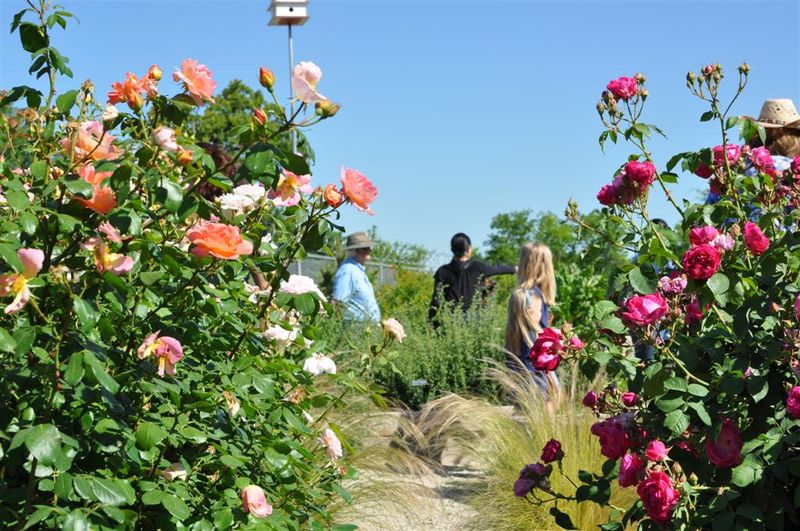
Running through the steps above gives your roses a real advantage: a root zone with adequate moisture and good drainage, 3 inches of mulch moderating soil temperature, clean healthy canes free of dead or diseased material, and no unnecessary fertilizer or pesticide stress layered on top of the heat. That combination reduces avoidable problems and improves the odds that your roses will hold onto healthy foliage and produce repeat flushes as conditions allow.
Even so, the American Rose Society is clear that heat stress can still scorch leaves, damage blooms, and cause roses to pause flowering during the most extreme stretches, regardless of how well they have been cared for. Good preparation is not a guarantee of continuous summer performance. Roses may produce smaller flowers, fewer petals, or off-color blooms during peak heat, and some will simply stop flowering temporarily until temperatures moderate.
If you are planning future additions to your garden, Texas A&M’s Earth-Kind rose research identified cultivars that perform well under Texas conditions with reduced inputs. Earth-Kind roses and other heat- or drought-adapted selections are worth considering as replacements or additions, with the understanding that they still require attentive watering during establishment and monitoring during prolonged heat or drought. No rose is entirely maintenance-free, but choosing cultivars suited to your specific Texas conditions is one of the most durable investments a rose grower can make.