

Rosemary is a fragrant, sun-loving herb that can thrive on a Texas patio through brutal summers, and plenty of gardeners are drawn to it partly because they hope it will help keep ticks away. That hope is understandable, but the reality is more complicated than the trend suggests. Planting rosemary is a solid gardening decision for many Texas yards, though it takes a different set of tools to actually reduce your risk of a tick latching on.
Rosemary earns a place on many Texas patios without promising tick protection
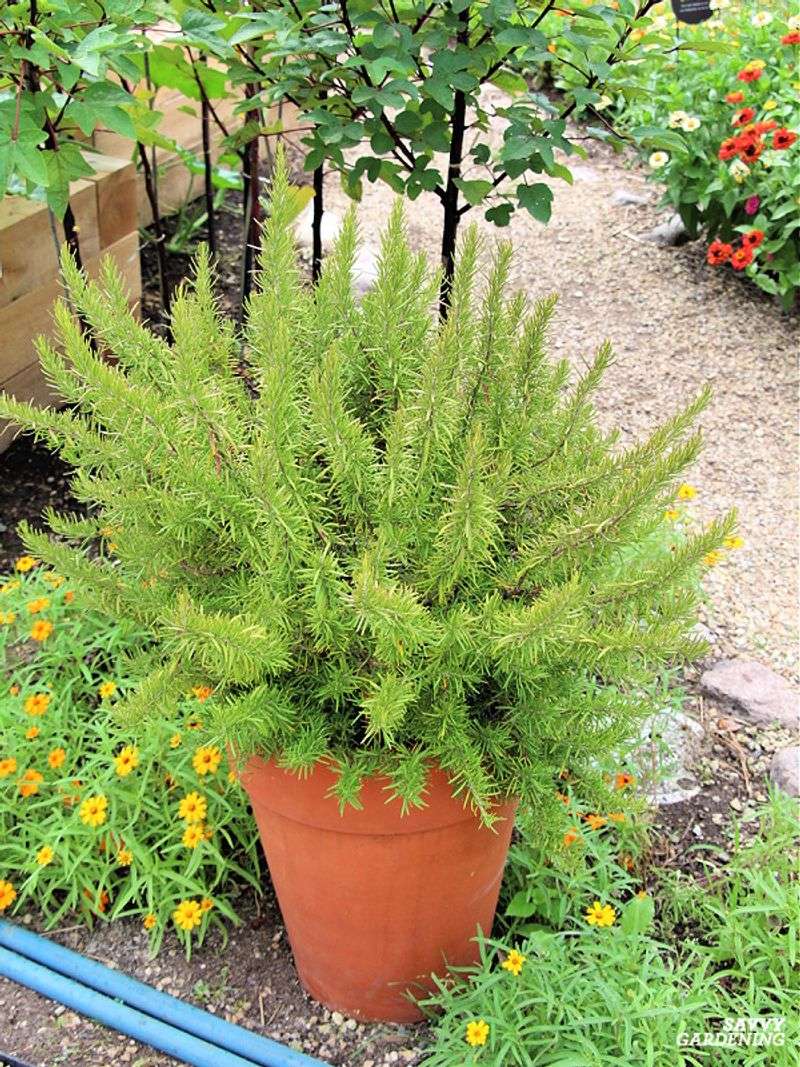
Rosemary is a Mediterranean-origin herb that has found a comfortable home in many Texas landscapes. It thrives in full sun, demands well-drained soil, and once it settles in, handles Texas heat and dry spells with relatively low water needs. Those traits alone make it a practical choice for gardeners who want a patio plant that will not collapse the first time summer temperatures push past 100 degrees.
The plant also earns points for versatility. Upright cultivars can grow into small shrubs that double as culinary herbs and informal garden borders. Trailing forms spill over raised beds, retaining walls, or container edges with a relaxed, ornamental quality. Victoria County Master Gardener guidance notes that rosemary can be grown as both a culinary herb and a landscape plant across many Texas settings, though cold tolerance varies by location and cultivar, so gardeners in northern or central Texas should confirm that a chosen variety suits their winters.
Fragrance is the quality that most often links rosemary to pest management conversations. The plant’s needle-like leaves release a sharp, resinous scent that many people find pleasant, and that aroma has fueled the idea that rosemary might push insects and arachnids away from a seating area. That intuition is not irrational, but intuition is not evidence. Rosemary’s culinary and ornamental value is well-documented and genuinely useful to Texas gardeners.
Its ability to shield a patio from ticks is not. Growing rosemary because it is fragrant, heat-tolerant, and good in the kitchen is a reasonable decision. Growing it with the expectation that it forms a tick barrier is a plan built on a claim that current research does not back up.
No evidence shows a living rosemary plant repels ticks around people
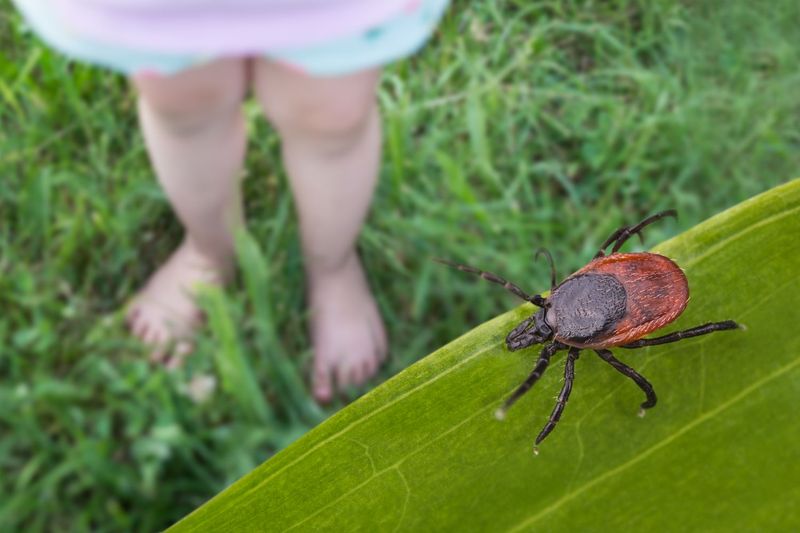
Gardeners sometimes assume that because rosemary smells strong, ticks will steer clear of any area where the plant grows. That assumption skips a critical step. A plant containing chemicals that might affect ticks is not the same thing as a plant releasing enough of those chemicals, at a high enough concentration, to protect the people sitting nearby.
An Extension expert response on plants and tick repellency states plainly that no scientific studies demonstrate that particular landscape plants effectively repel ticks around people. The explanation matters: plant chemicals may need to be extracted, concentrated, and applied at specific levels before they have any measurable effect on a pest. A rosemary shrub in a container is doing none of that. It is releasing volatile compounds into open air, where they dilute almost immediately, at concentrations far below anything tested in a laboratory setting.
This distinction is not a technicality. It is the difference between a plant that smells like something potentially useful and a product that has actually been evaluated for effectiveness. No current data supports the claim that placing rosemary beside a chair, a table, or a patio edge prevents ticks from crossing into that space or from reaching and attaching to people spending time there. A gardener who plants rosemary and then skips repellent, skips tick checks, and assumes the plant is handling things is working with a false sense of security in a state where ticks are genuinely present and capable of transmitting disease.
Rosemary belongs in the garden for real, documented reasons. Tick protection is not among them, and presenting it as such does a disservice to people who are trying to make informed decisions about their yards and their health.
Rosemary oil research cannot prove that a patio plant works

Laboratory studies do exist that test rosemary oil, spearmint oil, lemongrass oil, clove oil, and other botanical extracts against ticks. Those studies are real, and some of them report repellent effects under controlled conditions. The problem is what those results actually mean when applied to a container plant sitting on a patio.
A 2024 CDC-published review of unregulated minimum-risk products found that many botanical repellents provided very short or inconsistent protection times. Rosemary oil specifically provided less than 10 minutes of complete protection in one assay and showed no repellent effect in another cited skin-bioassay result. Results varied by tick species, oil concentration, formulation, and the method used to conduct the test. Pulling a single positive result from that body of research and applying it to a garden plant is not a valid interpretation of the data.
The Extension literature reinforces this point: plant chemicals may need to be extracted and applied at specific concentrations to affect pests at all. A living rosemary plant is not a delivery mechanism for concentrated botanical compounds. It is a living plant that releases volatile oils into open air, where they dissipate within inches of the leaf surface. The gap between a laboratory petri dish and an outdoor patio is enormous.
“Natural” status does not resolve the gap. The EPA notes that some botanical minimum-risk products are exempt from registration requirements, which also means they have not been evaluated by the agency for effectiveness. EPA-registered repellents have undergone that evaluation. Choosing a product because it sounds natural rather than because it has been tested is a pattern that the available data on botanical repellents does not reward.
Rosemary oil research is genuinely interesting, but it does not translate into a gardening recommendation for tick control.
Backyard habitat, wildlife, and pets create the real exposure pathways

Ticks do not appear in a yard because the right plant is missing. They arrive on hosts, and they persist in habitat that suits them. Understanding those two facts is more useful than any single plant recommendation when it comes to reducing how often ticks end up near a patio.
Extension guidance on tick habitat identifies the conditions that favor ticks near seating areas: tall grass, brush, wooded edges, leaf litter, dense ground cover, woodpiles, and debris piles. Shaded, moist areas close to where people and pets spend time are particularly relevant. Ticks cannot jump or fly. They quest, which means they climb to the tips of grass blades or vegetation and wait for a warm-blooded host to brush past.
A patio surrounded by unmowed grass and backed up against a brushy fence line offers that opportunity repeatedly.
Wildlife and pets are the delivery system. Deer, raccoons, opossums, rabbits, and rodents carry ticks into yards and drop them as they move through. Dogs and outdoor cats pick up ticks in grassy or wooded areas and bring them back to the places where people sit and sleep. A rosemary plant positioned near the patio does nothing to interrupt those pathways.
The ticks arriving on a dog that just ran through a brushy corner of the yard are not making scent-based decisions about where to go next.
Texas yards vary widely in tick pressure. A densely developed urban lot in Dallas presents different conditions than a Gulf Coast property with heavy vegetation and regular deer activity, or a wooded East Texas yard where Lone Star ticks are common. Tick management needs to account for the actual habitat and host pressure at a specific property, not a one-size approach built around a fragrant herb.
Make the patio edge less suitable for ticks

Landscaping changes that reduce favorable tick habitat are among the most practical steps a Texas homeowner can take, and they work by making the yard less hospitable rather than by promising elimination. Every measure here is risk reduction, not a guarantee of a tick-free space.
Start with the basics that Texas A&M AgriLife Extension tick control guidance recommends: mow the lawn regularly, remove tall weeds, clear leaf litter, and prune brush along fence lines and property edges to let more sunlight reach the ground. Ticks favor cool, shaded, moist conditions. Increasing sun exposure and air circulation at ground level makes those areas less comfortable for them to persist in.
Woodpiles and debris piles are tick magnets because they shelter the rodents and other small mammals that ticks feed on during earlier life stages. Moving woodpiles away from the house and patio, stacking them neatly off the ground, and eliminating brush piles removes that harborage. Clutter under decks and in storage areas along fences deserves the same attention.
A structural buffer can also help. CDC guidance on tick prevention recommends placing a three-foot-or-wider strip of wood chips, gravel, or mulch between the lawn and any wooded or brushy edge. That barrier does not stop ticks entirely, but it interrupts the questing zone where ticks wait for passing hosts and creates a drier, less favorable surface for them to cross. Where possible, patios, decks, and play areas should be positioned away from wooded or brushy edges rather than directly against them.
None of these steps replaces personal protection, but a yard that offers fewer tick-friendly conditions gives everyone who spends time in it a meaningful head start before they ever step outside.
Use labeled repellents and treated gear for personal protection

Habitat changes reduce the number of ticks in a yard. Personal protection reduces the chance that the ticks still present will reach and attach to you. Both layers matter, and one does not substitute for the other.
CDC guidance on preventing tick bites recommends EPA-registered skin repellents containing one of six active ingredients: DEET, picaridin, IR3535, oil of lemon eucalyptus, para-menthane-diol, or 2-undecanone. Each of those has been evaluated for both safety and effectiveness. The critical step is following the product label specifically for tick protection, because some formulations are tested primarily against mosquitoes and may have different use directions or protection windows for ticks. Read the label for your specific product before applying.
Clothing and gear offer a second line of defense. Treating clothes, boots, and gear with 0.5% permethrin can kill or repel ticks on contact. Permethrin is applied to fabric, allowed to dry completely, and remains effective through multiple washes. One firm rule applies here: permethrin must not be applied directly to skin.
It is a fabric treatment, not a skin repellent, and using it incorrectly can cause irritation. Pre-treated clothing is also commercially available if you prefer not to treat garments yourself.
Wearing light-colored clothing makes ticks easier to spot before they reach skin. Tucking pants into socks and shirts into waistbands removes easy access points along clothing edges. These steps feel minor, but they meaningfully reduce how often a tick finds a gap to exploit during time in the yard or garden.
The EPA’s framework for skin-applied repellent regulation makes clear that registered products have been evaluated for both safety and effectiveness, while minimum-risk botanical products exempt from registration have not. That distinction should inform product choices, especially for children, pregnant individuals, and people spending extended time outdoors in Texas during peak tick season.
Check for ticks after yard exposure and remove attached ticks promptly
Time in the yard, even a well-maintained one, warrants a tick check afterward. Ticks that have not yet attached can still be removed before they get the chance, and that window matters because transmission of tick-borne pathogens typically requires the tick to be attached for several hours.
CDC post-exposure guidance covers the full routine: check your clothing and gear when you come inside, check pets that were outside with you, and do a thorough body check covering the scalp, behind the ears, the back of the neck, underarms, the belly button, behind the knees, between the legs, and around the waist. Showering within two hours of coming indoors may help wash off unattached ticks before they find a place to bite. Tossing dry clothes in a dryer on high heat for 10 minutes kills ticks that may be hiding in fabric folds. If clothes are damp, dry them first and then run the heat cycle.
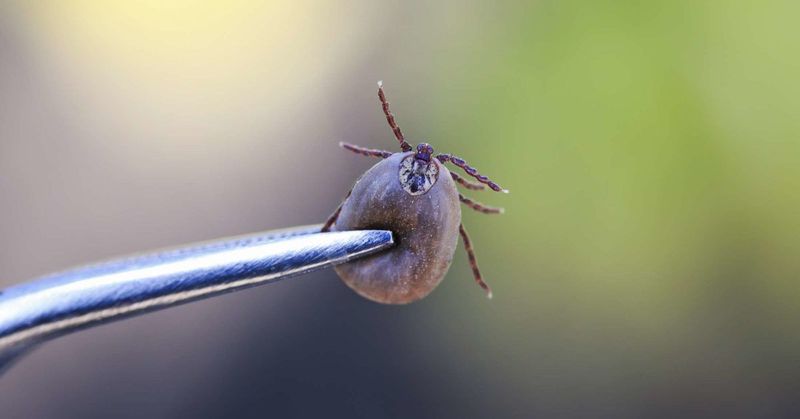
When a tick is already attached, remove it correctly. Texas A&M AgriLife Extension recommends using fine-tipped tweezers, grasping the tick as close to the skin surface as possible, and pulling upward with steady, even pressure. Do not twist or jerk. Avoid squeezing the tick’s body, which can push fluids back into the bite site.
Several removal methods circulate online that sound intuitive but cause harm. Do not use a hot match, petroleum jelly, nail-polish remover, or similar substances to try to make the tick detach on its own. Those methods stress the tick without reliably removing it and can increase the risk of fluid transfer. After removal, clean the bite area with rubbing alcohol or soap and water, and monitor the site and your health in the weeks that follow.
Contact a healthcare provider if you develop a rash, fever, or flu-like symptoms.
Plant rosemary for the patio, and use prevention for the ticks

Rosemary is genuinely worth growing on a sunny Texas patio. It handles heat, tolerates dry stretches once established, looks good in both upright and trailing forms, and sends a sharp, pleasant fragrance into the air every time someone brushes past it. Texas Master Gardener resources confirm its value as both a culinary herb and a landscape plant for many Texas settings. Those are solid reasons to grow it.
Tick protection is not on that list. Extension experts are direct on this point: no scientific studies show that landscape plants effectively repel ticks around people, and rosemary is no exception. Growing it near a seating area does not reduce tick pressure, create a barrier, or prevent ticks from reaching or attaching to people nearby.
The prevention strategy that actually holds up combines habitat management, personal repellents, treated gear, and routine tick checks. Mow, clear debris, create a mulch barrier at wooded edges, apply an EPA-registered repellent before heading outside, treat gear with permethrin, and do a body check when you come in. CDC guidance supports each of those steps. None of them require giving up the rosemary.
A fragrant, well-placed herb and a practical tick-prevention routine are not in conflict. They simply belong in different categories: one is a garden decision, and the other is a health one.