
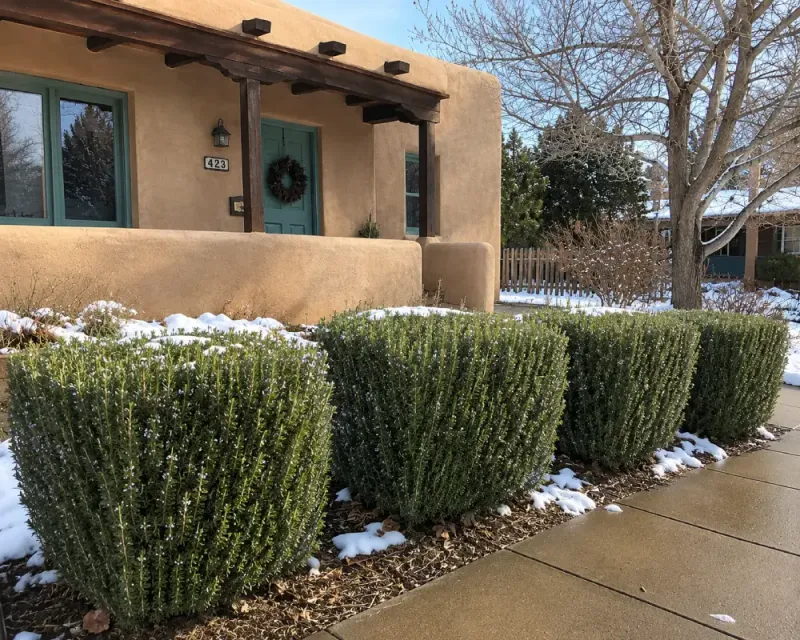
Rosemary is the fragrant, tough herb that Texas gardeners keep tucking near the front door every summer, and for good reason. It smells great, holds up in the heat, and looks sharp in a pot or a bed by the entry. But if you planted it expecting a mosquito-free porch all season, there is a real gap between the popular story and what the science actually shows. Understanding both sides helps you grow a plant worth keeping and build a protection plan that actually works.
Rosemary is a strong Texas porch herb, not a mosquito guarantee
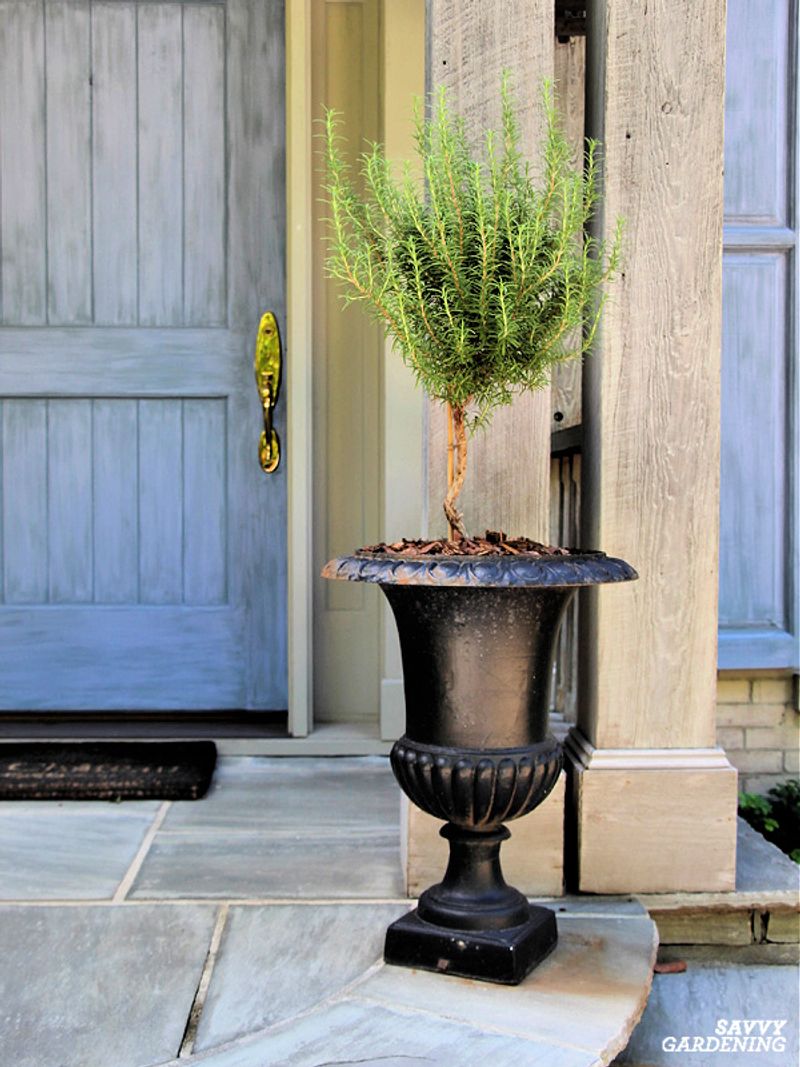
Walk past a well-grown rosemary shrub on a Texas porch and the smell alone makes the case. Brush a stem with your hand and you get a sharp, piney, almost resinous hit that lingers on your fingers. That scent comes from volatile oils packed into the plant’s narrow, needle-like leaves, and it is the same quality that makes rosemary one of the most recognizable culinary herbs in the world.
Rosemary, now classified as Salvia rosmarinus, is an evergreen aromatic shrub that comes in upright, spreading, and trailing forms. Texas A&M’s rosemary profile lists common culinary types reaching roughly 18 to 48 inches tall, which means you can find a size that suits a container flanking the door or a low bed along a walkway. The foliage stays green year-round in most Texas regions, which matters when you want something that looks good from the street even in January.
For a front-door planting, rosemary beats lavender on pure Texas toughness. Lavender is the herb most people picture when they think of a fragrant purple patio shrub, but Texas A&M’s herb and spice guide notes that lavender production in Texas has been limited by adaptation problems. Rosemary, by contrast, is described by AgriLife Extension as an easy-to-grow evergreen that thrives in hot, dry climates. That track record makes it a smarter bet for a Texas front entrance.
The mosquito side of the story is a separate matter entirely. Rosemary has aromatic chemistry, but aromatic chemistry in a living plant and proven mosquito control are not the same thing. That distinction is worth spelling out before you skip the bug spray.
Rosemary oil research does not prove a mosquito-free porch
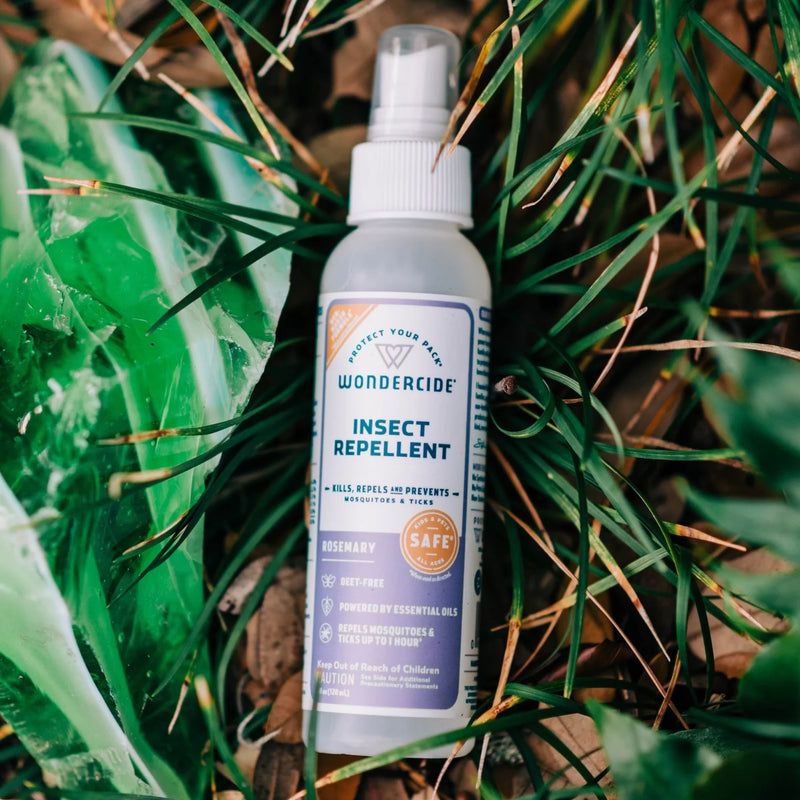
The claim that rosemary repels mosquitoes is not made up, but it is also not as broad as it sounds. Most of the evidence comes from laboratory work on concentrated rosemary essential oil, not from studies of a potted plant sitting on a porch in July.
One peer-reviewed study found that rosemary oil showed oviposition-deterrent and repellent activity against Aedes aegypti, the yellow fever mosquito, under controlled experimental conditions. That sounds promising until you read what was actually tested: a concentrated essential oil preparation applied in a lab setting, not a living shrub outdoors. A separate comparative study in the Journal of Medical Entomology that looked at plant-derived ingredients reported inconsistent results for rosemary oil across different testing conditions. Two studies, two different outcomes, and neither one tested a potted rosemary plant on a Texas porch.
The species gap matters too. Aedes aegypti is one mosquito species among many active in Texas. Research testing herbal essential oils against multiple mosquito species has found that results vary substantially depending on the species tested. What works against one does not automatically work against another, and Texas yards host a range of species depending on region, season, and rainfall.
Penn State Extension puts the practical point plainly: aromatic plants generally do not function as mosquito repellents when left intact. Their oils must be extracted and concentrated to reach the levels tested in studies, and crushing or rubbing the leaves produces only a short-lived effect. Clemson Cooperative Extension reinforces the same point, noting that a living plant releases far less concentrated volatile oil than an essential-oil formulation and that no evidence establishes a dependable mosquito-free radius around one or several potted plants.
Growing rosemary near the door is still a worthwhile choice for fragrance, cooking, and curb appeal. Just do not count on the scent alone to hold mosquitoes at bay while you sit outside.
Give rosemary full sun and soil that drains quickly
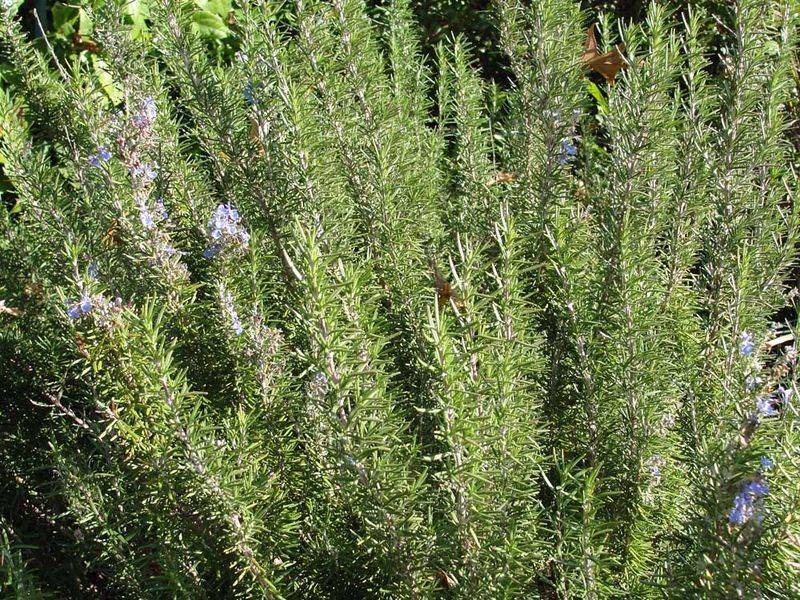
Healthy rosemary starts with two non-negotiables: full sun and fast-draining soil. Get those right and the plant tends to take care of itself through a Texas summer. Get them wrong and you end up with a yellowing, root-rotted shrub that gives up before the heat even peaks.
AgriLife Extension’s rosemary guide recommends planting in full sun and well-drained soil, and it flags overwatering as a recurring cause of failure. Rosemary evolved in the dry, rocky hillsides of the Mediterranean, so its roots expect soil that dries between waterings. Heavy clay soils that stay wet after a rain are a problem not because Texas heat is forgiving, but because sitting moisture around the roots invites root rot before anything else has a chance to go wrong.
That said, drainage is not the only factor worth watching. Texas A&M’s Easy Gardening rosemary publication notes that extreme heat, humidity, rainfall patterns, and soil type all affect how a plant performs. A rosemary bed in the Hill Country deals with different stresses than one near Houston, where summer humidity and heavier rainfall can push even drought-tolerant plants to their limits. Both heat and waterlogged conditions can cause failure; the balance between them shifts by region and by year.
For gardeners dealing with heavy or compacted soil, raised or slightly mounded beds are a practical fix. Texas Tech’s plant resource profile for rosemary supports planting in well-drained conditions and notes the plant’s suitability for Texas landscapes when those conditions are met. Mixing coarse sand or gravel into the planting area improves drainage without requiring a full raised bed. Even a few inches of elevation above the surrounding soil can make a meaningful difference after a heavy rain.
Water established rosemary deeply but infrequently, letting the top inch or two of soil dry before watering again. Young transplants need more consistent moisture to get roots established, but once the plant is settled in, backing off the watering schedule usually helps more than it hurts.
Use a container to manage Texas rain, soil, and freezes
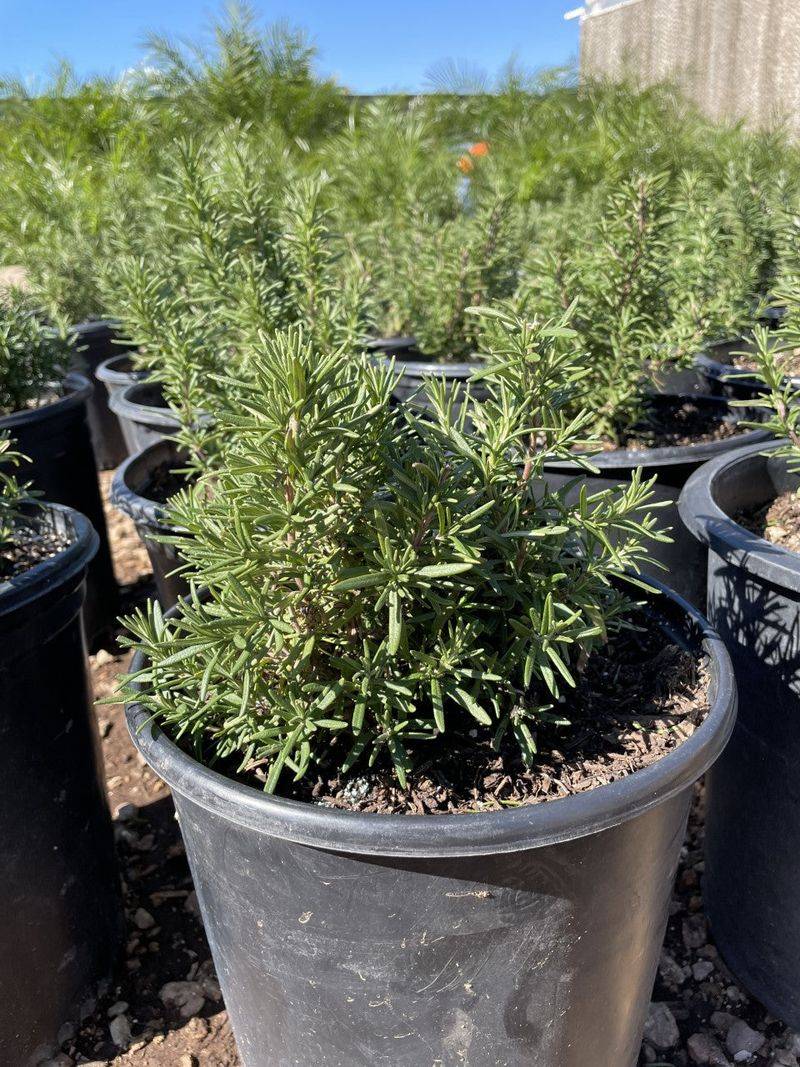
Tucking rosemary right beside the front door is easiest when it lives in a container. A pot gives you control that an in-ground bed simply cannot match: you choose the soil mix, you control how fast it drains, and when the weather turns ugly, you can move the plant out of harm’s way.
Texas Tech’s rosemary plant profile identifies container planting as a suitable approach, and Bexar County’s herb gardening guidance echoes the same recommendation for Texas home herb gardens. A container filled with a well-draining potting mix – something with perlite or coarse sand blended in – lets excess water escape quickly instead of pooling around the roots after a summer storm.
Freeze exposure is a real consideration depending on where you live in Texas. A hard freeze that would damage or kill an in-ground rosemary plant is far less threatening when the pot can be rolled into a garage or covered porch overnight. Gulf Coast and East Texas gardeners face a different challenge: high humidity, heavier rainfall, and wet summers mean that airflow around the plant matters almost as much as drainage. Setting the container slightly off the ground on pot feet improves airflow under the pot and reduces the chance of the drainage hole sitting in a puddle after rain.
AgriLife Extension notes that rosemary tolerates heat and dry conditions well, but the container format lets you fine-tune what the plant actually experiences rather than accepting whatever the native soil and weather deliver. Choose a pot large enough to give the roots room to grow – at least a 12-inch diameter for most upright varieties – and make sure it has drainage holes you can actually see working after a good watering.
Beyond the practical benefits, a container near the door puts the herb exactly where you want it: within arm’s reach for cooking, easy to appreciate for its fragrance, and visible enough to remind guests that someone here takes their porch seriously.
Remove standing water before relying on any porch plant
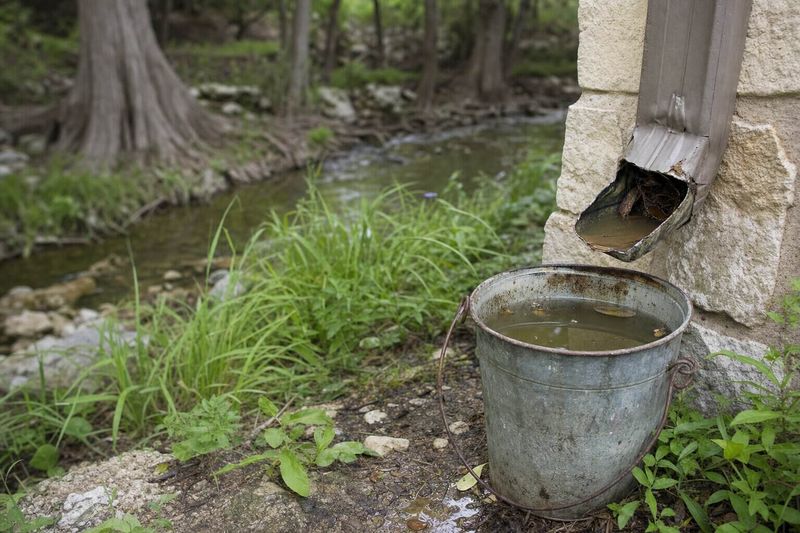
No plant, however fragrant, does what a dry yard does. The single most effective step a Texas homeowner can take to reduce mosquito pressure around the porch is removing the standing water where mosquitoes breed. Skip that step and it does not matter what you have growing by the door.
Texas A&M AgriLife’s backyard mosquito control guide recommends dumping, draining, covering, or turning over anything near the home that holds water: buckets, tires, toys, flowerpot saucers, birdbaths, and tarps. These are not unusual items – most Texas porches have at least a few of them within a few feet of the door. A saucer under the rosemary pot, for example, can become a breeding site if it holds water for more than a few days.
The reason proximity matters comes down to mosquito biology. Texas A&M’s mosquito control around the home publication notes that common container-breeding mosquitoes tend to stay within roughly 200 to 300 yards of their breeding site. That range puts your porch squarely in the flight zone of any water source in your yard or your neighbors’ yards. Removing breeding sites close to the house cuts the local population at its source in a way that no aromatic plant can replicate.
Other species travel farther and breed in different environments, which is why a single household’s source-reduction efforts cannot guarantee a mosquito-free experience. After heavy rain or flooding, the inspection needs to happen again. AgriLife Extension’s post-flood mosquito guidance recommends checking gutters, low spots in the yard, tarps, and any containers that may have collected water during the storm. Where standing water cannot be drained or removed, a labeled mosquito larvicide can be used to treat the water before larvae develop.
Rosemary by the door is a genuinely pleasant addition to a porch. Treat it as a fragrant companion to a clean, dry yard, not as the reason you skipped emptying the birdbath last week.
Use screens and proven repellents for personal protection

A well-planted porch and a dry yard reduce mosquito pressure, but they do not eliminate it. When you are actually sitting outside in a Texas summer, personal protection is what closes the gap between reduced exposure and getting bitten.
CDC guidance on preventing mosquito bites recommends EPA-registered repellents with active ingredients that have been evaluated for both safety and effectiveness: DEET, picaridin, IR3535, oil of lemon eucalyptus or its active compound PMD, and 2-undecanone. These products have gone through a regulatory review process that establishes how well they work and at what concentrations. CDC is direct on the point that the effectiveness of non-EPA-registered natural repellents is not known, which includes most plant-based sprays and diffusers sold as alternatives.
Intact screens on doors and windows are another straightforward layer of protection. They cost nothing extra if you already have them and work without any application or reapplication. Long sleeves and pants, while uncomfortable in Texas heat, are worth considering during peak mosquito hours at dawn and dusk.
The temptation to substitute rosemary essential oil or a homemade herbal spray for a labeled repellent is understandable, but it carries real risks. EPA’s guidance on skin-applied repellents explains that some products marketed as minimum-risk alternatives have not been evaluated for effectiveness. Beyond the efficacy question, Poison Control’s essential oil safety information notes that essential oils can cause skin irritation, allergic reactions, and toxicity if ingested, and that concentrated oils are particularly dangerous around children and pets. Undiluted rosemary oil applied directly to skin is not a labeled product and should not be treated as one.
Homemade candles, diffusers, or sprays made with essential oils carry additional concerns around concentration, inhalation, fire, and pet exposure that vary by formulation and use. Texas A&M’s mosquito control around the home resource recommends an integrated approach that puts labeled products and source reduction at the center, not plant-derived substitutes with unverified effectiveness.
Let rosemary earn its place without asking it to do too much

Rosemary genuinely belongs near a Texas front door. AgriLife Extension describes it as an easy-to-grow evergreen that handles hot, dry Texas conditions when planted in full sun with fast-draining soil. It smells good, it looks good year-round, and you can snip a stem for the kitchen without walking to the back yard. Those are real, lasting reasons to grow it.
The mosquito side of the story is narrower. Concentrated rosemary oil preparations have shown limited activity in specific laboratory studies, but extension guidance is consistent: a living plant does not release enough concentrated oil to function as a tested repellent, and no evidence establishes that one or several pots provide porch-wide protection. Mosquito pressure shifts with rainfall, flooding, nearby breeding sites, and species, so no single planting decision guarantees a comfortable summer outside.
The practical plan is straightforward. Grow the rosemary because it earns its spot on its own merits. Pair it with regular source reduction around the porch, keep your screens intact, and reach for a CDC-recommended EPA-registered repellent when you actually need bite protection. A fragrant, well-grown herb and a dry, screened porch together accomplish more than either one does alone.