
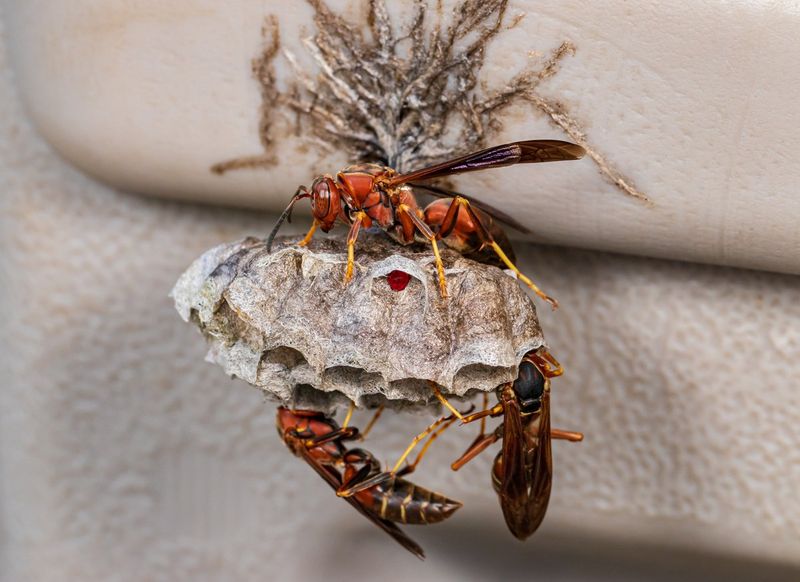
Step outside on a July afternoon in Texas and you might notice a lot more wasps buzzing around your porch than you did a month ago. That shift can feel sudden and alarming, but it usually has a straightforward explanation rooted in how wasp colonies grow and feed. Understanding what is actually happening helps you make smarter decisions about when to act and when to leave well enough alone.
Why porch wasps can seem to appear overnight
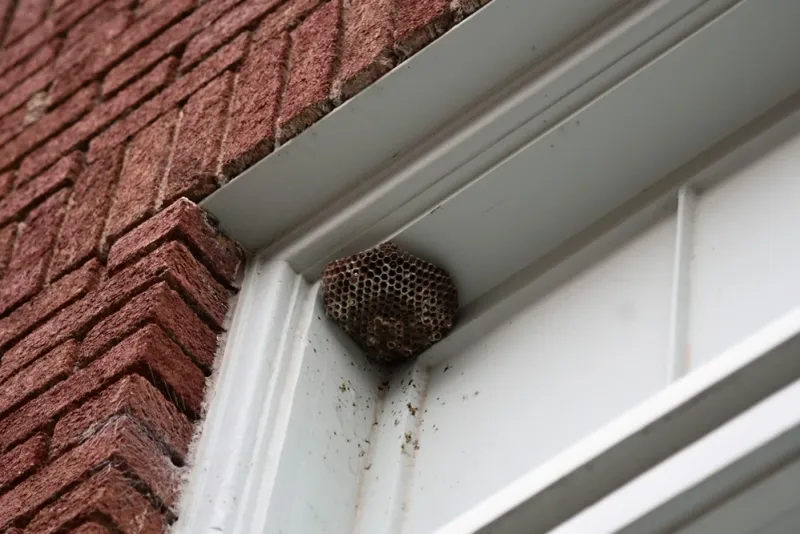
Most people assume that a sudden spike in wasp traffic means a brand-new nest just appeared, but that is rarely the full story. Social wasp colonies, including the paper wasps and yellowjackets most common on Texas porches, get their start in early spring when a single overwintered queen builds a small nest and raises the first batch of workers. By midsummer, those workers have taken over nest construction, larval feeding, and perimeter defense, so the colony that was quietly humming along in April may now have dozens or hundreds of members making constant trips in and out.
According to University of Minnesota Extension research on wasps and bees, yellowjacket activity in particular becomes especially conspicuous in late summer as colonies reach their largest annual size. The nest itself may have been attached to your eave for weeks before you noticed it. Worker numbers crossing a visual threshold, not a fresh arrival, is usually what makes the activity seem sudden.
Foraging also plays a role. Adult wasps that are not associated with your porch nest at all may visit because your yard offers caterpillars, flies, ripe fruit, or sugary drinks. As Texas A&M AgriLife Extension explains in its guide to paper wasps, yellowjackets, and solitary wasps, workers range well beyond their nest to gather protein and carbohydrates. Seeing wasps on your porch does not confirm a nest is present; it may simply mean your yard is on their foraging route.
Before concluding that nesting has begun, look for a physical nest structure with repeated entry and exit activity at a single spot.
Identify the wasp before judging the risk
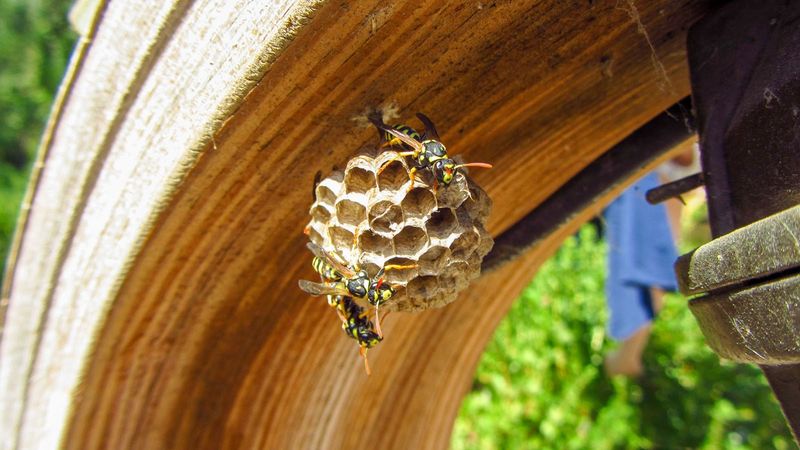
Calling every stinging insect on your porch a “wasp” is like calling every dog a Lab. The word covers several groups that behave very differently from one another, and treating them all the same way can lead to unnecessary risk or wasted effort.
Paper wasps are the most likely culprits when a nest appears under a porch eave or overhang. Their nests are open, umbrella-shaped combs made of gray papery material, with individual cells visible from below. Texas A&M AgriLife Extension’s wasp reference notes that paper wasps are generally less aggressive than yellowjackets when foraging away from the nest, though they will defend actively if the nest is disturbed. Multiple paper-wasp species are common in Texas, and colony sizes typically stay smaller than yellowjacket colonies.
Yellowjackets are stockier, often with brighter yellow-and-black banding, and they tend to nest in enclosed spaces such as ground holes, wall voids, tree cavities, or inside structural gaps. Texas A&M AgriLife Extension’s guide to venomous terrestrial animals flags yellowjackets as among the more defensive social wasps, especially when a nest is disturbed near high-traffic areas. If wasps are repeatedly emerging from a crack in the siding, a gap near the foundation, or a hole in the ground near your porch, yellowjackets are a strong candidate.
Mud daubers are a different situation entirely. These slender, often metallic-colored wasps build mud tubes or mud cells on walls, fences, and porch surfaces. University of Minnesota Extension’s guide to solitary wasps explains that mud daubers and other solitary species generally do not defend their nests the way social wasps do, making unprovoked stings uncommon. Similarly, large solitary wasps such as cicada killers can look alarming in flight but rarely sting people.
Identifying which group you are dealing with before reaching for any control product will keep the response proportionate and safe.
The porch supplies shelter and the yard supplies food
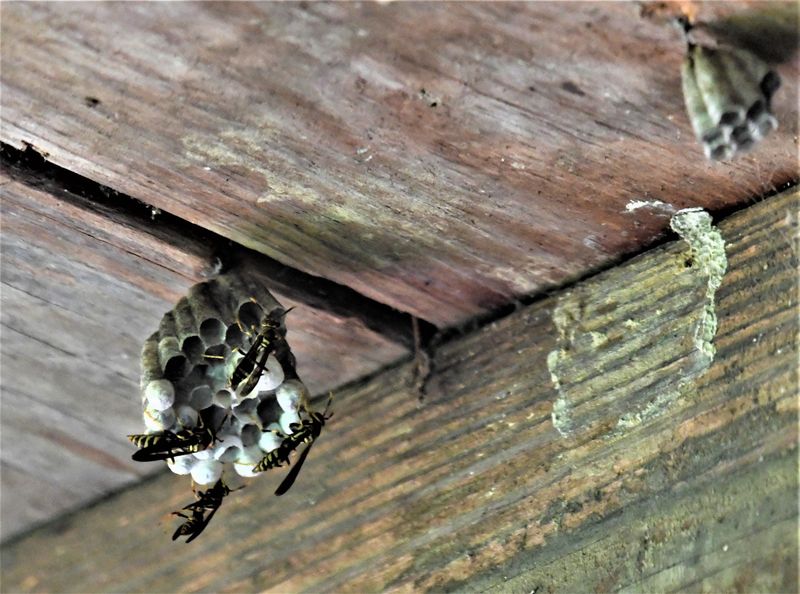
A porch is attractive to wasps for the same basic reason it is attractive to people: it keeps the sun and rain off. Overhangs, soffits, ceiling joists, light fixtures, railings, and the undersides of porch furniture all offer sheltered attachment points where a queen can start a nest and workers can expand it without the structure getting waterlogged or overheated. The porch’s appeal is mostly about physical protection, not about a flaw in your yard or a sign that something is wrong with your plants.
That said, University of Minnesota Extension points out that wasps forage widely for both protein and carbohydrates. Protein comes from caterpillars, flies, spiders, and other soft-bodied insects. Carbohydrates come from flower nectar, honeydew secreted by aphids and scale insects, ripe or rotting fruit, and human food sources such as soft drinks, juice, and grilled meat. A yard that has any of these resources near the porch in midsummer will see more wasp traffic, but that traffic does not prove a specific pest outbreak or plant disease is present.
It means the yard is producing food that wasps eat.
Water is another draw. Utah State University Extension notes that wasps need water to survive and to make the pulp they use to build paper nests, so birdbaths, dripping faucets, pet water bowls, and puddles near the porch can all attract foraging workers. Refuse left in open containers is also a reliable lure, especially for yellowjackets. None of these attractants necessarily caused the nest to form in the first place, but they can significantly increase how many wasps you see moving around the porch throughout the day.
Inspect from a safe distance
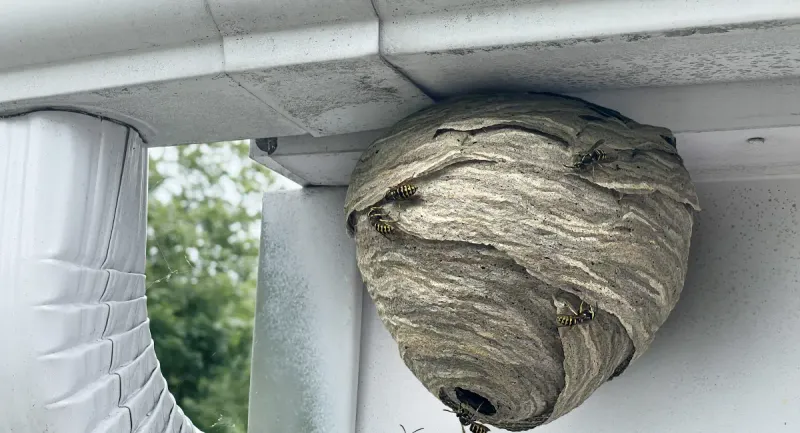
Curiosity about where the wasps are coming from is understandable, but the inspection itself needs to be done carefully. Stay at least several feet back from any suspected nest location and use natural light or a flashlight held at a distance to scan the area. Check the underside of porch ceilings, eaves, soffits, railings, and light fixtures, as well as nearby sheds, tree branches, and ground-level holes in the soil or lawn. A paper-wasp nest will look like a small upside-down umbrella of gray papery comb.
A yellowjacket nest in a wall void or ground hole will not be fully visible, but you can identify it by repeated, purposeful wasp traffic entering and exiting a single opening.
Texas A&M AgriLife Extension’s venomous animals guide cautions that social wasps defend their nests vigorously when disturbed. Watching traffic patterns from a calm, non-threatening distance is enough to locate most nests without triggering a defensive response. Once you have located a nest, resist the urge to poke it, shake it, spray it with a hose, seal the opening, or try to burn it out. Any of those actions can provoke a mass defensive response from the colony.
Ladders deserve a specific warning here. University of Minnesota Extension’s pest-prevention guidance notes that falls are a common hazard when someone climbs to reach an active nest and then has to escape stinging insects quickly. An elevated or structurally concealed nest is a job for a licensed professional, not a homeowner on a stepladder with a can of spray. Safe observation from the ground is the appropriate limit of a DIY inspection.
Leave low-risk nests alone when you can
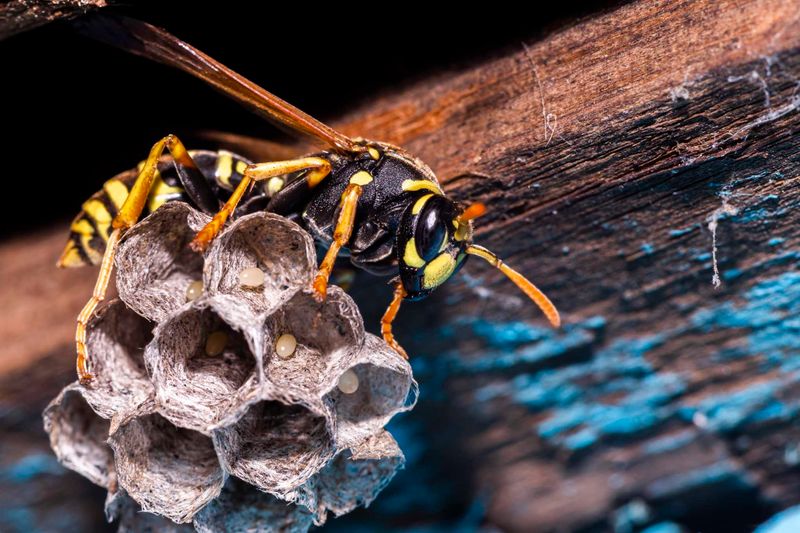
Not every wasp nest around a Texas property needs to come down. Many wasp species are active hunters that catch caterpillars, flies, aphids, and spiders to feed their larvae, which makes them useful allies in a garden. Texas Parks and Wildlife recommends conserving social bee and wasp colonies unless they create a direct stinging hazard or cause structural damage. A paper-wasp nest tucked into the corner of a back fence, a garden shed eave, or a tree branch well away from foot traffic may be doing quiet pest-control work that benefits your yard all season.
The calculus shifts when the location creates real exposure for people or pets. University of Minnesota Extension’s overview of wasps as garden allies acknowledges that a colony’s ecological value does not override the need for control when a nest sits beside a frequently used doorway, along a main walkway, near a play area or outdoor kitchen, or anywhere children and pets pass routinely. A likely yellowjacket colony, which tends to be more defensive and reaches larger colony sizes, raises the stakes further.
Households with a member who has a known serious sting allergy face a different risk threshold entirely. CDC and NIOSH guidance on stinging insects confirms that severe allergic reactions to wasp stings can be life-threatening, and a nest near regular activity is not a situation to manage by avoidance alone. Ecological benefit is real and worth weighing, but it does not make a high-risk nest harmless. The right question is not whether wasps are helpful in general but whether this particular nest, in this particular spot, creates an acceptable level of risk for the specific people and animals who use that space.
Reduce attractants without promising a wasp-proof porch
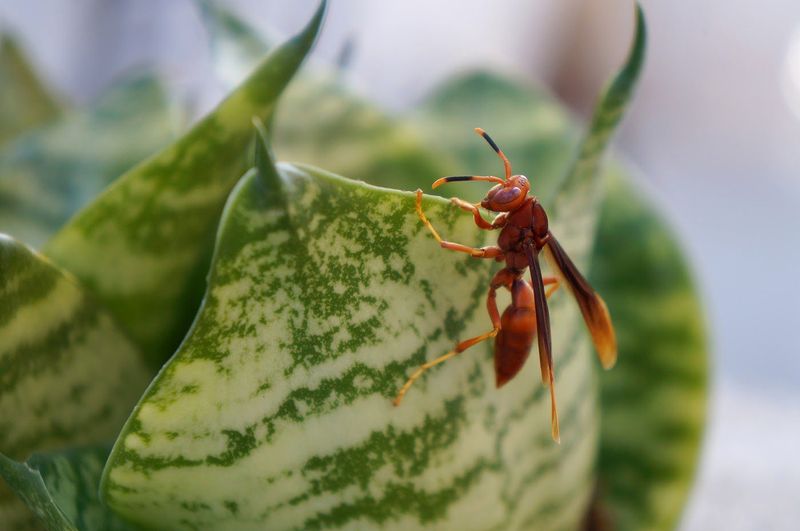
Cutting down on the food and water signals that draw foraging wasps to your porch is one of the most practical steps you can take, and it does not require any pesticides. Close trash containers tightly and keep lids secured between uses, since open bins are a reliable yellowjacket draw. Bring in or cover pet food bowls when pets are finished eating, wipe up drink spills promptly, and avoid leaving soda cans, juice glasses, or uncovered sweet foods on porch tables during peak activity hours.
Fallen or overripe fruit from trees or garden plants near the porch should be picked up regularly. The National Pesticide Information Center’s stinging-insect page lists exposed food and refuse as key factors that increase wasp activity around structures, and removing them is both free and immediate. Dripping outdoor faucets and standing water near the porch are also worth addressing, since wasps use water both to drink and to manufacture nest material.
Lure traps are an optional tool, but placement matters. Utah State University Extension recommends positioning them well away from porches, doors, patios, and other high-traffic areas, because a trap placed too close to where people gather can draw wasps toward the very space you are trying to protect. Think of these steps as reducing the signals that pull foraging wasps in your direction, not as a guarantee that your porch will stay wasp-free. A porch that still offers a sheltered attachment point may still attract a nesting queen next season regardless of how clean you keep the yard.
Use professional control for dangerous or hidden nests
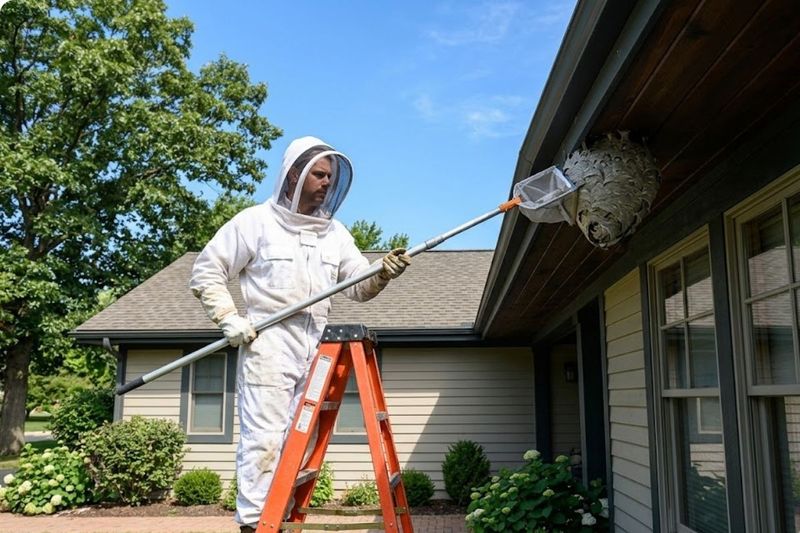
Some nest situations fall outside what a homeowner can or should handle without professional help. Any nest inside a wall void, attic, soffit cavity, or other structural space should go directly to a licensed pest-control service. Those nests can be large, hard to reach, and connected to pathways that drive wasps into living spaces if the entry is sealed without first eliminating the colony. Penn State Extension’s guide to removing stinging insects recommends professional treatment for concealed, structural, and inaccessible nests specifically because improvised attempts often make the situation worse.
Large, elevated, or high-traffic nests also warrant professional assessment. When you hire someone, the EPA’s guidance on selecting a pest control service suggests confirming that the company is licensed in Texas, asking about the products and methods they plan to use, and verifying that the technician will treat the specific species and location involved.
If you decide to use a pesticide yourself on a small, accessible, exposed nest, the legal and safety standard is strict: use only a product whose label specifically permits the wasp species, the treatment location, and the application method you intend. EPA pesticide safety guidance states that the label is a legally enforceable document, not a suggestion. Keep children, pets, food, and pollinator-attractive plants clear of the treatment area as directed, do not apply in wind or rain, and never exceed the labeled rate. Gasoline, bleach, essential oils, and other household mixtures are not registered pesticides and should never be used on a wasp nest.
For sting response: wash the site with soap and water and apply a cold pack for ordinary local pain and swelling. Call 911 immediately if you or anyone nearby experiences breathing difficulty, swelling of the face, throat, or tongue, dizziness, widespread hives, a sudden drop in blood pressure, or collapse. Texas Parks and Wildlife’s bites and stings guidance confirms that people with a known severe sting allergy should follow their prescribed epinephrine plan and seek emergency care without delay.
Read the activity as a clue, not a verdict
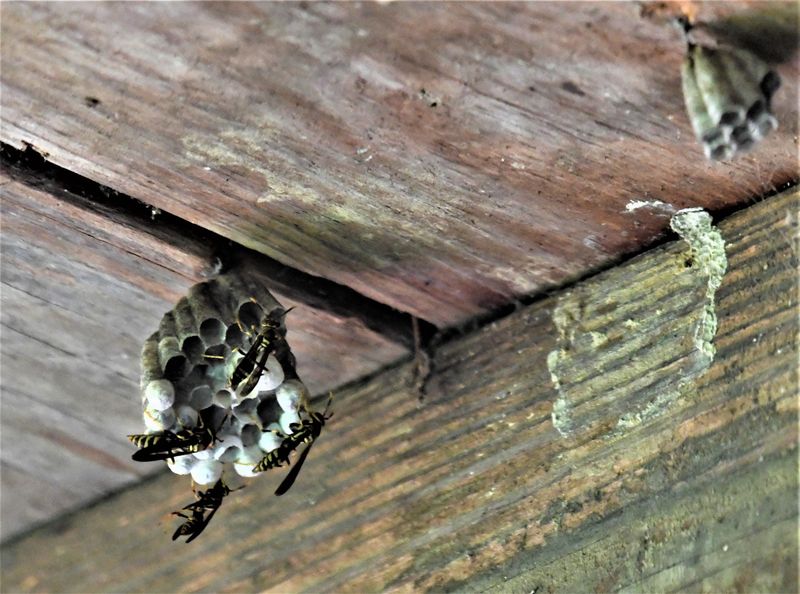
A midsummer rise in porch wasp activity most often points to one of three things: a colony that has been growing since spring and is now large enough to notice, workers foraging in a yard that offers food and water, or a nest that found a sheltered spot on your structure. University of Minnesota Extension and Texas A&M AgriLife Extension both support this reading. Increased visibility alone does not tell you the yard is unhealthy, that a specific pest infestation is underway, that the wasps just arrived, or that a hard Texas winter is on the way.
The practical sequence is straightforward: identify the wasp type, observe from a safe distance to confirm whether a nest is present, reduce avoidable food and water attractants, and then decide honestly whether the nest location creates a real hazard for the people and pets who use that space. Escalate to a licensed professional for anything hidden, structural, or out of safe reach. Texas Parks and Wildlife puts it plainly: wasps that pose no direct stinging hazard are often worth leaving alone. Most of the time, a wasp on your porch is less a warning sign than a window into how busy a healthy Texas yard actually is in summer.