
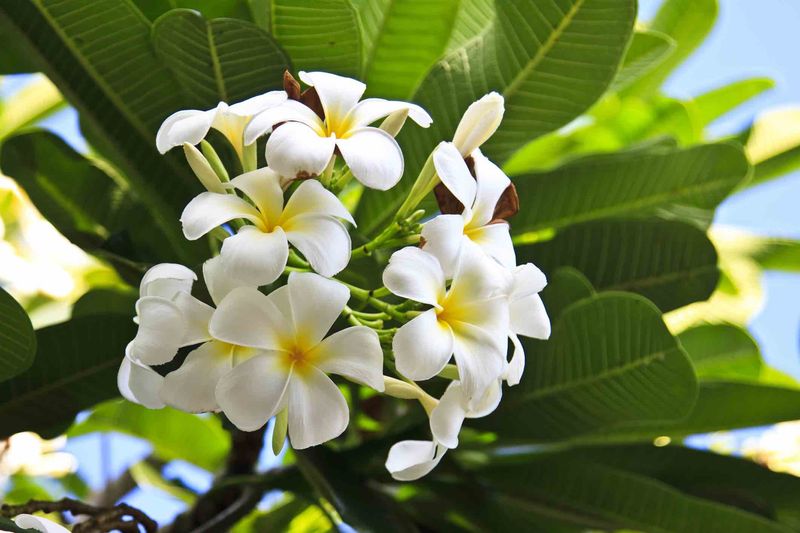
Texas summers push plumeria to its limits, but these tropical beauties are tougher than most people think. The real threats to late-summer flowers are not always the triple-digit temperatures themselves – drought stress, waterlogged roots, poor light, and a few other fixable problems are usually the bigger culprits. Getting the basics right now can support continued blooming, though no care routine can promise uninterrupted flowers through the most extreme heat. Here is what to check and adjust before the season peaks.
Support late-summer blooms without promising them
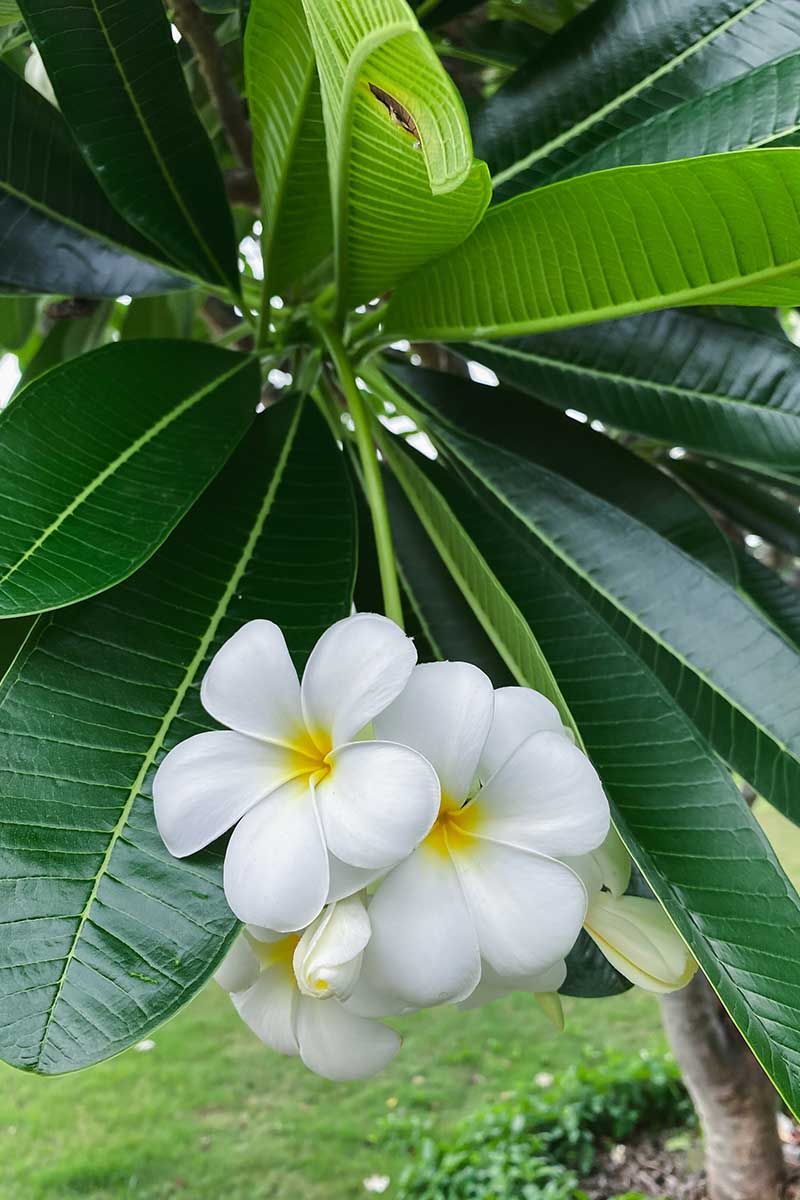
Plumeria earned its reputation as a heat-loving tropical plant for good reason. Native to warm climates, it generally handles Texas summers better than many ornamentals, and late-summer heat alone is not usually what stops a plant from flowering. The Plumeria Society of America identifies sunlight, water, and nutrients as the core requirements for summer flowering, and all three are things Texas gardeners can actually manage.
That said, appropriate care can support late-summer blooming but cannot guarantee it. A long list of factors beyond daily watering and fertilizing can shut down flower production: drought stress, saturated or damaged roots, inadequate usable light, nutrient imbalance, disease, storm injury, prior winter damage, plant maturity, cultivar characteristics, and the natural seasonal transition toward dormancy. When a plumeria stops flowering in August, any one of these – or a combination – may be responsible.
Two practical distinctions matter here. First, container plants and in-ground plants behave differently. A potted plumeria dries out faster, heats up more quickly at the root zone, and can be moved, but it also faces greater risk of root restriction and rapid moisture swings. An in-ground plant has more buffer against heat and drought but is harder to rescue if drainage is poor or roots are damaged.
Second, an established plant that has been growing in its current spot for a full season or more is not the same as one recently purchased, repotted, or moved outdoors from inside. Ellis County Master Gardeners note that plumeria grown in Texas should be treated as container plants in most of the state, with UF/IFAS placing reliable outdoor hardiness primarily in USDA Zones 10B-11, well south of most Texas gardeners. Understanding which situation your plant is in shapes every care decision that follows.
Give plumeria bright light without forcing a sunburn
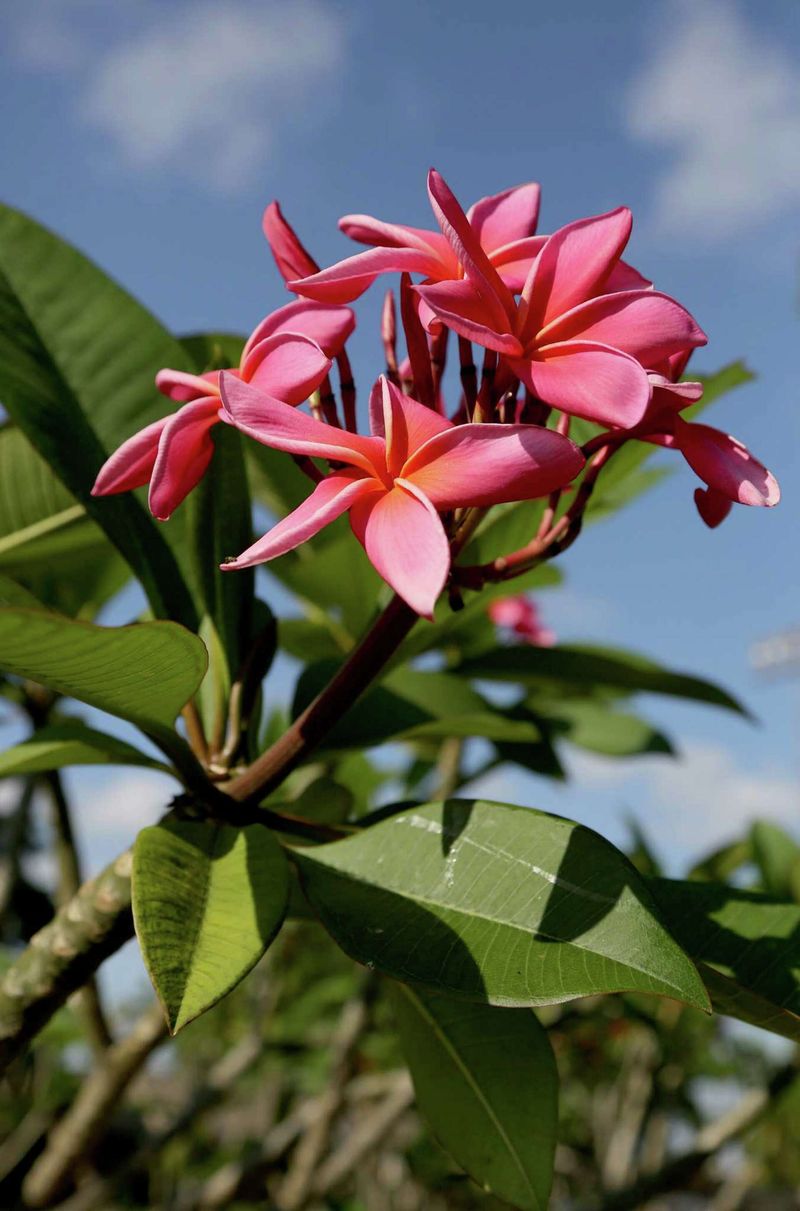
Around six to eight hours of direct or nearly direct sunlight generally supports plumeria flowering and helps reduce the risk of weak, elongated growth with sparse blooms. The Plumeria Society of America lists strong sunlight as one of the foundational requirements for summer flower production, and most established, acclimated plants in Texas can handle full sun without issue.
The complication arises with plants that have not had time to adjust. A plumeria moved from inside a home, a greenhouse, or a shaded porch directly into an open Texas patio in July is not the same as one that has spent the whole season in that spot. New Mexico State University Extension recommends increasing sun exposure gradually over roughly two weeks to reduce sunscald and leaf damage when transitioning a plant from low light to intense outdoor conditions. Skipping that window is one of the more common reasons Texas gardeners see brown, papery leaf tips or bleached patches appear quickly after moving a plant outside.
Leaf scorch does not automatically mean the plant needs permanent shade. North Texas Master Gardener guidance warns that leaves can burn under intense July and August sun, and some plants – particularly those in containers set against south- or west-facing walls – may benefit from relief during the most brutal afternoon hours. But this is a microclimate and acclimation decision, not a blanket rule for every plumeria in the state.
Before moving a plant into shade, consider the full picture. Reflected heat off walls or pavement, hot dry wind, and dry roots at the root zone can all contribute to leaf damage in ways that look identical to sun scorch. Cultivar differences also play a role; some varieties simply show more leaf sensitivity than others. Moving a well-adapted plant from full sun into deep shade to solve a scorch problem can reduce the light it needs to keep flowering, which trades one problem for another.
A modest position shift, improved watering consistency, or wind protection may address the damage without sacrificing the light that drives blooms.
Water by checking the soil, not the calendar
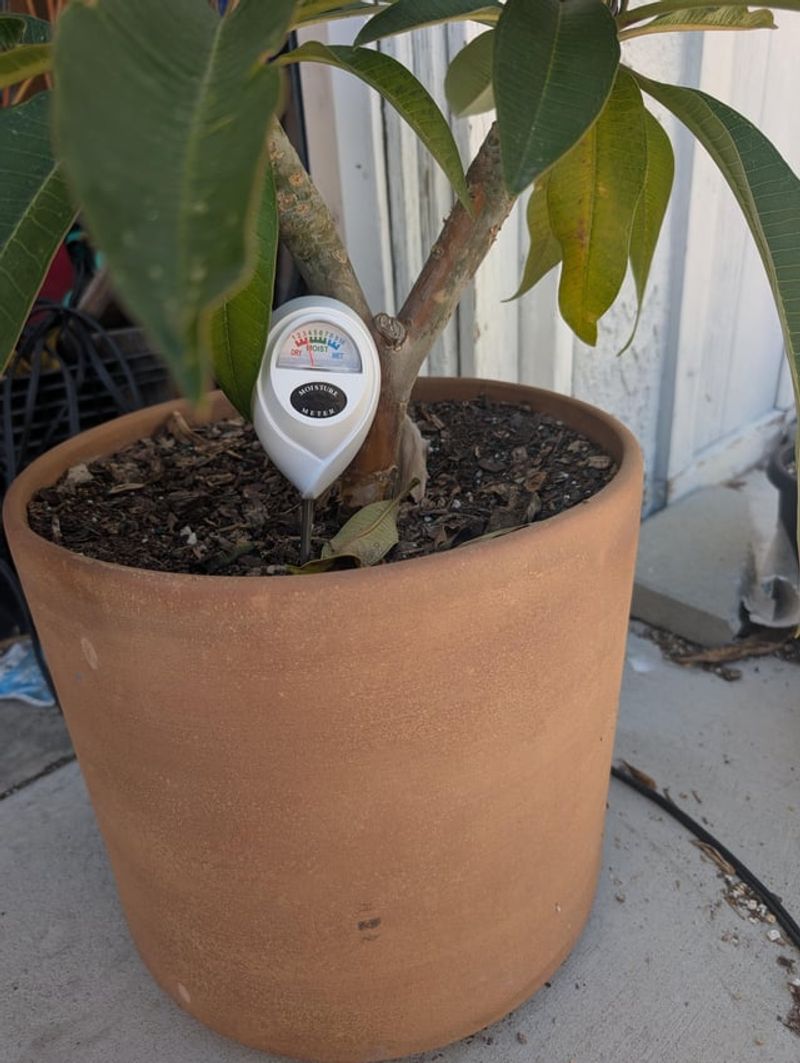
No single watering schedule works across Texas. A small terracotta pot sitting in full West Texas sun and wind can dry out completely in a day or two, while a large glazed container in a humid Houston courtyard with limited airflow may hold moisture for much longer. Prescribing a statewide “water every three days” rule would overwater one plant and underwater another. The method that actually works is physical: press your finger or a wooden dowel into the soil and check whether the top few inches have dried somewhat before watering again.
The Plumeria Society of America advises checking the top few inches of soil before watering and watering thoroughly during active growth once that layer has dried. “Thoroughly” means water until it runs freely from the drainage holes, saturating the root zone rather than just wetting the surface. What varies is how often that threshold is reached, and that depends on container size and material, the potting medium, ambient heat, wind, rainfall, plant size, and whether roots are filling the pot.
A small container with a fast-draining mix in a breezy North Texas yard during a dry stretch may need water every day or two. A large in-ground plumeria in the Houston area with heavier soil and recent rainfall may go much longer. Neither situation is wrong – they just require different attention.
Overwatering is a real risk, not just a theoretical one. Keeping the root zone constantly wet reduces the oxygen available to roots and can lead to root loss, particularly in poorly draining media. For in-ground plants, a reasonable layer of mulch – roughly two to four inches – can slow surface moisture loss and buffer shallow feeder roots from extreme surface heat during triple-digit stretches. Keep mulch pulled a few inches away from the trunk or stem so it does not hold moisture against the base of the plant, which can invite rot.
Check drainage alongside moisture and plant condition
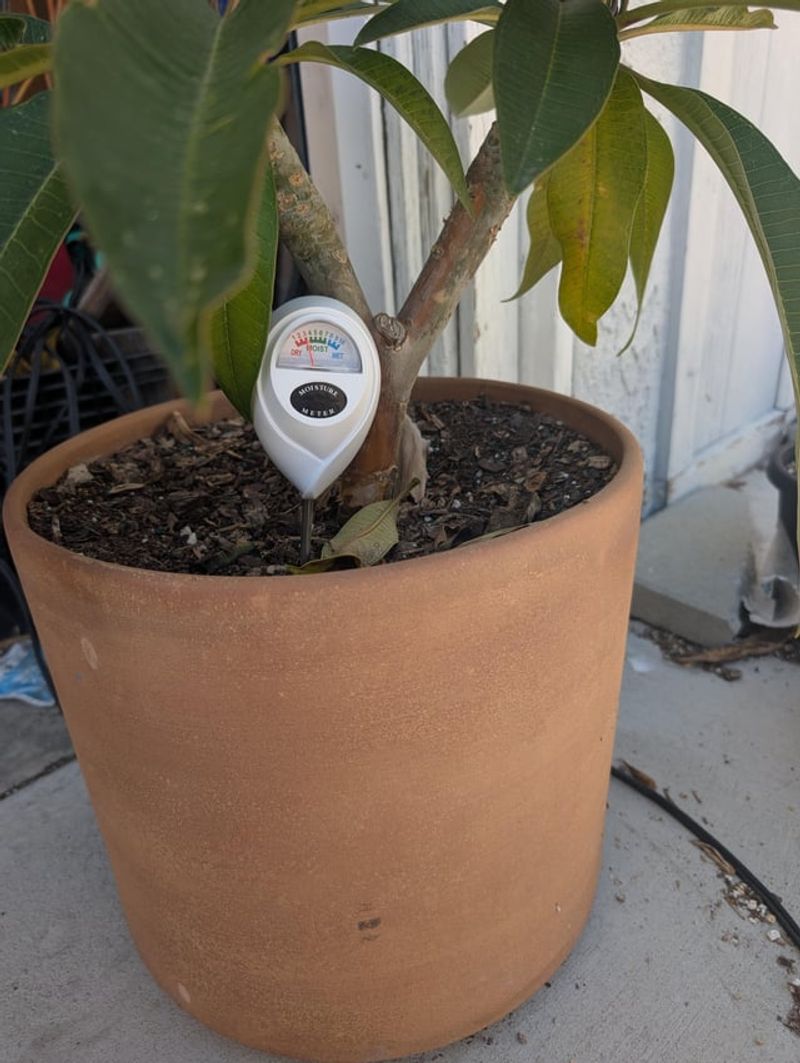
Fast drainage is one of the most important things a plumeria container can offer its roots, but drainage alone does not make overwatering impossible. A pot with clear drainage holes and a well-aerated mix can still develop root problems if it is watered too frequently, if the holes become blocked, or if it sits in a saucer that collects standing water. Think of drainage as an essential condition for root health, not a safeguard that excuses ignoring soil moisture.
Texas A&M AgriLife Extension identifies poorly drained soil and overwatering as common factors predisposing container plants to stem and root rot. A plumeria mix that drains quickly – typically one that includes coarse perlite, pumice, or bark to open up the structure – gives roots the air pockets they need between waterings. Check drainage holes periodically to confirm they are not blocked by compacted media, roots, or debris. Elevating a pot on feet or a stand can also improve airflow and drainage compared to a container sitting flat on a patio.
One of the more confusing situations in plumeria care is a wilted plant. Wilting feels like an obvious signal to water, but Iowa State University Extension explains that both underwatering and overwatering or root damage can cause drooping, because damaged roots simply cannot move water to the leaves regardless of how wet the soil is. Pouring more water onto a plant that is drooping from root rot accelerates the damage rather than fixing it.
Before increasing irrigation in response to wilting, check the soil moisture and examine the drainage situation. If the medium is already wet and the plant is still drooping, root damage is a more likely explanation than thirst. In that case, improving drainage, reducing watering frequency, and assessing whether repotting into fresh media is needed are better responses than adding water.
Feed active growth without chasing a bloom-booster formula
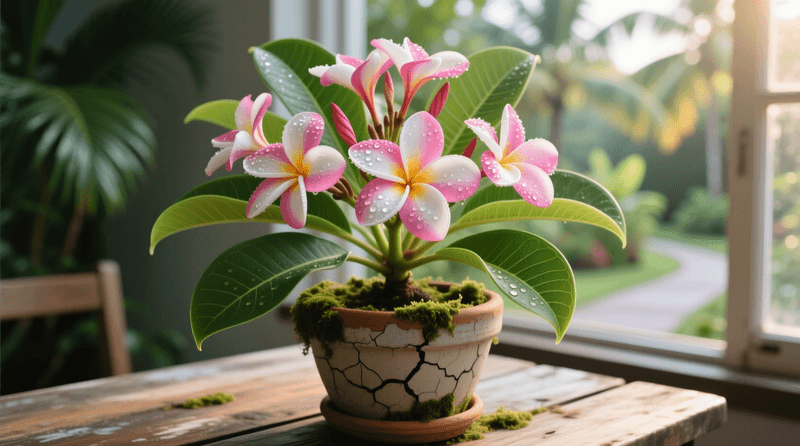
Nutrition matters for plumeria flowering, but the most important rule is simpler than any specific formula: feed only while the plant is actively growing, and follow the product label. A plumeria pushing new leaves and building stems in late summer is using nutrients and can benefit from supplemental feeding. One that is stressed, dormant, or recently transplanted is not in a position to use fertilizer effectively, and applying it anyway can damage already-compromised roots.
Nitrogen is the nutrient most likely to cause trouble when overused. Too much nitrogen tends to push leafy, vegetative growth at the expense of flowers. Most plumeria guidance, including Texas Master Gardener recommendations, points toward balanced or lower-nitrogen formulas during the growing season rather than a heavy nitrogen feed.
The phosphorus question is more complicated, and gardeners should know the disagreement exists. Older Plumeria Society guidance and some Texas extension material recommend low-nitrogen, high-phosphorus “bloom booster” products to encourage flowering. The Plumeria Society’s newer basic-care guidance, however, says plumeria do not need high phosphorus for blooming, while the older summer-care bulletin recommends it. Neither position has been settled as universal plumeria-specific science.
University fertilizer research adds a practical reason for caution. UMass Amherst guidance on flower garden fertilization warns that excess phosphorus can interfere with micronutrient availability and beneficial soil organisms, and recommends soil testing to determine whether phosphorus is actually needed before applying high-phosphorus products repeatedly. If you are unsure whether your soil or container mix is phosphorus-deficient, a soil test or advice from a local extension office is a more reliable starting point than automatically reaching for a bloom booster. The safer default is a balanced fertilizer applied at label rates during active growth, with adjustments made from there based on what the plant and soil actually show.
Protect existing flowers from unnecessary disturbance
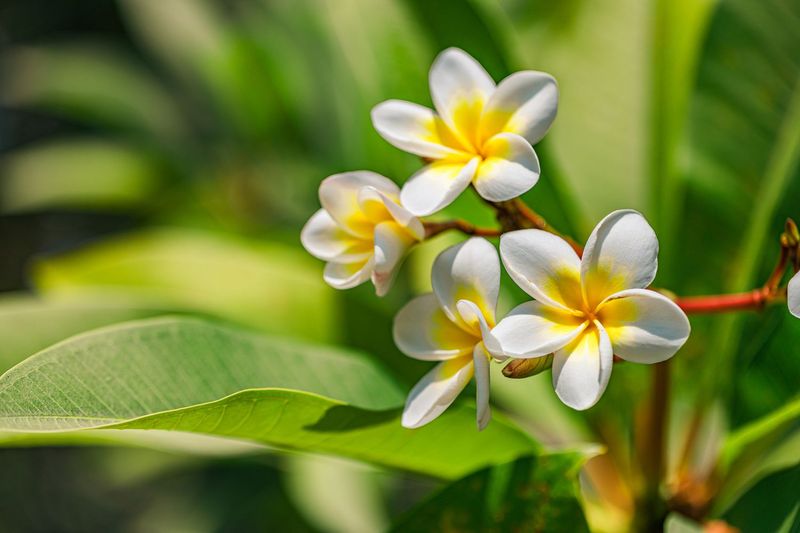
When a plumeria is actively flowering in late summer, the best pruning strategy is usually no pruning at all. University of Hawaii CTAHR guidance on pruning trees and shrubs notes that pruning timing can affect future flower development, and removing branches during peak flowering can take away material that is currently blooming or that would bloom next. Major reshaping and size management are better saved for the dormant or pre-growth window, not a week when the plant is carrying open flowers.
Minor dead-leaf removal or the cleanup of clearly diseased material is a different matter and can proceed with care. But avoid the impulse to cut back a plumeria that looks leggy or stressed during late summer as a way to “refresh” it. That kind of intervention during the flowering season rarely improves bloom production and frequently reduces it.
Storm and wind protection deserves attention for potted plants, especially in areas prone to afternoon thunderstorms. Penn State Extension recommends protecting plumeria from heavy wind and excessive rain during summer storms, and a top-heavy container plant can tip and snap branches in a strong gust. Moving vulnerable pots to a sheltered spot before a storm, or securing them against a wall or fence, is a straightforward precaution that preserves existing flowers and prevents physical damage to the stems.
Any time pruning or stem handling is unavoidable, wear gloves. UF/IFAS notes that plumeria sap is irritating to skin and eyes, even though the plant is not considered highly poisonous in the way some ornamentals are. Keep sap away from eyes and avoid situations where children or pets could chew on cut stems or damaged branches. A simple pair of garden gloves handles the risk without making the plant off-limits to care.
Read the leaves before changing the routine
Leaf symptoms are easy to misread, and a wrong diagnosis leads to the wrong fix. Before adjusting watering, moving the pot, or reaching for a spray bottle, spend a few minutes looking at what the leaves are actually telling you and connecting those clues to the plant’s recent history.
Sun or acclimation stress typically shows up as bleached, tan, or papery patches – often on the upper surface of leaves that received the most direct exposure. If a plant was recently moved from indoors or from a shaded location, that history combined with the symptom pattern makes acclimation stress the likely explanation. The response is gradual adjustment, not immediate relocation to deep shade. Texas Master Gardener guidance emphasizes that leaf burn under intense summer sun is a microclimate and acclimation issue, not proof that a plant fundamentally dislikes sun.
Drought stress and root damage can look similar: drooping leaves, soft or limp stems, and a generally wilted appearance. The difference lies in the soil. Iowa State University Extension points out that both underwatering and root damage from overwatering can produce wilting, because compromised roots cannot move water regardless of soil moisture. Check the medium before drawing conclusions – bone-dry soil points toward drought, while wet or soggy soil with a wilted plant above it points toward root trouble.
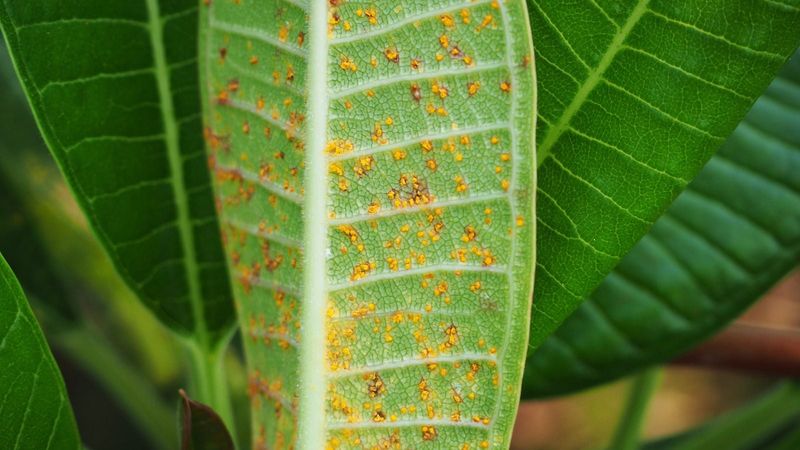
A distinct pattern to watch for is yellow-orange spots on the upper surface of leaves paired with powdery orange pustules on the underside. This combination may indicate plumeria rust, a fungal disease that can spread across a plant and reduce its vigor. UF/IFAS guidance on ornamental rusts recommends removing and disposing of infected leaves for minor home-landscape infections, rather than leaving them on the plant or on the ground where spores can spread. Fungicide is not automatically necessary for minor infections, and product registration and label requirements vary by state – consult your local extension office before applying anything.
Severe stress of any kind, whether from leaf loss due to rust, physical storm damage, or prolonged drought, can end flowering even when the rest of your care routine is solid. The Plumeria Society acknowledges that a plant under significant stress may halt flower production regardless of fertilizing or watering adjustments. Reading the leaves accurately helps you respond to the actual problem rather than adding interventions that may not help and could make things worse.
Run a late-summer check before the next watering
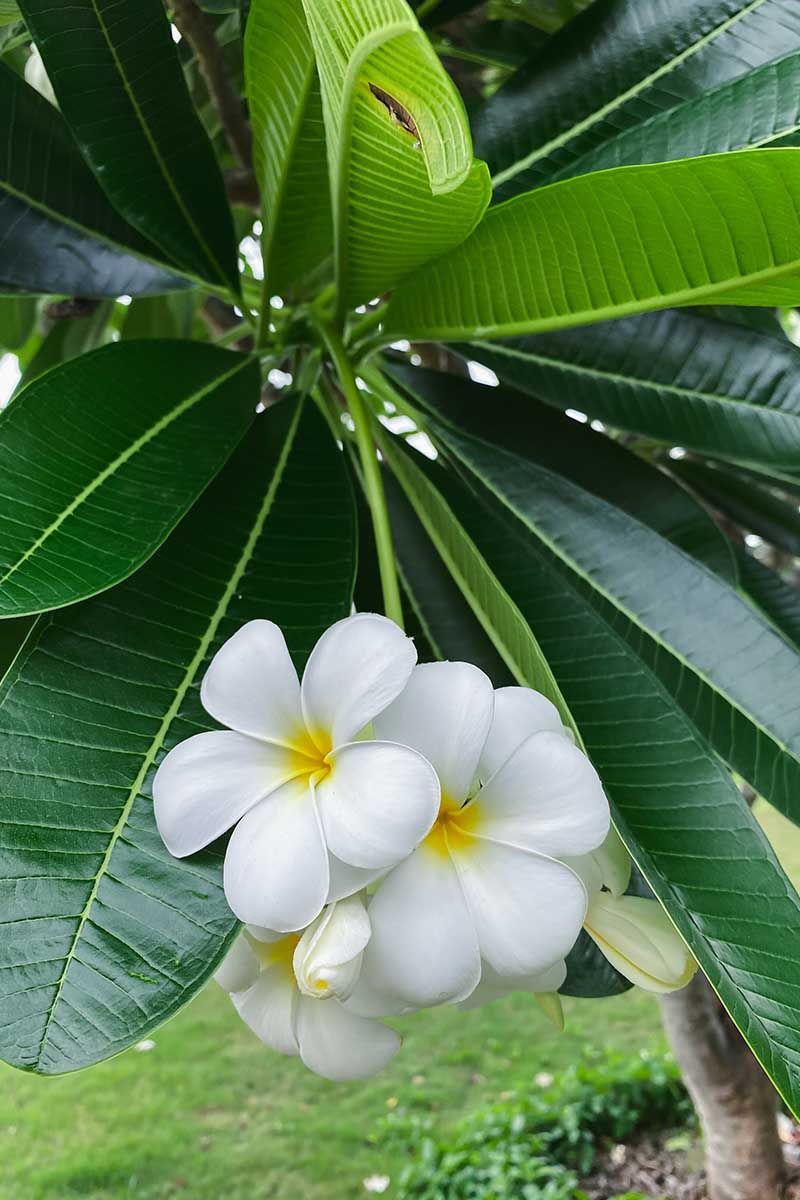
Before the next time you pick up the watering can, run through a quick sequence. Confirm the plant is receiving enough usable light – roughly six to eight hours of direct or nearly direct sun for an established, acclimated plant. Press into the top few inches of soil to check whether it has dried enough to warrant watering. The Plumeria Society recommends this soil-check approach over any fixed schedule.
After watering, watch that excess water exits the container within a reasonable time. Texas A&M AgriLife Extension links prolonged saturation to stem and root rot, so slow or blocked drainage is worth correcting promptly. Scan the leaves for persistent scorch patterns or the yellow-orange rust spots described earlier, and remove any clearly infected leaves before they shed spores. Texas Master Gardener guidance supports feeding only while the plant is actively growing and the label permits it – skip fertilizer if the plant looks stressed or has slowed its growth.
Leave flowering stems and open blooms undisturbed. The right response at any step depends on your Texas location, whether the plant is in a container or in the ground, and how recently it was moved or repotted. Good care right now tilts the odds toward more flowers – and that is a realistic, worthwhile goal even when the thermometer refuses to cooperate.