
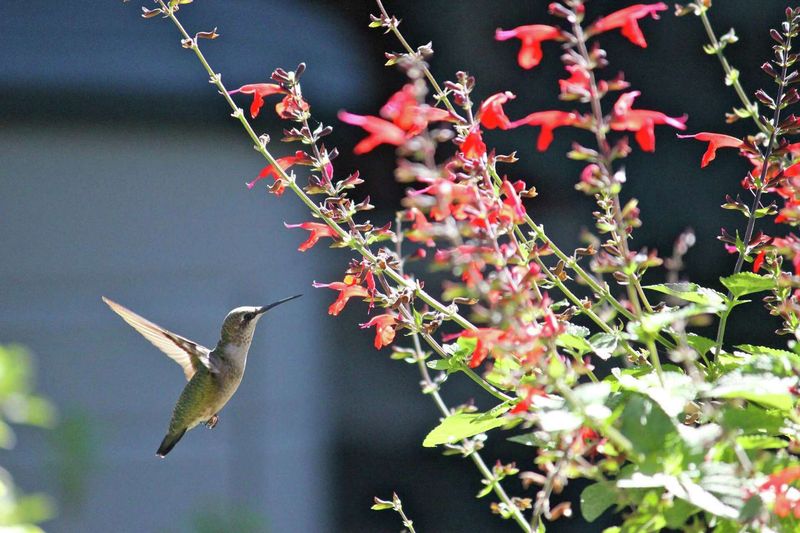
Most hummingbirds are not looking for a feeder when they pass through your yard. They are looking for a place with real food, cover, and enough resources to make a stop worthwhile. Autumn sage (Salvia greggii) has earned a reputation as one of the stronger nectar plants for Central, South, and West Texas gardens, and understanding what it can and cannot do is the difference between a yard hummingbirds pass through and one they return to all season long.
Autumn sage can anchor a regional hummingbird garden
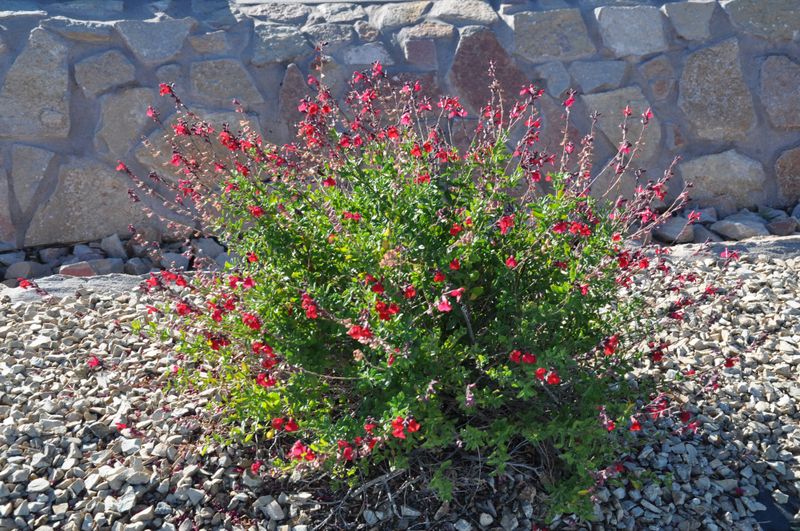
Salvia greggii, commonly called autumn sage, is a perennial shrub native to parts of south-central and West Texas and adjacent Mexico. Texas Parks and Wildlife lists it among recommended hummingbird plants, describing its flowers as abundant and especially attractive to hummingbirds, with usefulness extending well into the hot summer when many other flowering plants have already declined. TPWD hummingbird planting guidance treats autumn sage as a reliable nectar source for suitable Texas yards, which makes it a credible anchor plant for a regional hummingbird garden.
That phrase “anchor plant” matters. An anchor gives the garden a dependable nectar hub during its best flowering periods, not a guarantee that hummingbirds will arrive, stay, or nest because of one shrub. Hummingbirds visit plants that offer accessible, energy-rich nectar, and autumn sage delivers that in a form well-matched to a hummingbird’s bill. The tubular red flowers common to many Salvia greggii cultivars are shaped in a way that suits the long bills and hovering flight of visiting hummingbirds.
What the plant cannot do is replace complete habitat. A hummingbird needs insects and spiders for protein, shelter for resting and nesting, clean water, and enough overlapping nectar sources to sustain it across weeks of changing conditions. Autumn sage covers the nectar part of that equation well when conditions suit it. Horticultural references confirm its drought tolerance, heat tolerance, and attractiveness to hummingbirds, while also noting that performance depends on site conditions including drainage, sun exposure, and water during establishment.
Calling it a credible nectar anchor for suitable Central, South, and West Texas yards is accurate. Calling it the one plant hummingbirds treat like home all season overstates what any single plant can provide.
A long bloom season is possible, not guaranteed
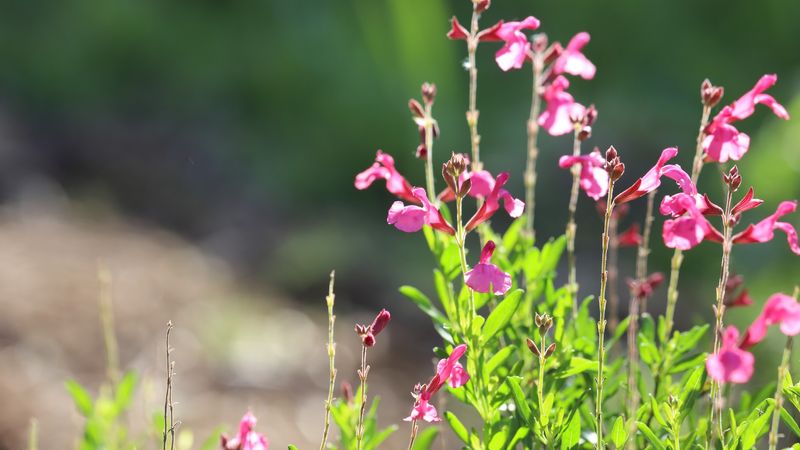
One of autumn sage’s most appealing traits is its potential to flower across a long portion of the year. A TPWD regional guide for the Hill Country and South Texas lists flowering from approximately April through December under suitable conditions, which is a remarkable window for any Texas perennial. That range, however, reflects favorable circumstances in a specific regional context, not a promise that every plant in every yard will flower continuously from spring into winter.
Other horticultural sources describe a more variable window. Missouri Botanical Garden’s plant profile notes that flowering can slow or become sporadic during intense summer heat, with stronger flushes typically appearing in spring and again in fall when temperatures moderate. This pattern is common across Texas: a plant that looks spectacular in April and October may produce only scattered blooms during the peak of a triple-digit July.
Several factors shape how long and how heavily autumn sage flowers in any given yard. Cultivar selection plays a role, since some selections are more heat-tolerant or more cold-hardy than others. Soil drainage directly affects plant health, and a waterlogged root system will reduce vigor and bloom output. Frost can cut flowering short in northern parts of the state, and an unusually early cold snap can end the season well before December.
Supplemental water during extended dry spells also helps maintain bloom, even on an established plant that is otherwise drought-tolerant. Expect a long season in a well-suited site, but plan the rest of the garden around the realistic possibility that bloom intensity will vary across the year rather than remain constant.
Match the plant to the Texas ecoregion
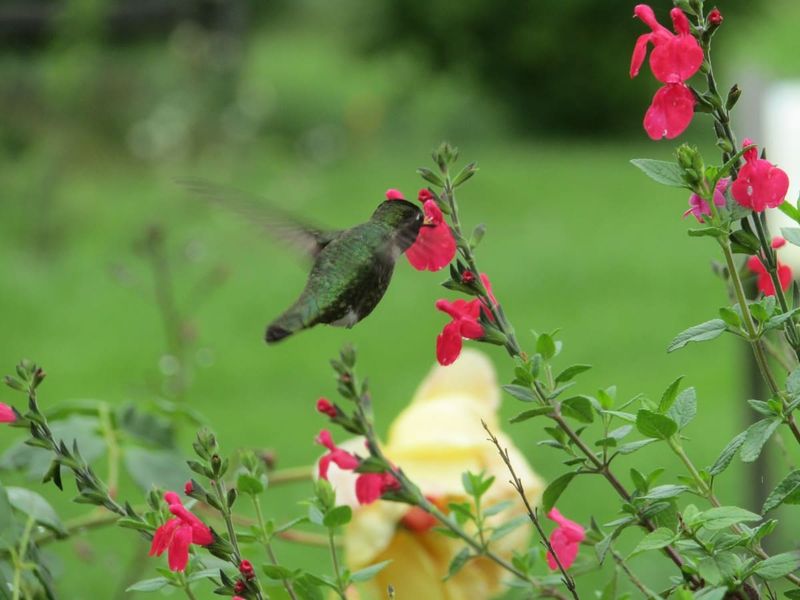
Autumn sage is not equally at home across all of Texas. Its native range centers on south-central and West Texas and adjacent Mexico, particularly rocky slopes and limestone-based terrain. That origin tells you a great deal about where it will thrive and where it will struggle. The North Carolina Extension Gardener Plant Toolbox confirms that Salvia greggii grows best in full sun with sharply drained soil, and that it is poorly suited to persistently wet or heavy clay conditions.
For gardeners in the Hill Country, San Antonio area, and West Texas, autumn sage is often a natural fit. Rocky or limestone-compatible soil, low humidity, and long sunny days match the plant’s native conditions well. In those settings, plant in full sun for best flowering. In areas where afternoon temperatures regularly exceed 105 degrees Fahrenheit, some afternoon shade can reduce heat stress and help maintain bloom through the worst of summer, though full sun remains the baseline recommendation for most sites.
Gardeners outside this core zone need to think carefully before assuming autumn sage is the right anchor plant. East Texas gardeners deal with heavier, more acidic soils and higher humidity, both of which can promote root problems in a plant that prefers sharp drainage. Gulf Coast yards face similar drainage challenges along with salt air. North Texas gardeners should check cold-hardiness for their specific cultivar, since winter injury is possible in exposed sites.
The Trans-Pecos presents its own set of conditions. TPWD ecoregional wildscapes guidance exists for regions across the state precisely because Texas is not one gardening climate, and a plant that thrives in Kerrville may perform poorly in Beaumont or Amarillo. Use autumn sage where the site genuinely suits it, and look to locally adapted alternatives when it does not.
Build overlapping blooms around the anchor
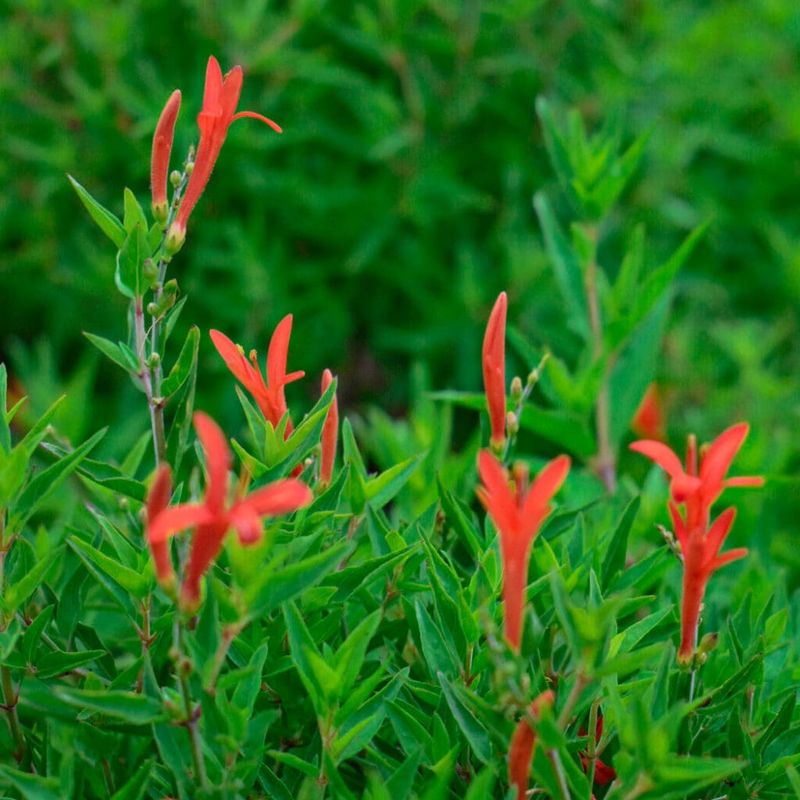
A single plant, no matter how productive, cannot carry a hummingbird garden through every week of the season. The practical solution is to treat autumn sage as a starting point and build a sequence of plants around it whose bloom periods overlap and fill in the gaps. Texas Parks and Wildlife recommends selecting plants that keep something in flower for as long as possible, because hummingbirds need reliable nectar across their full time in the region, not just during a plant’s peak flush.
The TPWD Texas Hummingbird Roundup final report recorded which plants hummingbirds used across observation sites, with Salvia species ranking first among the plants listed by volunteers. That finding supports autumn sage as a frequently visited plant, but the report’s authors noted a significant limitation: observers did not measure how many of each plant type were available at their sites. Frequent use does not equal a controlled preference test, and the data should not be read as proof that autumn sage is uniquely superior to other options.
Several other Texas natives deserve a place in the same garden. Flame acanthus blooms through summer heat with minimal water. Coral honeysuckle offers early-season color on a vine. Turk’s cap tolerates part shade and flowers through fall.
Red yucca sends up tall spikes that hummingbirds visit reliably. Desert willow and trumpet vine add structure and additional bloom periods. Native lantana covers gaps in warmer months. None of these plants should be treated as inferior to autumn sage; they serve overlapping roles in a layered planting that gives hummingbirds a reason to stay rather than just pass through.
Choose two or three companions that suit your specific ecoregion and soil, and plan them so something is always in flower from early spring through the first hard frost.
Add insects, shelter, and perches
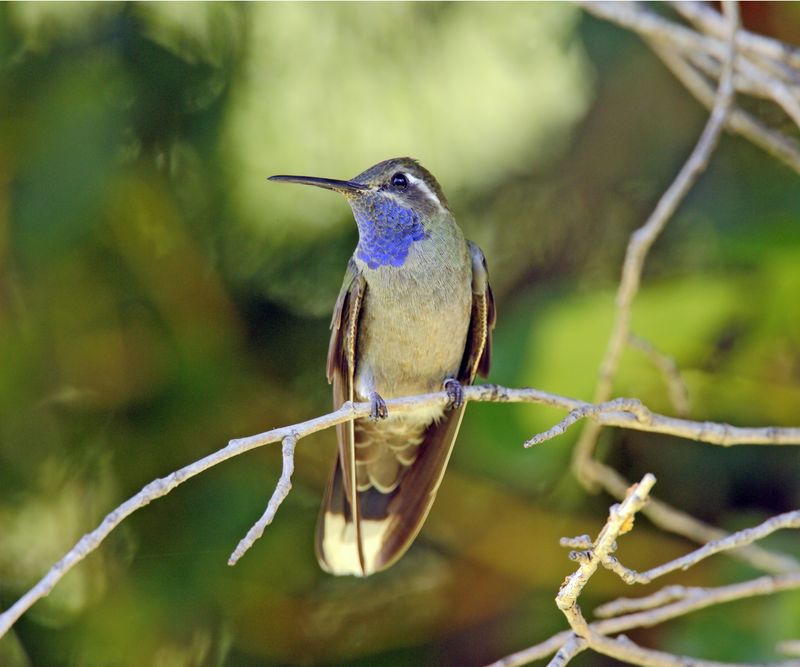
Nectar fuels a hummingbird’s flight, but it does not build a body. Protein does, and hummingbirds get most of their protein from insects and spiders. During nesting and chick-rearing, that protein source becomes critical. A yard that offers abundant flowers but has been heavily treated with pesticides may attract fewer hummingbirds than a yard with fewer blooms and a healthy insect population, because the birds are reading the whole habitat, not just the nectar supply.
Minimizing unnecessary pesticide use around your hummingbird planting is one of the most practical steps you can take. Audubon’s hummingbird habitat guidance specifically flags pesticide reduction as part of a bird-friendly yard strategy, because spraying for garden pests also removes the small arthropods hummingbirds catch in mid-air or glean from leaf surfaces and spider webs. Native plants tend to support more diverse insect communities than many non-native ornamentals, which is one of the practical reasons to favor them in a habitat planting, though the benefit is in ecological support rather than a guaranteed nectar advantage over every exotic cultivar.
TPWD’s Hummingbird Roundup guidance describes an open flight area surrounded by roughly five to fifteen feet of trees and brush as an appropriate garden structure for attracting hummingbirds. That surrounding layer of shrubs and small trees serves multiple functions. It provides resting perches between feeding bouts, cover from predators, and potential nesting sites for species that build nests on small branches with nearby food sources. Autumn sage itself is a nectar source, not a nesting structure; the nesting component depends on the woody plants around it.
TPWD’s habitat resources page reinforces that shelter and perches are distinct needs from nectar and should be planned as separate elements of the garden, not assumed to come automatically from one flowering shrub.
Offer shallow water instead of a deep bath
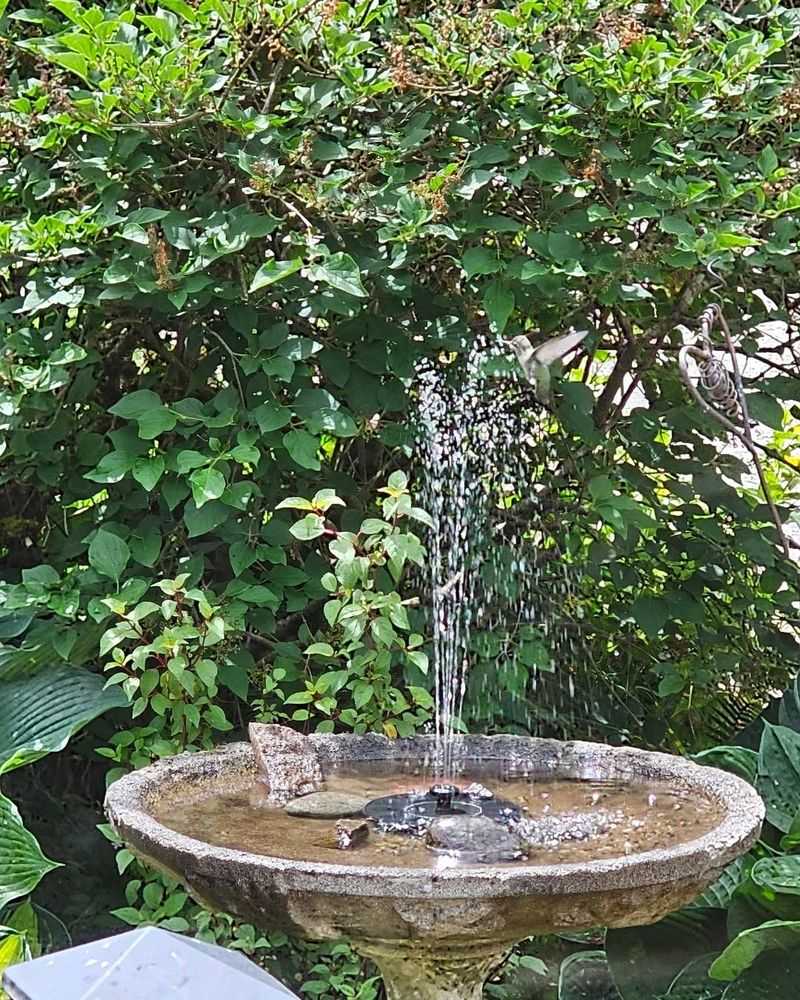
Water is the element most gardeners forget when planning a hummingbird yard. Hummingbirds do use water, but their relationship with it looks different from most backyard birds. TPWD’s nongame wildlife FAQ notes that hummingbirds have weak feet and are not well-suited to the deep water of a conventional birdbath. They prefer to bathe and drink from very shallow water, droplets on leaves, or moving water sources like misters and drippers.
A misting device attached to a garden hose or a shallow tray with no more than an inch of water works far better than a standard pedestal bath. Moving water is especially attractive because hummingbirds can detect it by sight and sound. Placing the water source near your autumn sage planting and close to cover gives the birds a place to drink, bathe quickly, and retreat to a nearby branch, completing the loop between nectar, water, and shelter in a compact garden space.
Keeping the water fresh matters as much as the design. Stagnant water in Texas heat becomes a mosquito breeding site and can harbor bacteria. Change the water in any shallow tray daily, and rinse the surface before refilling. A solar-powered dripper or mister solves the maintenance problem partly by keeping water moving, which resists stagnation and makes the feature more attractive to hummingbirds at the same time.
Adding water to the garden does not guarantee hummingbird visits, but its absence is a real gap in habitat quality, and filling that gap costs very little compared to the planting investment already in the ground.
Use feeders safely when flowers fall short
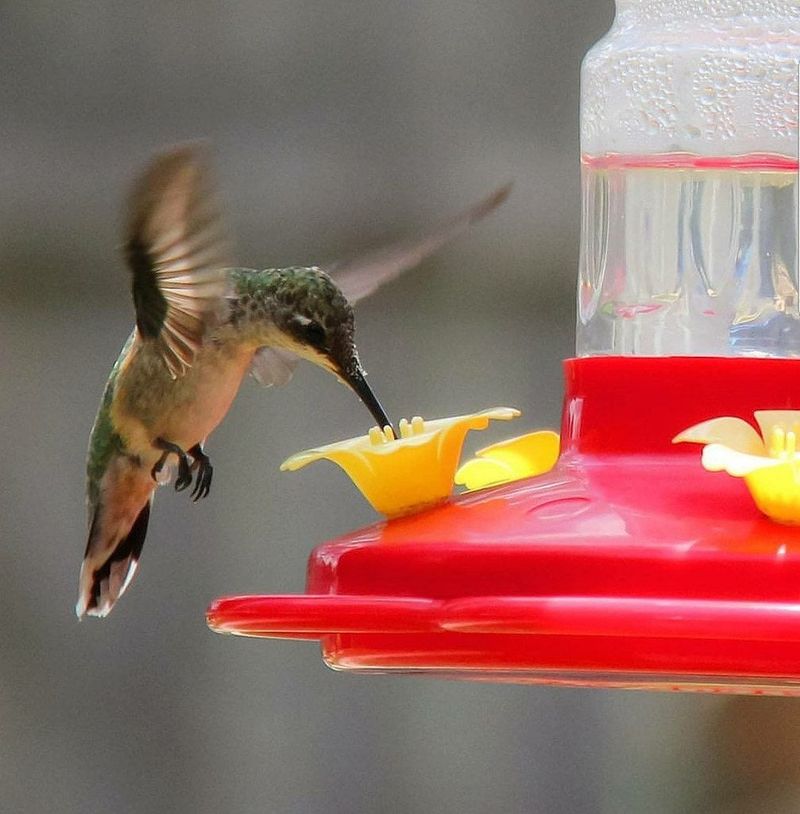
Sugar-water feeders have a real place in a hummingbird-friendly yard, but that place is supporting role rather than centerpiece. During spring and fall migration, when hummingbird numbers peak and flowers may not be keeping up with demand, a clean feeder provides reliable calories that help birds fuel long flights. During a mid-summer bloom slump, when heat has pushed autumn sage into a lighter flowering phase, a feeder can bridge the gap until the plant rebounds in cooler weather.
The recipe is straightforward and should not be varied. Audubon’s hummingbird feeding guidance specifies a 1:4 ratio of refined white granulated sugar to plain water, boiled to dissolve the sugar and then cooled before filling the feeder. Honey ferments quickly and can cause a fatal fungal infection in hummingbirds. Artificial sweeteners provide no calories and offer no nutritional value.
Brown sugar, molasses, and raw sugar contain compounds that hummingbirds cannot process safely. Red food dye is unnecessary because the red parts of the feeder itself attract the birds, and the safety of added dye has not been established for wildlife.
Cleaning frequency is where most feeders become a hazard rather than a help. In Texas summer heat, sugar water can ferment or grow mold within a day or two. Clean the feeder thoroughly every two days in hot weather, or daily if the solution appears cloudy or develops any off smell. Use hot water and a bottle brush; avoid soap residue, which can deter birds.
A feeder that is rarely cleaned does more harm than good, so be honest about your maintenance capacity before hanging one. A well-maintained feeder near a planting of autumn sage and companion plants gives hummingbirds both reliable nutrition and the habitat context that makes a yard worth returning to.
Start with autumn sage, then build the habitat
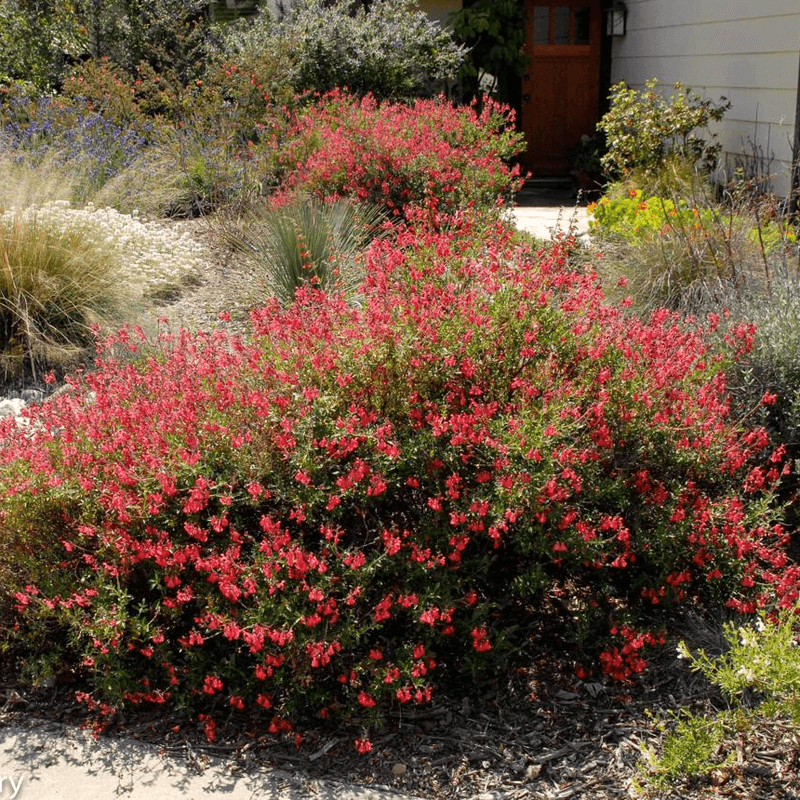
Autumn sage earns its reputation as a nectar anchor for suitable Central, South, and West Texas yards. When the site matches its needs, it can produce abundant flowers across a long portion of the growing season and provide a dependable nectar source during the months when hummingbirds are most active in the region. Its documented heat and drought tolerance, combined with hummingbird-friendly flower shape, make it a sensible starting point for a habitat planting.
Starting point, though, is the key phrase. Regional fit, soil drainage, establishment watering, bloom variation, companion plants with overlapping seasons, a healthy insect population, shrub cover, perches, shallow water, and a clean feeder when flowers fall short are what actually create the habitat. TPWD’s habitat resources treat all of these as connected parts of the same system, not optional additions to a single-plant solution. If your ecoregion or soil makes autumn sage a poor match, choose a regionally appropriate Texas native from the alternatives TPWD recommends and build the same layered habitat around that plant instead.
Hummingbirds are practical visitors. They return to yards that consistently offer what they need, and autumn sage is one well-supported piece of that picture for the right Texas site. The best hummingbird garden is not built around one perfect plant; it is built around an honest understanding of what your specific yard can provide.