
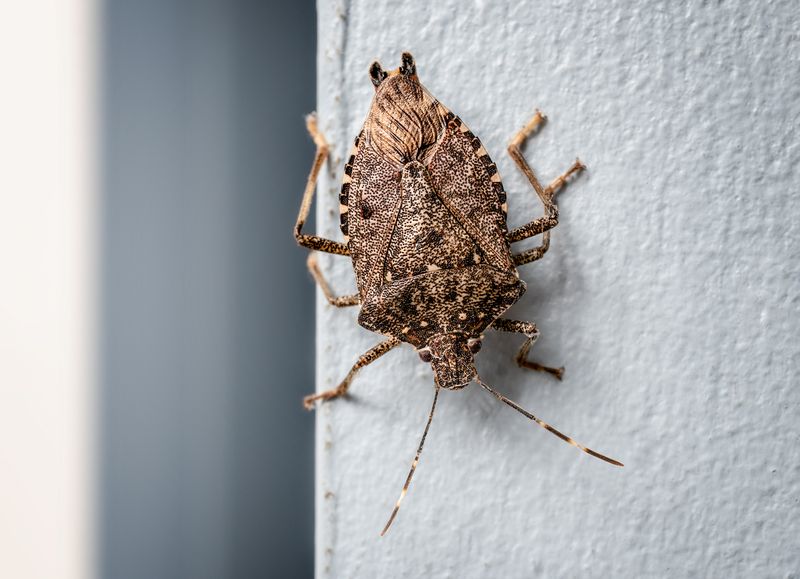
Spotting a stink bug on your curtain can send your mind racing toward worst-case scenarios, but the reality is usually more manageable than the smell. North Carolina homeowners deal with several stink bug species, and figuring out which one just walked across your window frame matters more than most people realize. One bug is a clue worth paying attention to, not automatic proof that hundreds more are hiding in your walls.
One bug is a clue, not a count
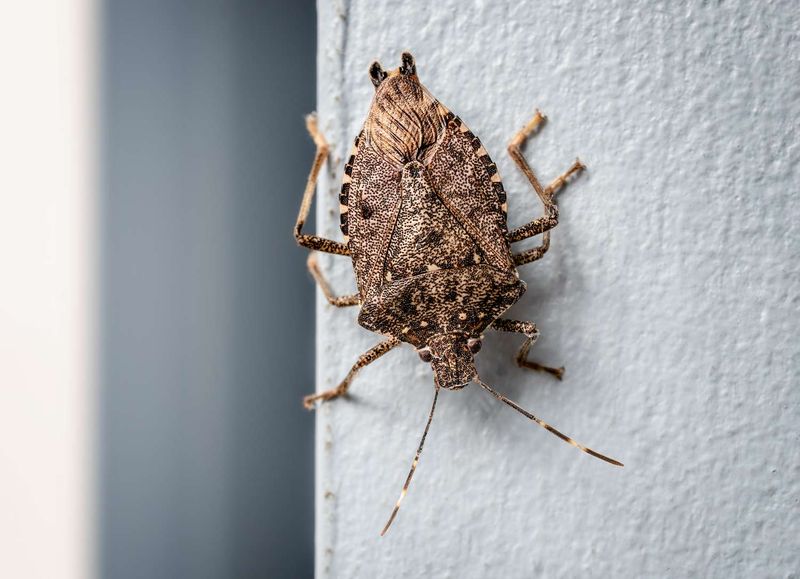
Finding a stink bug on your curtain is the kind of moment that makes you wonder what else is in the house. The instinct to assume dozens more are hiding nearby is understandable, but one insect is evidence of one insect. What it can tell you is that something nearby may have given it a way in, or that outdoor stink bug activity around your home is picking up.
The question becomes more pointed when the insect turns out to be the brown marmorated stink bug, known by its scientific name Halyomorpha halys. This invasive species, originally from Asia, is well established across much of North Carolina and has a documented habit of seeking sheltered spots inside buildings. NC State Extension’s profile of the brown marmorated stink bug notes that adults look for protected overwintering sites in structures, gathering in attics, wall voids, and spaces near windows and doors. A curtain near a drafty window frame fits that description, though a bug resting there could just as easily have wandered in moments ago rather than settled in for weeks.
Severe indoor aggregations do happen. USDA research on stink bug behavior in structures documented more than 20,000 brown marmorated stink bugs found in a single home over a three-month period, which shows that large indoor gatherings are possible under the right conditions. That example belongs at the far end of the spectrum, though, not as a prediction for what one sighting usually means.
Treat the curtain bug as a prompt to look around, not a verdict about what is already happening inside your home. The next few sections will help you figure out what species you are actually dealing with, what time of year tells you, and what the bug’s location might say about how it got there.
The insect’s identity changes the meaning
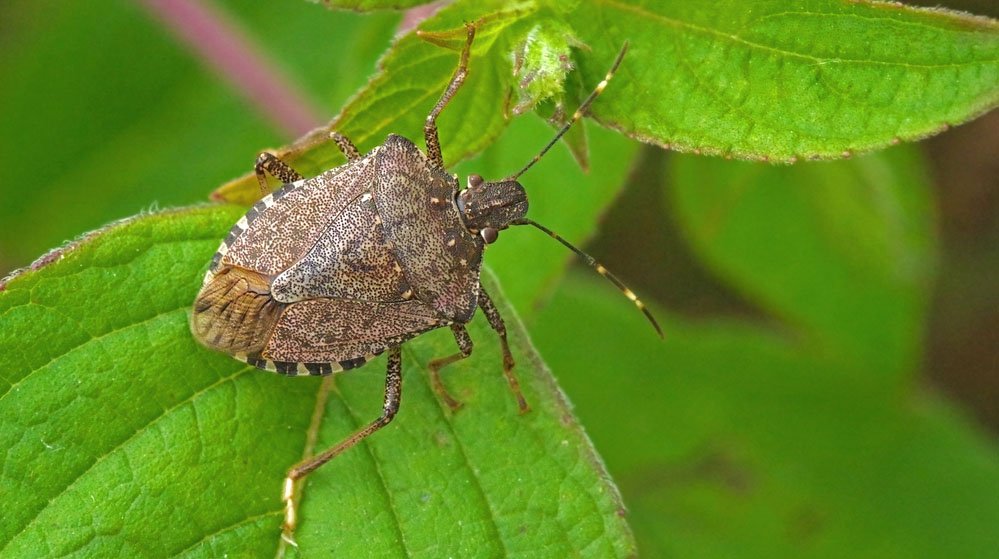
Not every shield-shaped brown bug crossing your windowsill is an invasive species. North Carolina is home to several native stink bug species, including the brown stink bug, the southern green stink bug, and the green stink bug, all of which can look similar enough to cause confusion at a quick glance. Assuming the worst without confirming the identity of the insect can lead to a response that does not match the actual situation.
The brown marmorated stink bug has a few reliable field marks that separate it from native lookalikes. Look for alternating light and dark bands on the last two antennal segments, smooth shoulders rather than the pointed ones seen on some native species, and alternating dark and light banding along the edges of the abdomen. NC State Extension’s stink bug FAQ describes these identification features and recommends confirming the species before taking action. A clear photo taken with a phone camera held steady is usually enough to compare against reference images online or to share with your local Cooperative Extension office.
Where you live in the state adds another layer of context. BMSB is more firmly established in the North Carolina mountains and Piedmont, where population numbers have been higher and homeowner reports more frequent. NC State has noted that high numbers have not been seen across much of the coastal plain, though the insect has been confirmed in 80 of the state’s 100 counties as of early 2026. A homeowner in Asheville or Greensboro has more reason to suspect BMSB than someone in Wilmington or New Bern, though neither should assume without checking.
Native stink bugs found indoors are generally less associated with large indoor aggregations and overwintering behavior in structures. NC State’s soybean insect management guide distinguishes among stink bug species in the state, a reminder that the group is ecologically diverse. Confirming the species first keeps your response proportionate to what you are actually facing.
Late summer is when the warning becomes more meaningful
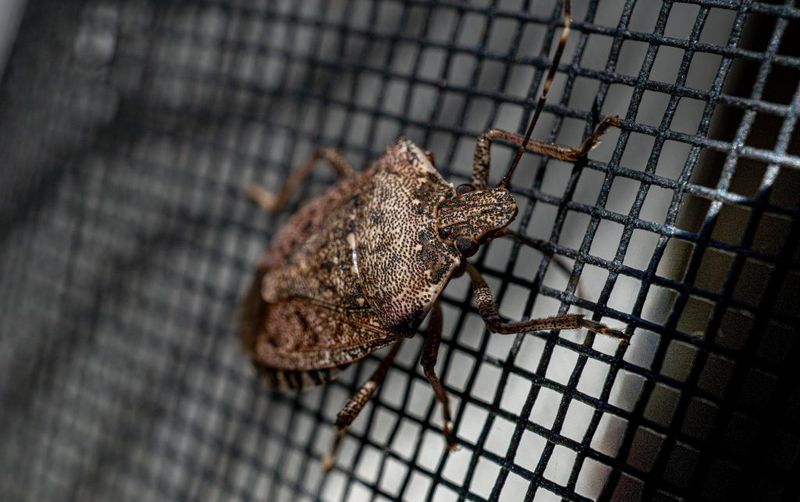
A stink bug sighting in July carries a different weight than one in September. Understanding why requires a quick look at how brown marmorated stink bugs spend their year. Through most of the summer, adults are outdoors, feeding on fruits, vegetables, and ornamental plants, and mating. The population is active, but it is largely focused on the landscape rather than your living room.
That changes as the season shifts. NC State Extension’s overview of BMSB in North Carolina identifies late summer and fall as the period when adults begin moving toward buildings in search of protected overwintering sites. September and October are specifically noted as important movement months. Adults are not breeding inside the home during this time; they are looking for a place to wait out the cold in a kind of dormancy, sometimes called diapause.
A single bug found indoors in early July might simply be a wanderer that slipped through an open door or an unscreened vent. That possibility is real and worth considering before drawing conclusions. The same sighting in late August or September, especially if it is followed by a second or third bug over the next few days, carries more weight. NC State’s detailed BMSB resource reinforces that the strongest indoor entry pressure builds in the fall rather than peaking during midsummer.
The practical takeaway is that summer is the best time to prepare, not panic. Inspecting and sealing entry points while the weather is warm gives you a head start before the fall movement begins in earnest. Finding one bug in July is a reasonable prompt to check your window screens and door sweeps now, so that the late-summer push finds fewer ways in.
What the bug may be signaling about the house
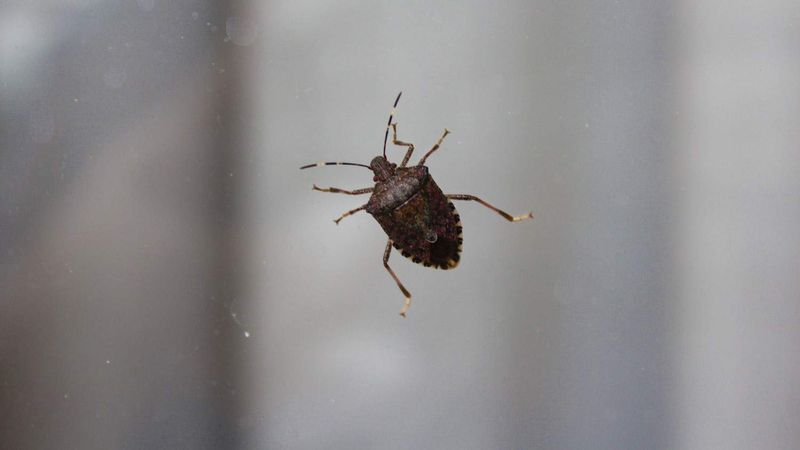
A stink bug that turns up inside has to have come from somewhere, and tracing that route is more useful than wondering how many relatives it brought along. Brown marmorated stink bugs are small enough to squeeze through surprisingly narrow gaps, and most homes offer plenty of options. Common entry points include cracks around window and door frames, gaps where utility pipes or cables pass through siding, unscreened attic louvers, damaged or missing crawl-space screens, and spaces around chimneys or roof vents.
NC State Extension’s FAQ on BMSB specifically calls out windows, doors, siding, utility penetrations, vents, and crawl-space openings as the places to check first. Once inside, adults tend to move toward sheltered, dark spots where temperature stays relatively stable. Attics and wall voids are common resting places, but so are spaces behind curtains, inside window treatments, and along the interior trim near exterior walls.
A bug on a curtain is suggestive rather than diagnostic. It could mean the insect entered through the window nearby, or it could mean the curtain simply offered a convenient dark fold to rest in after entering from somewhere else entirely. NC State’s BMSB profile describes curtains as one of the sheltered locations where aggregating adults may be found, but finding one there does not confirm that others are hidden behind it or inside the adjacent wall.
Use the sighting as a starting point for a focused walk-around. Check the window closest to where you found the bug. Look for daylight showing through the frame, feel for a draft, and examine the caulk and weatherstripping. Then widen the search to include the attic access, any crawl-space vents visible from outside, and spots where pipes or cables enter the foundation.
The goal is to find the gap, not to estimate a population count.
Indoors, BMSB is mainly a nuisance—not a household destroyer
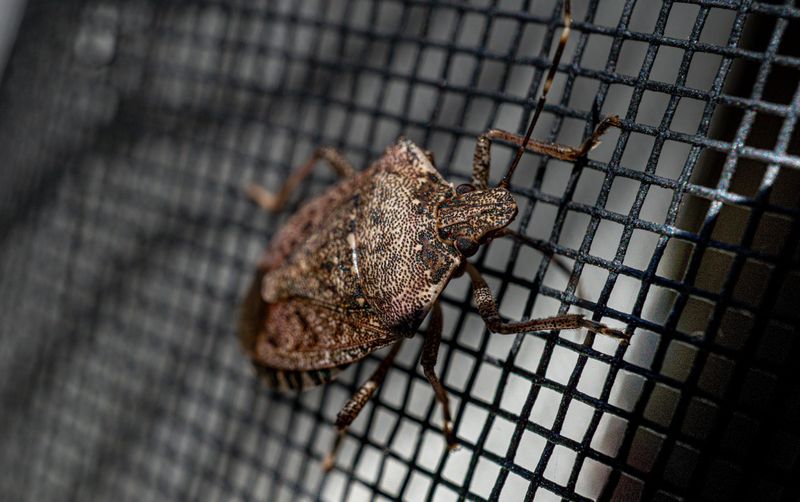
Brown marmorated stink bugs have a fearsome reputation built largely on what they do outdoors. They are genuine agricultural pests, capable of damaging apples, peaches, tomatoes, peppers, corn, and soybeans across North Carolina farms and home gardens. Inside a house, though, the list of things they can actually do to you or your home is much shorter.
EPA guidance on BMSB confirms that adults inside homes do not bite people or pets, do not sting, do not feed on furniture, fabrics, or stored food, do not damage the structure of the building, and do not transmit disease. They are not reproducing inside your walls either. Adults that shelter in wall voids or attics during the colder months are essentially waiting, not nesting, and they will not raise a new generation indoors.
University of Minnesota Extension’s BMSB resource echoes this, describing the indoor phase as a nuisance rather than a structural or health threat. Adults may become active on warm winter or early spring days, emerging from hiding spots to move toward light, which is usually how homeowners discover them after a fall entry.
Two qualifications are worth keeping. First, disturbing or crushing a stink bug indoors releases the defensive secretion responsible for the smell, which can linger on fabric, skin, and surfaces. Second, some individuals may be sensitive to allergens associated with insect material, particularly in homes where large numbers of bugs have been present over time. Neither of these rises to the level of a structural or medical emergency, but they are real enough reasons to remove the insect carefully rather than swatting it and moving on.
Remove the visitor and close the route it used

Slow and deliberate beats fast and messy when it comes to stink bugs. The first rule is to avoid crushing or agitating the insect, because doing so triggers the release of the defensive compounds that create the odor. A bug on a curtain or wall is easy enough to capture without contact if you approach it calmly.
A glass jar with a lid is one of the simplest tools available. Slide the jar over the bug, slip a piece of cardboard or a stiff envelope under the opening to trap it, and carry it to a container of soapy water. NC State Extension recommends drowning captured stink bugs in soapy water or freezing them rather than releasing them outside, because bugs released near the house are likely to find their way back in. A regular vacuum cleaner also works for capturing individuals, though the machine may retain the odor afterward.
Emptying or treating the canister or bag promptly, following the manufacturer’s guidance and local waste disposal rules, keeps the smell from spreading through the vacuum the next time it runs.
University of Maryland Extension’s stink bug tips suggest a dedicated hand-held vacuum kept specifically for bug removal, which sidesteps the problem of odor contaminating a primary household machine. Whichever method you choose, the capture step takes less than a minute and avoids the smell entirely if done without squeezing the insect.
After the bug is handled, shift attention to the entry point. NC State advises inspecting and sealing likely openings during summer, when conditions make the work easier and before fall movement increases pressure on the home’s exterior. The caution is worth noting: sealing a structure in fall, winter, or early spring could trap bugs already sheltering inside, so the summer window is genuinely the better time to act. Repair any damaged screens, replace worn door sweeps and weatherstripping, and caulk gaps around window and door frames, utility penetrations, and foundation vents.
These steps address the route, not just the symptom.
Why indoor spraying usually misses the real problem
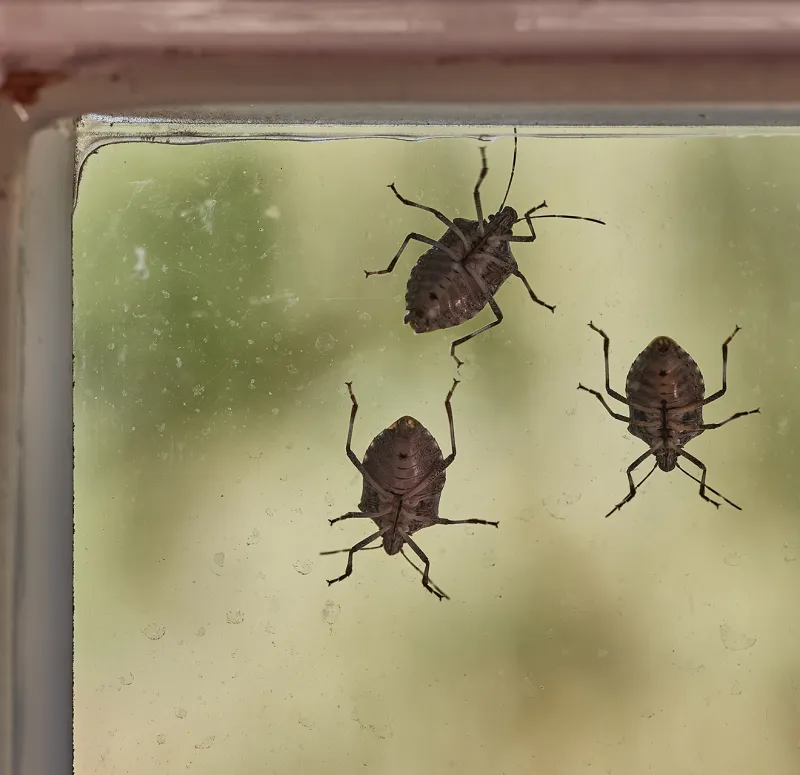
Reaching for a can of spray is a natural response when an unwanted insect appears, but for stink bugs that have entered through exterior gaps, indoor pesticide applications tend to address the symptom while the actual problem stays open. A fogger or a routine broadcast spray may kill any bugs exposed to it at the time, but it will not stop additional insects from emerging out of wall voids on a warm afternoon or from squeezing through the same gap that let the first one in.
University of Maryland Extension generally discourages indoor insecticide use for BMSB, emphasizing that exclusion and physical removal are more effective long-term strategies. Foggers in particular are poorly suited to reaching insects resting in wall voids, attic spaces, or the folds of insulation, which are exactly where sheltering stink bugs tend to be. The result is often dead bugs in accessible areas while the hidden population remains untouched until the next warm day brings them out.
If a pesticide is being considered after physical removal and exclusion have been tried, several requirements apply. EPA guidance on safe pest control is clear that any product must be registered for the specific site and target pest, and the label must be followed exactly, including all rate, timing, and application method instructions. EPA’s review of pesticides and indoor air quality notes that indoor pesticide use can affect air quality and expose residents and pets to chemical residues, risks that weigh against casual or preventive spraying.
Outdoor products must never be applied indoors, regardless of the pest involved. The National Pesticide Information Center’s stink bug page reinforces that label compliance is not optional. A broad outdoor perimeter spray program is not a recommended default either; university extension sources consistently point to sealing entry points as the more durable and environmentally responsible first line of defense.
Treat the sighting as a seasonal inspection prompt
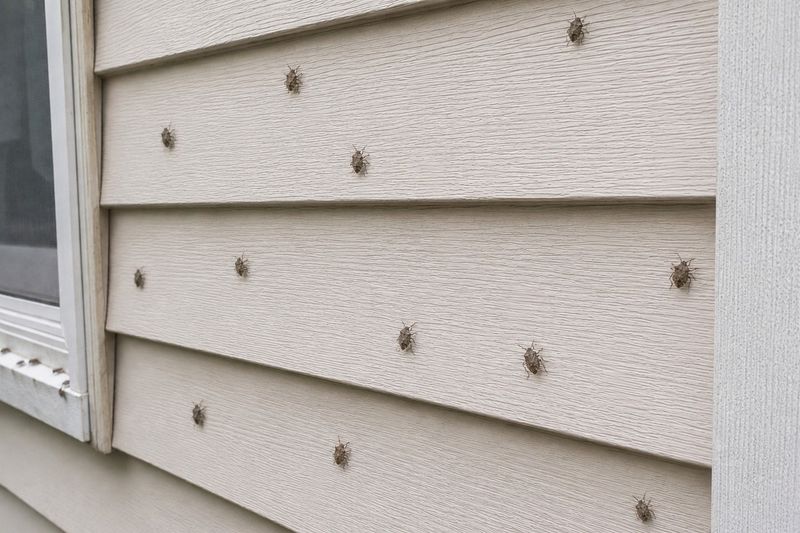
One stink bug on a curtain is most useful when you treat it as a prompt rather than a diagnosis. Start by confirming the species, note the date and where in the house you found it, remove it without crushing it, and then spend fifteen minutes checking the nearest windows, doors, and exterior penetrations for gaps. That sequence covers the practical bases without overreacting to a single insect.
Repeated sightings over several days, or a noticeable uptick as late summer arrives, are the signals that justify more thorough exclusion work. NC State Extension and its BMSB FAQ both point to summer as the right season to seal entry points before fall movement intensifies. EPA guidance reinforces physical exclusion and removal as the foundation of any response.
Inside the house, BMSB is a nuisance. Outside, it is an invasive pest with real consequences for North Carolina agriculture and home gardens. Keeping that distinction in mind makes it easier to respond calmly to an indoor sighting without either ignoring it or treating it as a crisis. A bug that shows up in August is doing exactly what its biology drives it to do; your job is simply to make sure the house offers fewer ways in than it did before.