
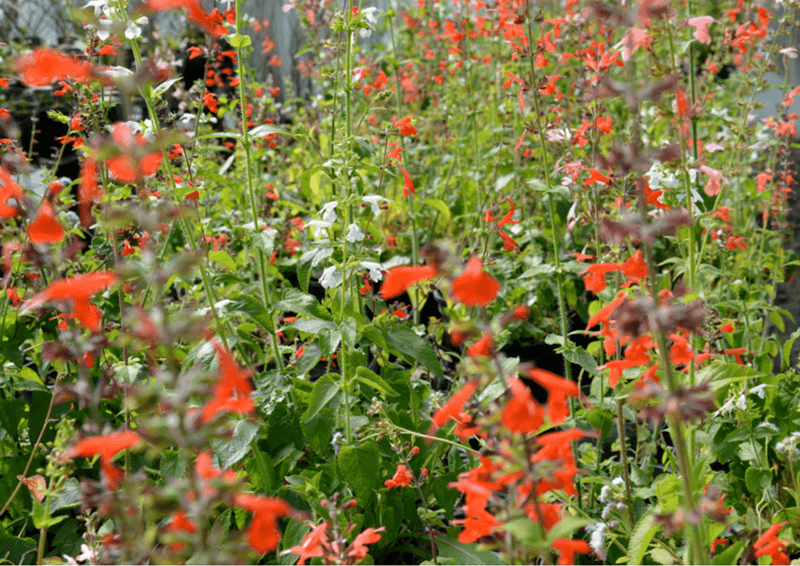
Most Florida gardeners walk right past tropical sage without a second look, even though this native wildflower puts on a show from spring through fall and sometimes longer in warmer parts of the state. Known scientifically as Salvia coccinea, it grows in sandy soil, tolerates summer heat, and draws hummingbirds and butterflies without demanding much in return. Whether you garden in the Panhandle or Miami-Dade, this plant is worth a serious look, as long as you understand what it can and cannot reliably deliver in your region.
Why tropical sage fits a long-blooming Florida landscape
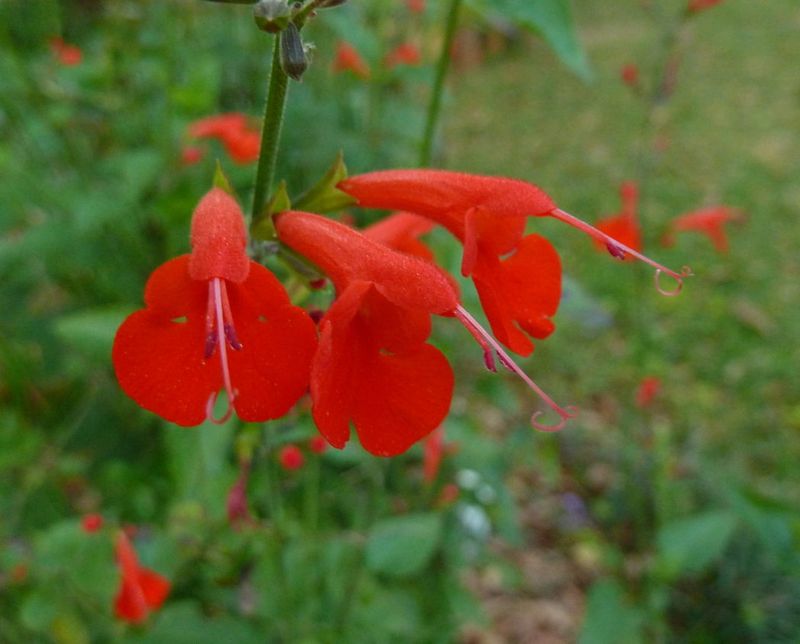
Salvia coccinea goes by several names depending on who you ask: tropical sage, scarlet sage, red salvia, and blood sage are all common. Regardless of what you call it, the plant itself is a Florida-native herbaceous perennial with an upright, bushy habit that typically reaches 2 to 4 feet tall, though plants growing in particularly favorable spots have been reported reaching up to 6 feet. That range alone makes it flexible enough to tuck into a mixed border, line a garden path, or fill in open ground under a sun-drenched yard.
One of the reasons tropical sage stands out is its extended flowering window. UF/IFAS Extension guidance on Salvia coccinea lists spring, summer, and fall as its primary bloom seasons, and that spring-through-fall arc is where the “six months” shorthand comes from. Think of it as a practical description of what a healthy plant in a good location can deliver, not a fixed botanical guarantee that applies equally from Pensacola to Key West.
A few important caveats apply right from the start. In North Florida, hard freezes can kill mature plants back to the ground, making perennial performance less dependable than it is in the warmer south. Central and South Florida gardeners are more likely to see plants persist and flower over a longer season, sometimes well into winter. The plant is classified as an herbaceous perennial, but in the coldest parts of the Panhandle it may behave more like a short-lived perennial or even an annual, with new seedlings replacing the parent plant after a hard freeze.
None of that makes tropical sage a poor choice. UF/IFAS Gardening Solutions notes that it can be planted anywhere in Florida, and the Florida Museum of Natural History describes it as adaptable, easy to cultivate, and long-blooming. Those qualities together make it a strong candidate for gardeners across all three Florida regions who want reliable seasonal color without a complicated care routine.
What bloom time can gardeners expect across Florida?
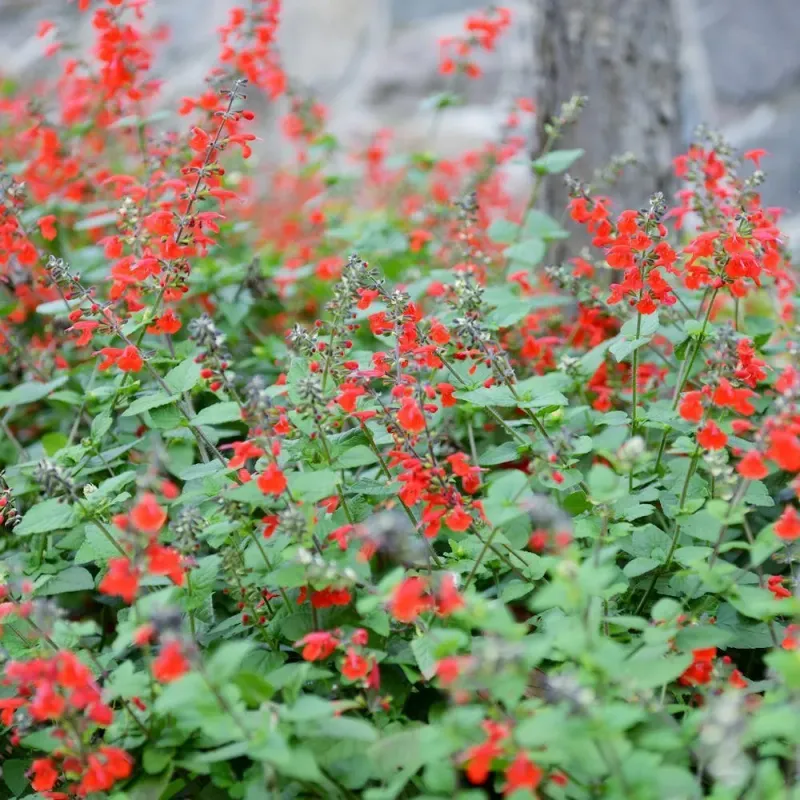
Regional variation is the single most important factor shaping how long tropical sage will flower in your yard. UF/IFAS Extension lists spring, summer, and fall as the core bloom window for Salvia coccinea, and explicitly notes that flowering duration varies by location. That means a gardener in Gainesville and a gardener in Fort Lauderdale are not working with the same calendar.
In North Florida, including the Panhandle and areas that regularly see hard freezes, plants may flower reliably through summer and into fall but get cut short when cold arrives. A killing frost can knock mature plants back to the ground. Some will resprout from the base in spring; others will not survive and will instead be replaced by volunteer seedlings from the previous season’s seed drop. That cycle still delivers months of summer color, but it is a different experience than the near-continuous bloom that warmer regions enjoy.
Central Florida sits in a middle zone where plants are more likely to persist through mild winters and extend their flowering into December or even January during warm years. South Florida gardeners, particularly those in frost-free or near-frost-free areas, may see plants flower for most of the year. The Florida Wildflower Foundation describes tropical sage as typically flowering in summer and fall but notes that it may bloom year-round in many parts of Florida, which reflects that south-to-north gradient.
Beyond latitude, several on-the-ground factors shape what you actually see. Full sun supports longer and heavier bloom; shade shortens the season noticeably. Moisture stress during a dry stretch can slow flowering, while a plant that has been in the ground for a full season generally performs better than a first-year transplant still establishing its roots. UF/IFAS wildflower guidance cautions that a plant may flower for many months in South Florida but only briefly in the Panhandle, which is a useful reminder to set expectations based on your specific zip code rather than a statewide average.
Where tropical sage occurs naturally in Florida
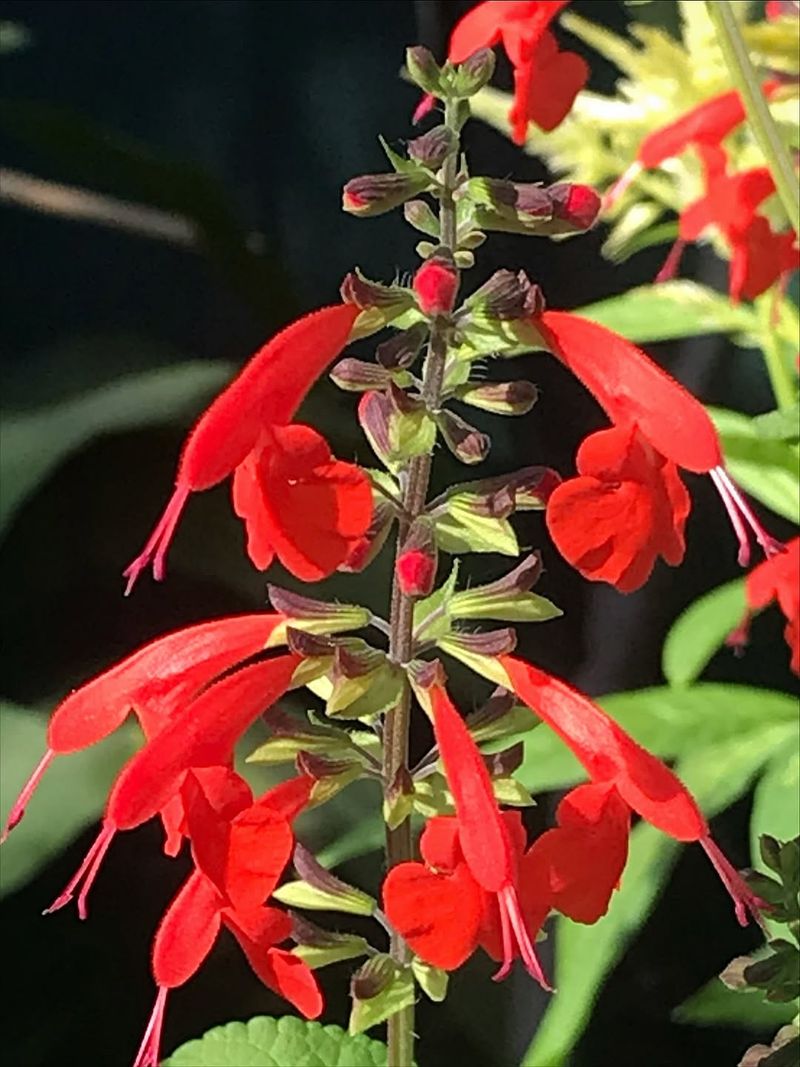
Spotting tropical sage in the wild is a real possibility across Florida, but “grows wild across the state” needs some honest unpacking before you go looking. Salvia coccinea turns up naturally in hammocks, open woodlands, disturbed ground, and ruderal sites, which are the weedy, human-influenced margins that spring up along roadsides, field edges, and cleared land. That broad habitat tolerance is part of why the plant shows up in so many different corners of the state.
What the evidence does not support is the idea that tropical sage blankets every county in equal abundance or lines every roadside from the Alabama border to the Florida Keys. The Florida Museum of Natural History describes it as a native wildflower that is common and adaptable, while the Florida Wildflower Foundation confirms it is suitable across North, Central, and South Florida. A more accurate framing is that it is a Florida-native wildflower found naturally in parts of the state and well-suited for cultivation in all three regions.
Identification is worth a careful look before you assume what you are seeing is Salvia coccinea. The Florida Native Plant Society notes that confusion with other red-flowered salvias is possible, since several non-native ornamental salvias share a similar flower color and general form. If you are trying to confirm a wild plant, a reliable field guide or a university extension resource will help you check the leaf shape, stem characteristics, and flower details before drawing conclusions.
When it comes to adding tropical sage to your own yard, buy it rather than dig it. UF/IFAS guidance on native plant sourcing advises purchasing from reputable nurseries or native plant sales rather than removing plants from the wild, and regulated species may not be legally collected without permission. Native plant society chapter sales, Florida-native specialty nurseries, and some botanical garden sales are good starting points for finding locally grown stock.
Choose sun and workable soil for the best flowering
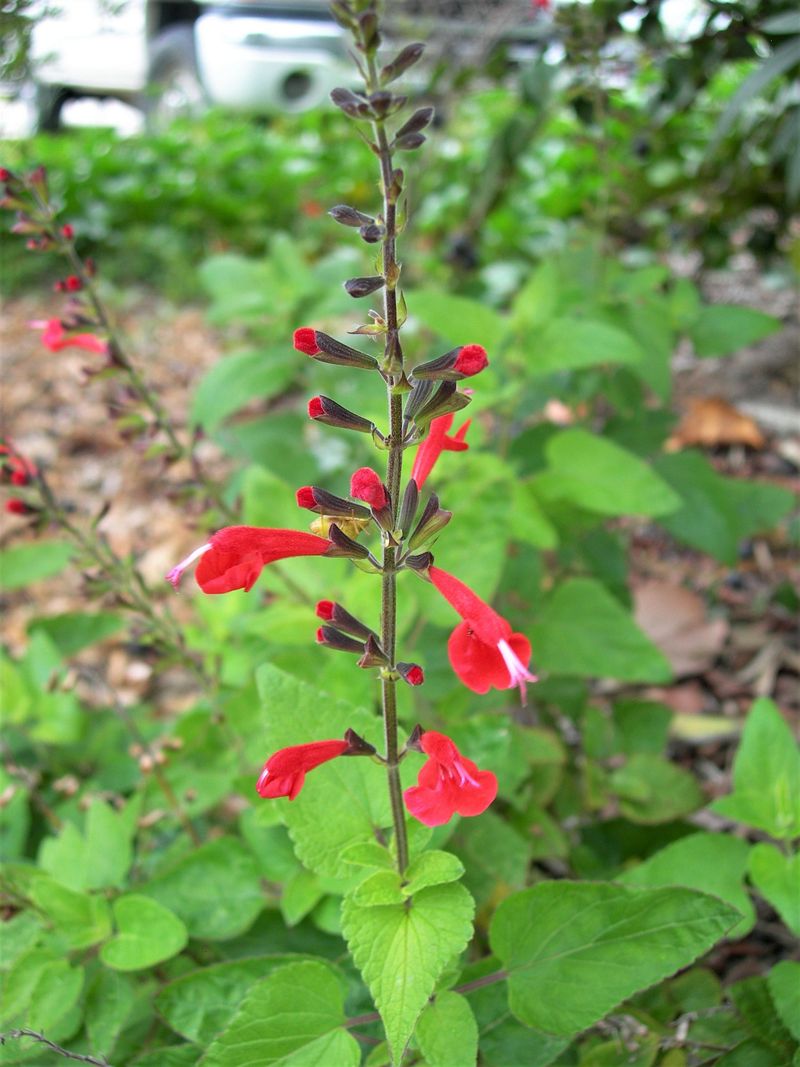
Placement is where you make or break tropical sage’s performance before you ever water it. Full sun, meaning six or more hours of direct sunlight per day, gives this plant its best shot at heavy, sustained flowering. UF/IFAS Extension is direct on this point: flowering declines as light decreases. Tropical sage tolerates partial shade and can survive in fairly shaded spots, but gardeners who put it under a dense tree canopy and then wonder why it barely blooms have answered their own question.
The good news for Florida gardeners dealing with tricky soil is that tropical sage is not fussy about what it grows in. Sandy soil, loam, clay, acidic pH, alkaline pH, and even occasional wet feet are all within its tolerance range. That covers a wide swath of Florida conditions, from the well-drained sandy ridges of Central Florida to the heavier soils found in parts of North Florida. The plant performs best in moist, well-drained soil, but it does not demand that you amend your entire bed to hit a precise texture target before planting.
Drainage matters more than soil texture in practice. A plant sitting in chronically waterlogged ground is more vulnerable to root problems and fungal disease than one in moderately dry sand that gets occasional irrigation. If your yard holds water for days after heavy rain, consider a slightly raised planting area or a spot with better natural drainage before committing to a full planting.
UF/IFAS Gardening Solutions recommends spacing transplants approximately 24 to 36 inches apart to give each plant room to develop its full upright form without crowding. Tight spacing can reduce airflow, which matters in Florida’s humid summers when fungal pressure tends to spike. Getting the spacing right from the beginning is easier than trying to correct it after plants have filled in and begun competing with each other.
Give new plants water, then keep care light
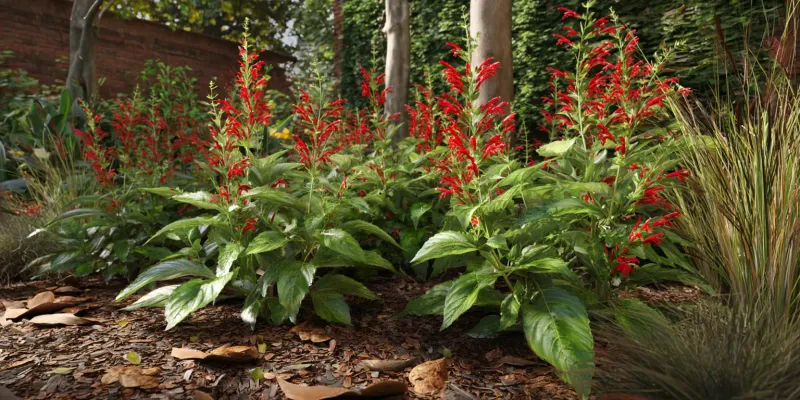
Established tropical sage has a reputation for toughness, and that reputation is earned, but it applies to plants that have had time to root into the surrounding soil. A transplant sitting in a nursery pot last week does not yet have that resilience. New plants need regular irrigation while their roots spread out and anchor into the surrounding soil, particularly during the dry season or a stretch of hot, rainless weeks. UF/IFAS low-maintenance plant guidance makes this point clearly: even drought-tolerant natives require establishment irrigation before they can be left to manage on their own.
Once a plant has settled in, usually after one full growing season, the care routine gets much lighter. UF/IFAS Extension reports that no serious pests or diseases are normally a major concern with Salvia coccinea. That said, two common gardening habits can undermine that natural resilience: overwatering and over-fertilizing. Excessive moisture and heavy nitrogen fertilizer together create the warm, lush conditions that fungal diseases prefer.
Keep irrigation moderate once plants are established, and skip the high-nitrogen fertilizer pushes that encourage soft, disease-prone growth.
Pruning is optional but useful. Light trimming during the flowering season can tidy up leggy stems and may encourage fresh branching and additional flowers. After flowering winds down, or when foliage starts to die back in the fall, cutting the plant back is a reasonable step for rejuvenation. In North Florida, plants that get hit by a hard freeze can be cut back to the ground; some will resprout from the base when temperatures warm.
UF/IFAS Gardening Solutions confirms that this kind of cutback is a practical option rather than a required step for survival.
The overall picture is a plant that rewards a little patience upfront and then largely takes care of itself, as long as drainage is adequate, light is sufficient, and you resist the urge to fuss over it with extra water and fertilizer once it is settled in.
Support pollinators while managing self-seeding
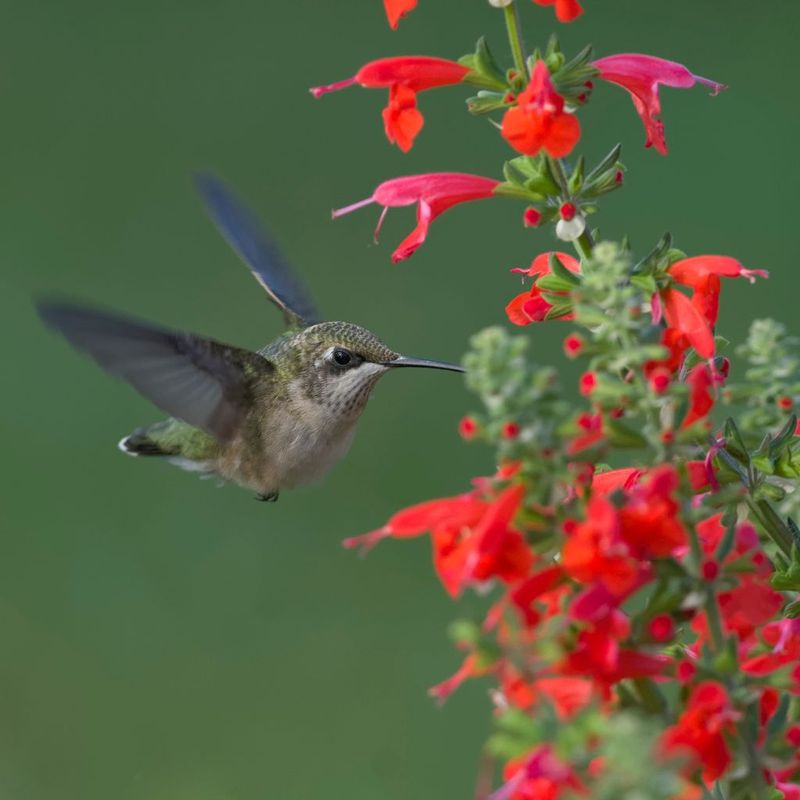
The tubular red flowers of tropical sage are built for hummingbirds, and ruby-throated hummingbirds in Florida take full advantage of them during migration and winter visits. Beyond hummingbirds, the flowers serve as a nectar source for butterflies, bees, and a range of other pollinators. The Florida Museum of Natural History specifically identifies Salvia coccinea as a nectar plant for these visitors, which is a meaningful distinction from a host plant relationship.
Host plants are the species that butterflies use to lay eggs and that caterpillars feed on to complete their life cycle. Tropical sage is not documented as a host plant for any Florida butterfly species. That does not reduce its garden value, but gardeners who want to support the full butterfly life cycle should pair it with documented host plants such as milkweed for monarchs or passionvine for Gulf fritillaries. Tropical sage fills the nectar role reliably and adds color that draws butterflies to the yard, where they may also find those host plants nearby.
Propagation is straightforward. UF/IFAS Extension notes that Salvia coccinea can be grown from seed or cuttings, and seeds germinate readily under warm Florida conditions. The plant also self-seeds prolifically, which is both a convenience and a management consideration. Volunteers tend to pop up wherever seeds fall, and in a favorable spot with good light and loose soil, they can appear in numbers that surprise first-time growers.
Being a Florida native does not make tropical sage non-spreading or maintenance-free. UF/IFAS Gardening Solutions and the Florida Native Plant Society both acknowledge that the plant can become fairly aggressive or weedy in some settings through self-seeding. A simple management strategy is to deadhead spent flower spikes before seeds fully mature in areas where you want to limit spread, while allowing seed to drop in spots where you want more plants. Pulling unwanted seedlings when they are small is far easier than managing a dense colony after the fact.
Respect the plant’s limits near coasts and storm exposure
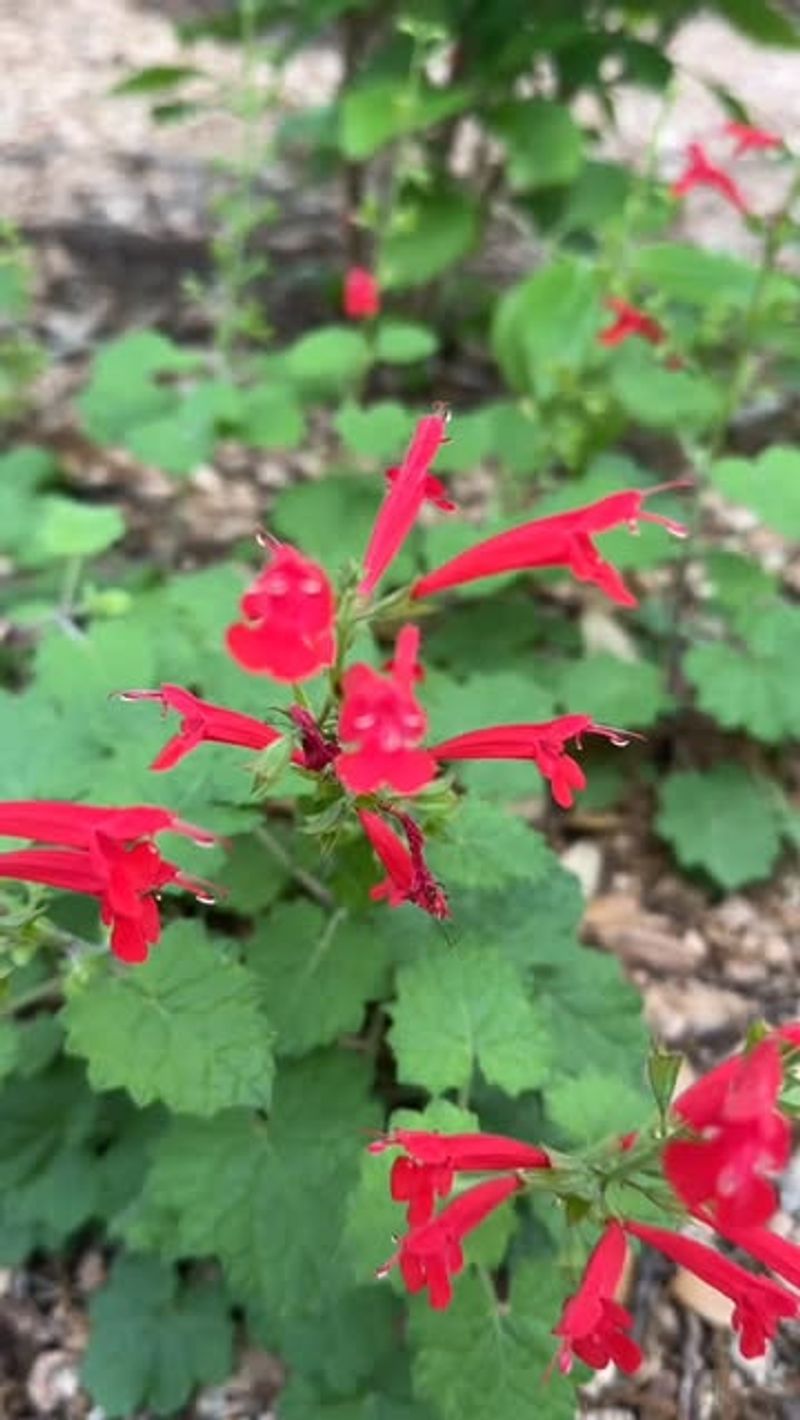
Florida’s coastal gardens face conditions that tropical sage simply cannot handle. The Florida Native Plant Society rates Salvia coccinea as not tolerant of saltwater flooding or brackish inundation. Sites that flood with storm surge, sit in tidal reach, or regularly receive brackish water are the wrong home for this plant, regardless of how well it performs just a few miles inland. Coastal gardeners can still grow tropical sage successfully, but the planting location needs to be well above any realistic flood line and away from areas that collect saltwater runoff after storms.
Salt spray and salty wind are a different matter. The plant may tolerate some exposure to airborne salt, which is common in coastal neighborhoods even without flooding, but that tolerance does not extend to roots sitting in salt-saturated soil. If your yard is close enough to the water to flood during a typical tropical storm, choose a different plant for that specific bed.
North Florida gardeners face a different kind of limit: freeze exposure. Hard freezes can kill plants outright or knock them back to the ground. UF/IFAS Extension Master Gardener reporting includes anecdotal accounts of tropical sage recovering after being cut back following storm or freeze damage, which is encouraging, but that recovery experience should not be read as a formal wind or cold-hardiness rating. Some plants bounce back; others do not, and local conditions vary widely even within a single county.
UF/IFAS Extension consistently frames tropical sage as suitable for all Florida regions, which is accurate, but suitability depends on choosing the right spot within your region. The practical rule is straightforward: plant in full sun, ensure reasonable drainage, stay well clear of storm-surge exposure, provide establishment water, and plan for some reseeding over time.
Treat six months as a possibility, not a promise
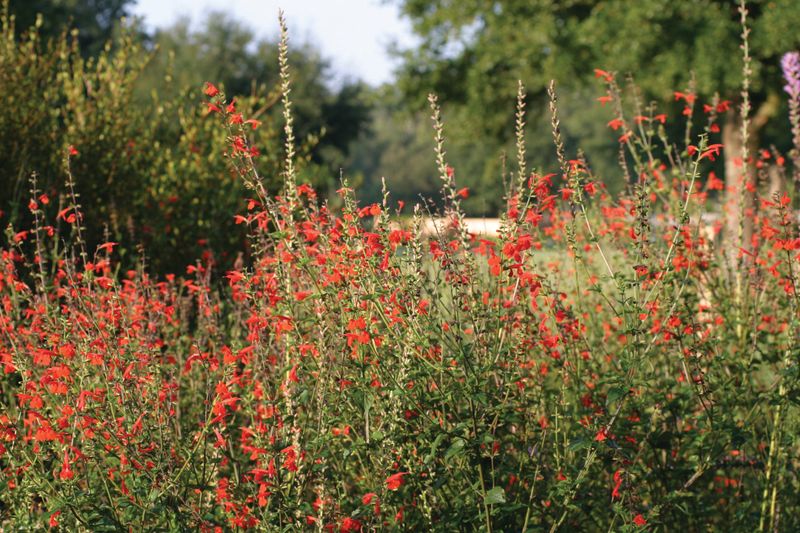
Salvia coccinea earns its place as a strong Florida-native planting candidate, but the six-month bloom claim is best understood as a ceiling that favorable conditions can help you reach, not a floor that every garden automatically delivers. UF/IFAS Gardening Solutions confirms that the plant can be grown statewide, while UF/IFAS Extension makes clear that flowering duration varies by location and zone. Central and South Florida gardeners with a full-sun planting in well-drained soil have a realistic shot at that spring-through-fall window, and sometimes longer. North Florida gardeners should plan for a shorter season with possible freeze interruption.
The conditions that shape success are not complicated: adequate sunlight, consistent moisture during establishment, reasonable drainage, and realistic expectations about frost in your area. The Florida Native Plant Society profiles it as a plant with genuine landscape value and honest limitations, which is a fair summary. Get the basics right, and tropical sage will likely reward you with months of color, hummingbird visits, and very little fuss. The six months is something to aim for, not something to count on before you have even put a shovel in the ground.