
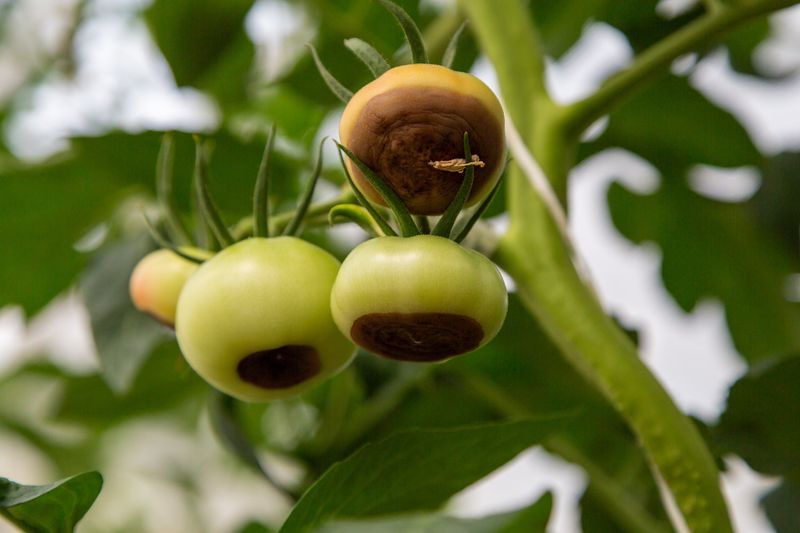
Finding a sunken black patch on the bottom of your tomatoes is one of the most discouraging moments in a summer garden. That symptom has a name – blossom-end rot – and it trips up a lot of gardeners because it looks like a disease or a pest attack when it is actually something else entirely. The good news is that once you understand what is really happening, you can take steps that genuinely lower the risk for the fruit still forming on your plants. The fix is less about adding a product and more about understanding what your tomato plants actually need right now.
When the blossom-end pattern points to a physiological disorder
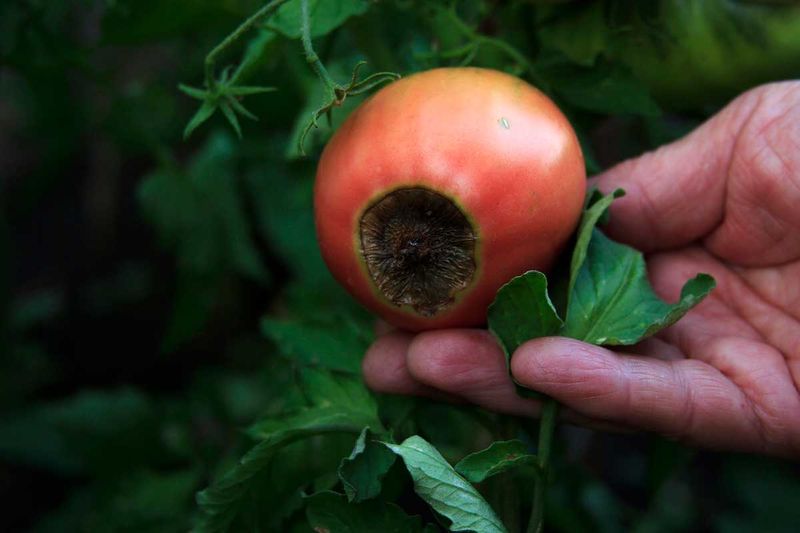
A sunken, tan-to-black patch at the very bottom of a tomato – the end opposite the stem – is the hallmark of blossom-end rot, or BER. The lesion typically starts small and water-soaked, sometimes appearing almost pale or translucent on a green fruit. Over the following days it enlarges, collapses inward, darkens to brown or black, and takes on a dry, leathery texture that does not improve.
According to UC IPM’s guide on blossom-end rot, BER is a physiological disorder, not an infectious disease and not the result of an insect. That distinction matters because no spray will cure it the way a fungicide might suppress a fungal disease. The lesion itself is not caused by something landing on the fruit from the soil or from a neighboring plant.
One important nuance: once that damaged tissue exists, fungi or bacteria can move in and colonize it. If you see a fuzzy coating, a spreading wet decay, or a foul smell, secondary infection has likely taken hold on top of the original injury. Those signs do not change the original diagnosis, but they do mean the fruit has deteriorated further.
University of Minnesota Extension’s tomato disorders page explains that BER reflects inadequate calcium reaching the developing fruit tissue – but that phrasing can mislead. Low calcium in the affected fruit cells is not the same as low calcium in your garden soil. Many gardens where BER appears have perfectly adequate soil calcium levels. The disorder is about delivery and demand, not simply supply.
Root-zone stress can raise risk without proving where BER began
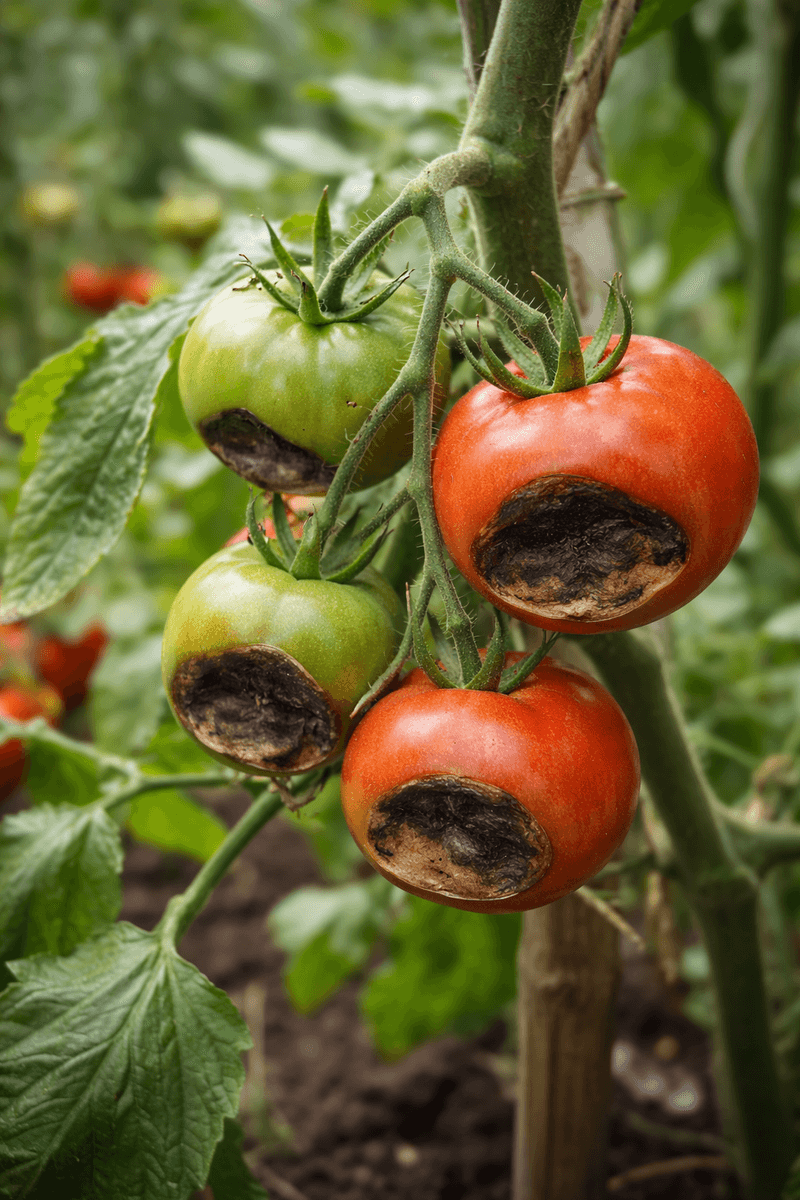
Calcium travels through a tomato plant primarily in water. As roots pull moisture from the soil and the plant moves it upward through its vascular system, calcium rides along. Developing fruit at the end of that pathway gets whatever calcium the water delivers – and young fruit is growing fast, with high demand and relatively limited ability to draw resources away from other tissues.
When moisture in the root zone fluctuates sharply – swinging from dry to saturated and back – that water movement becomes erratic, and calcium delivery to the fruit becomes unreliable. Drought, waterlogged roots, high salt levels from over-fertilizing, and rapid vegetative growth driven by excess nitrogen can all disrupt the system in different ways. Root injury from cultivation, transplant damage, or disease reduces the plant’s ability to absorb water regardless of how much is available in the soil.
A peer-reviewed analysis published in Scientia Horticulturae examining whether BER is a calcium or stress-related disorder raises the possibility that localized calcium depletion in fruit tissue may sometimes be a consequence of stress-induced cell injury rather than the original trigger. That debate has not been fully settled, which is why treating BER as a simple soil-calcium shortage oversimplifies the problem.
Root-zone conditions can create vulnerability before or during fruit development, but BER does not necessarily begin in deficient soil or always precede fruit set. Large slicers and paste-type tomatoes tend to show more susceptibility than cherry types, which adds a genetic layer on top of the environmental ones. Managing the root zone well reduces risk; it does not eliminate it entirely for every variety in every season.
Heat can intensify stress without identifying the disorder
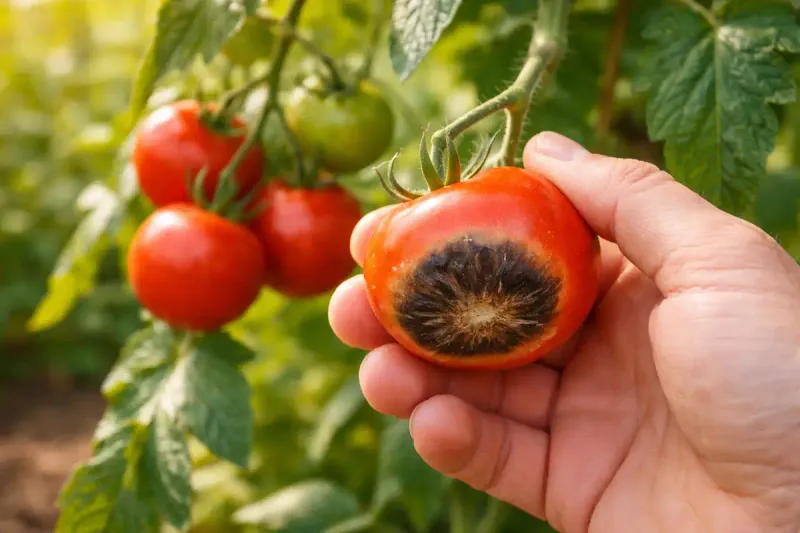
Hot weather puts extra pressure on a tomato plant in ways that can overlap with BER risk, but heat alone does not tell you which problem you are dealing with. On a scorching afternoon, a plant’s leaves lose water faster than the roots can replace it. That increased evaporative demand tightens the competition for available water inside the plant, and fruit – especially young, fast-growing fruit – can end up short-changed.
University of Minnesota Extension’s overview of how excessive heat affects the vegetable garden notes that sustained high temperatures can also cause blossom drop, poor pollination, or fruit abortion – outcomes that happen before fruit ever develops. Those are separate problems from BER, and they look different. Blossom drop means flowers fall off without setting fruit. Fruit abortion means tiny fruit forms and then shrivels.
Neither produces the sunken leathery lesion at the blossom end.
A single heat event is rarely the complete explanation for BER. The disorder reflects interacting factors – moisture consistency, root health, growth rate, cultivar, and yes, temperature – rather than one bad week of weather. Before concluding that heat caused your problem, check the location and appearance of the damage. A lesion at the blossom end that matches the pattern described in the first section points toward BER.
Sunscald, by contrast, appears on the side of the fruit facing the sun, and it looks pale, papery, or blistered rather than sunken and leathery at the bottom.
Keep the root zone evenly moist and well drained
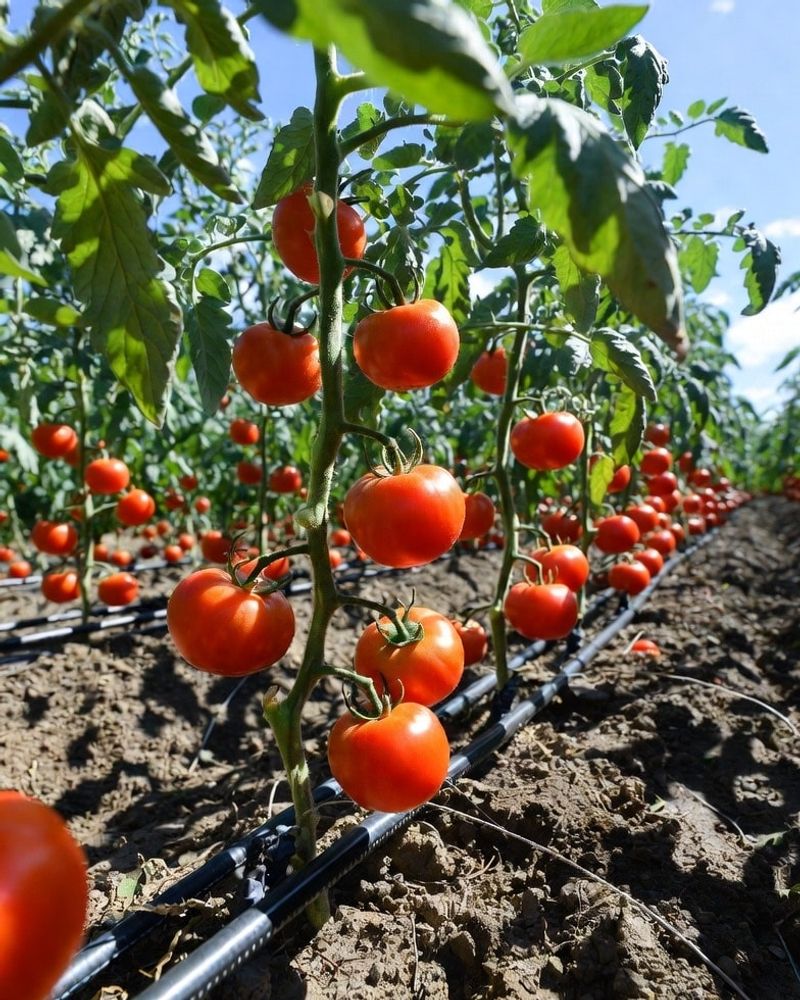
Steadying moisture in the root zone is the single most practical lever most home gardeners have during an active heat period. The goal is soil that stays consistently moist – not bone dry between waterings, and not waterlogged after a heavy session. Check the soil itself rather than watering on a fixed calendar. Push a finger or a small trowel a few inches down near the drip line of the plant.
If the soil feels dry at that depth, water thoroughly enough to wet the full root zone.
University of Minnesota Extension’s guide to growing tomatoes in home gardens offers roughly one inch of water per week as a general starting point, while noting that sandy soils may need more frequent watering. That figure is a benchmark, not a prescription. Containers dry out much faster than in-ground beds. Heavy clay holds moisture longer but can tip into waterlogging if drainage is poor.
During a heat wave, watering frequency may need to increase, but the target remains moist-and-aerated, not saturated.
Organic or plastic mulch spread two to three inches deep over the root zone can meaningfully reduce evaporation and smooth out wet-dry swings between rain events. Keep mulch pulled back slightly from the stem to reduce rot risk at the base of the plant. After a substantial rainfall, hold off on irrigation and reassess the soil moisture before resuming your normal schedule.
Drainage deserves as much attention as watering frequency. Roots sitting in saturated, oxygen-depleted soil cannot reliably take up water or nutrients even when both are present in abundance. UC IPM’s blossom-end rot resource specifically flags waterlogged soil as a contributing stressor – a reminder that “water more” without considering drainage can worsen rather than help the situation.
Test before you add calcium or change the soil
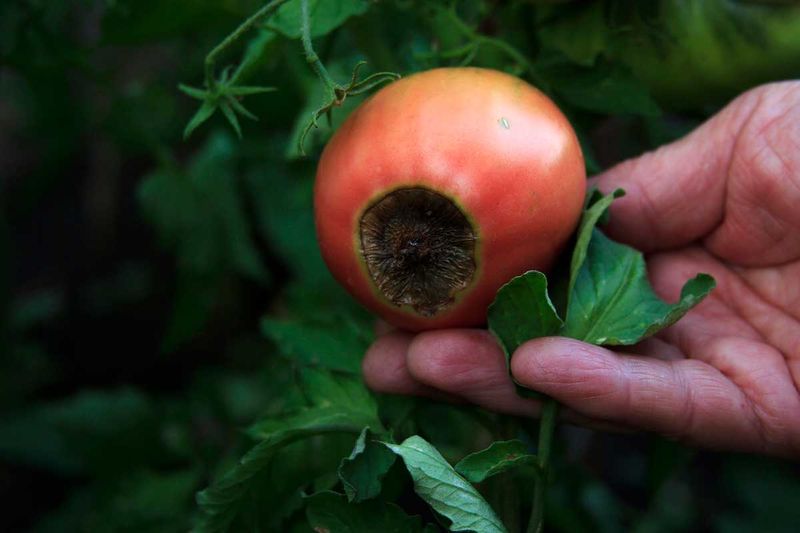
Reaching for a bag of lime, gypsum, or crushed eggshells the moment BER appears is one of the most common garden reflexes – and one of the least reliable responses. University of Georgia Cooperative Extension’s publication on blossom-end rot and calcium nutrition is direct on this point: adding calcium without knowing your soil’s current levels and pH can create new imbalances rather than solving the existing one. Excess calcium in the soil can actually worsen BER under some conditions, and high salt concentrations from over-amendment stress roots further.
Lime and gypsum are not interchangeable. Lime raises soil pH while also supplying calcium – useful if a soil test shows your pH is below the range tomatoes prefer, generally around 6.0 to 7.0. Gypsum supplies calcium without the same pH effect, which makes it the more appropriate choice if pH is already in range but a test indicates calcium is genuinely low. Neither product should be applied blindly.
Eggshells release calcium far too slowly to address an active BER problem in a current season. Colorado State University Extension’s vegetable troubleshooting guide specifically notes that crushed eggshells are not a practical rescue for BER. Similarly, Epsom salts supply magnesium, not calcium – and University of Arizona Cooperative Extension’s tomato challenges resource states plainly that Epsom salts are not a remedy for blossom-end rot. Excess magnesium can interfere with calcium uptake, making the imbalance worse.
Foliar calcium sprays are disputed. Calcium moves through the plant primarily in xylem water flow and is not easily redistributed from leaves to developing fruit. Extension recommendations conflict on this point, and the practical evidence for home-garden use is inconsistent. If any product is used, it must be labeled for the crop and applied exactly as directed.
University of Minnesota Extension also cautions against heavy ammonium-based nitrogen fertilization, which can accelerate vegetative growth and compete with calcium uptake – another reason to hold off on fertilizing unless a soil or tissue test supports it.
Protect roots and improve the odds for later fruit
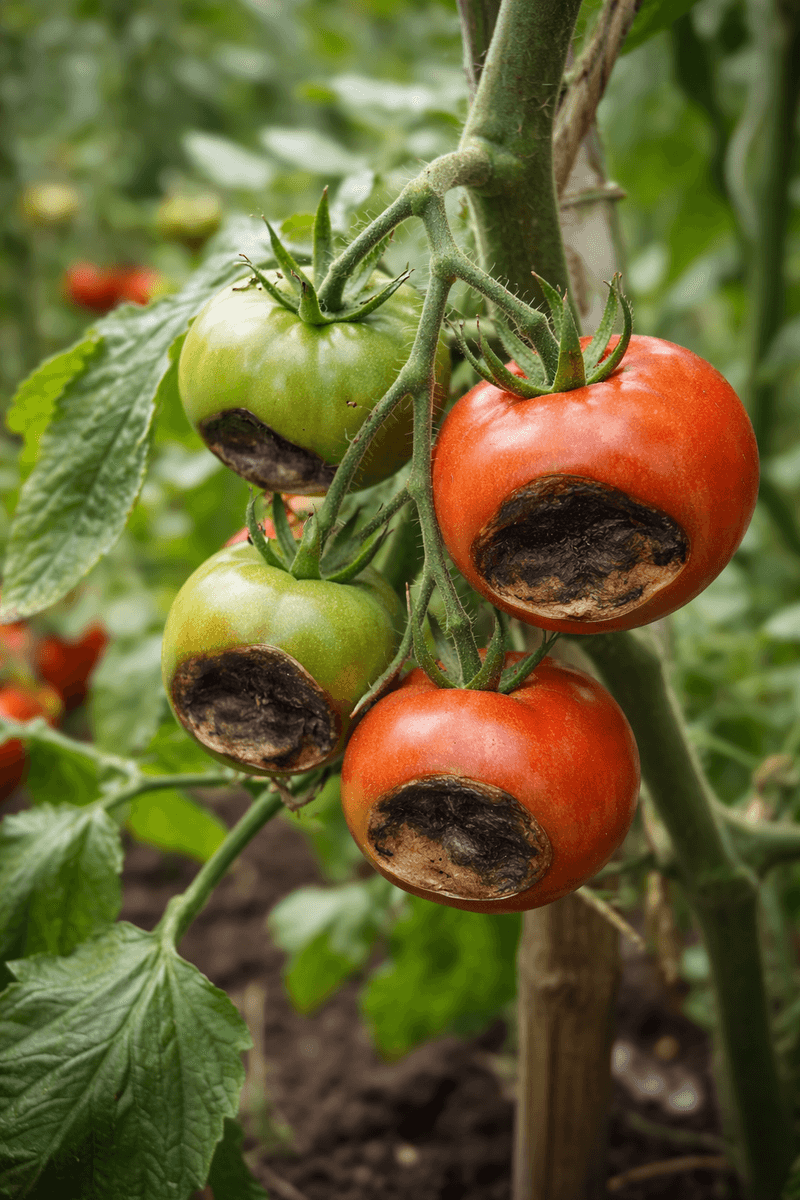
Roots are the plant’s water and nutrient lifeline, and anything that damages them during fruit development adds stress at the worst possible time. Deep hoeing anywhere near a tomato plant, cultivation within about a foot of the stem, and transplant injuries that were not fully healed before the heat arrived can all reduce the root system’s capacity to absorb water. University of Minnesota Extension advises avoiding cultivation within approximately one foot of the plant base for exactly this reason – tomato feeder roots spread shallowly and widely, and a single aggressive hoeing session can remove a meaningful portion of them.
Heavy pruning during a heat wave carries similar risks. Several extension sources, including University of Georgia Extension’s county-level BER guidance, associate heavy pruning and root pruning with increased BER risk rather than reduced stress. Removing large amounts of foliage during high temperatures can expose fruit to sunscald and push the plant into a stress response that compounds the original problem.
Once a lesion has formed, the affected tissue will not recover. Removing the fruit that shows established BER may allow the plant to redirect energy toward later-developing fruit, though that redirection does not guarantee those later tomatoes will stay clean. Penn State Extension’s blossom-end rot resource notes that early fruit clusters are often the most affected, and later fruit sometimes develops normally as conditions stabilize. If BER has been a recurring problem across multiple seasons, choosing a less-susceptible cultivar – typically cherry types or varieties bred for resistance – can reduce recurrence risk, though no variety is fully immune under severe stress conditions.
Handle damaged tomatoes with food safety in mind
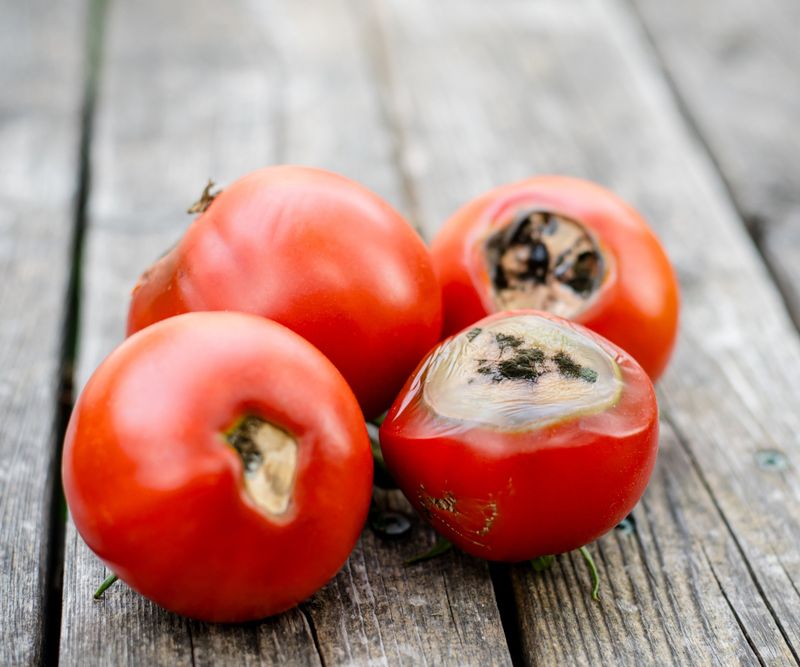
Not every tomato with a BER lesion has to go straight to the compost bin, but the decision about what to do with affected fruit deserves more thought than a quick trim and a rinse. The key distinction is between a small, dry, localized lesion and a tomato that has progressed to soft, wet, spreading decay or visible mold. Guidance from extension sources varies on whether trimming a limited BER spot and using the remaining firm tissue is acceptable for fresh eating, so assess each fruit individually rather than applying a blanket rule.
One precaution is non-negotiable: do not use BER-damaged tomatoes in home-canned products. University of Minnesota Extension’s canning guidance specifically advises against using damaged tomatoes in home-canned salsa because compromised fruit tissue can alter product acidity and may harbor pathogens that standard processing cannot reliably neutralize. That applies to salsas, sauces, and any other home-canned tomato preparation.
For fresh use, discard any fruit that is severely rotted, feels mushy through much of the flesh, smells foul, or shows active fuzzy mold growth. Those signs indicate secondary bacterial or fungal infection has moved well beyond the original lesion. University of Missouri Extension’s home garden tomato guide reinforces that accurate diagnosis and safe handling matter throughout the season. A tomato with a small dry spot at the bottom is a different situation than one that has collapsed from secondary rot – and treating them the same way, in either direction, is the mistake most worth avoiding.