
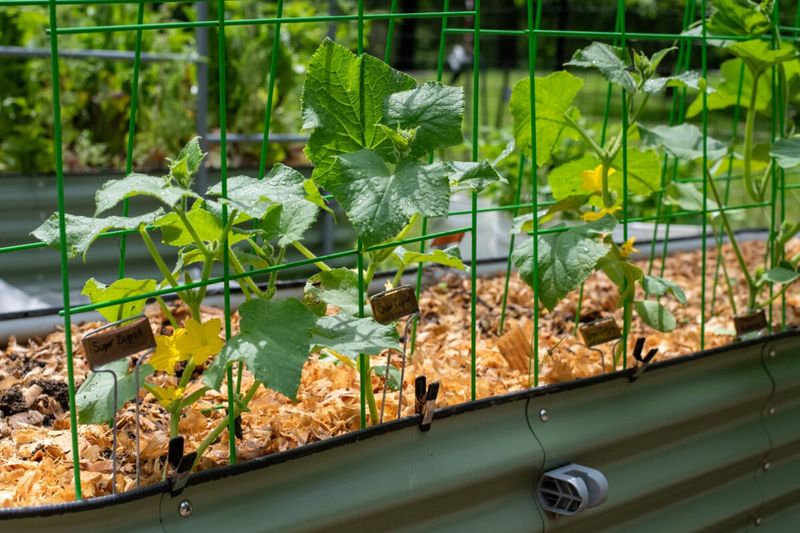
Watching a cucumber vine grow big and bushy while producing almost no cucumbers is one of summer’s most frustrating garden problems. The plant looks healthy, flowers keep appearing, yet the harvest bucket stays empty. Several things can cause this, and the fix depends on figuring out which one is actually happening in your garden. Knowing where to look makes troubleshooting much faster than guessing.
Identify the flower before diagnosing the vine
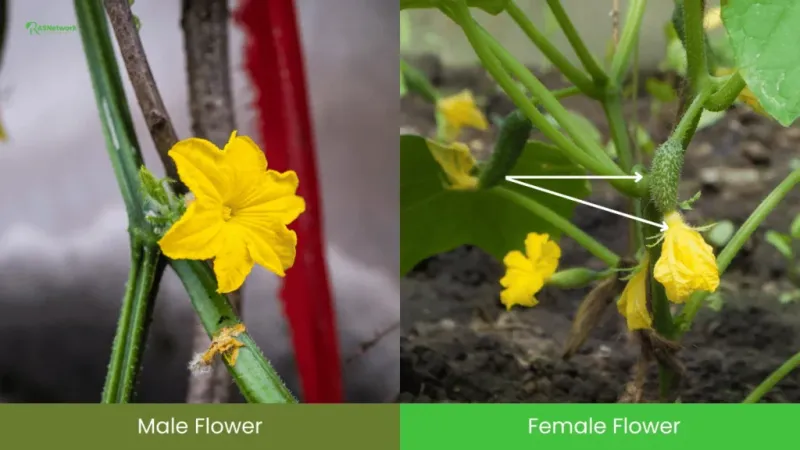
Before reaching for the watering can or fertilizer bag, take a close look at the flowers themselves. Male cucumber flowers grow on a slender stem with no swollen bump behind the petals. Female flowers have a small, cucumber-shaped ovary sitting between the blossom and the vine. That little green nub is the future cucumber, and it should start enlarging after successful pollination.
Many gardeners panic when the first wave of flowers drops without producing fruit, but UMN Extension’s cucumber growing guide notes that standard varieties commonly produce male flowers well before female flowers appear. Those early male blossoms drop naturally after opening, and that is completely normal. Seeing only male flowers for the first week or two does not mean the plant has a problem.
The situation changes if female flowers are appearing and still failing. When female blossoms or tiny cucumbers repeatedly yellow, shrivel, or drop before enlarging, something is actively interrupting fruit set. Illinois Extension’s cucumber page and UGA Cooperative Extension’s home garden guide both distinguish this pattern from the normal early male-flower flush. Identifying which type of flower is dropping is the first diagnostic step, because the cause and correction differ depending on the answer.
Several midsummer stresses can interrupt fruit set
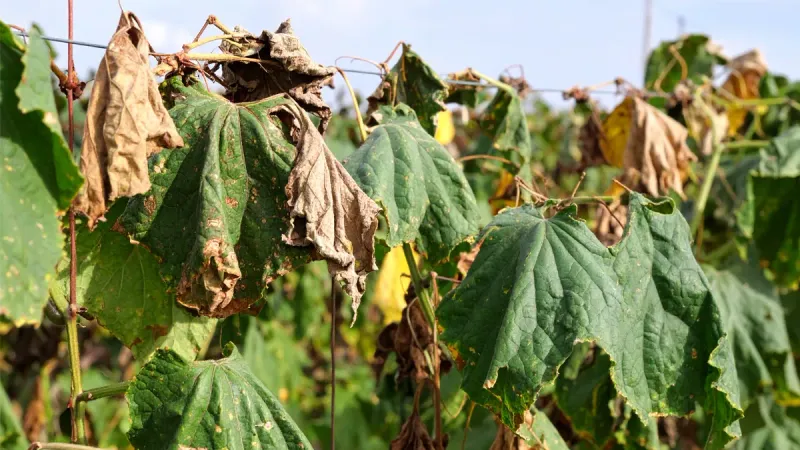
Once you have confirmed that female flowers or young cucumbers are dropping, several possible causes deserve consideration. No single midsummer mistake reliably explains every case. Drought, rapid swings between wet and dry soil, persistently saturated ground, high heat, limited pollination, excess nitrogen, and cultivar-specific traits can each contribute on their own or in combination.
UMN Extension’s vining vegetable guide identifies daytime temperatures in the 90s Fahrenheit or nighttime temperatures around the 70s Fahrenheit as conditions that can contribute to flower and small-fruit abortion in cucurbits, though the exact effect depends on cultivar, duration, humidity, and plant water status. Heat can affect fruit retention in more than one way. A peer-reviewed study on cucumber male flower development under heat stress found that high temperatures can reduce pollen fertility, and research on pistillate flower development in cucumbers found that air temperature during the seedling stage and at pollination can influence female flower production and fruit set in some cultivars.
Excess nitrogen is a separate concern. UGA Cooperative Extension explains that too much nitrogen encourages vigorous vine and leaf growth while potentially delaying fruiting. USDA Agricultural Research Service cucumber sex-expression research supports the idea that nutrient supply can influence flower ratios, though the relationship depends on cultivar, plant age, light, and other growing conditions. Treating one factor while ignoring others often leaves the real cause in place.
Correct the root zone without following a rigid watering rule
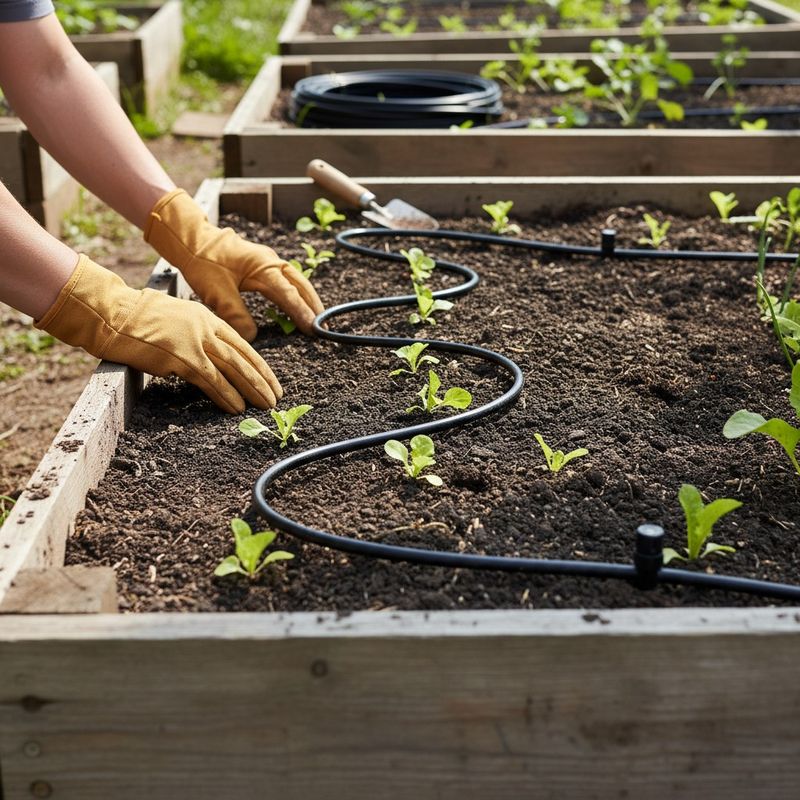
Soil moisture is one of the more controllable factors in fruit set, but both too little and too much water can cause problems. Before adjusting your watering schedule, check what the root zone actually feels like. Push a finger or a trowel a few inches into the soil near the plant’s base. Bone-dry soil, soggy soil that smells musty, and soil that has poor drainage all point toward different corrections.
Utah State University Extension’s cucurbit irrigation guide and USU’s cucumber garden research page recommend keeping root-zone moisture consistent during flowering and fruit development, using roughly 1 to 2 inches of water per week as a flexible starting point adjusted for rainfall, soil type, drainage, plant size, and heat. That range is a reference, not a prescription. A container plant in full sun on a 95-degree day may need water more often than a mulched in-ground bed after a recent rain.
Oregon State University Extension’s vegetable gardening guide notes that deep, thorough watering is preferable to frequent shallow irrigation, which can encourage shallow roots that are more vulnerable to drought. A 2- to 3-inch layer of mulch over the root zone can reduce rapid moisture swings between waterings. Drip or soaker irrigation places water near the roots and generally reduces the foliar wetting that overhead sprinklers create, which can also help limit some fungal diseases. The goal is steady, not excessive, moisture.
Do not feed a leafy vine blindly
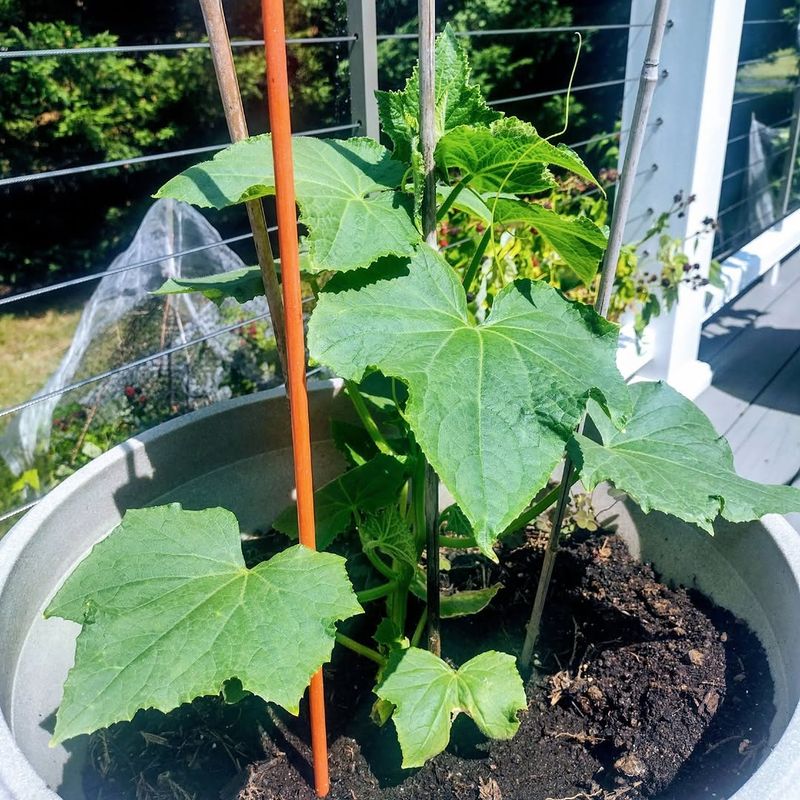
A cucumber vine covered in lush green leaves but short on fruit can tempt gardeners to reach for more fertilizer, assuming the plant needs a boost. That impulse often backfires. UGA Cooperative Extension’s cucumber guide explains that excess nitrogen drives vigorous vegetative growth while potentially delaying or reducing fruiting. Adding more nitrogen to an already leafy vine can make the problem worse, not better.
Peer-reviewed research on how soil nutrition affects floral traits and pollinator attraction in cucumbers and a review on sex differentiation in cucumbers both confirm that nutrient supply can influence flowering, but the relationship depends heavily on cultivar, plant age, light, temperature, and overall nutrient balance. There is no universal nutrient formula that reliably forces fruit set. Routine phosphorus additions are not supported by standard cucumber extension guidance as a fix for nonfruiting vines, and unnecessary phosphorus applications can create other soil and environmental issues.
The practical step here is to stop any improvised or unsupported fertilizer applications, not necessarily every planned feeding. UMN Extension’s vining vegetable guide and University of Florida IFAS’s cucumber page both recommend basing fertilizer decisions on a soil test or the specific directions on a crop-labeled product. A soil test gives you actual numbers instead of guesses, and it prevents adding nutrients the plant already has in adequate supply.
Check heat and pollination separately
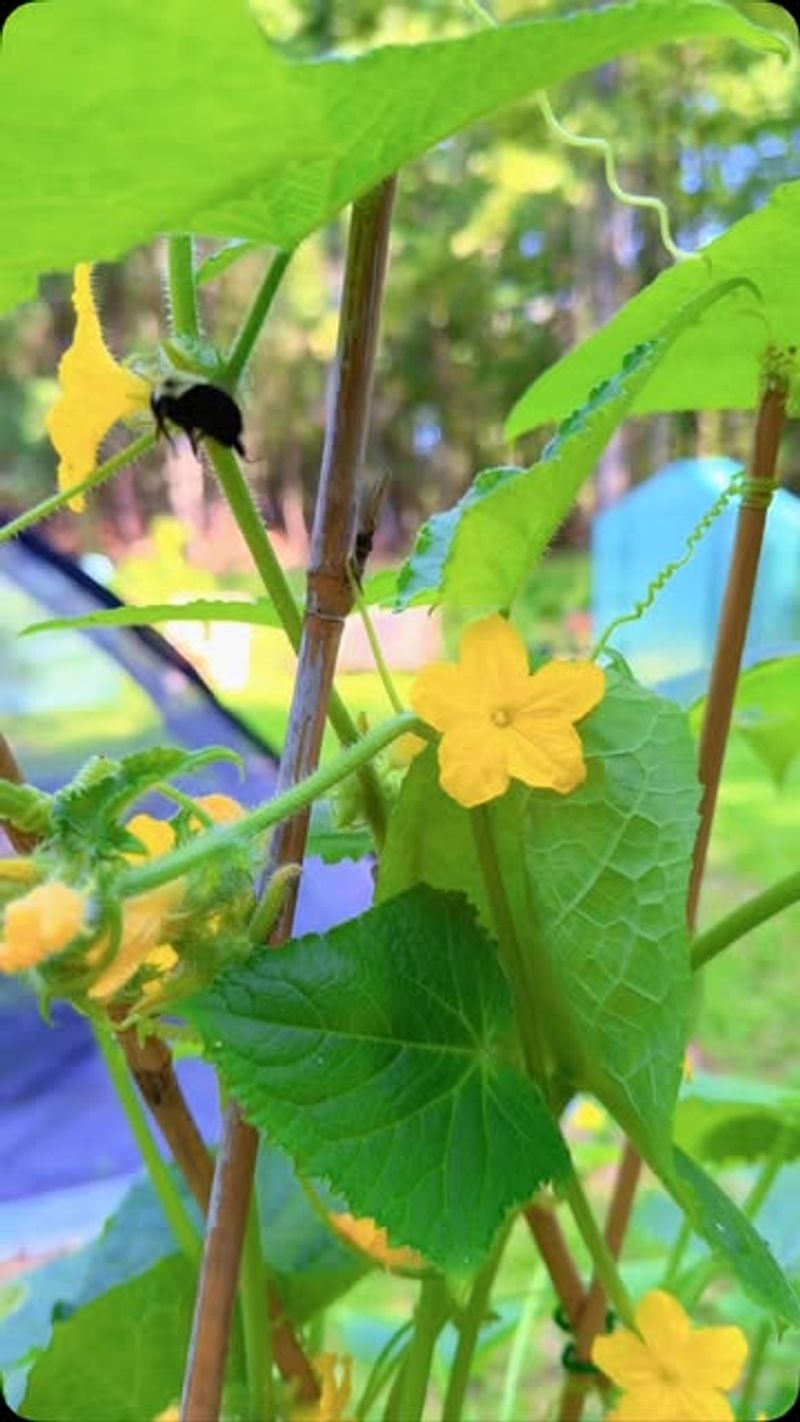
After assessing moisture and feeding habits, heat and pollination are the next two factors worth examining, and they are worth separating because they call for different responses. High heat can affect cucumber fruit set in several ways. As noted in research on cucumber flower development under heat stress and in the study on pistillate flower development and fruit set, elevated temperatures can reduce pollen fertility and alter female flower production in some cultivars. If your region has been running through consecutive days of extreme heat, that alone may be limiting fruit set regardless of your watering or feeding habits.
Pollination is a separate question. Penn State Extension’s cucumber pollination guide explains that most standard cucumbers require insect pollination, and cucumber flowers are typically receptive for only a short window, generally in the morning. Rain, cloudy weather, or very high heat can reduce insect activity during that window. However, not seeing bees during a casual observation does not confirm pollination failure.
Honey bees, bumble bees, squash bees, and other insects can all visit cucumber flowers, and their activity varies with location, time of day, and weather.
Illinois Extension recommends watching female flowers closely to see whether the small ovary behind the blossom begins to enlarge after the flower opens. If it stays the same size and then drops, pollination may have been incomplete. If the tiny cucumber starts to grow and then shrivels, heat or moisture stress is more likely involved. That distinction helps narrow the diagnosis before deciding on a next step.
Let the cultivar determine the pollination fix
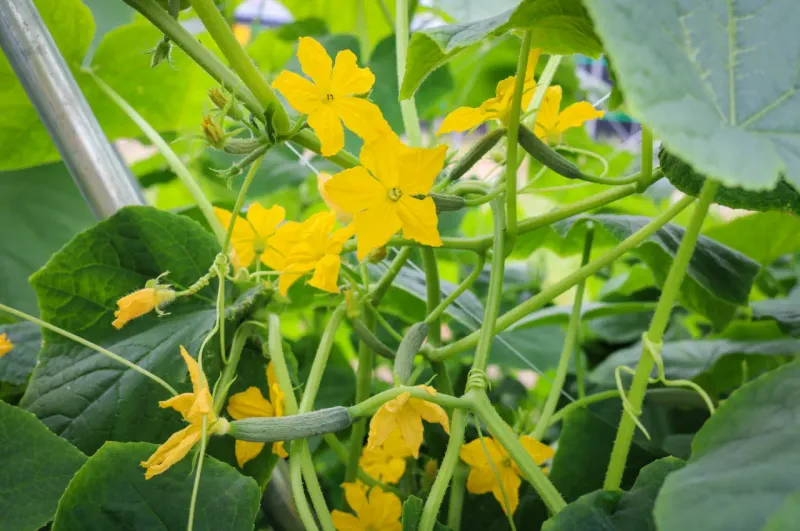
Not every cucumber needs bees to make fruit, and not every cucumber with poor fruit set has a pollination problem. Checking the seed packet or looking up the cultivar name before deciding on a fix can save a lot of effort. Cucumber varieties fall into a few broad categories, and the category determines whether pollination is even part of the equation.
Parthenocarpic cucumbers can set fruit without pollination at all. UMN Extension’s pollination requirements guide and Penn State Extension’s high-tunnel cucumber guide both note that parthenocarpic cultivars are often used in greenhouse or tunnel production specifically because they do not depend on insect visitors. If pollination does occur in some parthenocarpic varieties, the resulting fruit can be seeded or misshapen rather than the smooth seedless type the cultivar was bred to produce. Gynoecious cultivars produce mostly or entirely female flowers, which sounds like an advantage, but some gynoecious varieties still need a pollen-producing companion plant to set fruit.
Seed packets for these cultivars sometimes include a few seeds of a standard variety specifically to provide pollen.
Standard monoecious cucumbers produce both male and female flowers on the same plant and generally do require insect activity for good pollination. If your standard cucumber has female flowers and you have reason to think insect activity is genuinely low in your garden, Colorado State University Extension identifies hand pollination as an option worth considering for that specific situation. Transferring pollen from a male flower to a female flower with a small brush or a cotton swab can help, though it is not a guaranteed fix and is not necessary in every garden. UMN Extension confirms that cultivar type determines the approach, so start with the seed packet.
Harvest regularly and protect future flowers
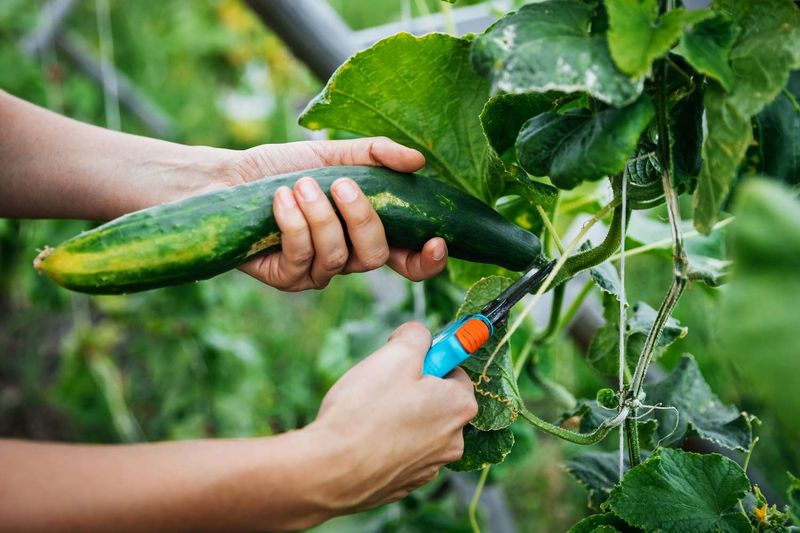
Once you have worked through the diagnostic steps, a few ongoing habits can help keep the plant producing. Frequent harvesting is one of the more straightforward ones. Illinois Extension’s cucumber plant detail page and Colorado State University Extension both note that overmature cucumbers left on the vine can inhibit additional fruit set. Picking cucumbers at usable size, rather than letting them grow oversized or yellow, keeps the plant’s energy directed toward new fruit rather than maturing existing ones.
Male flowers on standard cucumbers should stay on the plant. They supply the pollen that female flowers need, and removing them is counterproductive for any non-parthenocarpic variety. UMN Extension’s growing guide is clear on this point. If you are dealing with pests and considering a pesticide application, the timing and product matter considerably.
UMN Extension’s pesticide and pollinator guide recommends avoiding applications directly to open flowers and treating when bee activity is at its lowest, typically in the early morning or evening. Always follow the pesticide label, use only products labeled for cucumbers and the specific pest, and observe any stated restrictions around pollinators. Penn State Extension reinforces that insecticide exposure during bloom can reduce the pollinator activity that cucumber fruit set depends on.
After correcting whichever conditions applied to your situation, watch the next flush of female flowers and the tiny cucumbers behind them. Fruit that begins to enlarge and hold is a reliable sign that conditions have improved. A garden that flowers freely but fruits reluctantly usually has a solvable problem – the key is matching the fix to the actual cause.