
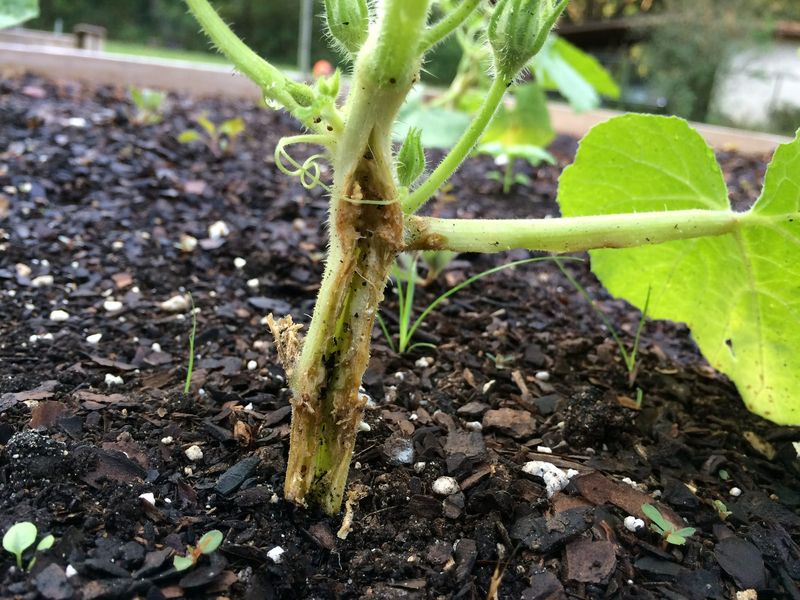
Walking out to your garden and finding a squash plant completely collapsed is one of the more unsettling summer surprises a home gardener can face. The first instinct is usually to reach for the hose, but extra water may not be the answer at all. A hidden caterpillar tunneling inside the lower stem can quietly cut off the plant’s water supply, causing a runner or even an entire plant to go down fast. Before you water or worry, a quick look at the base of the stem can tell you a lot about what is actually going on.
Inspect the lower stem before blaming the heat
Finding a wilted squash plant on a hot afternoon feels like an obvious watering problem, but the picture is not always that simple. A plant suffering from heat or drought stress may droop during the warmest part of the day and then perk back up overnight. When a runner or an entire plant stays collapsed and does not recover by morning, that persistent decline is worth investigating more carefully.
The first step is to check the soil. Push a finger a few inches into the ground near the plant’s base. If the soil is already moist, adding more water is unlikely to help and could make things worse if any root or stem rot is present. Once you have confirmed soil moisture, shift your attention to the lower stem, right at and just above the soil line.
Run your fingers along the lowest few inches of the main stem and look closely for any small holes, wet or discolored patches, or a gritty, sawdust-like material clinging to the outside. University of Minnesota Extension’s diagnostic guide for squash and pumpkin wilt lists squash vine borer, squash bugs, and bacterial wilt as distinct causes, which means a visual inspection of the stem is necessary before drawing any conclusions. Wilting alone cannot identify the cause, and cutting into a healthy stem creates unnecessary injury.
A clearwing moth larva can disrupt the vine’s water supply
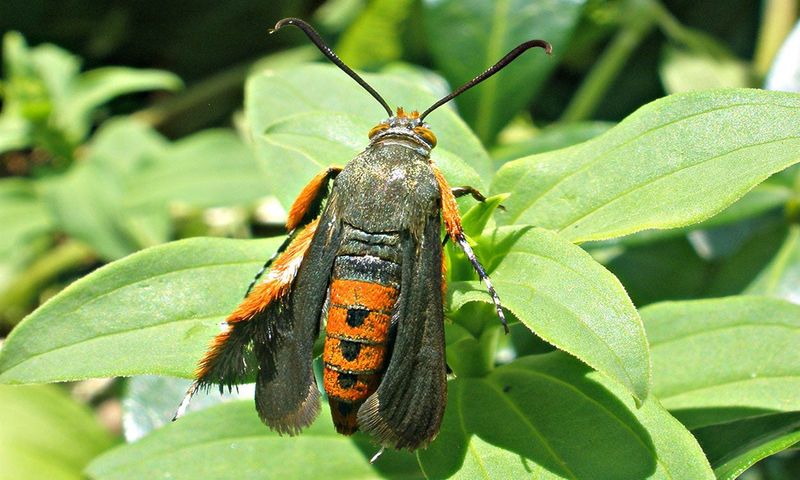
The pest responsible for this kind of hidden stem damage is the larva of a clearwing moth. The adult moth is a day-flier with a striking orange-and-black abdomen that can look like a wasp at first glance. During early to midsummer in much of the United States, females land on the lower stem or nearby plant parts and lay flat, reddish-brown eggs one at a time. The eggs are small enough to overlook unless you are specifically searching for them.
Once an egg hatches, the tiny caterpillar chews its way directly into the stem and begins feeding on the soft tissue inside. University of Illinois Extension’s squash vine borer page describes how the larva feeds internally for roughly four to six weeks before exiting the stem to pupate in the soil. During that entire period, the caterpillar is hidden from view and protected from most surface treatments.
As the larva feeds and grows, it hollows out more of the stem’s interior. That internal damage can interrupt the movement of water from the roots up through the plant, causing runners to wilt and, in severe cases, the whole vine to collapse. University of Maryland Extension’s squash vine borer guide notes that zucchini, acorn, delicata, and Hubbard types tend to be more vulnerable, though timing and severity vary by region and individual planting. Not every infestation follows the same path, and some plants sustain damage without fully collapsing.
Look for a hole, frass, and a hidden caterpillar
Wilt by itself is not enough to conclude that a borer is present. The inspection that actually matters is a careful look at the lowest portion of the main stem, from the soil line up to the first few inches of vine. Start with your eyes before touching anything.
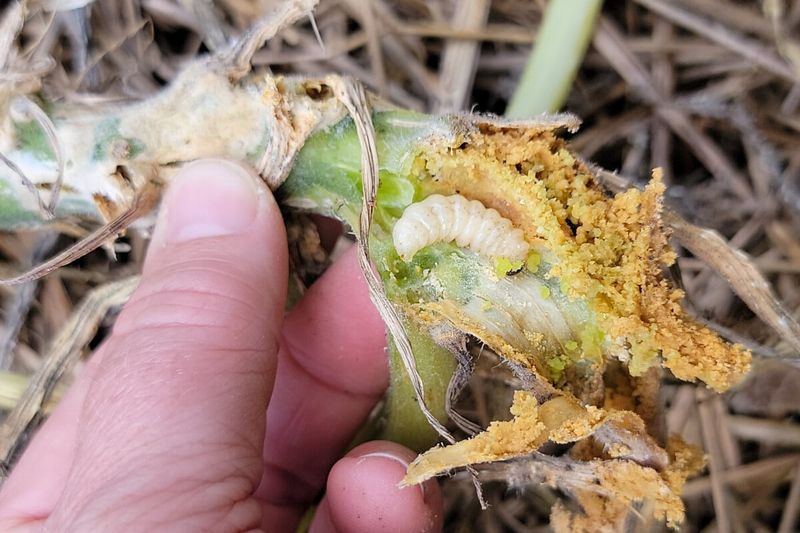
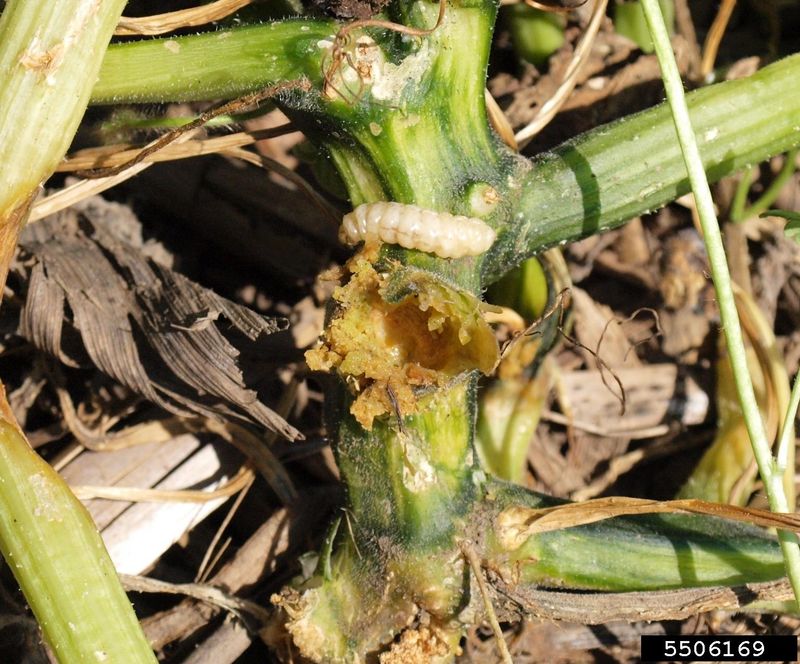
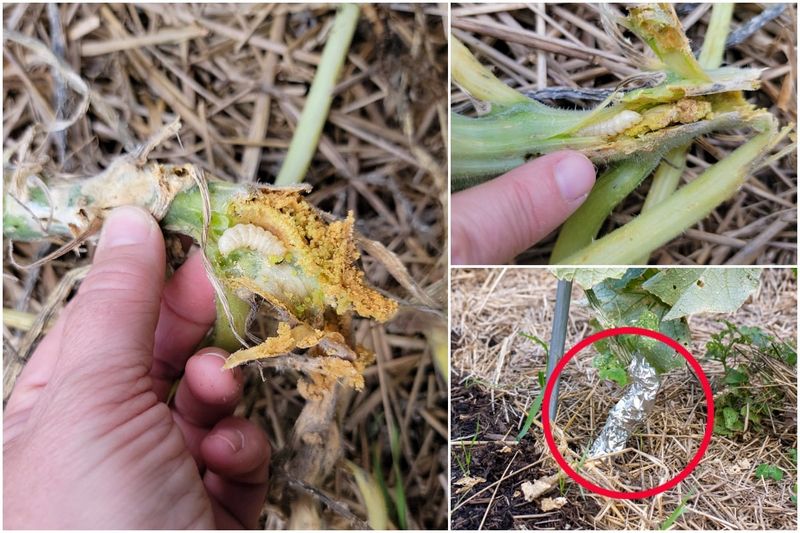
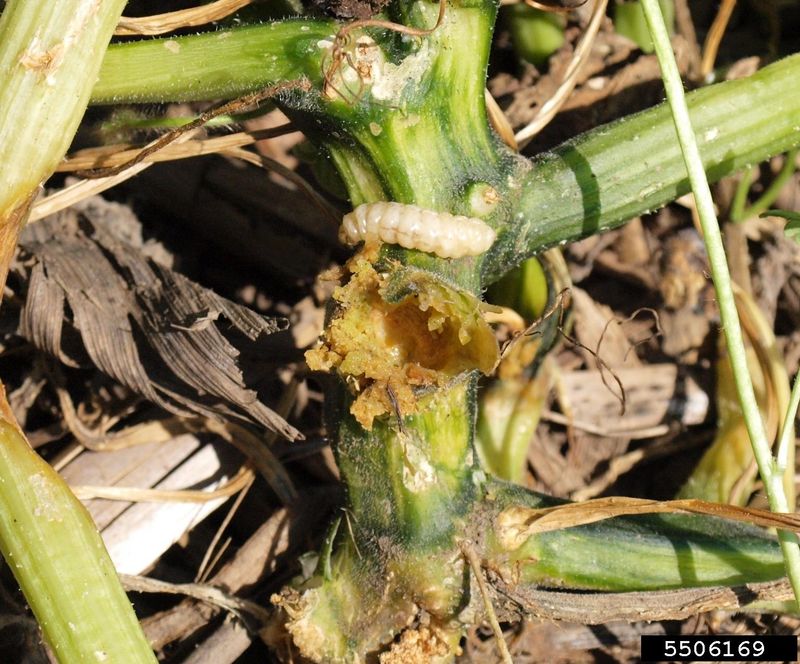
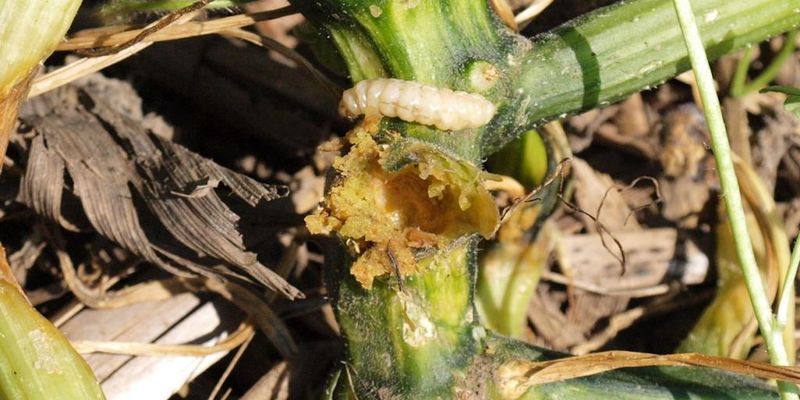
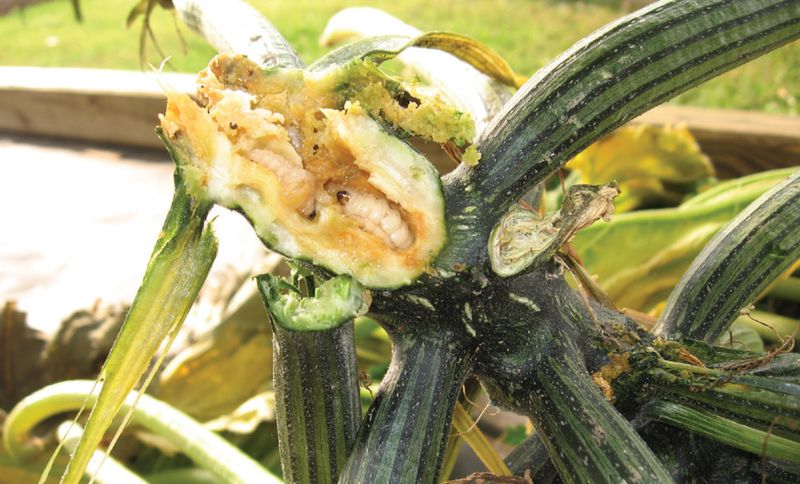
The most telling sign is a small, round entry hole, often surrounded by a crumbly or paste-like material that ranges from greenish to orange in color. That material is frass, which is the mixture of waste and chewed plant tissue the caterpillar pushes out of the stem as it feeds. Maryland Extension’s resource on squash vine borer describes this frass as one of the clearest field signs of an active infestation. Wet or discolored tissue around the hole is another clue that something is feeding inside.
If you see a hole and frass together, and the runner or plant is wilting, that combination justifies a closer look. Only at that point does it make sense to consider gently pressing on the stem to feel for soft spots or, when evidence clearly points to an active borer, carefully opening the stem to look for the larva itself. Illinois Extension and Illinois Hort Answers both describe the larva as cream-colored with a brown head, roughly an inch long when mature. A plant that is wilting but shows none of these stem signs should be evaluated for other causes before any stem is cut.
Separate borer damage from heat, squash bugs, and wilt disease
Not every wilted squash plant has a borer inside. Summer heat alone can cause dramatic daytime droop, especially in plants that are not yet well established or that are growing in sandy, fast-draining soil. The key difference with heat or drought stress is recovery: a plant that wilts in the afternoon but looks mostly normal the next morning is likely responding to temperature and moisture, not internal stem damage. Check the soil before assuming the worst.
Minnesota Extension’s wilting diagnosis tool lists squash bugs as a separate cause of squash decline. Squash bugs feed from the outside using piercing-sucking mouthparts, and they often leave behind clusters of shiny bronze eggs on the undersides of leaves, along with visible nymphs or adults on the plant. Their damage tends to cause yellowing and wilting that spreads outward from the feeding site, but there is no stem hole or frass involved.
Bacterial wilt, carried by cucumber beetles, can cause rapid daytime wilting that may temporarily ease at night early in the disease’s progression. Penn State Extension’s guide on insect pests affecting squash notes that cucumber beetles are the vector, so their presence alongside wilting symptoms is a reason to consider bacterial wilt as a possibility. Stem rot and root problems also produce persistent wilt without borer frass. Running through this short mental checklist, soil moisture, external insects, stem signs, takes only a few minutes and prevents unnecessary stem damage from cutting into a healthy vine.
Try one careful rescue only when borer evidence is present
When a stem shows a clear entry hole and frass together, and the plant is wilting in a way that suggests internal damage rather than heat stress, a careful rescue attempt may be worth trying. The goal is to locate and remove the caterpillar larva before it does more damage, but the outcome depends heavily on how much of the stem is still functional.
Maryland Extension’s squash vine borer guide and University of Georgia’s squash production guide both describe the technique: use a clean, sharp knife or blade to make a careful lengthwise incision in the stem close to where the frass is exiting. If the cream-colored larva is accessible, remove it. Then cover the wounded section of stem with moist soil, which gives the plant a chance to develop new roots from that node and begin compensating for the damage.
Set realistic expectations before you start. A plant whose crown or main stem has been heavily hollowed out may not recover even after the larva is removed. Illinois Extension’s managing squash vine borer article points out that burying healthy stem nodes along the vine can encourage additional rooting in vining types, which makes the plant more resilient to partial stem damage. For bush-type squash such as most zucchini, Illinois Extension’s summer squash page notes that the crown is more critical and damage there is harder to compensate for.
This rescue is a reasonable attempt, not a guaranteed fix.
Prevent egg-laying before the larva enters
Once a caterpillar is inside the stem, your options narrow considerably. The more effective approach is to stop the moth from laying eggs in the first place, and that means starting early. During early to midsummer in much of the United States, adult moths become active and begin searching for stems to deposit eggs on. Weekly inspection of the lower stem and runners during this period gives you the best chance of catching eggs or early damage before it becomes serious.
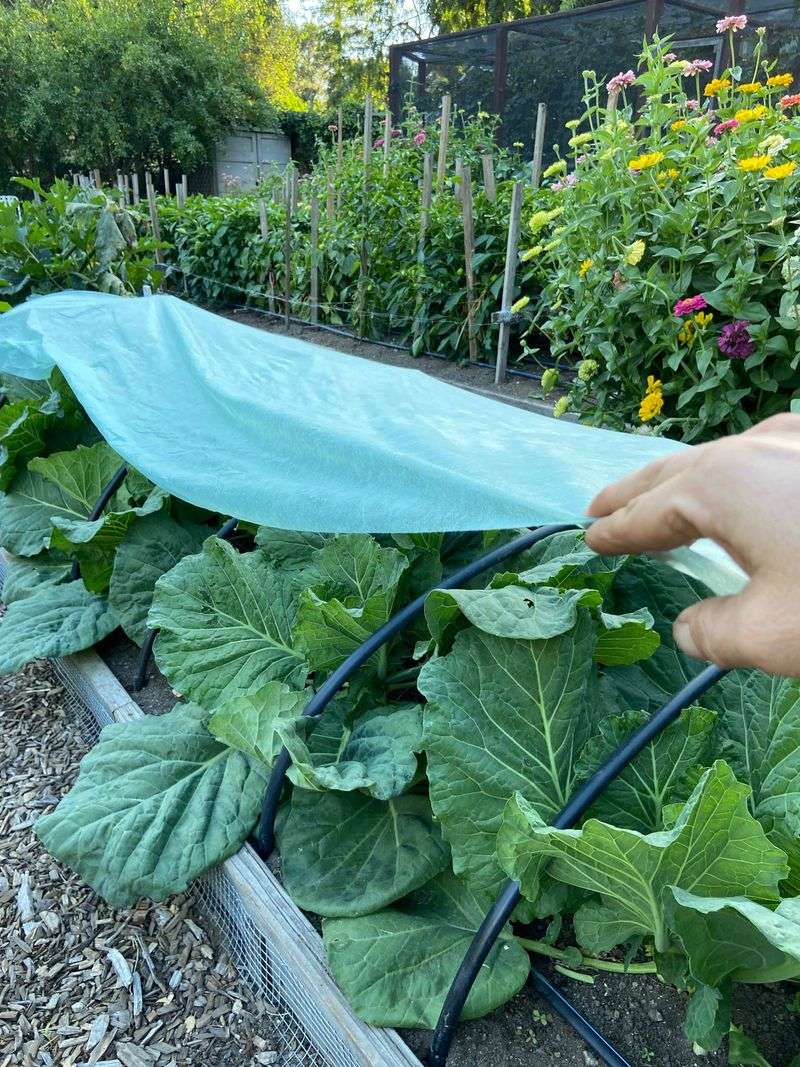
Floating row covers are one practical barrier tool. Maryland Extension’s row cover resource explains that covers can exclude adult moths when installed before egg-laying begins and kept closed at the edges. The critical catch is that squash flowers require insect pollination to set fruit, so covers must be removed once plants begin flowering unless the gardener is willing to hand-pollinate each morning. Covers can also trap significant heat during hot weather, so check temperatures under the fabric and be prepared to vent or remove them on very hot days to avoid stressing the plants.
Choosing less-susceptible squash types is another layer of protection. Maryland Extension and Illinois Extension both note that butternut, Tromboncino, and some cushaw or Cucurbita moschata varieties tend to be less susceptible than zucchini, acorn, or Hubbard types. Illinois Hort Answers reinforces that susceptibility varies by cultivar and region, so less susceptible does not mean immune. Combining variety selection with row covers and regular inspection gives you a more reliable defense than any single tactic alone.
Foliar sprays generally cannot reach a larva inside the stem
Reaching for a spray bottle is a natural reaction when a plant is in trouble, but timing matters enormously with squash vine borer. Insecticides are most useful before larvae enter the stem or against newly hatched caterpillars that have not yet tunneled inside. Once a larva is actively feeding inside the vine, ordinary foliar sprays applied to the outside of the stem generally cannot reach it. Illinois Extension and Purdue Extension’s vegetable insect identification guide both note this limitation, which means spraying after the fact is unlikely to reverse existing damage.
If you are considering a preventive or early-intervention insecticide application, the product label is the only authoritative guide for how to proceed. EPA guidance on reading the pesticide label is clear: the label is a legal document that specifies which crops and pests the product is registered for, how and when to apply it, what protective equipment is required, the preharvest interval, and any restrictions on application timing near blooms. No active ingredient should be assumed to be universally legal or appropriate for every garden situation.
Squash flowers attract bees and other pollinators, which makes timing and product selection especially important. EPA’s pollinator protection guidance emphasizes following label restrictions around bloom time and avoiding applications when pollinators are actively foraging. Applying at a particular time of day is not a substitute for reading the label, because restrictions differ by product. Check the EPA’s pesticide product label system if you need to locate the current label for a specific product before purchasing or applying it.
Combine inspection, cleanup, and practical prevention
A practical long-term response to squash vine borer combines several measures rather than relying on any single fix. When wilt persists and does not match heat or drought patterns, inspect the lower stem for holes and frass before doing anything else. Attempt the stem rescue only when characteristic borer evidence is actually present, and keep in mind that additional water or a foliar spray will not reverse internal damage already done by a feeding caterpillar.
At the end of the season, removing and destroying infested vines rather than leaving them in place or composting them can reduce the number of larvae that successfully exit the stem and pupate in the soil. Illinois Extension and Illinois Extension’s managing borer article both recommend this sanitation step. Crop rotation may reduce pressure from adults emerging near last year’s planting site, but it does not stop moths from flying into a new garden location, so it works better as one piece of a broader plan than as a standalone solution.
University of Georgia’s vegetable troubleshooting guide reinforces that no single tactic eliminates this pest reliably. Pairing end-of-season cleanup with row covers installed before adult flight, thoughtful variety selection favoring less-susceptible types, and weekly stem inspections during the risk window gives you the most realistic chance of a productive squash season. Gardening with this pest is largely a matter of staying observant early, because the window between egg-laying and a larva safely inside the stem is the only time most interventions have much effect.