
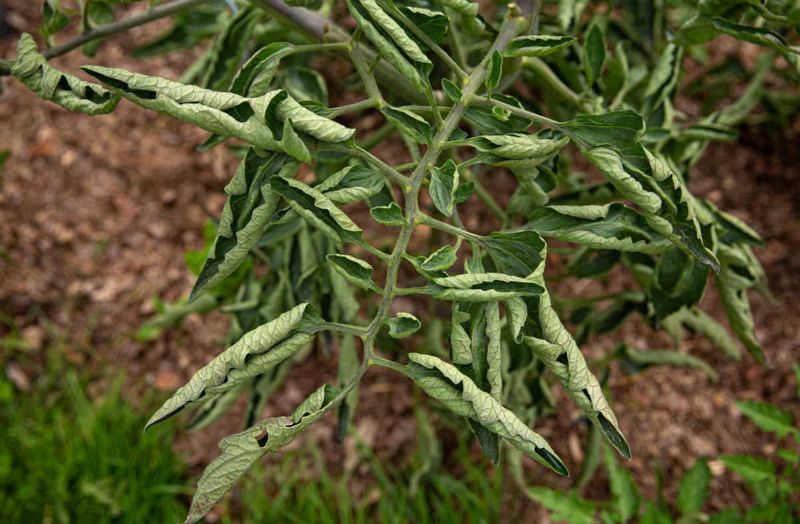
Curling tomato leaves during a heat wave can send a gardener straight to the garden center looking for a fix, but the problem is often simpler than it looks. Most of the time, leaves that roll upward and inward during hot weather are responding to stress, not signaling a disease. Knowing what to look for first can save your plant, your time, and your money.
The leaf pattern often points to physiological leaf roll
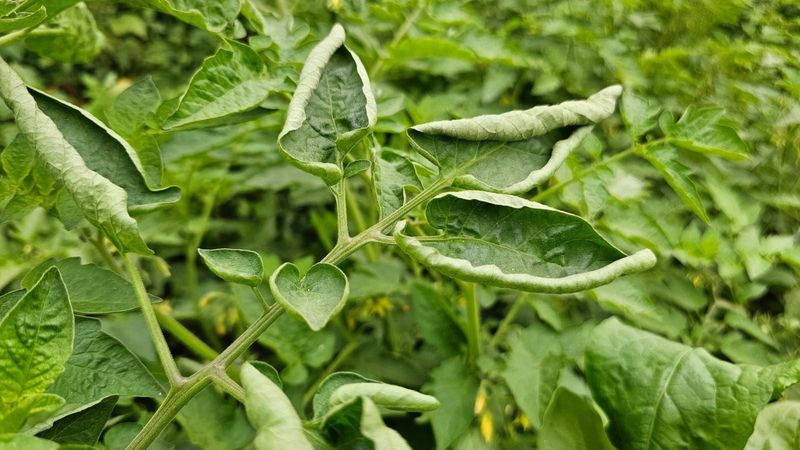
Firm, green leaves that curl upward and inward along the lower part of a tomato plant are a recognizable pattern worth knowing. University of Minnesota Extension’s tomato leaf curl diagnostic identifies this response as physiological leaf roll, a noninfectious condition that develops when the plant faces environmental stress. The leaves may feel leathery to the touch, and in more pronounced cases they can roll tightly enough to resemble a narrow tube.
This pattern tends to appear fairly uniformly across the lower canopy rather than in scattered spots, and the affected leaves stay green without yellowing or mottling. Utah State University Extension’s vegetable IPM advisory notes that the rolling is upward and inward, without the vein discoloration or distorted tissue that suggests something more serious. If the rest of the plant is growing at a normal pace and putting out healthy new leaves, that context supports a stress interpretation.
One thing worth understanding before you act: existing curled leaves may stay that way even after conditions improve. USU Extension research on tomato physiology confirms that new growth can emerge looking normal once stress is reduced, while the original rolled leaves remain. Treat this as a provisional read on what is happening, not a guaranteed diagnosis, since other causes can produce similar symptoms.
Heat can curl leaves even when the soil is not bone-dry
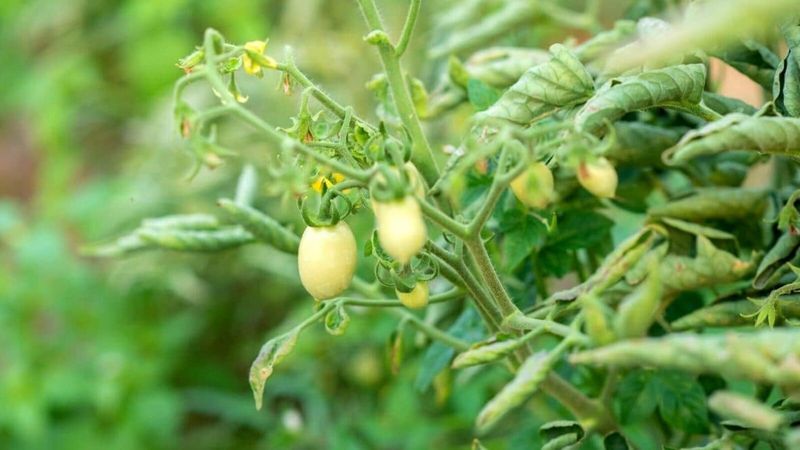
Hot, windy conditions pull water out of tomato leaves faster than the roots can push it back up. When that gap widens, the leaf margins roll inward to reduce how much surface area is exposed to the drying air, a response that Oregon State University Extension’s heat-wave garden guide describes as a plant’s way of managing water loss under atmospheric pressure. The soil can still contain adequate moisture while this is happening, which is why curling leaves alone are not a reliable signal that the plant needs water right now.
Heat stress and water stress overlap but are not the same thing. A plant can also struggle when its root zone is waterlogged, physically damaged, or otherwise unable to deliver water to the canopy, even if the surrounding soil feels damp. University of Minnesota Extension’s heat gardening guidance points out that both the atmosphere and the root zone contribute to whether a plant can stay hydrated under extreme conditions.
Relying on leaf curl to decide whether to water can lead you in the wrong direction. A plant facing root damage or waterlogged conditions will not benefit from more water on top, and a plant dealing with pure atmospheric heat stress may not need any at all. Check the soil and root zone directly before making that call.
Check the root zone before reaching for fertilizer
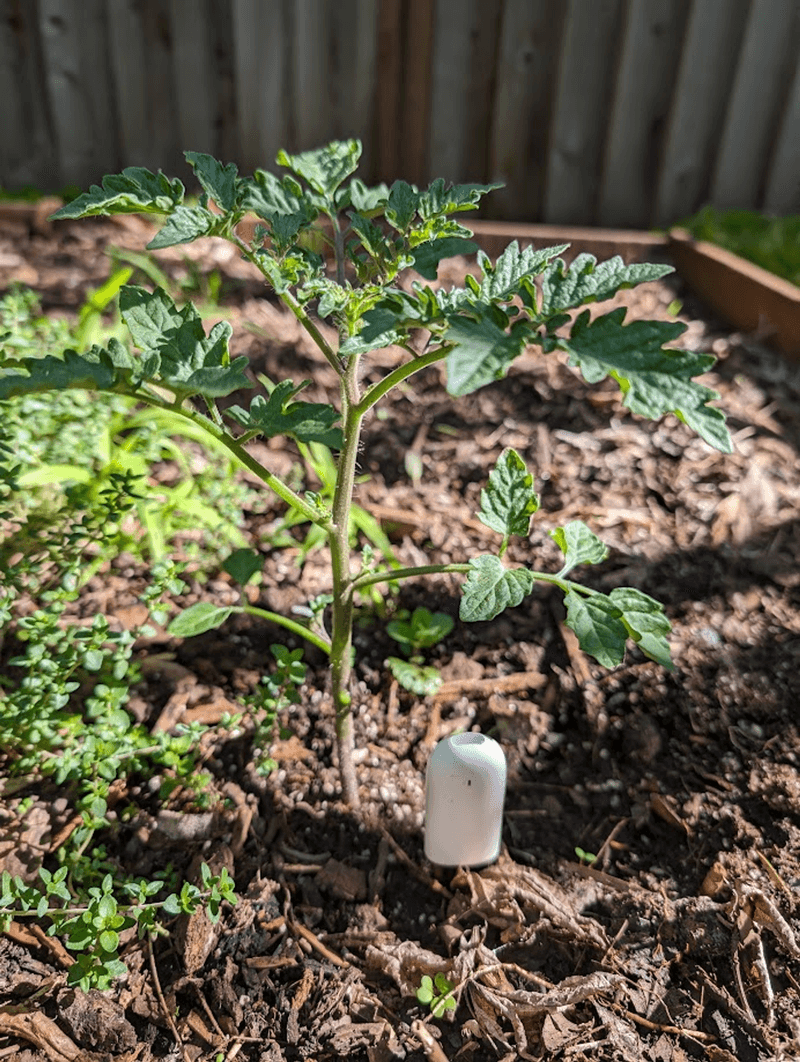
Before adding anything to the soil or spraying anything on the leaves, take a few minutes to read what the root zone is actually telling you. Push a finger or a trowel a few inches into the soil near the plant and note whether it is dry, moist, or soggy. University of Minnesota Extension’s tomato growing guide cites roughly 1 inch of rainfall or irrigation per week as a broad starting benchmark, but hot weather, sandy or clay-heavy soil, container size, plant maturity, wind, and recent rainfall all shift what the plant actually needs on a given day.
Think through recent conditions as part of the inspection. Has there been a stretch of unusually high heat or wind? Did a watering get skipped during that period? Was the plant recently transplanted, or were roots disturbed by cultivation or a nearby dig?
Container plants dry out faster than in-ground plants and may need more frequent attention during a heat wave. Minnesota Extension’s vegetable watering guidance recommends checking soil conditions directly rather than relying on a fixed schedule.
This inspection step matters most when the impulse is to reach for fertilizer, calcium supplements, or pesticides. Minnesota Extension’s fertilizing guide cautions that adding nutrients without knowing whether the soil needs them can introduce excess salts or nitrogen that worsen stress rather than relieve it. The tomato disorders resource from Minnesota Extension reinforces that leaf roll alone does not confirm a nutrient deficiency. The root zone check is the decision point, not the appearance of the leaves.
Use thorough, conditional watering and protective mulch
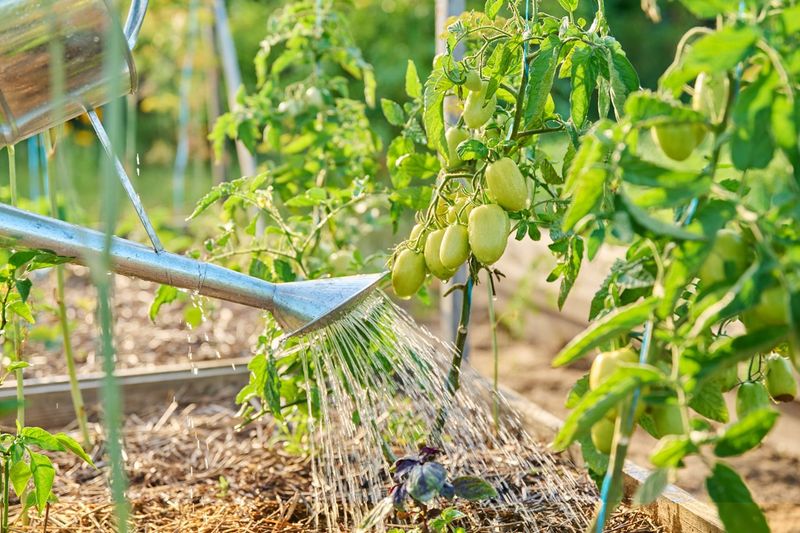
When the root zone inspection confirms the soil is dry and the plant needs water, the approach matters as much as the timing. Water thoroughly at the soil line so moisture penetrates deeply enough to reach the roots, rather than offering frequent shallow passes that wet only the top inch or two. Minnesota Extension’s vegetable watering guidance favors deep, thorough watering over frequent light applications because it encourages roots to grow deeper and draws on stored soil moisture more effectively.
Morning watering is generally preferred when you have the flexibility to choose, since foliage that gets wet has time to dry before evening, reducing conditions that favor fungal disease. Oregon State Extension’s heat-wave guide also recommends watering at the soil line and avoiding routine overhead irrigation, because soil splash and prolonged wet foliage can increase disease pressure. That said, a plant that is visibly wilting and urgently needs water should not wait for a specific hour on the clock.
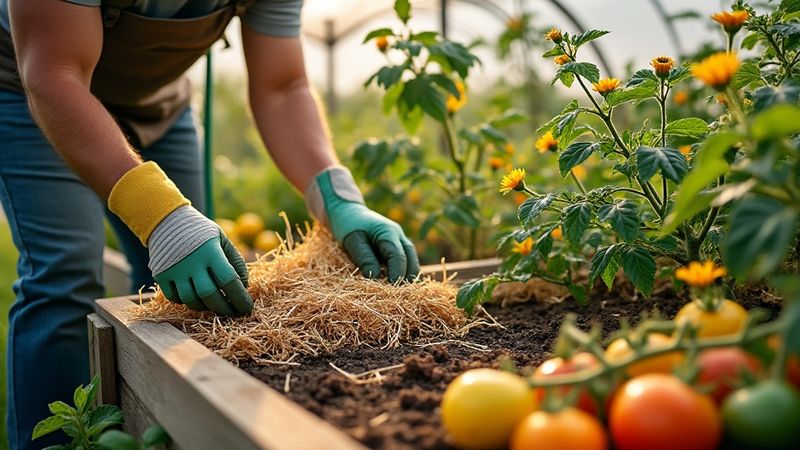
Mulch is a practical companion to good watering habits. Minnesota Extension’s mulching guide notes that an appropriate layer of organic mulch around the plant can slow evaporation from the soil surface and moderate temperature swings in the root zone. Keep the mulch a few inches away from direct contact with the stem to avoid creating a moist environment at the base that can invite rot. Minnesota Extension’s tomato guide treats mulching as a standard practice for keeping moisture more consistent between waterings, which is especially useful when temperatures climb.
Pause major pruning and add temporary shade during exceptional heat
Reaching for pruning shears during a heat wave is a common instinct that can backfire. Removing healthy leaves strips away the canopy that shades the fruit and stems, leaving them exposed to more direct sun and heat at exactly the wrong time. University of Illinois Extension’s tomato leaf rolling article notes that heavy pruning is itself one of the triggers for physiological leaf roll, so cutting back aggressively during a heat event can compound the stress you are trying to relieve.
Limit any leaf removal during a heat wave to foliage that is clearly dead, diseased, or damaged. Minnesota Extension’s hot-weather gardening guide advises holding off on major pruning until temperatures moderate and the plant has had a chance to stabilize. Healthy green leaves, even curled ones, are still doing useful work for the plant.
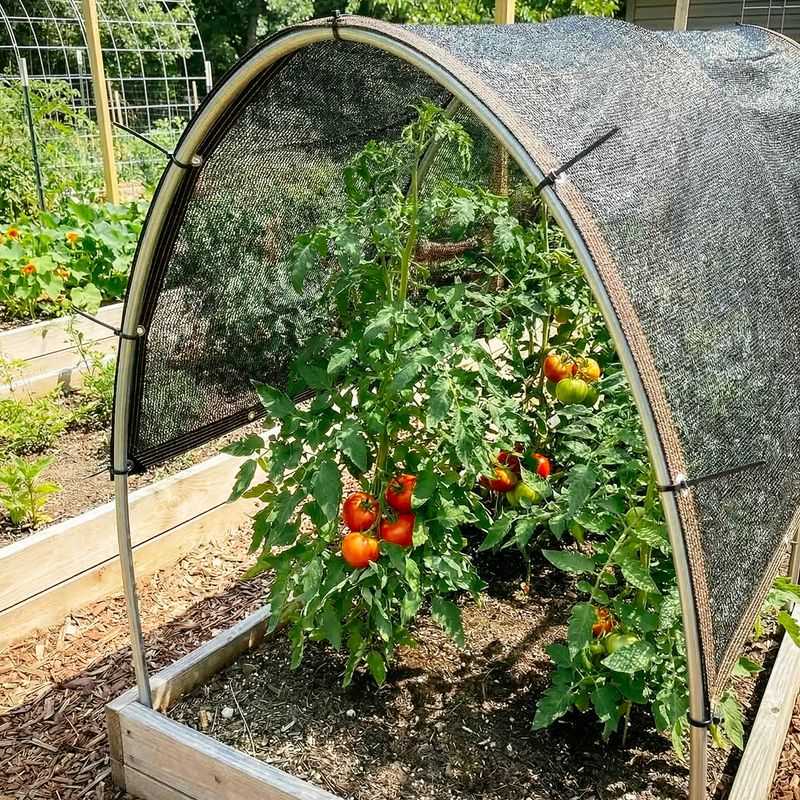
For plants facing exceptional heat or intense afternoon exposure, temporary shade is a reasonable protective step. Minnesota Extension’s heat gardening news piece recommends 30 to 40 percent shade cloth or a simple improvised barrier during peak afternoon hours. Container plants are especially vulnerable since their root zone heats up faster than in-ground beds. Once the heat wave passes, remove the shade so the plant can return to its normal light, since tomatoes need full sun to produce well over the season.
Look for warning signs that point beyond ordinary heat stress
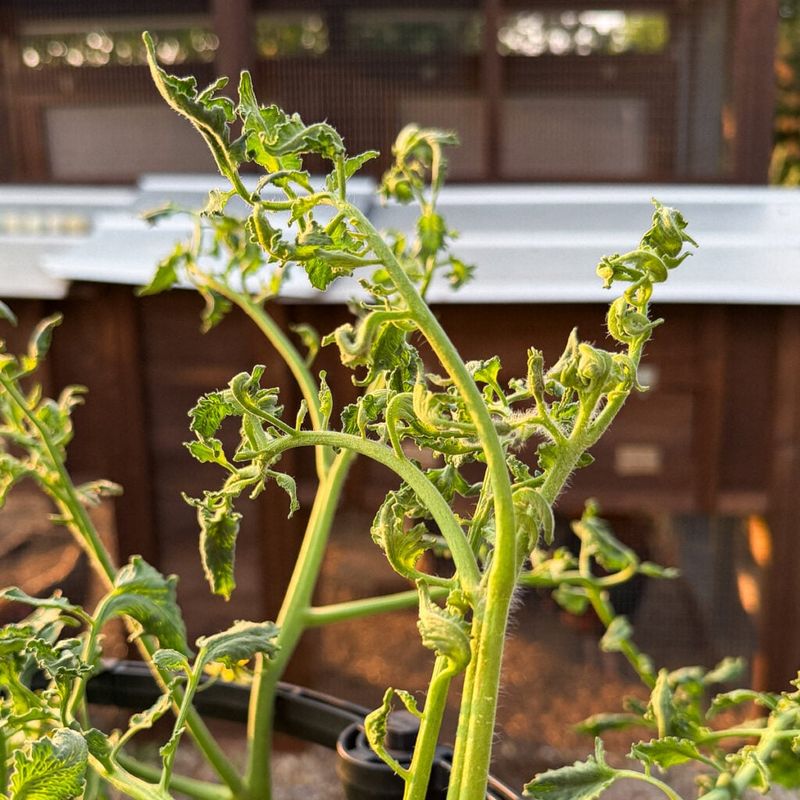
Uniform green curling during a heat wave, with otherwise normal growth and healthy new leaves coming in, is a relatively reassuring picture. The situation calls for more attention when the pattern shifts. Minnesota Extension’s tomato leaf curl diagnostic tool flags yellowing, mottling, stunting, and severe leaf distortion as signs that something beyond heat stress may be involved. Abnormal fruit development and failure of new growth to normalize after conditions improve are also reasons to look further.
Purple or reddish veins on the undersides of leaves, combined with thick or crisp texture, upward rolling, and stunted or prematurely dull fruit, raise the possibility of curly top virus. Utah State University Extension’s curly top resource explains that infected plants do not recover through better watering or reduced heat stress – the disease is spread by beet leafhoppers and has no cure once established. Improved growing conditions will not reverse the damage.
Twisted, cupped, or unevenly distorted growth – especially when the distortion is concentrated on the side of the plant nearest a possible spray application – raises concern about herbicide exposure. Kansas State Extension’s garden guide notes that drift from nearby spraying, contaminated equipment, treated grass clippings used as mulch, or contaminated compost are all possible sources. Minnesota Extension’s tomato disorders guide also lists aphid feeding, root damage, excessive nitrogen, and overwatering as causes of curling that will not respond to heat-stress remedies. None of these can be diagnosed from symptoms alone, so persistent or worsening curling with any of these additional signs warrants a closer look.
Protect flowers and fruit while the plant recovers
Leaves are not the only part of the plant that struggles when temperatures climb. Penn State Extension’s heat stress and tomatoes resource explains that sustained temperatures above roughly 85 degrees Fahrenheit during the day and 70 degrees at night can disrupt flowering, pollination, and fruit set – sometimes more noticeably than the leaf rolling that catches a gardener’s eye first. Blossoms may drop before setting fruit, or fruit that does set may develop unevenly.
That does not mean every plant with curled leaves will lose its crop. Minnesota Extension’s guide on heat effects in the vegetable garden notes that tomatoes can resume normal flowering and fruit set once temperatures moderate. Minnesota Extension’s irrigation strategies for vegetables reinforces that keeping the root zone consistently supplied – without overwatering – supports the plant through the stress period. Watch new growth, overall vigor, and whether flowers are setting rather than fixating on whether the already-curled leaves change shape.
The most useful order of operations stays the same whether you are worried about leaves or fruit: assess the root zone first, reduce stress with appropriate watering and mulch, and hold off on calcium supplements, extra fertilizer, pesticides, or aggressive pruning until you have ruled out simpler causes. A plant that gets the basics right has the best chance of carrying its crop through the heat.