
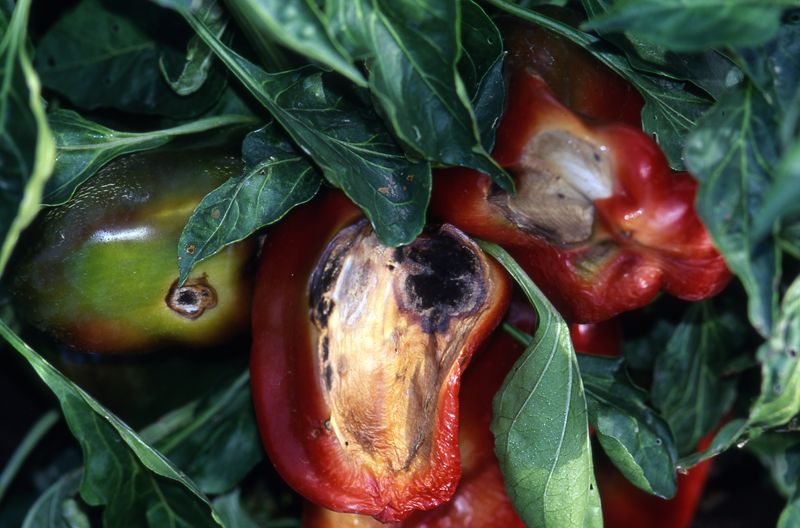
That pale, papery patch on your pepper is frustrating, especially when the rest of the fruit looks perfectly fine. What you are looking at is called sunscald, and it happens when intense sunlight overheats the skin of exposed fruit. The damage is real and permanent, but understanding why that fruit lost its shade can help you protect what is still growing on the plant.
Sunscald leaves a pale, papery mark on exposed fruit
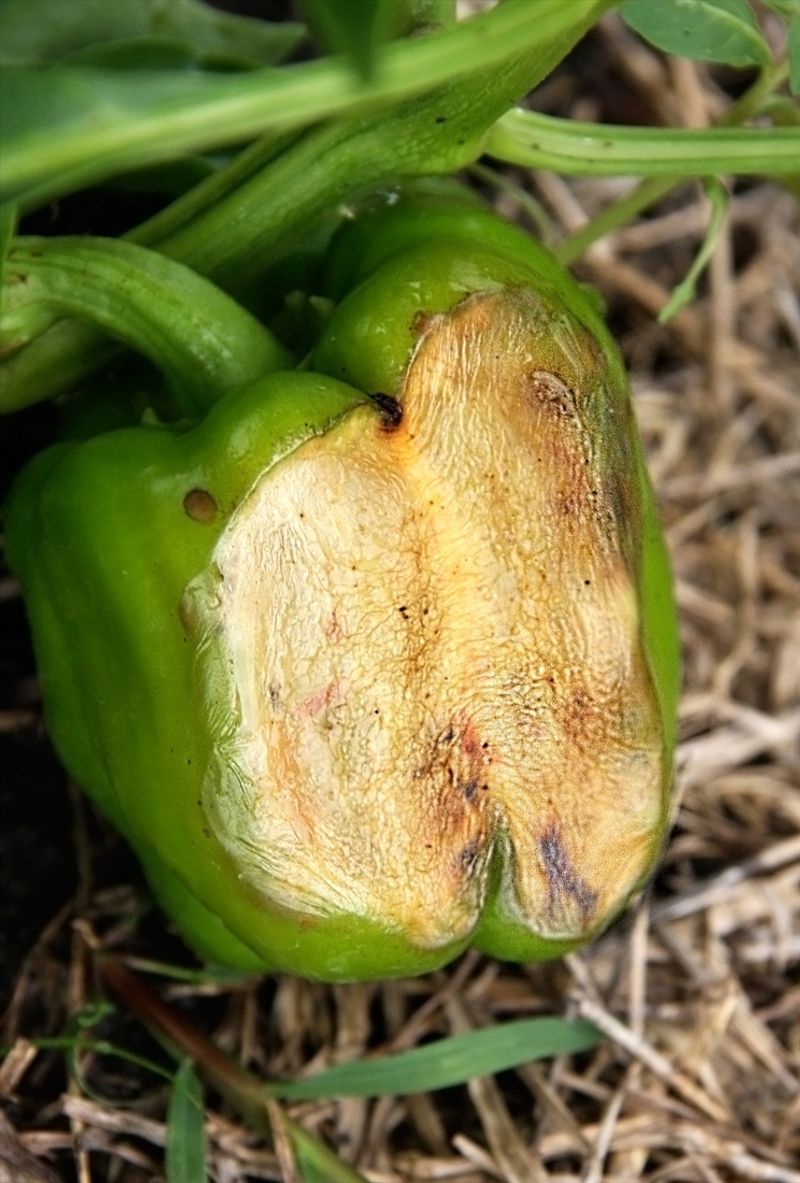
When a pale tan, white, or light-brown area shows up on the side of a pepper that faces the sun, sunscald is one of the most likely explanations. University of Minnesota Extension’s pepper fruit diagnosis tool describes the affected tissue as often becoming thin, papery, wrinkled, leathery, or sunken over time. The key detail that points toward sunscald rather than rot or disease is that the damage stays on the sun-exposed surface rather than appearing randomly across the fruit.
That dry, confined location matters when you are trying to figure out what you are dealing with. A lesion that is wet, foul-smelling, spreading quickly, or showing up on the shaded side of the fruit calls for a different diagnosis entirely. Soft rot, bacterial disease, or fungal problems can look similar at first glance, so the location and texture of the patch are your first clues.
One thing worth correcting right away: the title of this article leans harder on the leaf connection than the science fully supports. UC IPM’s sunscald guide for vegetables is clear that the immediate cause of sunscald is excessive solar heating of exposed fruit. A sparse or damaged canopy often explains why the fruit became exposed, but it is a risk factor and a useful place to investigate, not the universal origin of every case.
Leaves often protect peppers from the heat, but they are not the whole cause
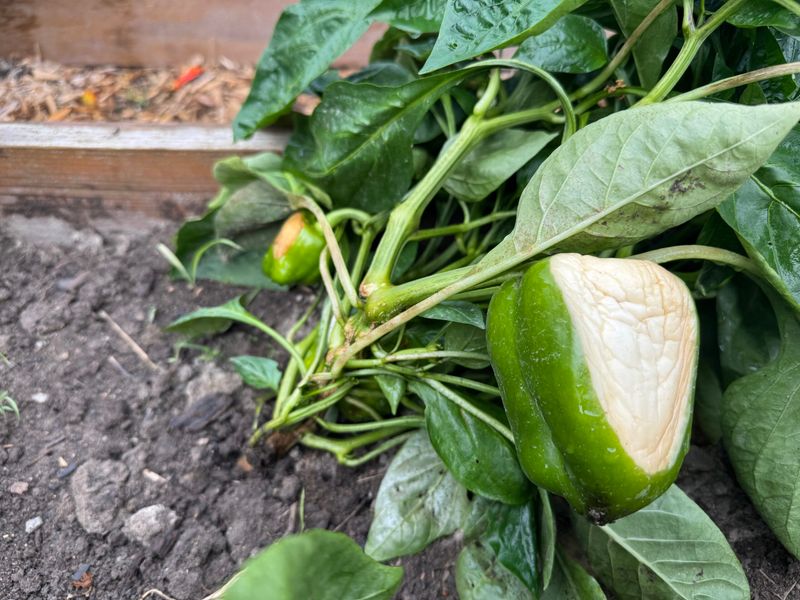
Healthy pepper foliage does real work during hot weather. Leaves intercept direct sunlight before it reaches the fruit, keeping skin temperatures low enough to avoid heat injury. When that canopy is full and well-positioned, fruit tucked inside it is largely protected even on the hottest afternoons.
The causal chain matters here, though. UC IPM explains that sunscald occurs when fruit is exposed to intense direct sunlight, and that a reduced or damaged canopy is a major reason fruit loses that protection. But the leaves are not always the starting point. University of Minnesota Extension’s pepper growing guide notes that plant size, vigor, and overall growing conditions all affect how well a plant can shade its own fruit.
Some pepper varieties naturally carry thinner foliage, and certain fruit positions simply grow above or outside the available canopy regardless of how healthy the leaves are. Fruit maturity can also play a role: research published in Scientia Horticulturae found that susceptibility to sunscald varies with fruit color and developmental stage in some pepper types, though this differs among cultivars and should not be treated as a universal rule. Local solar intensity, recent wind exposure, and even the angle of afternoon sun can push fruit into the danger zone without any recent change to the plant’s leaves. The canopy is a critical piece, but it shares the stage with several other factors.
Oregon State University’s pepper production guide reinforces that fruit growing beyond the protection of surrounding foliage is especially vulnerable, which is why the shape and spread of the canopy matter as much as leaf count alone.
Investigate why the fruit is exposed or the canopy is sparse
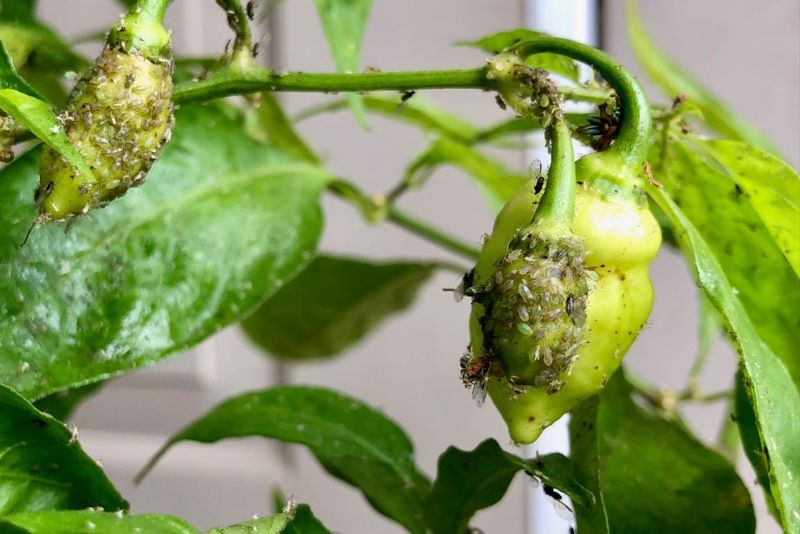
Rather than assuming the canopy recently thinned, treat this as a conditional investigation. Start by looking at the leaves themselves for clues about what opened up the gap between the fruit and its shade.
Cornell’s plant disease diagnostic gallery points to several common culprits: bacterial leaf spot can cause widespread leaf drop, and aphid colonies or other leaf-feeding insects can weaken foliage enough to reduce effective coverage. UC IPM’s pepper leaf spot management page describes how bacterial spot spreads under warm, wet conditions and can strip a plant of protective leaves surprisingly fast. Powdery mildew, hail, and strong wind can also thin a canopy that looked fine just a few days earlier.
Physical causes are just as worth checking. A broken main stem or a plant that has toppled over can expose a whole cluster of fruit at once. Over-pruning during training or staking can have the same effect. Utah State University Extension’s pepper guide emphasizes that drought stress and wilting can temporarily collapse foliage coverage even when the leaves are still attached, leaving fruit exposed during the hottest part of the day.
Some plants are simply small or young, with foliage that was never dense enough to cover all the developing fruit. Minnesota Extension and UC IPM’s disease notes on peppers both acknowledge that naturally sparse or compact cultivars face higher sunscald risk regardless of pest or disease pressure. Identifying the actual exposure pathway is the step that helps you prevent the next pepper from ending up with the same pale patch.
Check the leaves before treating the pepper
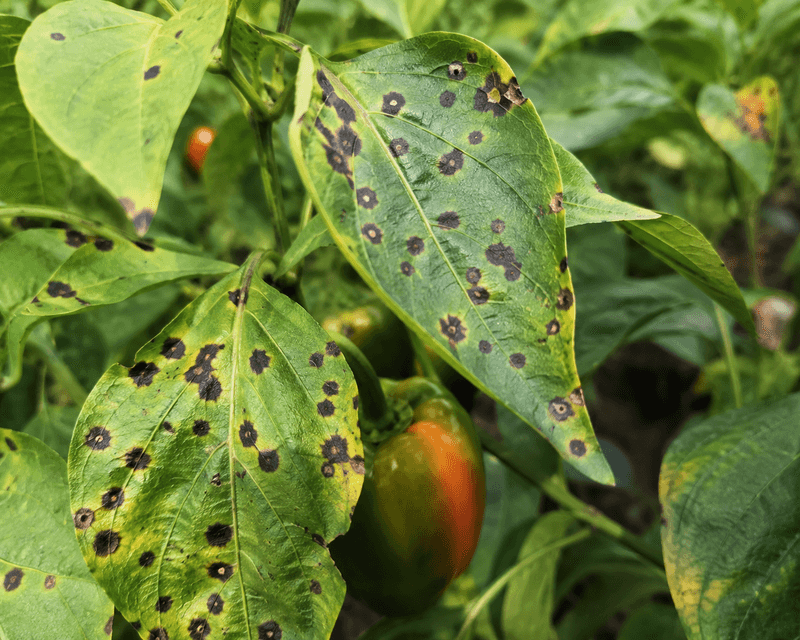
Before deciding how to respond, spend a few minutes reading the leaves as a diagnostic tool. The foliage often tells you more about what is actually happening than the fruit lesion alone.
Minnesota Extension’s pepper leaf spot diagnostic page describes bacterial spot as producing small, water-soaked spots that turn brown with yellow halos. On the fruit, the same bacterial infection can show up as raised, corky, scab-like spots rather than the pale, dry, sun-facing patch of sunscald. Mottled, puckered, or curling leaves point toward a possible viral problem, which would call for a completely different management approach. Noticing these differences early saves a lot of guesswork.
The fruit lesion itself also offers clues when you compare it against other common problems. Minnesota Extension’s fruit rot diagnostic guide contrasts sunscald’s dry, pale, sun-facing patch with the wet, rapidly spreading, foul-smelling tissue of bacterial soft rot. A lesion that is water-soaked, slimy, or spreading to the shaded side of the fruit needs a different diagnosis before any treatment plan makes sense.
Blossom-end rot is another disorder that gets confused with sunscald, but the two look quite different once you know where to look. Blossom-end rot develops at the very bottom tip of the fruit, where the flower was attached, and appears as a dark, sunken, often leathery lesion. Minnesota Extension’s pepper growing guide connects blossom-end rot to calcium transport problems driven by inconsistent soil moisture, not solar heating. A pale, papery patch on the side of the fruit facing the afternoon sun is a very different picture from a dark, collapsed blossom end.
Protect the healthy canopy instead of exposing more fruit
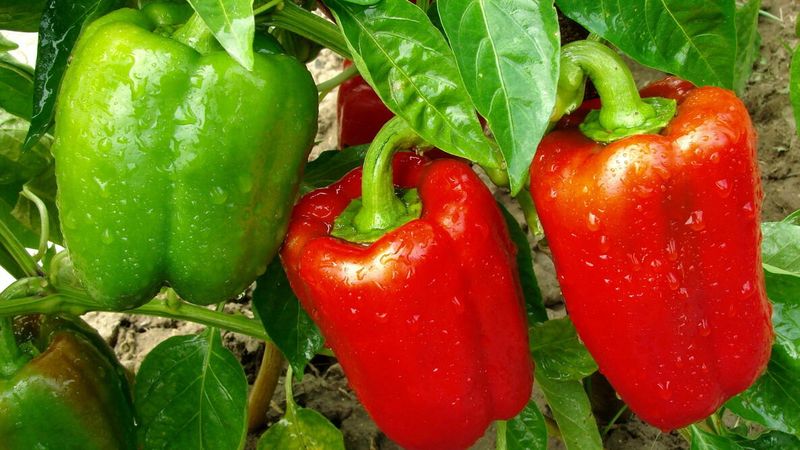
One of the most counterproductive things a gardener can do after spotting sunscald is start pulling leaves off the plant. Tidying up the plant, opening it up for airflow, or trying to get a better look at the fruit can all strip away the very coverage that was still doing its job.
UC IPM’s sunscald resource specifically recommends maintaining a healthy leafy canopy as one of the most reliable ways to limit sunscald damage. The practical rule is straightforward: remove a leaf only when it is clearly dead, actively diseased, or when a specific management decision requires it. Healthy leaves, even ones that look a little ragged from heat or wind, are still intercepting sunlight and keeping fruit temperatures down.
If a pest infestation or disease is actively thinning the canopy, addressing that problem directly gives the plant a chance to recover and push out new protective growth. Cornell’s sunscald notes point out that correcting the underlying cause of defoliation, whether aphids, bacterial spot, or something else, is more useful than reacting to the fruit damage alone.
New leaves that grow in after a problem is corrected may protect later-forming fruit, but they will not reverse the injury on the fruit that already scalded. UC IPM’s pepper disease notes confirm that sunscald tissue is permanently injured and that secondary fungal or bacterial colonizers can move into those dead areas if the fruit is left on the plant. The goal for the canopy is always forward-looking: keep what is healthy, correct what is causing loss, and protect the peppers still developing.
Maintain moisture and support plants without creating new damage
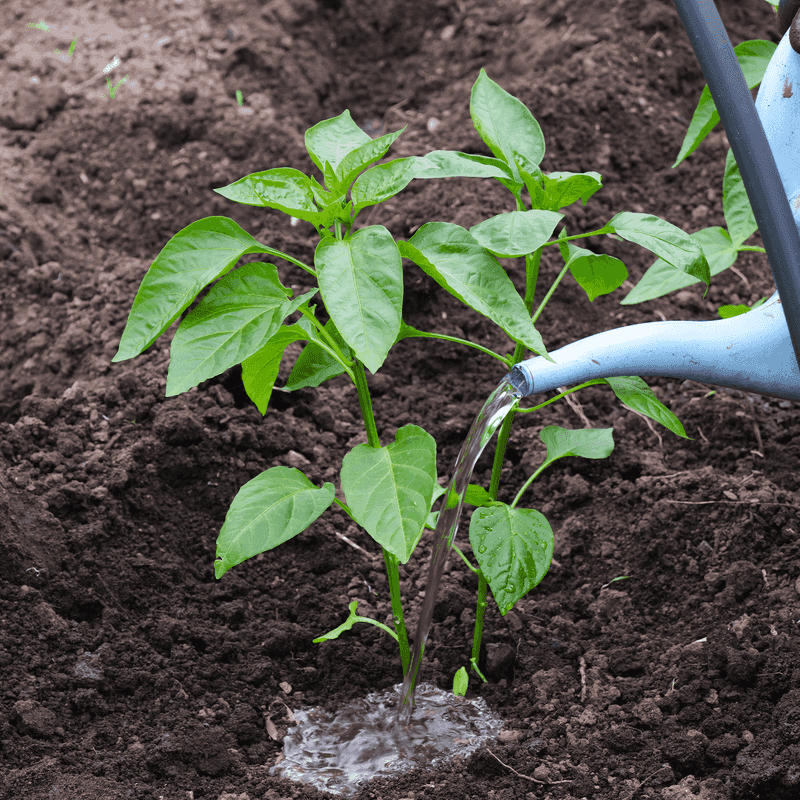
Consistent soil moisture during a heat wave does more than keep a plant alive. Well-watered pepper plants maintain turgid, upright foliage that actively shades fruit, while drought-stressed plants can wilt mid-afternoon and temporarily collapse their own canopy even when every leaf is still attached.
Minnesota Extension’s pepper guide recommends keeping soil evenly moist rather than cycling between very dry and very wet. Mulch spread around the base of the plant helps slow evaporation and can stabilize soil temperature during the hottest stretches. Utah State University Extension also recommends mulching as part of a summer care routine for peppers. What watering cannot do is reverse damage that has already happened; sunscalded tissue is gone, and no amount of moisture will restore it.
Plant support is another area where small decisions have real consequences. Colorado State University Extension’s pepper resource notes that unsupported plants can lean, fall, or break under the weight of a heavy fruit load, suddenly exposing fruit that had been safely shaded. Staking or caging plants before they reach full size keeps fruit within the canopy and reduces the risk of sudden exposure after a storm or a windy afternoon.
When installing support, work carefully. Oregon State University’s pepper growing guide cautions against rough handling of stems and branches during training or staking, since snapping a stem or stripping leaves during the process creates exactly the kind of sudden exposure that leads to more sunscald on an already stressed plant.
Use temporary shade when heat leaves fruit dangerously exposed
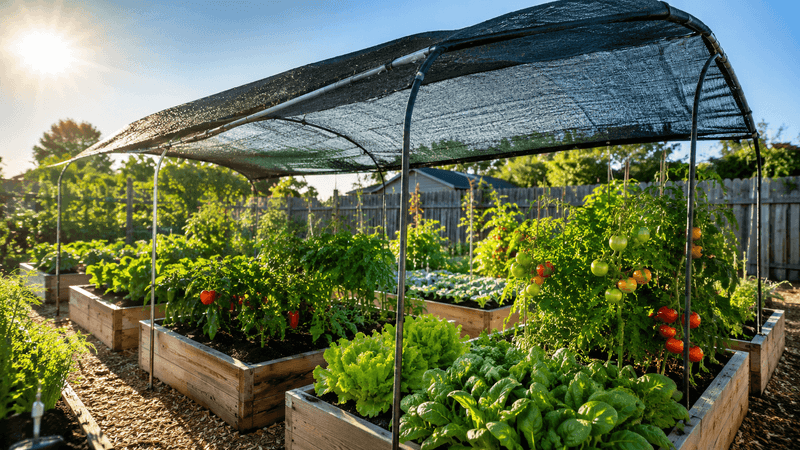
Sometimes canopy protection is not enough on its own, especially when fruit is already exposed because of natural sparseness, recent defoliation, or an extended heat event. Temporary shade is a practical bridge that can limit further injury while the plant recovers or the heat breaks.
Oregon State University’s pepper guide recommends using shade cloth or similar materials to reduce direct sun on vulnerable fruit. Kansas State University Extension suggests cheesecloth or a screen as lightweight options that can be positioned to shade the fruit without resting directly on it. Keeping the material off the plant matters because direct contact traps heat and can create a different kind of stress, so a simple frame or stakes to hold the fabric above the foliage works better than draping it over the plant.
No single shade percentage is right for every garden. Utah State University’s season extension guidance points out that the right amount of shade depends on your climate, the cultivar you are growing, the structure you are using, and how long you need the protection. University of New Hampshire Extension’s row cover guide emphasizes that airflow under any cover is important to prevent overheating and disease buildup, and that secure installation prevents the material from blowing onto the plants during wind. Set it up, observe how the plants and fruit respond over a few days, and adjust as needed.
Young transplants face a version of this same problem when they are moved directly from a sheltered indoor or greenhouse environment into full outdoor sun. Minnesota Extension notes that stems and leaves themselves can develop sunscald after abrupt exposure. UC ANR guidance recommends a proper hardening-off period, gradually increasing outdoor exposure over one to two weeks, to let young plants adjust before they face the full intensity of a summer afternoon.
The damaged patch will not heal, but later fruit can remain usable
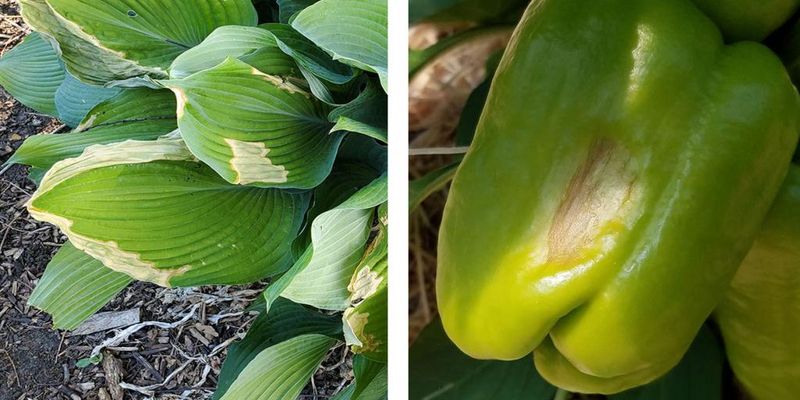
Sunscalded tissue does not recover. The cells that overheated are permanently injured, and leaving the fruit on the plant hoping the patch will fade or firm back up is not a useful strategy. The productive response is to stop additional exposure, correct whatever caused the fruit to lose its protection, and make a practical decision about the damaged peppers already on the plant.
Kansas State University Extension notes that UC IPM and other sources agree: lightly affected, firm fruit with a small dry patch can often be trimmed and used promptly, following normal food-safety judgment. The part of the fruit that was not damaged is generally fine. Discard a pepper when the scalded area has become soft, wet, moldy, foul-smelling, fermenting, or when secondary rot has spread substantially into the flesh. University of Maryland Extension’s sunscald resource and South Dakota State University Extension both support this practical distinction between lightly and substantially affected fruit.
Secondary decay is a real concern because injured tissue creates an entry point for fungi and bacteria. Ask Extension guidance on sunscald confirms that once the skin is compromised, colonization can happen quickly in warm conditions, so damaged fruit left on the plant in hot weather should be checked frequently. The broader lesson from this whole situation is not just about the fruit you already lost. Inspect both what the pepper looks like and why it ended up exposed, and that second question is the one that protects the rest of the crop.