
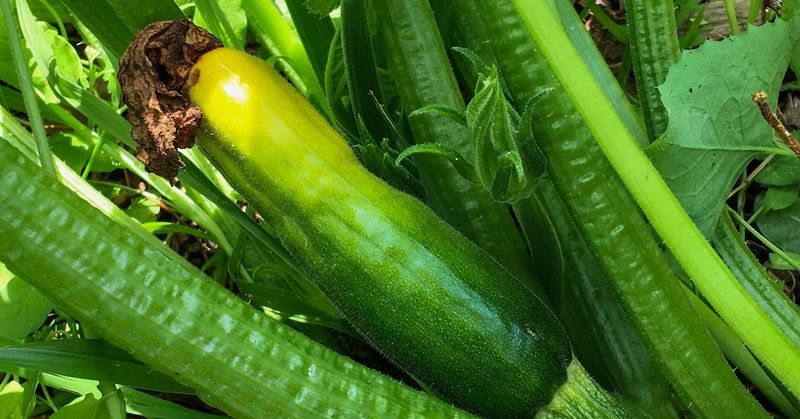
Watching a zucchini shrivel and rot at the tip is one of the more discouraging sights in a summer garden, especially when the vine looks perfectly healthy. The flower stage can play a real role in early fruit failure, but it is not the only explanation, and treating every case the same way can leave the real problem unsolved. Poor pollination, blossom-end rot, and fungal wet rot each leave different clues, and hot weather can push more than one of them toward your fruit at the same time.
The flower matters, but it is not the whole diagnosis
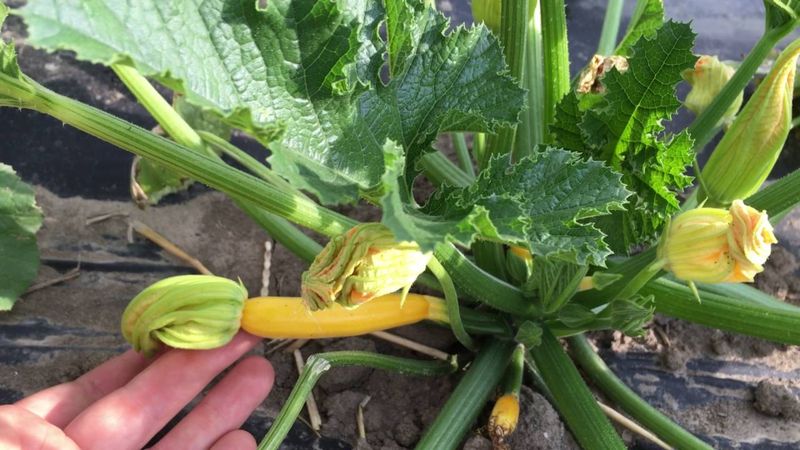
Zucchini plants produce two distinct types of flowers on the same vine. A female flower sits atop a small, swollen base that will become the fruit if pollination succeeds. A male flower, by contrast, grows on a slender stalk with no fruit behind it. University of New Hampshire Extension explains that both flower types are necessary, and the plant typically produces male flowers first before female flowers appear.
Timing matters more than most gardeners expect. Squash flowers generally open near dawn and close by midday, giving pollinators and gardeners a narrow window each morning to get pollen where it needs to go. Oregon State University Extension notes that squash-specialist bees often work these flowers very early, sometimes before the rest of the garden is active.
A lush, spreading vine with big healthy leaves does not guarantee that pollination is working or that fruit will develop normally. Vigorous foliage can reflect high nitrogen or favorable growing conditions without telling you anything about what is happening inside the flower. UC IPM confirms that poorly pollinated cucurbit fruit may still appear on an otherwise thriving plant, so the vine’s appearance alone is a clue, not a diagnosis.
When poor pollination causes the young fruit to fail
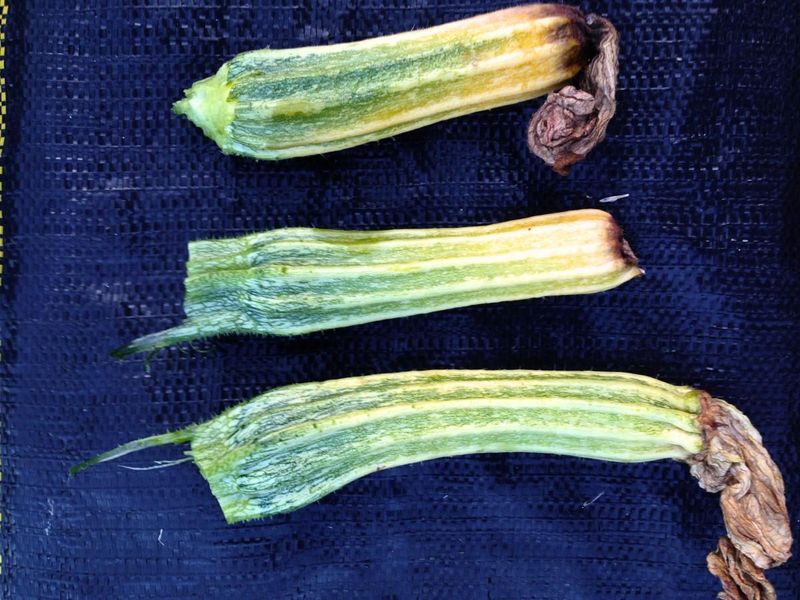
Poor pollination leaves a recognizable pattern if you know what to look for. The fruit stays very small, often becoming lopsided or noticeably narrower at the blossom end. It turns yellow or brownish, shrivels, and typically drops from the vine within a few days of the female flower fading. University of Maryland Extension describes this early, whole-fruit failure as distinct from other forms of tip damage, and notes that the fruit may be deformed before it collapses.
Bees must carry pollen from a male flower’s anthers to the lobed stigma inside a female flower for normal development to begin. When that transfer is incomplete or absent, the embryonic fruit receives the signal to abort rather than expand. Cutting a failed fruit open and finding few or no developed seeds can support this diagnosis, though it is not absolute proof because other stresses can also limit seed development.
UC IPM notes that rain, cold, high heat, reduced bee activity, poor pollen viability, and pesticide exposure can all interfere with pollination in cucurbits. The key distinction to hold onto is that poor pollination causes the whole young fruit to fail quickly, while a dry, sunken lesion that appears after the fruit has already begun expanding points toward a different problem entirely.
Heat disrupts several parts of the flowering window
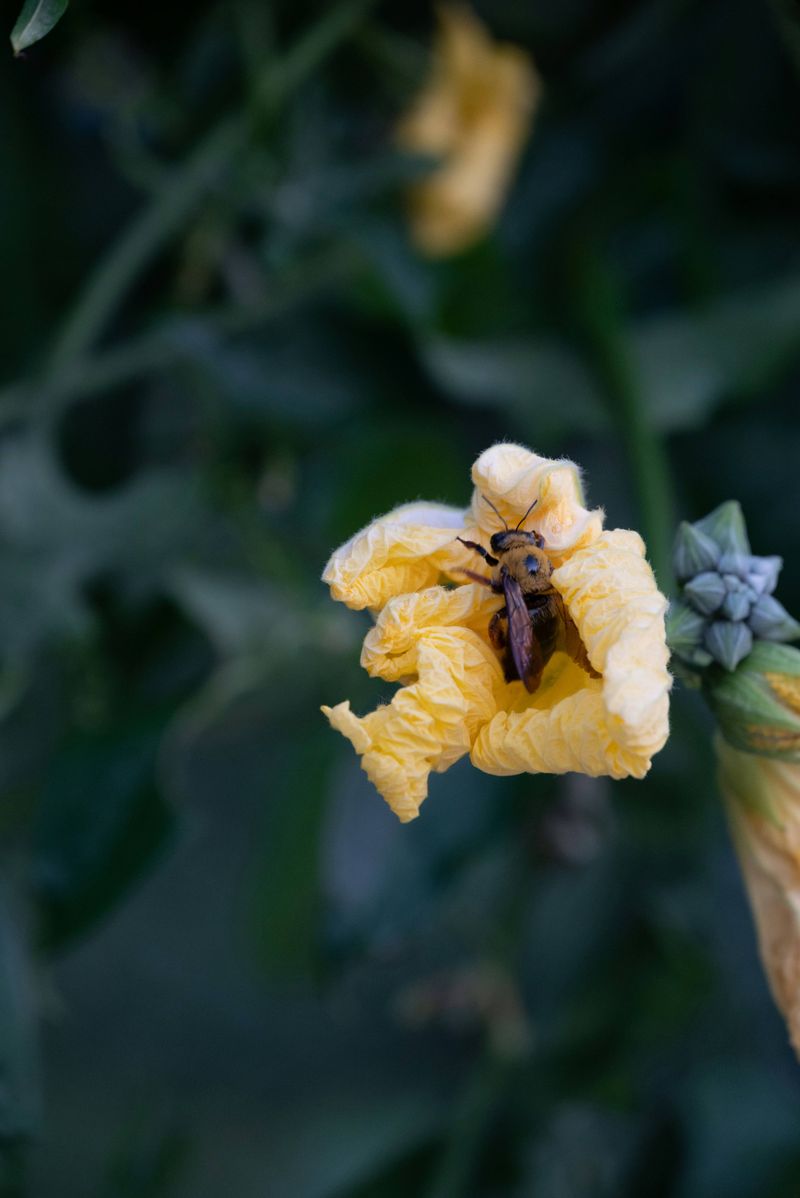
Hot weather creates real problems for zucchini pollination, but it works through several different pathways rather than a single mechanism. Bee activity often drops during heat waves, particularly in the middle of the day when temperatures peak. UC IPM reports that high temperatures and high humidity can reduce pollen viability or pollination success in cucurbits, and that heat can directly stress flowers as well.
Squash bees, which are among the most reliable pollinators for zucchini, tend to be most active very early in the morning. NC State Extension explains that squash bees often finish foraging and retreat before the heat of the day builds, which means the effective pollination window may be even shorter during a heat wave than it appears. Getting out to check your flowers around sunrise can tell you whether bees are visiting before the flowers close.
Rain, low light, cold snaps, and pesticide exposure can each interfere with pollination too, so heat is a risk factor rather than the only explanation. Early fruits on a new vine are especially prone to failure while flowering patterns and pollinator activity are still establishing. Later fruit sometimes improves as conditions stabilize, though that outcome depends on weather, bee populations, and your specific garden, so it should not be taken as a guarantee. Avoid disturbing or killing pollinators during heat waves, when their activity is already under pressure.
Use hand-pollination on new flowers, not failed fruit
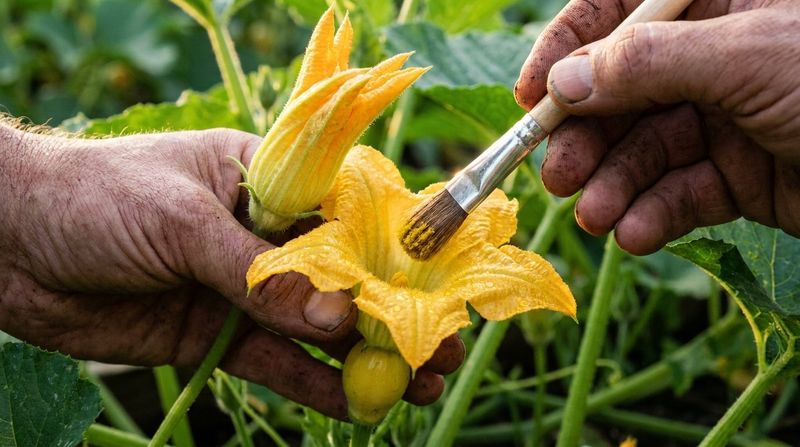
Hand pollination gives you a direct way to work around reduced bee activity, and the technique is straightforward once you can tell the flowers apart. Pick a freshly opened male flower or use a small, soft brush. Locate the pollen-covered anthers at the center of the male flower and collect the yellow pollen either by gently touching the brush to the anthers or by peeling back the petals and using the whole flower as an applicator.
Carry that pollen to a newly opened female flower and brush it onto the lobed stigma at the center. UNH Extension recommends doing this while flowers are still open, preferably in the morning, because flowers close by midday and the stigma is most receptive when the flower is fresh. A single well-pollinated female flower can produce a normal fruit even if no bees visited that morning.
Hand pollination also works as a diagnostic test. If female flowers you pollinate by hand go on to develop normally, that suggests inadequate pollination was contributing to your losses, though changing weather or watering conditions at the same time make certainty impossible. One important limit: do not try to rescue fruit that has already badly shriveled, yellowed, or begun to rot. By that stage the fruit has aborted and hand pollination cannot reverse the process.
Apply the technique only to newly opened flowers before any sign of failure appears.
A dry, sunken blossom end points elsewhere
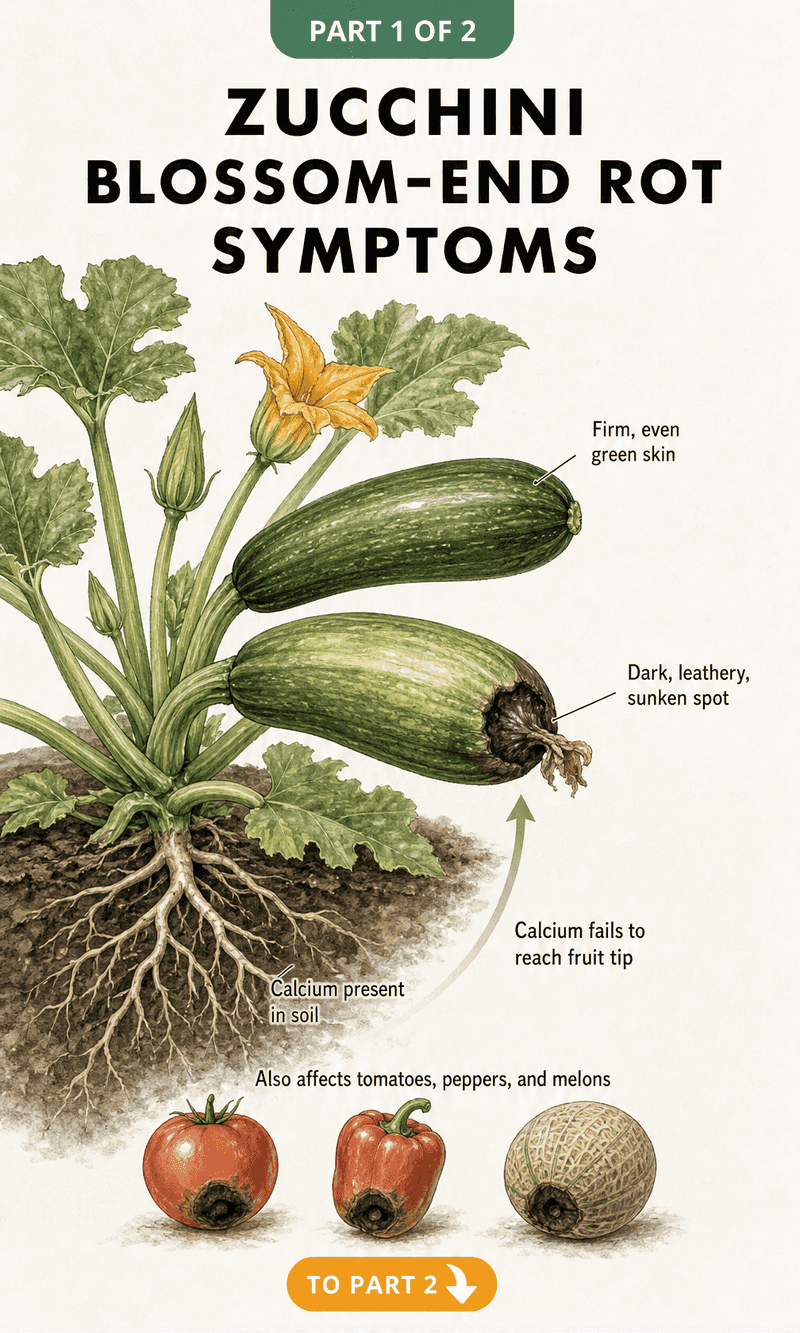
A fruit that has already begun expanding normally and then develops a dark, sunken, dry, or leathery patch at its blossom end is showing a different problem from poor pollination. That pattern is blossom-end rot, a physiological disorder rather than a disease. University of Maryland Extension describes the lesion as distinct from the whole-fruit shriveling and misshaping associated with pollination failure.
The underlying mechanism involves calcium. Rapidly growing fruit tissue needs a steady supply of calcium, and when delivery is disrupted, the blossom-end cells collapse and die. Iowa State University Extension explains that disrupted calcium uptake can result from uneven soil moisture, drought, waterlogged or damaged roots, heat, soil salinity, very rapid vegetative growth, or excessive nitrogen. The soil calcium level may actually be adequate; the problem is often that stressed or damaged roots cannot move it to the fruit fast enough.
Blossom-end rot does not spread from fruit to fruit, is not caused by a fungus or bacterium, and does not respond to fungicides. Secondary microbes may colonize the damaged tissue and make the lesion look worse, but they are not the initiating cause. Clemson Extension notes that foliar calcium sprays are not a reliable fix because leaves and fruit skin do not dependably deliver calcium to the affected tissue. Remove affected fruit, since the damaged tissue will not recover, and focus on steadying the root zone conditions that drive calcium delivery.
Stabilize moisture without saturating the roots
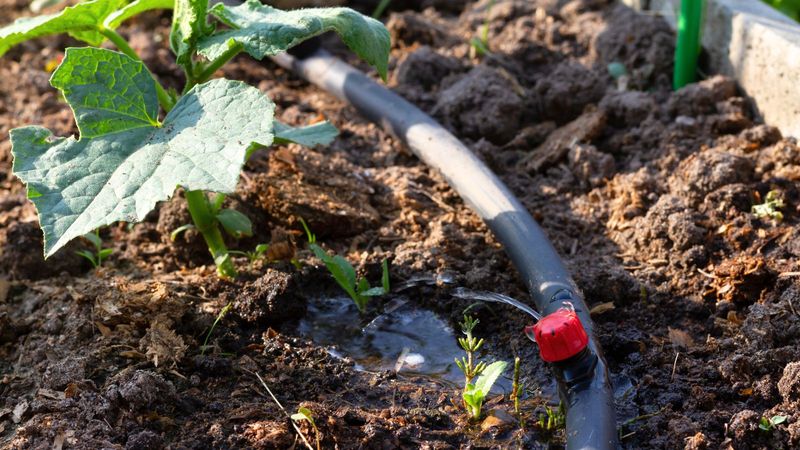
Steady root-zone moisture is one of the most practical steps you can take against both blossom-end rot and general heat stress in zucchini. Utah State University Extension recommends roughly 1 to 2 inches of water per week for summer squash, applied deeply enough to wet the root zone. That figure shifts depending on your soil type, local rainfall, plant size, and current temperatures, so treat it as a starting point rather than a fixed rule.
Sandy soils drain quickly and may need more frequent watering to stay consistently moist. Heavy clay soils hold water longer but can become waterlogged, which damages roots and actually worsens calcium delivery. University of Minnesota Extension recommends watering at the soil surface with drip irrigation or a soaker hose when possible, keeping moisture away from flowers and fruit. Routinely wetting the canopy overhead, especially during warm, humid weather, creates conditions that favor fungal rots.
A 2- to 3-inch layer of mulch around the base of the plant helps buffer moisture swings between waterings and reduces evaporation during hot spells. Avoid the temptation to add calcium amendments such as eggshells, lime, or gypsum without a soil test first. Unnecessary lime raises soil pH and can create secondary nutrient problems. The soil calcium level is often not the limiting factor; restoring consistent moisture and protecting root health usually does more to improve calcium delivery than emergency supplements.
Soft decay and fuzzy growth signal wet rot
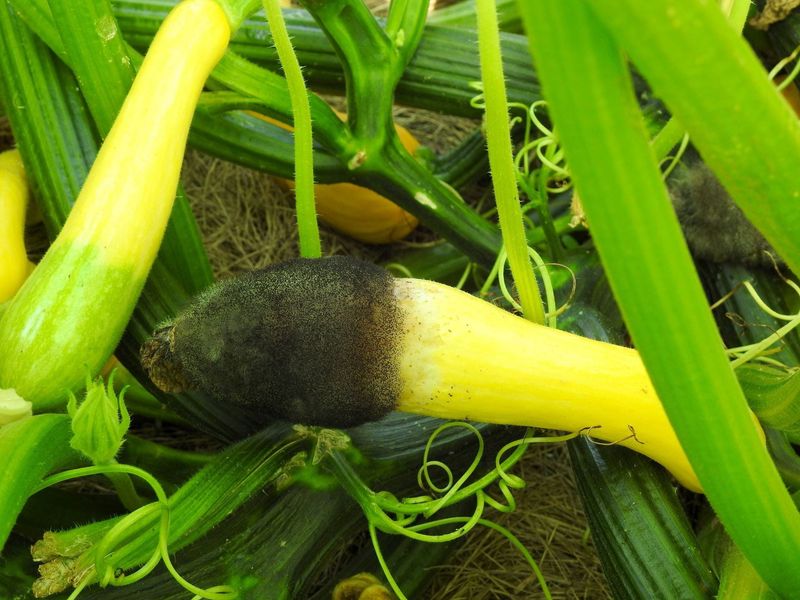
Soft, watery, brown or black decay that carries conspicuous fuzzy growth is a third possibility worth knowing about. Choanephora wet rot is caused by a fungal pathogen favored by warm, humid, wet conditions, and it looks nothing like the dry, leathery lesion of blossom-end rot. University of Minnesota Extension describes the characteristic fuzzy growth as white, gray, purplish, or black and resembling pins or whiskers attached to the decaying tissue.
The texture difference is the fastest diagnostic clue. Blossom-end rot feels dry and firm at the lesion margin. Wet rot feels soft and watery, and the decay may spread quickly up the fruit. Poorly pollinated fruit shrivels and yellows without the slimy, spreading quality of wet rot.
University of Maryland Extension notes that photographs, weather history, and the sequence in which symptoms appeared all help narrow the diagnosis when the damage pattern is not obvious.
Remove and discard any fruit showing active fuzzy mold or spreading soft decay. Do not compost it or leave it on the vine, because the pathogen can continue spreading under humid conditions. Improving air circulation around the plants and avoiding overhead irrigation during wet or humid weather can reduce the conditions that favor wet rot. Early fruits are sometimes more vulnerable because the plant is still establishing, and the first few failures may give way to cleaner fruit as the season progresses and conditions dry out.
Protect the next flowers with targeted care
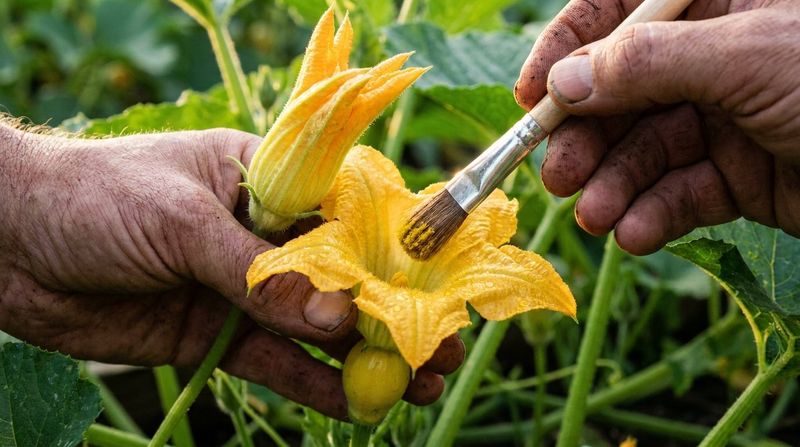
Matching your response to the symptom you actually observe will get you further than applying every remedy at once. Start by checking new female flowers early in the morning, while they are still open. If bees are absent and early fruits have been shriveling and dropping, hand-pollinate freshly opened female flowers as described earlier. Preserve bee activity by avoiding insecticide applications on open flowers.
EPA guidance on neonicotinoid pesticide labeling requires bloom-time restrictions on many products, and some labels prohibit application while bees are foraging or until flowering is complete.
Do not assume that an absence of visible bees makes spraying safe. NC State Extension explains that squash bees sometimes rest or shelter inside zucchini flowers, and residual or systemic products can affect them even when none are visible at the moment of application. Follow the label, and when in doubt, skip the treatment during bloom.
Pair careful pollinator protection with steady soil-level watering, sound drainage, and mulch to buffer moisture swings. Base any fertilizer decisions on crop needs or a soil test rather than applying amendments as an emergency response. Iowa State University Extension notes that excessive nitrogen can contribute to poor fruit development and blossom-end rot. The final decision rule is simple enough to remember in the garden: early whole-fruit shriveling suggests pollination trouble, a dry sunken lesion suggests blossom-end rot, and soft fuzzy decay suggests wet rot.
Hot weather can push more than one of these toward your fruit at once, which is why the texture and timing of the damage matter more than its location alone.