
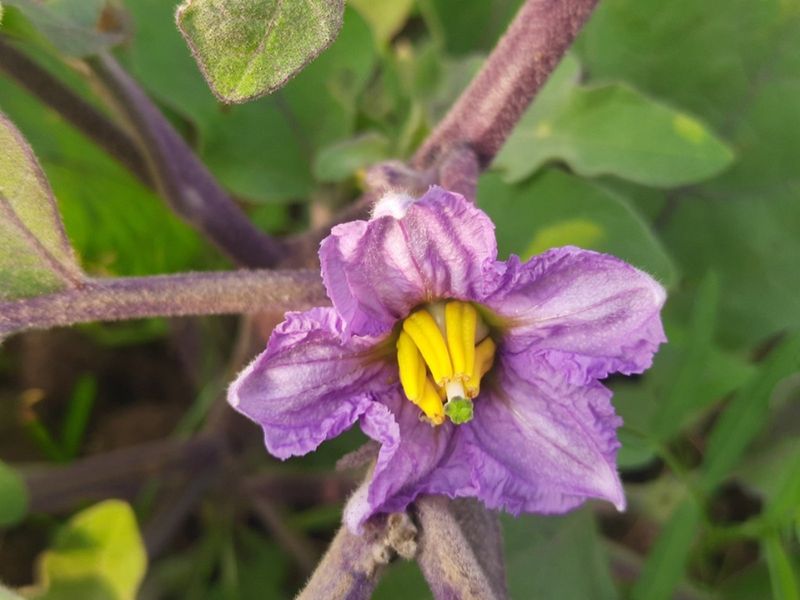
Watching your eggplant drop flower after flower without a single fruit forming is one of the more frustrating sights in a midsummer garden. The blossoms look healthy right up until they don’t, and then they’re on the ground before you ever got to harvest anything. The good news is that fallen flowers are a clue worth reading carefully, not a verdict on your gardening skills. Understanding what that clue actually tells you, and what it doesn’t, is the first step toward giving your next round of blossoms a better chance.
Treat the dropped blossom as a clue, not a diagnosis
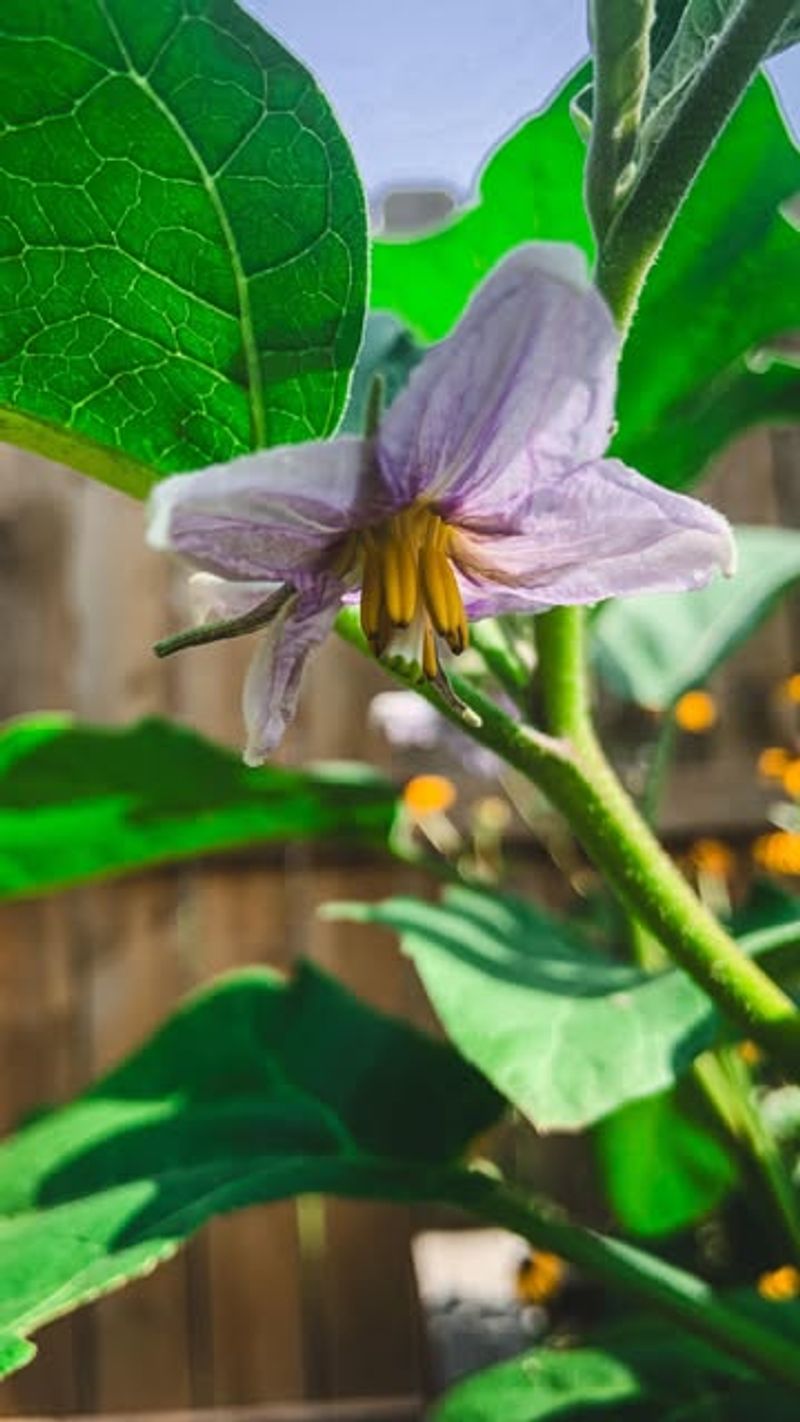
A blossom that shrivels and falls before leaving any fruit behind is the visible sign of failed fruit set, but the flower itself is more like the messenger than the source of the problem. The underlying stress could be coming from weather, water, the root zone, pests, disease, low light, or nutrition, and the flower is simply the stage where that failure becomes visible. Blaming the flower first is a bit like blaming the check-engine light for a failing engine.
The most useful thing to do right away is look closely at where the blossom separated from the stem. UC IPM cultural guidance for eggplant notes that water stress, temperature extremes, low light, pests, disease, and excess nitrogen can all contribute to poor production or flower loss, so no single cause should be assumed. If a tiny green swelling formed behind the flower before it dropped, fruit set at least began. If the blossom dried up and fell cleanly with nothing behind it, fruit set failed before it could start.
From there, compare what you see on the plant with recent conditions. Check overnight temperatures, daytime highs, and how the soil has felt two or three inches down. Look at the leaves for yellowing, stippling, or chewing damage, and scan the stem for lesions or unusual discoloration. University of Minnesota Extension guidance on growing eggplant identifies drought, temperature extremes, and several other stressors as potential contributors.
Observation, not a quick assumption, is the right first move.
Self-fertile flowers still need pollen to move
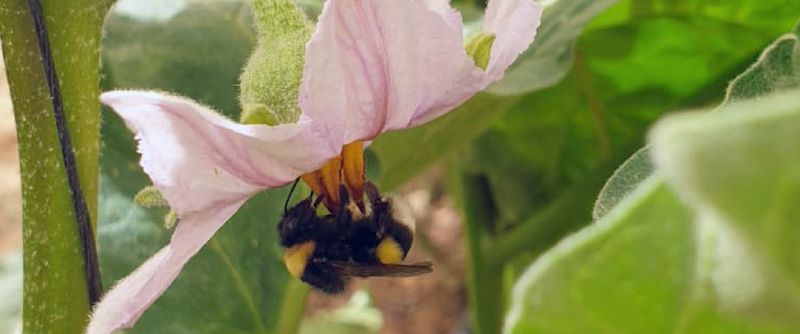
Every eggplant flower carries both male and female reproductive parts inside the same bloom, which makes it what botanists call a perfect or self-fertile flower. That design means the plant can theoretically fertilize itself without a separate male or female plant nearby. However, self-fertile does not mean pollination happens automatically or that the pollen moves on its own.
Pollen still has to travel from the anthers to the stigma, and that short journey usually needs a push. Oregon State University Extension’s eggplant guide notes that bee activity and physical vibration improve pollen transfer and fruit set. Bumblebees are especially effective because they use a behavior called buzz pollination, vibrating their flight muscles at a frequency that shakes pollen loose from the anthers. Other native bees, smaller insects, wind, and even the gentle movement caused by brushing past a plant can contribute the same basic function.
The practical takeaway for diagnosis is precise: eggplants do not categorically require honeybees, and the absence of one bee species is not necessarily the problem. But a flower growing in a sheltered spot, inside a screened enclosure, or in a yard with very little insect activity may not be getting the vibration it needs for reliable pollen transfer. UC IPM’s resource on incomplete pollination in eggplants and peppers frames poor or incomplete pollination as one possible contributor to fruit set failure, not the only explanation for every dropped flower.
Heat and cool nights can disrupt fruit set
Weather is one of the most common contributors to midsummer blossom drop, and it operates at the flower level in ways that are not always obvious from the outside. A plant can look green and upright while heat or water stress has already reduced the quality of its pollen or disrupted the development of its flowers. The visible drop comes later, after the damage is already done.
University of Minnesota Extension identifies drought, daytime temperatures above roughly 90 degrees Fahrenheit, and nighttime temperatures below about 60 degrees or above about 70 degrees as conditions that can cause poor flowering. Another extension source places the risk threshold closer to 95 degrees on the high end. These are useful warning ranges, not hard biological cutoffs that apply equally to every cultivar, humidity level, plant age, or growing situation. Duration matters too: a single hot afternoon is different from a week of sustained heat.
Cool nights are easy to overlook during a heat wave, but they carry their own risk. Unusually low overnight temperatures can reduce pollen fertility and delay fruit development, so a gardener focused only on hot afternoons might miss the real problem. Research on parthenocarpic eggplant lines documents that very high temperatures can induce pollen sterility. That finding points to an important limitation: if heat has already damaged pollen viability or flower development, moving pollen manually may not solve the problem.
That conclusion is an inference drawn from the separate evidence on bee-enhanced fruit set and heat-affected pollen, not the result of a direct household hand-pollination trial.
Reduce root-zone stress before chasing pollination fixes
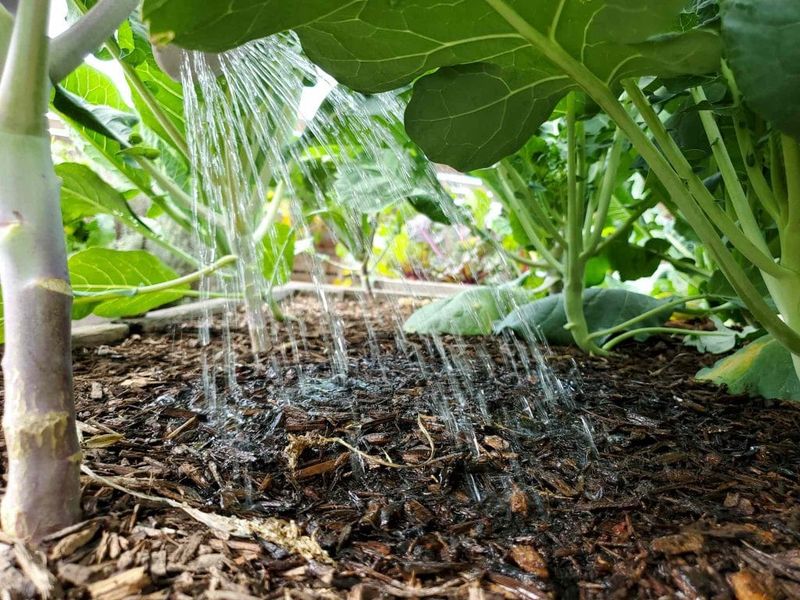
Before spending time on pollination techniques, check what is happening below the surface. Stick a finger or a trowel two to three inches into the soil near the plant’s root zone. If it feels dry at that depth, the plant is already under water stress, and that stress can reduce fruit set before any pollination problem becomes relevant.
University of Minnesota Extension guidance on irrigation strategies for vegetables recommends soaking the soil thoroughly when weekly rainfall is not enough, adjusting watering frequency for sandy soils that drain faster, and avoiding the repeated shallow watering that wets only the top inch or two. Shallow watering can actually make stress worse by training roots to stay near the surface where they dry out fastest. Container-grown eggplants deserve extra attention here, since pots can lose moisture quickly during hot weather and may need checking more than once a day in extreme heat.
Organic mulch spread two to three inches deep around the plant can help by reducing evaporation and moderating root-zone temperature. Keep the mulch a few inches away from direct contact with the stem to avoid rot. UMN’s eggplant growing guide supports mulching as a moisture-conservation tool, though it will not make an extreme heat event harmless on its own. Temporary afternoon shade, using shade cloth or a strategically placed board, can reduce heat load during exceptional heat waves.
UC Master Gardener Program of Alameda County notes that shade is a moderation tool for extreme conditions, not a permanent prescription. Excessive or prolonged shade can reduce photosynthesis and ultimately limit flowering.
Try gentle vibration when usable pollen may be available
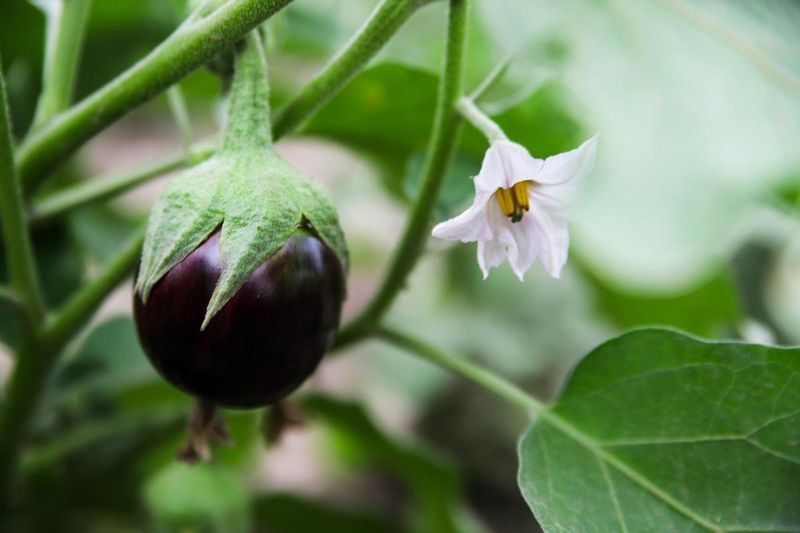
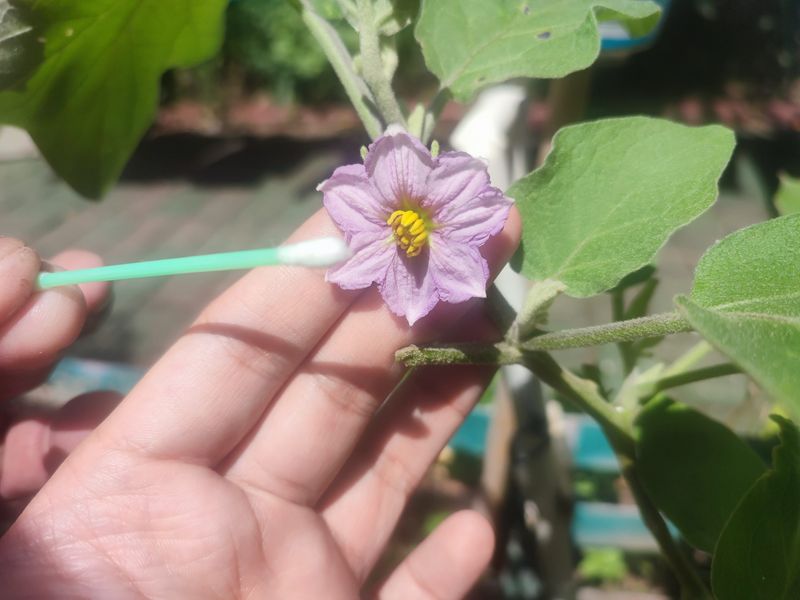
When flowers are growing in a sheltered spot, behind row covers, or in a yard where insect activity is low, giving pollen a gentle mechanical push can be a reasonable low-risk supplement to whatever pollinators may or may not be visiting. UC Master Gardeners of Santa Clara County specifically recommend shaking or tapping eggplant flowers to improve fruit set. The technique is simple: hold the flower or its stem and give it a light tap or gentle shake during the warmest part of the morning when pollen is most available. A clean, soft artist’s brush or a cotton swab can also be used to move pollen within the flower from the anther cone to the central stigma.
This approach makes the most sense as a diagnostic test as well as a supplement. If later blossoms begin forming fruit after you start hand-pollinating, that is a useful signal that pollen transfer was a limiting factor. If fruit still does not form, the problem likely lies elsewhere, and you can shift your attention back to weather and root-zone conditions.
The important limitation to state plainly is this: moving pollen manually is unlikely to help if heat has already impaired pollen viability or disrupted flower development. That conclusion comes from combining what the parthenocarpic eggplant research shows about heat-induced pollen sterility with extension guidance on bee-enhanced fruit set. It is an evidence-based inference, not the outcome of a controlled household hand-pollination experiment. Pair any hand-pollination effort with the moisture and heat-reduction steps described earlier, rather than relying on tapping alone.
Keep flowering plants accessible to pollinators
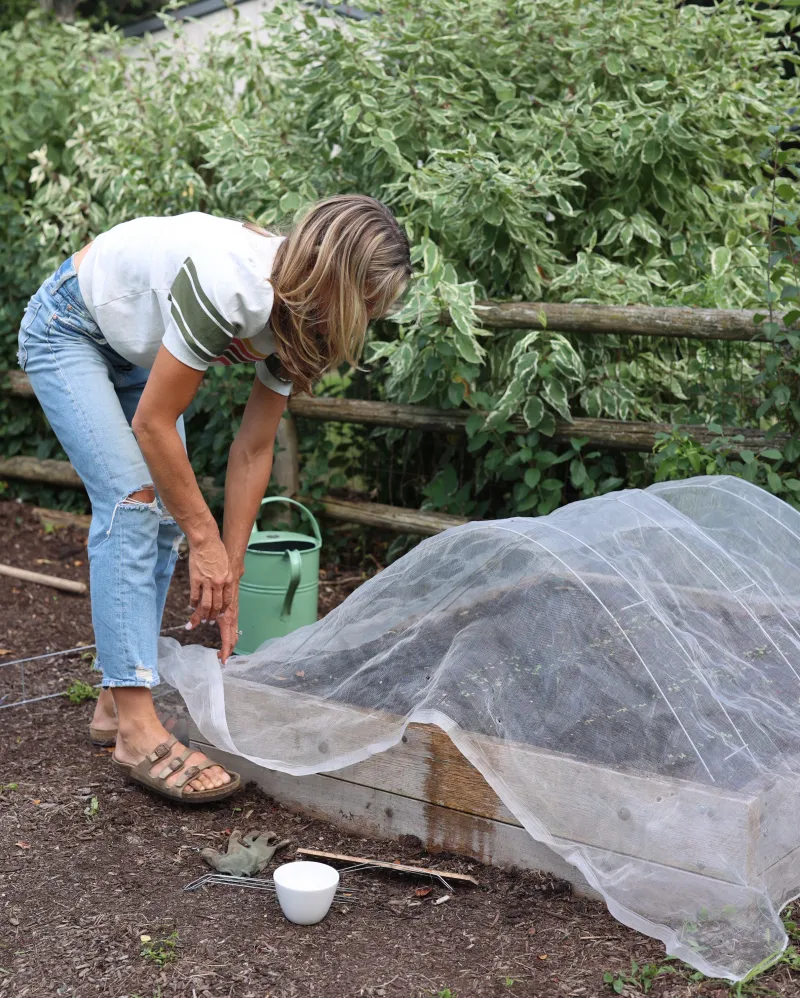
Garden setup choices can quietly limit how much pollen movement actually happens, even when a yard has plenty of insect activity nearby. Open flowers need insects or air movement to reach them, and anything that creates a barrier between the bloom and the outside world can reduce that access without the gardener noticing.
Row covers are the most common culprit. They are genuinely useful early in the season for pest protection and cold nights, but University of Maryland Extension guidance on row covers warns that leaving covers over flowering plants can block pollinators and raise temperatures inside the fabric, worsening the very conditions associated with flower and fruit drop. Once eggplants begin flowering, covers should come off unless the system is specifically designed to allow for ventilation and managed pollination access.
Beyond covers, check whether overhanging structures, dense companion plantings, or fencing are blocking the flight paths that bees and other insects use to find flowers. University of Maryland Extension’s guide to growing eggplant at home notes that eggplant requires insect pollination for reliable fruit production, which makes open access to blooms a meaningful part of the growing setup. No single bee species is mandatory, and a variety of native bees and other small insects can fill the role, but they do need a clear path to the flowers to do it.
Widen the diagnosis when other symptoms appear
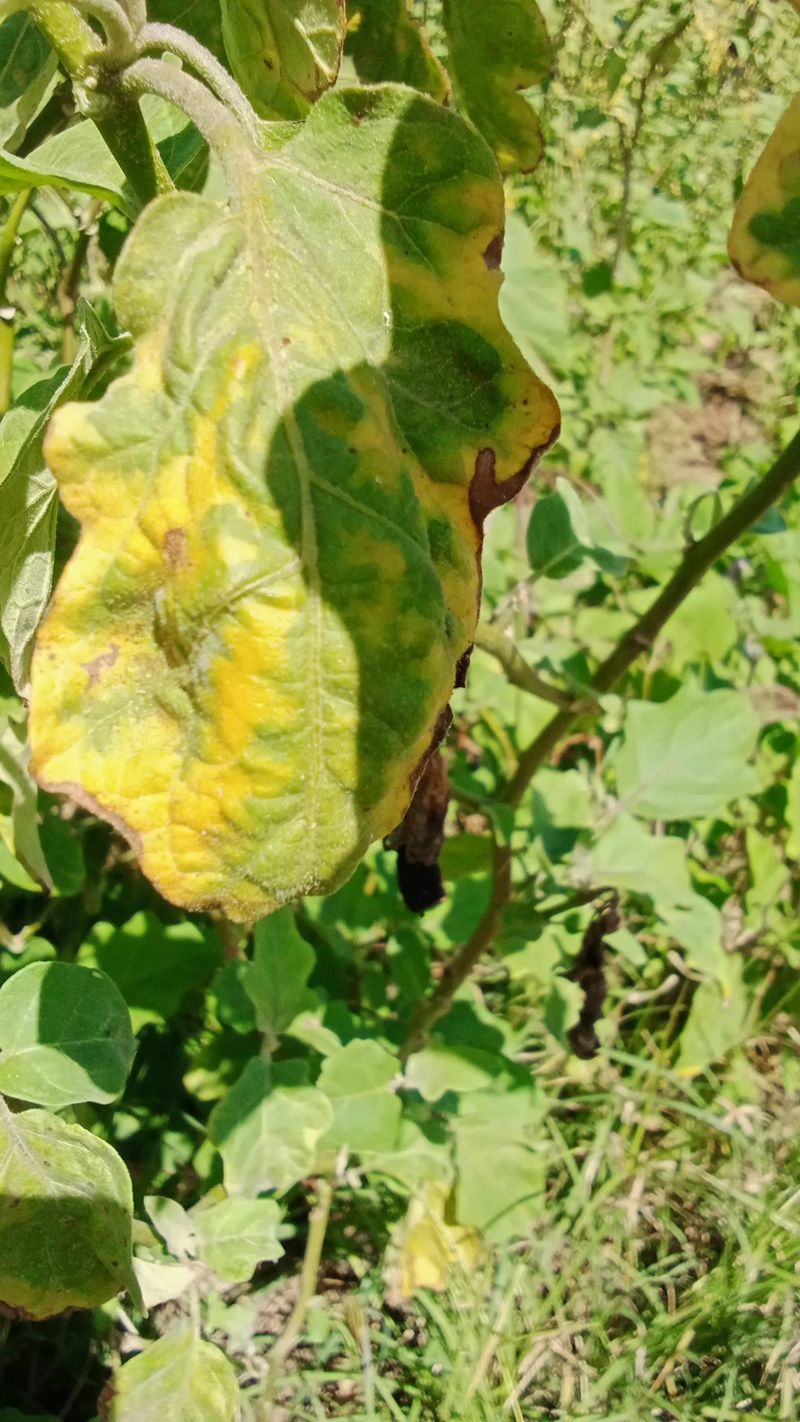
Blossom-focused troubleshooting covers a lot of ground, but some situations call for a wider look at the whole plant. Severe wilting that does not recover after watering, leaf yellowing that spreads across the plant, stippling or tiny white dots on the leaf surface, chewing damage along leaf margins, lesions or discoloration on the stem, and spots or sunken areas on developing fruit all suggest that something beyond heat or pollination is involved. UC IPM’s eggplant cultural tips identify pests, disease, and root-zone problems as contributors to poor production that a pollination-only diagnosis will miss.
Fertilizer is another area worth examining carefully. Too much nitrogen can push a plant toward lush, dark-green foliage at the expense of flowers and fruit, because the plant is directing its energy into vegetative growth. However, excess nitrogen is better described as a contributor to delayed or reduced production than as a confirmed direct cause of blossoms physically falling from the plant. Adding more fertilizer without a soil test is not a reliable treatment for heat-related blossom drop, and it could make a nitrogen-excess situation worse.
UMN Extension recommends soil testing before applying nutrients based on symptoms alone.
One distinction worth making clearly: blossom-end rot is not the same thing as blossom drop. Blossom-end rot is a condition that appears on developing fruit, showing up as a dark, sunken area at the blossom end of a forming eggplant. It is linked to calcium transport problems associated with inconsistent moisture, not to pollination failure. Clemson Cooperative Extension’s eggplant pest and disease factsheet covers the range of pest and disease problems that can affect eggplant production and are worth ruling out when symptoms go beyond dropped blossoms.
Give the next blossoms steadier conditions
Working through a blossom-drop problem is less about rescuing the flowers already on the ground and more about improving conditions for the ones still forming. Start by reviewing what the fallen blossoms and recent weather actually told you. Then restore consistent soil moisture, adjust watering depth and frequency to match your soil type and rainfall, and apply mulch if it is not already in place.
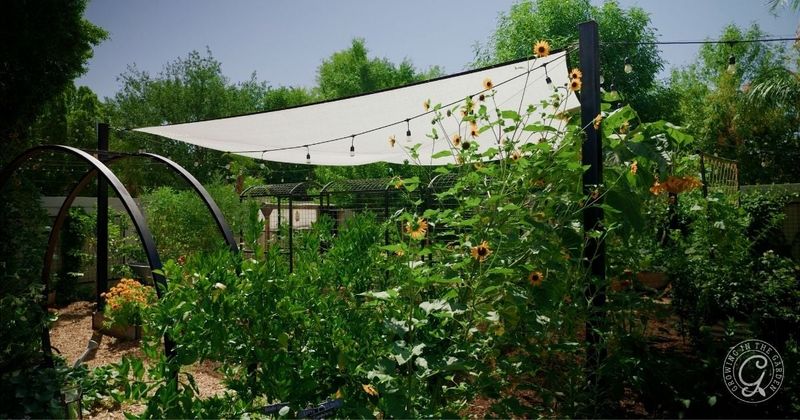
Where practical, use temporary shade cloth during the hottest part of the afternoon on days when temperatures push into the risk range. Keep row covers off flowering plants, or manage them specifically for ventilation. Give accessible flowers a gentle shake or tap during morning hours, particularly if insect activity has been low. UC Master Gardeners of Santa Clara County also recommend harvesting mature eggplants regularly, since leaving ripe fruit on the plant can slow new flower and fruit production.
Watch whether later blossoms leave a small green swelling behind when they open, since that is the clearest sign conditions are improving. UMN Extension and UC IPM’s cultural guidance both frame consistent moisture, appropriate temperatures, and open pollinator access as the foundation for reliable fruit set. A self-fertile flower still depends on the whole plant being in good enough shape to follow through.