
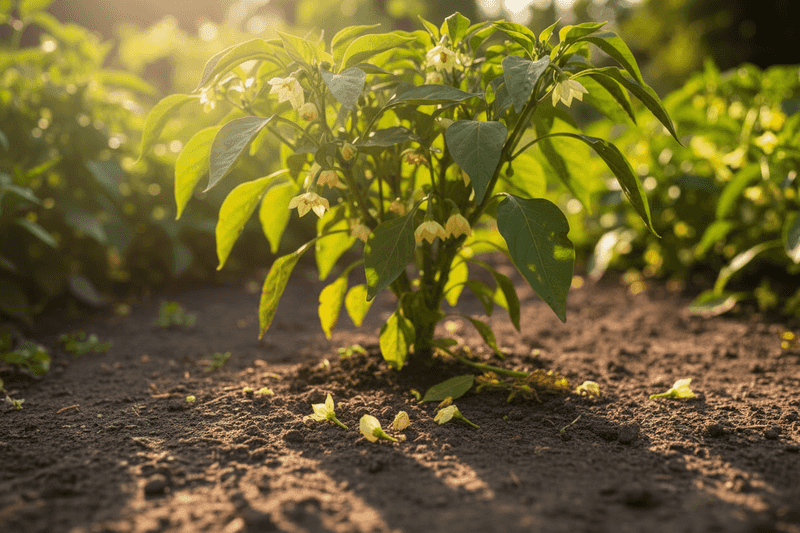
Your pepper plant looks great from the outside, full of leaves and loaded with flowers, but every blossom falls off before a single pepper forms. That gap between lush growth and zero fruit is one of the most frustrating puzzles in the summer garden. The good news is that a handful of well-understood conditions tend to drive this problem, and the most common one involves what happens to your plants after the sun goes down.
Bushy growth does not identify the cause
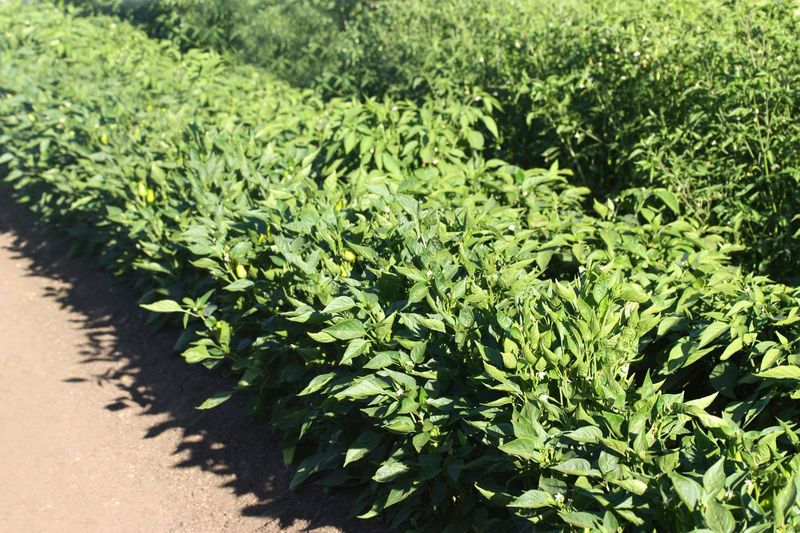
A pepper plant that looks thick and green while dropping every flower is actually doing something quite logical: when fruit production stalls, the plant keeps putting energy into leaves and stems instead. That leafy appearance can fool a gardener into thinking the plant is over-fertilized or growing out of control, but Illinois Extension explains that no-fruit plants may naturally look especially lush because their resources are going into foliage rather than developing peppers. Bushy growth alone does not point to any single cause.
During hot weather, repeated warm nights are one of the most important clues to investigate. Nights that stay around or above 75 degrees Fahrenheit can interfere with fruit set, and that pattern is worth checking before you change anything else. But warm nights are not the only possibility, and they may not even be the main factor in your specific garden.
Daytime heat, nights that are too cool, inconsistent watering, low light, too much shade, strong wind, the particular pepper variety you are growing, and pollination conditions can all reduce or eliminate fruit set on their own or in combination. Before adjusting fertilizer, pruning back growth, or assuming a nitrogen problem, take a look at what conditions have actually been like in your garden over the past few weeks. Oklahoma State University notes that a range of environmental factors can contribute to blossom drop, so a careful diagnostic approach will serve you better than a quick fix aimed at one suspect.
Check the temperature pattern, not one number
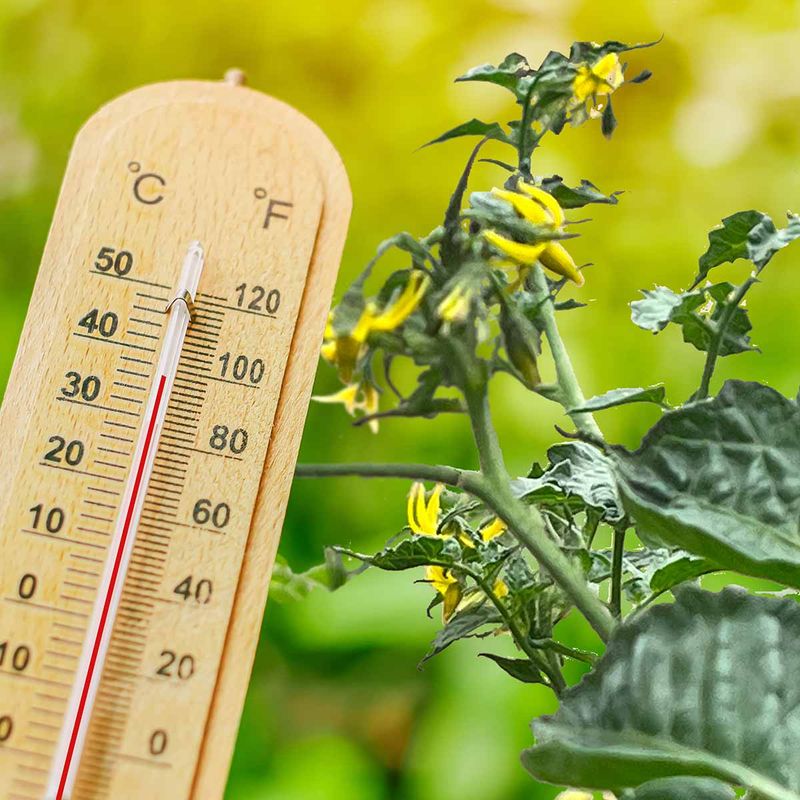
Rather than fixating on a single temperature reading, think about the pattern your garden has been experiencing over several nights. UConn Extension identifies nights above about 75 degrees Fahrenheit and days above about 90 degrees Fahrenheit as conditions that can inhibit fruit set in peppers. Repeated exposure to those ranges matters more than one warm evening, so mentally review the last few weeks rather than checking last night alone.
Nights below about 60 degrees Fahrenheit can also interfere with fruit set, so the problem is not limited to heat. The useful range to aim for sits roughly between 60 and 75 degrees at night, and both ends of that range can cause trouble when conditions push consistently outside it. Oklahoma State University reports very little fruit set when daytime temperatures exceed 90 degrees or nighttime temperatures fall below 60 degrees, which illustrates how both extremes can produce the same visible symptom of blossom drop.
Your local forecast gives a reasonable starting point, but garden microclimates can differ from official readings. A thermometer placed near your plants, or awareness of a particularly warm patio corner or a low-lying spot that holds cold air, can optionally improve your estimate. Controlled sweet-pepper research by Rylski and Spigelman found that the highest tested night temperature produced considerable blossom drop while the lowest tested night temperature yielded the greatest fruit set, supporting the special importance of overnight conditions. That said, thresholds shift with cultivar, humidity, plant age, duration of exposure, and what is happening during the day, so these ranges are practical guides rather than hard cutoffs.
Daytime heat and nighttime heat can disrupt fruit set
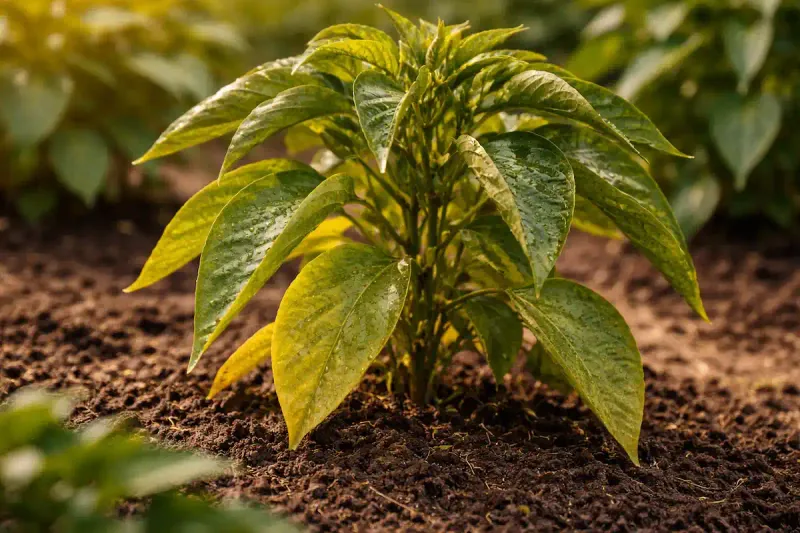
Heat affects pepper reproduction in a specific way that has nothing to do with the plant’s ability to grow leaves. When temperatures climb too high, pollen can lose its effectiveness, and flowers or tiny fruitlets that have already formed may abort before they develop further. The plant is not sick in a traditional sense; it is responding to conditions that make successful reproduction unlikely, and it continues building vegetative growth in the meantime.
UC IPM notes that normal pollination and fruit set can fail when daytime temperatures exceed about 85 degrees Fahrenheit, while other extension sources point to 90 or 95 degrees as more severe thresholds. The range matters because fruit-set problems can start at relatively moderate heat for some varieties and only at extreme temperatures for others. Heat-sensitive bell peppers are generally considered more vulnerable than many small-fruited or pungent types, though individual plant behavior can vary.
One timing distinction is worth keeping straight. Illinois Extension points out that pepper fruit can take more than 45 days to ripen after pollination succeeds, so a garden with no ripe peppers today might simply be reflecting normal ripening lag from flowers that set successfully several weeks ago. That situation is different from what you are seeing when fresh flowers are actively dropping right now. Currently falling blossoms or tiny fruitlets that shrivel and drop signal a present or very recent fruit-set problem, not a ripening delay, and that is the pattern this article addresses.
Use temporary shade to protect new flowers
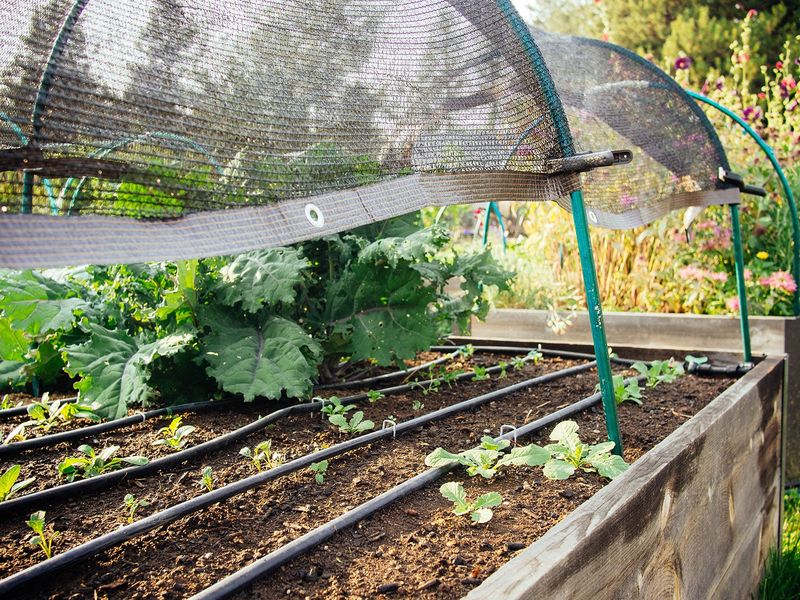
When a heat wave is actively stressing your plants, adding temporary daytime shade is one of the more practical steps you can take. The goal is to reduce heat load on flowers that have not yet been damaged, not to block all sunlight permanently. University of Delaware Cooperative Extension recommends shade cloth for peppers and tomatoes during heat stress and identifies approximately 30% shade cloth as a useful balance that cools plants while preserving enough light for most vegetables. A simple frame or hoops should keep the cloth from resting directly on the plant.
Shade helps protect new flowers that open during subsequent hot periods, but it cannot recover blossoms already damaged by heat. Think of it as forward protection rather than a repair. UC IPM recommends full sunlight for pepper pollination under normal conditions, so remove the shade cloth or move containers back into full sun once the extreme heat passes. Heavy or permanent shade creates its own fruit-set problems by reducing the light peppers need to flower and pollinate well.
Container plants have an advantage here: you can move them to a spot with afternoon shade during a heat wave and return them to full sun when temperatures moderate. For in-ground beds, shade cloth is the more practical option. UConn Extension warns that plastic row covers should be removed once blossoms form because the enclosed space can overheat and actually worsen blossom drop, so stick with breathable shade cloth rather than solid plastic covers during summer heat.
Keep moisture and soil conditions steady
Water stress is one of the stresses that can compound heat-related blossom drop, and it is also one of the more controllable factors. When soil moisture swings between bone-dry and waterlogged, the plant experiences additional pressure on top of whatever temperature stress it is already managing. Keeping the root zone consistently moist, without letting it sit in standing water, gives your plant the best foundation to work with during a difficult stretch of weather.
UConn Extension gives peppers a general starting point of about 1 to 2 inches of water per week, adjusted for rainfall, soil type, container size, and heat. Use that range as a guide, not a rigid prescription, since a clay soil in a cloudy week needs far less than a sandy container during a 95-degree stretch. Checking soil moisture a few inches below the surface is more useful than going by a fixed schedule.
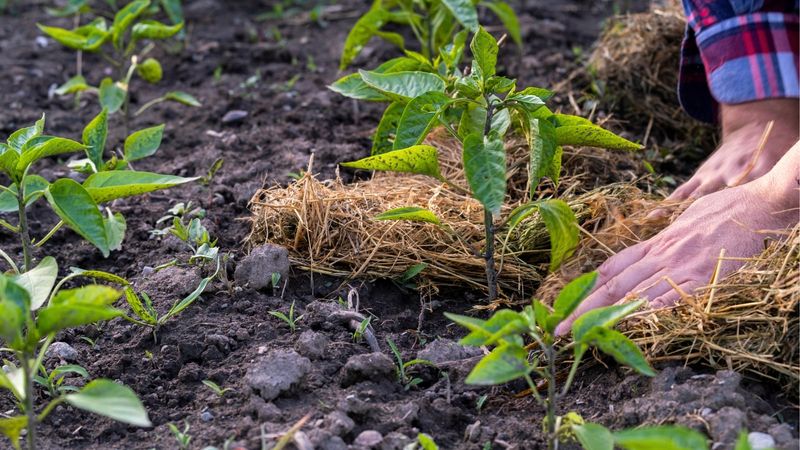
Mulch does two jobs at once here. A 2 to 3 inch layer of straw, shredded leaves, or wood chips over the root zone slows evaporation and helps moderate soil temperature during hot days. University of Maryland Extension identifies water stress as a contributor to flower and fruit drop, reinforcing that soil moisture management is part of the same problem you are trying to solve. Wetting the foliage is not a required step and can be undesirable in humid conditions where disease pressure is a concern, so keep the focus on the root zone.
Avoid unsupported quick fixes
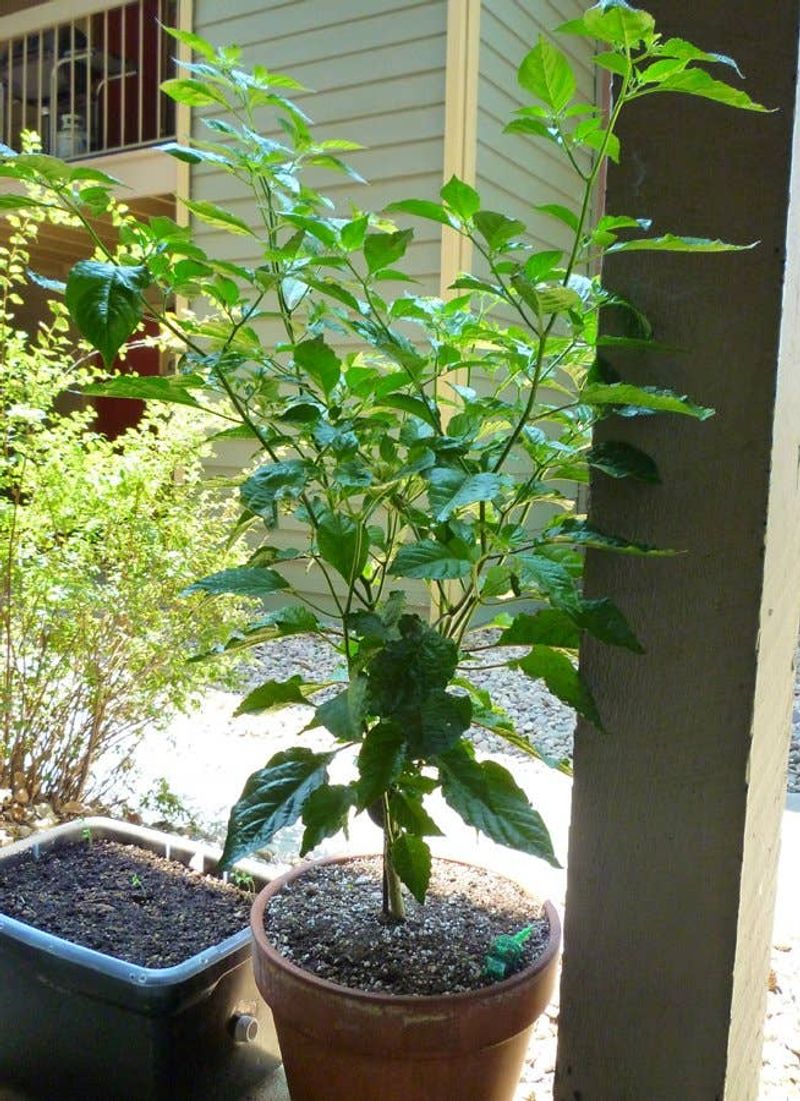
A lush, leafy pepper plant with no fruit is an easy target for the instinct to add fertilizer. Grabbing a bloom booster or extra phosphorus feels productive, but it addresses a symptom rather than the actual problem. Illinois Extension notes that a no-fruit plant may look extra leafy simply because its resources are going into foliage instead of developing peppers, not because it is over-fertilized. Adding unnecessary nutrients can damage plants and contribute to runoff without improving fruit set.
Follow soil-test results or product label directions rather than applying extra nitrogen, phosphorus, potassium, or a so-called bloom booster based on appearance alone. If you have not tested your soil recently, a basic home test kit or a cooperative extension soil test is a more reliable guide than the plant’s current look. The same caution applies to aggressive pruning: without a specific horticultural reason to remove major portions of the canopy, it is better to leave the plant’s structure alone while you address temperature and moisture conditions first.
Pollination is another area where common advice can lead gardeners in the wrong direction. Oklahoma State University explains that peppers generally self-pollinate, containing both reproductive structures in the same flower. More bees, a second pepper plant nearby, or hand-pollinating every blossom should not replace temperature and moisture management as your primary focus. UConn Extension reinforces that hand-pollination cannot reliably compensate for pollen already damaged by excessive heat, so the effort is unlikely to reverse heat-induced drop on its own.
Watch for recovery after conditions moderate
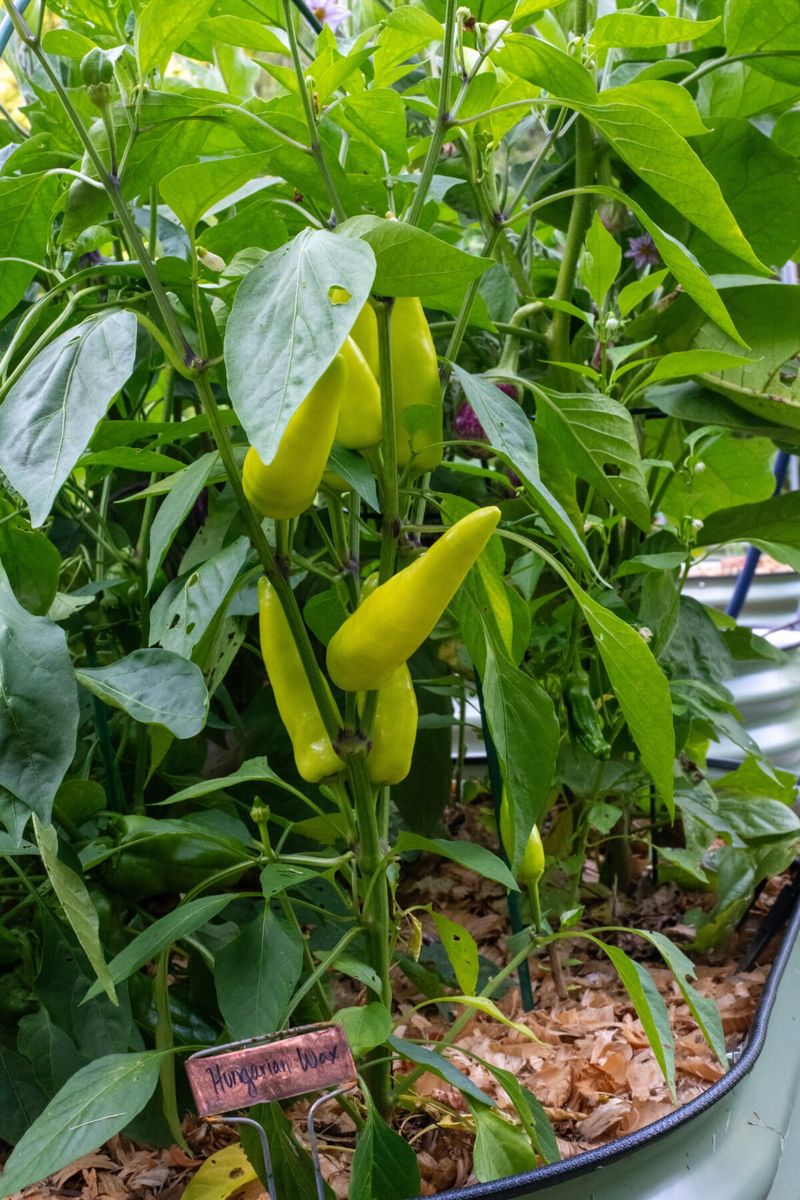
Once nighttime temperatures settle back into a more favorable range and daytime heat eases, healthy pepper plants can resume flowering and begin setting fruit again. University of Maryland Extension specifically notes that pepper production often resumes in late summer or early fall after a high-heat pause, so a plant that has been struggling through July or August may still deliver a meaningful harvest before frost.
Flowers already lost during the heat will not return, and cooler nights alone will not guarantee immediate fruit set. Keep watering steadily, maintain your mulch layer, and hold off on any major fertilizer changes while you wait. Illinois Extension reminds gardeners that fruit takes more than 45 days to ripen after pollination, so even once fruit set resumes, patience is part of the process. Watch for new flower buds and tiny fruitlets that stay on the plant rather than dropping as your first sign that conditions have improved.
If the plant keeps dropping blossoms even after temperatures moderate, work through a short diagnostic sequence: review nighttime temperatures first, then check daytime highs, soil moisture consistency, light levels, nutrition, wind exposure, and whether your cultivar is known to be especially heat-sensitive. Most cases resolve with one or two adjustments. A pepper plant that keeps growing through adversity is already telling you it wants to produce fruit when conditions allow.