
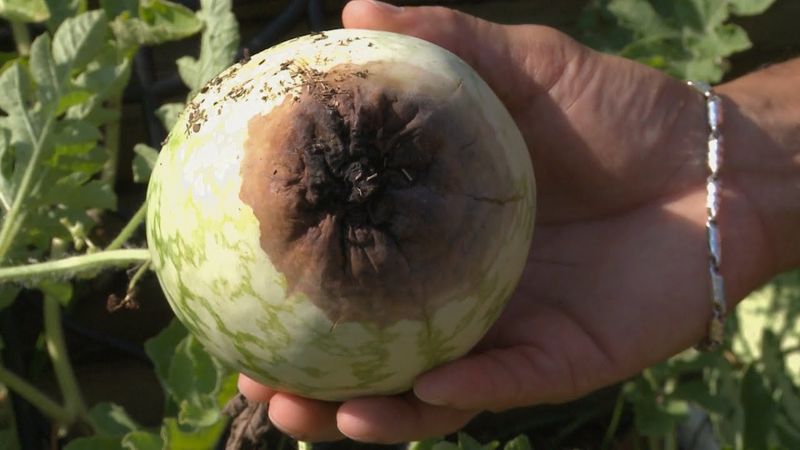
Finding a dark, sunken spot on the bottom of your watermelon is genuinely discouraging, especially when the vines look perfectly healthy. That lesion has a name – blossom-end rot – and it shows up more often during hot, dry stretches, but heat is not the whole story. The real trouble is usually a breakdown in how calcium moves through the plant to young fruit, and that breakdown can have several causes hiding in your soil and watering routine. Understanding what is actually happening gives you a real shot at saving the rest of your crop.
Start with the lesion, not the weather
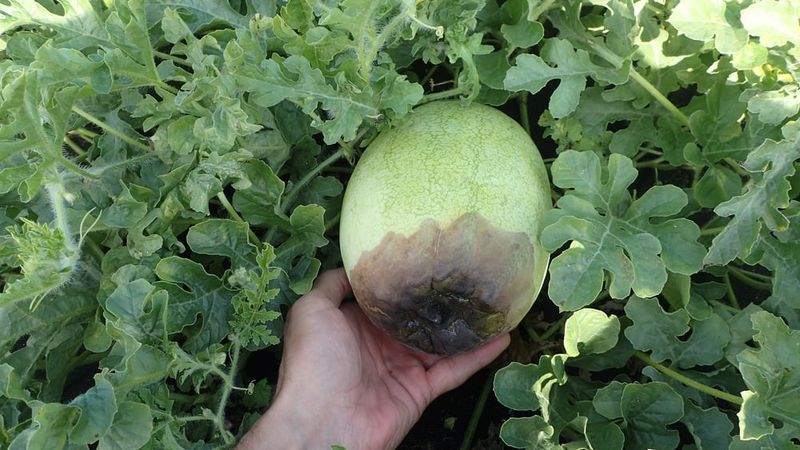
Before blaming the thermometer, take a close look at where the spot is sitting on your fruit. The blossom end is the end opposite the stem – the rounded tip that was once the flower attachment point. On a healthy melon, that end looks smooth and uniform. When Texas A&M AgriLife Extension describes watermelon blossom-end rot, the progression typically starts as a pale or water-soaked spot at that exact location, then gradually turns brown or black, sinks inward, and dries into a firm, leathery patch.
That leathery texture is actually a clue. A lesion that starts dry and stays confined to the blossom end looks different from rots that spread quickly across the rind or begin where the fruit rests on wet ground. Secondary fungi or bacteria can eventually colonize the damaged tissue, making it appear wetter, softer, or darker than the original injury – which is why the same melon can look dramatically worse within a few days of the first spot appearing.
Hot weather during fruiting season can make the situation feel urgent, but temperature alone does not confirm the diagnosis. A dark spot appearing during a heat wave still deserves a careful look at its location, shape, and progression before you decide what is causing it and what to do next.
What blossom-end rot actually means
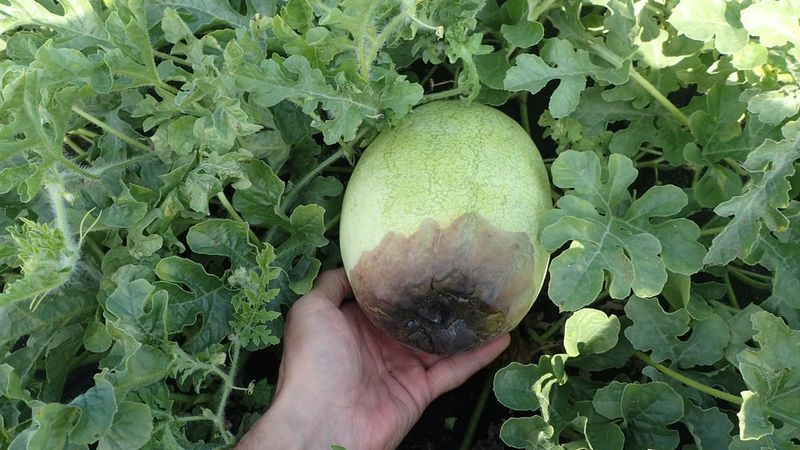
Blossom-end rot is not an infection. No fungus, bacterium, or virus triggers it at the outset – it is a physiological disorder, meaning the plant’s own internal processes go wrong. The core problem is that young fruit tissue receives too little calcium during a critical window of development, and those cells break down as a result.
Here is where it gets counterintuitive: your soil may already contain plenty of calcium. Oklahoma State University Extension horticulture guidance makes this point clearly – the disorder often reflects a failure of calcium transport rather than a true soil deficiency. Calcium moves through the plant almost entirely by riding along with water in the xylem, the plant’s internal plumbing. When water uptake is disrupted for any reason, calcium delivery slows or stops, and the rapidly dividing cells at the blossom end are the first to suffer because they have the highest demand.
Symptoms can reflect conditions during early fruit development, sometimes before the lesion is even visible on the outside. A vine under stress during fruit set may already be failing to deliver enough calcium to the tiny developing melon, even though the leaves look completely fine. This is why the disorder can seem to appear out of nowhere – the internal damage often precedes the visible spot by days. Secondary microbial decay may follow later, but that comes after the physiological injury has already occurred.
How heat, water, and roots disrupt calcium delivery
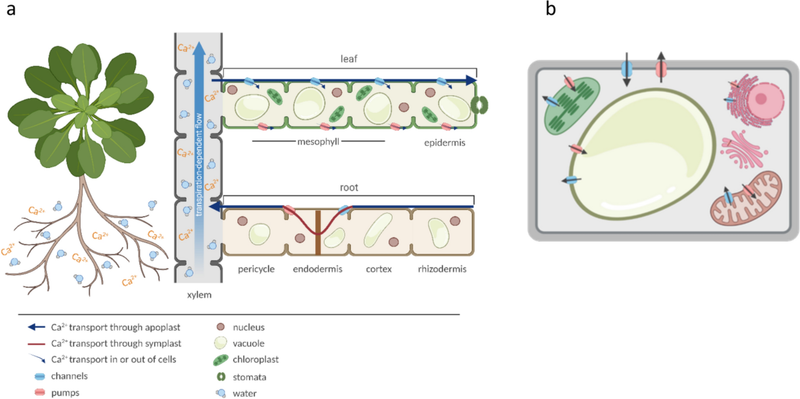
Hot, dry, or windy days push watermelon plants to pull water from the soil faster than usual. When the soil cannot keep up with that demand, the plant wilts, water movement slows, and calcium delivery to developing fruit drops off. Oklahoma State University’s watermelon production guide identifies drought, root injury, and poor drainage among the conditions that can contribute to blossom-end rot – a list that makes clear heat is just one piece of a larger puzzle.
Swinging between dry soil and sudden heavy watering is especially damaging. When parched soil gets flooded, the roots struggle to regulate uptake efficiently, and calcium transport to fruit can be interrupted even though water is now abundant. Waterlogged conditions create their own problem: oxygen-starved roots lose function, and a plant sitting in poorly drained soil can develop blossom-end rot even during a cool, rainy stretch.
Other root-zone stressors work the same way. Compaction from foot traffic or repeated deep cultivation tears fine roots that handle water absorption. High soil salinity, unsuitable pH, and excess nitrogen or other nutrients can each interfere with calcium uptake through different mechanisms. University of Georgia’s commercial watermelon production bulletin notes that nutrient imbalances involving excessive potassium, magnesium, or ammonium can also restrict calcium movement into the plant.
Lush foliage does not rule any of this out. The leaves draw on a larger, more established root system and can look healthy while the fruit – which has a much more concentrated calcium demand – goes short. That said, extremely vigorous leafy growth with poor fruit set can also point to excess nitrogen or heat-related pollination problems rather than blossom-end rot specifically.
Stabilize moisture without waterlogging the plant
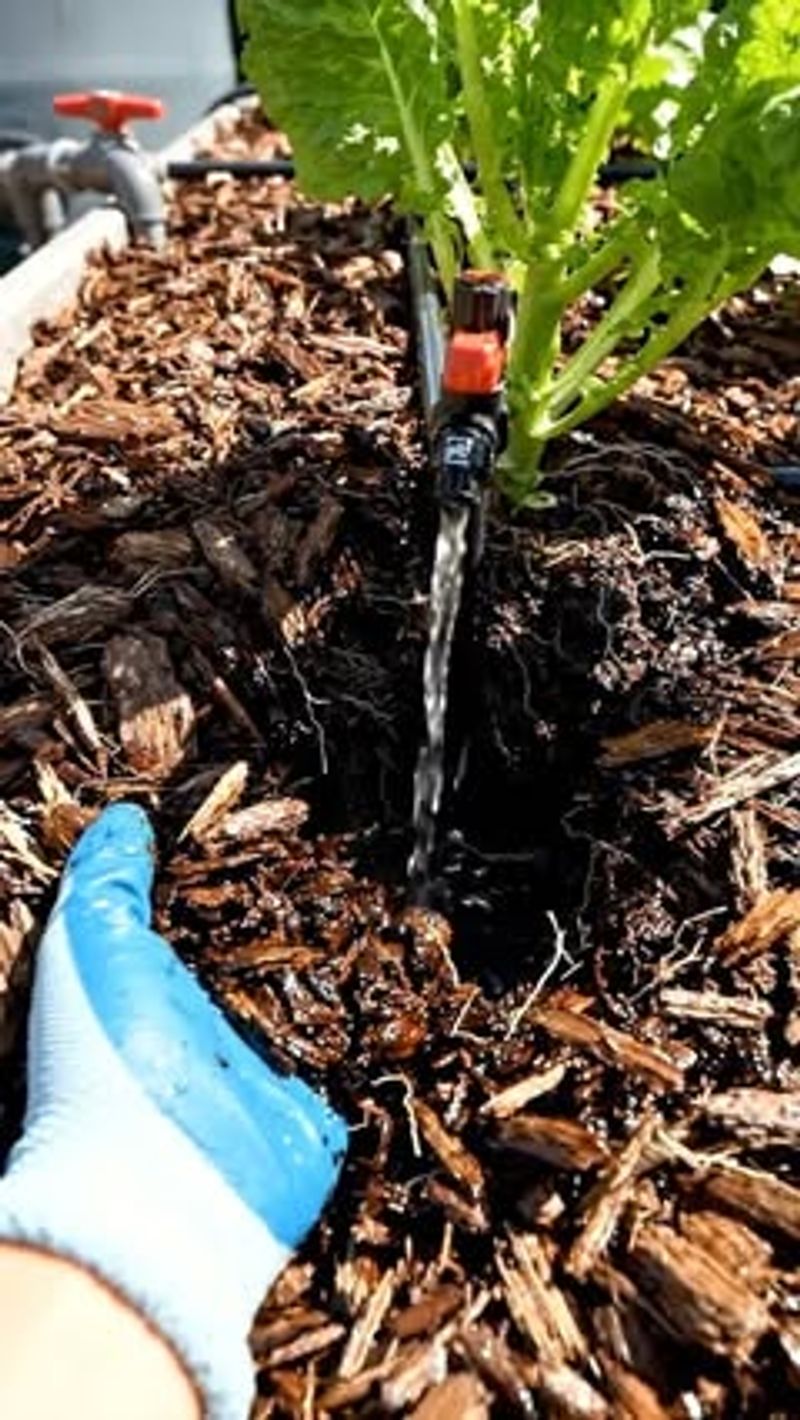
The most practical thing you can do right now is check the soil moisture at root depth – push a finger or a trowel a few inches down and feel whether it is dry, moist, or soggy. Your goal is consistent, even moisture through the root zone, not saturated soil and not bone-dry ground. University of Minnesota Extension’s irrigation guidance for vegetables emphasizes that steady moisture during flowering and fruit development is critical for crops like watermelon, which have high water demand during those stages.
Iowa State University Extension’s home watermelon guide suggests roughly 1 to 2 inches of water every 7 to 10 days during dry weather as a general reference point – but that figure needs adjustment for your soil type, local rainfall, temperature, and drainage. Sandy soils dry out faster and need more frequent watering; heavy clay holds moisture longer but can also stay waterlogged after rain.
Mulch is one of the most effective tools available to home gardeners. A 2- to 3-inch layer of straw, wood chips, or shredded leaves over the root zone slows evaporation and cushions the soil against wild temperature swings that can dry it out between waterings. Drip irrigation or soaker hoses deliver water directly to the root zone and keep the fruit surface and foliage drier than overhead sprinklers, which reduces the risk of secondary fungal problems on top of any blossom-end rot.
Avoid the wilt-then-flood cycle at all costs. Letting vines wilt before watering, then saturating the soil to compensate, is one of the most reliable ways to disrupt calcium transport to young fruit.
Test before adding lime, gypsum, or fertilizer
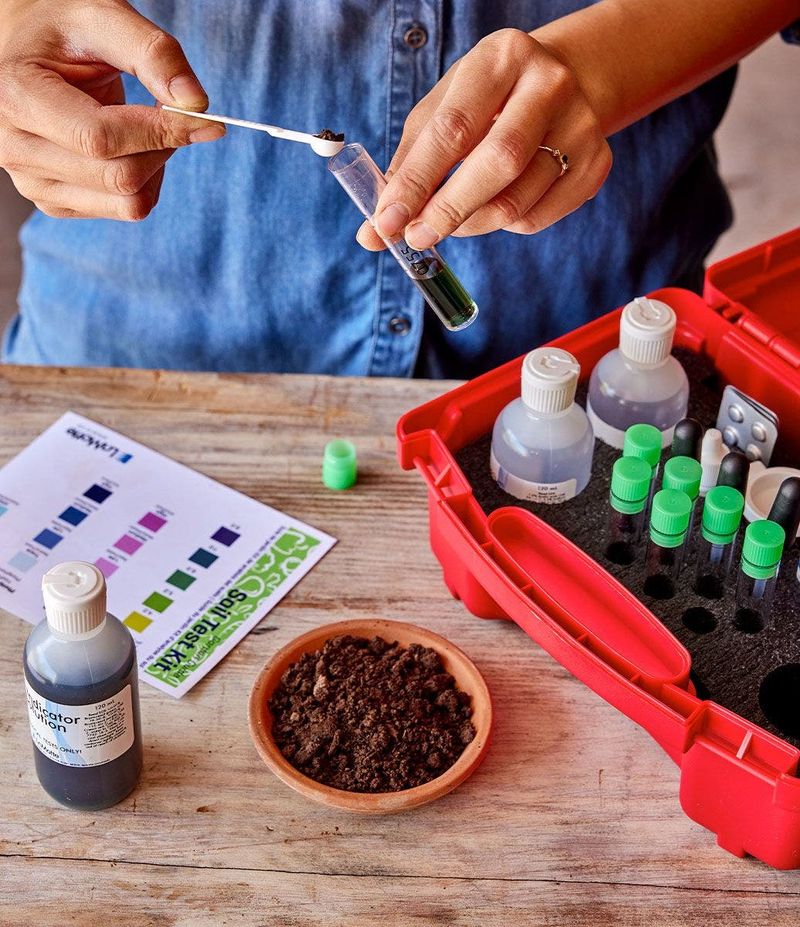
Reaching for a bag of lime or gypsum the moment you spot blossom-end rot is a common reaction, but adding amendments without knowing what your soil actually needs can make things worse. Too much lime raises pH above the range where watermelon roots can access nutrients efficiently. Excess fertilizer, especially nitrogen-heavy blends, can push lush vegetative growth that competes with fruit for calcium and can also tip the balance of other nutrients in ways that restrict uptake.
Penn State Extension’s soil testing resource explains that a standard soil test measures pH and available nutrients, and provides crop-specific amendment recommendations based on actual results rather than guesswork. Most university extension services offer affordable testing, and the turnaround is usually fast enough to guide decisions within the same growing season.
Lime and gypsum are not the same product and should not be treated as interchangeable. Penn State’s soil acidity and aglime guidance clarifies that lime neutralizes soil acidity and raises pH, while gypsum supplies calcium and sulfur without changing pH. If your soil is already at a suitable pH, adding lime will push it higher and may lock out other nutrients. Gypsum can supply calcium in that situation without the pH risk, but again, a soil test tells you which scenario you are actually dealing with.
Watermelon pH targets vary by region and source. Oklahoma State lists roughly 6.0 to 6.8, while UGA commercial guidance cites 6.0 to 6.5 and home-garden guidance stretches to 7.0. There is no single universal target – use your local extension service’s recommendation alongside your test results rather than picking one number from the internet.
Rule out diseases and pollination problems
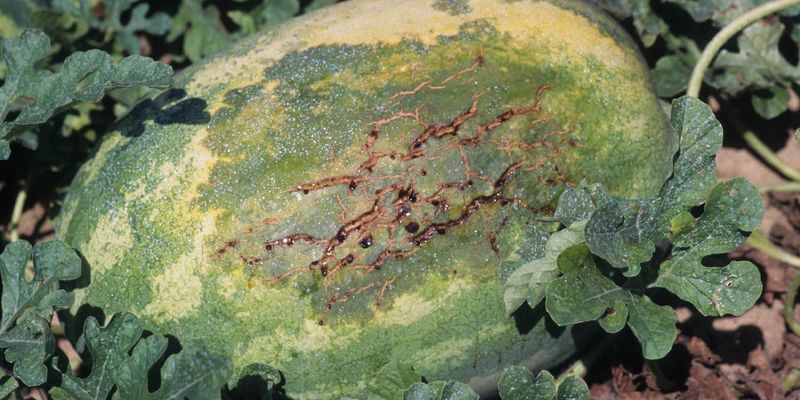
Not every dark, soft spot on a watermelon is blossom-end rot, and misidentifying the problem leads to the wrong response. A reliable checkpoint before drawing any conclusion is asking where exactly the lesion begins and how it progresses. Blossom-end rot starts at the tip – the blossom end, not the side or the ground-contact surface – and typically develops as a dry, sunken, leathery area that stays relatively confined in its early stages.
Cornell Vegetables’ watermelon fruit symptom diagnostic key notes that several diseases can produce lesions that superficially resemble blossom-end rot but behave differently. Anthracnose, black rot, Phytophthora fruit rot, gummy stem blight, and Fusarium dry rot can all affect watermelon fruit. Soil-contact rots often begin where the melon rests on moist ground, spread rapidly across multiple rind areas, and produce broadly soft, wet, or fuzzy growth – patterns that are distinct from the typical blossom-end presentation.
UC Davis Postharvest Research Center’s watermelon facts also highlights that postharvest and field rots can involve multiple organisms and entry points, reinforcing the need to look carefully at the full picture rather than assuming one cause.
Fruit that stops swelling entirely may not involve rot at all. UC IPM’s home watermelon guidance points out that watermelon requires successful pollination to set and develop fruit – poor pollination can cause fruit to stall or abort without any lesion present. If small melons are shriveling and dropping rather than developing a specific spot, the problem may be pollinator activity rather than calcium transport.
Remove fruit that is worsening or decaying
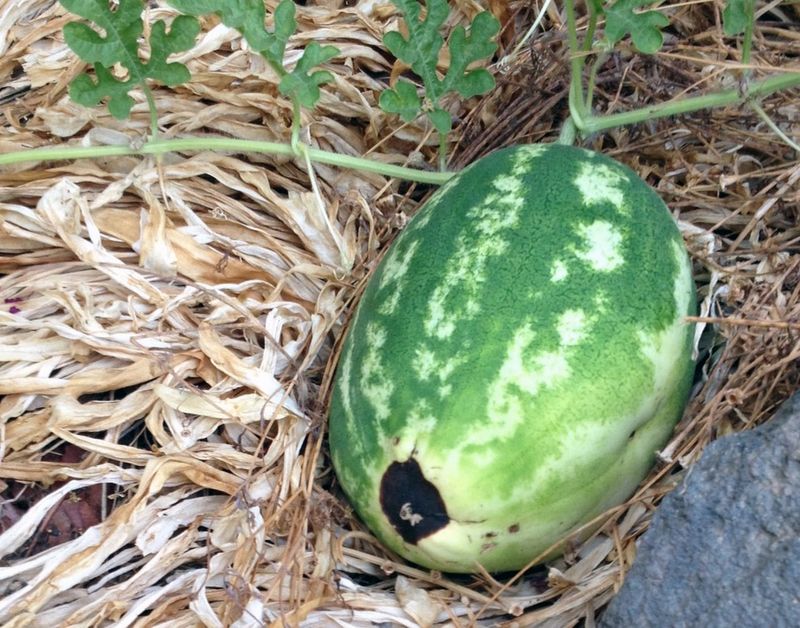
Once blossom-end rot damage appears, that tissue will not recover. The cells have already broken down, and no spray, fertilizer, or watering adjustment will repair the existing lesion. Oklahoma State University’s watermelon production fact sheet recommends removing affected melons, particularly when the lesion is actively expanding or secondary decay has set in, because the plant can then redirect its resources toward younger, healthier fruit that may still develop normally.
Removal is a practical garden-management step, not a cure for whatever stress caused the problem in the first place. Pulling a rotting melon will not fix inconsistent irrigation, damaged roots, or a nutrient imbalance – those underlying conditions still need attention if you want the next fruits to fare better.
Texas A&M AgriLife’s blossom-end rot resource notes that secondary fungi and bacteria can colonize damaged tissue, and UC Davis postharvest guidance on watermelon underscores that once microbial decay takes hold, the fruit quality deteriorates quickly. Fruit showing soft spreading rot, visible mold, a foul odor, or any sign of internal decay should be discarded rather than salvaged. Do not assume that cutting away the dark patch makes the rest safe to eat when decay has progressed beyond a small, dry, clearly bounded lesion.
Prevent the pattern next season
A repeatable prevention routine is more useful than any single fix. Before next season, start with a soil test so you know your actual pH and calcium levels before reaching for any amendment. Penn State Extension’s soil testing page explains how to collect and submit samples for accurate, crop-specific results that take the guesswork out of fertility decisions.
Plan your irrigation setup before the vines are in the ground. Drip or soaker systems make consistent root-zone moisture much easier to maintain than hand watering or overhead sprinklers. University of Minnesota Extension’s vegetable irrigation strategies reinforce that steady moisture during flowering and fruit development is one of the most effective ways to support calcium transport. Lay mulch early to slow evaporation and buffer the soil against temperature swings.
Protect roots throughout the season by keeping foot traffic and cultivation shallow near the vines. Oklahoma State’s watermelon production guidance specifically flags root damage from deep cultivation as a contributing factor – roots that cannot absorb water efficiently cannot move calcium to fruit, regardless of what the soil contains. A healthy-looking vine can still develop fruit-specific calcium stress, which means the symptom does not point to one simple soil deficiency, a heat-only cause, or a need for blind spraying. The gardeners who break the pattern are the ones who check the whole system, not just the fruit.