
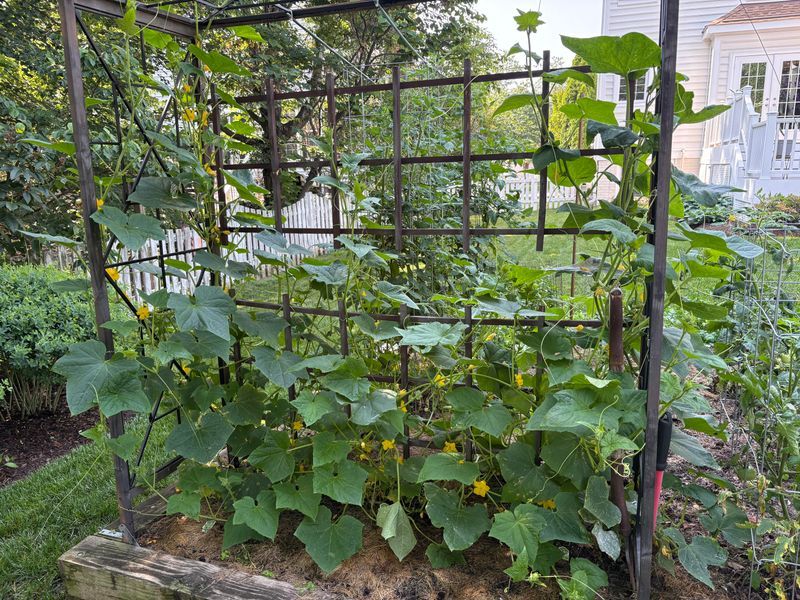
Watching your cucumber vines sit motionless in midsummer heat is genuinely frustrating, especially when you expected a surge of new growth and a steady harvest. A lot of gardeners reach for a fertilizer at this point, and fish emulsion comes up often as the fix. The truth is more useful: a label-diluted fish-emulsion feeding may help when low nitrogen is part of the problem, but heat stress, drought, overwatering, pests, and disease can all stall a cucumber vine in ways that no watering-can additive will correct. Knowing which problem you are actually facing is what gets the garden moving again.
Heat can stall a cucumber without causing nitrogen deficiency
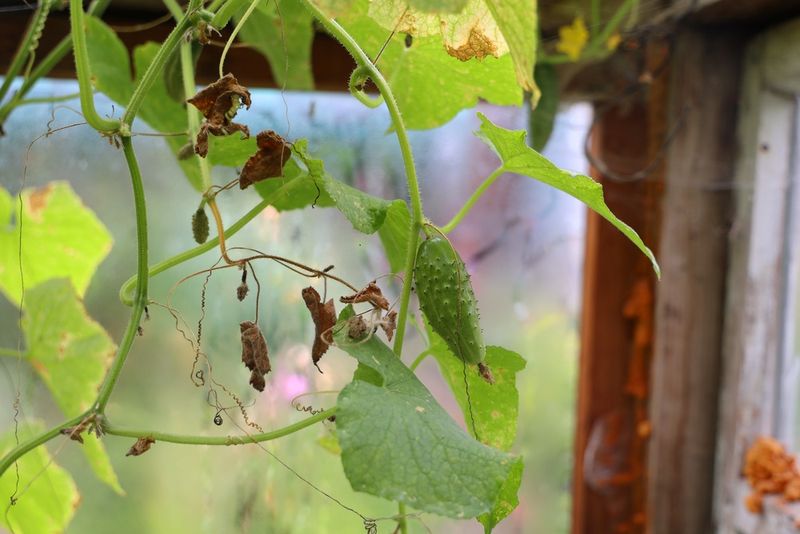
A cucumber vine that stops growing or producing during a heat wave is not automatically running low on nitrogen. High temperatures can cause wilting even when the soil is adequately moist, because the plant loses water through its leaves faster than roots can replace it. According to University of Minnesota Extension research on how excessive heat affects the vegetable garden, temperatures above roughly 90 degrees Fahrenheit can trigger flower abortion, shift the ratio of male to female flowers, and reduce bee pollinator activity, all of which cut fruit production without any nutrient shortage being involved.
Growth slowdowns can also come from drought stress, waterlogged roots, root disease, insect feeding, bacterial infection, or simple pollination failure. The Minnesota Extension cucumber wilting diagnostic tool lists bacterial wilt, root rot, and vine borers alongside heat and drought as common causes of wilting and stalled vines. Treating one cause when another is actually responsible wastes time and can make the plant worse.
Fish emulsion is a liquid nitrogen fertilizer, and it has a real role when low fertility is slowing a cucumber down. That role is conditional, though: it applies only after you have ruled out or addressed moisture problems and heat stress, and only when credible signs point to a nitrogen shortage. Think of it as one tool in a diagnostic sequence, not the first thing you reach for when vines go quiet.
Fish emulsion provides nitrogen when fertility limits vine growth
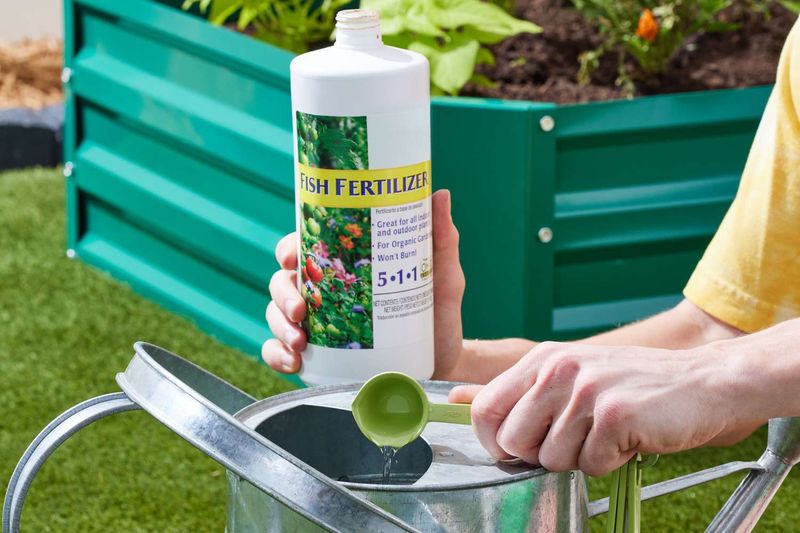
Fish emulsion is a liquid fertilizer made from processed fish, and its main job is delivering nitrogen in a form plants can take up relatively quickly. University of Minnesota Extension lists a representative analysis of approximately 5-1-1, meaning roughly five parts nitrogen to one part phosphorus to one part potassium, though actual product analyses vary. Always read your specific product label rather than assuming a standard concentration applies.
NC State Extension’s review of fish emulsion and seaweed fertilizers notes that fish emulsion is primarily a nutrient fertilizer and that claims about heat resistance, disease resistance, or guaranteed yield improvement are not uniformly demonstrated by research. Fish emulsion is not the same as seaweed or kelp extract, which are sometimes sold alongside it but have different nutrient profiles and different evidence bases.
University of Illinois Extension’s cucumber growing guide recommends side-dressing with nitrogen fertilizer when plants begin to vine, which is when cucumbers become heavy feeders and a nitrogen shortage is most likely to limit growth. Fish emulsion fits that timing as one practical organic nitrogen option. What it cannot do is cool a plant, reverse heat injury, or substitute for water. Its value is specific: supplying available nitrogen when low fertility is the limiting factor, after the plant is adequately hydrated and the root zone is stable.
Restore moisture and reduce heat before feeding
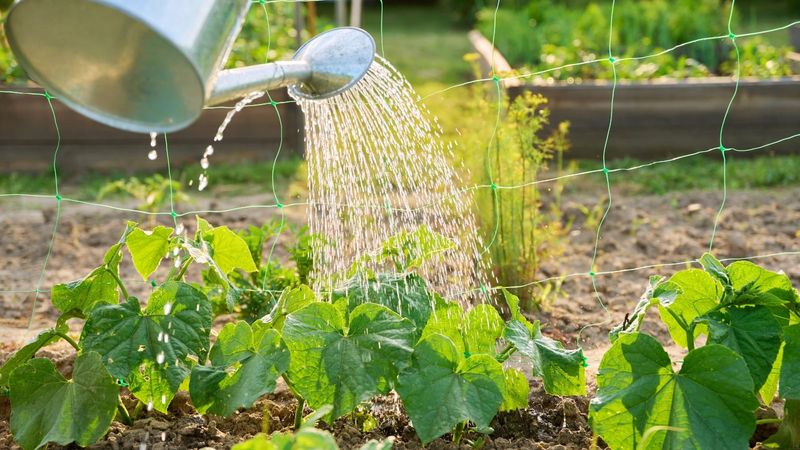
Before you add anything to a watering can, check the soil. Push a finger two inches into the root zone near the base of the vine. If the soil feels dry at that depth, the plant needs water far more urgently than it needs fertilizer. Minnesota Extension’s heat-gardening guidance recommends watering early in the morning, applying enough to wet roughly the top foot of soil, and repeating consistently rather than giving shallow, frequent sprinkles that never reach the root zone.
After watering, lay a one- to two-inch layer of mulch around the plants, keeping it a few inches back from the stem. Mulch slows evaporation, moderates soil temperature, and reduces the stress the plant experiences between waterings. For extreme afternoon heat, a piece of 30 to 40 percent shade cloth draped over a simple frame can meaningfully reduce leaf temperature and slow moisture loss without blocking the morning light cucumbers need.
Washington State University Extension’s guidance on fertilizer burn warns specifically against fertilizing plants that are stressed by heat or drought, because concentrated fertilizer salts in dry soil can pull water away from roots and worsen the damage. A severely wilted plant needs to recover its hydration first. Water it deeply, give it a day or two to stabilize, then reassess whether a nitrogen feeding makes sense. Shade and moisture are the first rescue tools; fertilizer comes later, and only conditionally.
Treat pale leaves and weak growth as clues, not a diagnosis
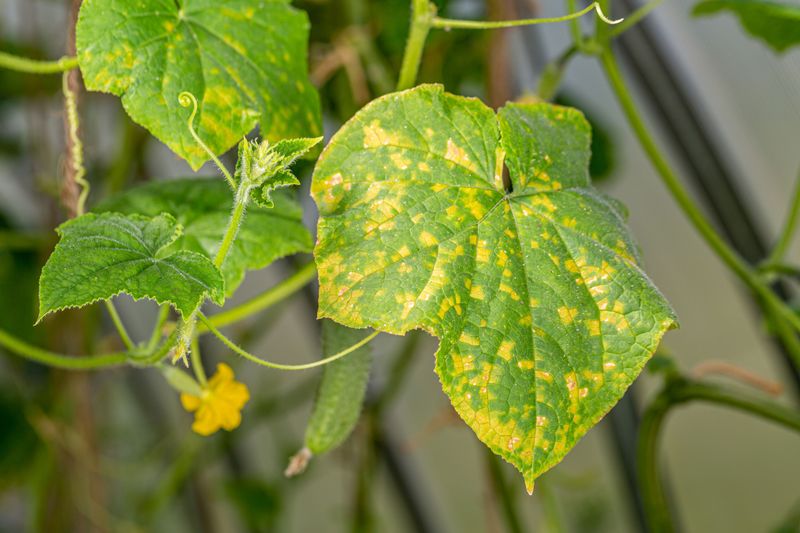
Pale foliage and sluggish vine growth can point toward low nitrogen, but they are not proof of it on their own. Roots damaged by overwatering, soil compaction, or root rot lose their ability to move nutrients into the plant even when nutrients are present in the soil, so the leaves turn pale for reasons that more fertilizer will not fix. Insect feeding, fungal disease, and some viral infections also produce yellowing and weak growth that mimic nutrient deficiency closely enough to fool an experienced eye.
The Minnesota Extension cucumber diagnostic tool walks through wilting and discoloration causes systematically, separating moisture problems, root disease, bacterial wilt, and pest damage from heat stress. Checking under leaves for insects, looking at root color and firmness, and noting whether symptoms appeared suddenly or gradually all provide more useful information than leaf color alone. University of Maryland Extension guidance on cucumber leaf yellowing also flags excess moisture as a frequent cause of chlorosis that gardeners sometimes misread as a feeding problem.
A soil test is the most reliable way to confirm a nutrient shortage. Penn State Extension’s soil-testing program explains that tests measure key nutrients including nitrogen, phosphorus, potassium, calcium, and magnesium, and provide specific fertilizer recommendations rather than guesswork. If a soil test is not practical mid-season, at minimum review your fertilizer history: a plant that received a balanced fertilizer at transplant and again when vining began is less likely to be nitrogen-limited than one grown in unamended soil with no supplemental feeding.
One more distinction worth making: heat-related flower abortion reduces fruit without necessarily weakening the vine itself. If your vines look green and vigorous but fruit production has dropped off in a heat wave, the problem is likely heat-damaged flowers or reduced pollination, not a nitrogen shortage. Feeding the vine more nitrogen in that situation will not restore flowers that have already dropped.
Apply fish emulsion by the product label
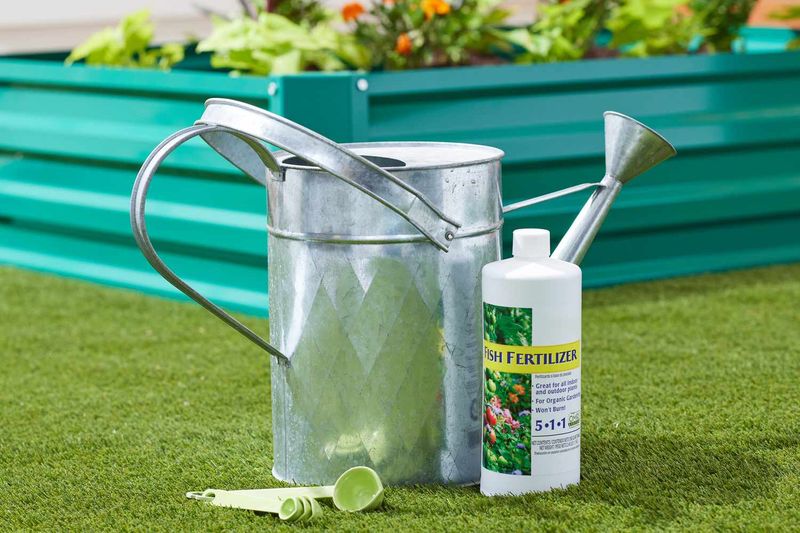
Once the plant is fully hydrated, the root zone is stable, and a nitrogen shortage still seems plausible based on pale foliage, weak growth, or a history of low fertility, fish emulsion becomes a reasonable next step. The method matters as much as the timing. UC Integrated Pest Management’s cucumber growing guidance recommends applying nitrogen in light applications when needed, keeping fertilizer away from plant stems, and watering it into the soil after application so it reaches the root zone rather than sitting on the surface.
Fish-emulsion products vary considerably in concentration, so the dilution printed on your specific bottle is the only reliable guide. Mixing a stronger solution than the label recommends does not speed results; it raises the salt concentration around the roots and risks the kind of fertilizer burn that WSU Extension warns against. Measure carefully, mix with water as directed, and apply to moist soil rather than dry ground.
Keep the solution away from stems and foliage unless your product label specifically describes and permits foliar application. Some fish-emulsion products are formulated for foliar feeding, but applying an undiluted or label-non-approved concentration to leaves can cause tissue damage. University of Minnesota Extension’s nutrient management guidance supports light, targeted nitrogen applications rather than repeated heavy doses. Excess nitrogen pushes the plant toward producing lush vines and large leaves at the expense of flowers and fruit, which is the opposite of what a gardener hoping for cucumbers actually wants.
One label-directed feeding, followed by a week of observation, tells you more than repeated applications in quick succession.
Know when fertilizer cannot solve the problem
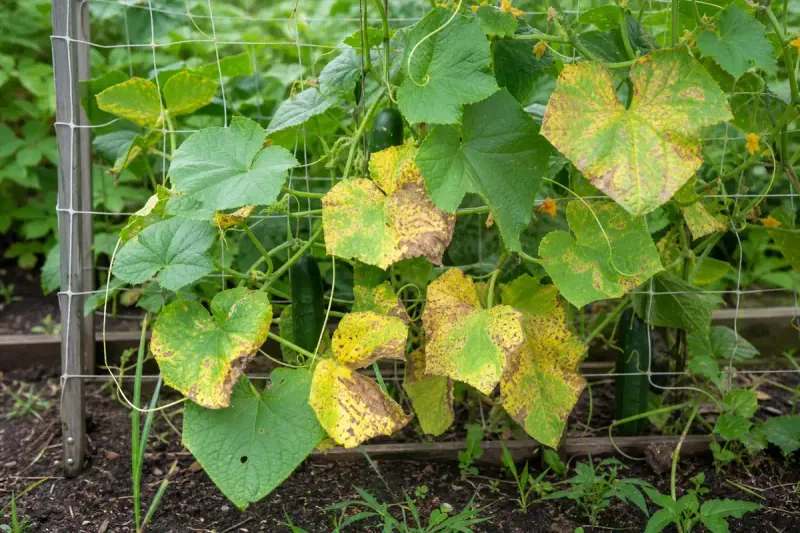
Fish emulsion is useful in a narrow set of circumstances, and recognizing its limits protects you from wasting effort on a plant that needs something else entirely. Drought and overwatering require opposite corrections: a drought-stressed plant needs deep, consistent moisture, while a waterlogged plant needs drainage and time for roots to recover oxygen. Adding nitrogen fertilizer to either situation without fixing the underlying water problem will not help and can make root damage worse.
Pollination failure and heat-related flower abortion are equally outside the reach of fertilizer. Minnesota Extension’s research on heat and vegetable production confirms that flowers already aborted by high temperatures cannot be restored by feeding the vine. If bee activity has been low during a heat wave, hand-pollinating early-morning flowers is a more direct response than fertilizing.
Bacterial wilt is a specific threat to watch for. According to the Minnesota Extension cucumber diagnostic tool, bacterial wilt causes leaves to wilt, progresses down the vine, and can kill the plant; it is spread by cucumber beetles and has no fertilizer cure. A vine that wilts suddenly and does not recover after watering, or that shows the classic “sticky thread” when a wilted stem is cut and the cut ends are slowly pulled apart, likely has bacterial wilt. Treat that problem by managing cucumber beetles, not by feeding.
On the topic of common misconceptions: University of Maryland Extension guidance cautions against keeping cucumbers constantly saturated, noting that excess water damages roots and contributes to disease. Penn State Extension also warns that Epsom salt, sometimes suggested as a garden rescue, can create nutrient imbalances that interfere with calcium and potassium uptake; it is not a default fix for stalled cucumbers. Finally, Illinois Extension’s cucumber guide points out that leaving overripe yellow cucumbers on the vine signals the plant to stop producing. Harvesting regularly, even cucumbers that have passed their prime, encourages continued flowering and fruiting in a way that no amount of fertilizer can replicate.
Use fish emulsion only when the plant needs nitrogen
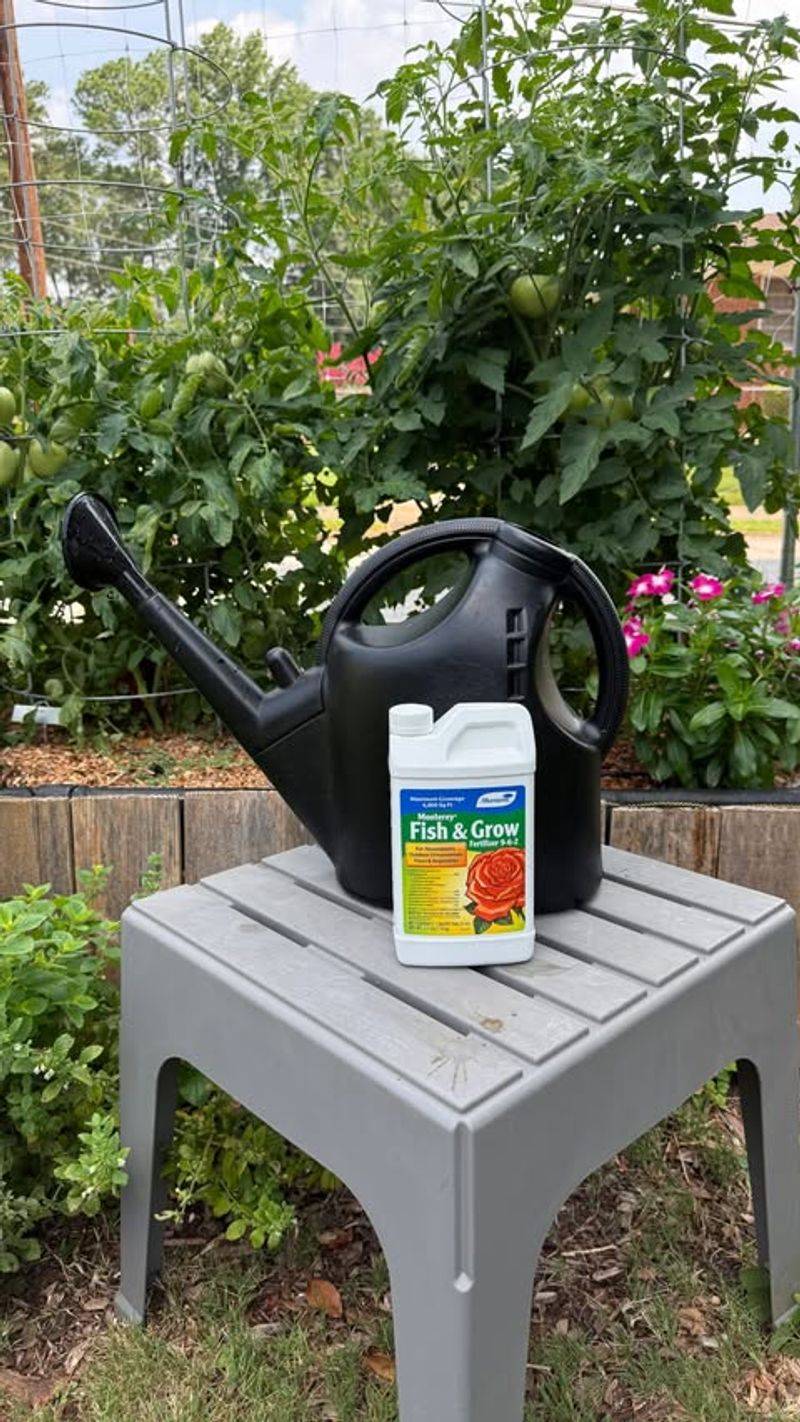
The practical decision rule is straightforward. Start by restoring moisture and reducing heat exposure through deep watering, mulch, and temporary shade, following the Minnesota Extension heat-gardening sequence. Then check for pests, disease, and root problems before drawing any conclusions about fertility. A fish-emulsion feeding earns its place only when the plant is hydrated, stable, and showing credible signs of nitrogen shortage, such as pale overall yellowing on older leaves, weak vine extension, or a history of no nitrogen application since transplant.
When those conditions are met, follow the product label for dilution and application rate, water it into moist soil, and give the plant time to respond before repeating. University of Minnesota Extension’s nutrient guidance supports targeted, light applications rather than repeated heavy doses. One well-timed feeding under the right conditions can support new vine growth; one feeding applied to a heat-stressed, drought-parched, or disease-affected plant will not make cucumbers climb again. The watering can is only as useful as the diagnosis behind it.