
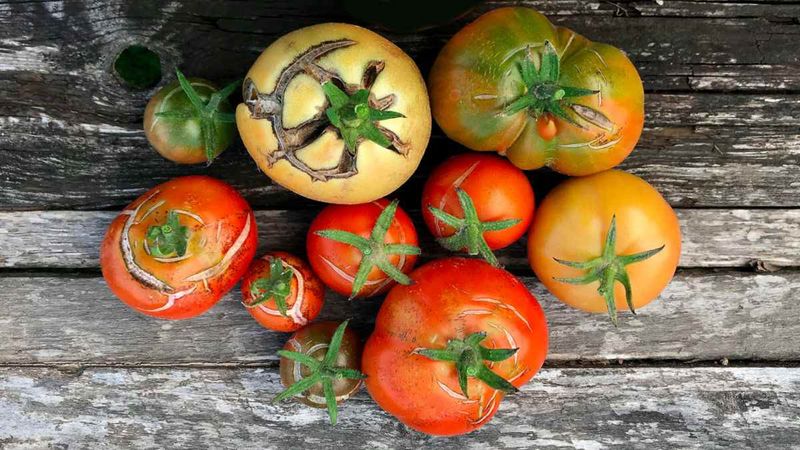
Reaching into your tomato plants on a hot afternoon and finding split fruit is one of the most discouraging sights in a summer garden. You watered deeply after a dry stretch, and now your ripening tomatoes look like they burst from the inside out. The good news is that this kind of cracking is usually a physiological issue, not a disease, and the watering pattern behind it is something you can adjust. Understanding what triggers the split gives you a real shot at protecting the rest of your crop.
A dry-to-wet swing is one cause to investigate first
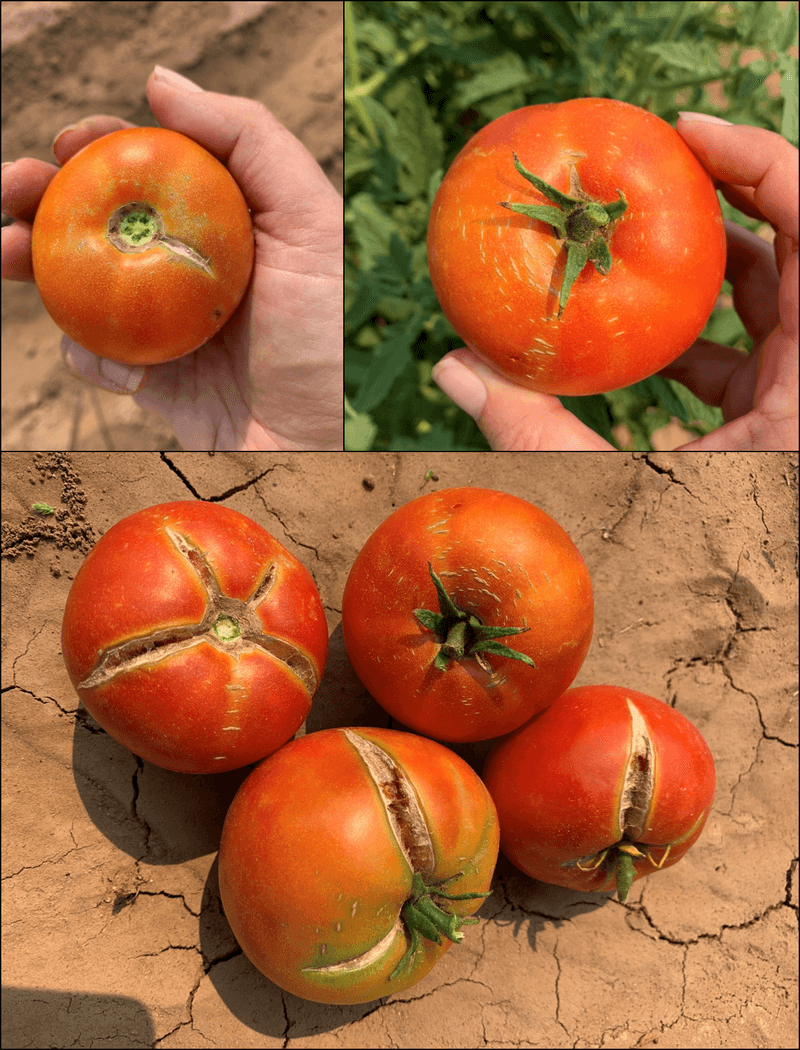
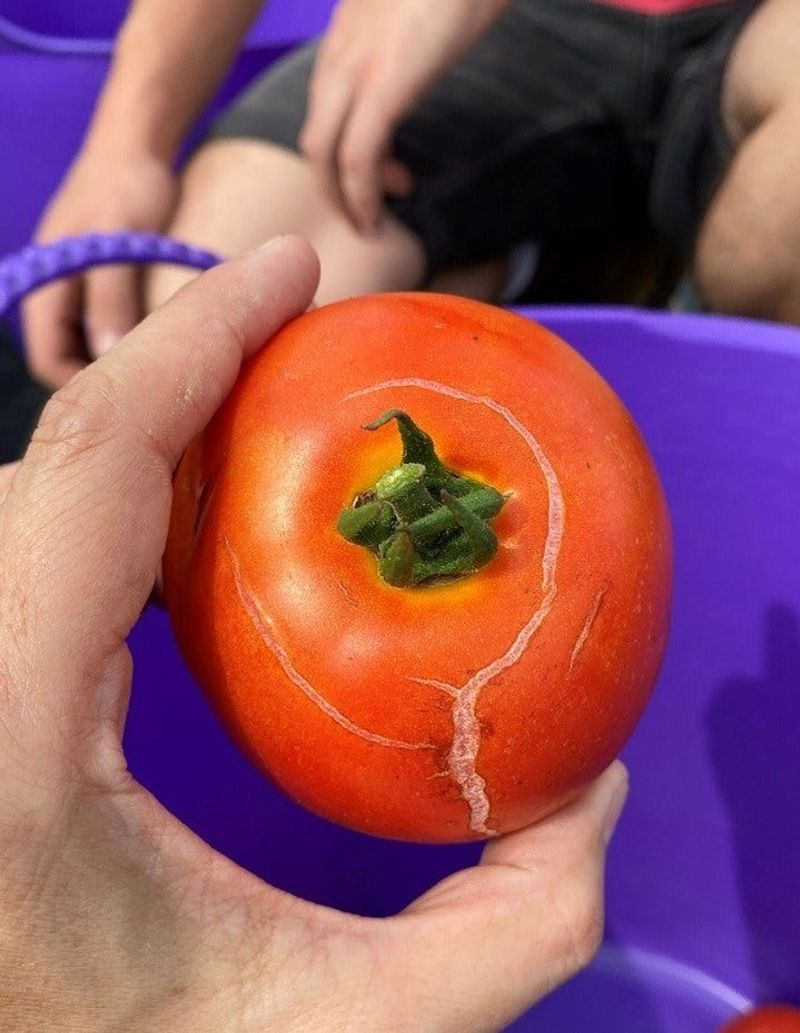
Picture a tomato that has been ripening through a week of hot, dry weather. The soil around it has gone from damp to powder-dry, and then you give the bed a thorough soaking. A day or two later, you spot a split running from the stem end down the shoulder, or a ring-shaped crack circling the top of the fruit. That scenario is one of the first causes worth investigating when you see cracked tomatoes.
Tomato cracking is generally a physiological disorder, meaning the plant’s own growth process is behind it rather than a pest, fungus, or bacteria. University of Minnesota Extension’s tomato fruit crack diagnostic identifies two typical growth-crack patterns: radial cracks that radiate outward from the stem end, and concentric cracks that form a circular ring around the shoulder of the fruit.
A sharp swing from substantially dry soil to excessive moisture is a common, controllable trigger and a sensible first place to look. That said, timing alone cannot prove that the watering you did yesterday caused the crack you see today. Penn State Extension’s tomato cracking guide notes that heat, ripeness stage, cultivar genetics, sun exposure, rainfall, humidity, pruning, crop load, and root or nutrient stress can all play a role. Treating the dry-to-wet swing as the primary suspect is a good starting point, not a guaranteed diagnosis for every crack you find.
Rapid fruit expansion can outpace the skin
When the root zone goes from very dry to very wet in a short period, a tomato plant can take up water quickly. That sudden influx moves into the fruit, and the interior flesh begins to expand. The skin, which has been toughening and losing elasticity as the tomato ripens, may not be able to stretch at the same rate. The result is a split, usually along the weakest point near the stem or around the shoulder.
Ripening fruit are more vulnerable to this process precisely because the skin becomes less flexible over time. A green tomato that is still growing has more give; a tomato that has turned pink or red has skin that is closer to its limit. Research published in HortTechnology on soil moisture and cultivar influence on cracking found that cracking can occur even under relatively stable moisture conditions, which tells us the story is more complicated than a single watering event.
Heat adds another layer to this. High temperatures can accelerate fruit development, raise the fruit’s surface temperature, reduce skin elasticity further, and increase the plant’s overall water demand. So a hot stretch followed by a heavy irrigation creates several stresses at once, not just one. Recognizing that combination helps you understand why cracks seem to cluster during the hottest parts of summer, even if no single factor is fully to blame for each individual split.
Deep watering helps when it matches the plant’s needs
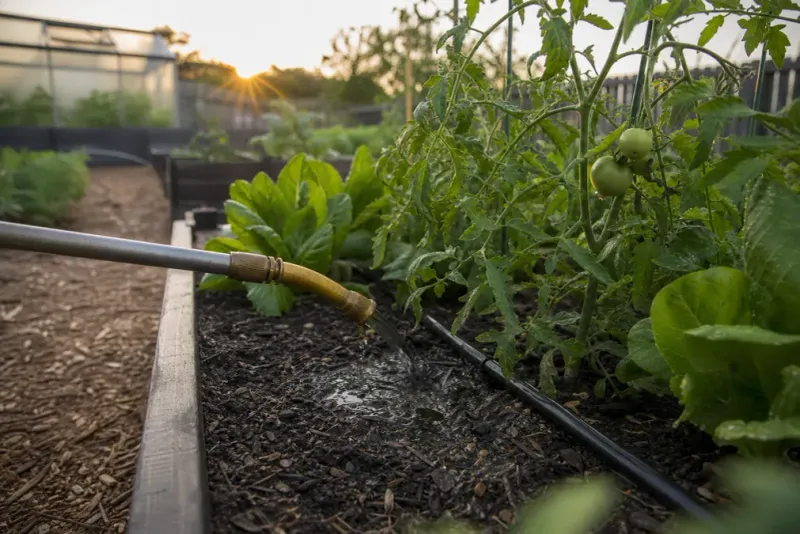
A deep soak is not the problem by itself. Watering deeply enough to wet the full root zone is actually the recommended approach for tomatoes, because shallow watering encourages roots to stay near the surface where they are more exposed to heat and drying. The concern is the pattern: letting soil become severely dry and then applying an unusually large amount all at once creates the abrupt swing that can stress ripening fruit.
Utah State University Extension’s tomato growing guide suggests a general benchmark of roughly 1 to 2 inches of water per week for garden tomatoes, but treats that as a starting point rather than a fixed rule. Sandy soils drain faster and may need more frequent watering at smaller amounts. Clay soils hold moisture longer but can become waterlogged if irrigation is too heavy. Containers dry out faster than in-ground beds.
Wind, plant size, and rainfall all shift the equation further.
The practical correction is to check the moisture in the root zone before watering rather than following a rigid calendar. Push a finger or a simple soil probe several inches into the soil near the plant. If the soil still feels moist at that depth, the plant likely does not need water yet. Penn State’s tomato production guidance reinforces that excess water and poor drainage can also stress plants and increase cracking risk, so consistent moisture does not mean keeping the soil saturated.
The goal is steady, appropriate hydration, not swinging between bone-dry and waterlogged.
Heat can raise both water demand and watering frequency
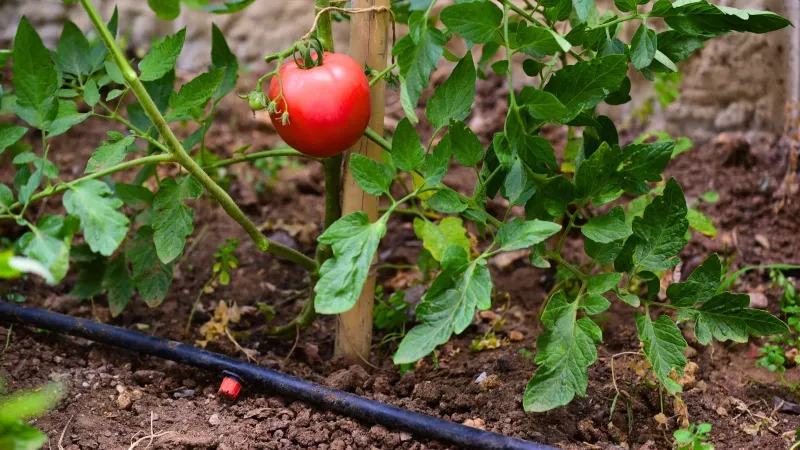
Checking the soil more often is one of the most useful adjustments you can make during a heat wave, but the heat itself also changes how much water your plants actually need, not just how quickly you notice they are thirsty. Higher temperatures push plants to transpire more, roots pull water from the soil faster, and the surface dries out quickly. University of Minnesota Extension’s hot-weather gardening guide notes that when daytime temperatures exceed 90 degrees F and nights stay above 70 degrees F, gardens may need watering daily or every other day, though that is a conditional guideline tied to heat conditions rather than a schedule every gardener should follow year-round.
One thing worth knowing: tomatoes can wilt in the middle of a hot afternoon even when the soil has plenty of moisture. That midday droop is a temporary response to heat stress, not a reliable signal that the plant needs immediate water. Checking soil moisture at the root zone, rather than reading leaf appearance alone, gives you a more accurate picture of what the plant actually needs.
UMN Extension’s heat garden tips recommend applying roughly 1 to 2 inches of mulch around vegetable plants, kept away from direct contact with the stem, to slow evaporation and buffer soil temperature swings. Drip lines, soaker hoses, or careful hand-watering at the base of the plant deliver water more evenly than overhead sprinklers and reduce the leaf wetness that encourages foliar disease. Watering in the morning is a useful default because it gives the plant time to absorb moisture and allows any foliage that does get wet to dry before evening, though morning timing addresses disease risk more than it directly prevents cracking.
Cultivar and plant stress change the risk
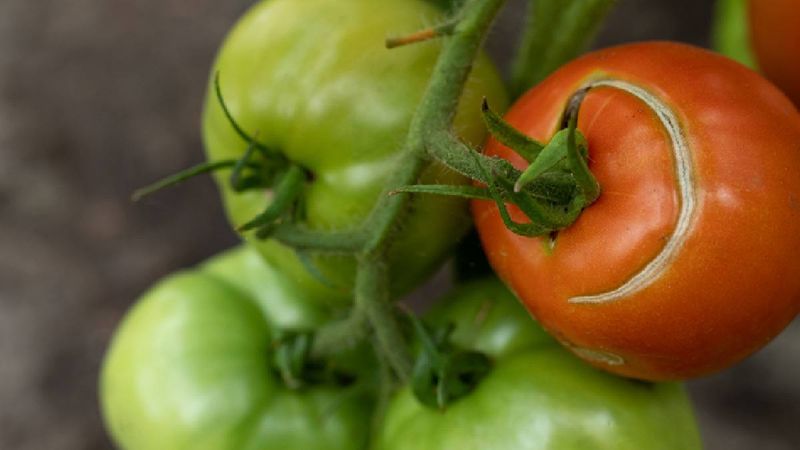
Not every tomato variety handles moisture swings the same way. Large-fruited types, including many popular heirloom varieties, tend to show more growth cracking than smaller-fruited types. Cherry tomatoes are generally less prone to splitting than a big beefsteak, partly because there is less interior volume pressing against the skin. University of Minnesota Extension’s fruit crack diagnostic confirms that cultivars differ substantially in susceptibility, and choosing a crack-resistant variety can reduce losses during wet or irregular seasons.
That said, no variety is immune. A crack-resistant label means the plant handles moisture variation better than average, not that it will never split under the right combination of heat, rapid water uptake, and advanced ripeness. Treating cultivar choice as one layer of protection rather than a complete solution keeps expectations realistic.
How you manage the plant also matters. Removing large amounts of foliage at once, topping the plant aggressively, or stripping leaves to speed ripening can suddenly expose fruit to intense direct sun. That kind of abrupt sun exposure can raise fruit temperature and alter how the plant moves water and nutrients. Penn State Extension’s cracking guidance cautions against excessive pruning or topping as a factor that may increase vulnerability.
One optional strategy worth knowing: harvesting tomatoes at the breaker stage, when they have just begun to show color, lets them finish ripening off the vine and reduces the window during which they are exposed to additional water uptake. This is a reasonable risk-reduction choice, not a step every gardener needs to take.
Separate growth cracks from other tomato damage
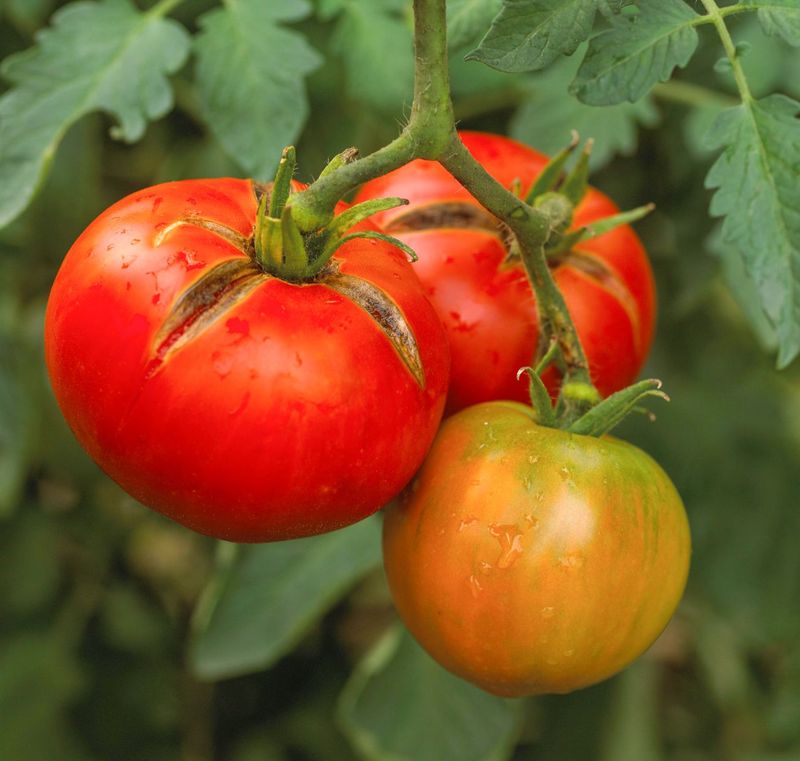
Applying the watering diagnosis to every damaged tomato can send you chasing the wrong fix. Growth cracks, the kind driven by rapid moisture uptake, typically appear as splits radiating outward from the stem end or as concentric rings circling the fruit’s shoulder. They are usually clean-edged openings in otherwise healthy-looking skin.
Rain check looks different. It produces fine, rough networks of tiny surface cracks or russeting, often covering a larger area of the fruit. Penn State Extension’s guide on blossom-end rot and rain check notes that the exact cause of rain check is still not fully understood and may involve rainfall contacting the fruit directly, temperature shifts, cultivar, and rind development. Blossom-end rot is a completely separate disorder: it appears as a tan, brown, or black leathery patch at the blossom end of the fruit, the bottom opposite the stem.
It is associated with calcium movement within the plant under environmental and root-zone stress, particularly moisture fluctuations, but a patch of blossom-end rot does not simply confirm that your soil is calcium-deficient. Adding calcium amendments without a soil test can be counterproductive, and consistent, even moisture is a more defensible first step.
University of Minnesota Extension’s tomato disorders page describes sunscald as a pale, flattened, white-to-gray patch on fruit that has been exposed to intense direct sun, often after leaf loss or heavy pruning. Sunscald is not a moisture disorder. Knowing which problem you are actually looking at helps you respond with the right adjustment rather than changing your watering routine when the real culprit is sun exposure or a separate physiological issue.
Use sound cracked tomatoes quickly and safely
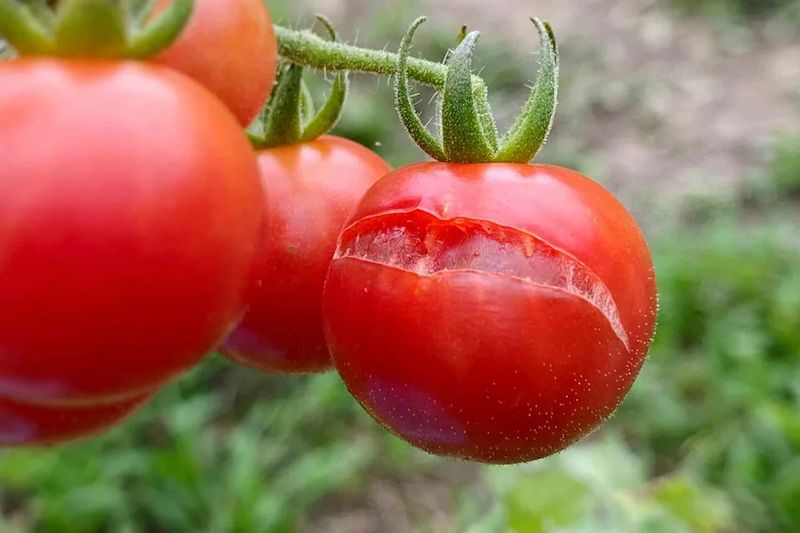
A tomato that has just split does not automatically go to waste. If the fruit is firm, the crack is clean, and there is no mold, soft rot, or foul smell, it may still be perfectly good for fresh eating. Wash it thoroughly, cut away the cracked tissue and any surrounding area that looks discolored or soft, and use what remains the same day or within a day at most.
The opening changes things quickly, though. Once the skin splits, the fruit is exposed to bacteria, mold, fruit flies, and other insects. FoodSafety.gov’s fruit and vegetable safety guidance advises cutting away damaged areas before eating produce that has been bruised or broken. A cracked tomato that sat in warm outdoor conditions for even a few hours may have already begun to deteriorate in ways that are not visible on the surface, so err on the side of using it immediately or discarding it.
Canning is a different matter entirely. University of Minnesota Extension’s home canning guidance for tomatoes calls for firm, disease-free fruit. Cracked, overripe, or visibly deteriorated tomatoes should not go into home-canned products. Damaged tissue can create food safety and acidity concerns that home canning processes are not designed to correct.
Fresh use is the right call for a cracked tomato that is otherwise sound; the canning jar is not.
Adjust irrigation to prevent severe drying without overwatering
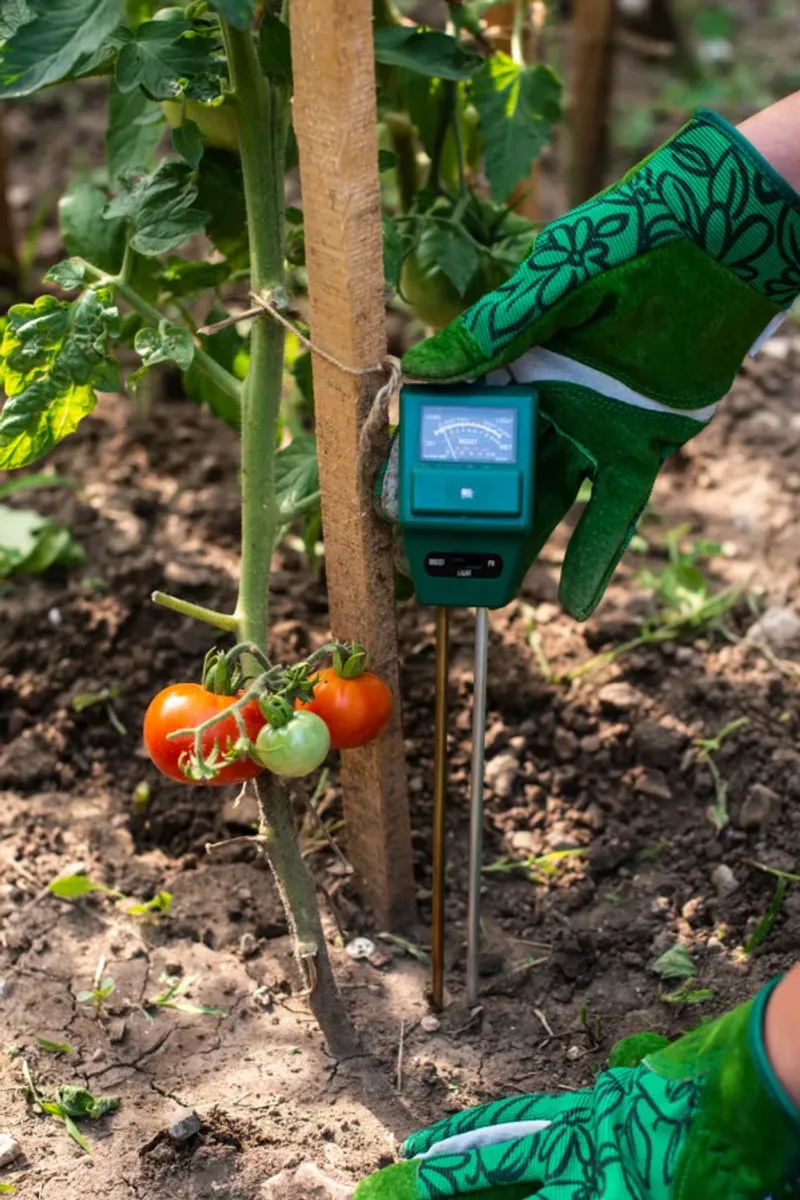
The most practical takeaway is straightforward: monitor the moisture in your root zone, apply an appropriate deep watering when the soil is getting dry but before it becomes severely parched, and repeat that cycle before the plant hits the extreme end of dryness again. Adjust both the amount and the interval based on your soil type, container setup, recent rainfall, plant size, wind, and heat.
Utah State University Extension’s vegetable water recommendations reinforce that soil type and site conditions matter more than any single universal schedule. Steadier moisture can reduce one of the most common cracking triggers, but it cannot eliminate susceptibility rooted in genetics, weather, or advanced fruit ripeness. If cracks keep appearing despite consistent watering, broaden your review to include cultivar choice, ripeness at harvest, pruning practices, sun exposure, and whether the plant has experienced any root or nutrient stress during the season.
Getting this right is less about following a precise rule and more about staying attentive. A few minutes checking the soil before each watering, combined with mulch and base-level irrigation, gives ripening tomatoes the steadiest environment you can reasonably provide. The gardeners who see the fewest splits are usually the ones who water by feel and observation rather than by the clock alone.