
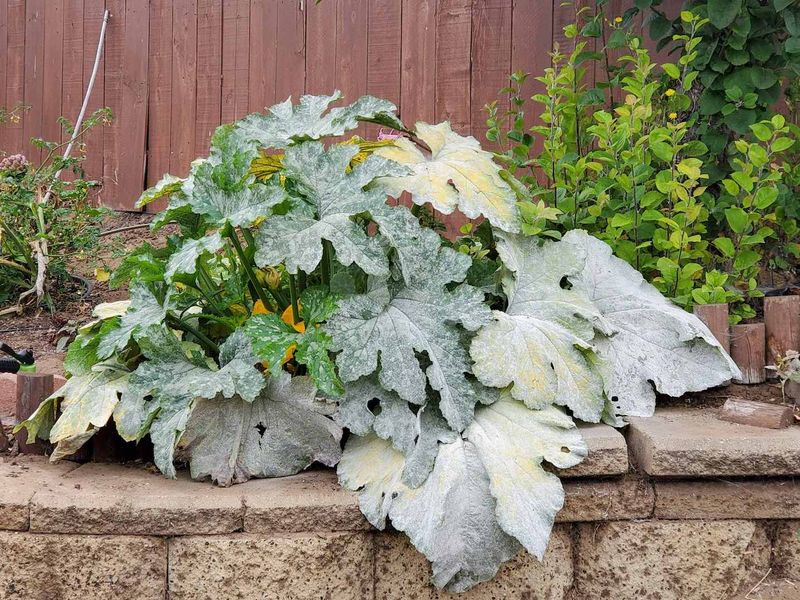
Spotting white or silvery patches on your squash leaves during a heat wave can send any gardener straight for the fungicide spray bottle. Before you treat anything, though, the most useful thing you can do is take a close look at exactly what those patches look like. White squash leaves have more than one explanation, and picking the right response depends entirely on getting the diagnosis right first.
Identify the pattern before blaming the weather
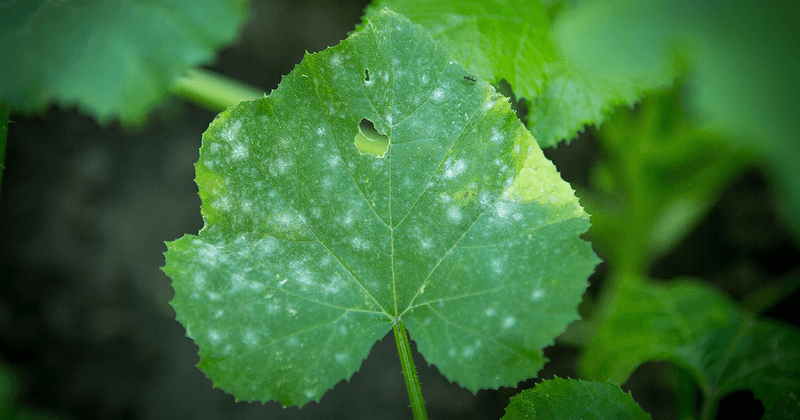
White or silvery patches on squash leaves can mean several different things, and the hot weather that makes symptoms more visible does not tell you which one you are dealing with. Before reaching for any product, carry an affected leaf into good light and look at it carefully from both sides. Compare a newer leaf near the growing tip with an older leaf closer to the base of the plant.
A few simple questions can point you in the right direction. Does the white area look like powder or flour that might rub off? Does it look like a smooth, uniform color change across the whole leaf surface, almost as if the leaf were spray-painted silver? Are the pale areas arranged in a neat, angular, or symmetrical pattern that seems to follow the veins?
Or do you see angular yellow or pale-green patches on top with a fuzzy or downy growth underneath?
Each of those patterns points toward a different cause. University of Minnesota Extension notes that powdery mildew on cucurbits produces a white or gray powdery coating, while UC IPM guidance on cucurbit whiteflies describes insect-related silvering as a distinct and separate symptom. Penn State Extension adds that downy mildew creates its own set of visual clues. Getting the pattern right is the necessary first step before any treatment decision.
Recognize powdery mildew by its texture and spread
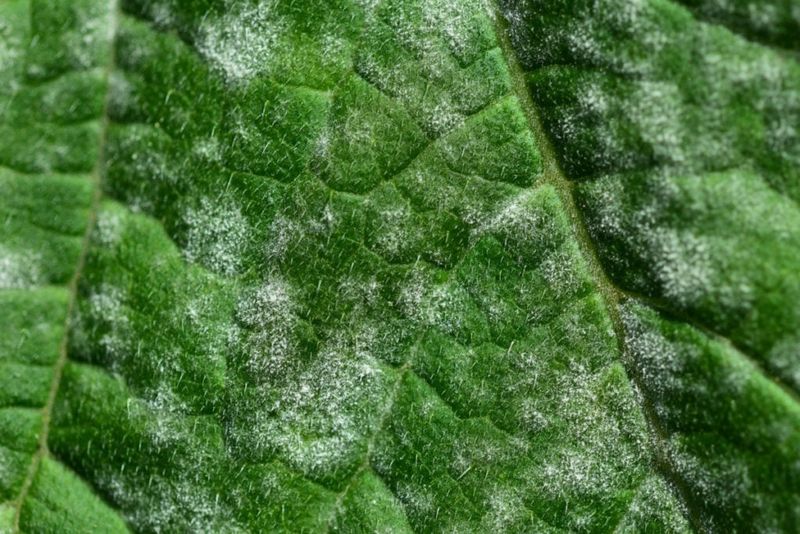
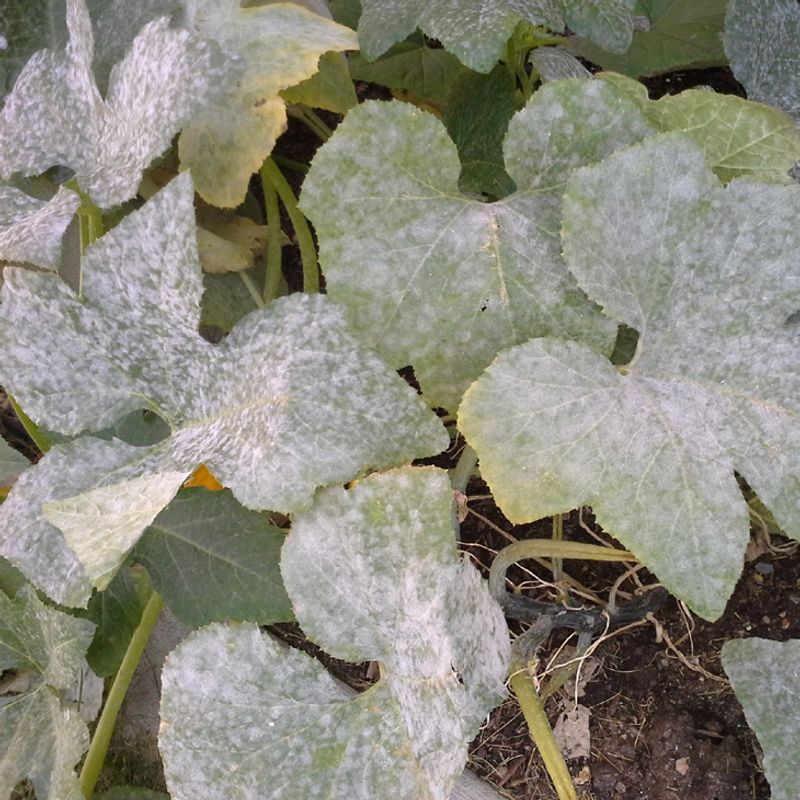
Powdery mildew has a distinctive look once you know what to search for. The patches appear white or gray and have a powdery, flour-like, or sometimes felt-like texture on the leaf surface. They may start as pale-yellow spots before the white coating develops, and they tend to expand outward and merge as the season progresses. Leaves, petioles, and stems can all become affected.
One feature that sets powdery mildew apart from a simple color change is that the coating sits on the surface rather than being part of the leaf tissue itself. If you gently rub a patch with your finger, it may smear or partially lift, unlike a smooth silver sheen that stays put. UC IPM’s cucurbit powdery mildew page notes that older or shaded leaves are often the first to show symptoms, which can help you trace where the infection started in the canopy.
Many gardeners assume that wet weather or overhead watering triggers powdery mildew, but the disease actually behaves differently from most fungal leaf problems. Penn State Extension’s powdery mildew resource explains that the pathogen does not require rain or continuously wet foliage to develop or spread. Humid nights combined with moderate temperatures and dry daytime conditions can be enough to support the disease cycle. That pattern is worth keeping in mind when you are trying to piece together why symptoms appeared when they did.
Look back at the canopy only after confirming mildew
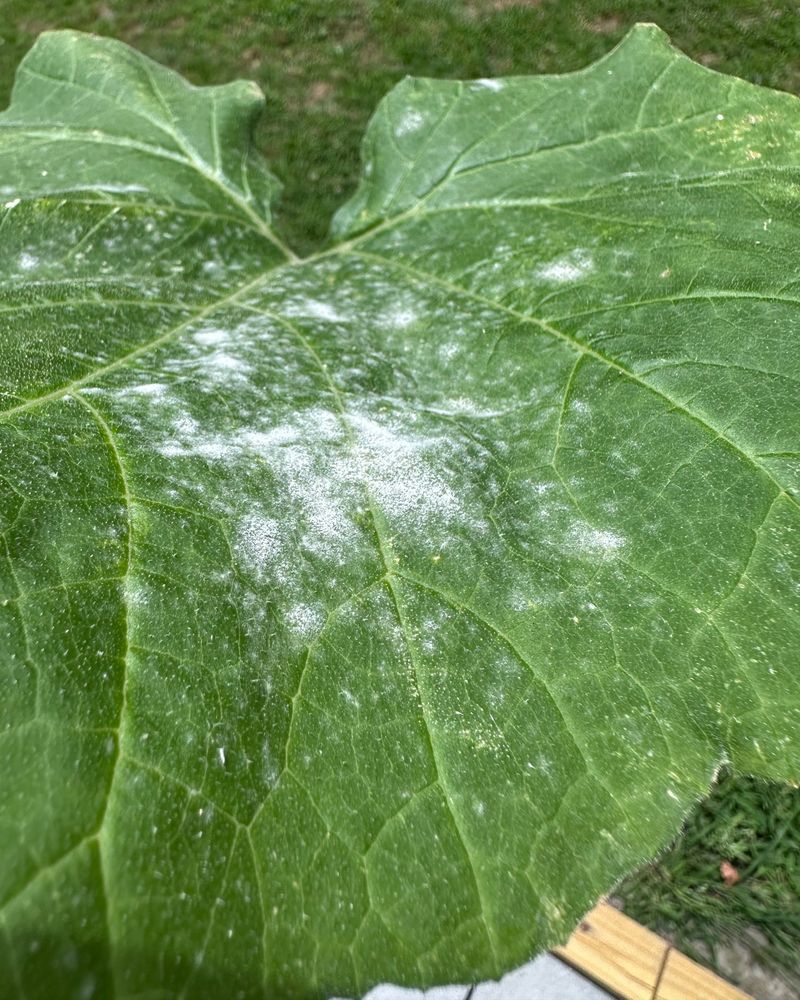
Once powdery mildew is your working diagnosis, it is worth looking back at how the garden has been managed, because certain conditions can make plants more susceptible. Dense planting that restricts airflow, weeds competing in and around the bed, heavy shade from structures or neighboring plants, and excess nitrogen fertilizer are all factors that can increase the chance of infection taking hold. Crowded foliage traps moisture and limits the air movement that helps leaf surfaces dry out between humid periods.
Excess nitrogen deserves a specific mention. University of Minnesota Extension specifically warns that over-fertilized cucurbits are more likely to develop powdery mildew, likely because the resulting flush of soft, lush growth is more susceptible to infection. If you applied a high-nitrogen fertilizer without a soil test or visible crop need to justify it, that may have contributed to the problem.
Even so, no single care habit explains every case. Cornell Cooperative Extension’s cucurbit powdery mildew fact sheet and UC IPM both point to variety susceptibility, pathogen presence in the area, and local weather patterns as important factors alongside garden management. Hot weather can coincide with visible symptoms because heat stress may make affected foliage wilt more noticeably in the afternoon, but heat alone does not cause the disease. Reviewing earlier conditions is useful for planning ahead, not for assigning a single root cause.
A smooth silver sheen may signal whiteflies
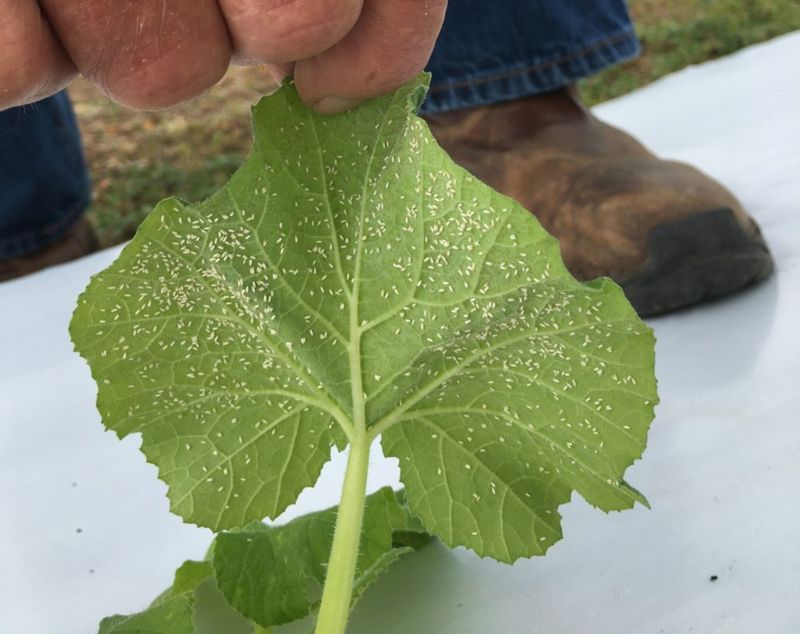
Not every silver or whitish leaf change is a fungal problem. When the upper surface of a squash leaf takes on a smooth, uniform, spray-painted silver appearance rather than a powdery coating, the cause may be feeding injury from silverleaf whiteflies rather than mildew. The two symptoms can look superficially similar from a distance, but the texture and pattern differ once you look closely.
Checking the undersides of affected leaves is the key diagnostic step. UC IPM’s cucurbit whitefly page describes the silvering as a result of insect feeding, not a fungal infection, and UC IPM’s pest damage detail page outlines how the symptom develops. Look for tiny white adult insects, pale nymphs, or flat oval pupal cases on the underside of the leaf. Tapping the plant gently may send a cloud of tiny white insects flying, which confirms the pest is present.
Because whitefly silvering is insect feeding injury, a fungicide will have no effect on the cause. The correct response is an insect management approach, not a disease treatment. Additional UC IPM detail on whitefly biology helps explain the pest’s life cycle on cucurbits. Silverleaf whitefly is especially consequential in California and southern desert regions, and the Utah Pests newsletter from Utah State University notes that local prevalence varies considerably by region.
Gardeners in the Northeast or Upper Midwest should weigh their local pest pressure rather than assume this diagnosis automatically.
Check for organized markings and downy mildew
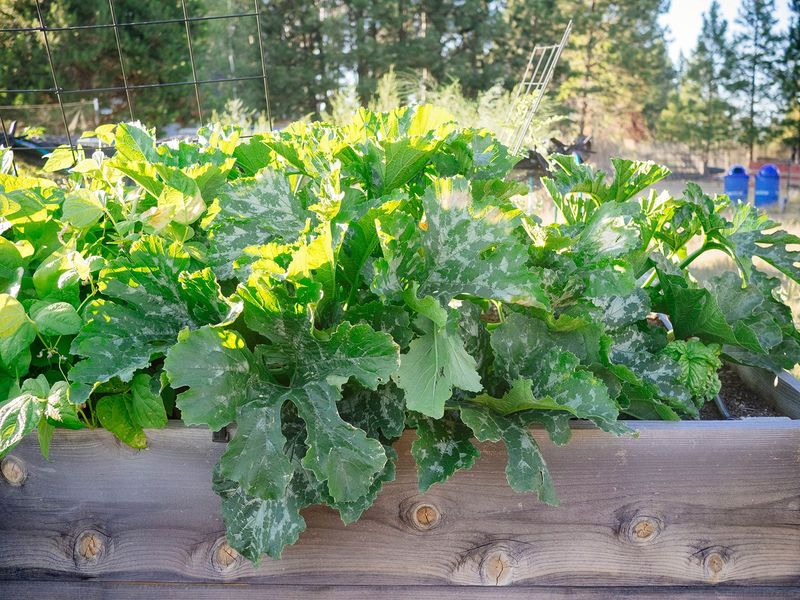
Two more possibilities are worth ruling out before settling on a diagnosis. Some summer squash varieties naturally produce symmetrical, angular white or pale patches that tend to follow or sit along the leaf veins. These markings are part of the plant’s appearance rather than a sign of disease, and treating them as an infection would be both unnecessary and unhelpful.
A University of Minnesota Extension vegetable update raises the possibility that organized vein-associated markings may reflect varietal characteristics in certain squash types. This source is dated July 23, 2026, and should be verified as available and accessible before publication. Until that confirmation is in hand, treat organized vein markings as a possibility requiring confirmation rather than an established diagnosis. If your squash variety has always shown a consistent geometric pattern on healthy-looking leaves that are not spreading or changing, that is a reasonable clue that you may be looking at a plant characteristic rather than a disease.
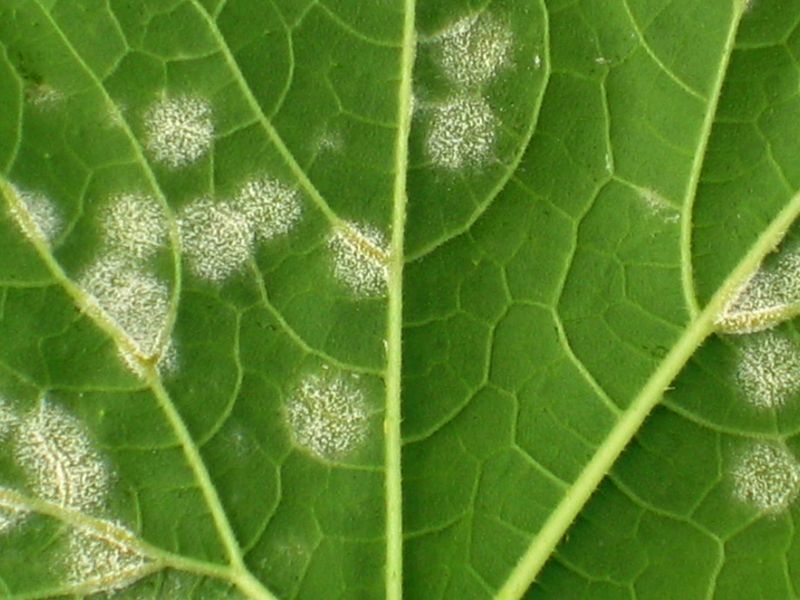
Downy mildew is a separate and distinct disease that also deserves consideration when symptoms are unclear. Penn State Extension’s guide on downy and powdery mildew explains that downy mildew typically produces angular pale-green or yellow lesions on the upper leaf surface, while the underside shows gray, purple, or white fuzzy growth during humid conditions. The University of Minnesota plant diagnostic tool for squash leaf spots can also help you work through the visual differences between these conditions before deciding on a response.
Improve conditions when mildew is the working diagnosis
When powdery mildew becomes your working diagnosis, the most practical first moves are nonchemical. Improving air movement through the canopy can reduce the humid conditions that allow the disease to develop and spread. Follow the spacing recommendations for your squash variety, because plants set too close together restrict airflow and keep foliage damp longer after humid nights. Removing weeds growing in and around the bed helps for the same reason, and cutting back any dense shade from nearby structures or overgrown plants can also help where that is feasible.
University of Minnesota Extension and Oregon State University’s squash production guide both recommend these spacing and airflow steps as part of a sound mildew management approach. On fertilizing, hold off on additional nitrogen unless a soil test or a clear nutrient deficiency gives you a specific reason to apply it, since excess nitrogen can push the soft, lush growth that powdery mildew tends to colonize more easily.
Watering at the soil level rather than over the foliage is sound general guidance for squash, even though powdery mildew behaves differently from many leaf diseases. Oregon State University Extension notes that free water can actually inhibit spore germination for many powdery mildew species, but overhead irrigation can still encourage other pathogens and raise canopy humidity, so Oregon State’s summer squash guidance and Penn State Extension both favor soil-level watering as a general practice. Remove heavily diseased leaves when practical and keep plant debris out of the bed. Do not add visibly diseased material to a compost pile that will not reliably reach high enough temperatures to break down pathogens.
None of these steps will reverse damage already done, but they can slow further spread.
Use treatments carefully and only for the confirmed problem
Fungicides have a real role in managing powdery mildew, but their timing and application matter a great deal. Cornell Cooperative Extension and Utah State University Extension’s cucurbit powdery mildew guide both explain that fungicides work best preventively or at the very first sign of infection. Once a large portion of the foliage is already covered, a fungicide will not restore those leaves. Thorough coverage of lower and inner leaf surfaces is important because the pathogen often develops in those less-exposed areas first.
Whether treatment is worth pursuing also depends on timing in the season. University of Minnesota Extension frames late-season powdery mildew as often cosmetic, since the plants may be near the end of their productive life anyway. Early or severe foliage loss is a more serious concern, because it can reduce fruit size, slow ripening, affect storability in winter squash, and leave developing fruit exposed to sunscald without the leaf canopy for shade and protection.
Temperature matters when choosing a product. Utah State University Extension specifically warns against applying sulfur-based fungicides above 90 degrees F because of the risk of foliar injury. For whitefly management, insecticidal soaps and horticultural oils work by contacting the insects directly and require thorough coverage of leaf undersides, including nymphs and pupal cases. UC IPM’s home whitefly page and UC IPM’s less-toxic insecticide guidance advise applying these products only when plants are not drought-stressed and temperatures are below 90 degrees F to reduce the risk of plant burn.
Repeat applications are often needed. Keep mildew treatments and insect treatments completely separate, since each addresses only the problem it was designed for. Any pesticide applied to an edible crop must be labeled for that crop and that pest, and the label’s application, re-entry interval, and preharvest interval instructions must be followed. Oregon State University Extension reinforces this label-compliance requirement as a baseline for any treatment on food crops.
Follow a diagnosis-first decision rule
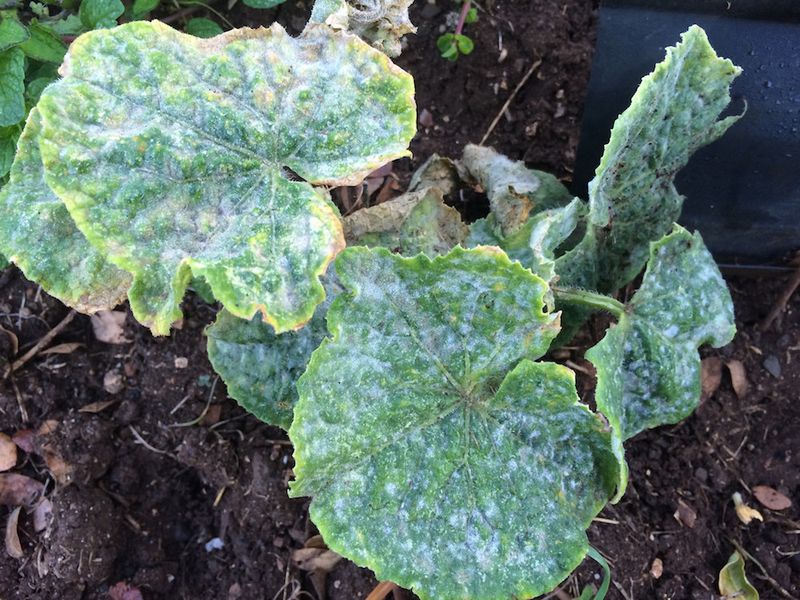
A short visual checklist can keep the diagnosis on track when you spot a white or silver leaf. Powdery, expanding patches that look like flour or felt on the surface, especially on older or shaded leaves, point toward powdery mildew. A smooth, uniform silver sheen combined with tiny insects or pupal cases on the leaf underside points toward whitefly feeding injury rather than a fungal disease. Organized, symmetrical markings that follow the veins and do not appear to spread may be a varietal characteristic, though that possibility should be confirmed rather than assumed.
Angular pale or yellow patches on the upper surface with fuzzy growth on the underside suggest downy mildew, which calls for a different management approach than powdery mildew.
If powdery mildew is confirmed, University of Minnesota Extension and Penn State Extension both support reviewing whether crowding, shade, weeds, or excess nitrogen may have increased susceptibility, while recognizing that no single habit is responsible in every garden. The proportionate response is to inspect carefully, improve growing conditions, monitor whether the symptom spreads or stays stable, and treat only the identified problem when timing and label directions make treatment appropriate. Getting the diagnosis right first is not a delay in responding to your plants; it is the response.