
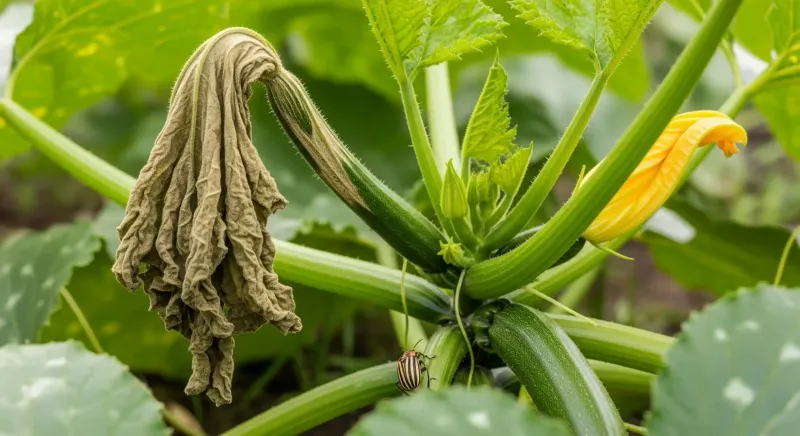
Watching a cucumber plant go limp on a hot afternoon is alarming enough, but finding wet soil beneath it makes the whole thing even more confusing. If the plant bounces back by evening, heat stress is a likely explanation. When the wilting keeps spreading and the vine stops recovering overnight, that pattern points toward a vascular disease called bacterial wilt, and a small beetle most gardeners overlook is often the one carrying it in.
Moist soil narrows the mystery—but does not solve it
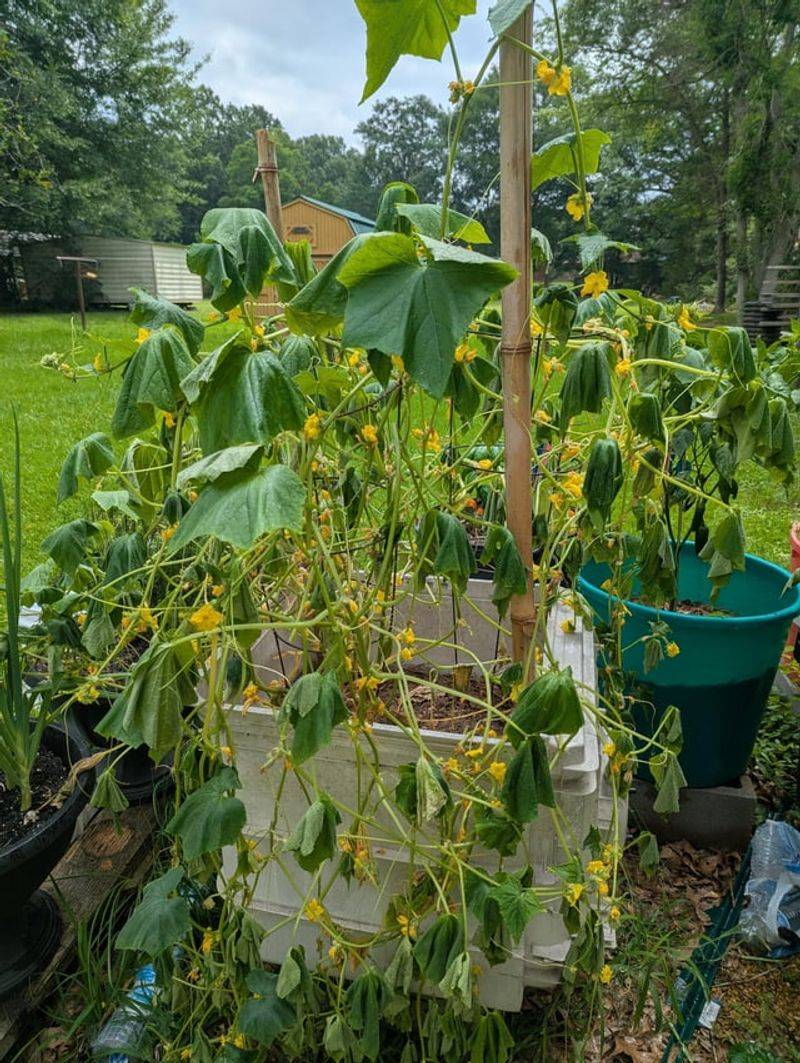
Finding wet soil under a wilting cucumber vine feels like a clue, but it actually rules out less than you might expect. Roots can struggle to deliver usable water even when the surrounding soil is damp. UMN Extension heat guidance notes that hot, windy conditions can push leaves to lose moisture faster than roots can replace it, so the soil reading and the plant’s condition can tell two different stories at the same time.
Constantly wet soil creates its own problems. Waterlogged conditions can damage roots and reduce their ability to take up water, meaning a plant sitting in soggy ground may actually be underserved at the root level even though the surface looks fine. Oregon State University watering guidance points out that both underwatering and overwatering can impair root function in ways that show up as wilt.
The most useful diagnostic clue is not the soil at all – it is timing. Colorado State University Extension explains that cucumbers commonly wilt during the hottest part of the day and recover by evening or the next morning when heat or water stress is the cause. A plant that stops recovering overnight, or whose wilting spreads to more of the vine each day, deserves a closer look for something beyond temporary stress.
An infected beetle can introduce a vascular disease
Bacterial wilt is caused by a bacterium called Erwinia tracheiphila, and the way it travels from plant to plant is not through the air or through water. UMN Extension bacterial wilt guidance explains that the bacterium multiplies inside a cucumber’s vascular tissue, the internal system that moves water through the plant, gradually blocking that flow until the vine can no longer sustain itself.
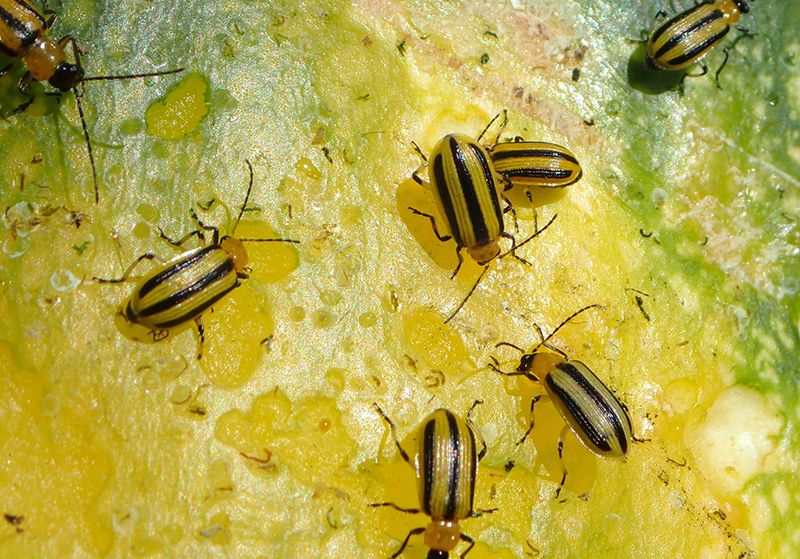
Striped and spotted cucumber beetles are the primary carriers. When an infected beetle feeds on a healthy vine, it can introduce the bacterium directly through the wound it creates. UC IPM cucumber beetle information describes how both species feed on cucurbit leaves, stems, flowers, and fruit, making every feeding site a potential entry point for the pathogen.
That connection matters, but it does not mean every beetle you find is carrying bacterial wilt. Illinois Extension confirms that infected beetles represent an important transmission route, not a guarantee that every beetle or every wilted plant is involved. Cucumbers and muskmelons are especially vulnerable to this disease; squash and pumpkins tend to tolerate it better, which means the crop in front of you shapes how seriously to weigh the beetle connection.
Progressive collapse makes bacterial wilt more suspicious
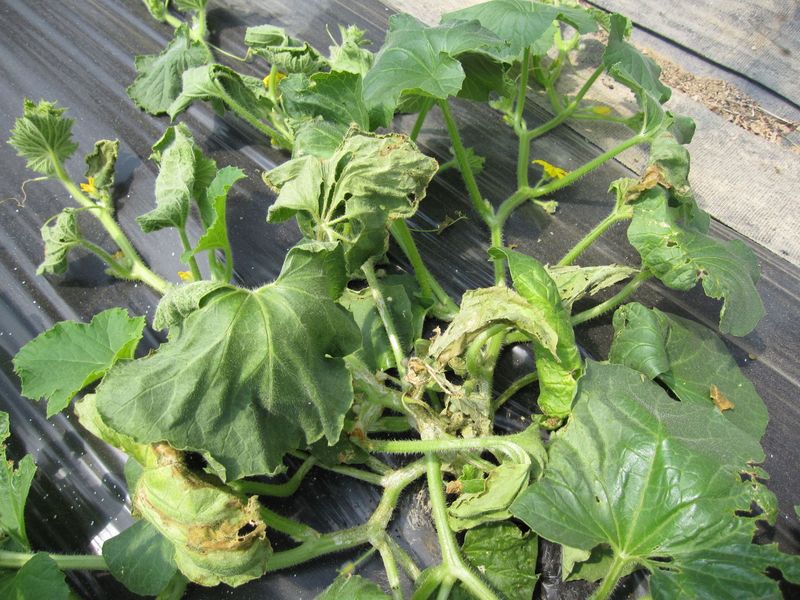
A single wilted leaf on a hot afternoon is not much of a signal on its own. The symptom pattern that raises concern about bacterial wilt is one that builds over time: leaves take on a dull green color and droop during the day, then the wilting begins spreading from individual leaves or runners down toward the main stem. UMN Extension notes that in cucumbers and melons, the plant can die rapidly once symptoms take hold, which is why the direction of travel matters more than any single observation.
The overnight test is the most practical check a home gardener can apply. A plant that perks back up by morning after a hot afternoon is behaving like a heat-stressed plant. One that looks worse the next day, or whose wilt has crept further down the vine, is showing a progression more consistent with a vascular problem. Penn State Extension reinforces that managing the beetle population early is the most effective way to prevent this kind of spread.
Even a convincing progression does not lock in a bacterial wilt diagnosis by itself. The UMN diagnostic guide for wilting cucumbers lists root disorders, other wilt diseases, and pest damage as conditions that can produce similar symptom patterns. Treat the progression as a reason to look harder, not as a final answer.
Inspect for beetles, then use streaming as a field clue
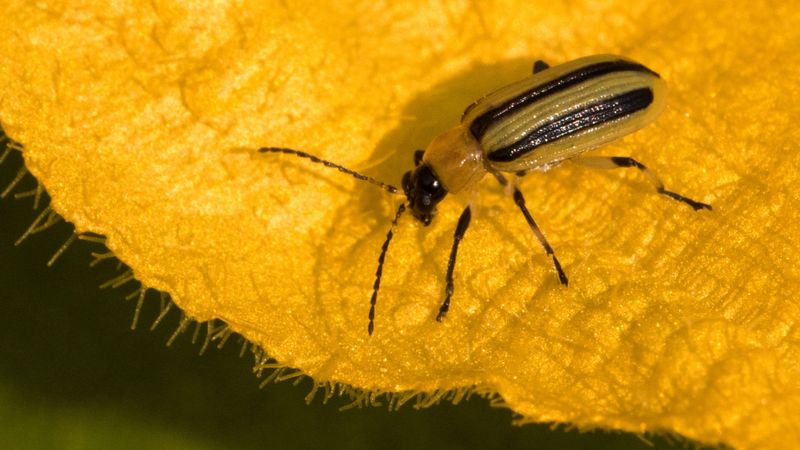
Before reaching any conclusion about bacterial wilt, spend a few minutes looking at the plant itself. Adult striped cucumber beetles are about a quarter inch long, yellow to yellow-green, with three black stripes running lengthwise. Spotted cucumber beetles carry multiple black spots on the same yellow-green background. UMN Extension cucumber beetle identification notes that both species leave behind small holes or scarring on leaves, stems, flowers, and fruit, so feeding damage can show up even when you do not catch a beetle in the act.
Check the undersides of leaves, along stems near the soil, and inside flowers where beetles often shelter. UC IPM describes both species in detail and confirms that their feeding habits make every wound a potential entry point for pathogens. Finding beetles on a plant that is also showing progressive wilt adds meaningful weight to a bacterial wilt suspicion.
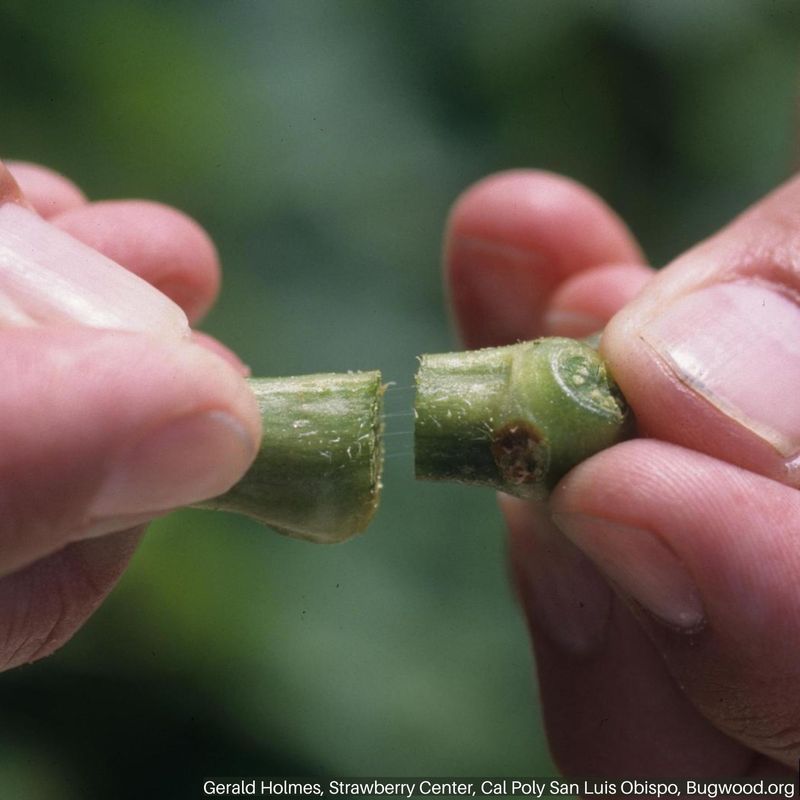
The bacterial streaming test is the next step if the symptom pattern and beetle presence both point that direction. Cut a symptomatic stem close to the crown, press the two cut surfaces gently together, then pull them apart slowly. Thin, sticky, thread-like strands stretching between the surfaces are a field clue supporting bacterial wilt. UMN Extension is clear that a negative result does not rule the disease out, and that laboratory testing at an extension diagnostic clinic provides more reliable confirmation when the decision really matters.
Illinois Extension echoes that visible strands increase suspicion without making the streaming test definitive on its own.
Heat, roots, and squash pests can mimic the symptoms
Recovery after the hottest part of the day passes is one of the clearest signs that heat stress, rather than a vascular disease, is behind the wilting. Colorado State University Extension points out that cucumbers and other cucurbits commonly droop in peak afternoon heat and then firm back up as temperatures drop. A plant that consistently bounces back by evening deserves more water management attention before suspicion shifts to bacterial wilt.
Soil that stays too wet is a separate concern. Waterlogged roots lose their ability to take up water efficiently, which can produce wilt that looks almost identical to what a vascular disease causes. If your garden bed drains poorly or you have been watering heavily, root damage is worth considering alongside any pest explanation.
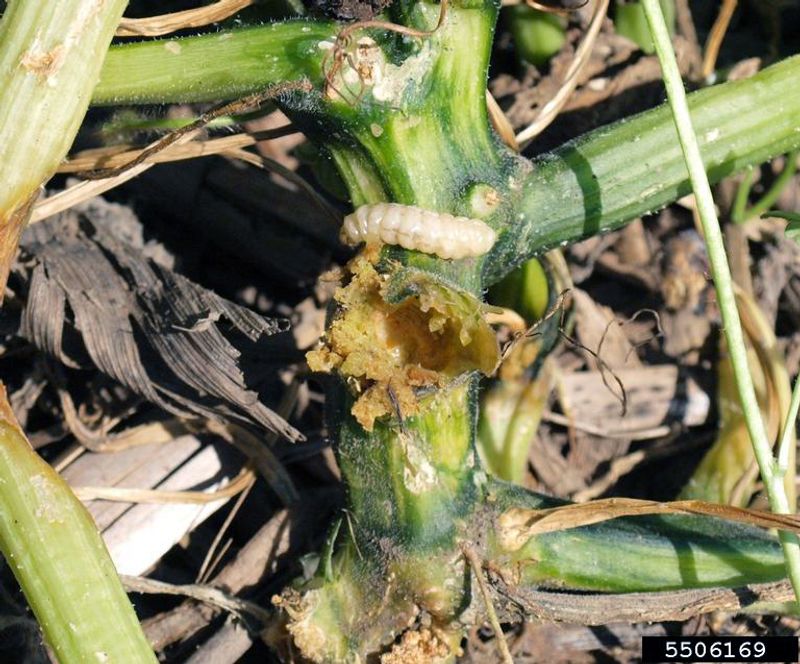
Squash and zucchini are a different diagnostic situation. UMN Extension vegetable IPM updates and the UMN cucumber diagnostic guide both flag squash vine borer as a more common culprit on those crops. Look for entry holes at the crown and wet, sawdust-like frass packed nearby. Squash bugs and Phytophthora blight can also cause collapse on squash and zucchini.
UMN Extension squash growing guidance reinforces that bacterial wilt is most relevant to cucumbers and muskmelons, so when a squash vine goes down, the investigation should start somewhere else. If the symptom pattern does not fit neatly, your local extension diagnostic clinic can help sort it out.
Remove a strongly suspected infected vine
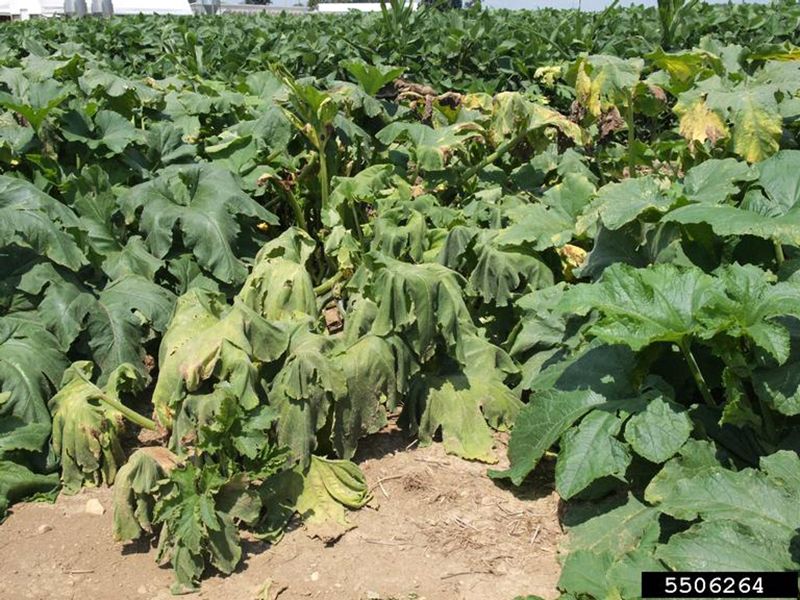
Once a cucumber plant is infected with bacterial wilt, there is no treatment that can reverse the damage. UMN Extension is direct on this point: insecticides may reduce further beetle feeding on healthy plants nearby, but they cannot clear the bacterium from a vine that is already infected. Leaving a severely affected plant in the ground simply gives beetles more time to feed on it and potentially carry the pathogen to plants that are still healthy.
Pull the entire plant, including the roots, and remove it from the garden. Illinois Extension Good Growing guidance recommends getting affected material out of the garden rather than leaving it accessible to beetles. Follow your local extension or municipal guidance on disposal – burying the material away from the garden is one option, but casual composting is not recommended unless local guidance specifically supports it for diseased plant tissue.
Removing the plant reduces a potential source of ongoing transmission, but it does not guarantee that neighboring vines are safe. Illinois Extension notes that beetle movement between plants may have already carried the bacterium before any visible symptoms appeared. After removal, shift attention to protecting whatever healthy vines remain.
Protect healthy cucumbers before beetles feed

Row covers are one of the most reliable tools available to a home gardener trying to keep cucumber beetles away from young plants. Floating row covers or fine insect barriers placed over seedlings at transplant time create a physical wall that beetles cannot cross. UMN Extension season extension guidance supports their use for protecting young cucurbits, and the approach works well during the vulnerable early weeks when plants are small and beetle feeding has the most impact.
The covers must come off when flowers open. Cucumbers depend on bees and other pollinators to set fruit, and a cover that stays on through flowering will block that process entirely. Penn State Extension cucumber pollination guidance explains the pollination requirement clearly – remove covers at first bloom unless you have a separate plan for hand-pollinating. Leaving them on is not a safe shortcut.
For small plantings, hand-picking beetles into a container of soapy water is practical and costs nothing beyond a few minutes of attention each morning when beetles are easiest to catch. UMN Extension cucumber beetle management also recommends clearing crop debris and leaf litter at the end of the season, since beetles use that material for overwintering shelter. Blue Hubbard squash is sometimes used as a trap crop in integrated pest management programs because it strongly attracts cucumber beetles, but it requires active monitoring and follow-up control. Penn State Extension organic cucurbit production research describes trap crops as a tool that demands attention, not a passive fix – beetles drawn to a trap crop need to be managed there, or you have simply created a beetle nursery near your cucumbers.
Make chemical control a labeled, regional decision
Reducing beetle feeding on healthy plants can lower the chance that an infected beetle reaches an uninfected vine, and that is the genuine role insecticides play in a bacterial wilt management plan. They protect plants that have not yet been infected – they do not help plants that already are. Any decision to use a chemical product should start with realistic expectations about what it can and cannot do.
Treatment thresholds vary significantly by region, crop stage, beetle species, and local disease pressure. UMN Extension cucumber beetle management describes Minnesota-specific guidance that suggests considering action at two or more beetles per plant on 25 percent of seedlings at the cotyledon stage, or after roughly 25 percent defoliation on older plants. Those numbers reflect local conditions and should be treated as one regional example, not a universal home-garden rule. UMN Extension bacterial wilt guidance reinforces that regional variation in beetle populations and disease pressure shapes what thresholds make sense where you garden.
If you decide to use an insecticide, the product must be labeled for both cucumber beetles and cucumbers specifically. EPA pesticide label guidance makes clear that the label is a legal document and users are required to follow every instruction on it, including crop restrictions, application rates, and pollinator precautions. The preharvest interval – the number of days that must pass between the last application and harvest – is printed on the label for a reason. EPA label review training materials note that pollinator protection language on labels has become more detailed in recent years; read it carefully before applying anything during flowering.
Let the pattern guide your next move
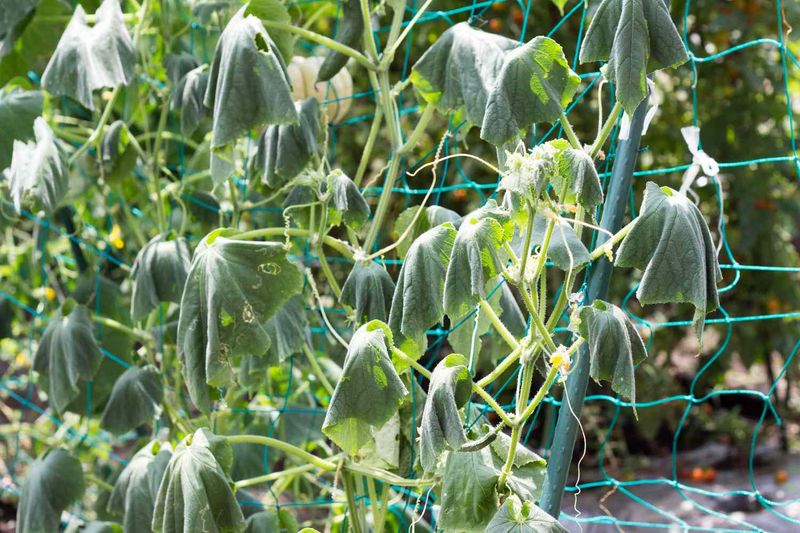
The clearest path forward starts the morning after you first notice wilting. Check whether the plant has recovered. A vine that looks normal again after a cool night is probably dealing with heat or water stress, and adjusting irrigation and airflow is the right response. A vine that looks worse, or whose wilt has moved further down the stem, warrants a beetle inspection and the bacterial streaming field check described earlier.
UMN Extension and the UMN cucumber diagnostic guide both support a stepwise approach: observe the progression, look for beetles and feeding damage, use streaming as a clue rather than a verdict, and remove a plant only when the overall pattern strongly supports infection. Protect remaining healthy vines from beetle feeding while you work through that sequence.
Moist soil and bacterial wilt can absolutely coexist, because the disease disrupts water movement inside the plant rather than depleting the soil around it. Colorado State University Extension confirms that heat stress remains a credible alternative explanation, and root problems stay on the list too. When the symptom pattern does not fit cleanly, your local extension service can run a proper diagnosis – and that confirmation is worth getting before you pull a plant you might not need to lose.