
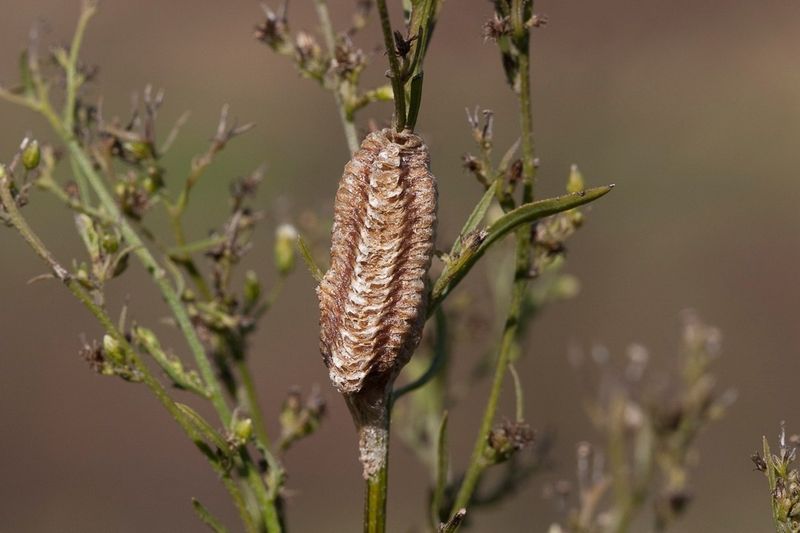
Walk past your shrubs before you grab the pruning shears this fall, and you might spot something that looks like a small wad of dried foam stuck to a stem. That foam-like lump is a praying mantis egg case, called an ootheca, and it holds the eggs that will spend the winter outdoors and may hatch next spring.
North Carolina yards can host both native and non-native mantis species, so knowing what you are looking at before you cut makes a real difference for local wildlife.
Fall cleanup may reveal oothecae that overwinter until spring
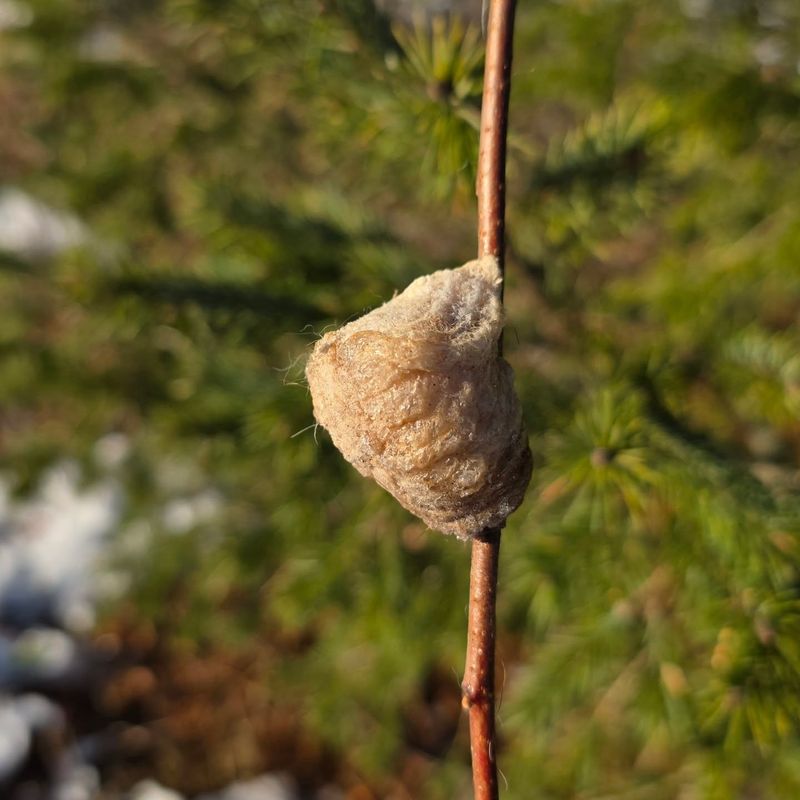
Sometime between late summer and the first hard frost, female praying mantises begin depositing their eggs inside a hardened, foam-like protective structure called an ootheca. The cases are attached to shrub stems, perennial stalks, wooden fence posts, and other upright surfaces where they will stay through winter.
After leaves drop and herbaceous plants die back, the cases become much easier to spot against bare stems.
According to NC State Extension’s article on mantids, oothecae are formed in late summer and fall and overwinter before nymphs hatch in spring or late spring, with exact timing varying by species, weather, and location across the state. The coastal plain, Piedmont, and mountain regions of North Carolina can see different timing, so there is no single date when every yard will have a freshly deposited case.
The right way to frame it is that late summer through fall is the window when homeowners may find them.
Before cutting back any shrub border or perennial bed, spend two or three minutes scanning the stems at eye level and below. Check the crotches where branches fork, the lower half of woody stems, and even the dried stalks of tall perennials like rudbeckia or ornamental grasses.
A quick look costs almost nothing and keeps you from accidentally snipping off a case that could have remained outdoors through winter undisturbed.
The case’s shape offers a useful first clue
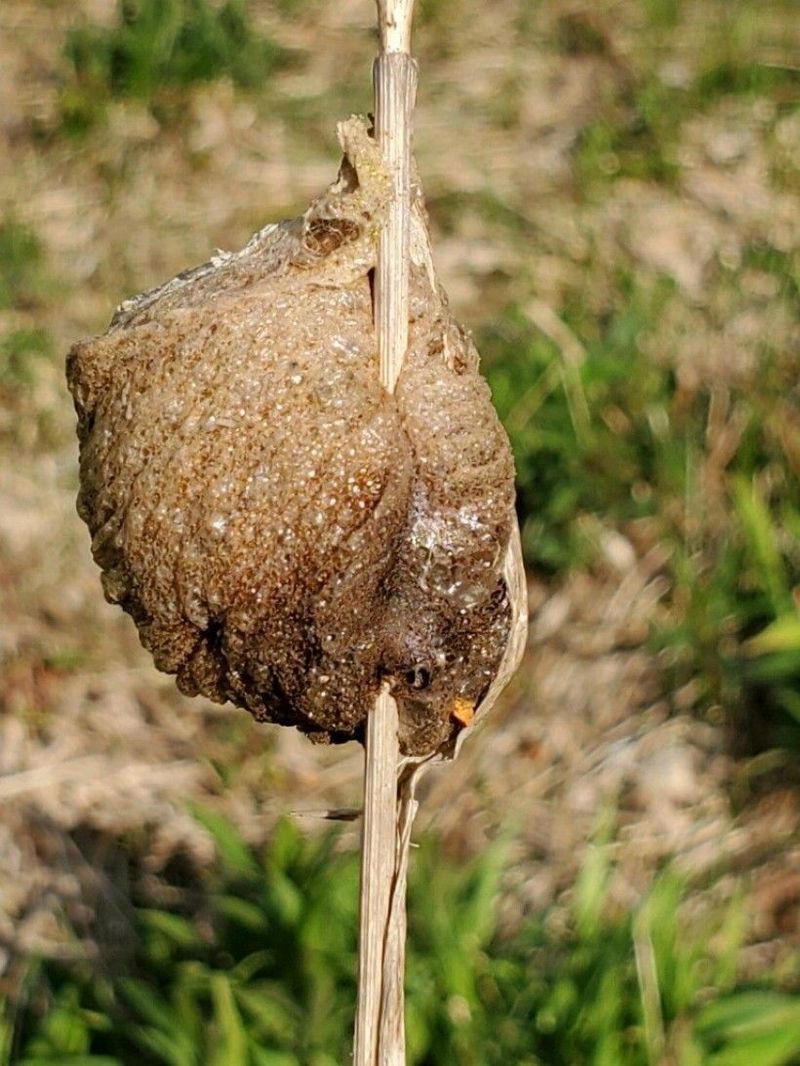
The hardened, foam-like structure females produce is technically called an ootheca, and its shape and color can give you a starting point for figuring out which species deposited it. Two types are most commonly encountered in North Carolina yards, and they look noticeably different once you know what to compare.
The native Carolina mantid (Stagmomantis carolina) tends to produce a case that is elongated and narrow, with a gray-brown color and sometimes a pale or white ridge running along the middle. University of Maryland Extension’s mantid resource describes the ootheca as a hardened foam mass that protects the eggs through winter, and field observations consistently describe the Carolina mantid’s case as smaller and more slender than the introduced species.
The Chinese mantid (Tenodera sinensis), by contrast, typically produces a larger, beige or tan case that is more rounded or block-like in overall shape.
That size and shape difference is a useful first clue, but it is not a reliable species diagnosis on its own. Cases can vary depending on age, weathering, and the angle from which you view them.
NC State’s Carolina Mantid profile notes that the state also hosts other non-native species, including European and Japanese narrow-winged mantids, which adds another layer of uncertainty to visual identification. Treat appearance as a preliminary filter rather than a definitive answer, and factor in case size, location on the plant, and any other contextual clues you can gather before deciding what to do.
Native does not mean dependable pest control
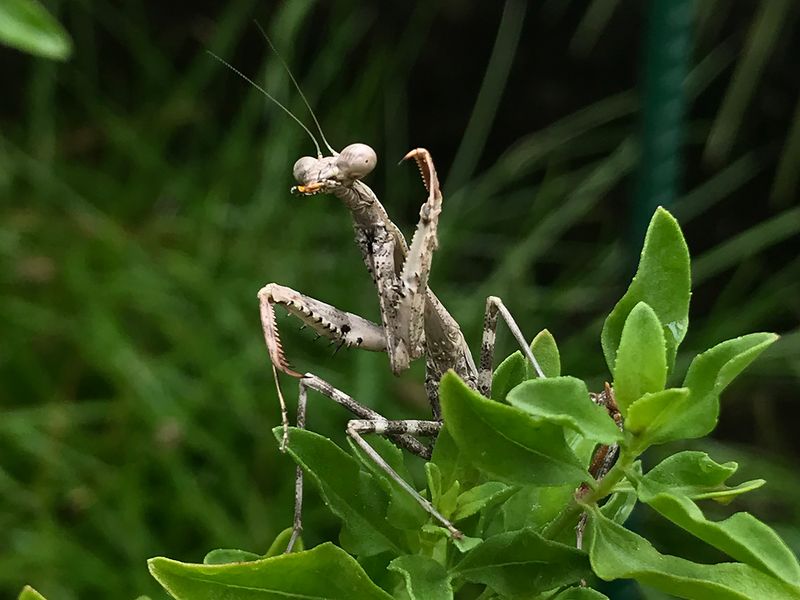
One of the most persistent misconceptions about mantises is that having them in the yard means fewer pests. The Carolina mantid is genuinely native to North Carolina, which makes it worth supporting as part of a healthy local insect community.
Native status, however, does not translate into reliable pest management.
NC State Extension’s Carolina Mantid page states plainly that the species has no demonstrated value in pest management. Mantises are ambush predators, not specialist hunters.
They sit and wait for prey to come within reach, then strike at whatever is available, which can include butterflies, bees, syrphid flies, spiders, and other predatory insects that gardeners generally want to keep around. The UC Statewide IPM Program’s mantid overview makes the same point, noting that mantises do not selectively target pest species and may actually reduce populations of beneficial insects.
A peer-reviewed study published in the journal Arthropod-Plant Interactions and available through ScienceDirect examined the diets of two non-native mantid species and found prey across all ecological roles, including pollinators and other predators. University of Wisconsin Extension’s biological control guide categorizes mantises as generalist predators with weak and inconsistent value for garden pest suppression.
The narrower, more defensible case for leaving an identifiable native ootheca in place is ecological stewardship, not pest control. Preserving a Carolina mantid case supports one piece of North Carolina’s native insect community, and that is reason enough without needing to promise anything about aphids or caterpillars.
Before pruning, decide whether the case should stay
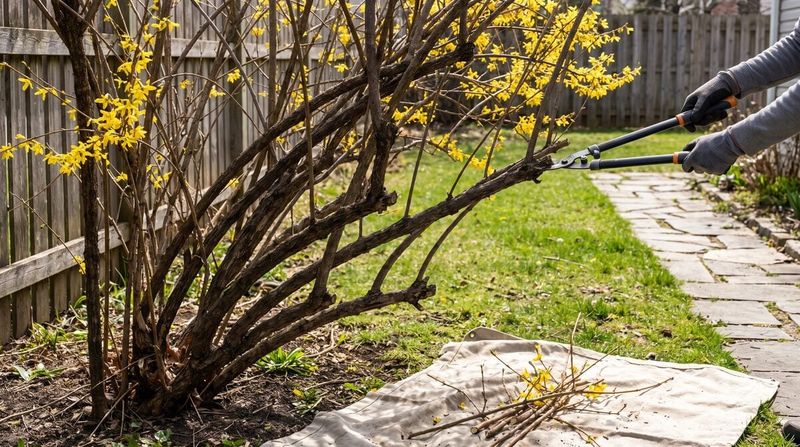
Standing at the edge of your bed with shears in hand is the wrong moment to figure out what to do with a mantis case. A quick visual scan before you start cutting gives you a decision point while you still have options.
Look at the case, consider its shape and size as a first clue, and then ask yourself two questions: does this look like a native Carolina mantid case, and does the stem it is on actually need to come off?
When a case appears to be from the native Carolina mantid and the stem it sits on is healthy, leaving it undisturbed is a reasonable stewardship choice. University of Maryland Extension recommends leaving cases outdoors through winter to complete the natural life cycle.
That choice supports the insect’s overwintering stage without requiring you to do anything extra.
The calculus changes when the case appears to belong to a Chinese mantid. NC State Extension specifically recommends removing and destroying Chinese mantid cases when the goal is to reduce pressure on native insects and mantids.
If the case is large, beige, and rounded, removal is the more defensible choice for a homeowner focused on native-insect stewardship.
For unidentified cases where you genuinely cannot tell, the decision is yours. If the stem is healthy and the case does not interfere with plant care, leaving it in place is low-risk.
However, NC State Extension’s September gardening guidance is clear that diseased, hazardous, or structurally damaged wood should not stay in the landscape. No insect case, identified or not, is a reason to leave a dangerous branch standing.
A cut branch can keep an ootheca outdoors
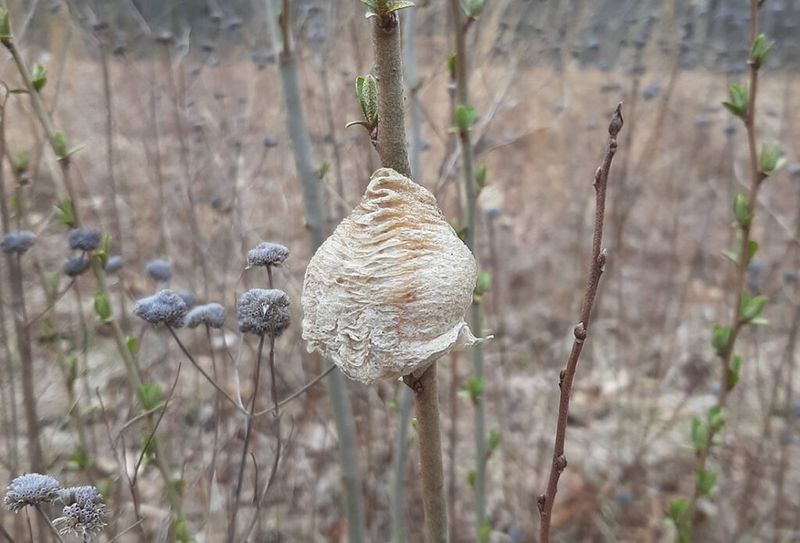
Sometimes the branch an ootheca is sitting on genuinely has to come off. Maybe it is crossing another branch, creating a structural problem, or simply in the way of a necessary cut.
Removing the branch does not have to mean destroying the case.
The key is to keep the ootheca attached to the cut twig or stem rather than trying to peel it off. Mantis egg cases are bonded tightly to the surface they were deposited on, and forcing one off can damage the protective outer layer.
Instead, make your pruning cut a few inches below the case so you end up with a short section of twig that still holds the ootheca intact.
From there, tuck the cut twig into the branches of a nearby outdoor shrub or woody plant at roughly the same height where you found it. Ask Extension’s guidance on mantis egg cases supports placing the case in a protected outdoor location rather than leaving it exposed.
Penn State Extension’s Christmas tree insect page specifically warns against placing cases on the ground, where ants and other predators can reach them easily and consume the eggs before spring.
Wedge the twig firmly enough that it will not fall out over winter, and position it where it gets some protection from the worst wind. The case is built to handle freezing temperatures, so cold is not the concern.
The goal is simply to keep it elevated, attached to something stable, and away from ground-level predators until spring hatching conditions arrive.
Keep the ootheca outdoors through winter
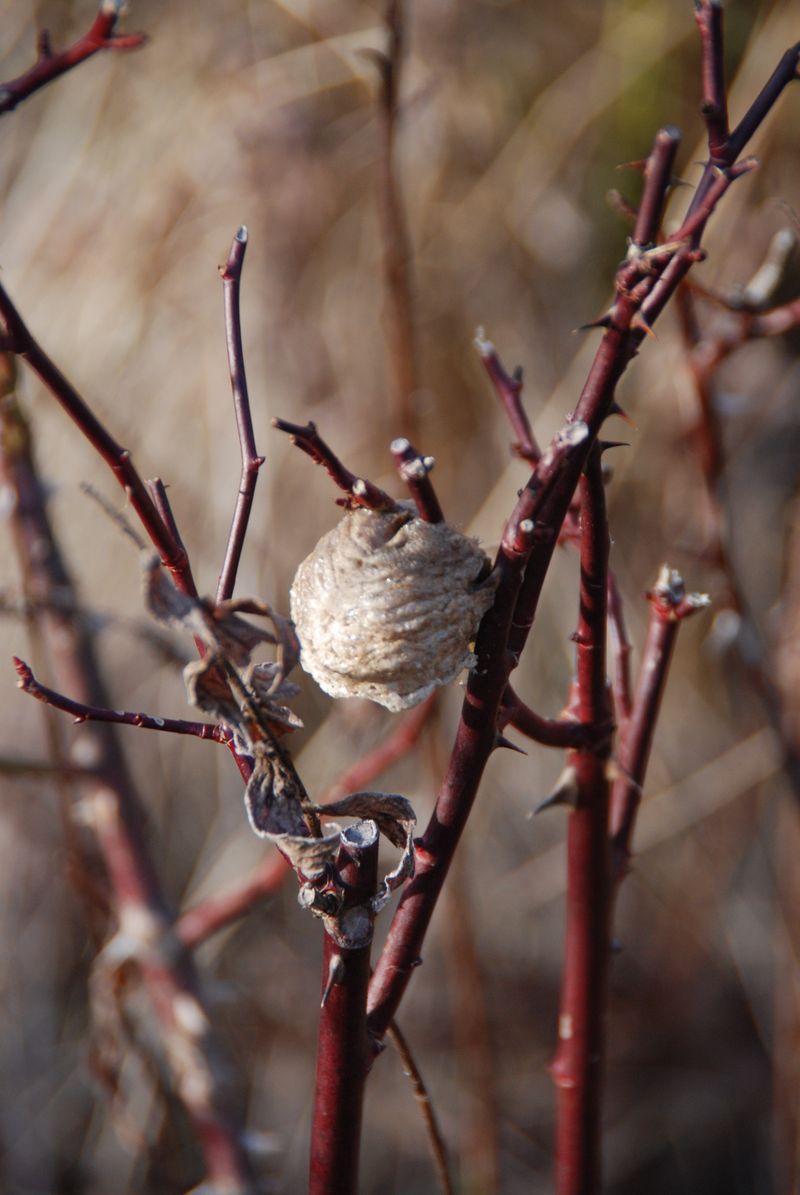
Bringing a mantis egg case inside is one of the most common mistakes homeowners make after finding one during fall cleanup. The impulse makes sense, but indoor conditions work against the natural process the case is designed for.
A heated home will trigger premature hatching. NC State Extension’s Chinese mantid profile notes that oothecae brought indoors can hatch far earlier than they would outside, leaving dozens or hundreds of tiny nymphs with no food source in a living room.
Penn State Extension warns the same in the context of Christmas trees brought inside with cases attached, explaining that warmth mimics spring conditions and triggers hatching within days.
Newly emerged nymphs are tiny, fragile, and immediately hungry. Without live prey available, they will begin eating one another.
Cannibalism among mantis nymphs is a documented part of their early life, not an unusual event, and it contributes significantly to the natural die-off that happens after hatching.
Utah State University Extension’s beneficial insects page explains that a single ootheca may contain dozens to hundreds of eggs, but many nymphs do not survive because of starvation, predation by other insects and spiders, adverse weather, and cannibalism. Finding a case in fall does not mean you will have a yard full of adult mantises by summer.
The ootheca’s job is to protect eggs through winter, not to guarantee a large spring population, and the best way to support that process is to leave the case where cold temperatures can do exactly what the insect’s life cycle expects.
Inspect first, then choose stewardship over promises
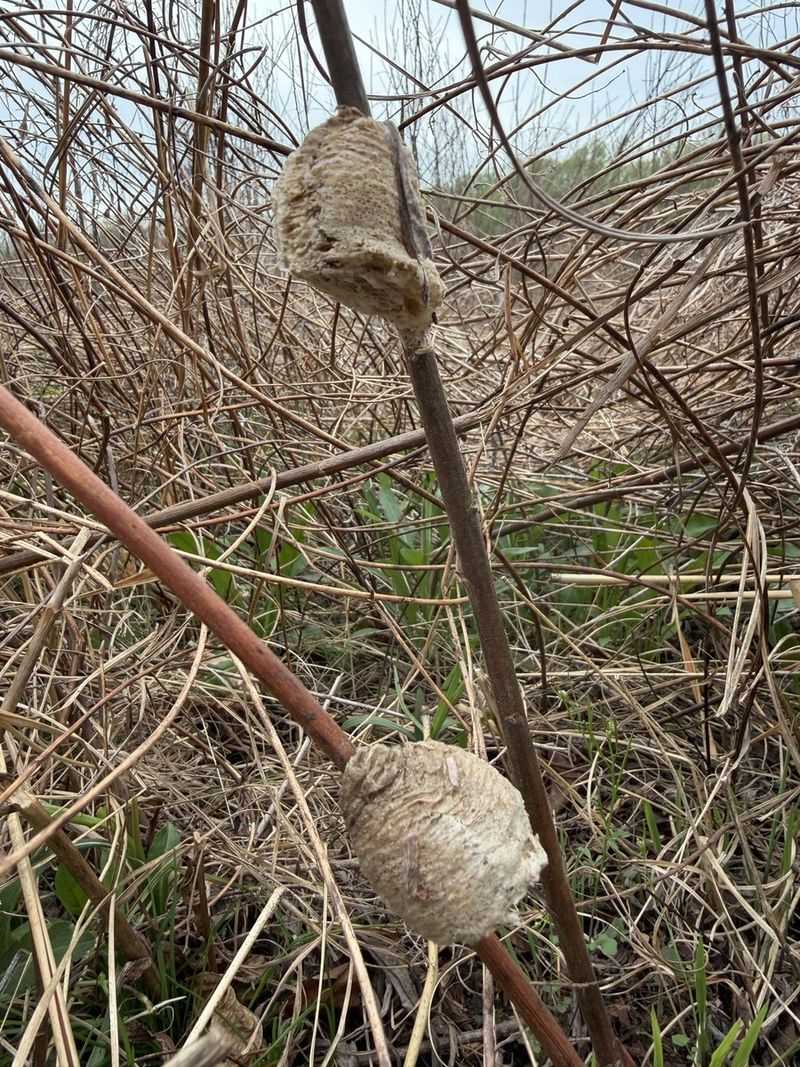
A practical fall routine does not have to be complicated. Before cutting anything back, walk the bed and scan stems at multiple heights.
When you spot a case, look at its size and shape as a first clue, keeping in mind that a narrow, gray-brown, elongated case is more likely to belong to the native Carolina mantid, while a larger, beige, rounded one points toward the Chinese mantid.
Leave a likely native case in place when the stem is healthy and the case does not interfere with necessary plant care. Move a case outdoors on its cut twig when the branch has to go, and tuck it into a nearby shrub above ground level.
Remove and discard a likely Chinese mantid case when supporting native insects is your priority, following the approach that NC State Extension recommends for reducing pressure on native mantids and insects.
Beyond the ootheca decision, the most defensible thing you can do for mantises and other arthropods is to cut back on unnecessary broad-spectrum insecticide applications. NC State Extension’s beneficial bugs article and University of Wisconsin Extension’s biological control guide both point to broad-spectrum sprays as a significant source of harm to nonpest arthropods.
Reducing those applications supports the full range of insects in your yard, not just mantises.
None of this guarantees a pest-free spring. Mantises are generalist predators that eat what they can catch, including pollinators and other beneficial insects, and no single insect species functions as a reliable pest-control program.
What the inspection routine does offer is a small, low-effort act of native-insect stewardship that costs nothing more than a few minutes before you start cutting.