
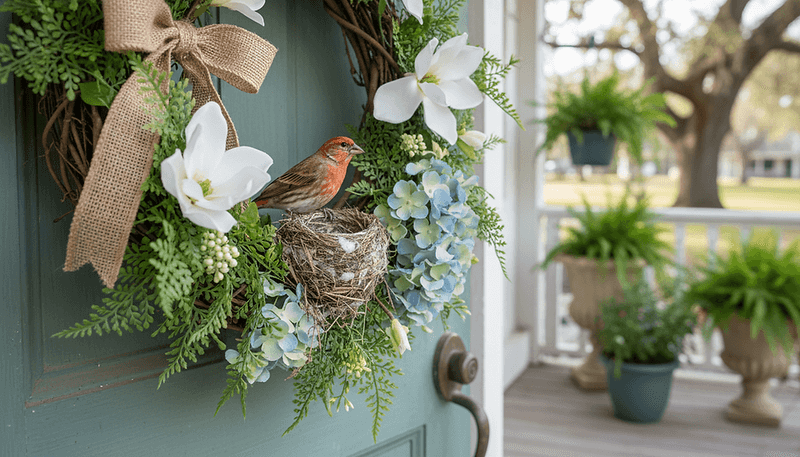
A small, streaky bird flits in and out of your fuchsia basket, and soon there is a tidy cup of grass tucked among the blooms. In California, that visitor is often a House Finch.
Knowing what the bird is doing, and what you can do to keep both the plant and the nest in good shape, takes the worry out of watering. Here is how to care for your porch planter while giving the family some room.
House Finches use more than one kind of nest site
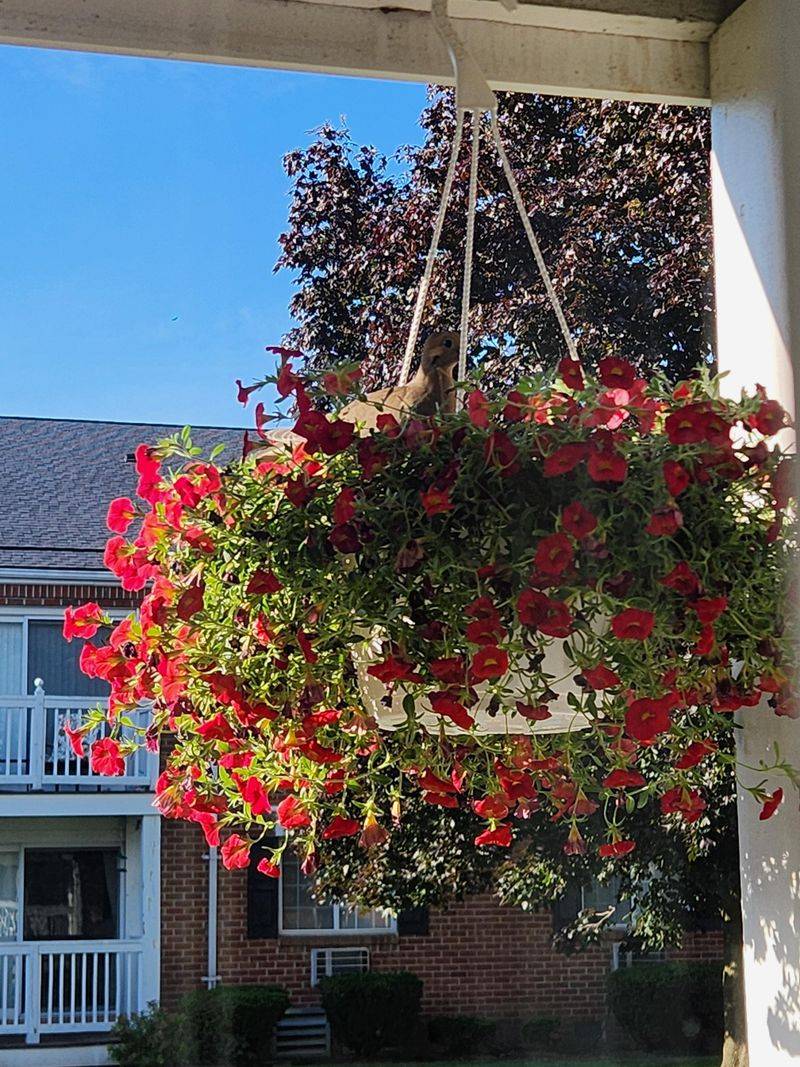
Many Californians know the House Finch even if they have never learned its name. Males wear rosy red on the head and chest, while females are plain brown with soft streaks.
They show up at feeders, on wires, and around buildings, so a pair raising young near your front door is not a strange event.
According to Cornell Lab of Ornithology life history notes, House Finches build a cup-shaped nest and use a wide range of spots. Trees and shrubs are common, and so are buildings, where nests turn up on ledges, in vents, in ivy, and even on streetlights.
Cornell NestWatch also lists hanging planters among the sites these birds use. That is the key point: a basket is one option on a long list, not a special nursery the birds are known to prefer.
Why a particular pair picks a particular basket is not something anyone can say for sure. A plausible guess is that a cup-shaped planter full of leaves gives them a ready-made spot with something to hold nesting material.
But a guess is all it is.
So if you spot dried grass, twigs, or feathers tucked among your petunias, think of it as a flexible bird using what is available. Your next step is simply to look without hovering, and then plan how to care for the plant around the nest.
Does a leafy basket make a safer nursery?
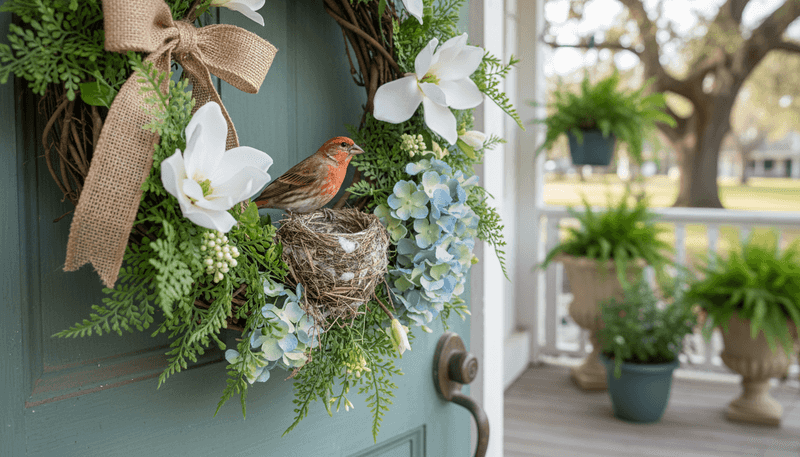
It is tempting to assume the answer is yes. Thick leaves can hide a nest from view and soften sun and wind, so a full basket may look like a cozy hideaway.
That appeal makes sense, but looking cozy and being safe are two different things.
Nothing reviewed shows that porch baskets are safer than other nest sites or lead to more young leaving the nest. Height, greenery, and a spot near the front door do not guarantee protection from predators, bad weather, or people coming and going.
As Cornell Lab guidance on protecting nests makes clear, nest safety depends on the circumstances around each nest.
Even the research on nest protection is a mixed picture. A peer-reviewed review of nest-protection methods shows how hard it is to prove which steps truly help wild nests.
The fact that a bird chose a spot does not prove the spot worked well.
Since House Finches are known to use many kinds of sites, as NestWatch notes, the most honest reading is that a leafy basket may appeal as one available spot. Whether a given brood does well depends on things you cannot see or control.
The practical takeaway is to skip fixes built on the idea that the basket is a fortress. Keep the area calm, keep pets and foot traffic in mind, and enjoy the visit without expecting a promised result.
Water the plant without soaking the nest
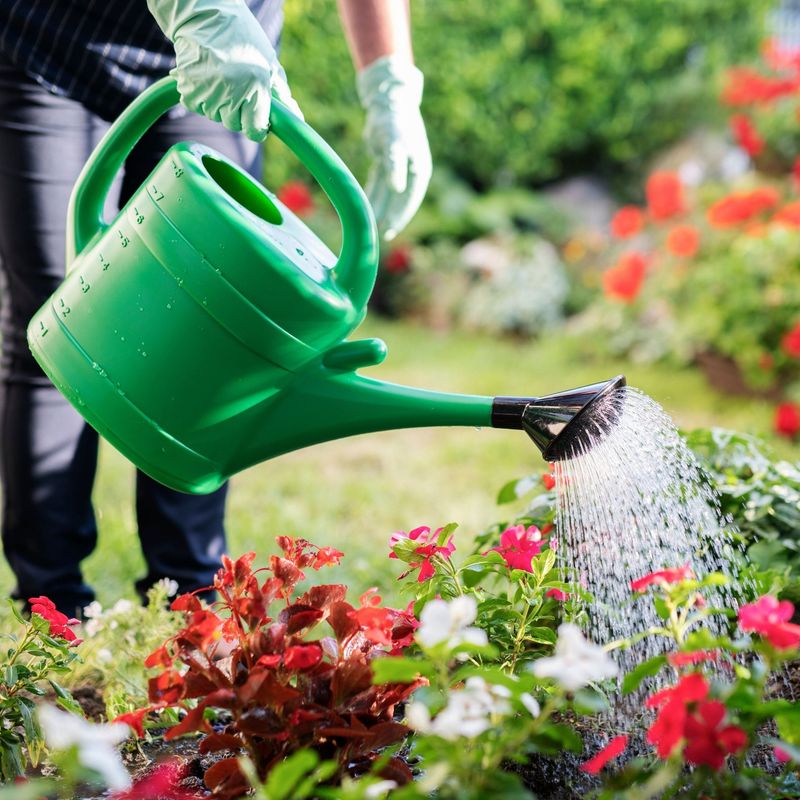
Your plant still needs care, and in a California summer a hanging basket can dry out fast. Advice from an Extension expert answering a hanging-basket nest question was straightforward: water the plant as needed, avoid wetting the nest, and keep disturbance to a minimum.
That means you do not have to let the whole basket dry out until the birds leave. Stressed, wilted plants are no help to anyone, and the guidance does not call for stopping watering.
A narrow-spout can works better than a hose spray. Aim at the soil on the side farthest from the nest, pour slowly so water soaks in rather than splashing, and keep the stream low.
Check the soil with a finger from a distance you are comfortable with before you water. Many baskets only need a drink when the top inch feels dry, and skipping an unneeded watering is one less visit.
Try to keep each visit short and calm, and do it at a steady time of day. Avoid leaning over the nest, peering in, or touching the foliage near it.
No watering method can promise that the parents will not notice you, so the goal is simply less fuss, less water on the nest, and a healthy plant.
If drought rules limit your watering days, a handheld can fits well within them, since it uses only what the plant needs.
Leave an active nest in place and check before acting
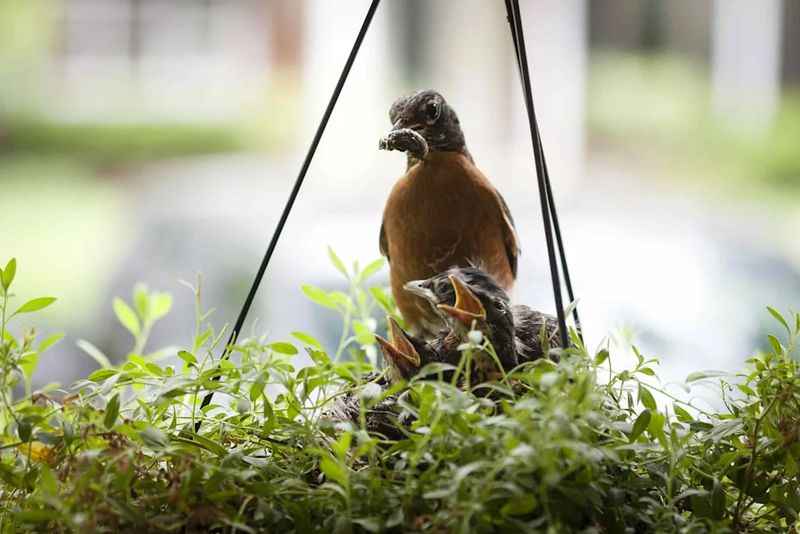
Once a nest holds eggs or chicks, the simplest choice is usually to leave it where it is. Lifting down a basket, tilting it, or shifting the nest to a spot you think is better can disrupt the family, and there is no proof it would turn out better for them.
Lowering a basket on a chain or rope may sound harmless, but it is not universally safe. If the nest truly causes an urgent safety or access problem, such as blocking a door you must use or posing a hazard, contact your local wildlife agency or a licensed rehabilitator first.
They can give advice for your exact situation before you do anything.
Timing matters in California, but not in a tidy way. The California Department of Fish and Wildlife says February through August is typical for many species, yet timing varies by species and location, and some birds nest year-round.
A nest in November is not automatically abandoned just because it falls outside that window.
Federal law also plays a part. The Migratory Bird Treaty Act applies to protected migratory birds and prohibits unauthorized take.
The details are more nuanced than a simple rule, and U.S. Fish and Wildlife Service guidance on bird nests is the place to look for how nests are treated.
It would be wrong to say every empty nest is always protected or that every brush with a nest is automatically illegal. If you have a specific legal question, ask the relevant wildlife agency rather than relying on a general rule.
A typical nesting timeline is not a countdown
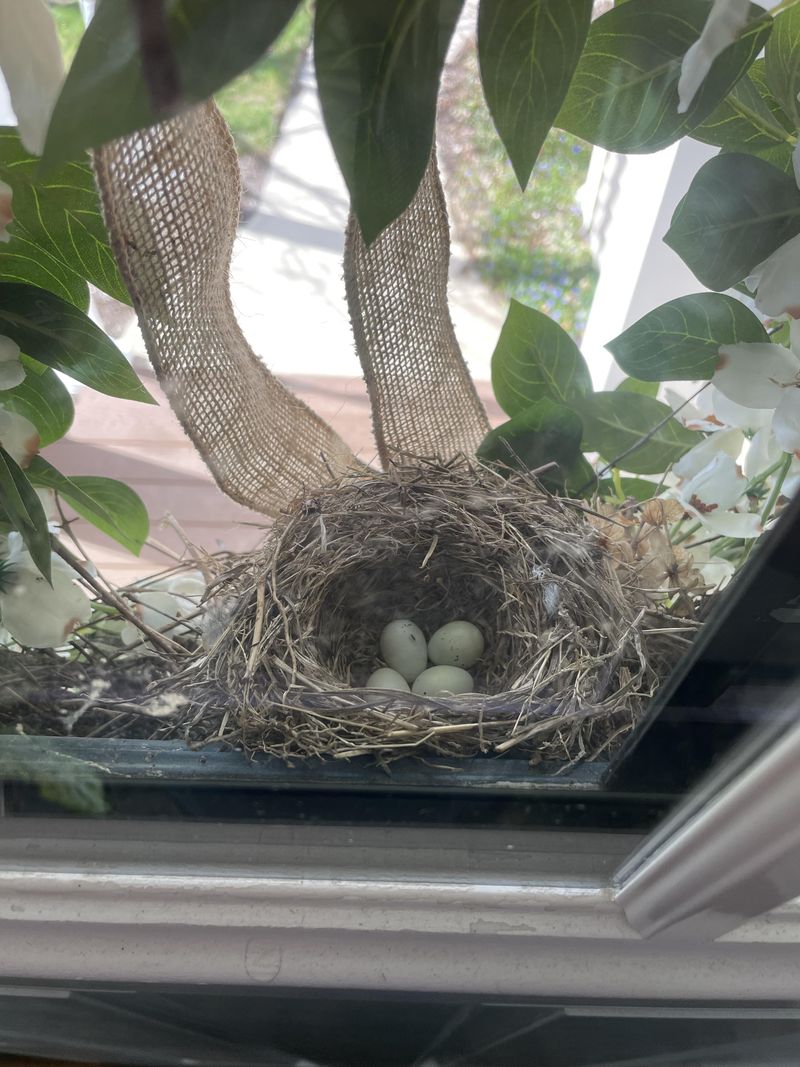
Numbers can be handy, as long as you treat them as ballpark figures. Cornell NestWatch lists House Finch incubation at 13 to 14 days, and the nestling period at 12 to 19 days.
Those are typical figures for the species, not a schedule for the nest above your welcome mat. You rarely know when the eggs were laid, how many broods a pair has raised, or when the first chick hatched, so you cannot count forward and name a day.
The spread alone shows the problem. A nestling period that can run anywhere from 12 to 19 days is a week of difference, and that is before you add in the unknown start date.
For that reason, do not use the ranges alone to decide a nest is empty or safe to disturb. Quiet does not always mean the birds have left, and a nest that looks finished may still be in use or may be used again.
A better habit is to keep watering visits short and steady while you see signs of activity, such as adults flying in and out or soft chirping. Watch from a distance, and write down dates you notice if it helps you make sense of the season.
If you are unsure, hold off on any cleanup or basket changes, and ask a local wildlife agency for advice on your particular nest.
What if a baby bird is on the ground?
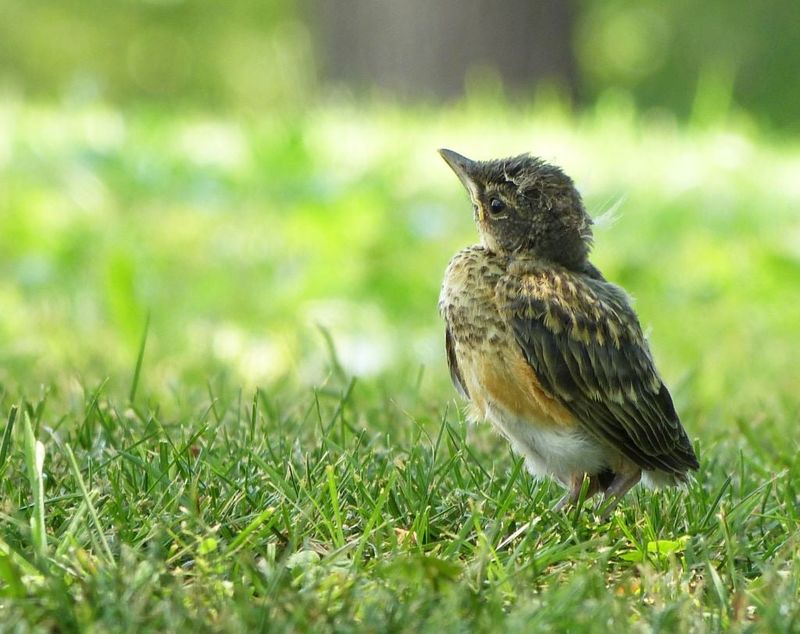
Finding a small bird on the ground near your basket can feel like an emergency. Often it is not, so take a moment to look closely before you step in.
A feathered fledgling has left the nest on purpose. It may hop around or sit still for a while, and as U.S.
Fish and Wildlife Service guidance on found baby birds explains, fledglings often remain under their parents’ care while outside the nest. Being on the ground, or being quiet, does not by itself mean it has been abandoned.
A nestling looks different. It is featherless or mostly bare, and its eyes may be closed.
A bird like that is not ready to be out of the nest, so look for a nest you can see and tell a wildlife professional what you found rather than guessing.
Do not feed the bird or give it water. Food and drinks can harm a young bird, and it needs professional direction before anything is offered.
If the bird is injured, or genuinely orphaned, contact a licensed wildlife rehabilitator. Call ahead before you transport it, so they can tell you how to proceed and whether they can take it.
Meanwhile, keep cats and dogs indoors, stay back so the parents can return, and watch from a distance for a while to see what happens.
Give the nest room while keeping the planter cared for
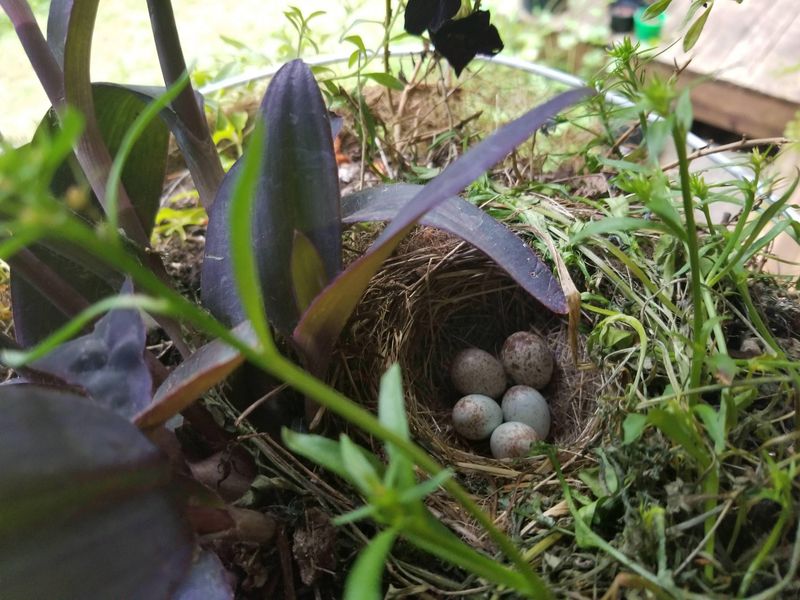
Keep the plant going with careful, nest-aware watering, keep visits few, and leave an active nest alone unless an urgent problem arises. If one does, get case-specific guidance from wildlife officials first.
For an injured or truly orphaned bird, reach out to a licensed rehabilitator.
A basket may be a usable nest site, never a guaranteed safe one. Your calm routine is the kindest thing you can add to it.