
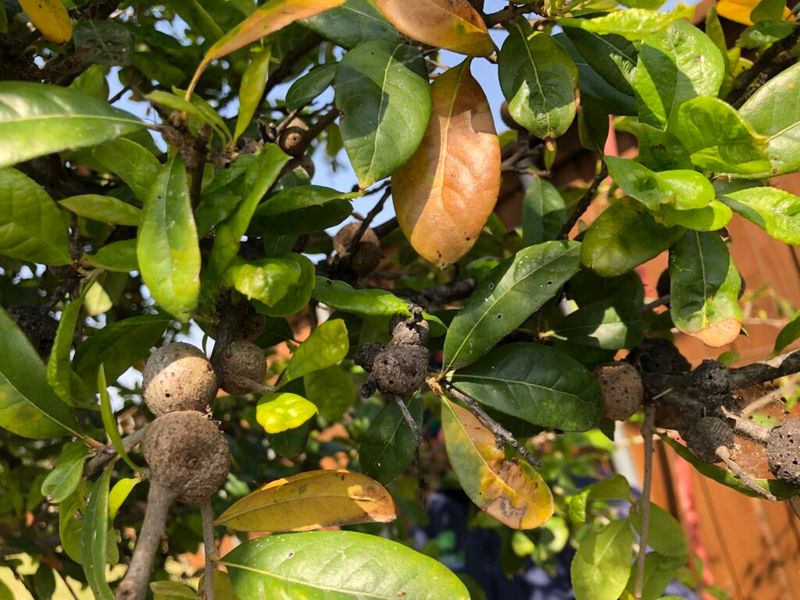
A live oak turning yellow and dropping leaves in fall can stop a Central Texas homeowner cold, especially when the tree looked fine all summer. The instinct to blame an iron shortage is understandable, but yellowing leaves alone cannot confirm that diagnosis.
Understanding what iron chlorosis actually looks like, how alkaline soil fits into the picture, and which other stresses can produce similar symptoms will help you figure out the real problem before reaching for any treatment.
Fall leaf drop is a clue, not a diagnosis
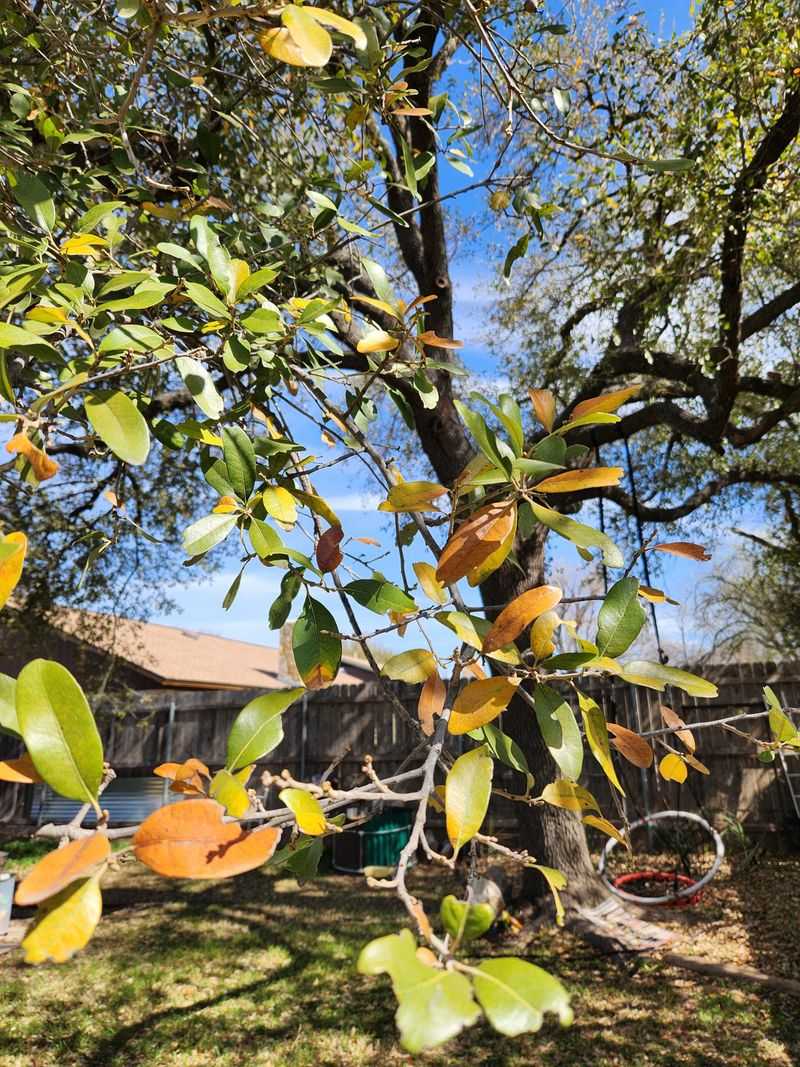
A live oak shedding yellow leaves in October or November can look alarming, but the timing itself is the first diagnostic clue worth examining. Live oaks in Central Texas are evergreen or semi-evergreen, meaning they hold their leaves through winter and into spring rather than following the classic autumn leaf-drop pattern of deciduous oaks like cedar elm or Texas red oak.
Texas A&M Plant Disease Diagnostic Lab guidance on annual live oak leaf drop describes the normal leaf exchange as a spring process, in which older leaves fall as new growth pushes out, typically between February and April in much of Central Texas.
That spring timing matters because fall yellowing sits outside the expected window. When a live oak drops noticeably yellow or scorched leaves before winter, something other than normal seasonal exchange is likely at work.
Texas A&M Forest Service reporting on drought-stressed Texas trees entering early dormancy notes that prolonged heat and drought can push oaks into premature dormancy, producing yellowing, leaf scorch, and early leaf drop that can resemble a conventional fall color change.
Central Texas summers frequently deliver weeks of triple-digit temperatures with little rainfall, and a tree that ran short on water through July and August may begin shedding stressed leaves by September. That early drop reflects a survival response, not a nutrient deficiency.
Texas A&M Forest Service fall foliage guidance also clarifies that live oaks do not produce the same anthocyanin-driven color display as deciduous species, so any vivid yellowing on a live oak in fall deserves a closer look rather than a quick assumption. Use the unusual timing as a prompt to inspect the pattern of symptoms more carefully before drawing any conclusions.
What iron chlorosis looks like
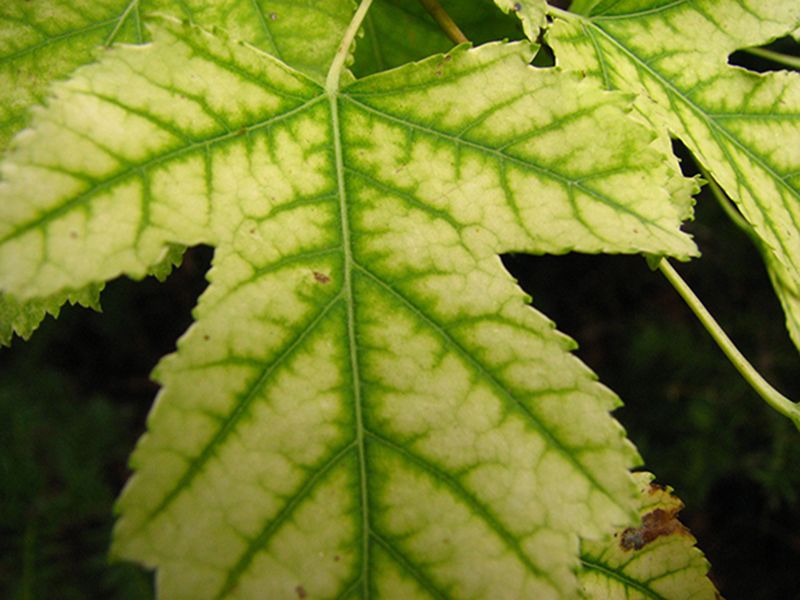
Recognizing iron chlorosis starts with knowing exactly where the yellow appears on the leaf. The classic pattern is interveinal chlorosis: the tissue between the leaf veins turns yellow or pale while the veins themselves stay distinctly green.
That contrast, green veins against a yellow background, is the visual fingerprint of iron deficiency, and it shows up first on the newest, youngest leaves at the tips of branches rather than on older foliage lower in the canopy.
USU Extension guidance on preventing iron chlorosis in trees and shrubs confirms that iron deficiency generally appears on new growth first, because iron is not easily moved from older leaves to newer ones within the plant. In severe cases, the yellowing can intensify until leaves look nearly white, and the tree may show reduced growth, leaf scorch along the margins, and eventually some leaf drop.
Those advanced symptoms overlap with several other problems, which is why the earliest stage of the pattern matters most for narrowing down the cause.
Contrast that newest-leaf interveinal pattern with uniformly yellow older leaves, where the whole leaf blade loses color rather than just the tissue between veins. Texas A&M AgriLife guidance on diagnosing nutritional deficiencies explains that uniform yellowing on older leaves points more toward nitrogen deficiency or a general stress response than toward iron shortage.
Visual patterns narrow the list of possibilities rather than confirming a single cause, so use what you see as a starting point for further investigation, not a final verdict. If your live oak is dropping older leaves uniformly with no clear vein contrast on new growth, iron chlorosis is less likely to be the primary explanation.
Alkaline conditions can reduce iron availability
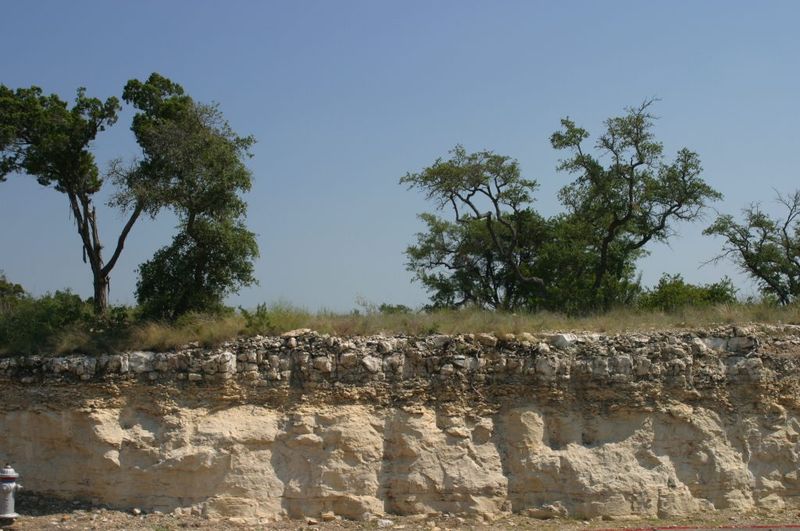
Many Central Texas soils sit at a neutral to alkaline pH, and some yards contain caliche, a calcium-carbonate-rich layer that forms naturally in the region’s geology. USGS research on calcic soils and calcretes in the southwestern United States describes how calcium carbonate accumulates in these profiles over long periods, creating layers that range from soft and chalky to dense and rock-like depending on age and depth.
The connection to iron chlorosis is chemical rather than physical. Iron exists in most Texas soils in adequate total quantities, but at high pH levels the form of iron available to plant roots changes.
USU Extension iron chlorosis guidance explains that as soil pH rises above roughly 7.0 to 7.5, iron converts to forms that roots cannot absorb efficiently, so a tree can sit in iron-rich soil and still show deficiency symptoms. Adding elemental iron to high-pH soil without addressing the pH problem will not automatically fix the situation.
Caliche or other calcium-carbonate material may also contribute to shallow soil depth or impeded drainage depending on how thick and dense the layer is at a particular site, but those are separate site conditions worth assessing independently. Texas A&M AgriLife vegetable gardening guidance for Texas acknowledges that soil depth, drainage, and chemistry vary considerably from yard to yard across the state, even within the same neighborhood.
Compaction from foot traffic, construction, or heavy equipment is another root-zone issue that can limit nutrient uptake, but it should be assessed on its own rather than assumed from caliche presence alone. The practical takeaway is that alkaline or calcareous conditions are a plausible contributor to iron unavailability, but they are not a uniform condition across all Central Texas properties, and a soil test is the only way to know what your specific site is doing.
Test the site before treating the tree
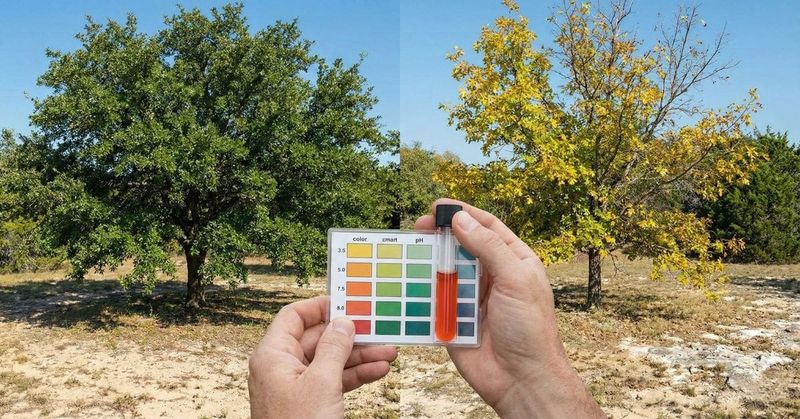
Before spending money on iron products or soil amendments, spend a few minutes reading the tree itself. Walk around the canopy and compare the newest leaves at branch tips with older leaves further back.
If the new growth shows interveinal yellowing while older leaves look relatively normal, iron or manganese chlorosis becomes more plausible. If older leaves are uniformly pale or yellow, or if you see brown margins, curled edges, wilted tips, or widespread premature drop across older and newer foliage alike, drought stress, root damage, poor drainage, or disease moves up the list.
Also consider the recent history of the root zone. Has the tree been through a dry summer with little supplemental water?
Was there construction, trenching, or soil grading nearby in the past year or two? Is the area prone to standing water after rain, or does it drain quickly?
Those conditions directly affect root health and nutrient uptake regardless of what the soil chemistry shows. Texas A&M AgriLife fertilizing guidance recommends against applying blanket fertilizer or amendments based on visual symptoms alone, precisely because overlapping causes can produce similar-looking results.
A soil test is the safest practical next step once you have observed the symptom pattern and site conditions. Texas A&M AgriLife soil testing guidance recommends collecting a composite sample from several locations within the root zone rather than pulling a single scoop from one spot.
The test should include pH and relevant nutrients at minimum. When symptoms remain ambiguous after visual inspection and a basic soil test, a plant-tissue test or a consultation with a professional can fill in the gaps.
Texas A&M’s urban and homeowner soil sample information guidance provides specific instructions for collecting and submitting samples from residential landscapes. Applying iron chelates, sulfur, or other amendments before knowing your soil pH and nutrient levels risks wasting money at best and stressing the tree’s roots further at worst.
Match treatment to the tested soil
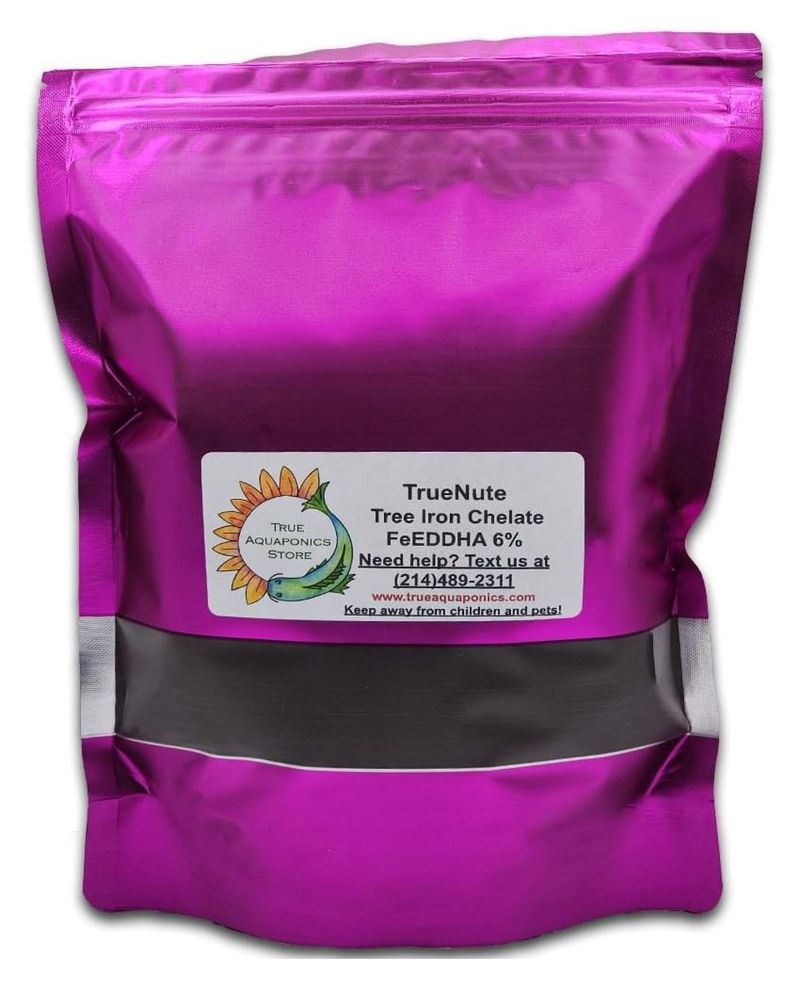
Treatment makes sense only after the leaf pattern, site conditions, and soil test results point consistently toward iron chlorosis. Skipping that sequence and applying iron products to a tree stressed by drought, root damage, or disease is unlikely to help and may create additional problems.
Once the evidence does support an iron-availability issue, product selection matters because not all iron supplements perform equally in high-pH soil.
USU Extension guidance on iron chlorosis treatment identifies Fe-EDDHA as the iron chelate most likely to remain stable and available to roots at pH levels above roughly 7.2, where many other chelated iron products become ineffective. Look for products labeled specifically for trees and for the soil pH measured in your test, and follow the product label for application rate and timing rather than copying a generic dose from an online forum.
Label directions account for product concentration, application method, and safety margins that a universal recommendation cannot provide.
Soil-applied iron treatments work more slowly but can last longer than foliar sprays. Foliar applications tend to green up leaves faster but produce shorter-lived or incomplete improvement because they do not address the root-zone chemistry.
Trunk injection can be effective on valuable mature trees, but the process creates wounds in the bark and should be handled by a qualified arborist rather than attempted by a homeowner with rental equipment.
Water management is part of the treatment picture regardless of which iron product you use. Roots stressed by drought cannot absorb nutrients efficiently, and roots sitting in waterlogged or poorly drained soil face a similar problem through a different mechanism.
Texas A&M Forest Service guidance on drought-stressed Texas trees underscores the importance of appropriate irrigation during dry periods. Adjust watering to match the tree’s actual site, soil type, and current weather rather than following a fixed schedule, and avoid keeping the root zone constantly saturated, which can cause root rot and nutrient-uptake problems of its own.
Recognize stresses that mimic iron chlorosis
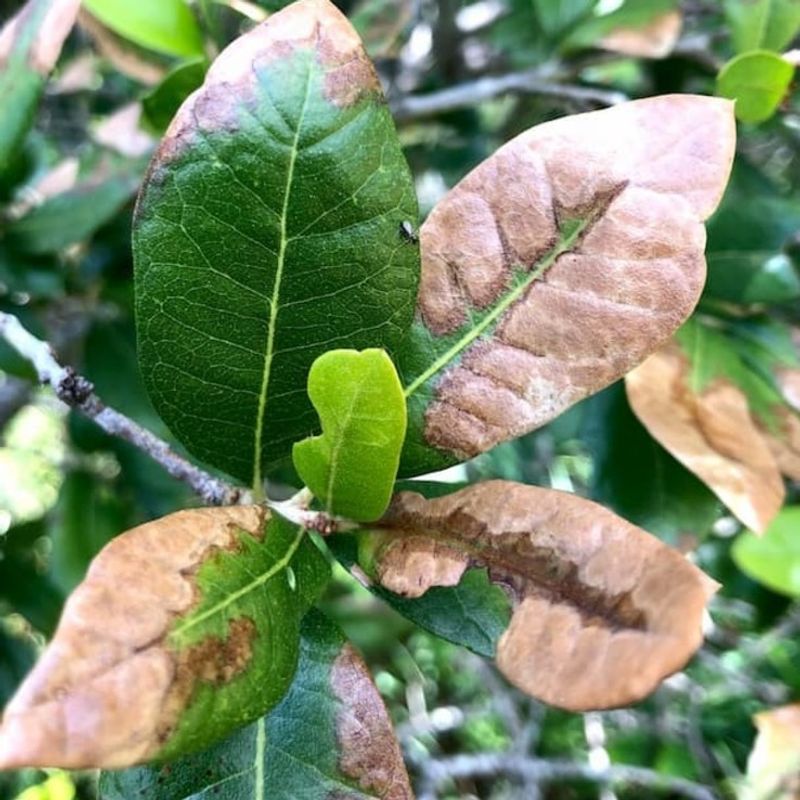
Several common problems produce yellow leaves on a Central Texas live oak, and the iron-chlorosis explanation does not fit all of them. Knowing which patterns point away from iron shortage can save time and prevent the wrong treatment from masking a more serious issue.
Uniform yellowing across older leaves, with no clear vein contrast, suggests nitrogen deficiency or a general stress response rather than iron. Brown or tan margins on otherwise green leaves, especially on older foliage during or after a heat wave, point toward drought scorch.
Curled, wilted, or limp leaves combined with widespread premature drop across large sections of the canopy can reflect severe water stress, root damage from compaction or construction, or poor drainage. Texas A&M Forest Service drought-dormancy guidance notes that heat and water stress can produce a range of visual symptoms that overlap with nutrient deficiencies, making site history and recent weather essential context for any diagnosis.
Texas A&M AgriLife guidance on diagnosing nutritional deficiencies specifically warns that manganese deficiency can closely resemble iron chlorosis, with interveinal yellowing on newer leaves. Salinity, herbicide drift, and root injury from nearby trenching or soil disturbance can also produce yellowing and leaf drop that does not fit neatly into any single nutrient category.
Oak wilt deserves its own mention because it can be confused with other causes of decline. Texas A&M AgriLife oak wilt identification and management guidance describes distinctive vein discoloration patterns in live oaks, including veinal necrosis where the veins themselves turn brown or yellow, which differs from the classic iron-chlorosis pattern of yellow tissue between green veins.
Rapid decline, branch dieback moving through sections of the canopy, or symptoms affecting several nearby oaks at once are flags that go beyond a nutrient explanation. Texas A&M Forest Service oak leaf disease information covers foliar fungal diseases that can also cause spotting, yellowing, and early drop on live oaks, particularly after wet springs.
If any of these patterns appear, or if you are unsure whether the symptoms fit iron chlorosis, contact a Texas A&M diagnostic service or an ISA Certified Arborist before treating. Yellow leaves alone cannot diagnose oak wilt, but they cannot rule it out either.
Follow a cautious action plan
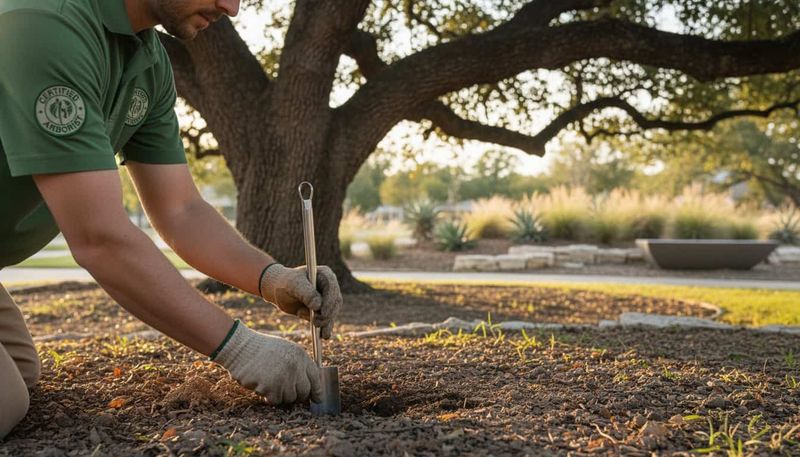
A practical sequence keeps you from wasting money on the wrong fix or accidentally stressing the tree further. Start by photographing both the newest leaves at branch tips and the older leaves further back in the canopy, noting where on the tree the yellowing is concentrated and how quickly it has progressed.
Record recent weather, any irrigation changes, and whether any construction, grading, or chemical application happened near the root zone in the past year.
Next, submit a composite soil sample from several spots within the root zone and request pH along with a full nutrient panel. Texas A&M AgriLife soil testing resources walk you through the collection and submission process for residential properties.
Treat only when the leaf pattern, site conditions, and test results all point toward iron chlorosis, and follow the product label and any site-specific professional advice rather than a fixed generic rate. USU Extension iron chlorosis guidance reminds homeowners that soil treatments may need to be repeated because the underlying pH or drainage conditions that limit iron availability often persist after a single application.
If the tree shows rapid decline, branch dieback, or symptoms that match oak wilt descriptions, skip the soil amendments and contact a qualified arborist or Texas A&M AgriLife oak wilt resources immediately. A live oak that gets the right diagnosis early stands a far better chance than one treated repeatedly for the wrong problem.